Running Nutrition
Fuelling a 2,000-Mile Run: The Nutrition Kit for a Sea-to-Source Danube Ultra
A practical fueling and recovery kit for a 70-day, marathon-a-day run along the Danube, from breakfast shakes to caffeine gels and recovery drinks.
Introduction
Running 2,000 miles from the mouth of the Danube to its source is not a challenge you can wing nutritionally. The plan is roughly a marathon a day for 70 days, crossing eight countries and four capital cities with everything carried on the back, no rest days, and days ranging from about 16 miles to nearly 50. Staying under an 8-kilo pack weight means every gram of food has to earn its place.
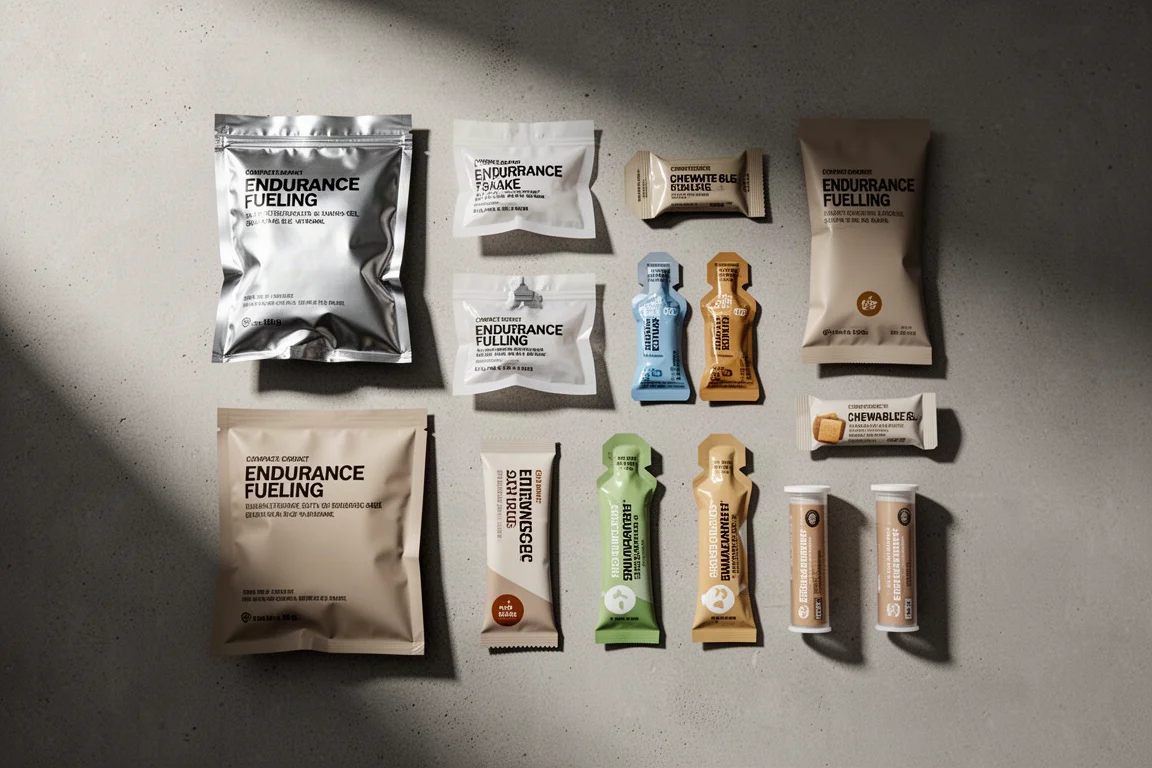
The kit below is built around three priorities: a solid nutritional foundation each morning, portable running fuel that delivers carbs and sodium without bloating the pack, and lightweight recovery options for the evening. Here is what made the cut, and why.

The Strategy: Fuelling Separately from Daily Food
The key idea is to treat running fuel differently from general nutrition. Running fuel is carried and planned; everything else, dinner included, gets sourced from shops, supermarkets and petrol stations along the way. That means accepting some calorie deficit, some unfamiliar food, and supplementing the carried kit with whatever the road offers: Haribos, chocolate bars, cans of fizzy drink.
Hydration is the other half of the equation. With daytime temperatures potentially reaching 30 to 35 degrees Celsius, sodium and electrolyte intake becomes critical, not optional.
Breakfast Foundation: 33 Fuel Elite Meal Replacement Shakes
Each day starts before dawn, between 4 and 5 am, to beat the heat. The first stop is a meal replacement shake built from around 33 mostly natural ingredients: organic pumpkin protein, sunflower protein, flax seeds, alfalfa, almonds, coconut, gluten-free oats, carob, raw cacao, goji berries and walnuts. It delivers energy, protein and a broad hit of micronutrients in one go.
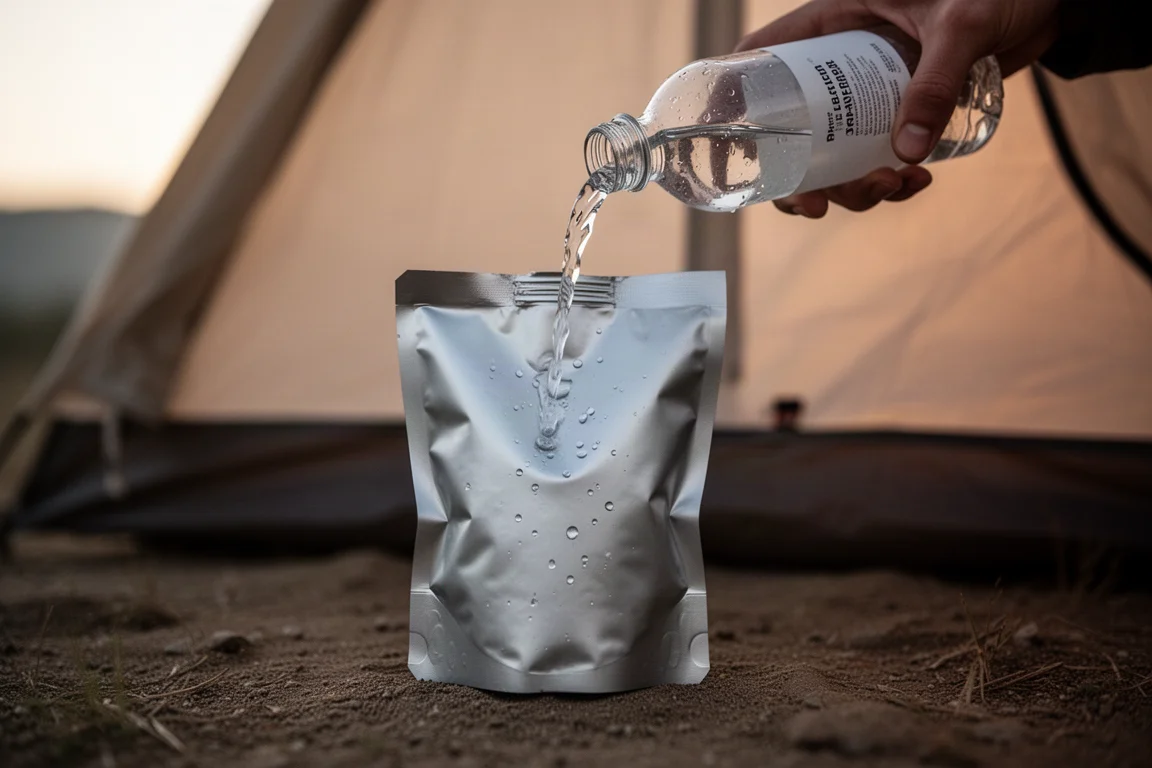
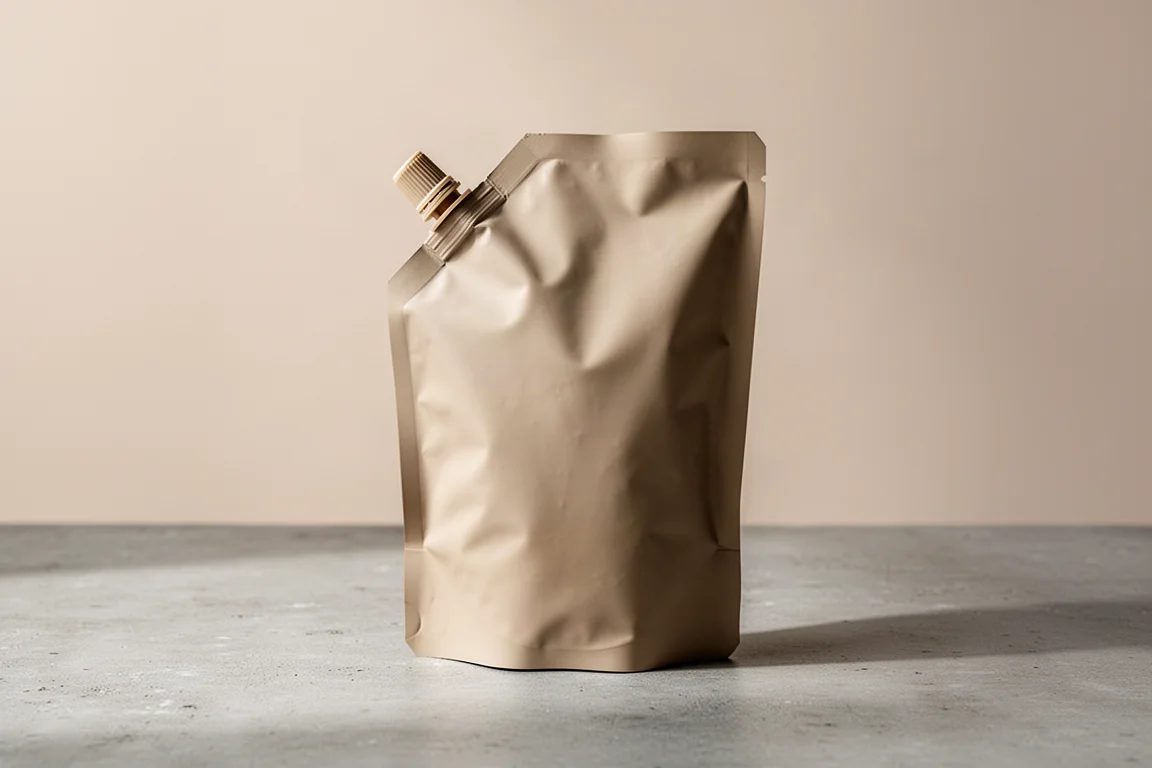
The practical appeal is the packaging: it folds flat, you can pour water straight in, mash it up and drink it from the pouch, or decant it into a bottle and sip on the move.
Daily Greens and Amino Acids
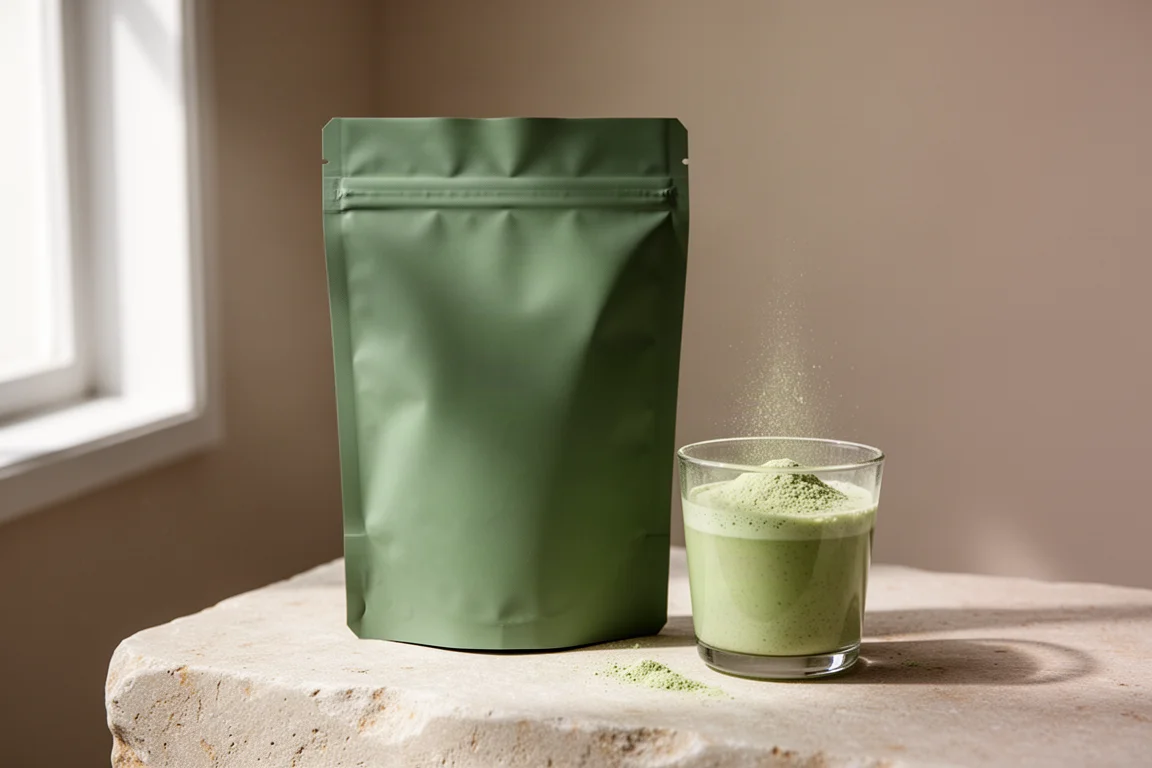
Alongside the shake, a daily greens mix adds another layer of foundational nutrition: pea protein, organic wheatgrass, cinnamon, barley grass, chlorella, spirulina, kale, broccoli and spinach. The cinnamon makes it genuinely pleasant to drink, which is not something you can say about every greens powder.
This gets combined with a full-spectrum amino acid supplement, the building blocks for muscle repair. When much of your diet out on the road comes from petrol stations, one scoop covering the amino acid gap is a real safety net. Both are portioned into vacuum-sealed daily pouches to save weight, each with its own motivational message on the packet.
On-the-Go Carbs: Chews and Resalable Gel Pouches
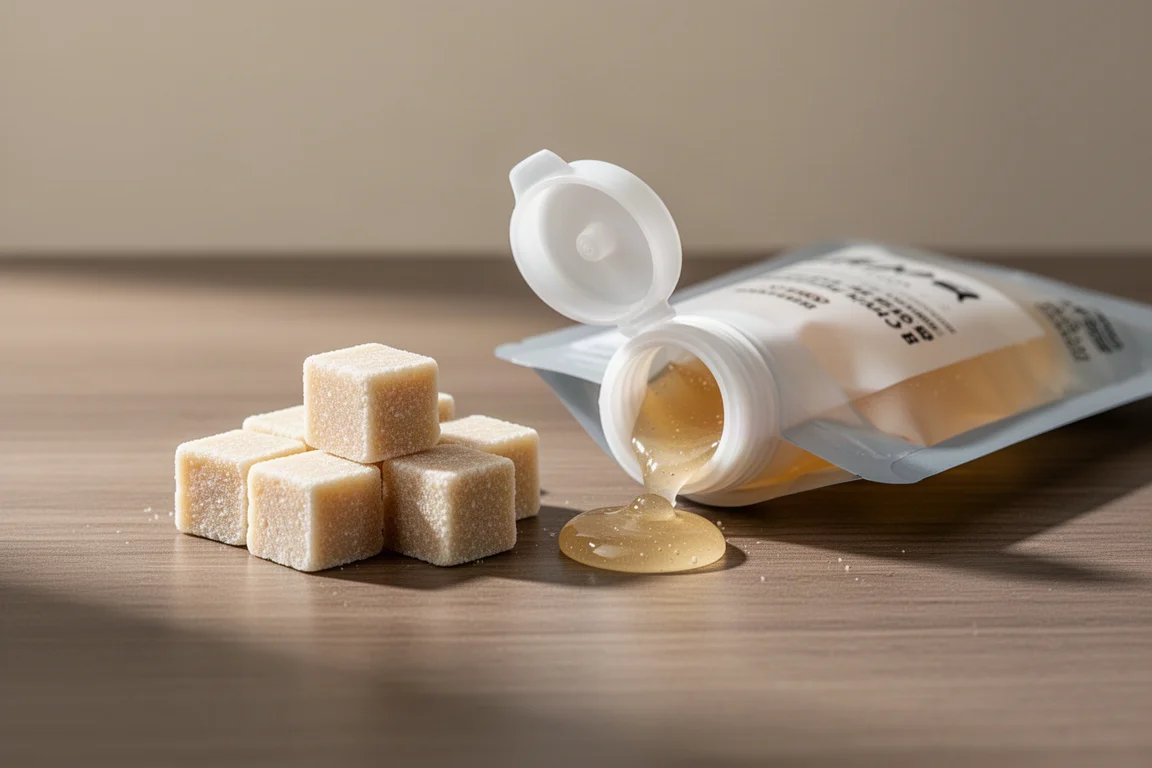
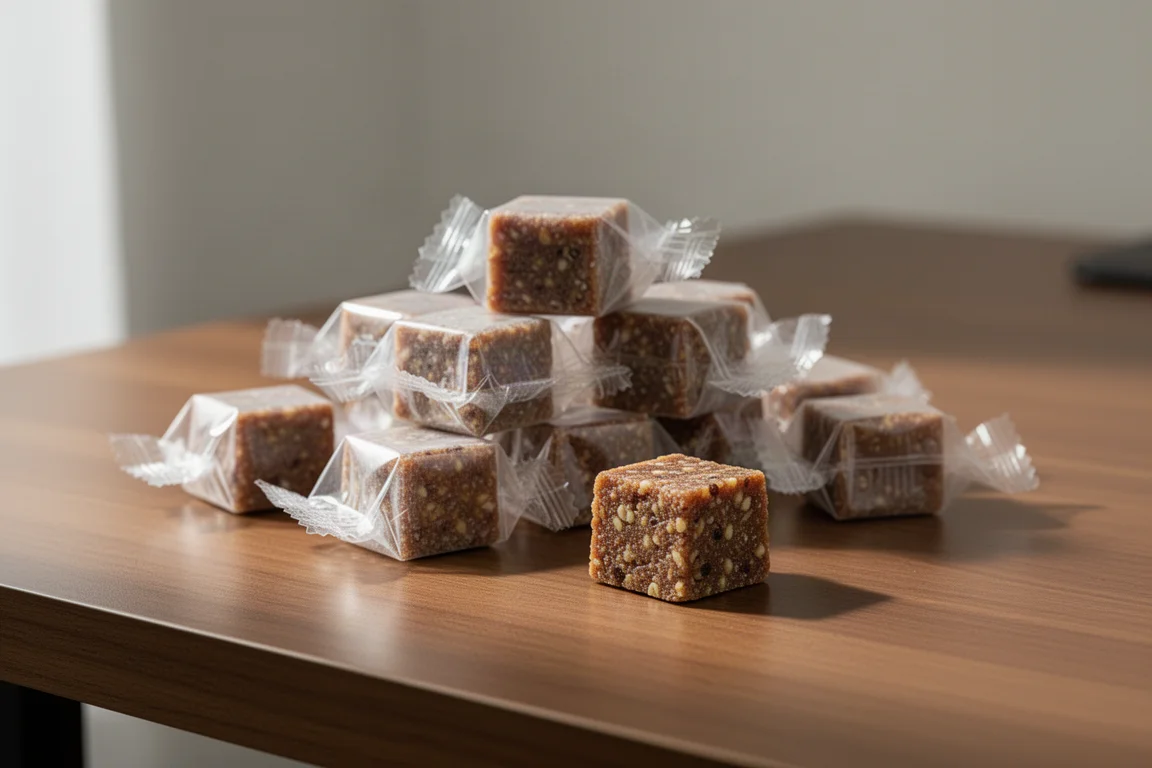
Once moving, the go-to running fuels are tried and tested favourites. Precision Fuel and Hydration Chews pack 30 grams of carbs into each small cube, and three cubes travel in a pocket every day. They come in flavours like mint and lemon, plus a neutral option.
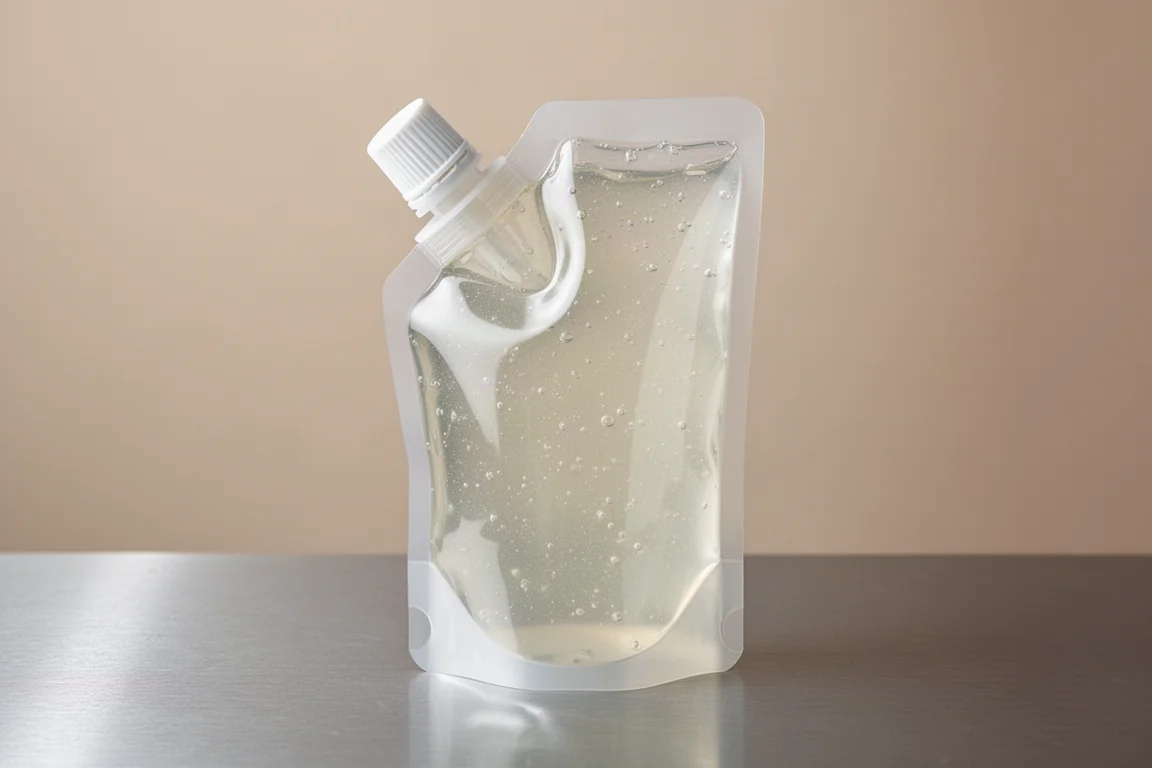
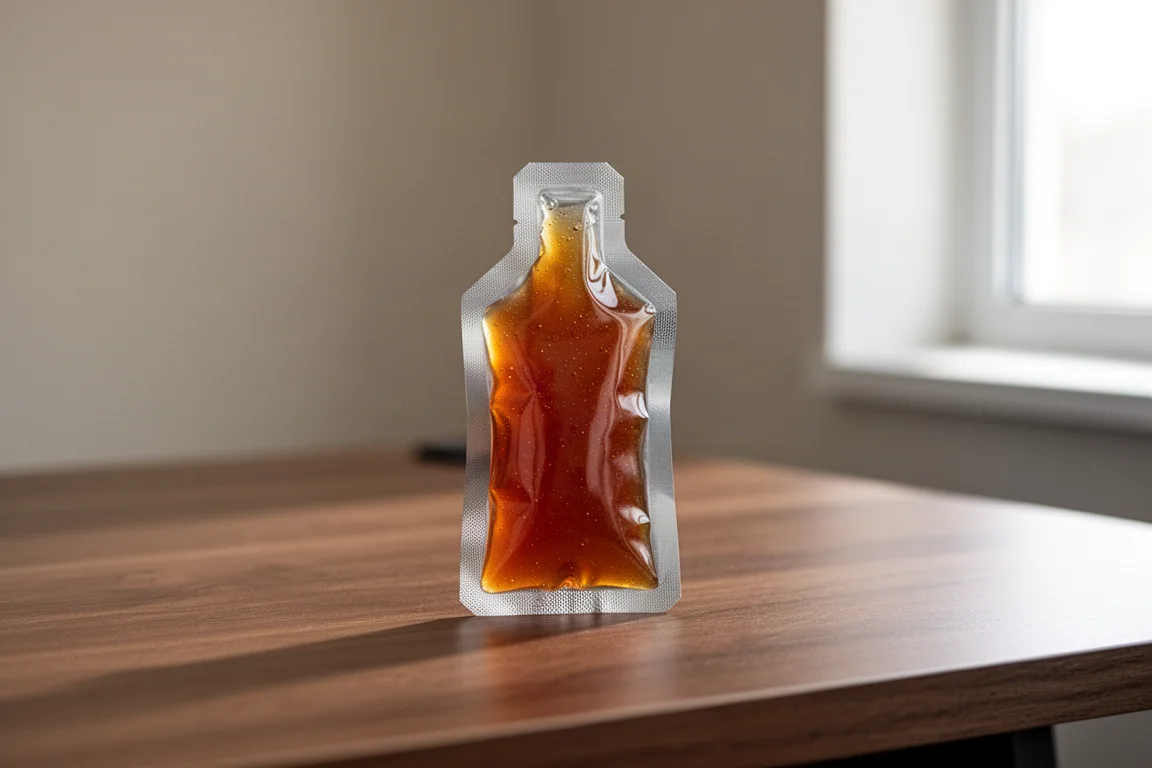
The 90-gram gel pouches solve a familiar gel problem: the resealable cap means you can take half now and save the rest, rather than finishing a gel you did not want or carrying a sticky open packet. One soft, loose-textured pouch can stretch across a couple of days if needed.
Caffeine, Used Sparingly
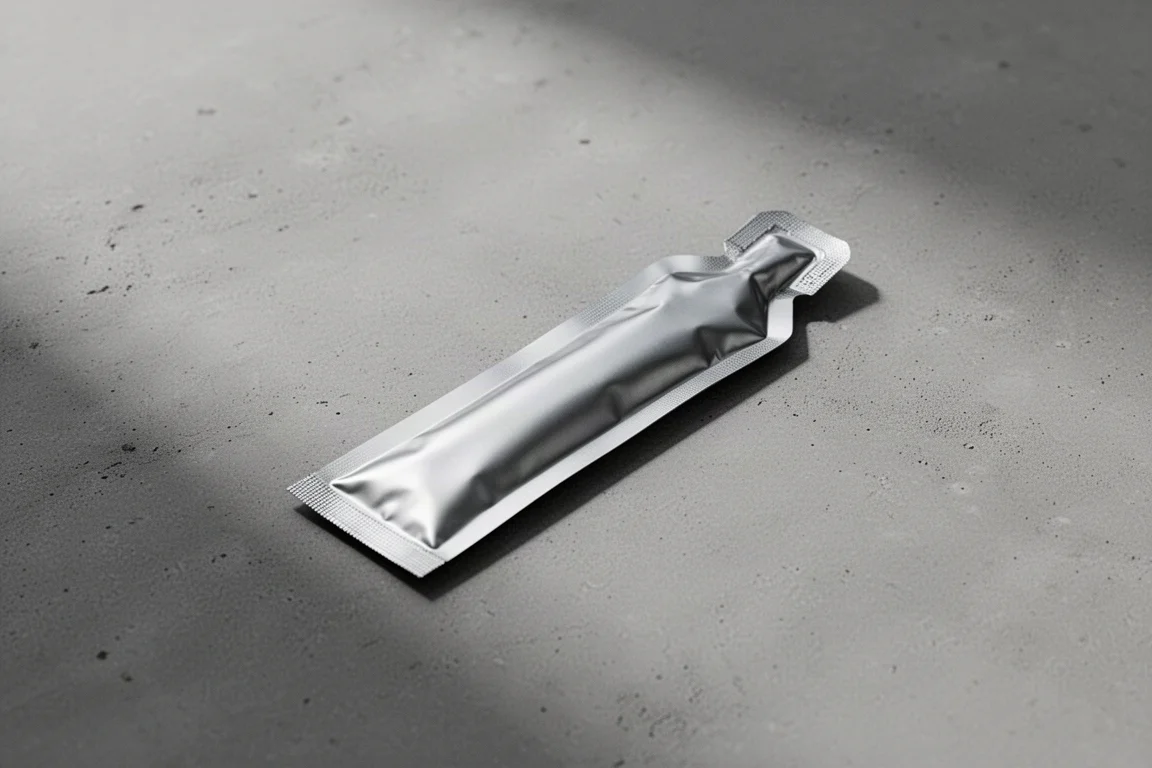
The 30-gram caffeine gel from Precision Fuel and Hydration carries 100 mg of caffeine in a compact sachet. The plan is to reserve these for moments that genuinely demand them: navigation decisions, a sluggish early start, or a late push that needs a few extra hours of alertness. Only a small number are carried, so each one counts.
The Treat: Vaola Energy Gel
Roughly a dozen Vaola Energy Gels are packed for the whole 70 days, saved for the lowest moments. It is a natural-ingredient gel with a short list: maple syrup, date paste, lemon juice, lime juice, chia seeds, matcha tea powder and sea salt. It tastes genuinely good, which matters psychologically when you need something to look forward to on the move.
Hydration and Electrolytes
Electrolyte planning is based on a real sweat test with Precision Fuel and Hydration, which showed a low-to-medium salty sweater with a moderate sweat rate. For each seven-day stretch, the load-out is two tubes of 1,500 mg sodium effervescent tabs and two tubes of the 1,000 mg version. The 1,500s go in a bottle with breakfast and again in the evening during recovery; the 1,000s ride along in a running bottle while the other bottle carries plain water. The tubes are slim and stash easily in the pack.
Recovery: Vaola Forte Vita and Nova Shakes
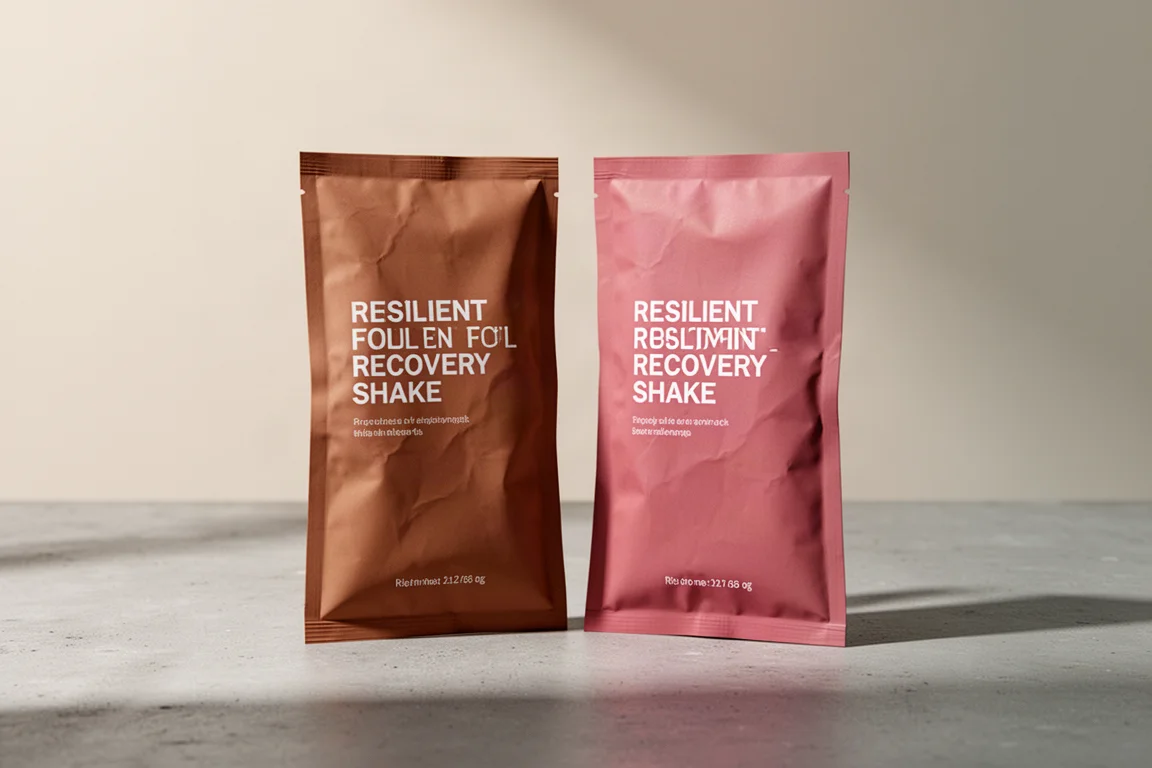
Immediately after each run, recovery shakes fill the gap when a proper meal cannot be guaranteed. The Vaola Forte Vita and Nova shakes come in banana and cocoa, and raspberry and acai. Each delivers 13 grams of protein in the 3:1 carb-to-protein ratio that supports nutrient uptake, plus 3 g and 2 g of branched-chain amino acids respectively. They mix with 300 ml of water, pack light, and the resilient foil packs are trustworthy enough not to burst inside the bag.
Foraging for Food on the Road
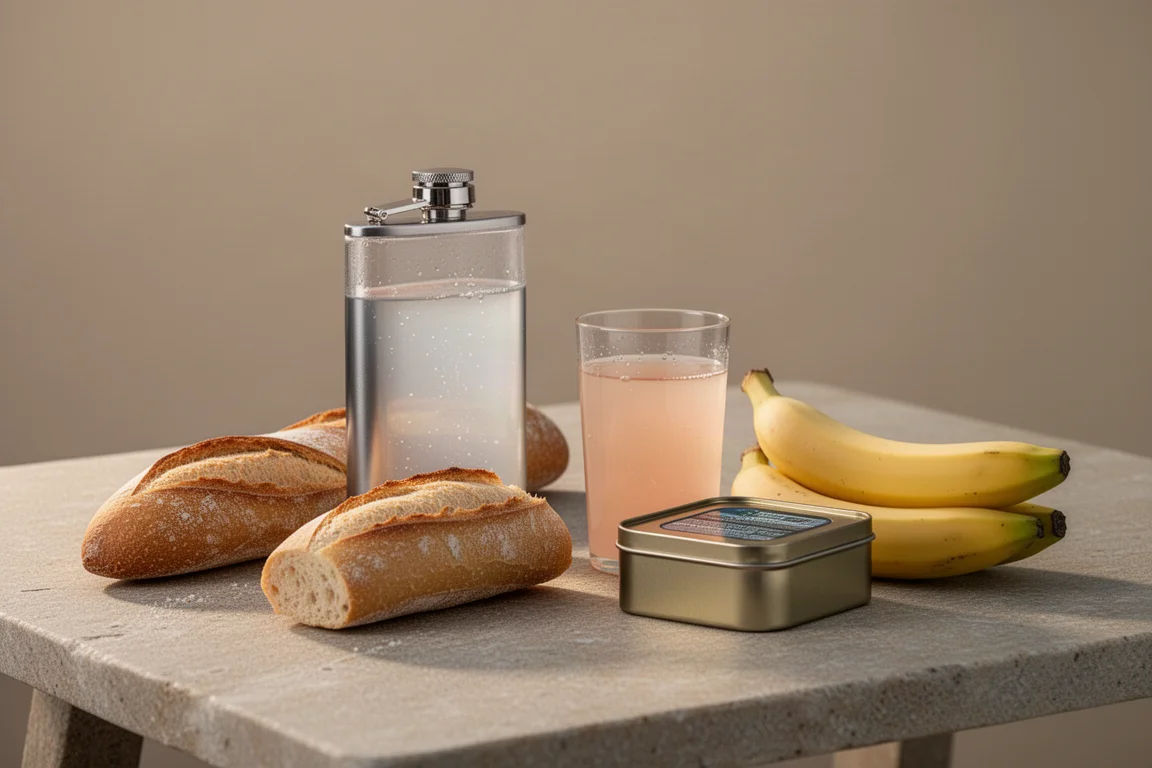
Beyond the carried kit, food comes from wherever it can be found, guided by a few sensible rules learned from the Precision Fuel and Hydration team: no unidentified meat, avoid salads where you do not know how the produce was washed, and favour packaged food to reduce the risk of a stomach bug that could knock out a day of running. Tins of tuna, avocados in their own wrapper, and bananas are the safe staples, with plenty of foreseeable supermarket dinners built around a baguette and whatever identifiable protein is available.
Who This Kit Suits
This setup works best for multi-day adventures where pack weight and nutrition density both matter. Many of these items have already proven themselves in the Marathon des Sables desert and other multi-day events, and most also slot neatly into ordinary marathon prep or daily training fuelling. If you are planning something similar, test everything in training first rather than learning on the move.
Conclusion
The core lesson from this kit is that a long challenge is won with routines: a dependable breakfast, familiar running fuel you actually enjoy eating, electrolytes matched to your own sweat profile, and a recovery plan for the evening. Everything here is compact, lightweight and proven across multi-day events, which is exactly what a 70-day, 2,000-mile run demands.
Further reading
Related Reviews
Running Nutrition
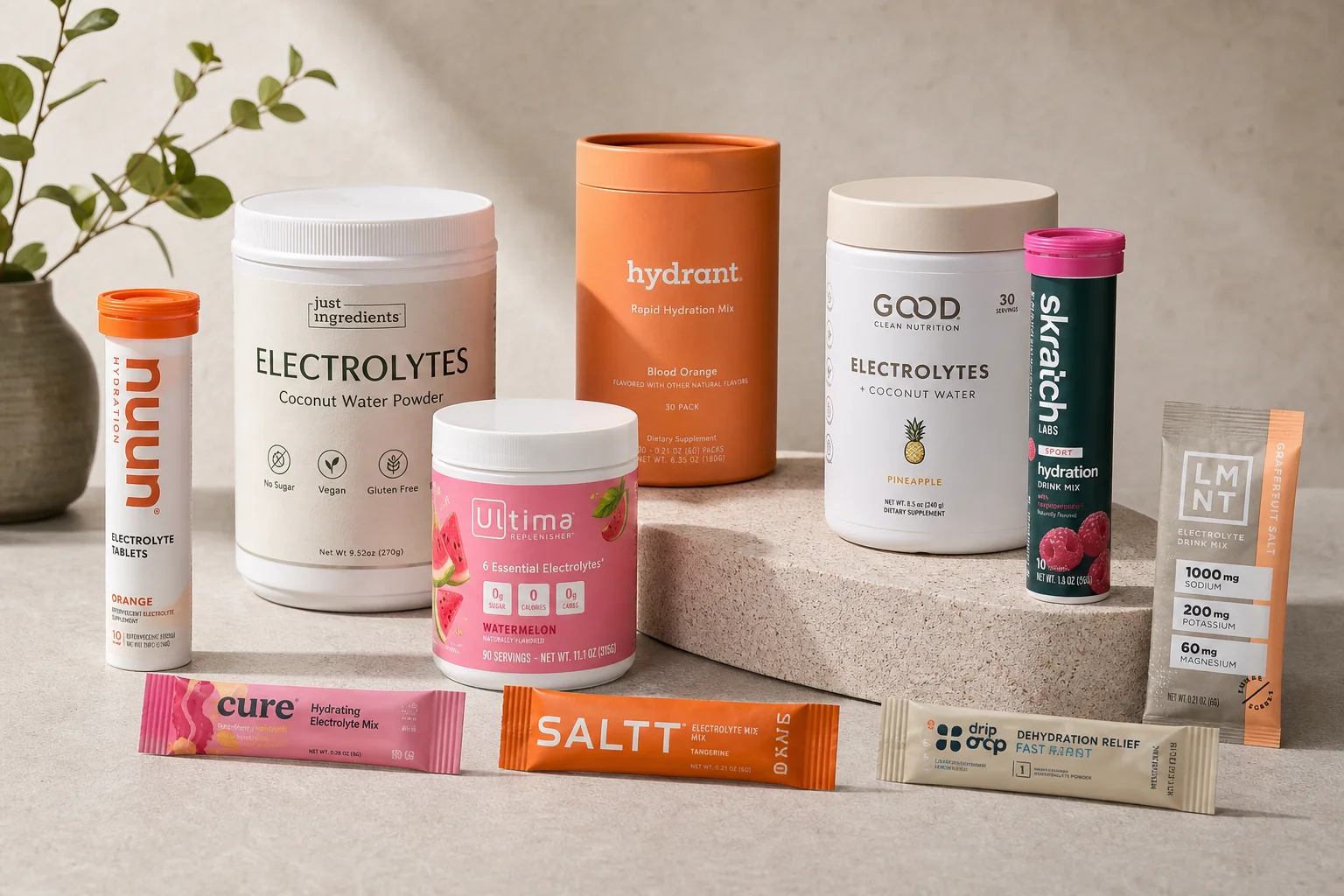
Best Electrolyte Drinks for Running: 13 Products Tested for Taste and Performance
A comprehensive taste test and review of leading electrolyte products, from powder formulations to dissolvable tablets, to help runners maintain hydration and performance.
Running Nutrition
Best Running Gels: Five Options Compared for Different Runner Types
A practical comparison of five popular running gels, from beginner-friendly options to advanced formulas, with honest taste and usability feedback.
Running Nutrition
Best Marathon Energy Gels: What to Use, How to Fuel, and What to Avoid
A practical guide to marathon fueling: how gels work, top gel picks, alternatives like chews and drinks, and how to carry everything on race day.