Fountain Pens
Danitrio Takumi Tame-nuri Red Urushi Fountain Pen Review: Handcrafted Japanese Lacquer Art
A close look at the Danitrio Takumi in red Tame-nuri urushi, from the lacquer technique and artisan signature to the 18k gold nib and everyday writing performance.
Introduction
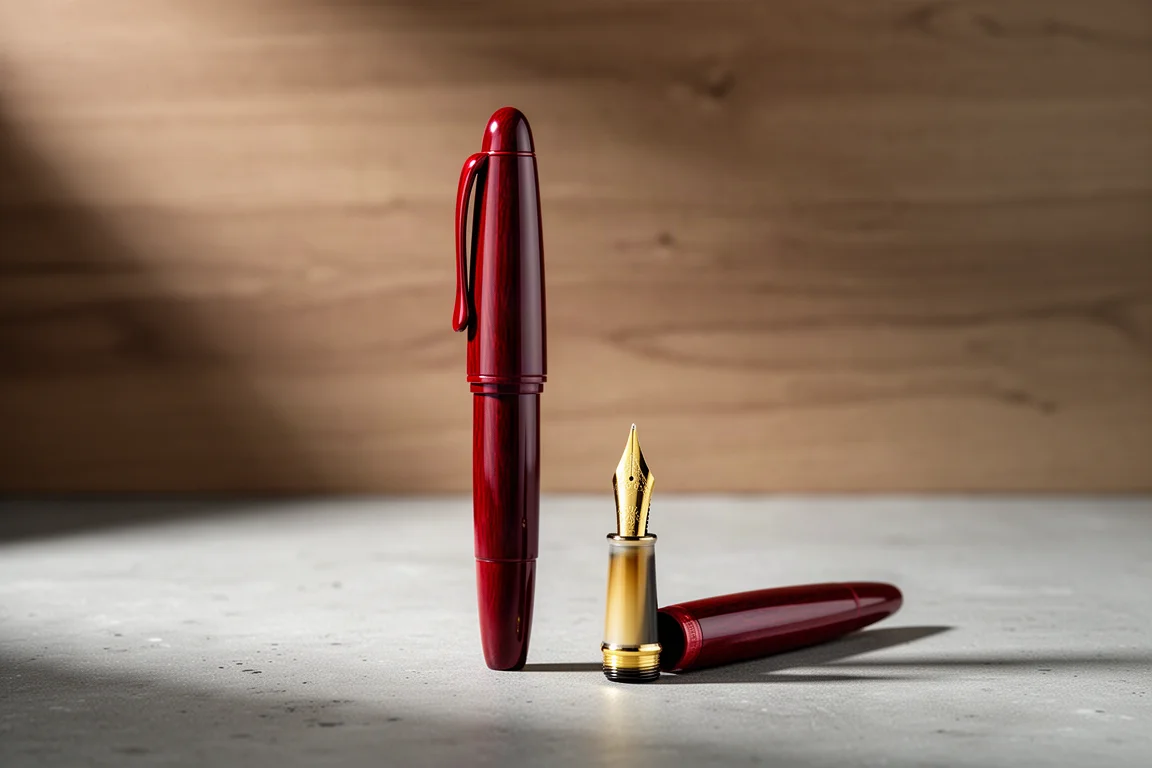
Danitrio has built a reputation for handcrafted urushi lacquer pens, and the Takumi in red Tame-nuri is a strong example of why. Sent over for evaluation by the folks at urushi pen.com, this pen combines a traditional Japanese lacquer technique with a hand-finished 18k gold nib, and it arrives feeling very much like a piece of functional art rather than just a writing tool.
In this review we cover the Tame-nuri technique, the parts and features of the pen, size comparisons, and a writing sample, plus a few honest notes on what works and what does not.
Unboxing and First Impressions
The pen arrives in a pleasant softwood box with the company name on the front. Inside, alongside a branded polishing cloth, sits a kimono sleeve, and within that sleeve rests the pen itself.
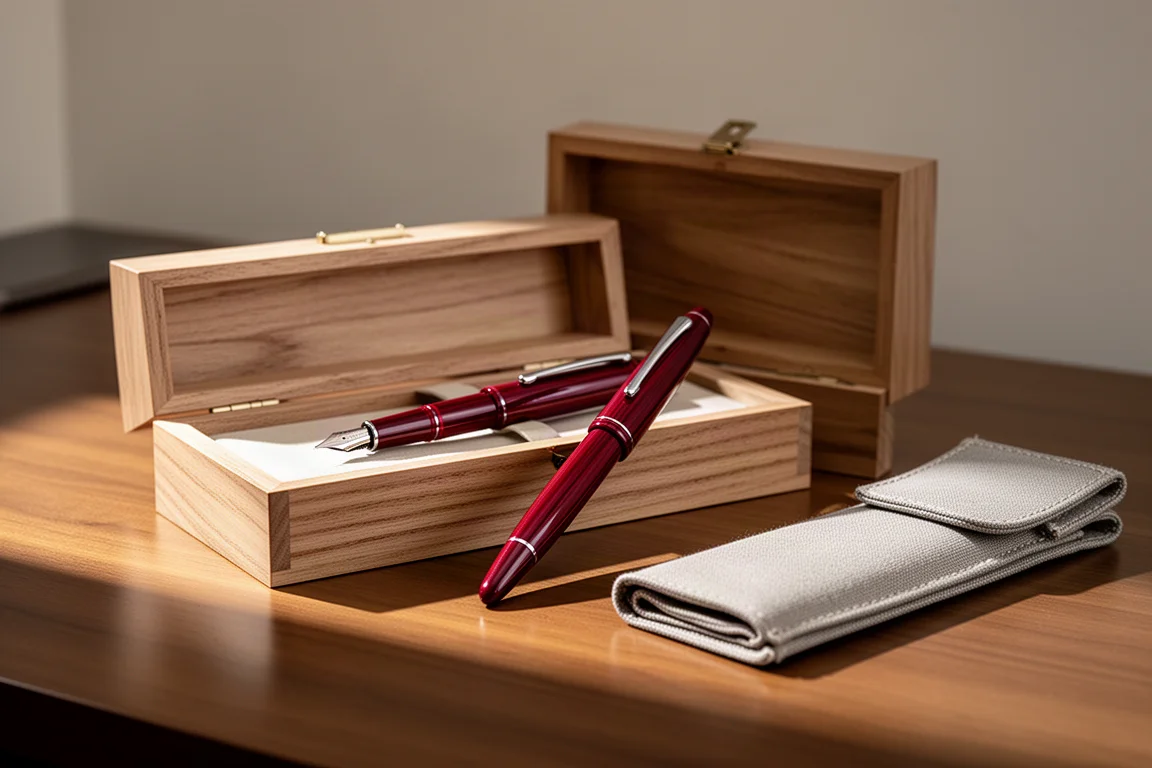
Danitrio pen names tend to be very descriptive, and this one is no exception: Tame-nuri refers to the urushi technique used on the pen, red describes the color of the lacquer, and Takumi is the model name. It is a straightforward system once you know what you are looking at.
Understanding the Tame-nuri Technique
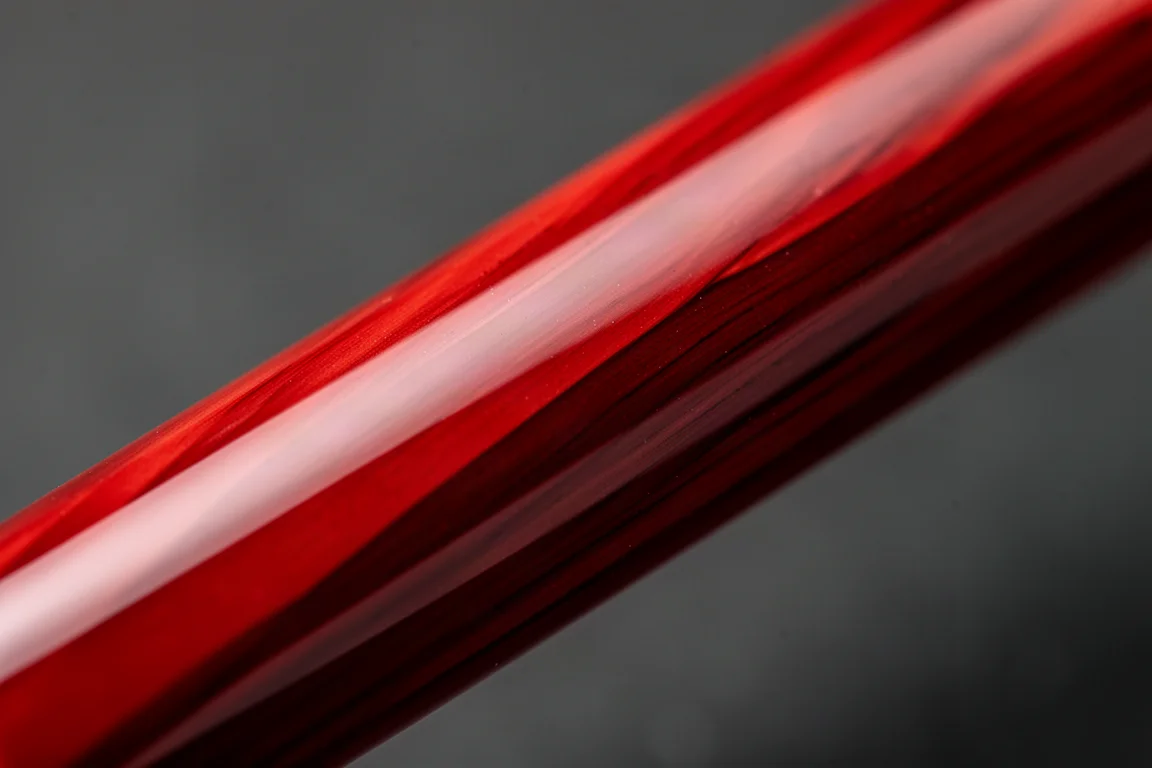
Tame-nuri is one of the more accessible urushi techniques, and one of the most loved. The process layers a translucent Suki-urushi over a typically colored base lacquer, creating real depth and variation across the surface. The word itself is evocative: Tame means lake or pool, and nuri means lacquering. Just as lake water is shallow and clear near the shore and dark where it deepens, the lacquer on a Tame-nuri pen reads darker where the application is thicker and lets the brighter base color peek through where it is thinner.
That variation is what gives each pen its own character. The look also depends heavily on shape: pens with more curves, edges, and facets show more of the underlying color. And time matters too. Urushi is a natural material that continues to cure over the years, and some layers become more transparent with age, so a five-year-old Tame-nuri pen can look noticeably different from a brand-new one.
Parts, Features, and Craftsmanship
The cap and barrel both end in rounded finials, and the clip has a distinctive curved shape that almost recalls an Italian horn necklace. Buyers can also choose this pen without a clip or with a painted clip that gets a rough, textured Negoro-style treatment for an intentionally unfinished look.
The cap angles upward for about an inch before running straight, with a minimal and smooth rounded step down to the barrel. The barrel then runs straight for a couple of inches before tapering to a rounded point. A highlight here is the signature of the urushi artist who finished the pen. This example was lacquered by Kira Kiroaki, an artisan recognized by the Japanese government as a Dento Kogeishi, an honorary title meaning master of traditional crafts, awarded only to a select few who have made a significant contribution to their craft. Kicho also works on combs, jewelry, and traditional hair pins. The signature sits on the underside of the barrel, which keeps the profile clean while writing, though it would be nice to see it facing up while in use. When capped, it aligns roughly with the clip, which makes for a tidy aesthetic.
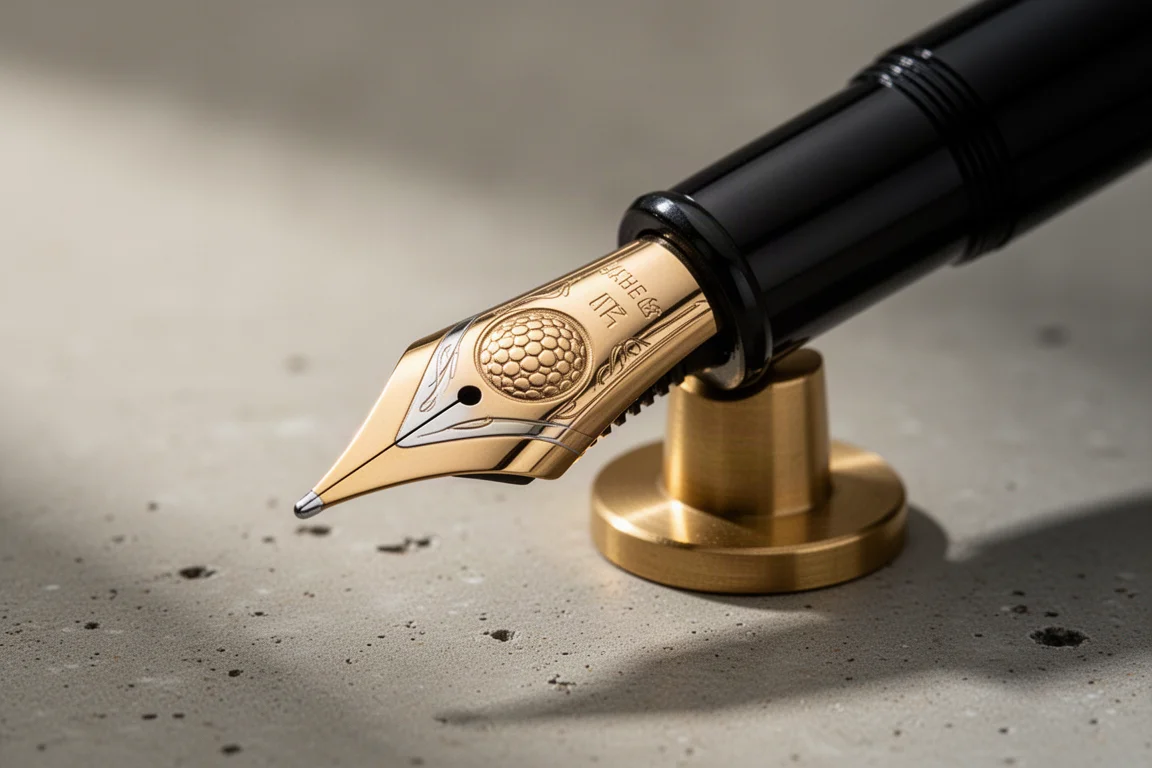
The cap twists off in just under two rotations, revealing a two-toned number six gold nib with a striking fireball imprint, one of the best-looking nib engravings around, paired with a plastic feed. The section begins with a slight flare and angles up a touch before the threads, with a small step to the barrel. It is not an overly long section, but the grip does not naturally slide onto the threads, and even if it did, they are not sharp or uncomfortable. The pen is plenty long enough to use unposted, which is what you would want with an urushi pen anyway.
Price and Size Comparisons
As you would expect from a handcrafted luxury piece, this pen carries a luxury price. It retails for $1,800 on the urushi pens website. While Danitrio does offer a few models in the $1,200 to $1,500 range, a number of its pens sit in the $1,800 bracket. Compared with other similar pens on the market, that pricing is not outrageous for what you are getting.
For scale, next to Danitrio’s own Genkai, which carries a number eight nib and a beautiful imprint of its own, the Takumi is clearly the smaller of the two but still a substantial pen. Against the Nakaya Decapod Twist, the Platinum Izumo, the Wancher Dream Pen, and the Nakaya Dorsal Fin 2, it holds its own as a well-proportioned full-size writer. Among Danitrio’s nib imprints, both the fireball on this pen and the design on the Genkai stand out as some of the best in the market.
Writing Performance and Ink Pairings
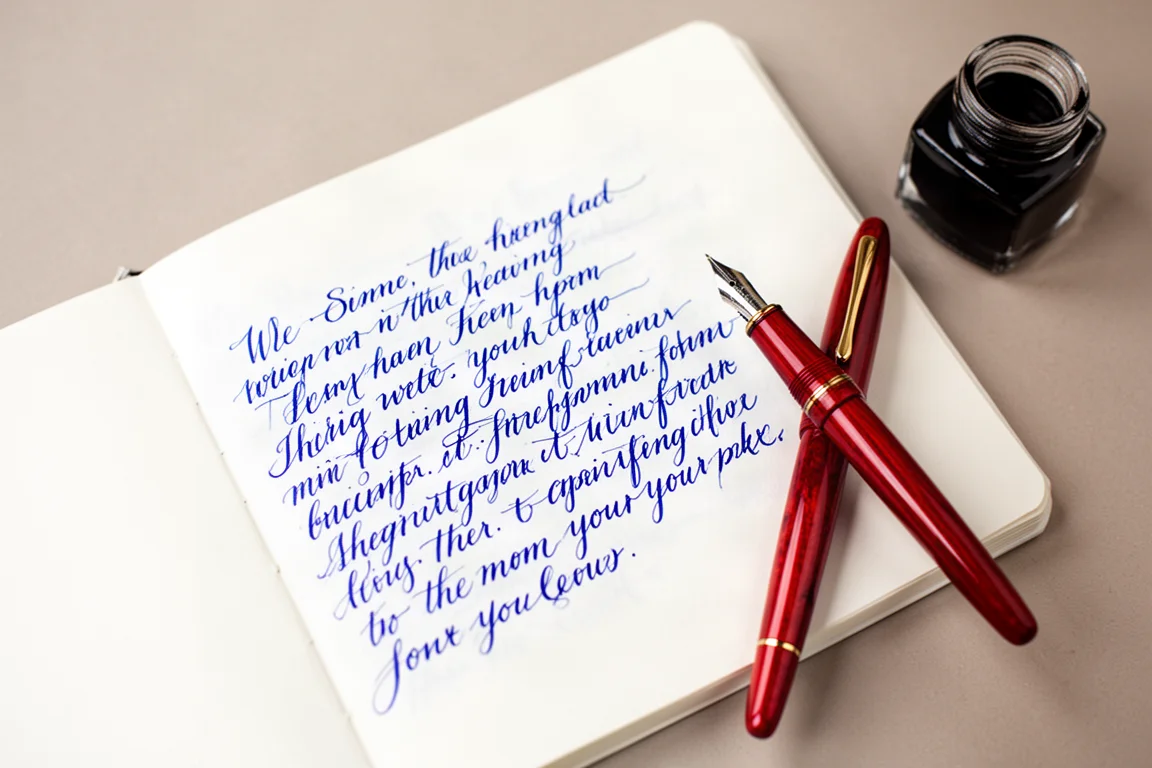
This example carries a fine 18k gold nib. Fine nibs are not usually a personal favorite, but this one is genuinely pleasant. It has a touch of feedback, is not scratchy, and maintains really good ink flow. There is also a decent amount of flex available when you want it.
In reverse writing it performs well, laying down a nice extra-extra-fine line, and during fast writing the feed keeps up comfortably. For testing, the pen was filled with Pilot Iroshizuku Kon-peki, a favorite vibrant blue with a bit of sheening, alongside samples with Robert Oster Admiral Blue and a lighter blue along the lines of a Blue Ring Octopus shade.
Buying Advice
If you are in the market for a high-end urushi offering, Danitrio is a natural place to start. The Takumi Tame-nuri in red makes sense for buyers who want a pen with a traceable artisan signature, a living lacquer finish that evolves over time, and a nib that is comfortable for daily use. It is a significant investment, so it suits collectors and enthusiasts rather than someone looking for a first fountain pen. Even if you are not buying today, browsing the urushi pens website is worth it for the sheer visual range of Danitrio’s catalog.
Conclusion
The Danitrio Takumi in red Tame-nuri is a handsome, thoughtfully executed urushi pen with a distinctive lacquer finish, a beautifully engraved 18k gold nib, and the personal touch of a government-recognized master artisan. It is priced accordingly at $1,800, but for those drawn to traditional Japanese craftsmanship, it delivers an experience that few pens at any price can match.
Product link
View more details for Danitrio Takumi Tame-nuri Red Urushi Fountain Pen
This product is mentioned in the review. Check the specifications, options, and compatibility before buying.
View more details for Danitrio Takumi Tame-nuri Red Urushi Fountain PenFurther reading
Related Reviews
Fountain Pens
Best Budget Fountain Pens Tested: 9 Pens, One Clear Winner
A hands-on comparison of nine affordable fountain pens for everyday writing, calligraphy, and sketching, with a clear standout for flexible nib fans.
Fountain Pens
Aurora Optima Review: An Italian Piston Filler That Punches Above Its Price
A 14k gold nib, ebonite feed, and a beautifully deep oraloid body make the Aurora Optima one of the most rewarding piston fillers around.
Fountain Pens
Cross Bailey Light Review: The Entry-Level Fountain Pen Worth Keeping at the Office
A plastic-bodied Cross with a metal clip, snap cap, and famously smooth extra fine steel nib. Around $15, available almost everywhere, and easy to recommend.