GPS Watches
COROS Vertix 2 Battery Review: Tested Across Seven Marathons in Seven Days
We put the COROS Vertix 2 through 30.5 hours of GPS running over seven marathons in seven days to see if its 140-hour battery claim holds up in the real world.
Introduction
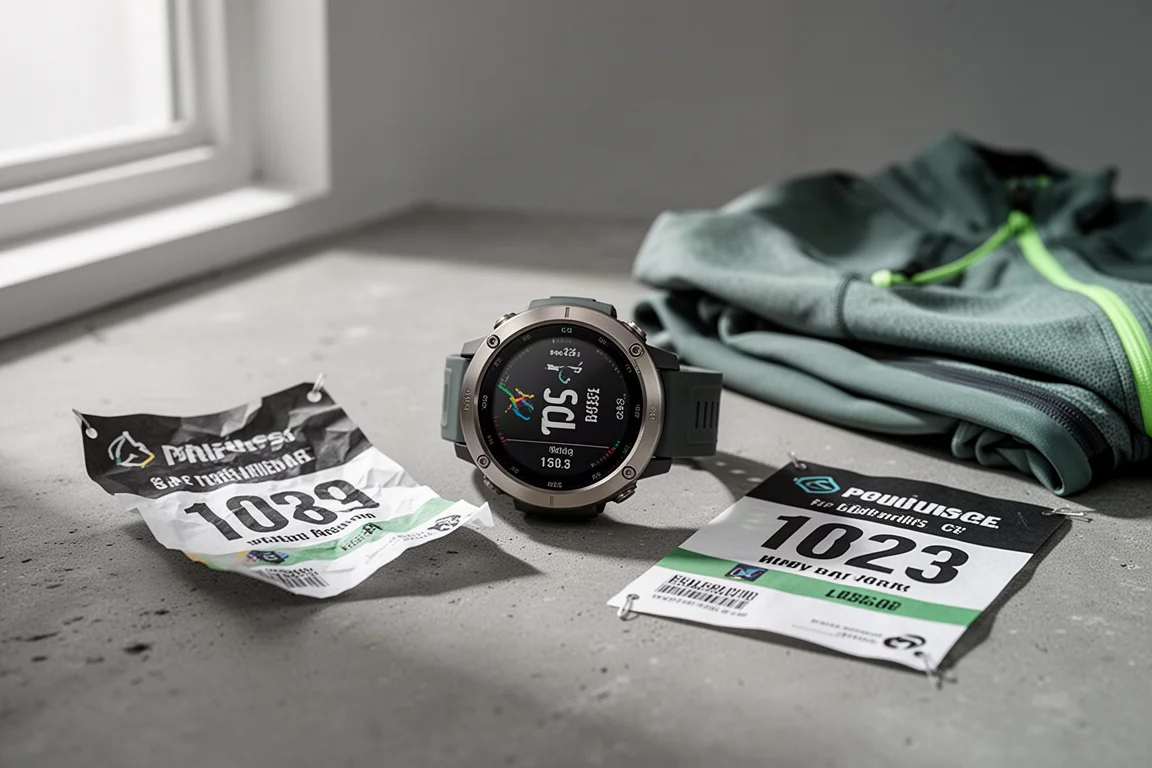
Most GPS watch makers quote battery figures that only appear in a lab. COROS claims the Vertix 2 lasts up to 140 hours in full GPS mode, and the only honest way to test that claim is to run, a lot. So the watch was put through a week-long endurance trial: seven marathons in seven consecutive days, finishing at the London Marathon, with GPS settings changed every day to see how each mode affects the burn rate.
The total challenge came to 183.4 miles, or 295.4 kilometres, of running, plus continuous 24-hour daily tracking and overnight sleep tracking between runs. If a GPS watch can handle that, it can handle almost anything an endurance athlete will throw at it.
The Seven Marathons in Seven Days Test
Each day started early, with the watch fully charged or checked before heading out for roughly four to four and a half hours of marathon running. Day one left the house at 6am in the dark with the watch at 100%, and after a four-hour-plus marathon in full GPS mode the battery had dropped by just 2%. Overnight, including sleep tracking, it lost only 3% by bedtime.

Day two, run in the same full GPS settings, saw the battery down to 91% after another marathon, a full day of tracking, and another night of sleep. The pattern was quickly becoming clear: this is a watch that barely notices a marathon.
Key Battery Specs at a Glance
The headline figures COROS publishes for the Vertix 2 are generous on paper, and the week-long test gave plenty of chances to check them against reality:
- 60 days of everyday daily use on a single charge
- 140 hours in standard full GPS mode, where the watch pulses satellites every second
- 90 hours using all satellite systems
- 50 hours in all systems plus dual frequency mode, the most accurate real-time setting
- 240 hours (10 days) in low-power UltraMax GPS mode
Even the most demanding setting, all systems plus dual frequency, offers enough runtime for multi-day ultras. UltraMax extends that to ten days of continuous tracking for wilderness expeditions.
Midweek Findings: Battery Burn in Real Conditions
By the morning of day three, after two full marathons in top-level GPS settings plus two complete days of general tracking, the watch sat at 88%, having burnt only 12%. That is roughly nine hours of GPS running plus 48 hours of everyday tracking on one charge, with burn rates of just one to two percent between runs.

The per-run numbers scaled almost exactly to COROS’s published claims:
- A full GPS run burnt about 2%, which stacks up to more than the claimed 140 hours
- All systems mode burnt around 5% per run, in line with the 90-hour figure
- All systems plus dual frequency burnt roughly 7%, close to the quoted 50 hours
- Overnight burn was about 1%, covering sleep tracking and general monitoring
- General use between runs added another 2 to 3%
After five marathons and roughly 18 hours of GPS running across mixed settings, the watch still estimated 36 hours of GPS use remaining, more than enough for the three marathons left in the challenge.
Training Insights Along the Way
Battery endurance is only half the story. The onboard EvoLab training insights tracked the physical cost of the week, and the data told a compelling story. Running performance started at 104 on day one, base fitness climbed steadily from 68 to 90 by day three, and the race predictor drifted from a 3:20 marathon estimate up to 3:26 as fatigue accumulated.
The fatigue and recovery metrics were the most telling. Fatigue hit 55 after the first marathon and 71 by day two, while recovery crashed to 0% by day three and hovered near 15% thereafter. A daily ECG-based heart rate variability test rounded out the picture of how the body was coping. For anyone using EvoLab to guide real training, this week demonstrated that the metrics respond meaningfully to genuine physical stress.
Headphones, Chest Straps and Other Battery Drains
Extras do cost battery, but far less than expected. On day five, with paired headphones playing music for three hours of the run, the battery dropped a heavier 17% for that session, still a solid result given full GPS was running simultaneously.

A planned chest strap test on day six was abandoned for an unrelated reason, though the watch continued on from 52% at the start of that day. Day four’s marathon was run in UltraMax mode, and the low-power GPS settings proved easy on the battery as expected. As a reference point in the same conditions, another brand’s endurance watch in the test had drained far faster under the same workload, underscoring how far ahead the Vertix 2’s efficiency sits.
Final Verdict on Battery Life
Seven marathons in seven days ended at the London Marathon start line with the watch still at 40%. Across the full week, the final tally was remarkable:
- 2 weeks and 5 hours of total battery life
- 189 miles of running
- 30.5 hours of GPS running, often in the highest accuracy settings
- Optical heart rate throughout, plus one three-hour music session
- An average burn of around 8% for a four-hour run, which scales to roughly the claimed 50 hours in dual frequency mode

The COROS claim of 140 hours in full GPS mode held up under real-world conditions, and every other quoted figure scaled close to reality. For ultra runners, multi-day adventurers, or anyone tired of charging a watch every few days, the Vertix 2’s battery performance is genuinely in a class of its own.
Conclusion
The seven-marathon test was designed to push the Vertix 2 to its absolute limit, and the limit was never found. A week of marathons, continuous daily tracking, sleep monitoring and daily ECG tests left nearly half the battery remaining. If battery life is your top priority in a GPS sports watch, the COROS Vertix 2 makes an exceptionally strong case, and its EvoLab training metrics add real depth for athletes who want to understand how their body responds to big training blocks.
Product link
View more details for Coros Vertix 2
This product is mentioned in the review. Check the specifications, options, and compatibility before buying.
View more details for Coros Vertix 2Further reading
Related Reviews
GPS Watches
Garmin Fenix 6S Pro Review: A Compact Multi-Sport GPS Watch
A long-term look at the 42mm Garmin Fenix 6S Pro, covering mapping, training metrics, battery life, and what to weigh before buying.
GPS Watches
Garmin Instinct 2 Solar Review: Weeks of Battery for Runners, Riders, and Hikers
A practical look at the Garmin Instinct 2 Solar, covering solar charging, multi-week battery life, training metrics, and GPS performance across running, cycling, and hiking.
GPS Watches
Suunto 9 Peak Pro Review: A Light, Long-Lasting GPS Watch After 12 Months
A compact multisport GPS watch with exceptional battery life, accurate breadcrumb navigation, and a deliberately simple interface. Here is where it shines and where it falls short.