Running Watches
COROS Pace 3 vs Garmin Forerunner 165: Which Budget Running Watch Should You Buy?
Two of the strongest value running watches go head to head on display, battery life, sports tracking, training tools, and GPS accuracy to help you pick the right one.
Introduction
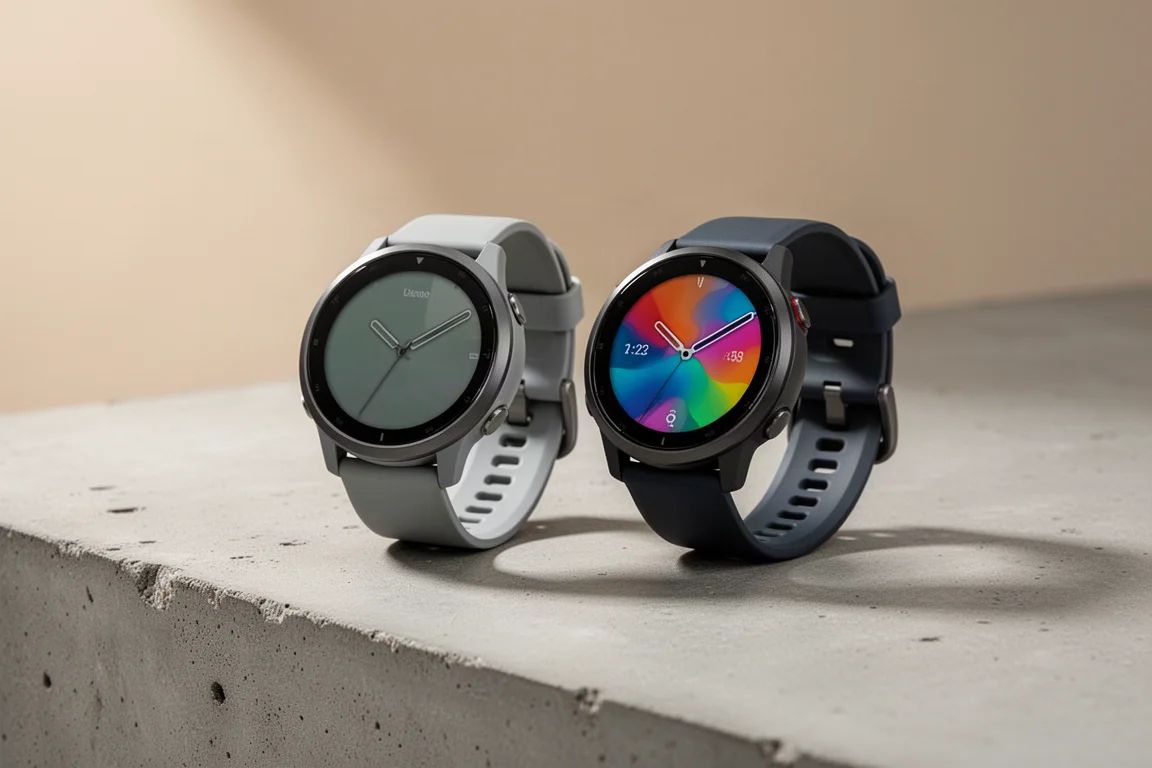
The COROS Pace 3 and Garmin Forerunner 165 sit near the top of the budget-friendly running and fitness watch category. Both pack in plenty of health features, running metrics, training feedback, and multi-sport tracking, including open water swimming. They share a lot of DNA, but a handful of real differences should steer your choice one way or the other.
Price and First Impressions
The Pace 3 starts at $229, while the Forerunner 165 starts at $249, a $20 difference. The 165 also has a Music variant at $299 that adds music streaming capabilities.
Both watches are lightweight and comfortable enough for hard running sessions, all-day wear, and sleep tracking. Build is similar too: resin cases with mineral glass on the Pace 3 and chemically strengthened glass on the 165, plus 5 ATM water resistance so both handle showers and swimming without worry. Screen protectors can be added to either for extra scratch resistance.
Display: Transflective vs AMOLED
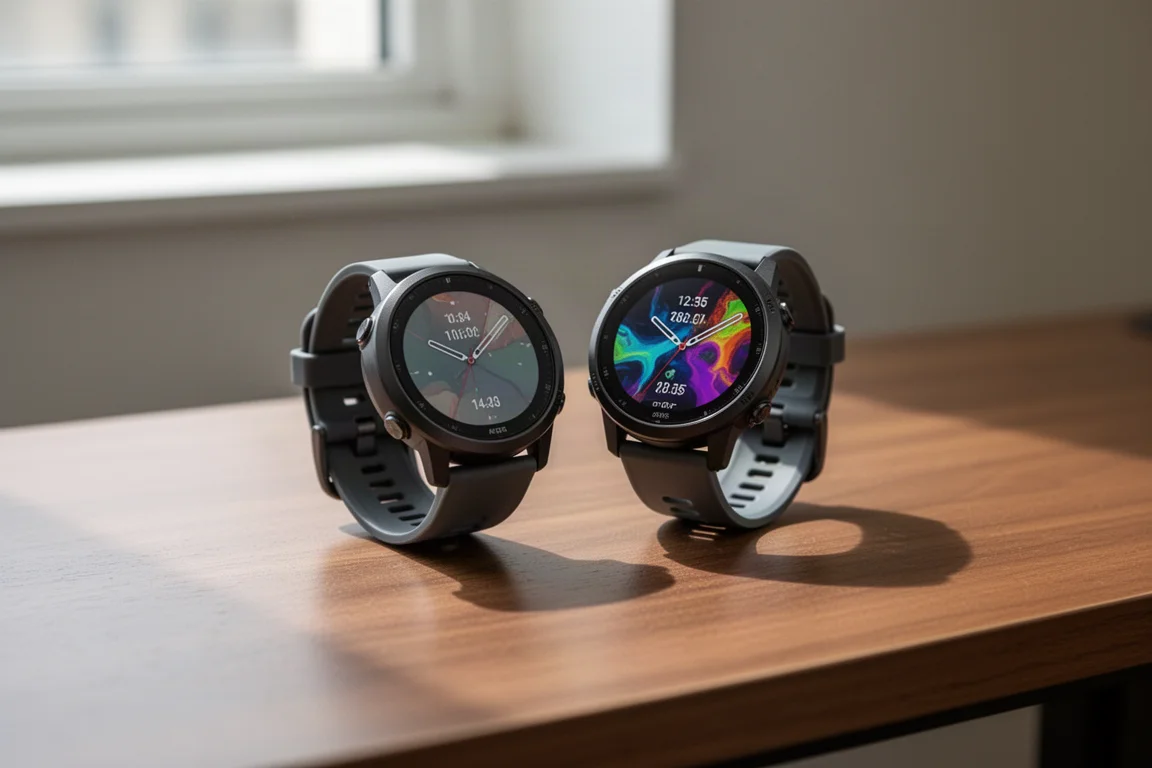
Both watches use 1.2-inch touchscreens, but the underlying technology differs and it drives much of the buying decision. The Pace 3 uses a memory-in-pixel transflective panel that actually gets easier to read as outdoor brightness increases, and it sips power compared to AMOLED. The trade-offs: it is harder to read indoors without a backlight and looks less crisp and vibrant.
The 165’s AMOLED display is bright, colorful, high-contrast, and higher in resolution, closer to what you expect from a smartphone screen. The cost is significantly higher power consumption.
Battery Life
Battery figures vary with settings, but the shape of the comparison is clear. As a plain smartwatch with the always-on display off, the 165 reaches about 11 days, or roughly 4 to 5 days with always-on enabled. The Pace 3’s transflective display is always on by nature and stretches up to 17 days.
For the fairest comparison, the Pace 3 was tested with stress tracking and real-time heart rate enabled, which are not on by default on the Pace 3 but are standard behavior on the 165. That brings the Pace 3 down to roughly 9 days, still very good.
For GPS activities, using the same All Systems GNSS single-band mode on both watches, Garmin advertises up to 17 hours on the 165 versus 25 hours on the Pace 3, and both watches exceeded those claims in real use. The Pace 3’s dual-frequency mode drops it to an advertised 15 hours, which puts it roughly on par with the 165 at maximum accuracy settings.
Controls
Both watches have touchscreens and physical buttons. The 165 uses a five-button layout, while the Pace 3 uses two buttons, one doubling as a digital dial for scrolling. This is largely personal preference: some prefer the simpler two-button arrangement, others the full five-button control scheme.

Smartwatch Features and Music
Both work with iPhone and Android, but functionality differs. On iPhone, both deliver one-way notifications for texts, calls, and apps. Paired with Android, the 165 gains the ability to reply to texts and calls with predefined quick responses, something the Pace 3 cannot do.
On music, the Pace 3 has offline MP3 playback for files transferred from a computer. The base 165 has no music support, but the 165 Music variant, $50 more, adds offline playback from streaming services like Spotify and Amazon Music. Both watches include 4 GB of storage. The 165 also supports contactless payments through Garmin Pay, handy when heading out without a wallet.
Health and Sleep Features
Both track heart rate 24 hours a day and include an SpO2 sensor, with small but meaningful differences. COROS watches measure heart rate in 10-minute intervals when not in an activity, though real-time recording can be enabled at some battery cost. Garmin measures continuously by default.
The 165’s SpO2 sensor runs during sleep and can be set to always-on or manual-only. The Pace 3’s SpO2 sensor is not currently used for sleep or daily tracking; it is intended for high-altitude situations via the altitude alert feature, with manual readings available through the Wellness Check feature.
Both offer daily stress tracking and an on-demand health snapshot capturing heart rate, SpO2, stress, and HRV in one reading: Health Snapshot on the 165, Wellness Check on the Pace 3. Sleep tracking works well on both for bed and wake times and awake periods. The 165 adds a sleep score, nap tracking, and a Sleep Coach recommendation based on recent sleep, history, and workouts. It also brings Body Battery, an energy-level estimate that many runners find lines up with how they actually feel, plus the Morning Report summarizing sleep, HRV, recovery time, and Body Battery.
Both track calories, steps, and floors climbed, and both include an altimeter.
Sport Profiles and Training Tools
Both cover all the common profiles: indoor and outdoor running and cycling, gym profiles including strength training with rep counting, and pool and open water swimming. The differences matter depending on your sport mix.
The Pace 3 supports triathlon and multisport, letting you transition seamlessly between profiles and even record transitions, which the 165 cannot do despite having run, cycle, and swim profiles. The Pace 3 also adds outdoor recreation profiles like skiing and snowboarding. The 165 counters with more gym-based profiles plus options like tennis.
On workout data, both provide heart rate, calories, and training effect. The Pace 3 adds training load, weekly training load, a four-week intensity distribution, and an Intensity Trend comparing the last seven days against roughly six weeks of base fitness, useful for tracking build phases and tapering. Note the Pace 3’s widget shows the current week rather than the last seven days.
For running specifically, both capture distance, pace, cadence, stride length, and wrist-based running power. The 165 also records advanced running dynamics such as vertical ratio, vertical oscillation, and ground contact time straight from the wrist, while the Pace 3 needs the COROS running pod accessory for those metrics. Both estimate VO2 max and offer a race predictor, though the estimates on the 165 tend to land closer to reality. The Pace 3 counters with effort pace, its version of grade-adjusted pace, which adjusts for hills and elevation. The 165 lacks this, which matters if you run a lot of hilly or trail terrain.
Two quirky Pace 3 extras: camera control for GoPro and Insta360 cameras, and a screen mirroring feature that displays watch data on your phone.
Both watches support downloadable training plans and structured workouts, and both offer a pacer. The Pace 3’s Virtual Pacer is basic, a single goal pace for the entire run with above or below prompts. Garmin’s PacePro is far more customizable, supporting strategies like negative splits across a 10K.
Both track HRV and provide a recovery time advisor estimating how long until you are fully recovered for peak performance.
External Sensors
Both pair with external heart rate straps and cycling speed and cadence sensors. From there it splits: the Pace 3 supports cycling power meters and smart bike trainers, which the 165 does not. The 165 instead pairs with Garmin’s Varia radar and lights plus other Garmin sensors like a temperature sensor. The 165 also connects to both ANT+ and Bluetooth sensors, while the Pace 3 is Bluetooth only. With the COROS running pod, the Pace 3 gains running dynamics plus a running form test scoring left-right balance and stride ratio.

GPS Accuracy in Real-World Testing
The Pace 3 has a dual-frequency satellite chipset; the 165 uses single band. Both access multiple systems like GPS and Galileo. Dual frequency aims to improve accuracy where signals bounce off tall buildings, canyon walls, and heavy tree cover, but the hardware alone does not guarantee better results.
In testing, the two watches delivered similar distance and elevation results on road runs and rides. The Pace 3 drifted slightly off path in places and overshot some fast corners, with slightly less detail on switchbacks. On a challenging trail run with heavy tree cover and tall rock faces, neither had major misses, though the Pace 3 drifted off track at times and produced overly smooth lines.
The city run with tall buildings was the most revealing. Both wandered in places. On tight turns around a very tall building, the Pace 3 cut corners short while the 165 went wide on one and nailed another. Neither was perfect, and the Pace 3 was not night-and-day better. Both did a good job overall, and the dual-band chipset alone is not a compelling reason to pick the Pace 3.
Both watches offer breadcrumb navigation and route loading, but neither has full maps like higher-end models such as the COROS Apex and Vertix or Garmin’s Forerunner 965 and Epix series.
Heart Rate Accuracy
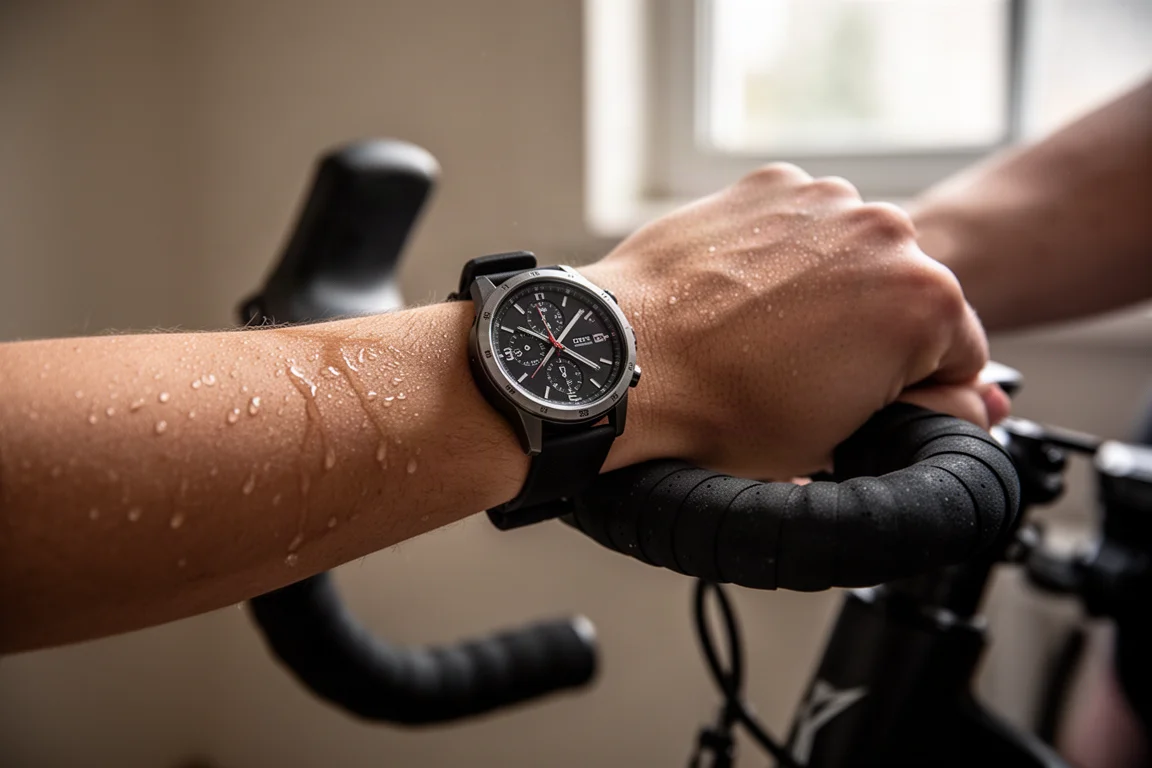
The Pace 3 uses COROS’s latest optical sensor; the 165 uses Garmin’s fourth-generation sensor, not the newer fifth-generation unit from higher-end models, but a capable sensor nonetheless. Testing spanned many activities, with wrist switching to confirm consistency.
Indoor cycling, an easy case for optical sensors, looked good on both with only minor spikes and dropouts. On intervals, both took about a minute to lock on at the start, after which the Pace 3 showed some odd dropouts. Treadmill running was nearly spot on for both, with one brief Pace 3 hiccup and one 165 issue on another run. Both watches experienced a cadence lock on one run, where footstep rhythm is mistaken for heart rhythm.
The biggest gap appeared in outdoor cycling, where the Pace 3 consistently struggled, likely due to road vibrations and bumps. Weight training was a mixed bag for both, so an external heart rate monitor remains the best option there.
Which One Should You Buy
The choice comes down to display preference, battery life, smartwatch features, fitness features, and accuracy. Display is pure preference, but it drives the battery story. Smartwatch features favor the 165 with Garmin Pay and stronger Android functionality. If you want music on runs without your phone, the Pace 3 does it cheaper, though only with MP3 files rather than streaming services. For sports, the Pace 3 wins on triathlon support and richer training load feedback, while the 165 generally takes the accuracy crown.
Conclusion
Both the COROS Pace 3 and Garmin Forerunner 165 are solid budget-friendly running and fitness watches, and the differences are clear enough to make the decision straightforward: pick the Pace 3 for battery life, triathlon, and training load insights, or the 165 for its display, smartwatch extras, and slightly stronger overall accuracy.
Product link
View more details for Coros Pace 3
This product is mentioned in the review. Check the specifications, options, and compatibility before buying.
View more details for Coros Pace 3Further reading
Related Reviews
Running Watches
Coros Pace 3 Running Watch Review: Why Software Matters More Than Specs
The Coros Pace 3 prioritizes runner-focused design and intelligent software over expensive hardware. Here's why it outperforms watches that cost twice as much.
Running Watches
GPS Running Watch Accuracy Test: Seven Watches Compared Across Urban, Trail, and Race Conditions
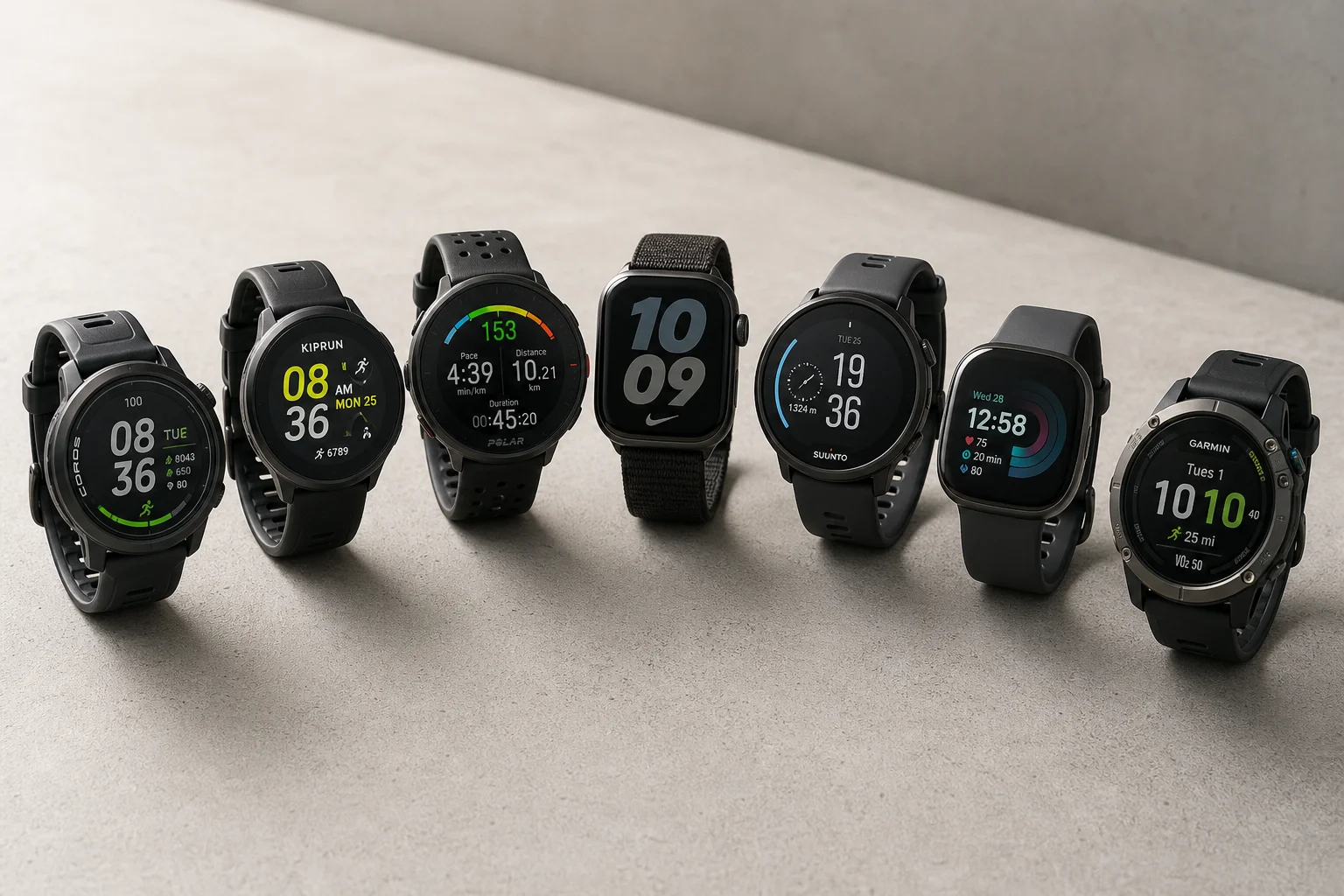
We tested seven popular running watches from major brands in three different environments to find out which delivers the most accurate GPS tracking for distance and pace.
Running Watches
Garmin Forerunner 70 Review: Garmin's Cheapest Forerunner Is More Capable Than You'd Expect
The new entry-level Forerunner 70 brings an AMOLED screen, a fresh interface, and real training analysis for £219/$249, with a few trade-offs to weigh before buying.