Fountain Pens
Cool or Not: 13 Fountain Pens Judged, from the Lamy Safari Terracotta to a Golden Dragon Maki-e
Thirteen fountain pens face a simple test: are they genuinely cool, or just pretty? Verdicts on the Lamy Safari Terracotta, Pilot Custom Urushi, Waterman Edson, and more.
Introduction
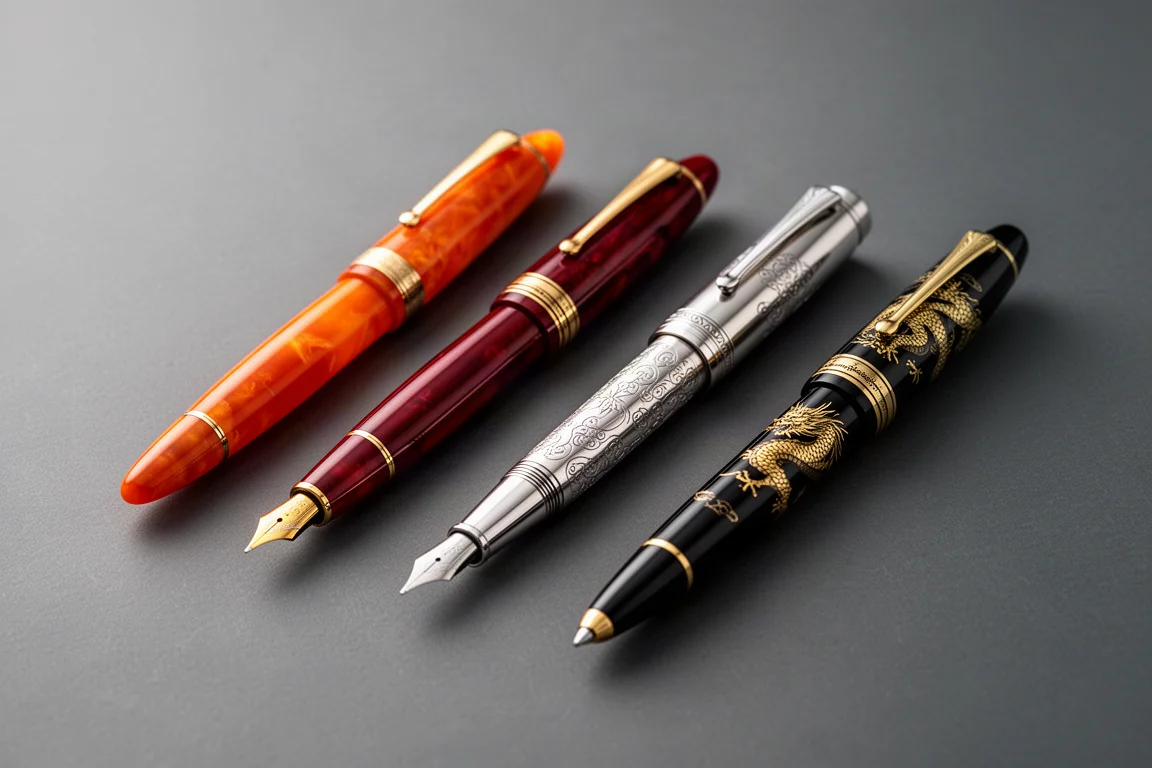
We set one question before thirteen fountain pens: are they cool, or are they not? Not “are they good” and not “are they beautiful,” but whether each pen brings something fresh, unique, or iconic to the table. Some earned unanimous nods, some split the panel down the middle, and a few were lovingly sent to the “cute” pile instead. Here is how each one fared, and what to weigh if you are eyeing one yourself.
Lamy Safari Terracotta: the Classic, Restored
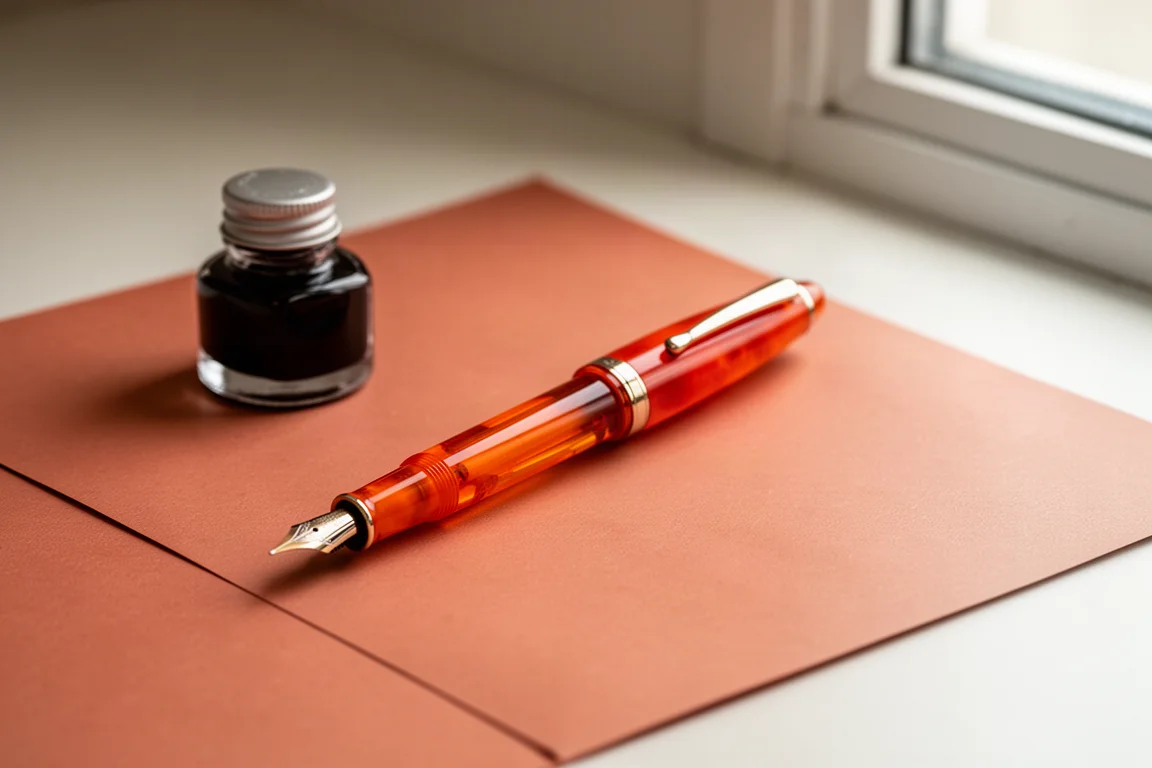
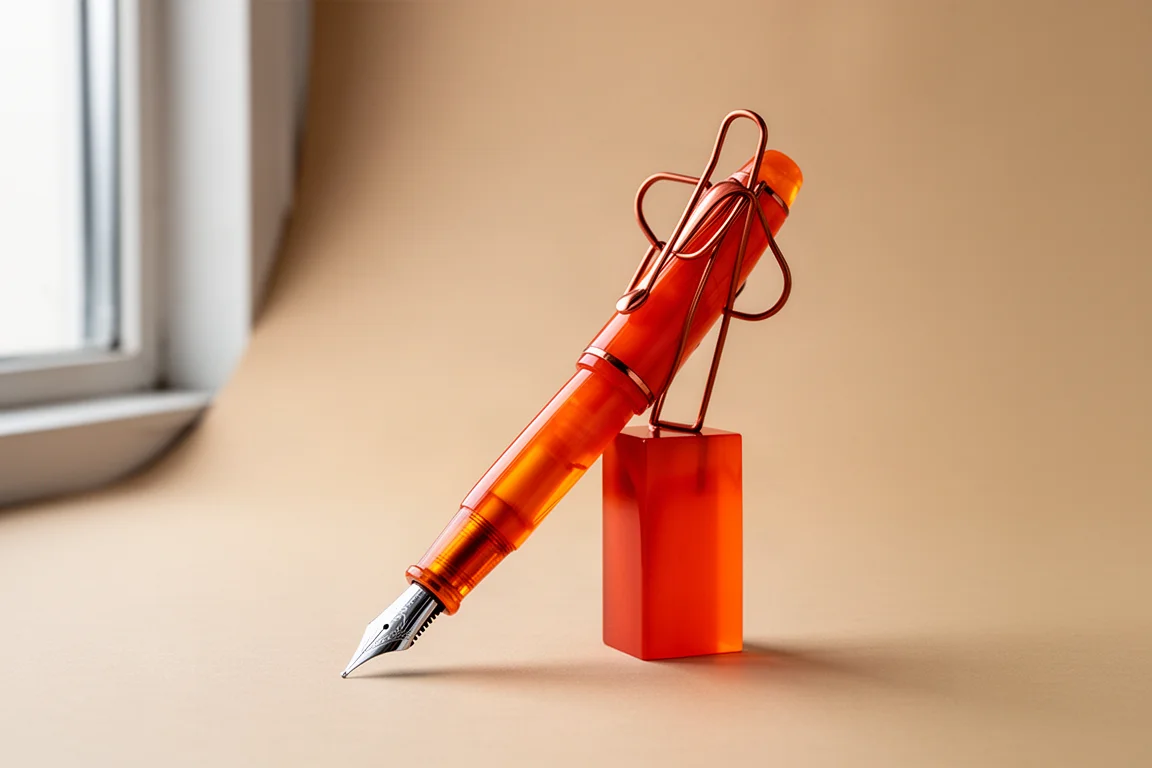
The Lamy Safari needs little introduction, but the Terracotta is a specific and satisfying story: when the Safari launched roughly 45 years ago, it arrived in two colors, terracotta and savannah green. This reissue brings back that original orangish-red, and honestly you would struggle to tell it apart from an original. It carries that late-70s, early-80s safari-themed energy, and the color alone makes it stand out on a desk full of black pens.
This one scored a unanimous cool. It is affordable, iconic, and the retro colorway gives it an edge the standard versions do not quite have. If you prefer green, the savannah shade has its fans too, but terracotta is the stronger statement.
A Mystery Italian Pen with a Glass Nib
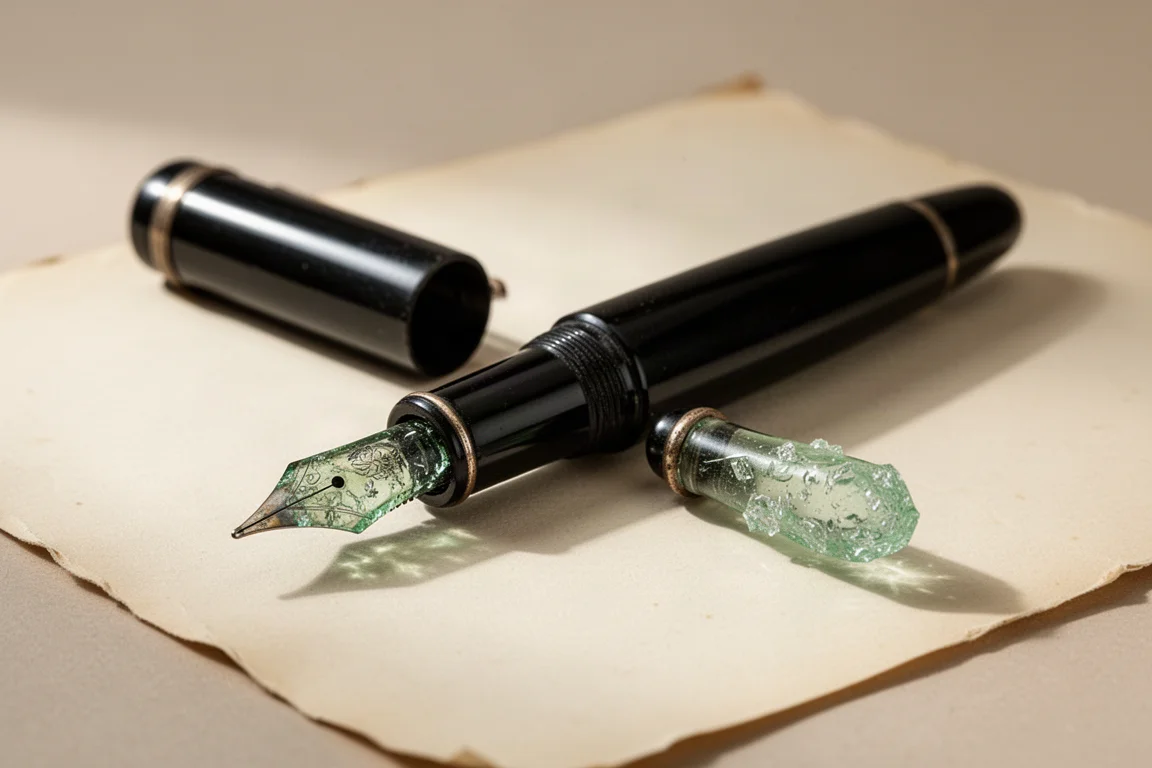
Sometimes the coolest pen on the table is one nobody can fully explain. This Italian pen, likely from the 1950s or 1940s, has no known maker, but it does have a green Murano-style glass nib and a button-filler mechanism: dip, press the button repeatedly, and the barrel draws up ink. Against all expectations, it writes well.
The verdict was unanimous cool, largely for the crystal-like green nib, which is genuinely unexpected the moment you uncap it. One practical warning if you hunt for one of these: glass nibs are extremely delicate, and chipped or cracked examples are common, so inspect carefully before buying. It is obscure, charming, and definitely cool.
Pilot Custom Urushi: More Beautiful Than Cool
The Pilot Custom Urushi is a serious piece of Japanese lacquer work. Urushi is a traditional technique built up in many layers to achieve real depth of color, and this pen wears it in vermilion with gold bands and black accents that keep it grounded enough for office use. The size 30 Pilot nib is a touch soft when you write with heavier pressure, and the bluish feed is a nice bit of personality most makers never bother with.
This is where the cool test got interesting. One vote went firmly to not cool, with the argument that the pen is simply more beautiful than cool. It is also large and girthy, which not every hand will love. The other two votes said cool regardless, and we suspect most urushi fans would agree.
Waterman Edson: Timeless, but Is It Cool?
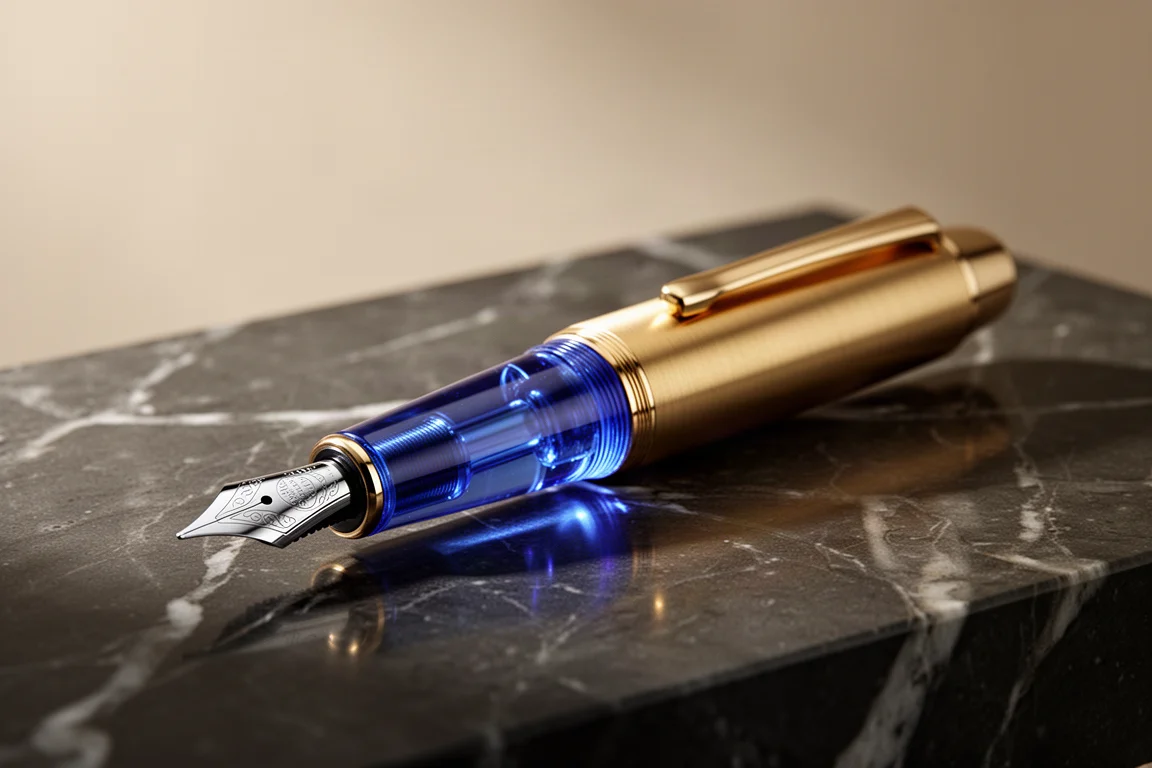
About 30 years old, the Waterman Edson pairs a double barrel of glowing sapphire blue with a brushed gold cap and an inlaid nib set into a beautifully decorated grip. The cap latch system feels elegant and cushioned, and the writing experience is genuinely superb: over a year of use with never a skip or false start, just a smooth, precise ribbon of ink.
The panel split here too. One vote cool, praising the distinctive inlaid nib and the art deco styling that has aged well. The dissent argued that “stunning” and “timeless” are not the same as cool, and there was nothing fresh about it. Call it two out of three, with the honest takeaway that the Edson is a classic first and a conversation piece second.
Montegrappa Around the World in 80 Days, India Edition
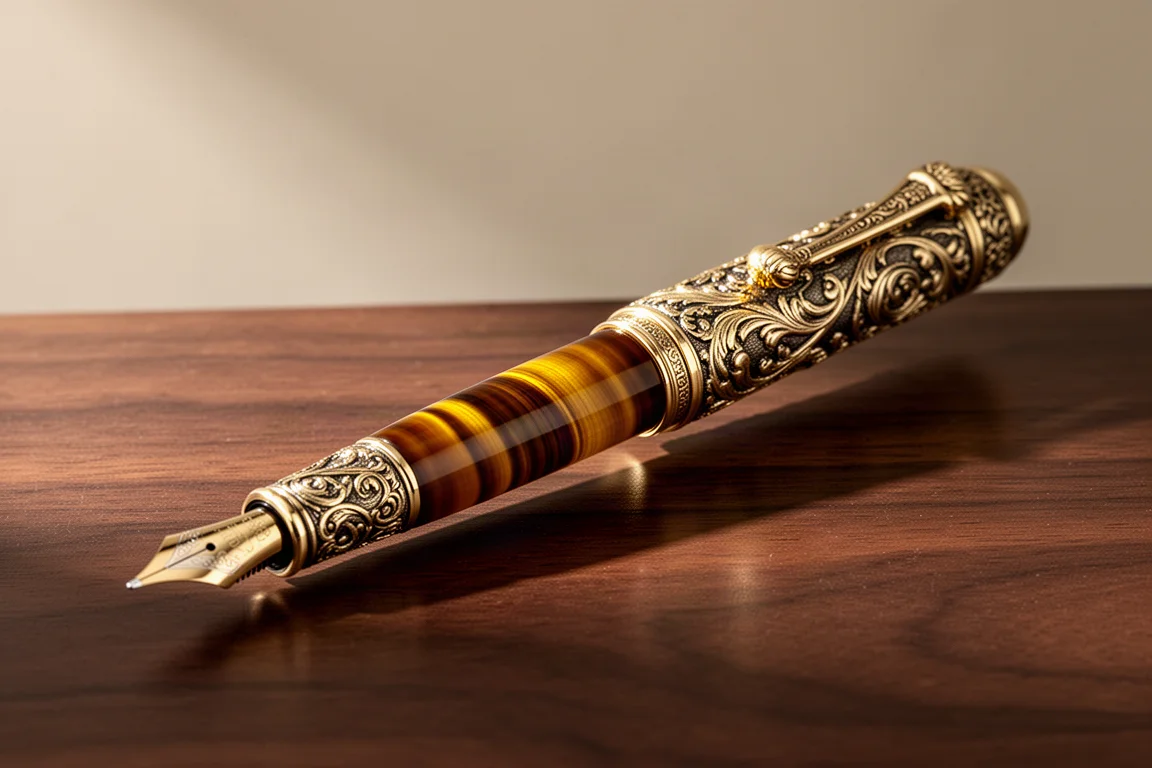
This pen is a lot, and it knows it. The Montegrappa Around the World in 80 Days India edition carries a beautifully rendered elephant, lavish gold decoration, and a barrel with a tiger’s-eye-like sunburst quality. It is rooted in a 19th-century novel, and it is almost garish, which is either a flaw or exactly the point.
The host voted not cool despite loving the pen; the rest of the panel overruled, citing the elephant and the striking barrel design. Final tally: cool. If bold, unapologetic decoration is your thing, this pen has presence few others can match.
Yard-O-Led Viceroy Grand: a Sterling Time Capsule
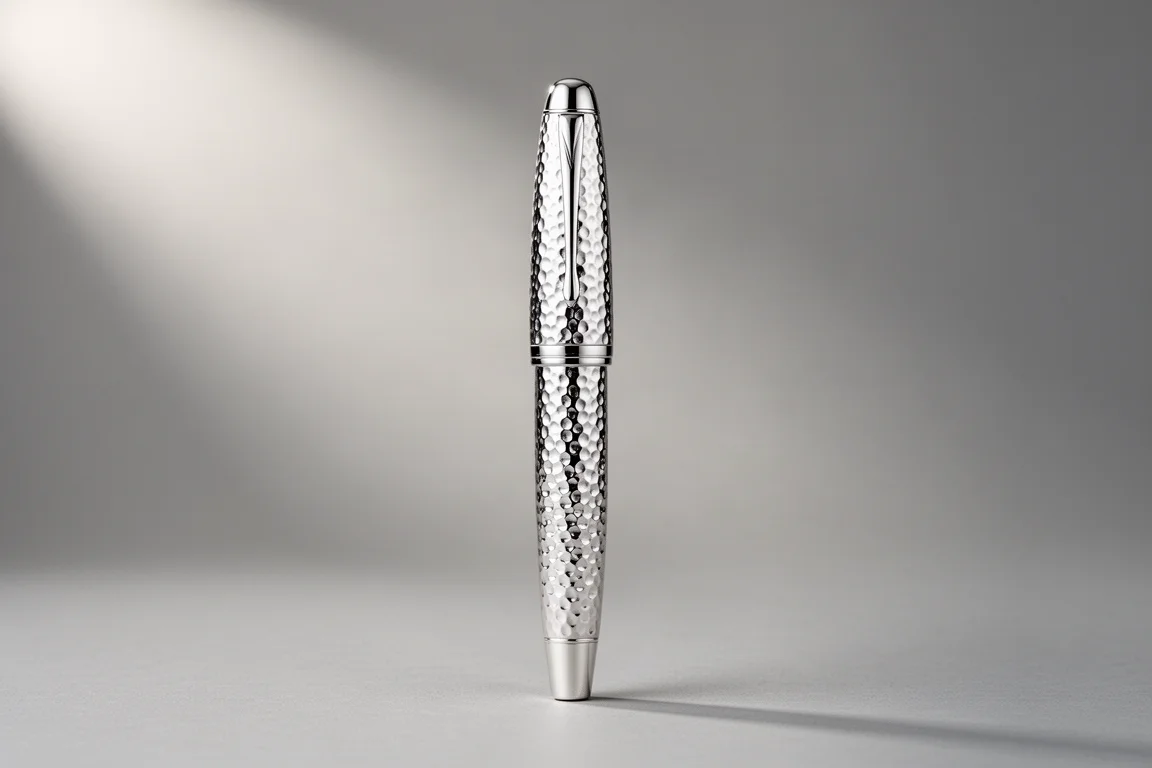
The Yard-O-Led Viceroy Grand looks and feels like a fountain pen from over a hundred years ago: sterling silver, English hallmarks, traditional handcrafted production, and real heft in the hand. It is the sort of pen you imagine discovering in a curiosity shop, engraved with some long-ago executive’s initials. In this case, literally, since custom engraving is part of the appeal.
Two votes cool, one not. The dissent respected it enormously but felt no particular pull toward it. The consensus: as a crafted object honoring its heritage, Yard-O-Led does things exactly right, but whether it reads as cool to you depends on how much you love gleaming, vintage-flavored silver.
Pilot Elite in Black: Sleek 1970s Japanese Elegance
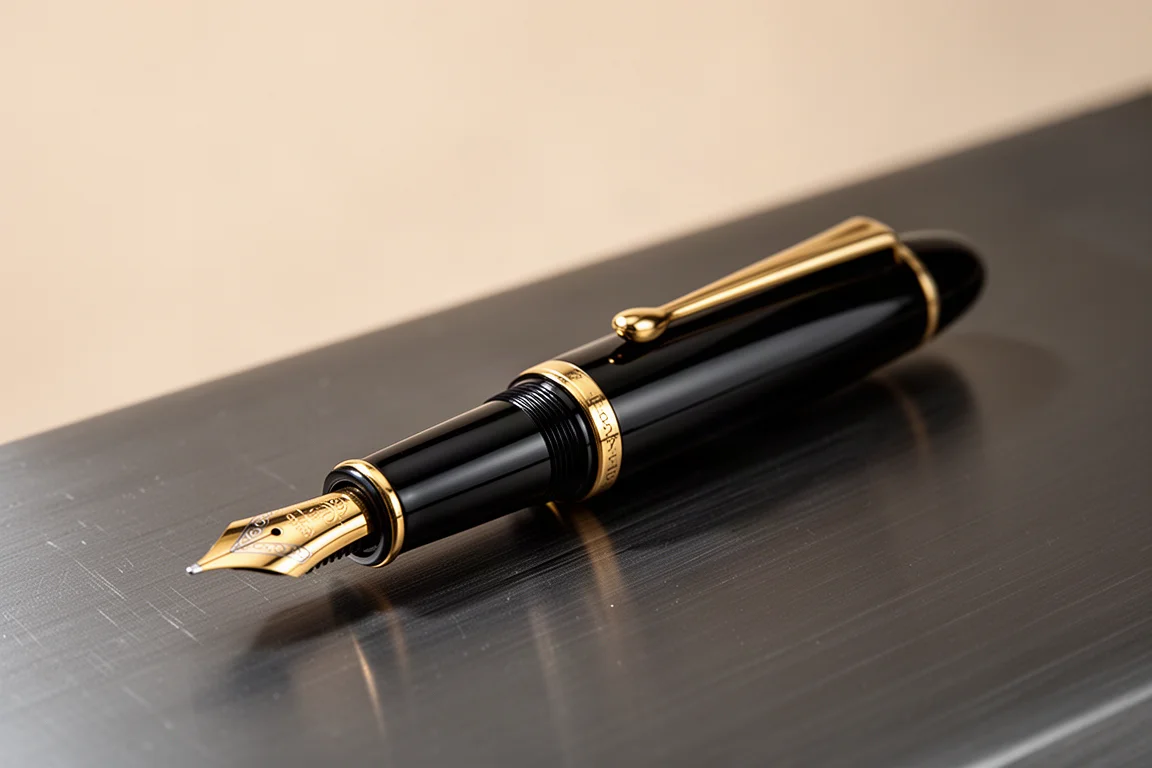
This Pilot Elite in black is new old stock from the early 1970s, never inked, sticker intact, sourced through Payton Street Pens. The friction cap slides on with a satisfying progressively firmer feel, and the nearly hooded nib gives the whole pen a sleek, unified look in black and gold.
A unanimous cool, and a genuine surprise from a panel member who rarely votes that way, won over by the friction cap and the genuinely different nib design. If you find vintage examples in good condition, they make a compelling compact everyday pen, though many collectors understandably hesitate to ink one.
Pilot Namiki Hokusai Great Wave: a Fresh Take on an Icon
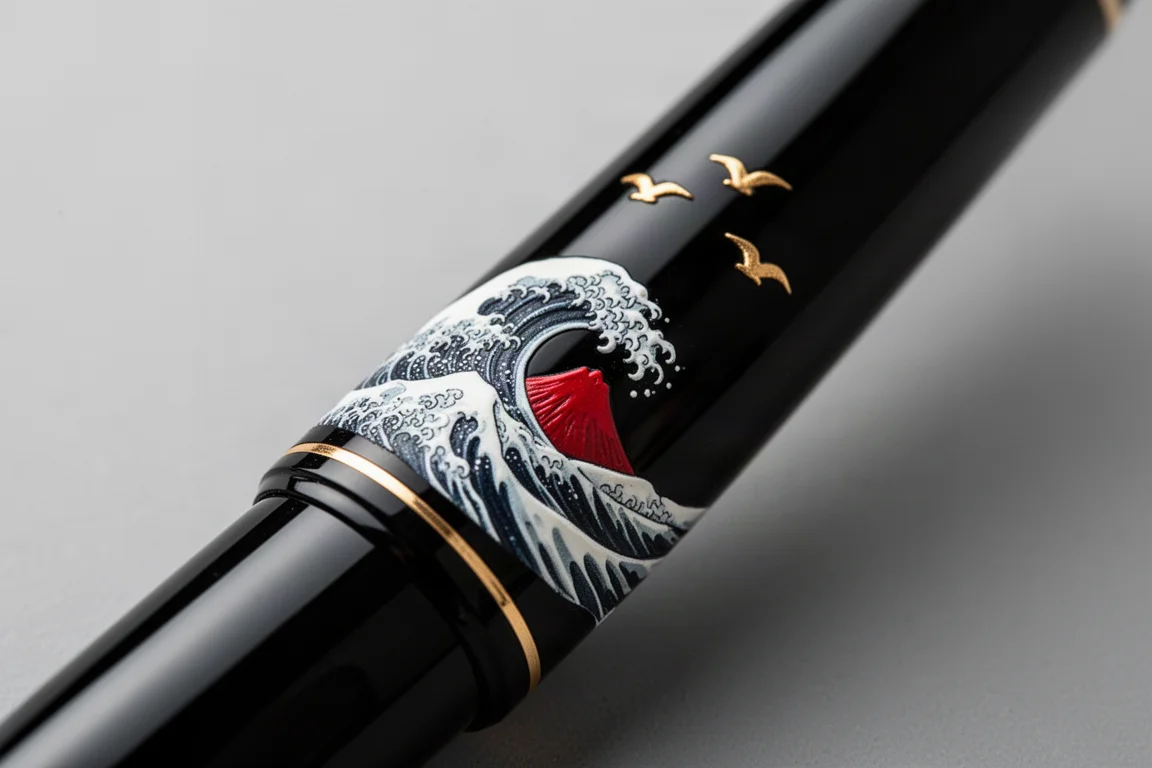
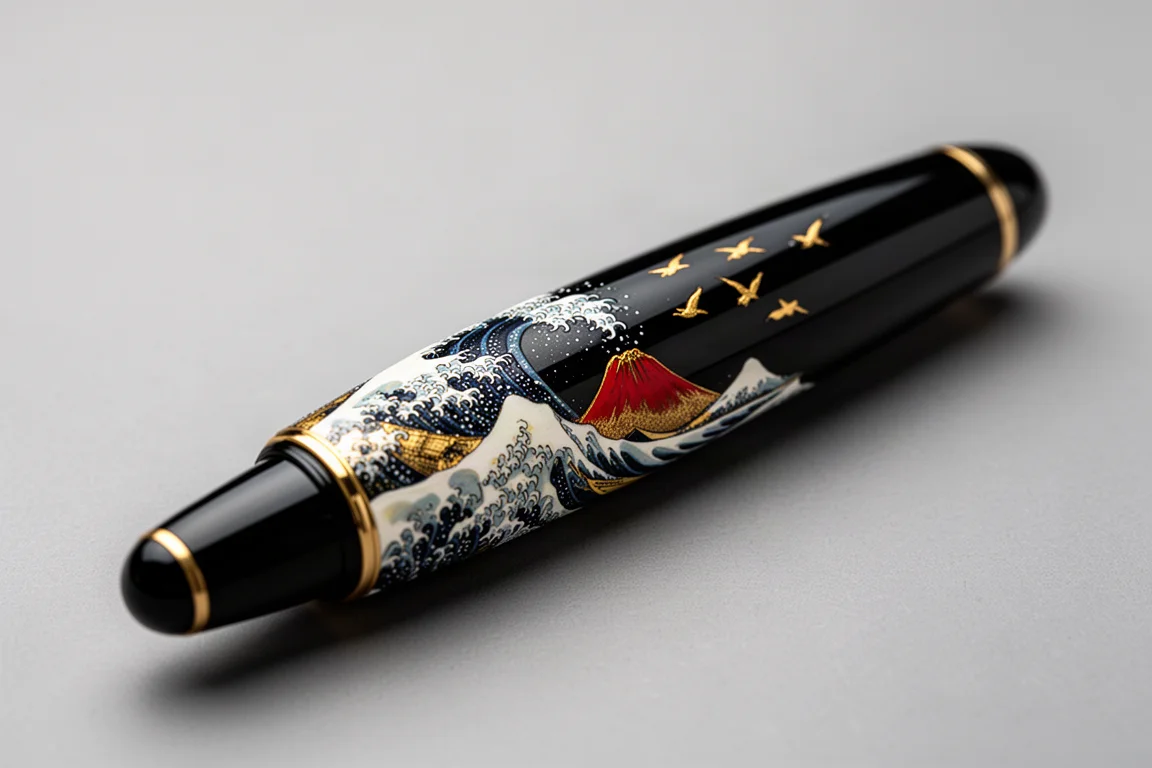
This Namiki offers an interpretation of Hokusai’s Great Wave, and the details matter. It folds in the red Fuji from another print in the 36 Views of Mount Fuji series, faces the wave in a different direction, and adds small golden birds that recall the flecks of sea spray in the original woodblock print. The maki-e craftsmanship is superb, and Namiki makes its own nibs, something the panel values highly; whether you spend $5 or $2,000 on a Pilot, the nib delivers.
Three cool votes, no dissent. The verdict also noted it is something of a museum piece, which is either part of the charm or, if you are stingier about cool, a slight deduction. As a writer, it is fantastic regardless.
Montegrappa 147 Traveler in Bordeaux
The Montegrappa 147 Traveler in Bordeaux is elegant and practical in a way most luxury pens are not: the back section unscrews to reveal a twin-cartridge “sleigh” that is genuinely handy for travel, provided you fill both before you go. The two-tone gold nib writes beautifully, and bordeaux is a particularly strong color right now.
Two votes cool, one not. The dissent liked the color but found nothing exciting about the pen overall. One honest caveat from long-term use: the small bit of resin at the edge of the gold trim can chip, which is worth noting if you plan to carry it hard. Otherwise it is a proven traveler, having logged writing sessions in Florence, Rome, and Venice.
Pilot Capless LS: the Quiet Retractable
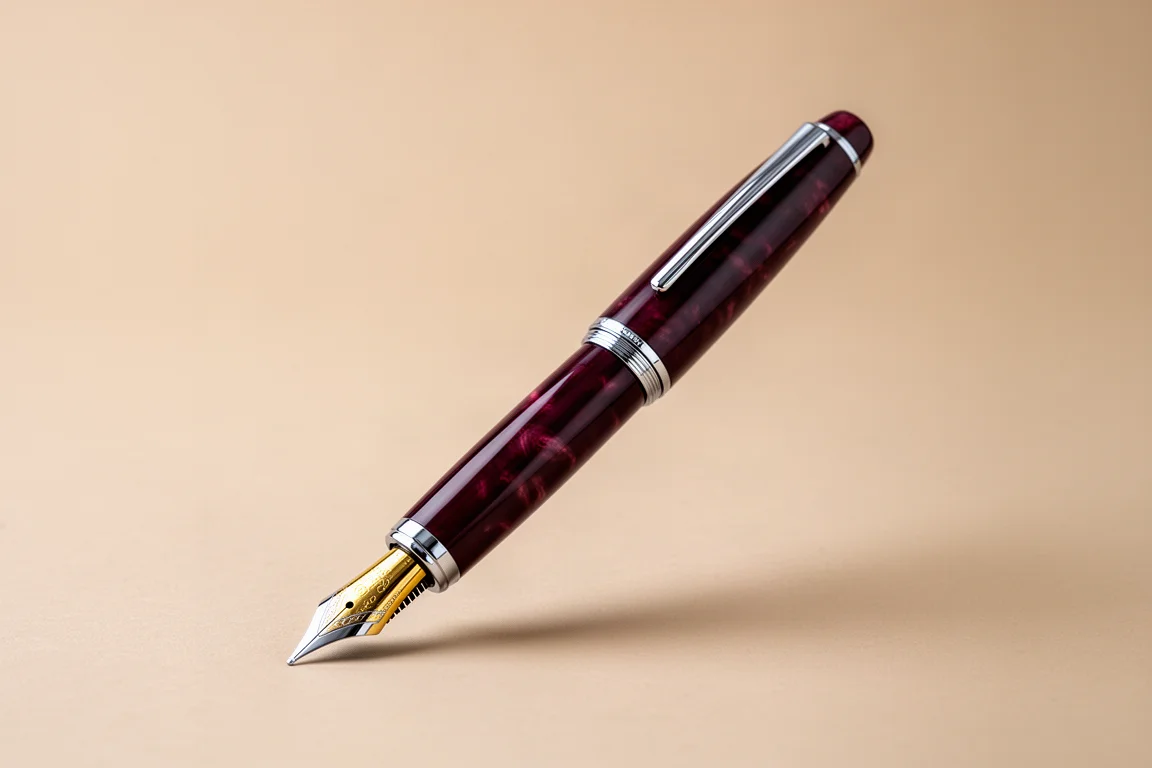
The Pilot Capless LS is the quieter sibling of the Vanishing Point. Where the VP clicks loudly, the LS closes with a small, nearly silent turn, which matters more than you would think in meetings. The gold nib delivers the same writing experience, a decorative center band adds a touch of jewelry-like flair, and the purplish, almost amethyst colorway with silver trim is lovely.
Two votes cool, one not. The dissent came down to the nib: it is mostly hidden, and a visible, beautiful nib is a big part of what makes a pen exciting for some buyers. If you prefer discretion and a retractable mechanism that will not annoy the room, the LS is an easy recommendation.
Waterman Carene Reflections of Paris: Romantic, Not Cool
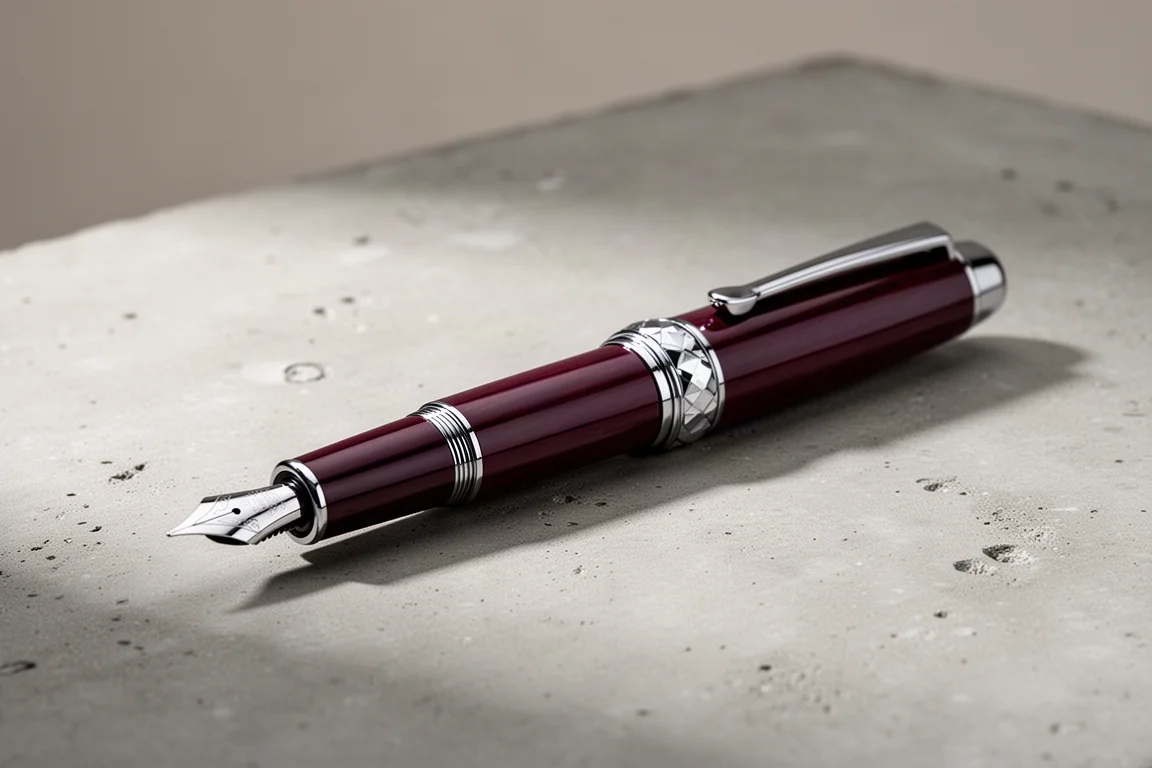
The Waterman Carene Reflections of Paris pairs a black barrel with an undulating palladium cap meant to evoke sand in the moonlight, and its design is influenced by mid-century power boats. It has an inlaid nib and it is genuinely beautiful; it was even brought to Paris and written with in cafes, as romance demands.
And yet: a rare unanimous not cool. The panel called it romantic and elegant, an elder statesman of a pen, but staid, something for affluent cafe scribblers rather than something with edge. The practical note is the price: the standard black Carene can be found for around $220, while this edition runs close to $400, and you may be just as happy with the cheaper one.
Kaweco Sport Hello Kitty: Cool or Just Cute?
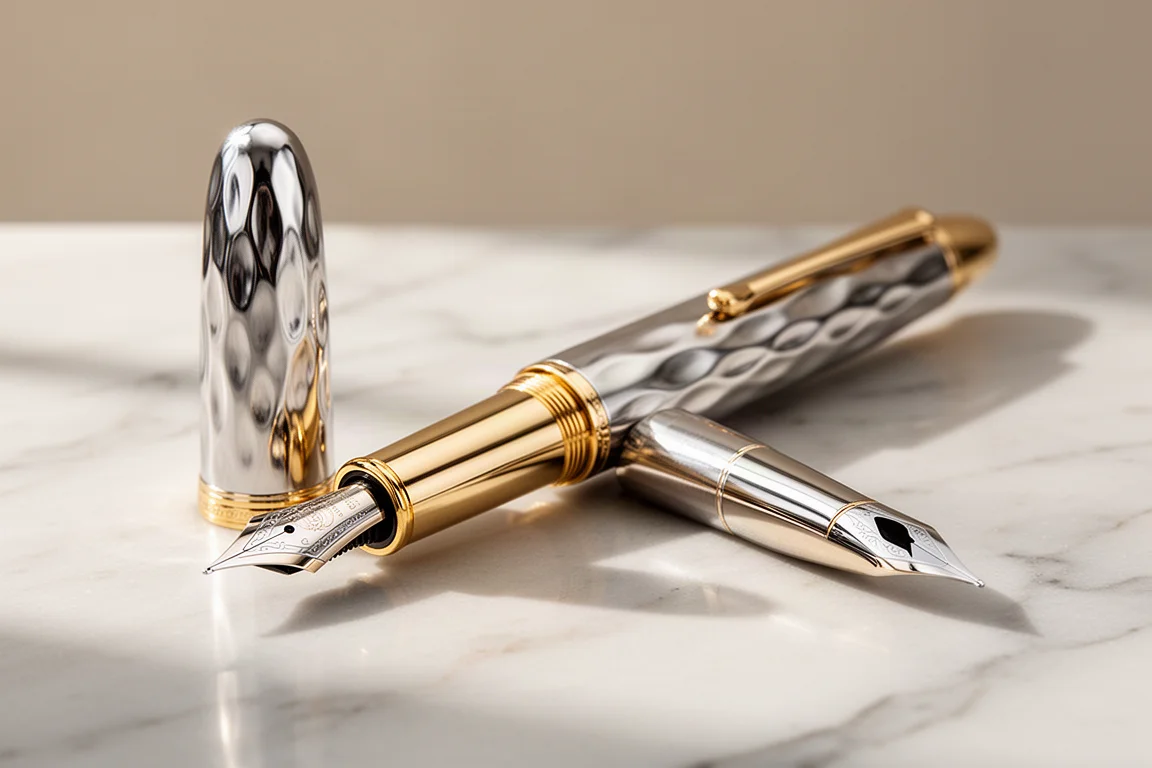
The Kaweco Sport Hello Kitty edition is a pearloid pocket pen that screws together and posts into a full-size writer, and it is a special edition done with real care: Hello Kitty’s bow on the body and her likeness on the nib itself, not just slapped on the box. It even comes with a keychain, though it costs roughly double a standard Kaweco.
This one invented a new verdict category. The first vote declared it cute, not cool, with the argument that Hello Kitty is charming but never edgy. The counter-argument: it is also genuinely cool, the kind of Hello Kitty pen a fan dreams of, and the integration shows real effort. Final ruling: firmly into the cute section, adored by its owner, and worth it for the right buyer.
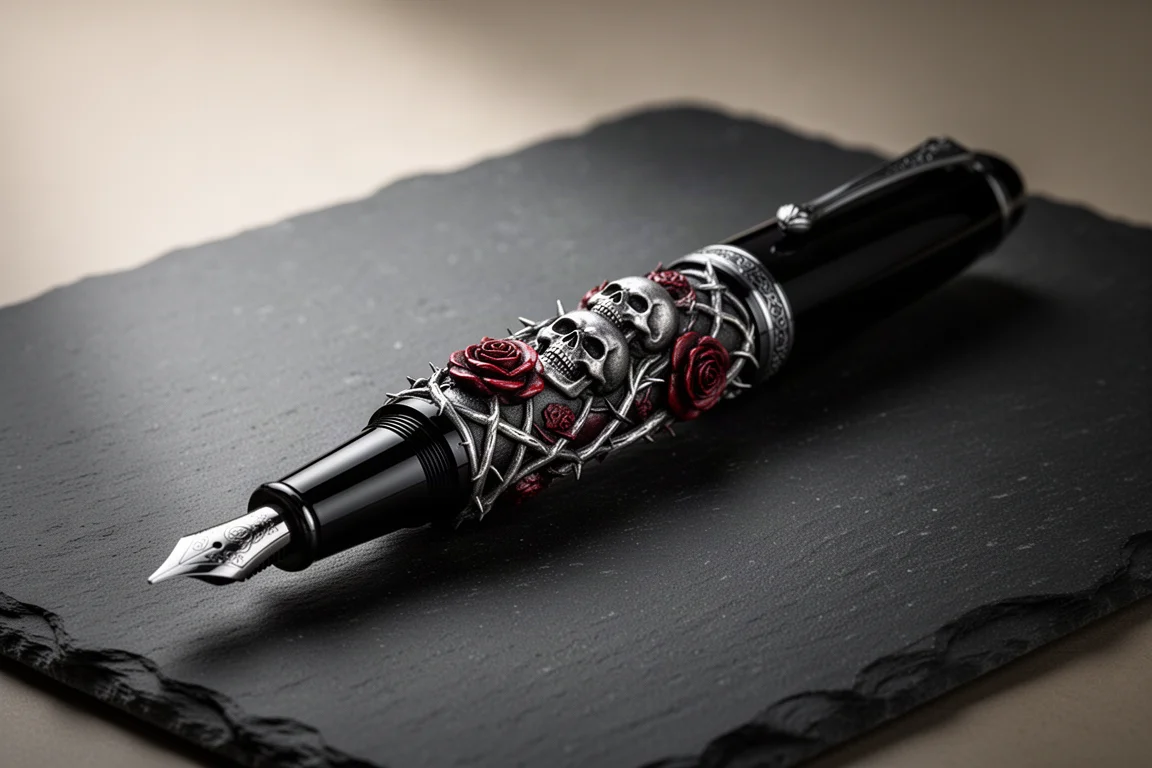
Benu Skulls and Roses: Gothic Excellence
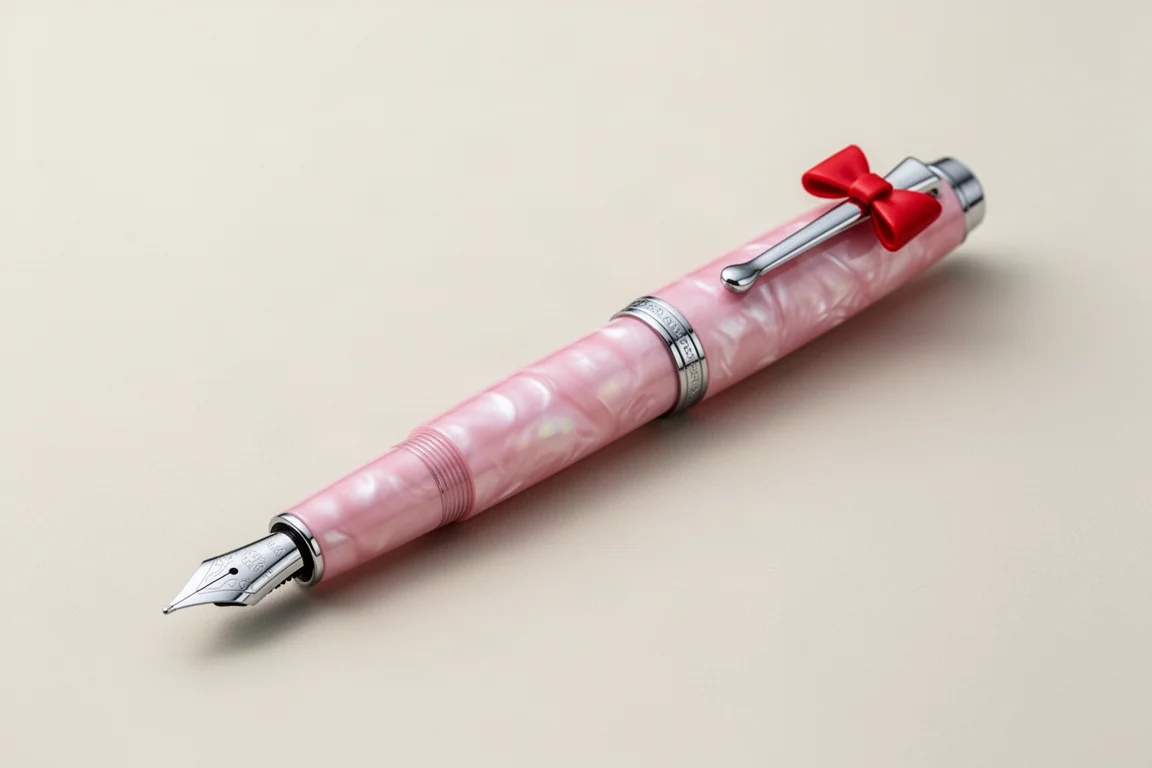
The Benu Skulls and Roses may be the most gothic fountain pen around, with thorns, roses, and skulls rendered with genuine artistry. It invites comparison to 90s gothic cinema, and it absolutely owns that mood. It writes fantastically, though it is not the most comfortable pen to hold for long sessions, which is why it does not get pulled out daily.
Unanimous cool, with one voter admitting the skulls are a little unnerving since it is hard to know what a skull is thinking. As a seasonal statement pen heading into October, or for anyone who leans gothic, this is arguably the coolest-looking pen on this list for the money.
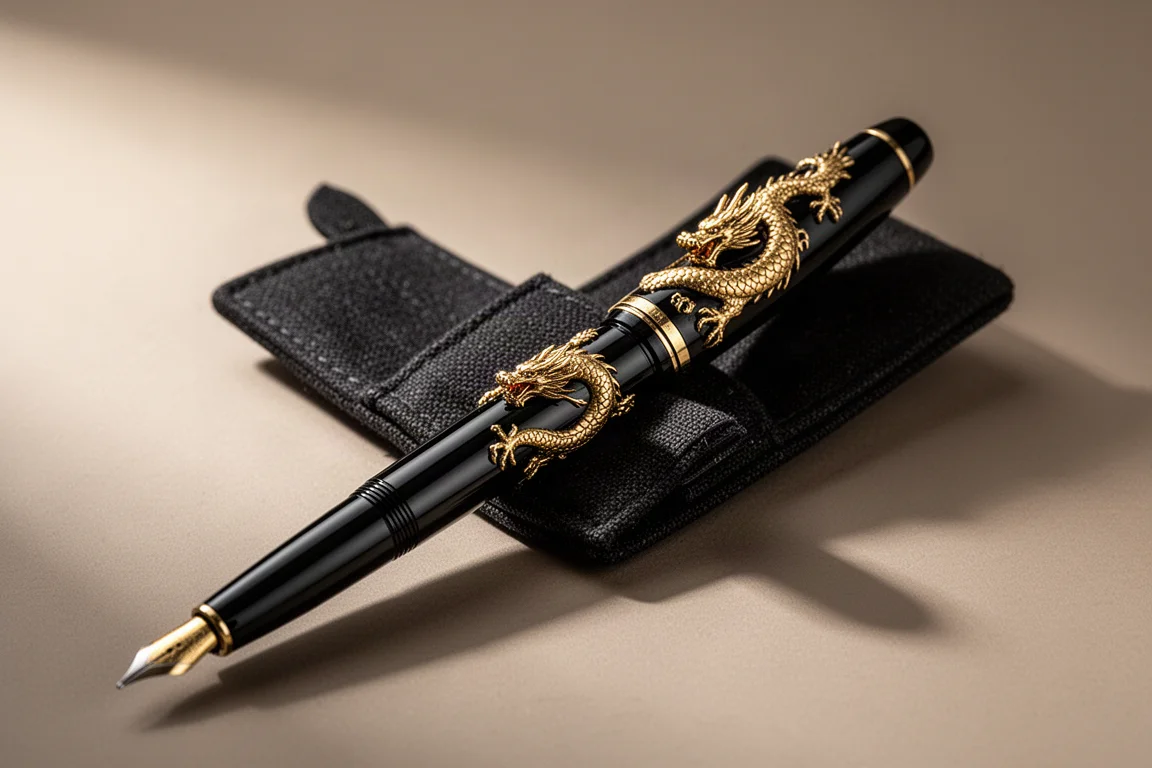
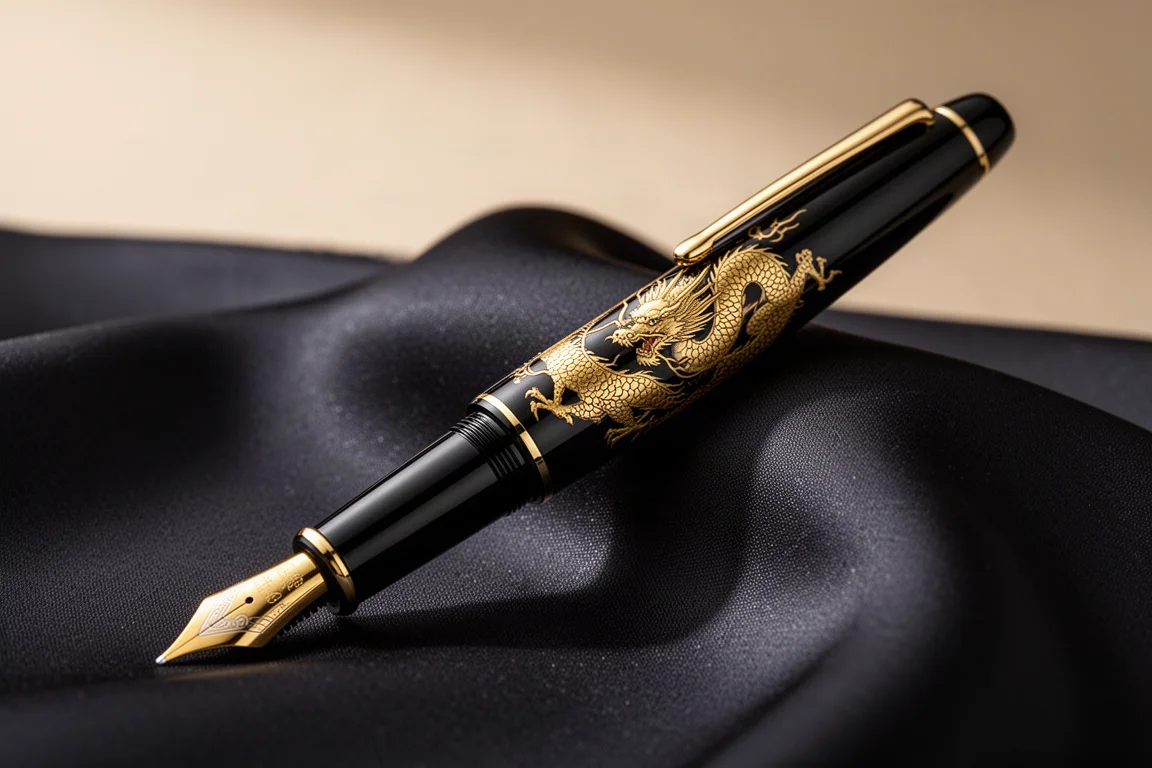
Sai Golden Dragon Maki-e: the Coolest of Them All
The final pen is a Japanese handcrafted piece by the maker Sai, picked up at the DC pen show and kept in a small fabric kimono sleeve. It features a golden dragon on a black background in maki-e, with the decoration continuing onto the grip in a way that recalls a sheathed samurai sword. When you screw it together, the pattern lines up perfectly, and the whole thing radiates intense, confident energy.
A unanimous cool, and the panel’s pick for the coolest of all thirteen. Honest caveats: it uses a Schmidt nib rather than one made in-house, and it cost somewhere in the range of $600 to $800. But for this level of craftsmanship, that is where the money has to go, and the nib is a reasonable place to compromise.
Buying Advice
If you want maximum cool per dollar, the Lamy Safari Terracotta and Benu Skulls and Roses are the obvious picks, both unanimous and both genuinely distinctive. If beauty matters more than edge, the Pilot Custom Urushi and Waterman Edson deliver in spades, just know they split our panel on the cool question. For travel, the Montegrappa 147 Traveler’s dual cartridge system is the most practical design here, and the Pilot Capless LS is the best choice if you want a retractable pen that stays quiet in meetings. And if budget is no object and you want the single most striking pen of the bunch, the Sai golden dragon maki-e is the one that would sit at the top of the pile.
Conclusion
Thirteen pens, one question, and a clear winner. The golden dragon maki-e from Sai took the crown as the coolest of them all, with the Benu Skulls and Roses and the Namiki Great Wave as strong runners-up, and the Hello Kitty Kaweco earning its own permanent spot in the cute section. Cool is subjective, but every pen here earned its place on the table for a reason, and the right one for you is whichever makes you want to uncap it first.
Further reading
Related Reviews
Fountain Pens
Best Budget Fountain Pens Tested: 9 Pens, One Clear Winner
A hands-on comparison of nine affordable fountain pens for everyday writing, calligraphy, and sketching, with a clear standout for flexible nib fans.
Fountain Pens
Aurora Optima Review: An Italian Piston Filler That Punches Above Its Price
A 14k gold nib, ebonite feed, and a beautifully deep oraloid body make the Aurora Optima one of the most rewarding piston fillers around.
Fountain Pens
Cross Bailey Light Review: The Entry-Level Fountain Pen Worth Keeping at the Office
A plastic-bodied Cross with a metal clip, snap cap, and famously smooth extra fine steel nib. Around $15, available almost everywhere, and easy to recommend.