Fountain Pens
Conway Stewart Wellington vs Churchill: Vintage Charm Meets Modern Revival
A closer look at two British fountain pens from the same lineage: a pre-shutdown Wellington in silver graphite and a modern Churchill in Dartmoor acrylic.
Introduction
Few pen brands carry a story quite like Conway Stewart. The British maker closed its doors in the early 2000s, and its stock and tooling were later acquired by Bespoke British Pens, which restarted production first from leftover original parts and now with newly made components while keeping much of the brand’s legacy alive. That history makes comparing a pre-shutdown pen with a modern revival genuinely interesting, and these two models, the Wellington and the Churchill, show both sides of that story beautifully.
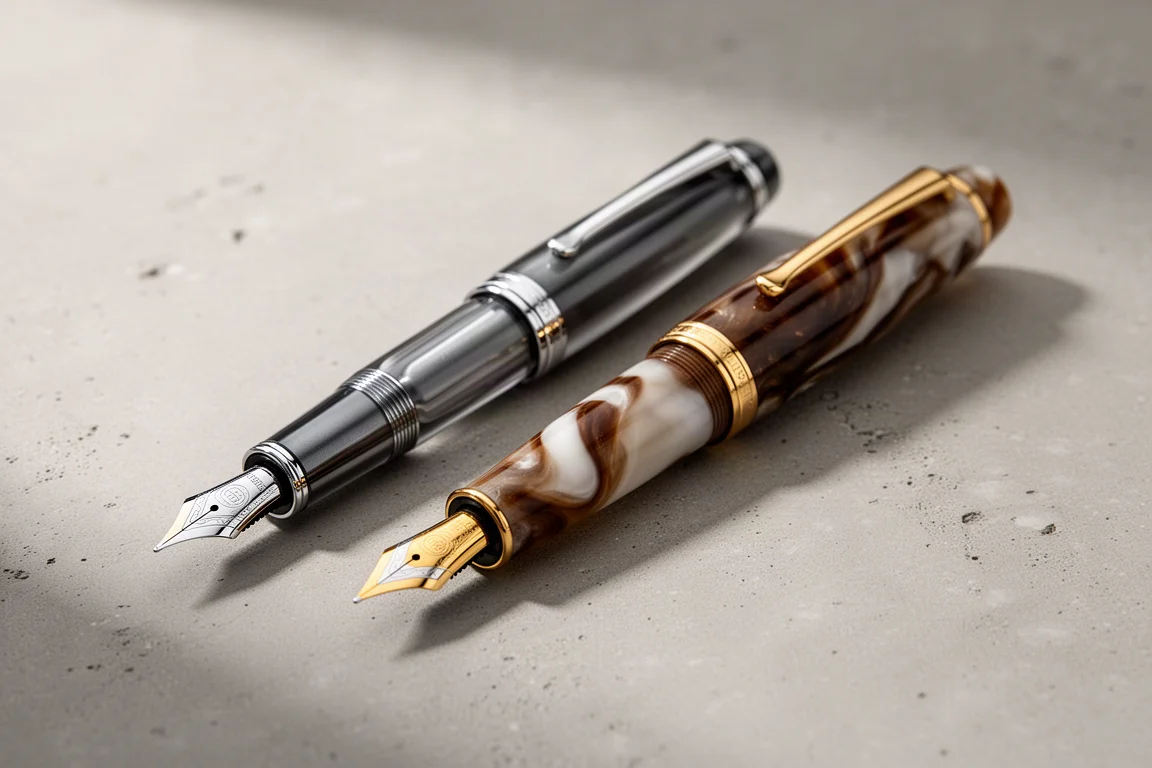
This piece focuses on a vintage Conway Stewart Wellington in the silver graphite finish, a limited example numbered 38 out of 50, likely from the 1980s or 1990s, alongside a modern Conway Stewart Churchill in Dartmoor acrylic. Together they show what the brand did then, what it does now, and which route makes more sense for a buyer today.
The Wellington: A Vintage British Pen with Real Character
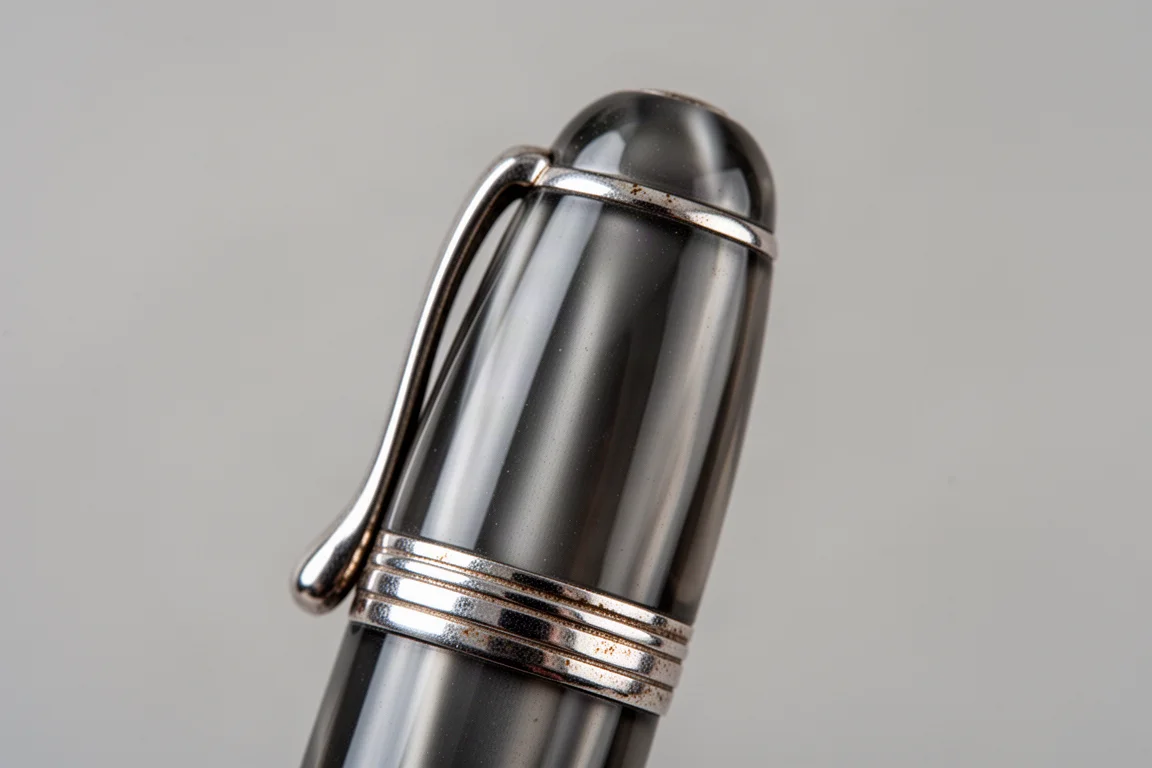
The Wellington stands out within the Conway Stewart lineup thanks to its distinctive cap profile, which bulges outward with three silver bands at the top and the classic Conway Stewart clip. While the brand typically favoured gold trim, this silver graphite example pairs understated, deep-looking acrylic with silver trim that has developed a gentle patina. That wear has been left unpolished, and it suits the muted finish remarkably well.
The material has a genuine depth to it, refined without being flashy. The clip is comfortable and not overly tight, looser than some modern examples which can be a bit stiff, and the cap comes off in about one and a quarter turns. The barrel is heavier than resin alone would suggest, thanks to a brass sleeve inside that begins after the threads and runs to the back of the barrel. It takes a standard international cartridge or converter, and the resin-on-resin threads are exceptionally smooth.
The Churchill: The Modern Revival Under Bespoke British Pens
The Churchill is a massive pen, easily dwarfing the Wellington, which itself runs slightly larger and noticeably heavier than a comparable standard Japanese-size pen. It shares the same design language, so the family resemblance is obvious at a glance. This example is finished in Dartmoor acrylic, a swirling mix of varying brown shades with white between them, and it is one of the most striking resins the brand has produced.
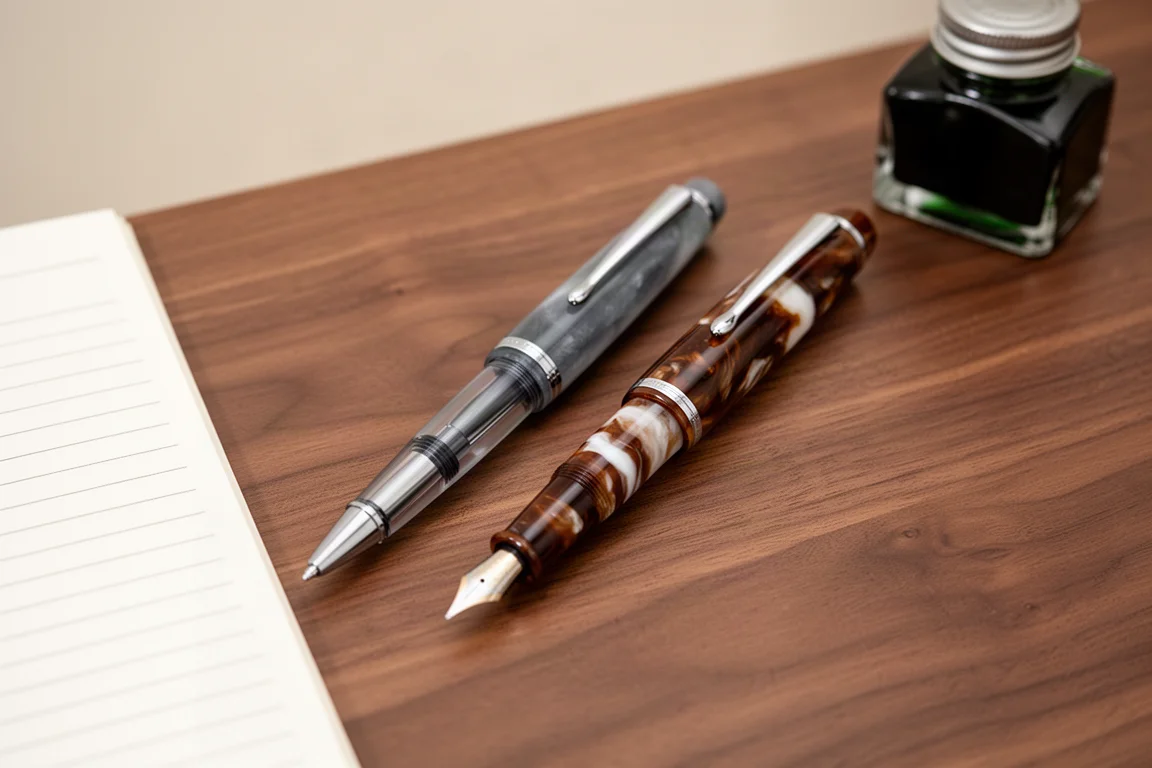
This Churchill dates from the period when Bespoke British Pens was still using leftover original materials: clips, bands, and acrylic rods from the old company stock. As close as you can get to a vintage Conway Stewart today, it also carries a gold band and the classic Churchill clip. Notably, this particular pen lacks the trademark engravings found on all new-production examples, making it something of a rarity among modern Conway Stewarts. On current production, engraving is available as a paid option, roughly an extra $20.
Build Quality and Nib Character Compared
Both pens share the same solid engineering approach: a brass insert in the section area of the Churchill adds weight and balance, so even this chunky pen feels well balanced in the hand. The Wellington is one of the sturdiest, best-built pens in its owner’s collection, and it shows no sign of its age, looking essentially like it came off the production line yesterday.
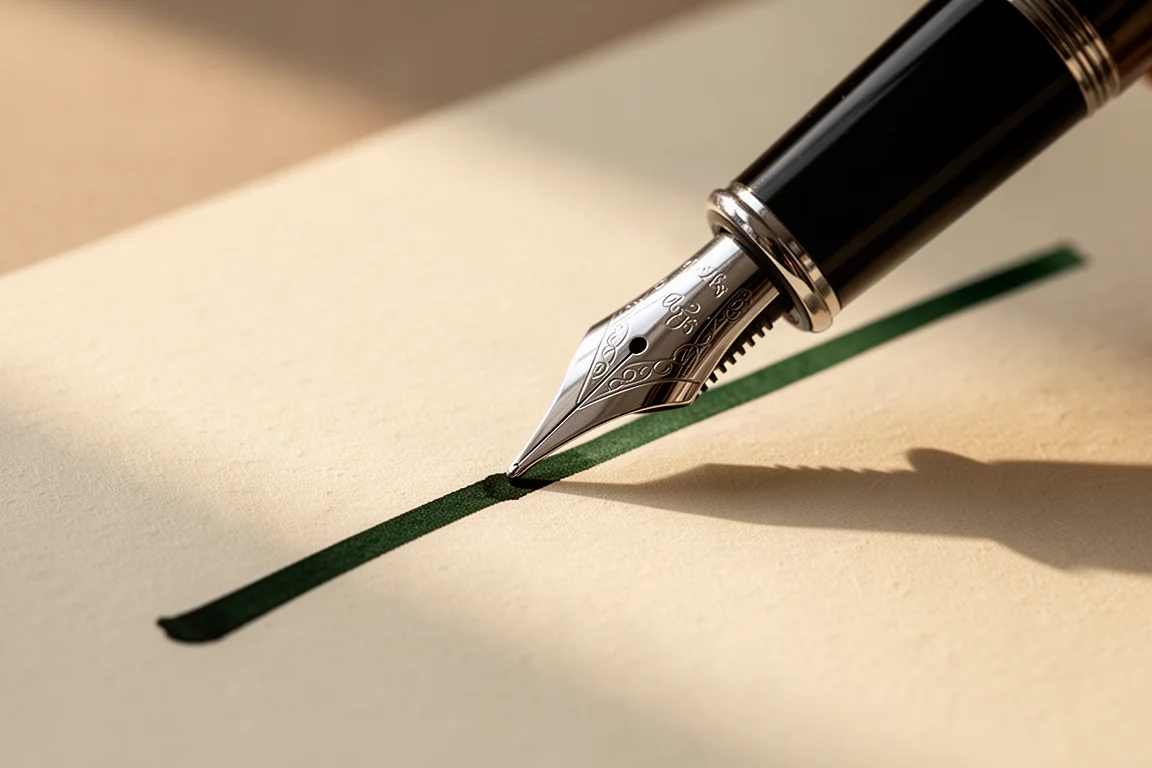
The nibs tell an interesting story. The Wellington carries an 18 karat gold two-tone fine nib that runs a little firm for a gold nib, which is precisely what many writers prefer: consistent, controlled, and still soft enough to feel luxurious on the page. The Churchill carries one of the post-buyout nibs marked with the Bespoke British Pens flag, an 18 karat gold medium that was later reground to a finer point. These flag nibs are notably soft and bouncy, which made the original medium gushy and prone to throwing ink around, hence the regrind.
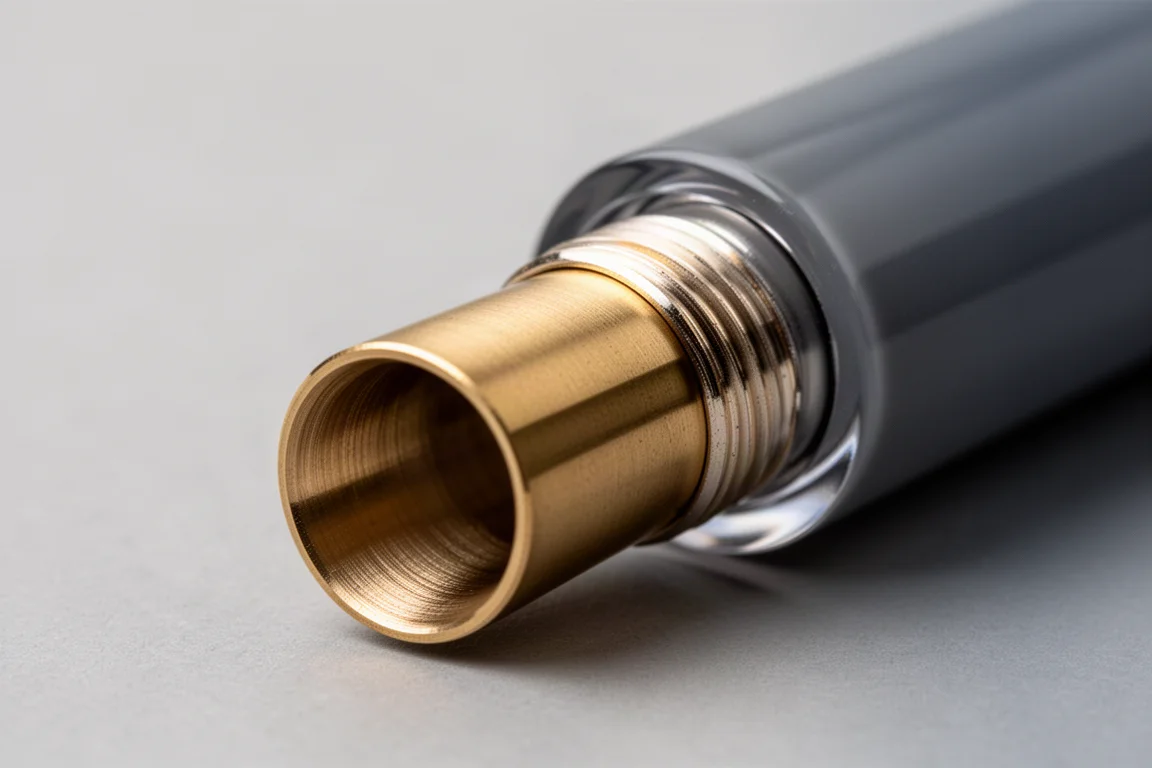
Both pens also feature threaded converters inside the barrel, a small but thoughtful detail that keeps the converter from working loose. Between the two nibs, the vintage one edges ahead for its firmness and consistency, though the newer nibs suit writers who enjoy a soft, bouncy feel. It is worth noting the newest production runs have moved to Conway Stewart-branded nibs that look closer to the vintage style, so nib character may vary depending on when a pen was made.
Writing Experience and Pricing
Inked with a dark green Sailor Jentle Epinard, the Wellington delivers exactly what you hope for: a very smooth, wet line in every direction with a feed that never stumbles. The line runs wide enough to show off shading and sheen in the right ink. The nib has a Goldilocks feel, firm enough for control yet soft enough that the gold gives pleasantly under light pressure, and the balanced weight makes extended writing sessions genuinely comfortable.
On pricing, the gap between vintage and modern is significant. A modern Churchill like this one runs around $700 or more today, and gold prices may have pushed it higher since. A good-condition vintage Conway Stewart, meanwhile, can often be found for around $150 to $200 or less. The reason is simple: collectors hunting vintage pens mostly chase Montblanc, Parker, and Sheaffer, leaving excellent vintage Conway Stewarts overlooked and affordably priced.
Conclusion
The rare part of this story is that Conway Stewart’s modern quality genuinely holds up. Where many classic pen brands saw their newer production fall short of the vintage standard, modern Conway Stewarts under Bespoke British Pens match their vintage equivalents in build quality. The sensible path is to start with a vintage Wellington or similar model to experience the brand’s true character at a friendly price, then splurge on a modern example like the Churchill if the design speaks to you. Either way, you get solid build, beautiful materials, and nibs that write beautifully, just at very different price points.
Product link
View more details for Conway Stewart Wellington
This product is mentioned in the review. Check the specifications, options, and compatibility before buying.
View more details for Conway Stewart WellingtonFurther reading
Related Reviews
Fountain Pens
Best Budget Fountain Pens Tested: 9 Pens, One Clear Winner
A hands-on comparison of nine affordable fountain pens for everyday writing, calligraphy, and sketching, with a clear standout for flexible nib fans.
Fountain Pens
Aurora Optima Review: An Italian Piston Filler That Punches Above Its Price
A 14k gold nib, ebonite feed, and a beautifully deep oraloid body make the Aurora Optima one of the most rewarding piston fillers around.
Fountain Pens
Cross Bailey Light Review: The Entry-Level Fountain Pen Worth Keeping at the Office
A plastic-bodied Cross with a metal clip, snap cap, and famously smooth extra fine steel nib. Around $15, available almost everywhere, and easy to recommend.