Art Supplies
Best Lightfast Colored Pencils: What a 6-Month Fade Test Revealed
More than 200 days of sunlight exposure, dozens of brands, and a full blue wool comparison. These are the colored pencils that actually kept their color, and the ones that quietly faded away.
Introduction
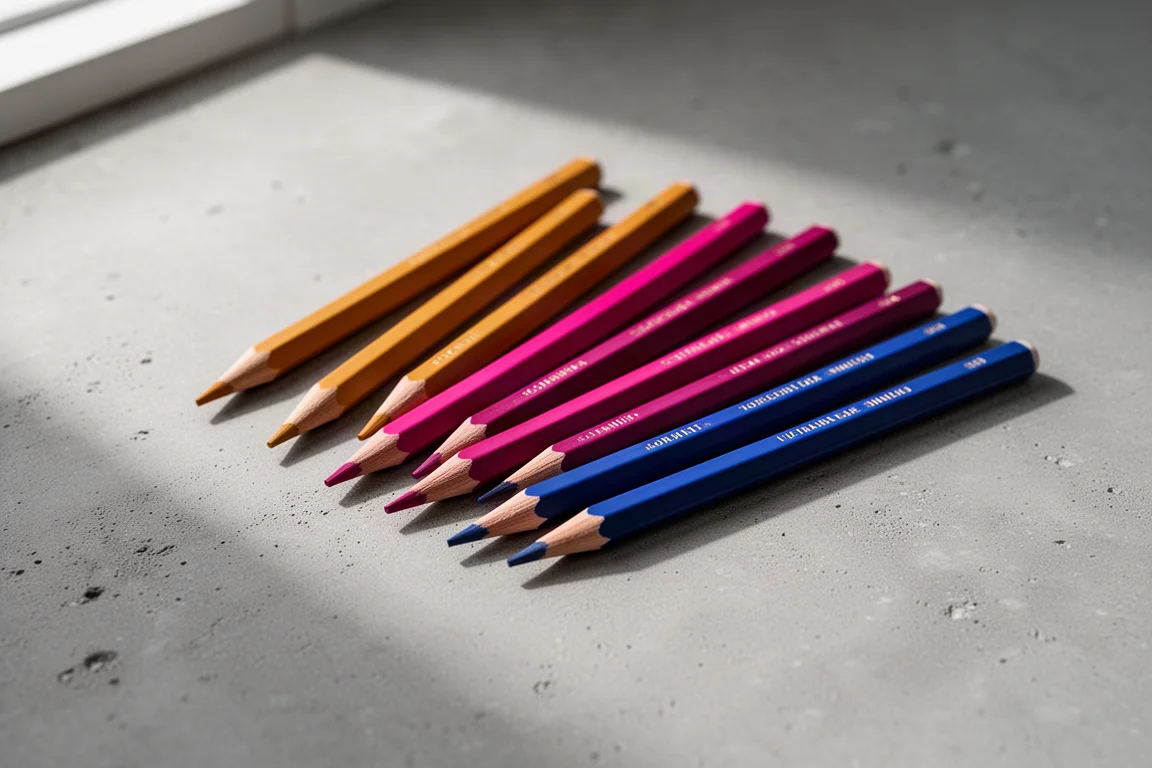
Lightfastness is the one thing most artists never test, because it takes months to find out. A color’s lightfastness tells you how much it will fade when exposed to light, and there is nothing more disappointing than pouring hours or days into a piece only to watch it wash out a few months later. To answer whether this actually matters for the average hobby artist, and whether affordable pencils are really any different from expensive ones, a long-running fade test put swatches from more than thirty brands in direct sunlight for over 200 days, measuring every color every two weeks with a color scanner and converting the results against the industry standard blue wool scale. The results split the field very cleanly: a handful of brands barely moved at all, several mid-priced ranges performed far better than expected, and a group of budget pencils that advertise themselves as highly lightfast faded badly. Here is what the data showed, brand by brand.
How the Fade Test Was Run
Each brand was swatched in twelve core colors on archival paper, with three copies of every swatch: one exposed to sunlight, one kept as a control in a dark drawer, and one swatched fresh at the end as a backup. Half of each swatch went on the window, half stayed in the dark. Every two weeks, a NYX Mini3 color scanner captured a digital reading of each color, logging the exact hex value in a spreadsheet so changes could be measured mathematically rather than judged by eye.
To make sense of those readings, the test used the CIEDE 2000 color matching algorithm, converting every color to a lab color space and calculating a delta E score for each. A delta E of zero means two colors are identical; a score of five or ten means the difference is obvious. Those numbers were then converted into a percentage fade for each swatch, and calibrated against the blue wool scale, the recognized reference method where eight dyed wool samples fade at progressively slower rates. The two officially recognized tests for colored pencils are ASTM D6901, which scores pencils from one (best) to five (worst), and the blue wool comparison. A pencil counts as lightfast only if it lands in the top scores, and a full set only counts as lightfast if every pencil passes.
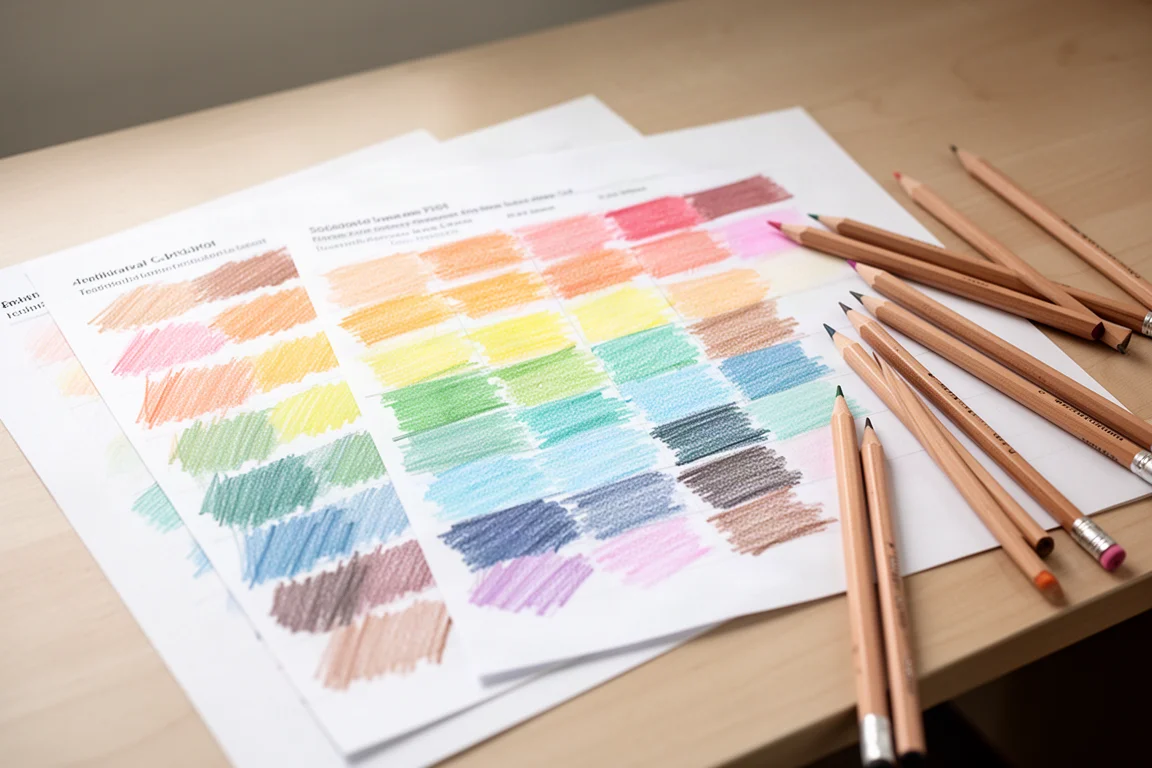
Two extra questions rounded out the testing. First, do swatches kept in a dark drawer fade anyway? After six months, re-swatching every control showed no change at all, even among the least lightfast supplies, which is great news: keeping artwork out of sunlight genuinely protects it. Second, the claims printed on pencil boxes were put under scrutiny, and that is where some of the most interesting findings surfaced.
The Winners: Most Lightfast Colored Pencils
When it came to the most lightfast colored pencils, the top of the table was no surprise. The Caran d’Ache Luminance and the Derwent Lightfast ranges showed no change whatsoever after more than six months in direct sun. They simply refused to fade. Both brands publicly state that all of their pencils are officially tested for the highest possible lightfastness, and the results backed that up completely.
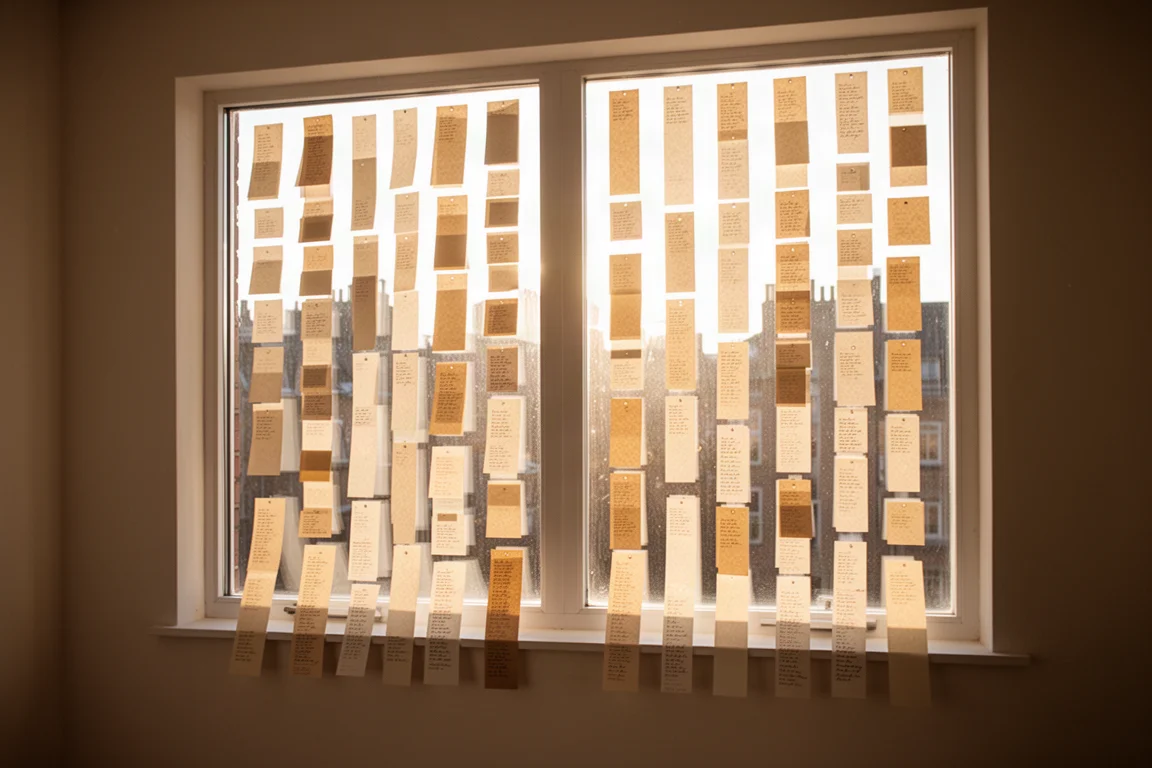
These two also performed best in broader comparisons against even more brands, so if keeping finished artwork pristine for years is the priority, these are the two names worth shortlisting first.
Excellent Performers Just Behind the Leaders
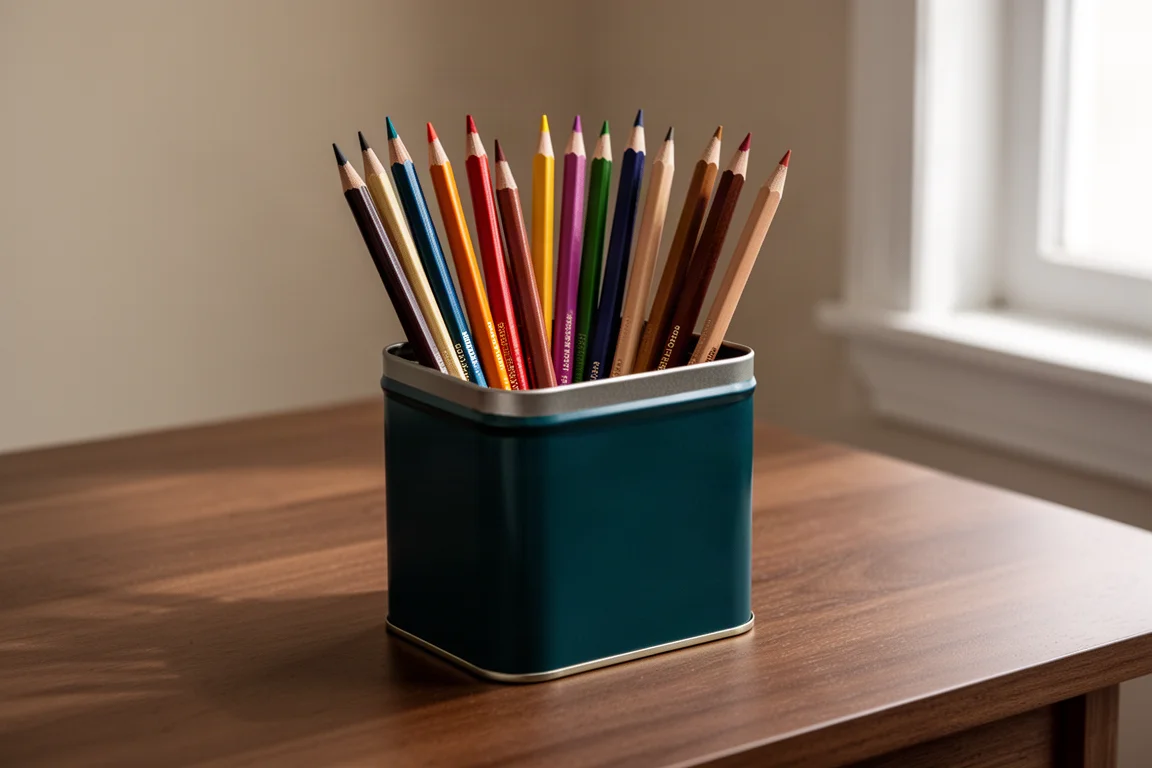
Just below the two top performers, a group of ranges earned an “exceptional” rating. The Faber-Castell Goldfaber actually outperformed its more expensive sibling, the Polychromos, which did well but not quite as well. The Derwent Chromaflow and Derwent Coloursoft were also surprisingly good, with the Chromaflow’s only weak spot being its pink. Koh-I-Noor Polycolor rounded out this group with strong all-around results.
One of the biggest surprises of the entire test was Crayola. The cheap kids’ pencils performed well across the board, except for pink. Yet the Crayola Signature range, marketed toward adults, was among the worst performers, which makes spending extra on it hard to justify.
The Best Budget Pick: StarJoy Gold
Among the affordable brands, StarJoy Gold clearly outperformed the rest of its price range. It performed far better than other similarly priced sets, proving once again that it is strong value for money. If budget is the deciding factor, this is the affordable set the test results support most confidently.
That said, most budget pencils are not so lucky, and the next section explains why.
The Budget Pencils That Faded Badly
Castle Art, Arteza, Shuttle Art, Brutfuner and several others in the affordable pencil range all demonstrated why they cost less: their pigments simply do not last compared to professional-grade colored pencils. Many of these same pencils are the ones bragging about lightfast ratings in their advertising, which deserves a closer look.
Lightfast Claims and Sneaky Marketing
Several brands do their own in-house lightfast testing and print the results on the box, but with no real regulation around this, the market is a mess of big claims, confusing terminology and misleading methods. One brand in the spotlight has been Woomer: its test uses the blue wool reference more like a stopwatch, stopping at blue wool level five, meaning nothing can be accurately ranked as lightfast beyond that point. Marco followed Chinese textile guidelines with a xenon lamp test, which sounds thorough until you notice the pencils were tested for less than a day and only a few colors had results shared. In the actual six-month sunlight test, both Woomer and Marco were no different from other brands in the same tier.
Others, including Castle Art, Arteza and Calour, run their own scoring systems without explaining what the scores are based on. By contrast, brands like Derwent, Holbein, Faber-Castell and Caran d’Ache publish their lightfast testing transparently, which makes their claims much easier to trust.
The Fugitive Colors: Pinks, Purples and One Specific Orange
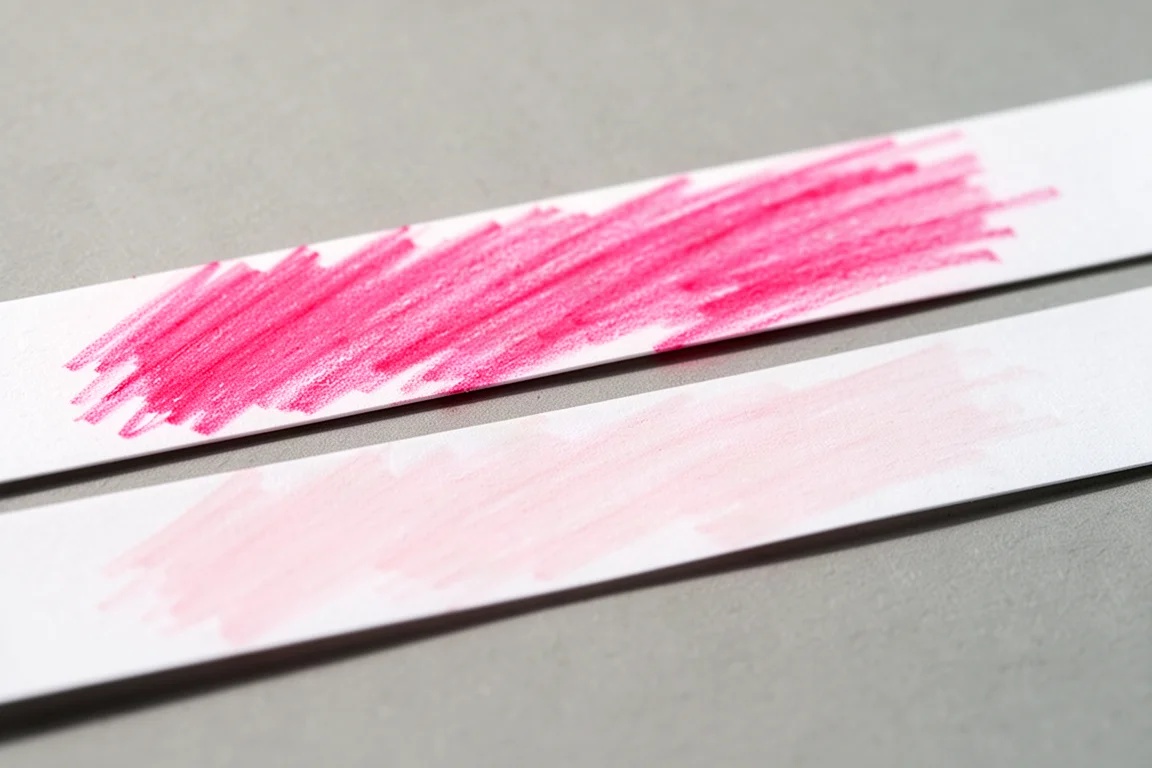
The clearest pattern across every brand that faded was the same color fading first: pink. In more than thirty brands, pink was the only color that disappeared completely by week ten, and neon pinks did not hold up either. There is a pigment-level reason for this. Magenta is not naturally occurring, so stable pigments in those hues are hard to find, which is why they are called fugitive colors.
Beyond pink, darker purples held up reasonably well, but light to mid purples lost over half their color on average in six months. Darker oranges survived, while one particular orange shade faded quickly in seven different brands. Blacks performed well across the board. A few swatches did not just fade but shifted color entirely, likely when a color is mixed from multiple pigments of varying lightfastness. The strangest case was a Marco Raffine pencil that shifted from chocolate brown to greenish brown, then again toward blue grey.
What About Markers?
The markers fared even worse than the pencils, many changing color within the first few weeks. The one clear takeaway from this testing: alcohol markers are not lightfast, even the most expensive ones. In the alcohol marker category, every brand failed. Even black Olo markers ended up monotone. That does not mean alcohol markers cannot be enjoyed; it just means finished pieces should be protected with UV protectant sprays or UV glass, photographed for prints, or stored away from sunlight.
The exceptions were the non-alcohol options. Winsor & Newton watercolor markers held up well, and the Panartine water-based markers, which advertise lightfastness, barely changed at all. Faber-Castell Pitt Artist Pens also held their color strongly, though only a few colors were included. All other water-based markers tested faded as quickly as the alcohol ones.
Overall Buying Advice
If finished artwork needs to survive, the buying advice is straightforward. Caran d’Ache Luminance and Derwent Lightfast are the safest choices and showed zero change in six months of direct sun. The Faber-Castell Goldfaber, Derwent Chromaflow, Derwent Coloursoft, Koh-I-Noor Polycolor and Faber-Castell Polychromos are all excellent for less money, with the caveat that every range in this group has at least one weak pink. On a tight budget, StarJoy Gold is the affordable set that genuinely earned its results. Budget sets like Castle Art, Arteza, Shuttle Art and Brutfuner are fine for practice, coloring books and throwaway work, but not for pieces meant to last. And if alcohol markers are part of your toolkit, plan on UV protection, prints, or dark storage.
Conclusion
Six months of data settled a question most artists never get to answer. Lightfastness matters to anyone who wants to keep their art, and it matters less for temporary sketches or meditative coloring. The transparent, officially tested brands proved their claims, the affordable mid-tier over delivered, and the budget sets advertising “unsurpassable lightfastness” failed to back it up. Choose based on how long you want your work to last, and when in doubt, keep it out of the sun.
Further reading
Related Reviews
Art Supplies
Art Pop Watercolor Pencils 48-Color Set: A Thoughtfully Designed Student-Grade Option
The Art Pop 48-color watercolor pencil set blends well, dissolves smoothly, and includes artist-friendly details like barrel-printed color names, all at an affordable price.
Art Supplies
Artics Acrylic Markers 3mm Review: Versatile Paint Markers With a Few Caveats
A 48-color set of water-based acrylic paint markers that blend while wet, dry permanent, and keep the price low, though safety transparency remains a question.
Art Supplies
Best Art Supplies Worth Your Money: Pencils, Pens, Paints, and Paper That Earned Their Spot
After years of daily use and testing, these are the pencils, pens, watercolors, gouache, brushes, sketchbooks, and erasers that stand above the rest.