Fountain Pens
Five Clear High-Capacity Fountain Pens Compared: From Affordable to Grail Territory
A practical comparison of five clear large-capacity fountain pens, covering ink capacity, filling systems, nib options, and price.
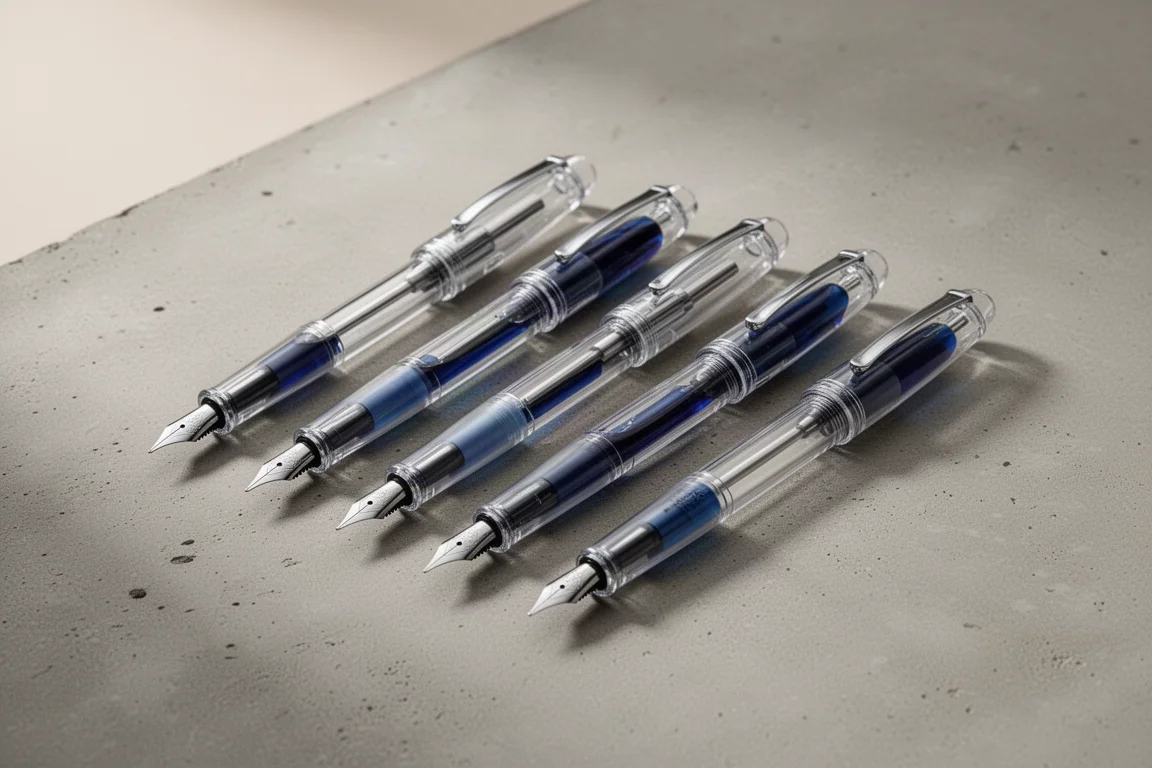
Introduction
Clear demonstrator fountain pens with genuinely large ink capacity are a satisfying niche: you can watch the ink level fall and you are not chained to a standard converter. This comparison looks at five pens that share two requirements: they must be clear, and they must hold a lot more ink than a converter. The lineup runs from affordable to very expensive, so there is something here for most budgets.
A standard converter holds roughly 0.7 to 0.9 ml, which is the baseline every pen here beats. All measurements below come from filling each barrel completely and emptying the contents into a sample vial.
Evaluation Criteria
The only hard requirements were clear construction and large ink capacity. Beyond that, each pen is assessed on price, ink capacity, filling system, and nib options. Every pen in this comparison is inked with the same blue ink, which keeps the writing comparison fair. All of them use some form of secondary ink chamber, so for long writing sessions you open a knob or valve at the end of the barrel to restore a wetter flow.
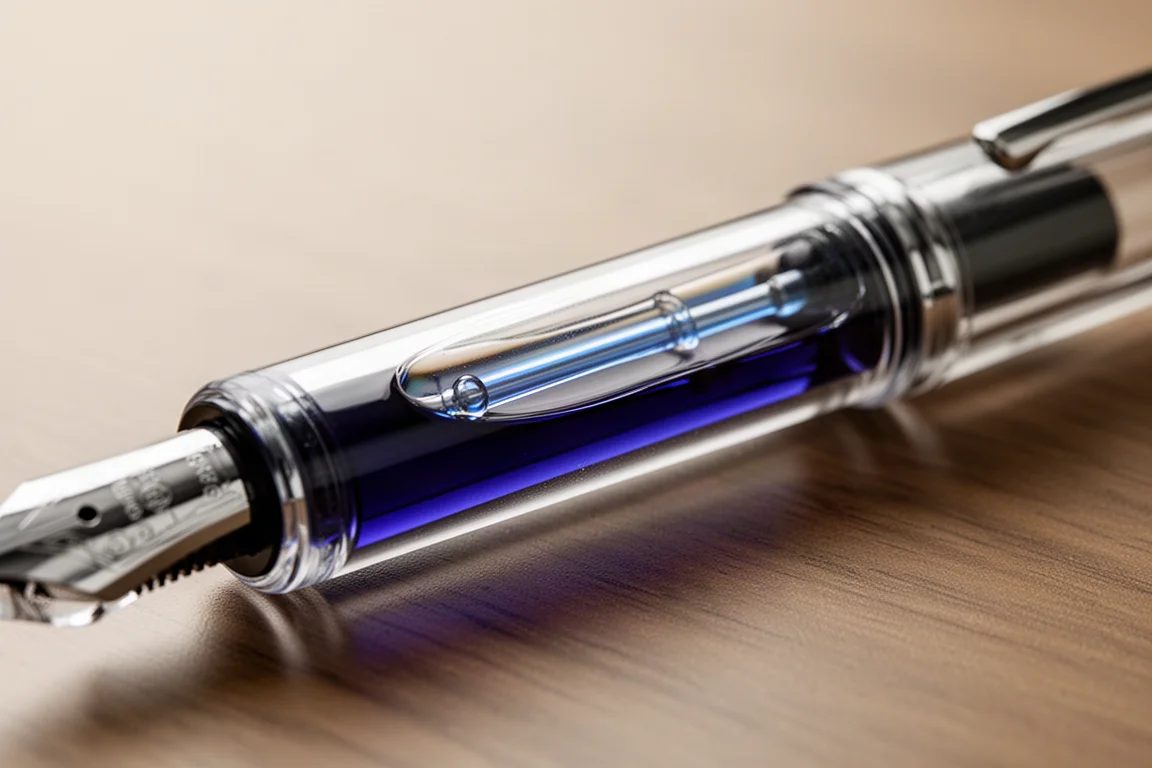
Asvine V200
The most affordable pen here at around $50, with an optional upgrade to a number six Bock nib that adds about $80. Note that the nib upgrade costs more than the pen itself, which may not be worth it for everyone. Out of the box, the standard fine nib is a pleasant, comfortable writer. The Bock option is appealing because those nibs are ubiquitous and easy to swap.
It is a vacuum filler: unscrew the tail end, pull out the rod, push it back in while the nib is in a bottle of ink, and the vacuum draws ink into the barrel. On the plus side, the hourglass-shaped titanium section is comfortable even though it runs on the slim side. The main annoyance is the two rubber O-rings that make posting secure; one of them tends to pop off when you remove the cap.
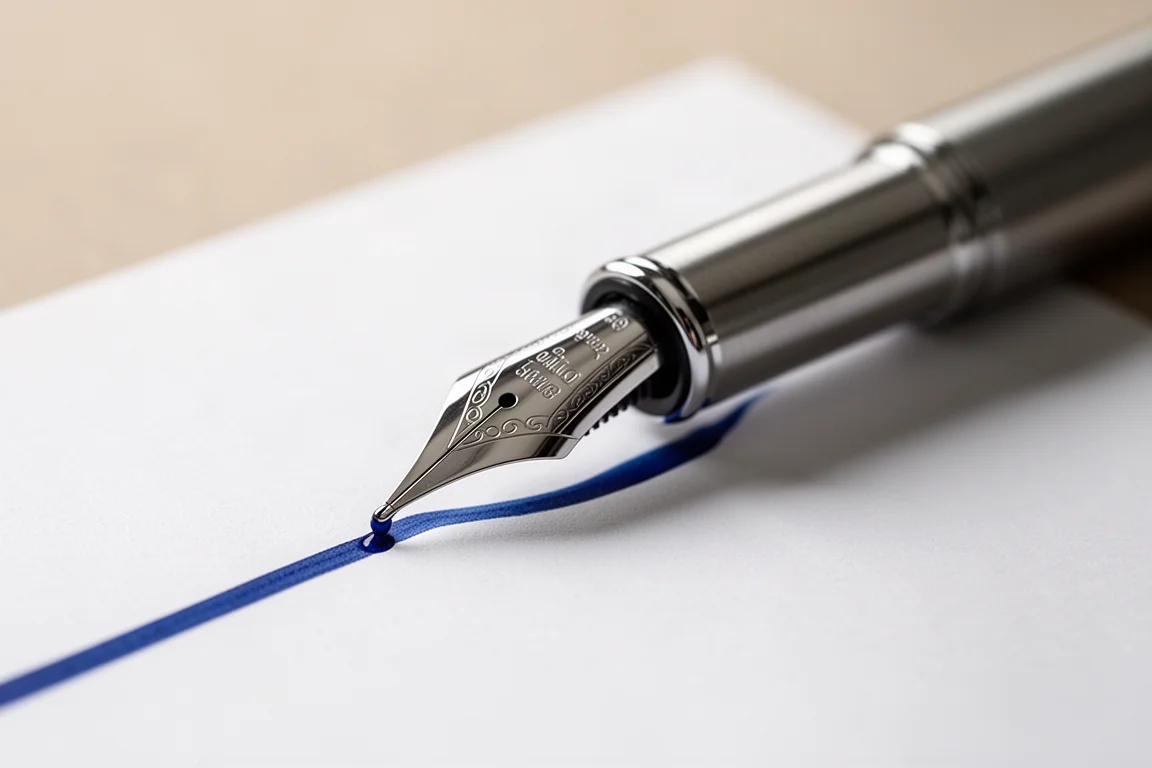
Measured capacity is about 2 ml, the lowest in this lineup but still comfortably more than a converter.
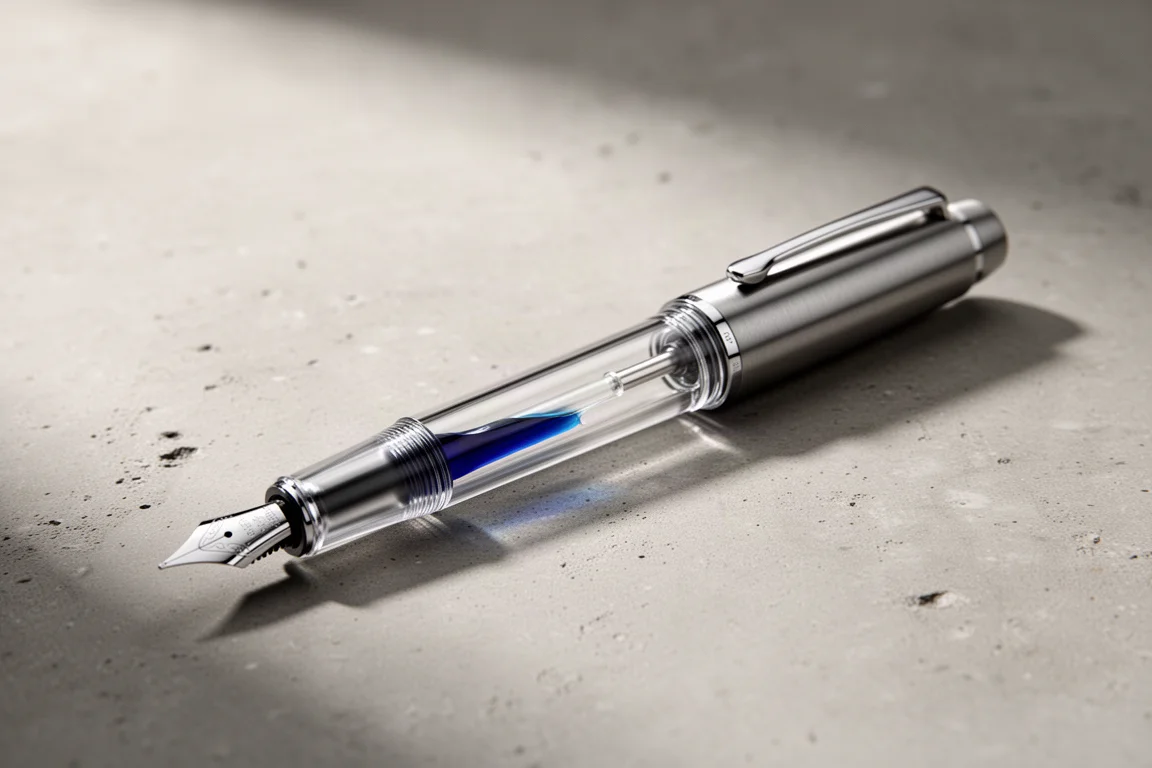
Opus 88 Omar
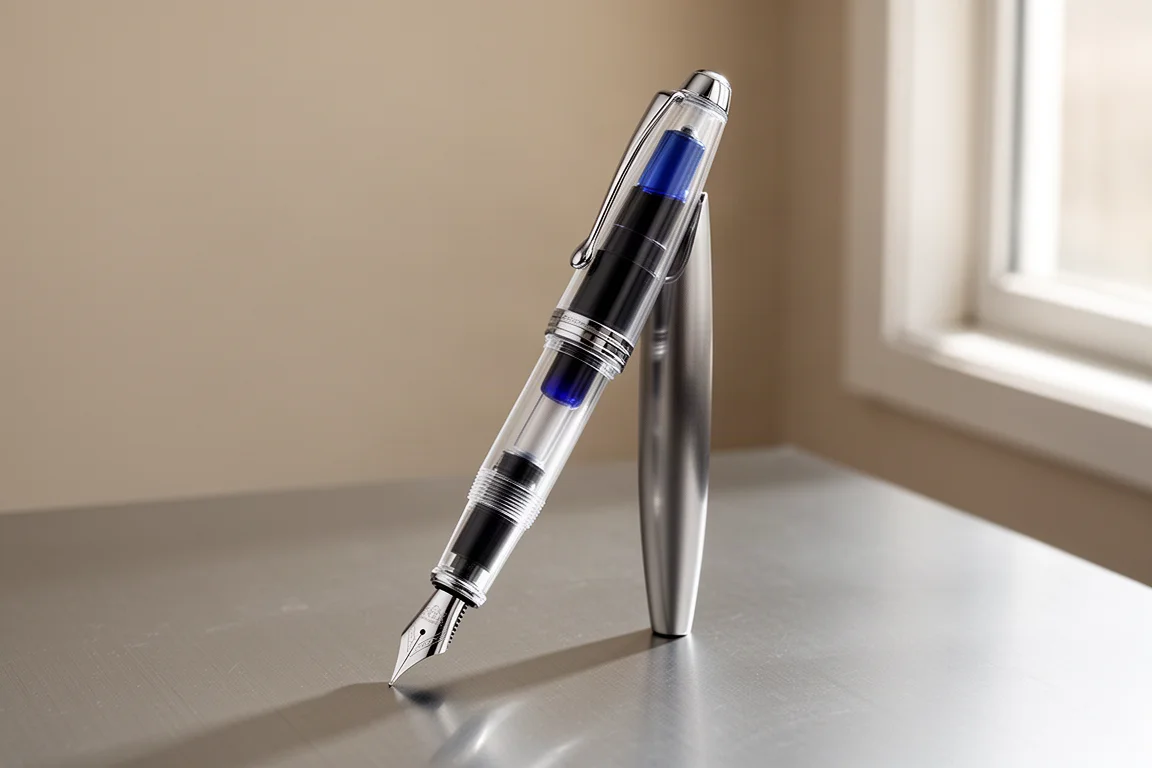
A notably bulkier pen with added girth that makes for a comfortable grip. It uses a number six Jowo nib, available in a range of grades, and the broad steel version is very smooth and quite wet. The eye-catching feature is the one-way shut-off valve system, which is uncommon at this level: you unscrew the section, fill with an eyedropper, and use a knob at the end to open or close the secondary chamber.
One honest caveat: opening the valve does make the flow a bit wetter, but the difference is modest rather than dramatic. The section is very hard plastic, which some writers find polarizing. It does not really post, but it is a large pen that wears its size well, and being able to see the nib as you cap it is a nice touch.
TWSBI Vac 700R
Another vacuum filler that works the same way as the Asvine, with a primary and secondary ink chamber. This unit has a 1.1 mm stub nib, which brings natural line variation the other pens here do not offer: broad downstrokes and finer cross strokes with no pressure at all. It is a fairly wet, smooth, pleasant nib.
The weak point is the section. It is too skinny for longer writing sessions and there is a noticeable step down from the barrel. Capacity measured around 2.7 to 2.8 ml, a little more than the nominal 2.5 ml figure, and the pen is available in several finishes.
Cedo Kakari
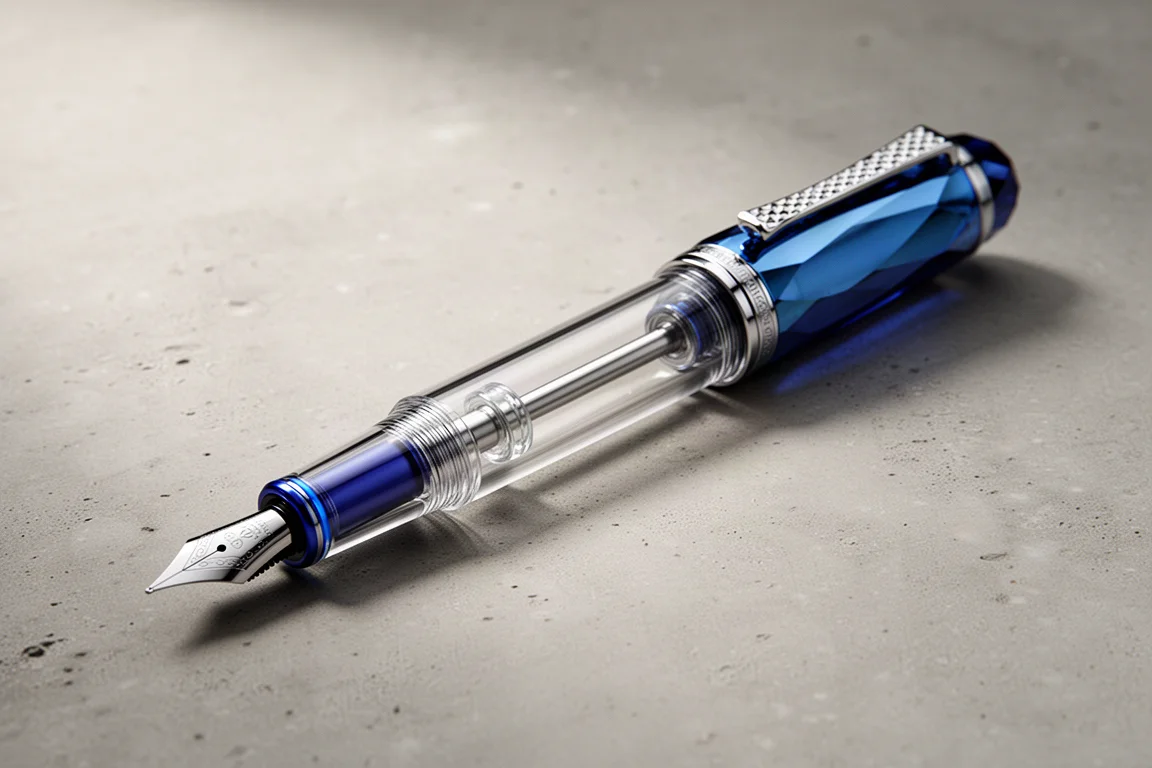
At around $600, this is a major step up in price. It comes with a gold Jowo nib, which writes smoothly with a wet flow and a touch of springiness, though it is not a flex nib. The metal titanium section is textured just enough that it never feels slippery, and the pen does not ship with a clip.
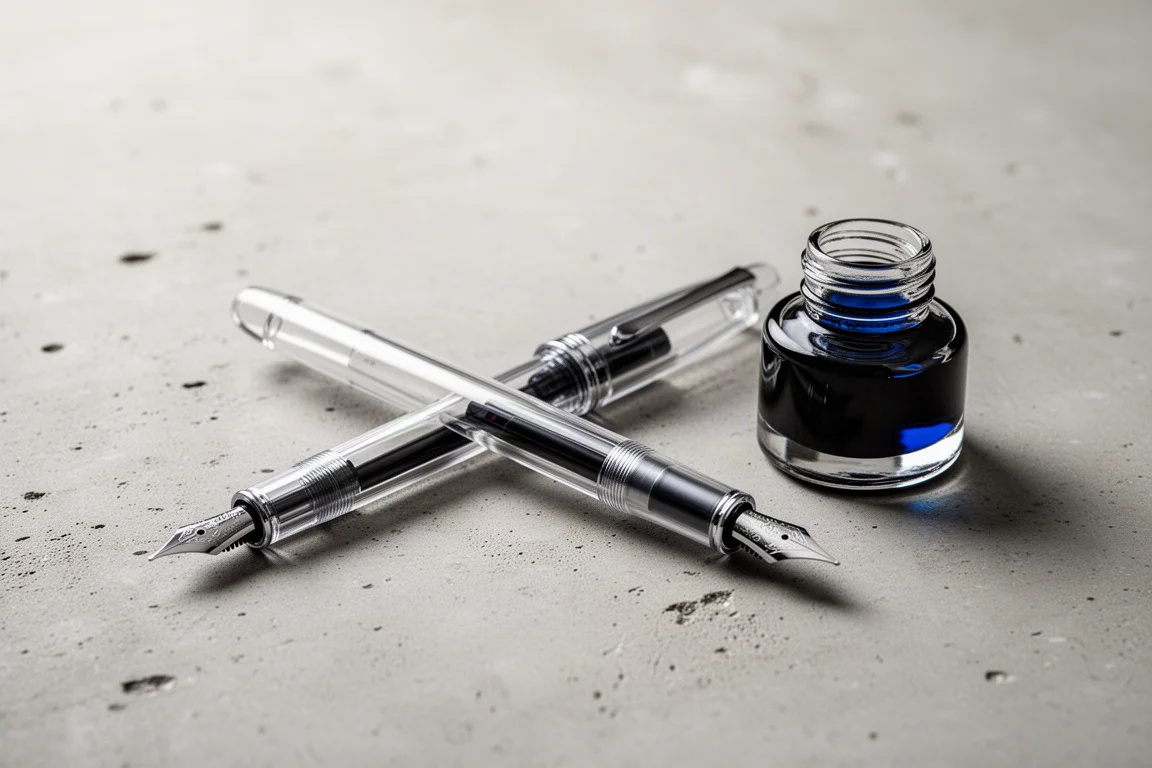
The filling system is a draw filler with a clutch mechanism: you unscrew the tail, pull out the rod, engage the clutches, unscrew the seal, then draw the rod back in a bottle of ink to create a vacuum. It is the most effective filling system in this lineup, filling nearly the entire barrel in one go, something even the Conid does not manage. Those who prefer a more intuitive approach may still like the Conid’s threaded variant better.
Conid King Size
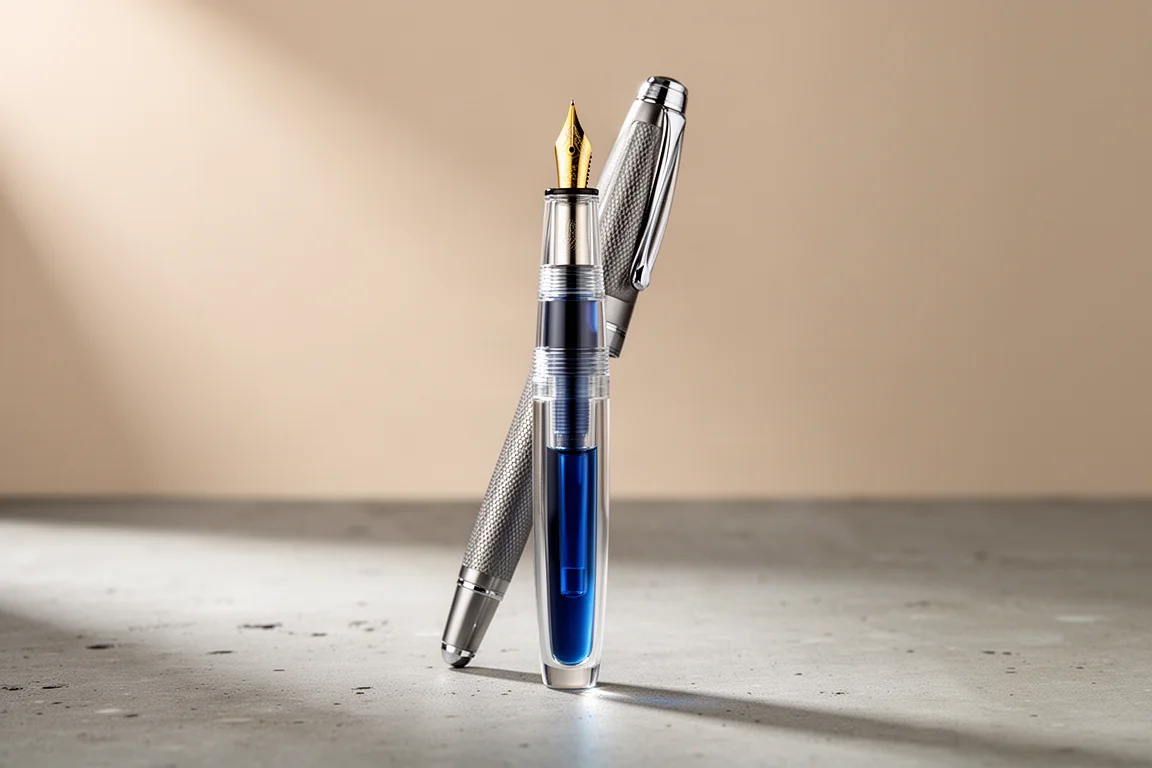
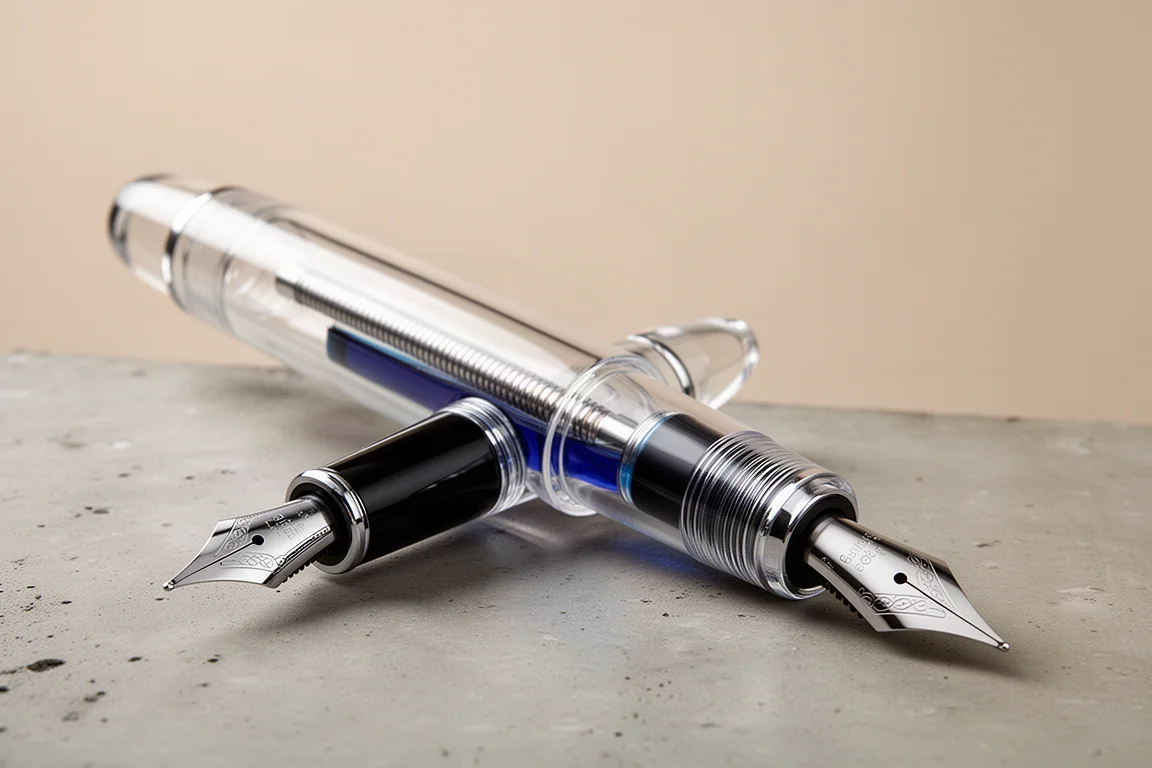
The most expensive pen here, released in small batches and guaranteed to cost more than $1,000. It is the only pen in this comparison with a number eight nib, a double broad that is very wet, soft, and pleasantly bouncy. The pen is roughly the size of an oversized flagship, posts if you want it to, and uses an ebonite feed.
The filling system is similar to the Cedo’s draw filler, but the rod threads into the seal, which makes it a little more intuitive to use. The clear body shows off both the mechanism and the ink, and the section is slightly girthier than the Cedo’s, which many will find more comfortable. It is simply a reliable, excellent writer, with price and limited availability as the only real drawbacks.
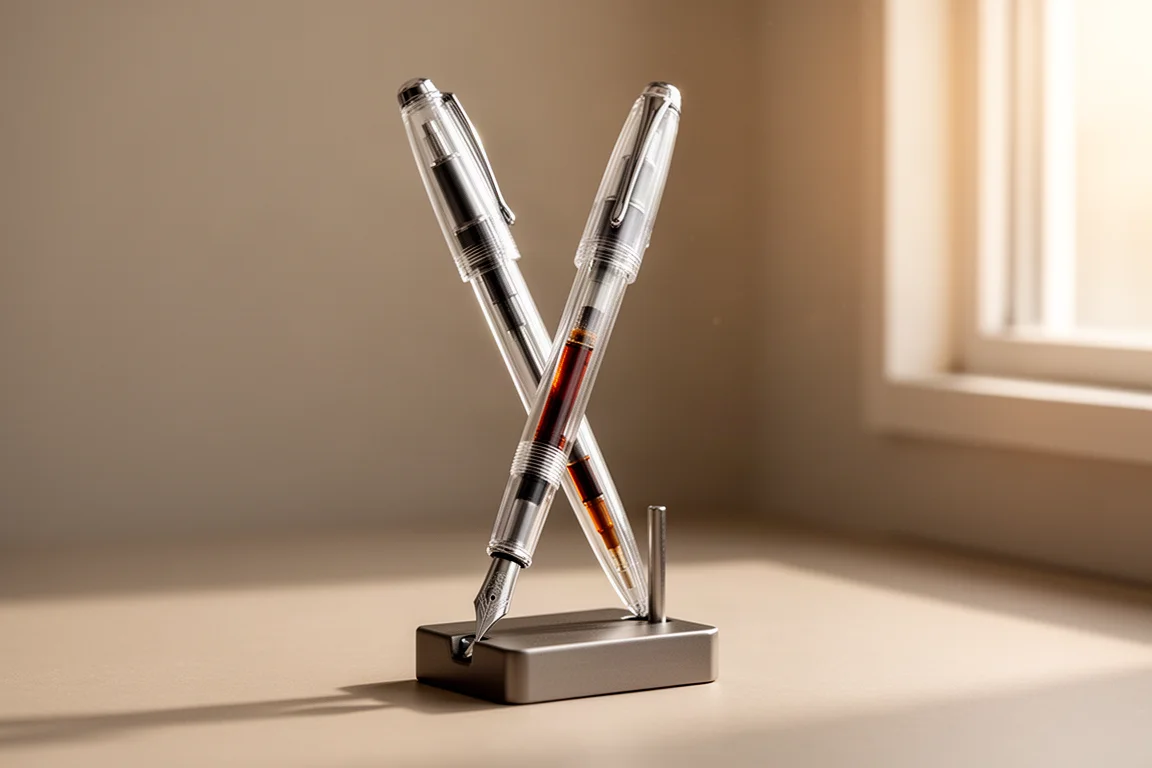
Capacity is a full 4 ml, matching the Cedo for the largest in this comparison.
Ink Capacity Compared
Measured by completely filling each barrel and emptying it into a vial:
- Asvine V200: about 2 ml
- TWSBI Vac 700R: about 2.7 to 2.8 ml
- Opus 88 Omar: 3 ml
- Cedo Kakari: 4 ml
- Conid King Size: 4 ml
The Cedo and Conid hold the most, helped by their substantial barrels. Even the smallest entry here, the Asvine at 2 ml, comfortably beats a standard converter.
Buying Advice
For a first high-capacity demonstrator, the Asvine V200 is the sensible entry point, and the standard nib is good enough that the Bock upgrade is optional rather than essential. If you want more girth and an unusual valve system, the Opus 88 Omar is a strong mid-tier pick. The TWSBI Vac 700R is the one to choose if line variation matters to you, provided a slim section does not bother you. At the top end, the Cedo Kakari offers the best filling system of the group and a gold nib, while the Conid King Size is the connoisseur choice if budget and availability are not obstacles.
Conclusion
Every pen here solves the same problem, holding far more ink than a converter in a clear barrel, at very different price points. Match the filling system and section size to how you actually write, and any of these five can be a rewarding daily carry.
Further reading
Related Reviews
Fountain Pens
Best Budget Fountain Pens Tested: 9 Pens, One Clear Winner
A hands-on comparison of nine affordable fountain pens for everyday writing, calligraphy, and sketching, with a clear standout for flexible nib fans.
Fountain Pens
Aurora Optima Review: An Italian Piston Filler That Punches Above Its Price
A 14k gold nib, ebonite feed, and a beautifully deep oraloid body make the Aurora Optima one of the most rewarding piston fillers around.
Fountain Pens
Cross Bailey Light Review: The Entry-Level Fountain Pen Worth Keeping at the Office
A plastic-bodied Cross with a metal clip, snap cap, and famously smooth extra fine steel nib. Around $15, available almost everywhere, and easy to recommend.