Camping Gear
Claymore V600+ Camping Fan Review: Measured Airflow, Noise, and Run Time
A rechargeable camping fan with four speeds, a 7,800 mAh battery, and a removable safety cage, tested for airflow reach, noise, run time, and charging speed.
Introduction
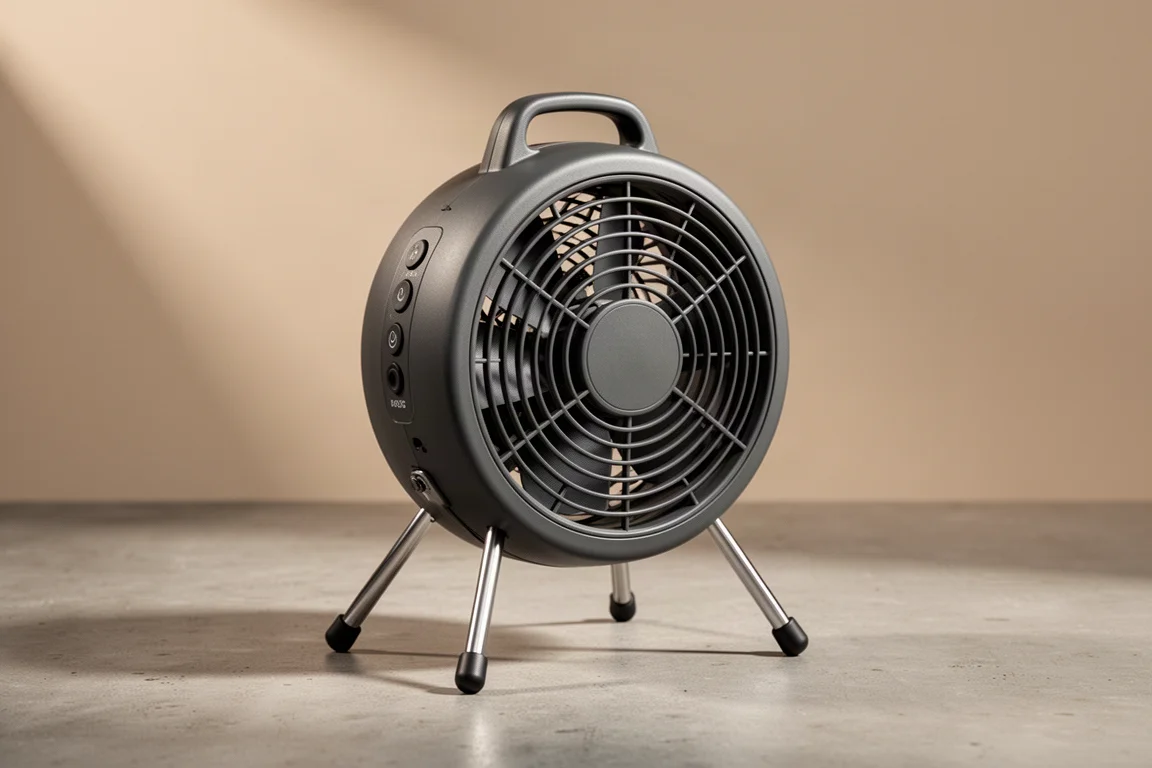
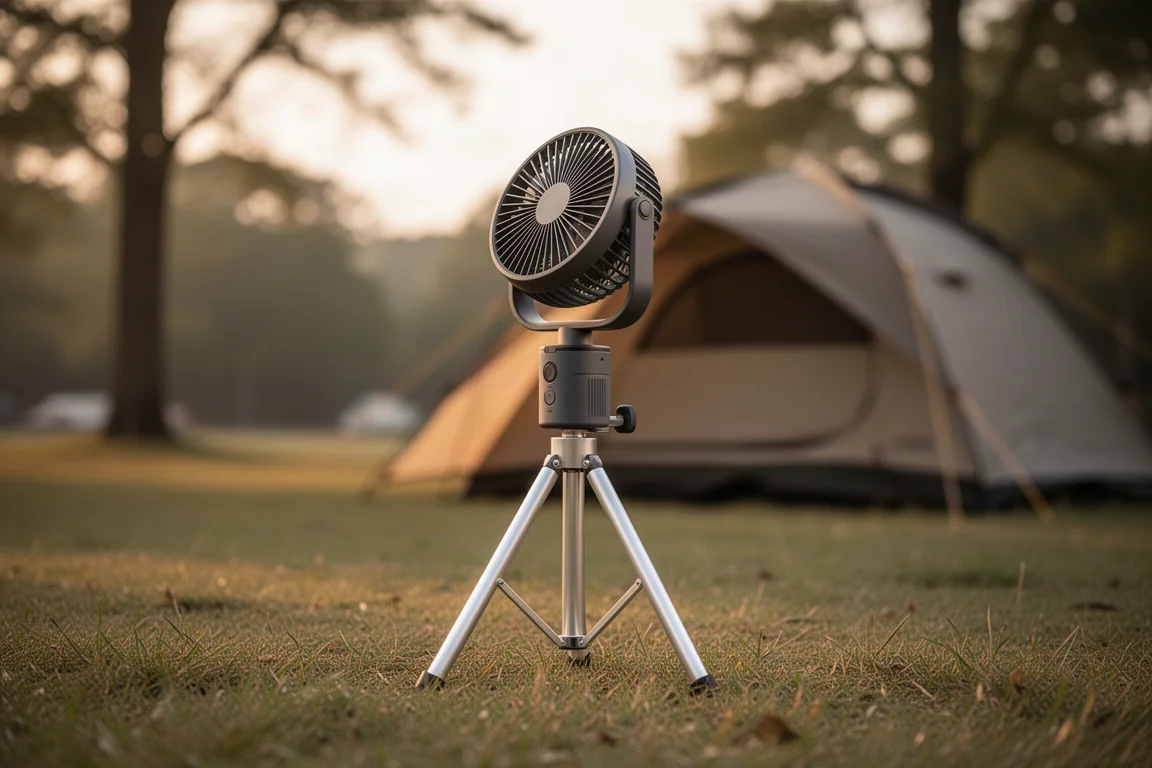
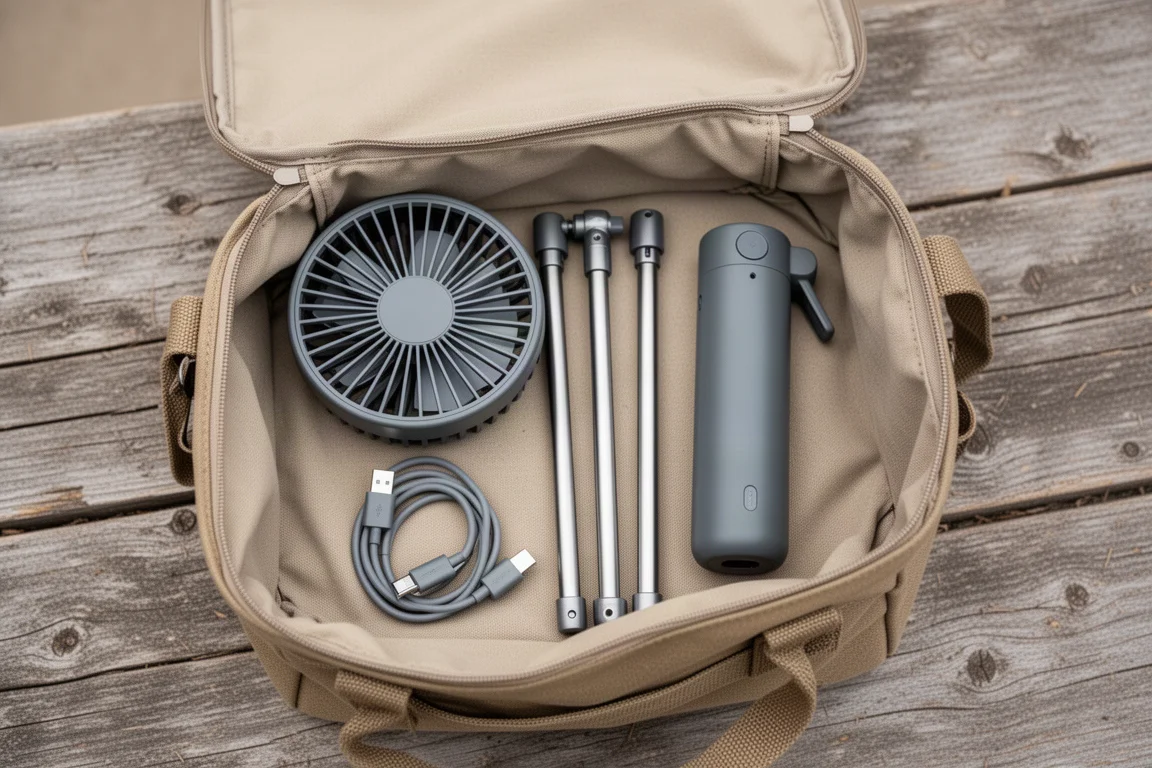
The Claymore V600+ is a rechargeable camping fan built for warm, still nights inside a tent. It carries a 7,800 mAh battery, offers four selectable fan speeds, and ships with a USB-C charging cable plus a set of detachable legs. A standard quarter-inch tripod thread on the underside lets you mount it on a separate tripod when you want the airflow lifted off the ground.
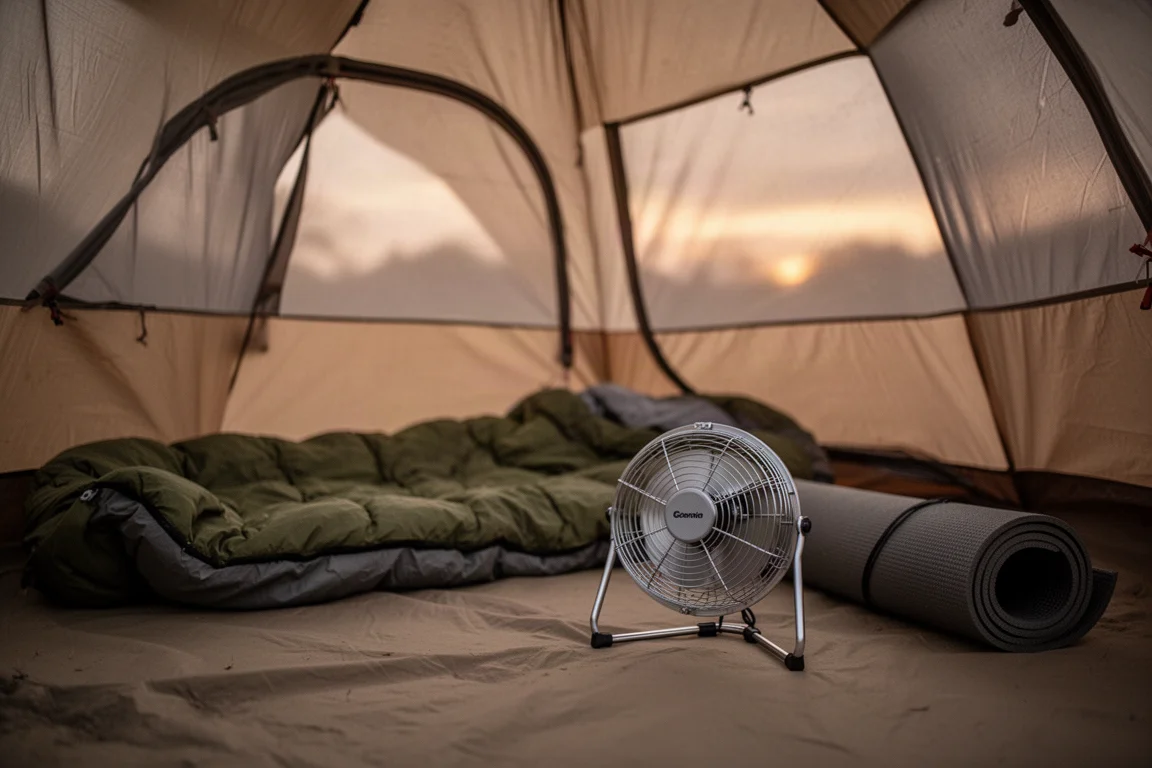
In practice the fan is easy to live with. It arrives with roughly half a charge, the two control buttons cover speed and timer, and the airflow is strong enough to reach the far end of a large tent. The sections below cover measured airflow, noise, run time, and the quirks worth knowing before you commit.
Who the Claymore V600+ Is For
This fan suits campers in hot and humid climates who want moving air without hooking up to mains power. It is a good match for tent campers using shelters up to six person size, where the airflow still registers at the opposite end of the tent, though weakly at that distance.
It also suits light sleepers. On the two lowest speeds the fan is effectively inaudible in a quiet room, which makes it practical to leave running overnight. Anyone who wants a fan they can break down for packing will appreciate that the legs detach completely from the head.
Main Strengths
The removable safety cage is the standout detail. Turning the cage anticlockwise unlocks it and lifts it clear, giving direct access to the blades for cleaning. Grooves and an alignment arrow make it easy to seat correctly again, and a clockwise turn clicks it back into place. The fan will still run with the cage removed, so handle that step with care.
Four speed settings cover a useful range, from a gentle ultra-low setting to a high setting that pushes a noticeable amount of air. Build quality feels a step above typical camping fans, with a metal handle and metal legs paired with a plastic fan head and blades. The rear handle doubles as a carry grip and a loop point for a carabiner, so the fan can be hung from the top of a tent. The quarter-inch tripod thread adds another mounting option for more height and adjustability.
Battery life is another strength. Run times stretch from a full weekend and beyond on the lowest settings, and the sleep timer helps spread the charge across several nights.
Airflow, Noise, and Run Time in Practice
Measured airflow at the face of the fan came in at roughly 2.6 meters per second on ultra-low, 3.1 meters per second on low, 3.8 meters per second on medium, and 4.2 meters per second on high. Those readings sit below the 5.8 meters per second maximum figure the fan is marketed with.
Airflow reach was measured in still air. On high, the airstream registered up to about 156 inches, which is 13 feet or nearly 4 meters, from the fan. Medium reached about 142 inches, low about 112 inches, and ultra-low about 87 inches. Inside a six person tent, the airflow carried to the far wall on the highest setting, though the draft at that distance was faint, which makes a six person tent the practical ceiling for this fan.
Noise readings were taken in a quiet room where the background level alone measured about 41.5 decibels. With the fan running, the meter averaged about 46.3 decibels on ultra-low, 51.7 decibels on low, 57 decibels on medium, and 60 decibels on high. The quoted 15 decibel minimum figure looks optimistic against these numbers, but subjectively the two lowest speeds are silent enough for sleep, medium is a light hum, and high is quieter than many comparable fans.
Run time is quoted at 7 to 32 hours depending on speed. On high the fan ran for about 6 hours 15 minutes, and on ultra-low it ran for about 31 hours 30 minutes, so the real figures land close to the published range.
The sleep timer offers one, two, three, and four hour settings, with a fifth press turning it off. Each setting shut the fan down within about a second of its target. The battery indicator uses the same lights and appears only for about five seconds after you switch the fan on, so checking the charge later means power cycling it.
Things to Consider Before Buying
Charging is the slowest part of the experience. A full charge takes about six and a half hours, consistent within a few minutes each time, and that is a long wait compared with most portable gear. The fan does run while plugged in, so you can use it during a charge if an outlet is within reach.
Head tilt is limited. The fan angles from straight ahead to roughly 45 degrees upward, and it cannot be aimed downward. One workaround is to remove the legs, rest the head on the ground with the buttons facing down, and use the handle as a stand.
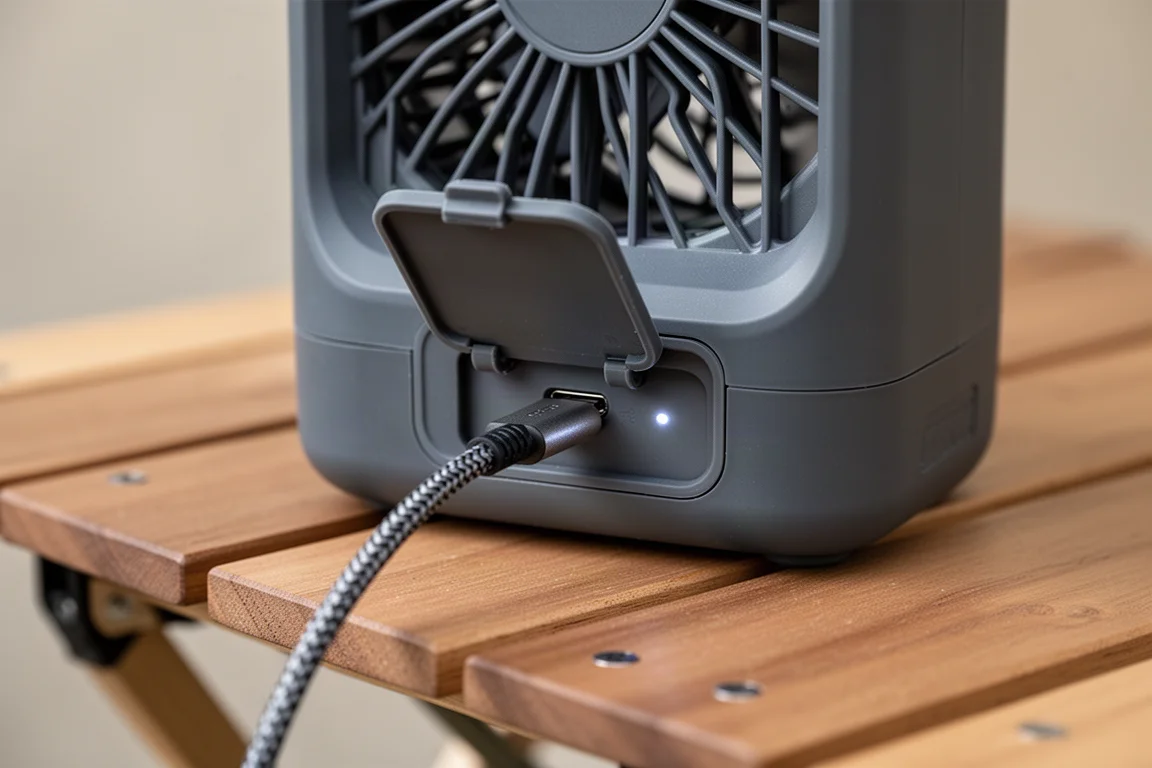
There is no IP rating published for this fan. In a 30 minute test under moderate rain the fan kept working, and the controls and timer continued to function, but water collected inside the port flap at the back. The port cover is not tightly sealed, so light rain is survivable while sustained heavy exposure is a different matter.
Two smaller points are worth noting. The indicator lights are bright in complete darkness, which can bother light-sensitive sleepers, though covering them is simple. There is also no built-in flashlight or lantern, so this fan covers cooling only. The USB-C port may support charging other devices, but that capability has not been confirmed.
The legs are adjustable but the head is top-heavy, so spreading the legs as wide as possible is the safest setup. The locking mechanism is not especially intuitive, and separating the legs from the head can take some effort.
Setup, Cleaning, and Care
Getting the fan ready is quick. Clip the legs into the base, align the grooves on the legs with those on the fan attachment, then turn anticlockwise until the notch lines up with the edge of the icon. That locks the legs in place and stops them pulling free.
Removing the safety cage for cleaning follows the same logic. Hold the face of the fan, press down, and turn the cage anticlockwise until it clicks, then lift it away to reach the blades. To refit it, position the cage over the blades with the logo facing up, press gently, and rotate slightly until the notches engage, then turn clockwise until it clicks. Check that the arrow on the cage lines up with the groove on the fan body to confirm a correct fit.
Charging is handled through a flap on the back of the housing. Open the flap, connect the supplied USB-C cable, and a small light beside the port confirms the fan is charging. That light switches off when the battery is full. A one year warranty covers the fan.
Buying Advice
Buy the Claymore V600+ if you want a rechargeable fan that can cool a tent overnight without waking you, and if you value being able to strip it down for packing. The combination of four speeds, genuinely quiet low settings, a removable cage for cleaning, and a tripod thread covers the practical needs of most tent campers.
Think twice if charging speed matters to you, since a full top-up takes most of a working day, or if you need the fan to double as a light. Campers who regularly pitch very large tents should also weigh the reach figures above, because the airflow thins out noticeably past six person size.
Used with the sleep timer, the battery comfortably covers a weekend trip and several nights beyond it on the lower speeds. Keeping the legs spread wide and using the carry handle for hanging covers the two most common setup situations.
Conclusion
The Claymore V600+ does the core job well. It moves air across a large tent, stays quiet enough for sleep on its lower settings, and runs long enough to last a trip. Its main compromises are a long charging time, a limited tilt range, and the absence of built-in lighting. For campers who want dependable portable cooling and can plan around the charge time, it is a sensible pick.
Product link
View more details for Claymore V600+
This product is mentioned in the review. Check the specifications, options, and compatibility before buying.
View more details for Claymore V600+Further reading
Related Reviews
Camping Gear
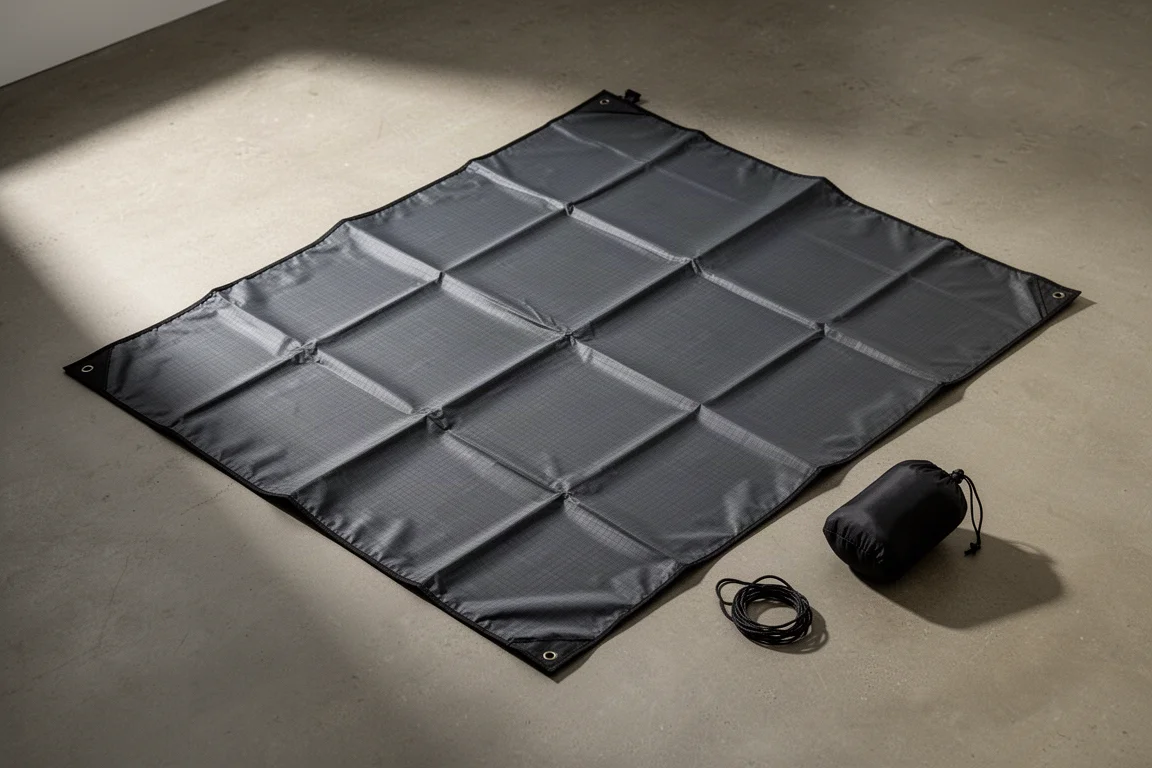
3FUL Ultralight Ground Sheet Review: A Two-Person Footprint Worth Packing
A 6.7 oz two-person ground sheet in ripstop silnylon, priced around $30. Here is what it protects, what it does not do, and who should pack it.
Camping Gear
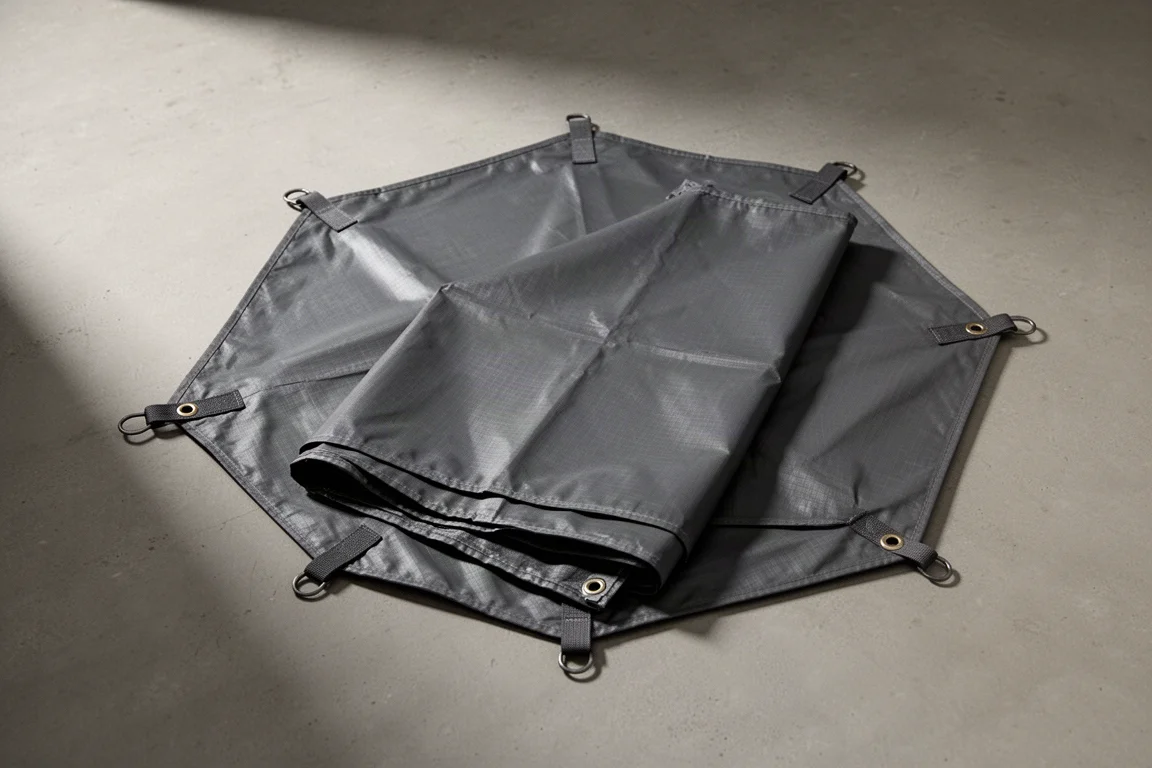
Backcountry Light Dual-Function Tarp and Floor Review: A Footprint First
A dual-purpose tent floor and tarp that keeps falling rain off you, but cannot block wind. Here is where it works and where it does not.
Camping Gear
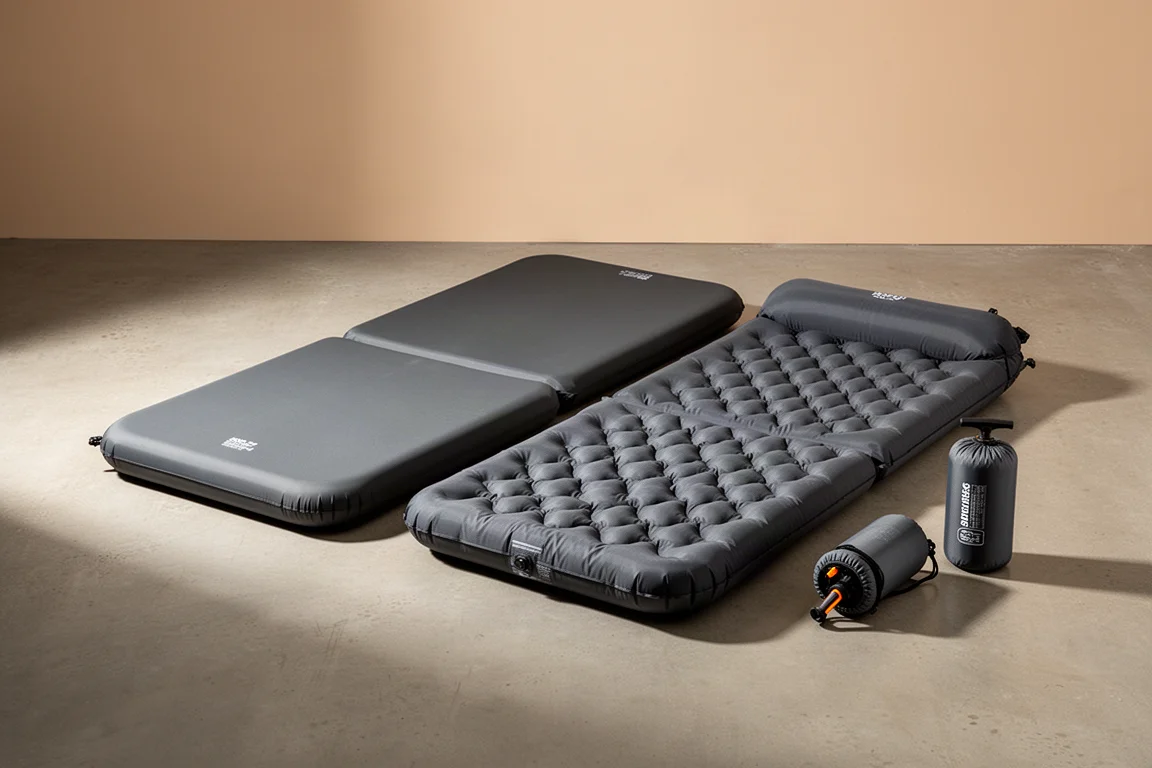
Best 2-Person Camping Mattresses for Couples: 10 Options Compared
A practical comparison of ten two-person camping mattresses, covering self-inflating pads, air pads and air mattresses for couples.