Fixed Blade Knives
Civivi Timber Bark Review: A Practical Fixed Blade for Bushcraft and Game Processing
A budget-friendly fixed blade with 14C28N stainless steel, orange G10 scales, and a well-thought-out Kydex sheath system.
Introduction
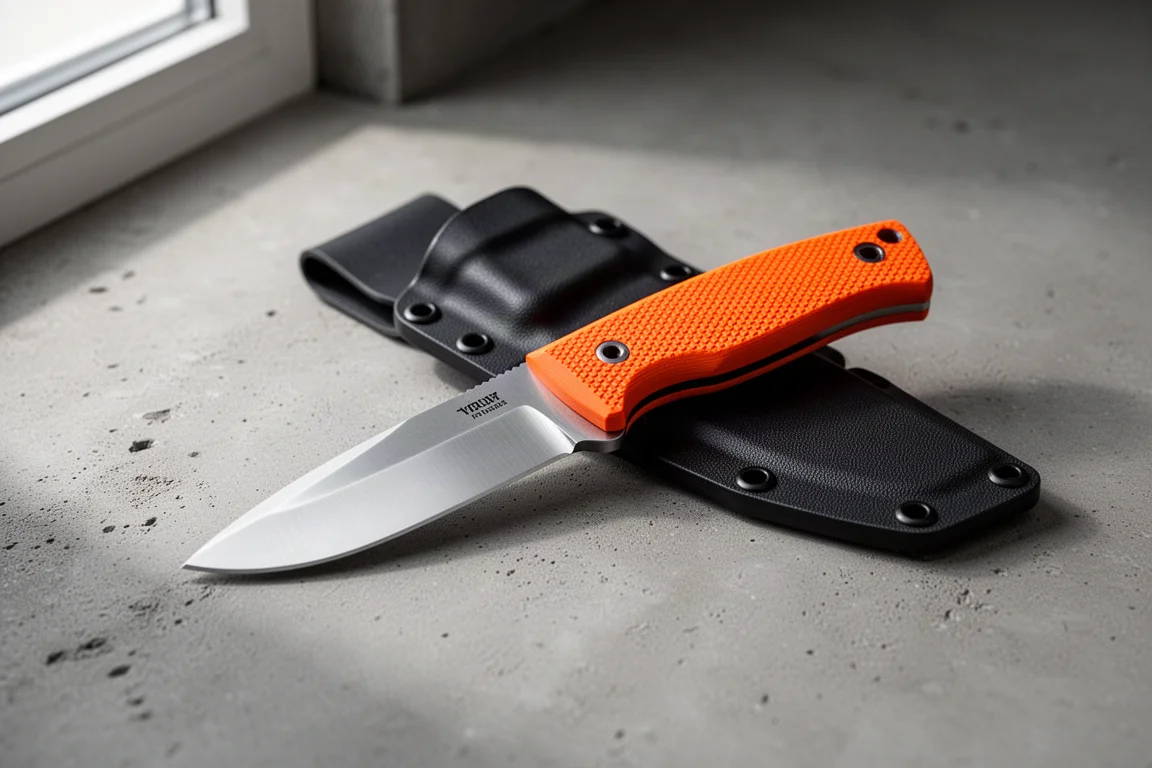
The Civivi Timber Bark is a new fixed blade aimed squarely at people getting into bushcraft or looking for a dependable hunting knife for processing game. It keeps the design deliberately simple: a drop point blade with a flat grind, orange G10 scales, and a full tang construction with the scales bolted on using two Torx bolts. At a street price of around $60 or slightly under, it positions itself as an excellent gateway bushcrafting knife, and it largely earns that label.
Design and Handle Ergonomics
The handle is fairly small, which works in its favor more often than not. Smaller hands will find it comfortable, it handles well with gloves on, and a compact handle leaves room for precision work. That is the same reason kitchen knives never have oversized handles: when you are doing controlled, detailed cutting rather than hacking apart trees, a smaller grip gives you better indexing.
Jimping placed right up front on the blade spine adds real value here. It gives you a secure index point for precision cuts and helps maintain grip when working inside a cavity, a common scenario during game processing. There is also a solid finger choil that allows a full wraparound grip when you need more control.
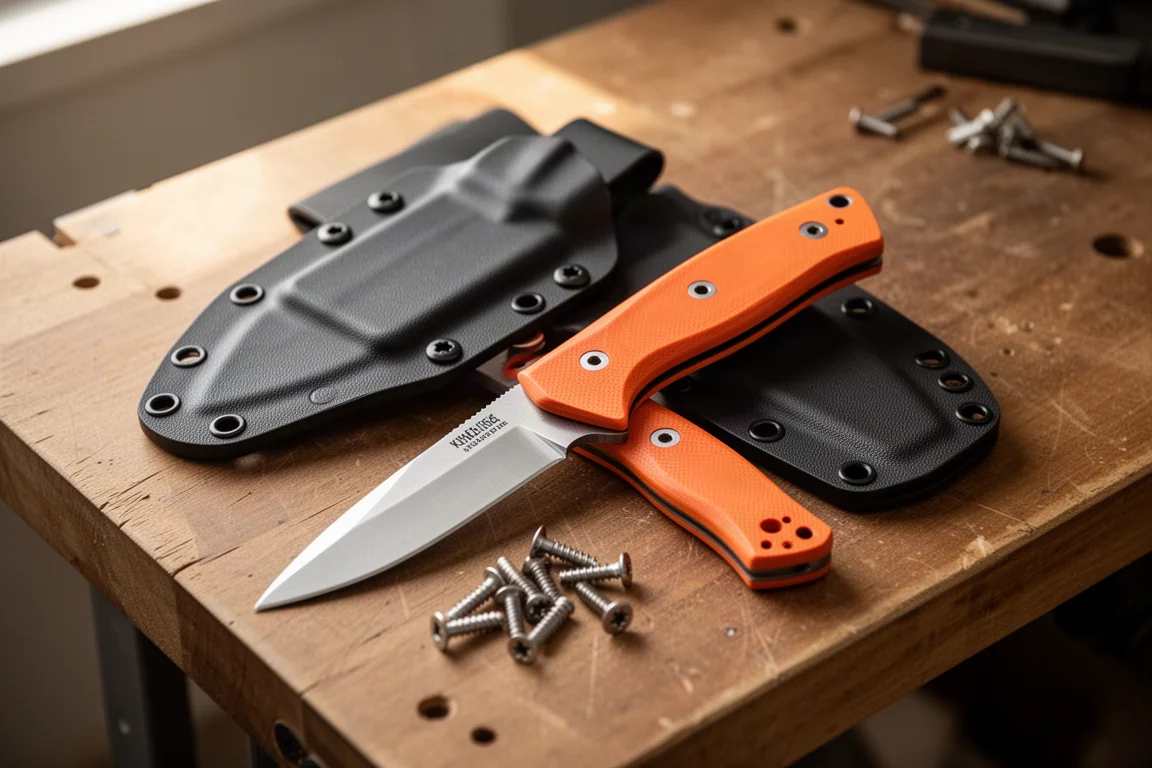
The full tang design is straightforward: solid steel running through the handle with the scales attached by two Torx bolts, a very common and proven construction. The orange color choice is more than cosmetic. Anyone who has used knives in the field, especially for game processing, knows it is not a clean job. Knives get set down, dropped, or tossed aside while working, and a bright orange handle makes the knife far easier to find again.
Blade and Steel Performance
The blade uses 14C28N stainless steel, a reasonable choice for this price point and one that suits a knife that will see messy field work and regular cleaning. Blade thickness is 3 mm, which is noticeably thicker than some comparable small fixed blades, and the knife has a nice big, thick belly on the edge.
Overall length comes in at about 6.7 inches, with a blade length a little over 3 inches and a cutting edge of roughly 2 3/4 inches. That is standard territory for bushcraft, where palm-sized blades are the typical starting point. Weight is about 3.3 ounces, so it stays fairly light on the belt or in the pack.
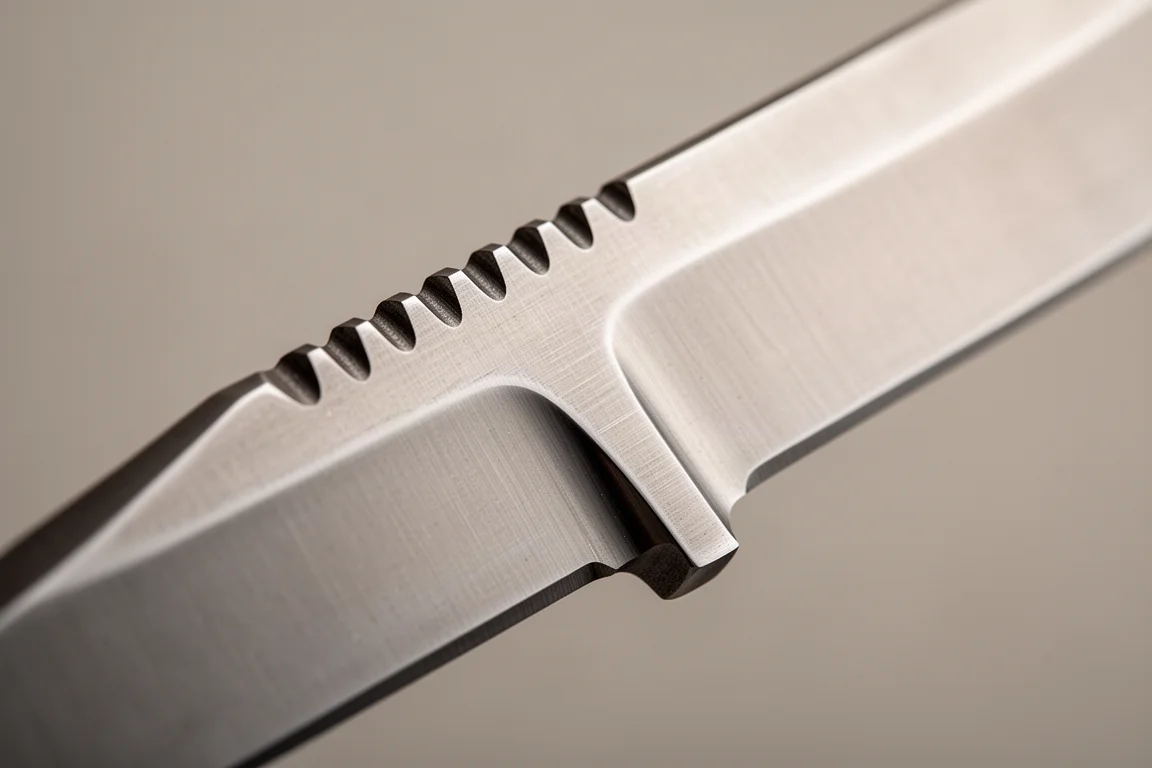
For wood work, the finger choil earns its keep again, letting you choke up for controlled carving. Bushcraft rarely calls for a big knife anyway; in the field you would carry a hatchet alongside it. The Timber Bark works as a good solid primary for lighter tasks, a capable backup knife, and a practical camping knife.
Who This Knife Is For
This is a knife for beginners building their first bushcraft kit, hunters who need a dedicated blade for processing game, and campers who want a simple, functional fixed blade they do not have to baby. The modest price makes it an easy entry point, and the 14C28N steel keeps maintenance simple.
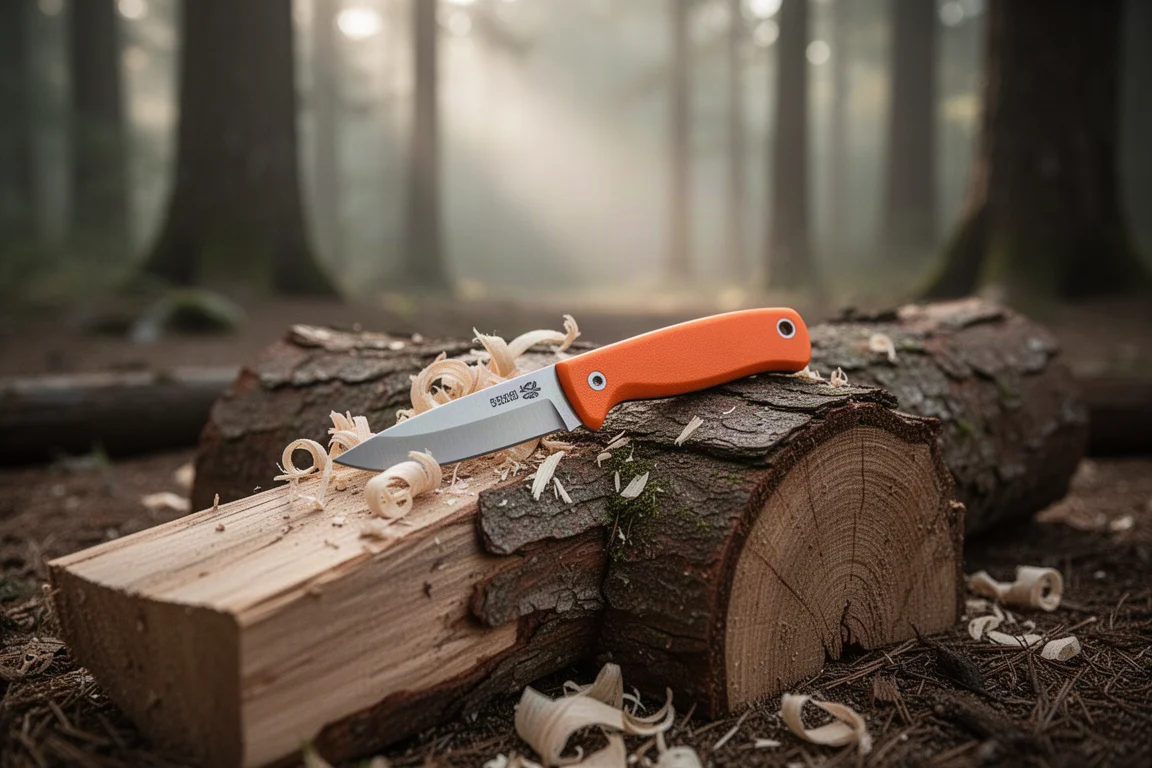
It also suits anyone drawn to visible gear for practical reasons. Orange shows up well against leaf litter, mud, and bloodied work surfaces, which matters more than most people expect once the work gets messy.
Carry Options and Sheath System
The knife ships with a black Kydex scabbard, a detachable belt clip (the teac-style clip), and the mounting screws needed to attach it in different positions. The clip bolts onto the Kydex in multiple configurations, so you can adjust how you carry it depending on preference and setup.
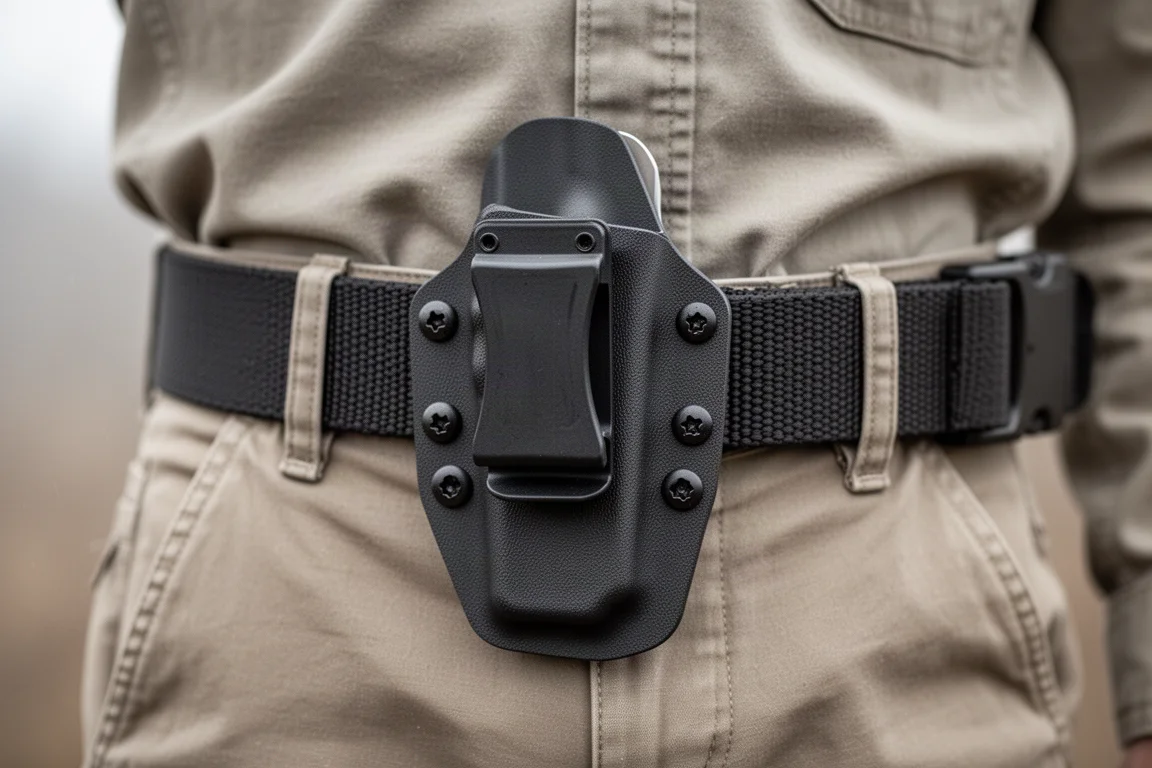
The retention is one of the more impressive details: the sheath snaps on easily, but the knife locks in rigidly and takes deliberate effort to remove. That is exactly the behavior you want from a fixed blade sheath.
Conclusion
The Civivi Timber Bark does what a gateway bushcraft and game processing knife should do: simple, elegant, functional design, sensible steel, secure carry, and a price around $60 that keeps the barrier to entry low. For a first bushcraft knife, a hunting processing blade, or just a well-made orange fixed blade, it is easy to recommend.
Product link
View more details for Civivi Timber Bark
This product is mentioned in the review. Check the specifications, options, and compatibility before buying.
View more details for Civivi Timber BarkFurther reading
Related Reviews
Fixed Blade Knives
SOG Altar Fixed Blade Review: A Promising EDC Knife Held Back by Its Handle and Sheath
A 3.6-inch 154CM fixed blade with an interesting 360-degree mounting system, but questionable ergonomics and a fragile sheath raise serious value concerns.
Fixed Blade Knives
Best First Fixed Blade Knives: 7 Options for New and Occasional Users
Seven fixed blade knives evaluated as first knives for someone who does not use a knife often, with sheath security, grip, and handedness all factored in.
Fixed Blade Knives
CountyComm Erggo R4A Pro Review: A Utility Fixed Blade With a Pry-Bar Heart
A thick, short D2 blade on a dense G10 handle, built for aggressive knife work and wood processing at around $55.