Fixed Blade Knives
Best First Fixed Blade Knives: 7 Options for New and Occasional Users
Seven fixed blade knives evaluated as first knives for someone who does not use a knife often, with sheath security, grip, and handedness all factored in.
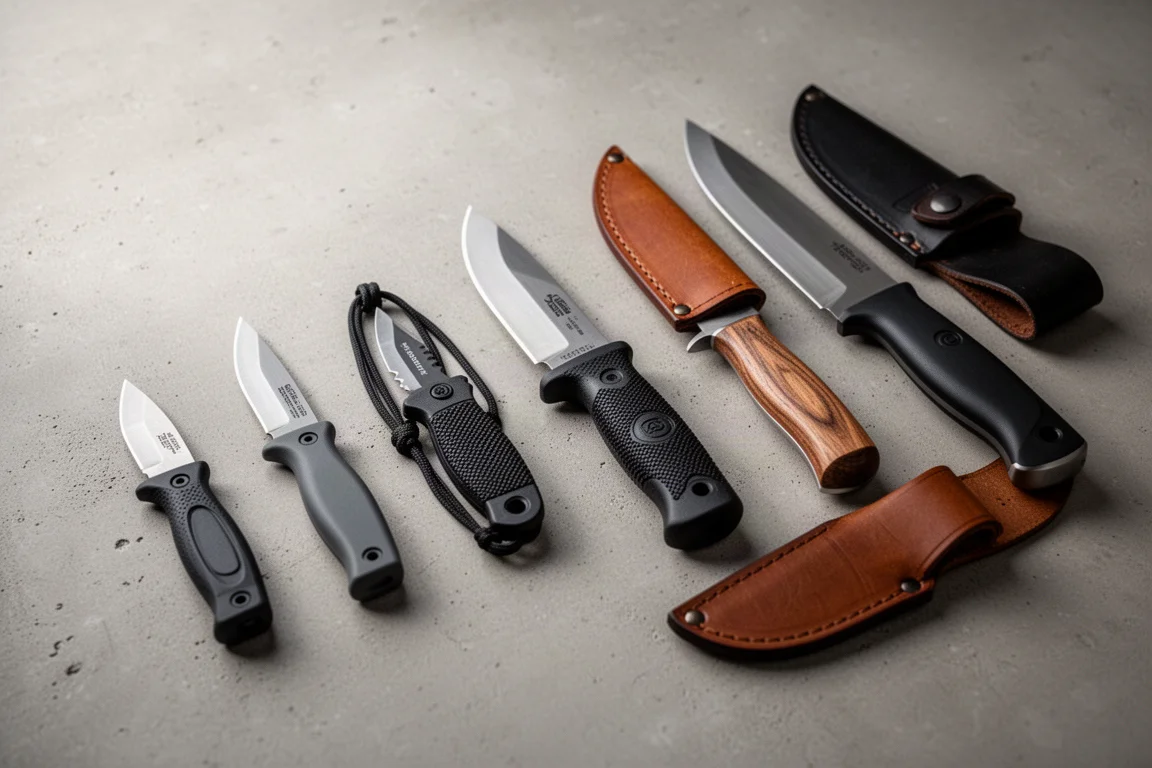
Introduction
Picking a first fixed blade knife for someone who does not use a knife often is trickier than it sounds. The knife needs to be very sharp, easy to grip securely, forgiving to learn on, and it needs a sheath that actually holds the blade in place. Left-handed users complicate things further, because plenty of budget knife setups are right-hand only.
This guide walks through seven fixed blade options and looks at where each one fits, where it falls short, and which one makes the strongest all-around first knife.
Mora 511 Basic
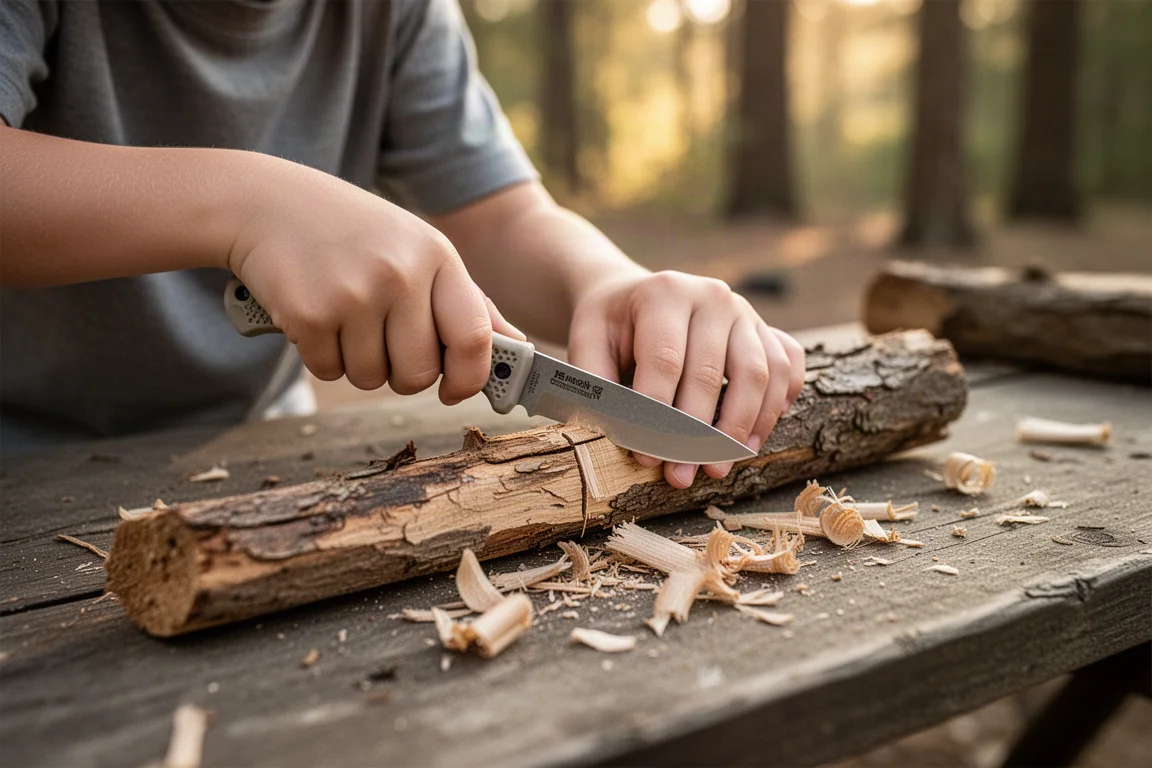
The Mora 511 Basic is widely regarded as the best knife at its roughly $10 price point, and for good reason. It comes razor sharp out of the box, has a handle that encourages good technique, and it is a natural choice for building muscle memory under supervision.
There are two caveats. First, the sheath retention is light. It is not terrible, but it could be better, and a blade that shifts in the sheath is not ideal for a new user. Second, the setup is right-hand only, which rules it out entirely for left-handed users. If you are right-handed and want a superb budget learning knife, this remains an easy recommendation.
Mora Garberg
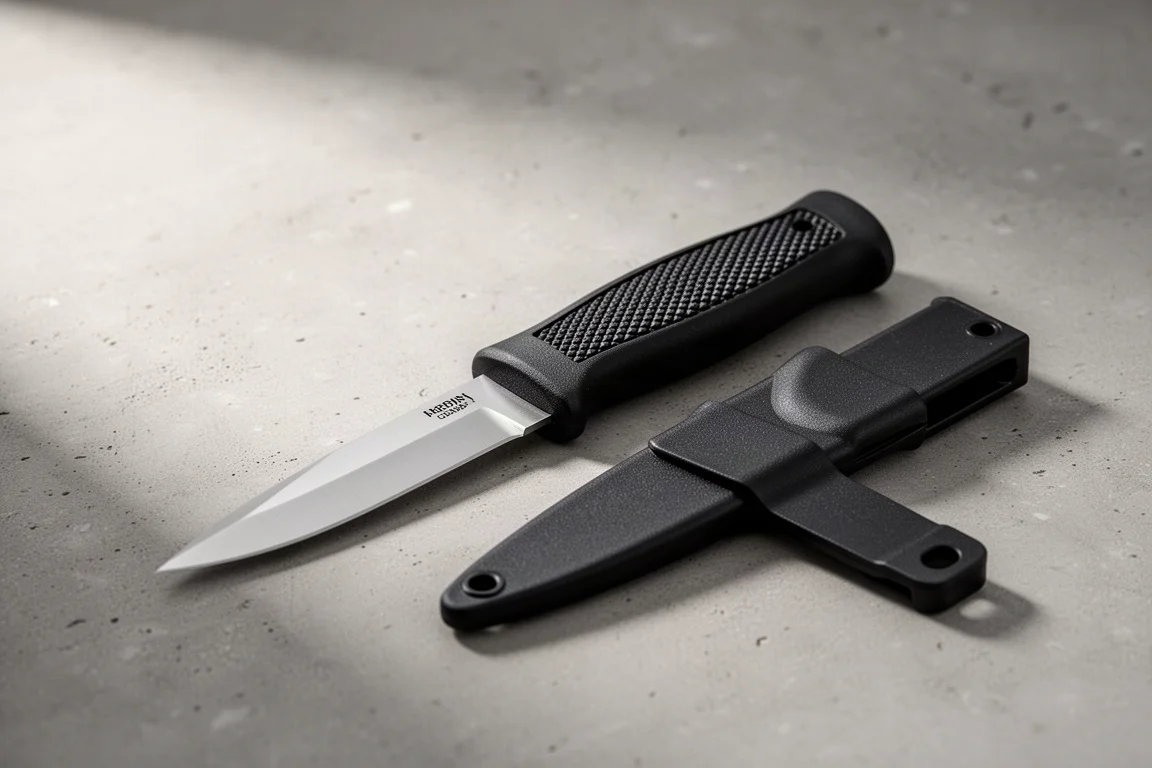
The Mora Garberg offers a very good balance between grippy and not grippy, with enough of the handle protruding from the sheath to grab it confidently. It is a step up in capability and is a knife many people would happily carry.
As a first knife, though, it is arguably more knife than a true beginner needs to start with. It makes a great second purchase or a choice for someone who already has some handling basics, but it is not where this search started or ended.
Mora Eldris
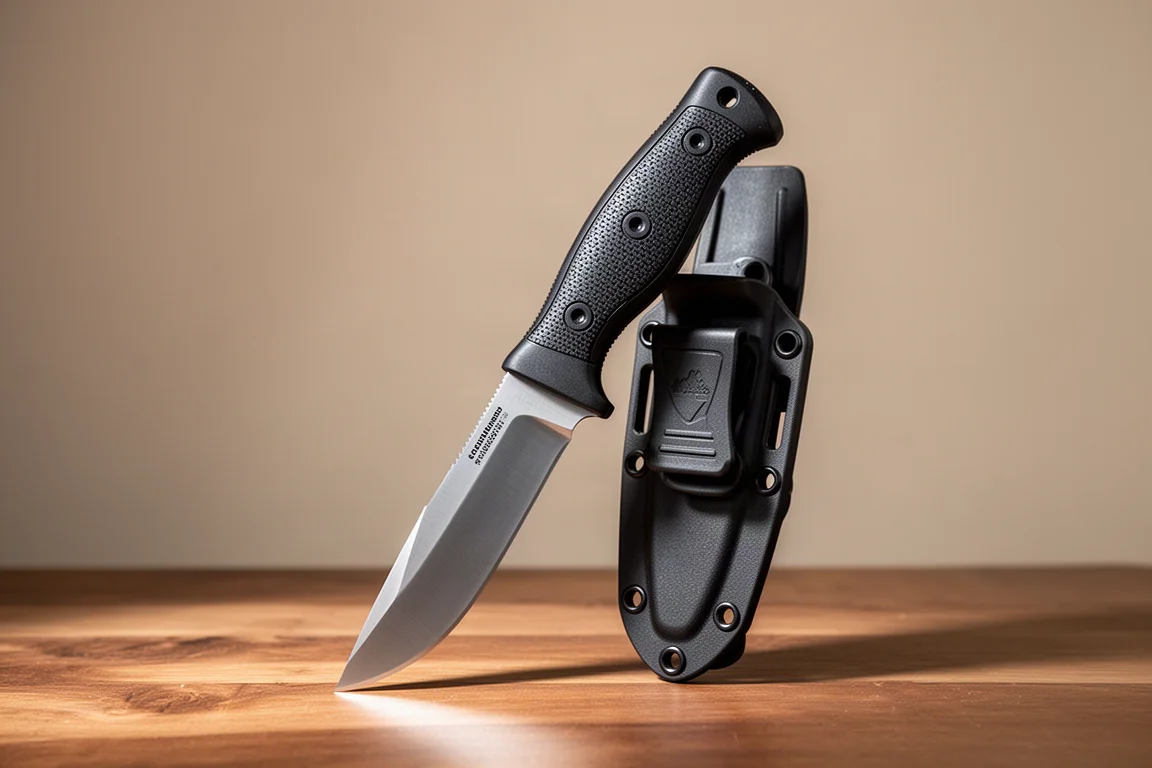
The Mora Eldris is compact and appealing, but the sheath is the sticking point. It can only be carried as a neck knife, and there is not enough handle exposed to keep the hand at a safe distance from the blade edge during use or removal.
That margin for accidental injury was the dealbreaker here. The Eldris works fine for people who specifically want a neck knife and are comfortable with the short handle, but as a supervised first belt knife it does not fit.
Outdoor Element Scout Feather
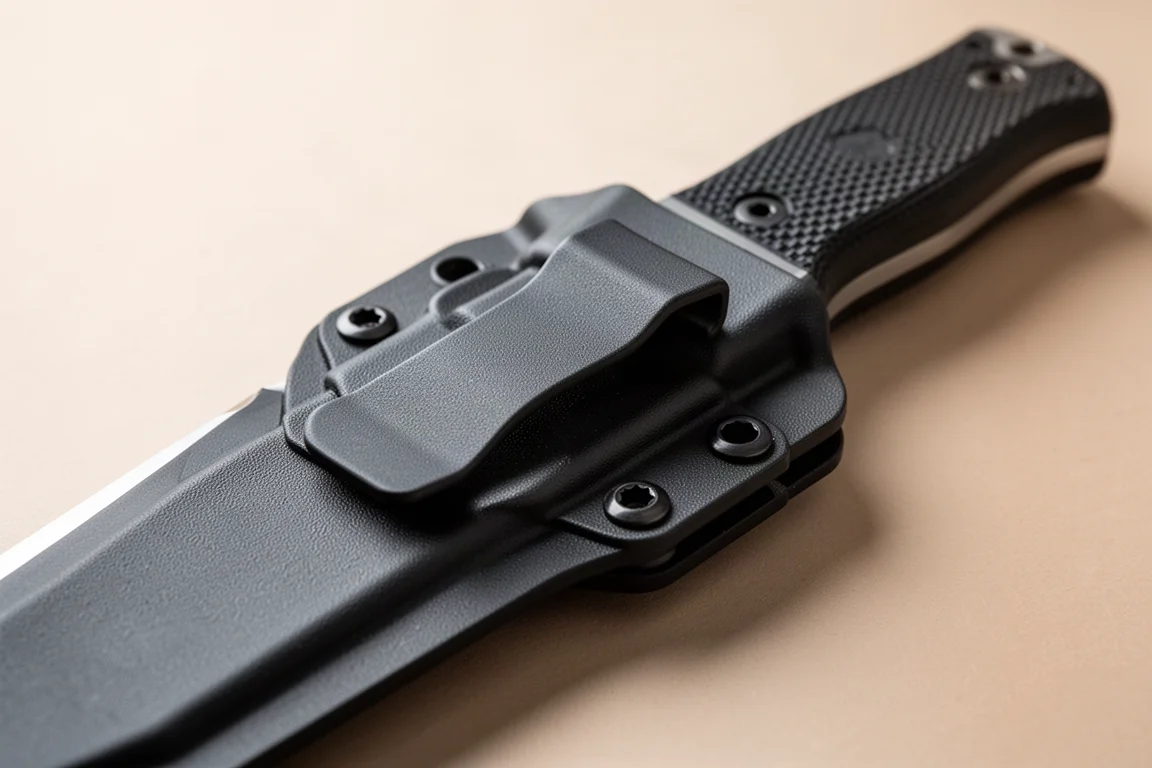
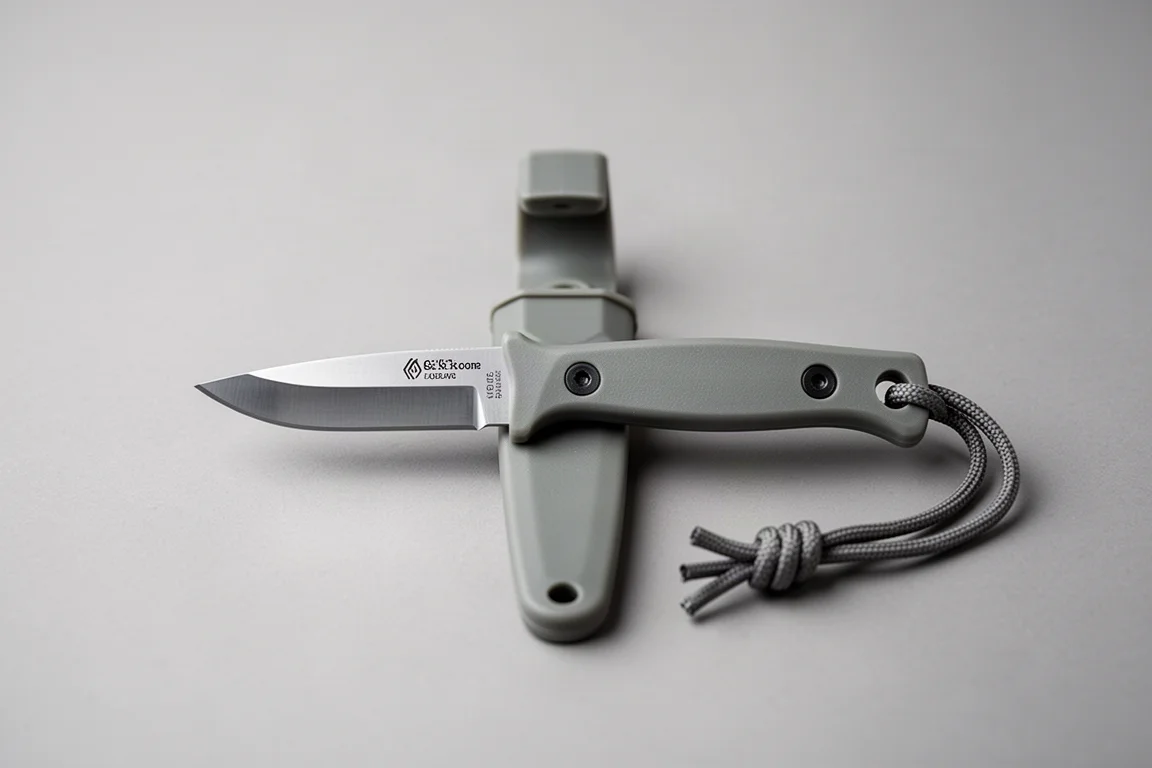
The Outdoor Element Scout Feather makes a lot of sense on paper. It locks into the hand well, has a versatile saber-ground blade shape, a true 90-degree spine, and it even integrates a ferro rod and a small sharpener. The sheath tension is close to perfect: not too tight, not too loose.
The limitation is carry style. In practice it works best as a neck knife rather than a belt knife, and the goal here was something carried on the hip. It remains a good option, especially for anyone happy with neck carry, but it was not the final pick.
Odin’s Wolf
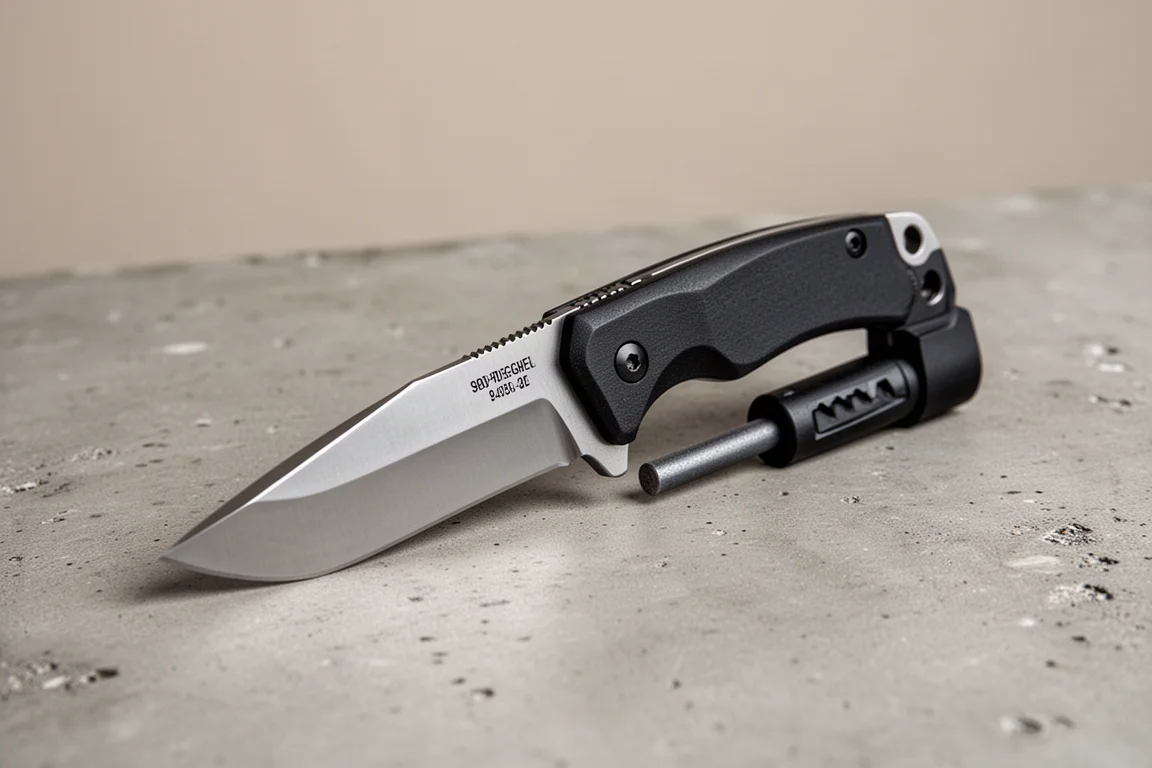
The Odin’s Wolf, at around $25, surprised with a genuinely good rubberized handle. Unlike the Eldris, the hand sits in the proper position, and there is a thumb ramp to help push the knife out of the sheath. The sheath itself is excellent and nails the retention for neck carry.
It would work well as a neck knife and reasonably well with an ULTI clip, but the included belt clip sits high and is not very secure, so it does not convert into a reliable belt knife. That keeps it just outside the top choice for this particular use case.
Benchmade Pendleton Mini Hunter
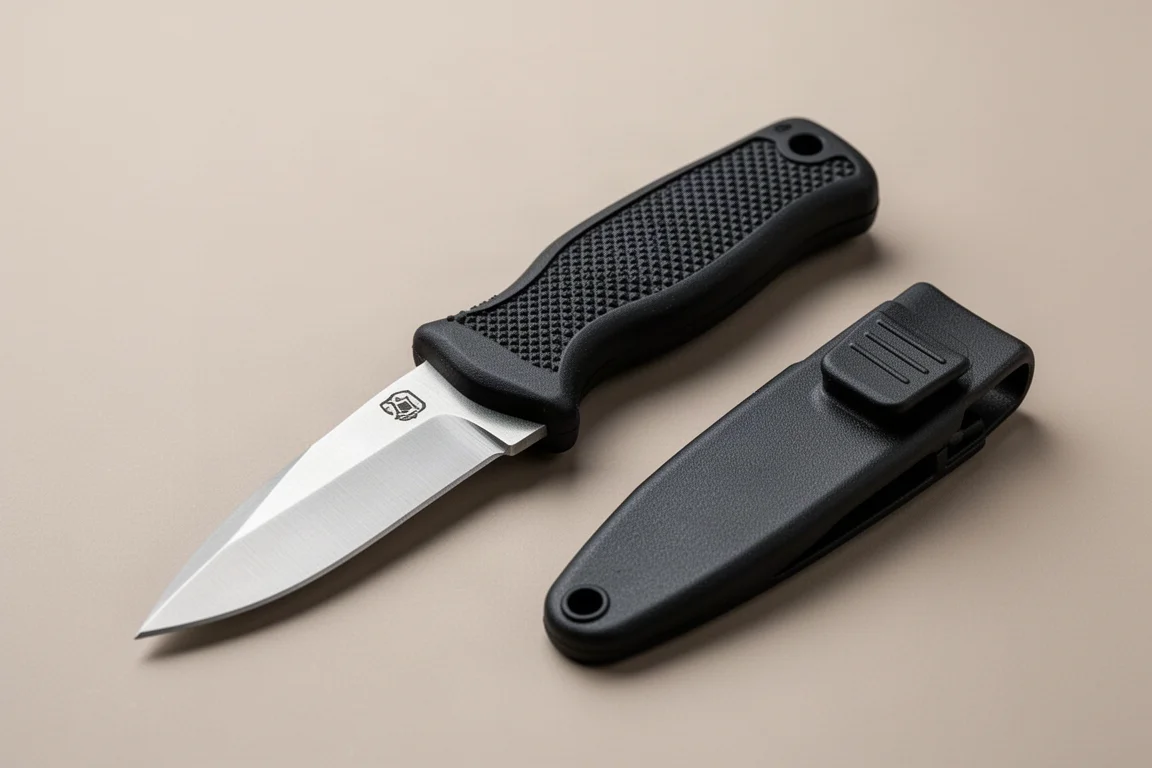
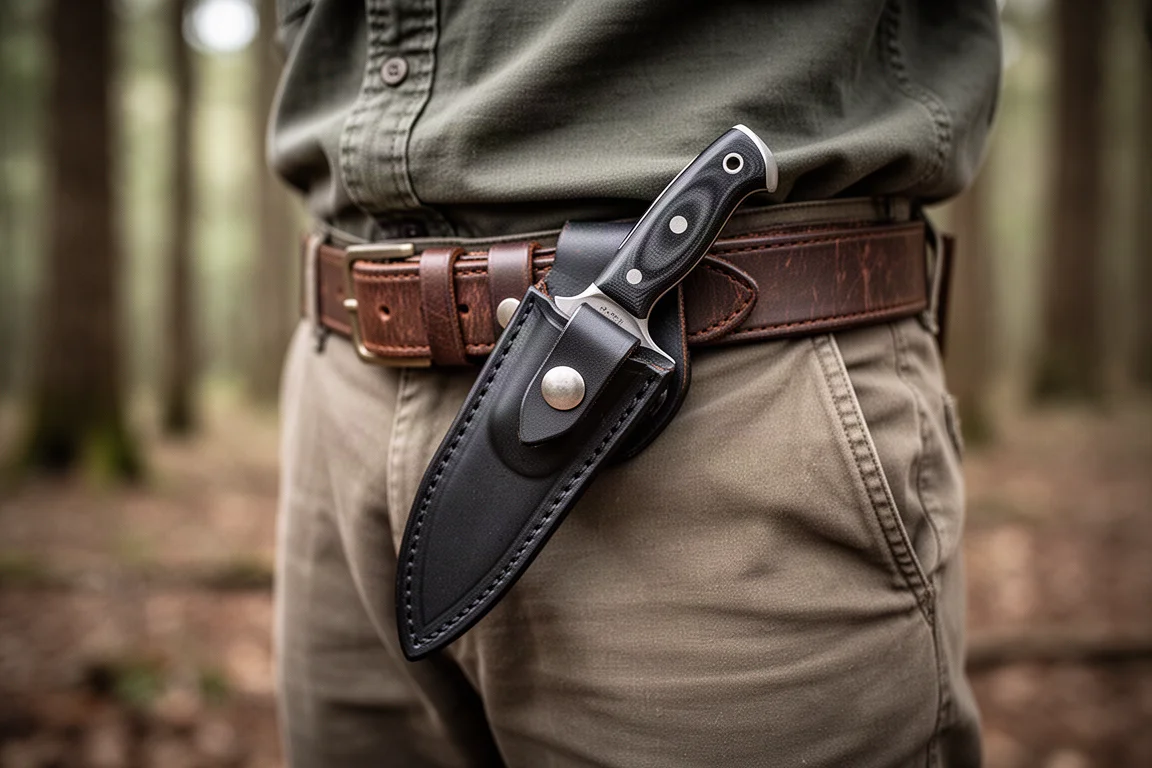
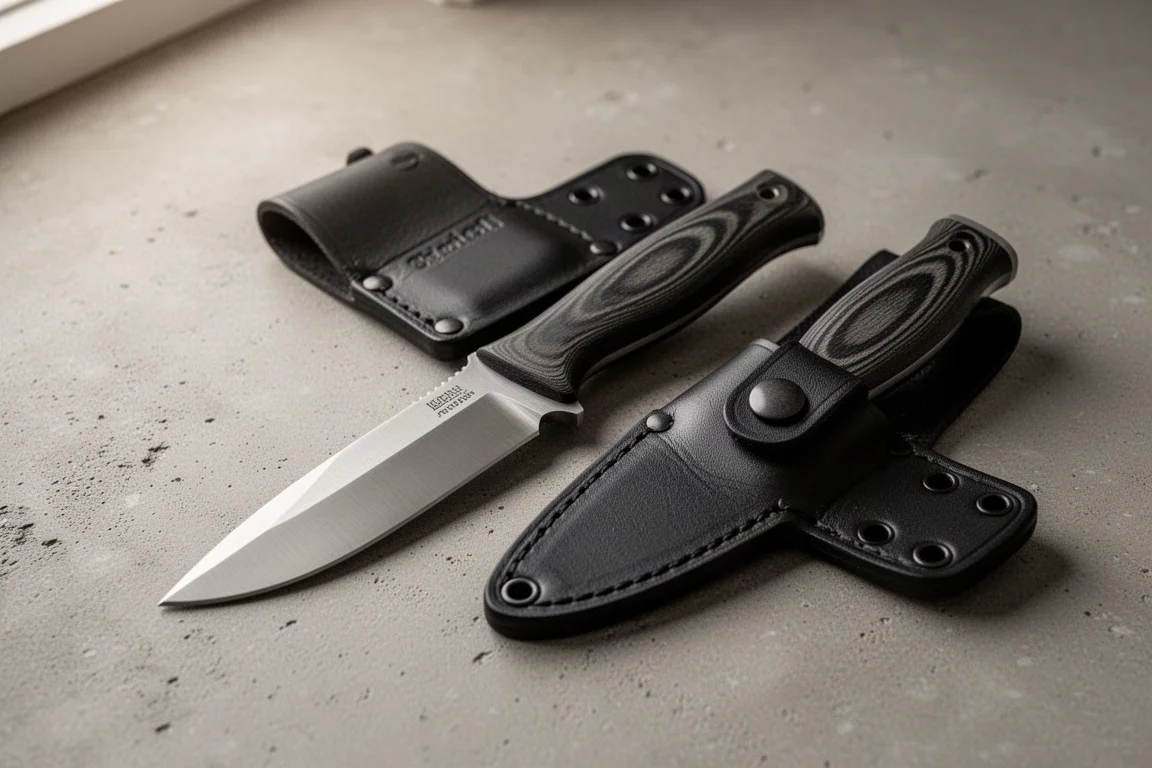
The Benchmade Pendleton Mini Hunter ended up being the pick. It is available in CPM 3V, still for around $60, and the base model has been upgraded from O1 to O10A steel, a Japanese stainless steel with performance similar to VG10. The blade has a 90-degree spine and is nicely thick, similar in thickness to the Mora Robust, so there is little worry about breaking the tip.
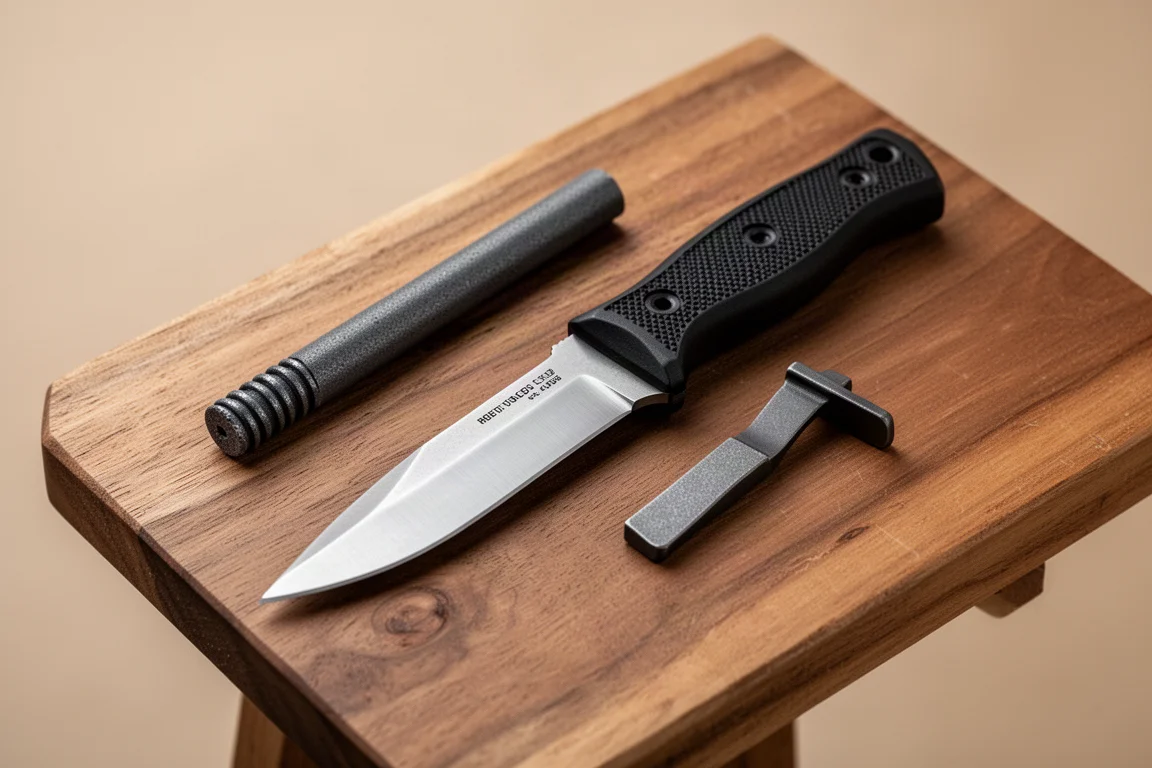
The sheath has been improved too. Earlier versions could let the knife fall out without the strap; the current version has just enough tension, a thumb ramp for pushing up on it, and a button clasp that really locks it in. The attachment points are completely ambidextrous, which matters for a left-handed user, and the handle size is just right for smaller or newer hands.
Mora Robust
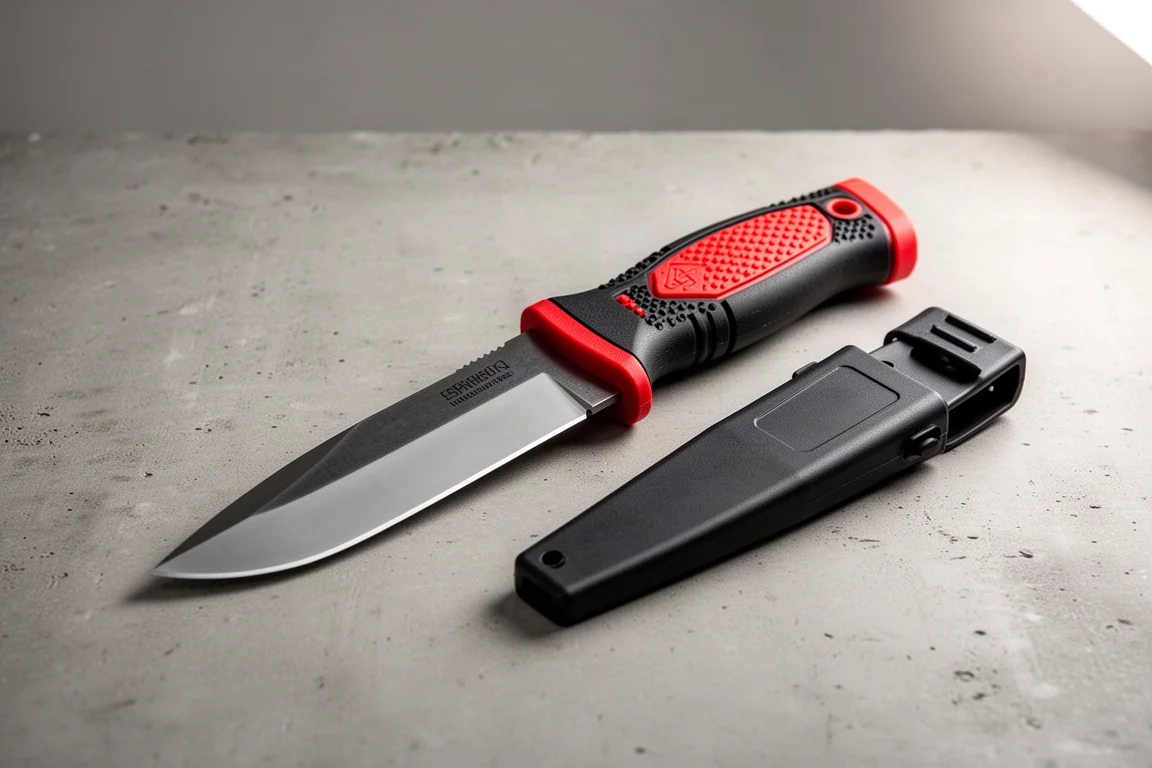
The Mora Robust is a favorite among Mora’s lineup and costs around $16. It is thicker and sturdier than most budget Moras, with a handle that suits a wide range of hands.
It also invites some fun customization: one setup turns it into an in-pocket fixed blade by making a higher-retention sheath and attaching an ULTI clip to the outside. There is an undeniable irony in putting a pocket clip that costs nearly as much as the knife itself onto a $16 blade, but the result is a genuinely usable pocket-carry fixed blade.
Buying Advice
For a right-handed adult or teen who wants the cheapest excellent learning knife, the Mora 511 Basic is hard to beat. For a left-handed user, or anyone who prioritizes sheath security above all, the Benchmade Pendleton Mini Hunter is the strongest all-around first knife thanks to its ambidextrous carry, improved retention, and durable steel.
If neck carry suits the person you are buying for, the Odin’s Wolf and Outdoor Element Scout Feather both offer thoughtful sheath designs at friendly prices. And for a robust budget workhorse, the Mora Robust remains a favorite.
Conclusion
A first knife should be sharp, secure in its sheath, comfortable in the hand, and suited to how the user will actually carry it. The Mora 511 Basic wins on pure value, while the Benchmade Pendleton Mini Hunter is the most complete package for a wider range of users. Whichever you choose, supervised practice and good habits matter more than any spec sheet.
Further reading
Related Reviews
Fixed Blade Knives
SOG Altar Fixed Blade Review: A Promising EDC Knife Held Back by Its Handle and Sheath
A 3.6-inch 154CM fixed blade with an interesting 360-degree mounting system, but questionable ergonomics and a fragile sheath raise serious value concerns.

Backpacking Gear
Building a 10 lb Base Weight: An Ultralight Backpacking Gear List
A practical walkthrough of the ultralight pieces behind a 10 lb base weight, from a 765 g pack and a roomy one-person tent to a full camp chair and a dependable water filter.

Road Bikes
10 New Road Bikes Worth Watching: Aero, Titanium, Steel and Endurance Standouts
A practical roundup of 10 new road bikes, from aero flagships chasing single-watt gains to titanium, steel and endurance platforms built for real roads.