Kitchen Tools
Circulon Ceramic Tool Crock Review: A Tidy Home for Your Kitchen Utensils
After side-by-side comparisons across ceramic, plastic, metal, and bamboo crocks, the Circulon ceramic tool crock came out on top for capacity, stability, and cleaning ease.
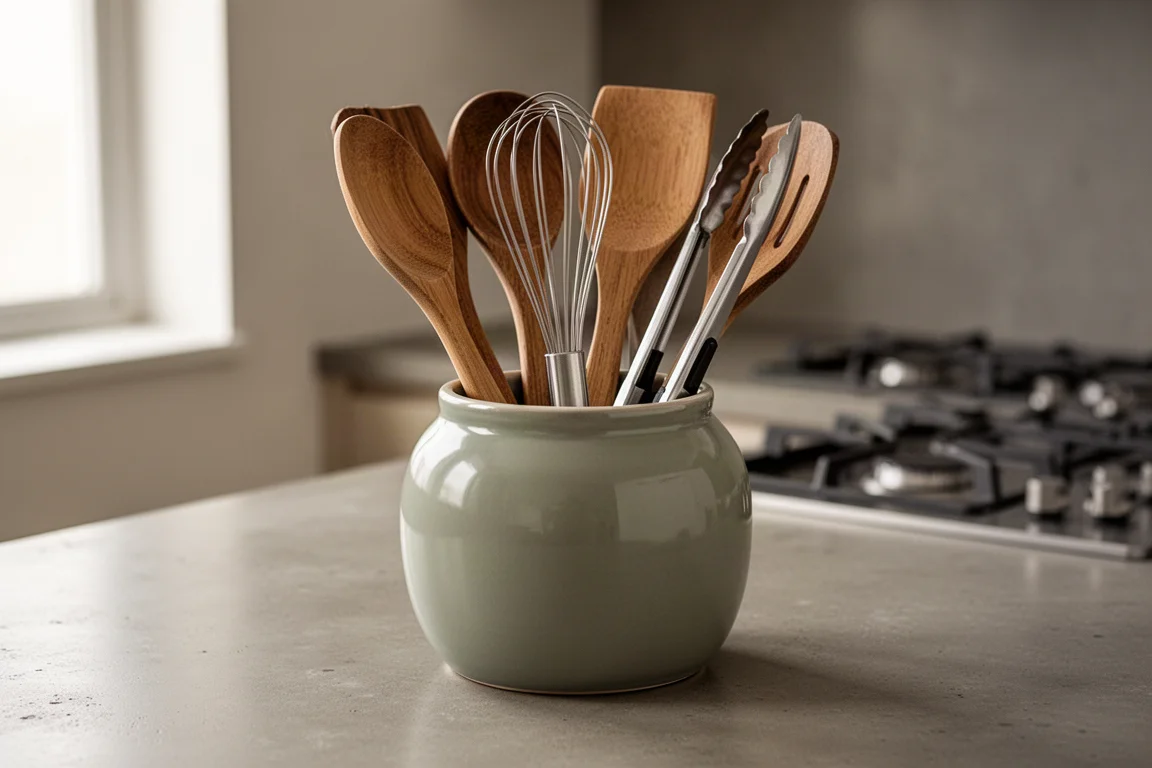
Introduction
A utensil crock sounds like a small, almost trivial purchase, until you have lived with a bad one. A crock that tips over, or one that only holds a couple of tools while the rest pile up on the counter, turns a simple grab for a spoon into a small daily annoyance. To find out which crocks are actually worth keeping next to the stove, a range of options priced from about $14 to $50 was tested, spanning ceramic, plastic, metal, and bamboo constructions, in round, oval, and even rotating designs.
Why a Good Utensil Crock Matters
Most of us keep a crock beside the stovetop, and that is exactly where the problems show up. Pull out one utensil and three others tumble out with it. Jam them back in and get on with cooking. It is a minor irritation, but it happens every day.
The right crock solves this with three things: enough capacity, enough stability, and a shape that actually suits the tools you own. The testing focused on exactly those qualities, and the results separated the field pretty quickly.
Capacity and Shape: What Fits and What Doesn’t
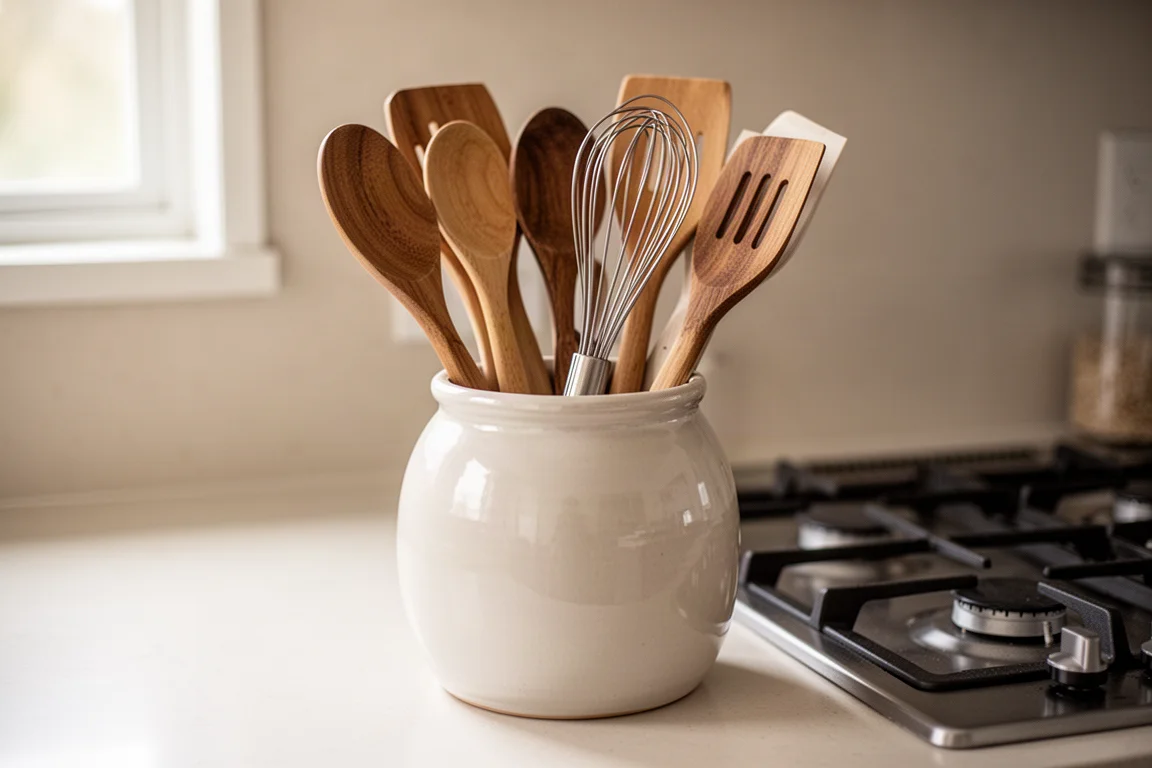
Testers tried to load 20 favorite utensils into every crock. Ideally all 20 would fit; in practice, about 17 was the typical result, with a few crocks managing the full set.
Shape mattered more than expected. The oval crocks were the least popular because their tapered ends forced bulky tools, or ones with hooks at the end, into the center only. Round crocks handled the same load far more easily.
Size mattered too. Bigger is generally better, so aim for at least a six-inch diameter. Heights in the test ranged from 5.25 to 9.5 inches, and the sweet spot landed around 6.5 inches: tall enough to keep tools upright and organized, but not so deep that short tools like a pastry brush disappear at the bottom.
Stability: The Tip-Over Test
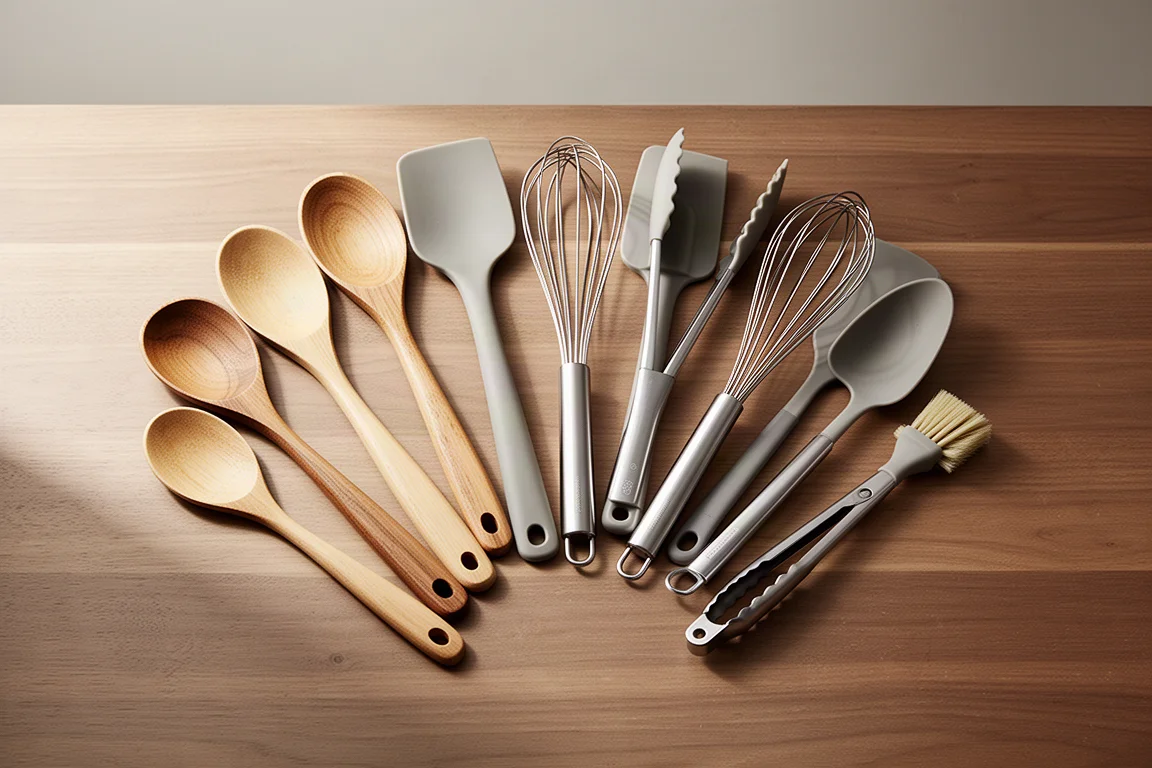
Since crocks live next to a busy stovetop, testers loaded and unloaded each one from a single side to simulate real use. Most passed without trouble. The notable exception was the rotating Lazy Susan-style crock, which wobbled thanks to feet on the bottom that made it unsteady. If you cook with any enthusiasm, a crock that stays planted when loaded unevenly is worth prioritizing.
Dividers: Helpful in Some Shapes, Wasted Space in Others
Dividers sound useful on paper, and in round crocks they genuinely are. They let you organize tools by category, keeping metal tools or whisks on one side and wooden spoons on the other, while keeping everything upright. A removable divider adds a bonus: you can lift it out to clean it or move it around as your tool collection changes.
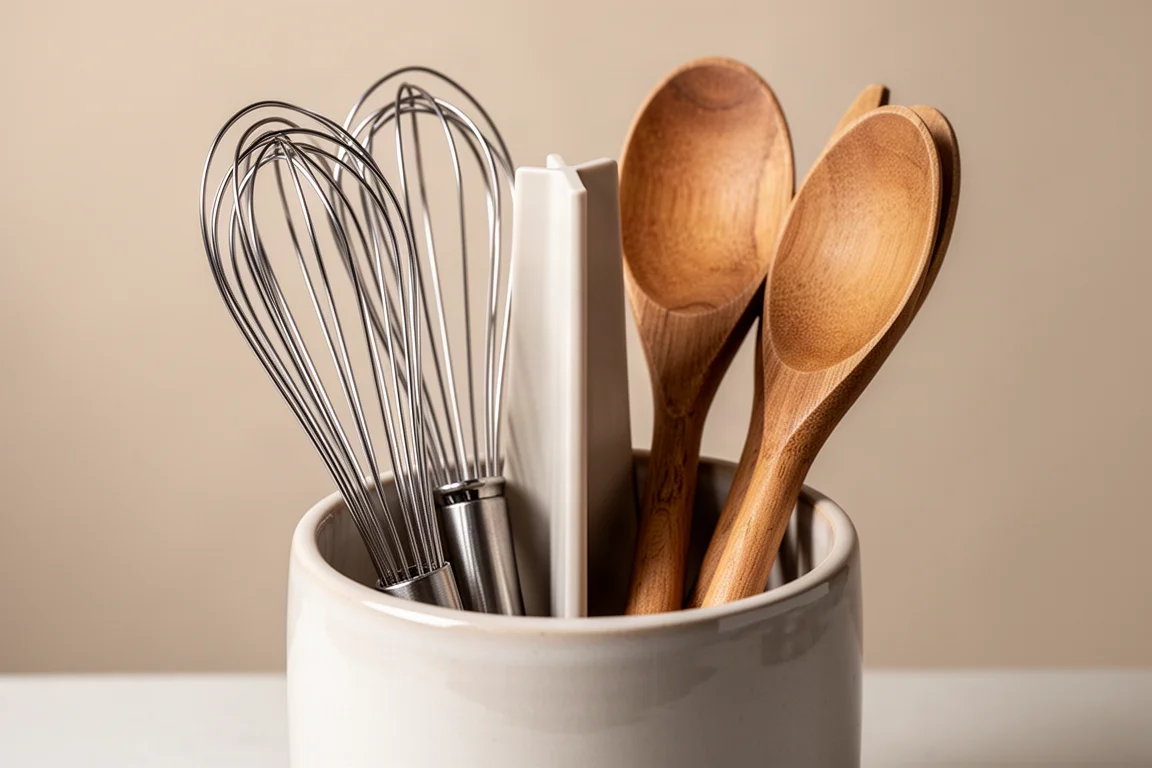
In oval crocks, however, dividers mostly got in the way. They took up space that could have held utensils, and they made the tapered ends even harder to use for bulky tools. If you are considering an oval shape, treat built-in dividers as a downside rather than a feature.
Cleaning and Everyday Durability
Because these crocks sit beside the stove, they get splattered constantly. Most of the models tested were easy enough to wipe down. Two were problem cases: the expandable crock, where the expanding section was difficult to clean inside, and a perforated model that was remarkably hard to clean properly. If low-maintenance matters to you, avoid complicated internal structures.
The Winner: Circulon Ceramic Tool Crock
The top pick of the lineup is the Circulon ceramic tool crock, priced at about $34. It held all 20 test utensils, which no crock should be assumed to do. It includes a removable insert, so organizing tools by category is easy and cleaning is simple. It is also a genuinely good-looking piece, available in different colors, which matters for something that lives permanently on your counter.
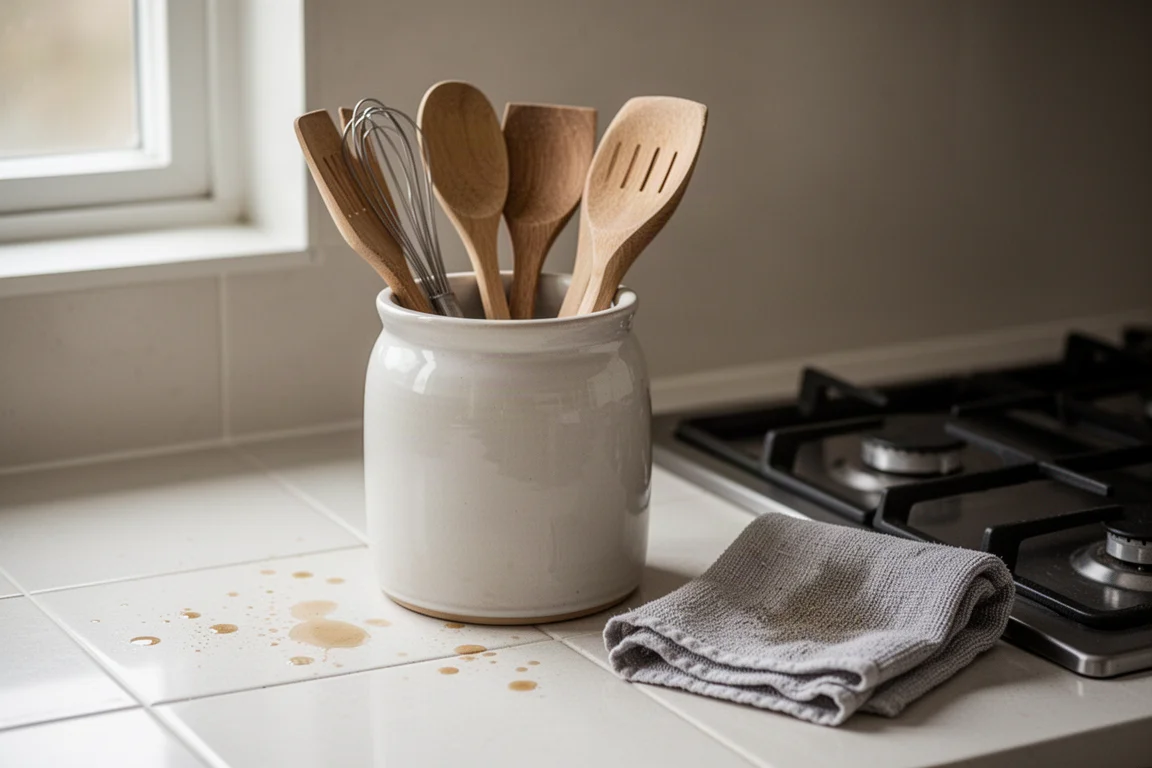
The combination of full capacity, a removable divider, easy cleaning, and solid everyday stability is what set it apart. Those are exactly the qualities that make a crock disappear into the background of a working kitchen, which is the highest compliment you can give this kind of tool.
Buying Advice
When shopping for a utensil crock, use the same criteria that decided this comparison:
- Shape: Round beats oval. Tapered ends waste usable space.
- Diameter: At least six inches to fit a full set of tools.
- Height: Around 6.5 inches is the sweet spot, tall enough for stability but not so deep that short tools vanish.
- Stability: It should stay upright when loaded from one side. Watch out for designs with raised feet that wobble.
- Cleaning: Smooth, simple interiors are far easier to maintain than expandable or perforated designs.
Conclusion
For roughly $34, the Circulon ceramic tool crock delivered the best all-around performance in this comparison: it fit a full set of 20 utensils, offered a removable, easy-to-clean insert, and looks good on the counter. If you are replacing a crock that tips over or swallows your pastry brush, this is a straightforward, satisfying upgrade.
Product link
View more details for Circulon Ceramic Tool Crock
This product is mentioned in the review. Check the specifications, options, and compatibility before buying.
View more details for Circulon Ceramic Tool CrockFurther reading
Related Reviews
Kitchen Tools
Amazon's Top-Rated Chef Knives Tested: Five Models from £11.50 to £200
We tested five of Amazon's highest-rated chef knives across sharpness, comfort, and versatility to see which delivers the best value and real-world performance.
Kitchen Tools
Benriner Japanese Mandoline Review: A Sharp Tool for Precise Vegetable Slicing
A practical guide to using a Japanese mandoline safely and effectively, with tips for achieving consistent, crisp results in the kitchen.
Kitchen Tools
Best Cheese Slicers: Five Practical Options for Consistent Slicing
Five cheese slicers with different designs and features, from multi-blade versatility to wire-based precision, each suited to different kitchen needs and cheese types.