Kitchen Tools
Amazon's Top-Rated Chef Knives Tested: Five Models from £11.50 to £200
We tested five of Amazon's highest-rated chef knives across sharpness, comfort, and versatility to see which delivers the best value and real-world performance.
Introduction
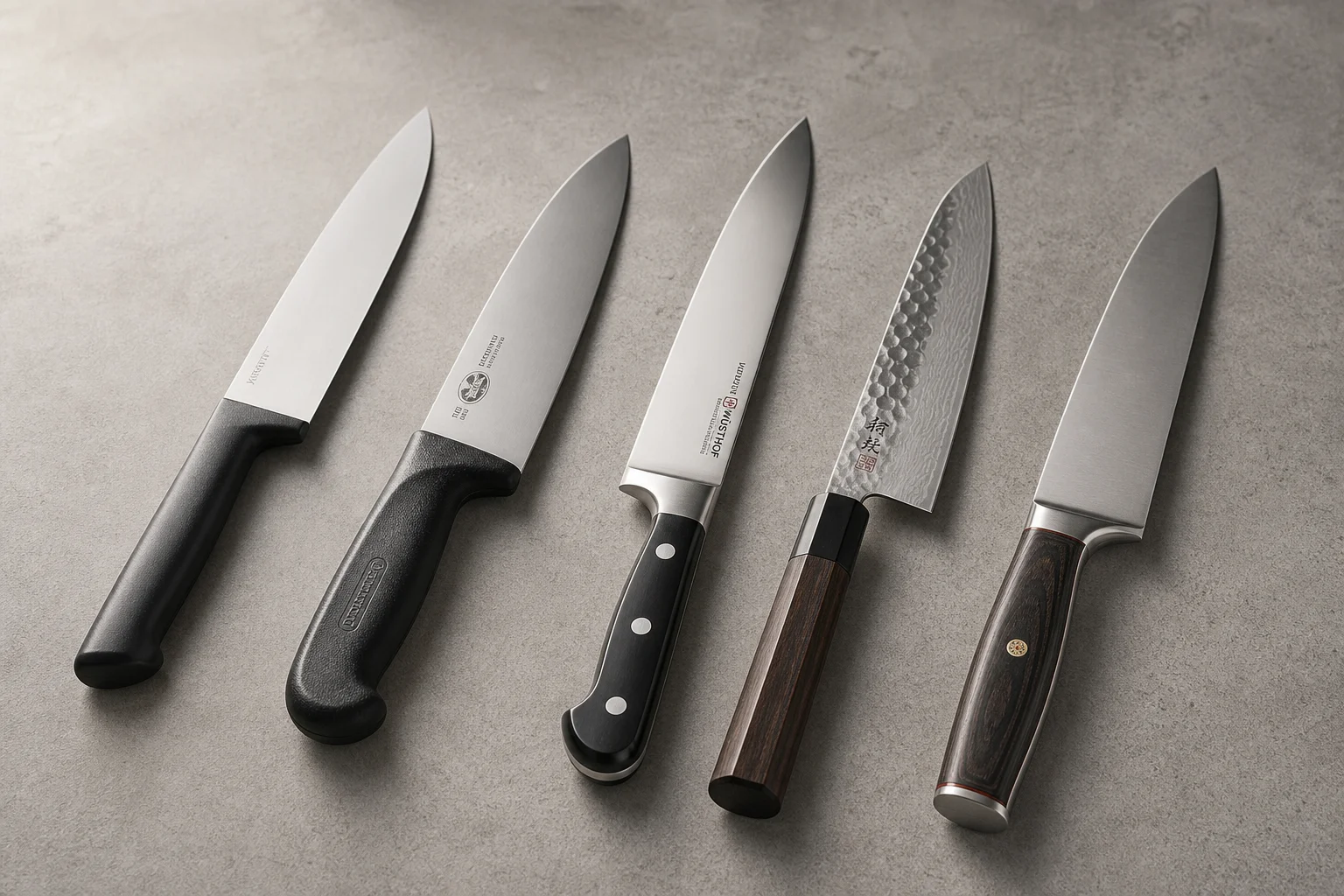
Buying a chef knife online presents a genuine challenge: you cannot hold it, feel its weight, or test its balance before committing. Amazon’s top-rated knives span a remarkable price range, from budget options under £12 to premium models at £200. We tested five of the highest-rated models to understand how price correlates with real performance, comfort, and longevity.
Understanding Chef Knife Terminology
Before testing, it helps to understand the key specifications that define knife performance.
German steel knives are typically made from softer steel, which makes them tougher and more durable. Rockwell hardness (HRC) measures this softness versus hardness. German knives tend to sit between 55 and 58 HRC, requiring more frequent honing and sharpening but offering greater durability against impacts and twisting.
Japanese knives, by contrast, are much harder, typically rated 60 to 63 HRC. They maintain a finer edge angle of 10 to 15 degrees, which produces a laser-sharp feel that stays sharp longer. However, this hardness makes them more prone to chipping if twisted, scraped, or dropped.
Damascus patterns refer to the swirled or layered steel visible on some blades. While visually striking, the pattern itself does not determine performance. What matters is the underlying steel composition, hardness, and edge geometry.
Sharpness Testing: The Tomato Slice
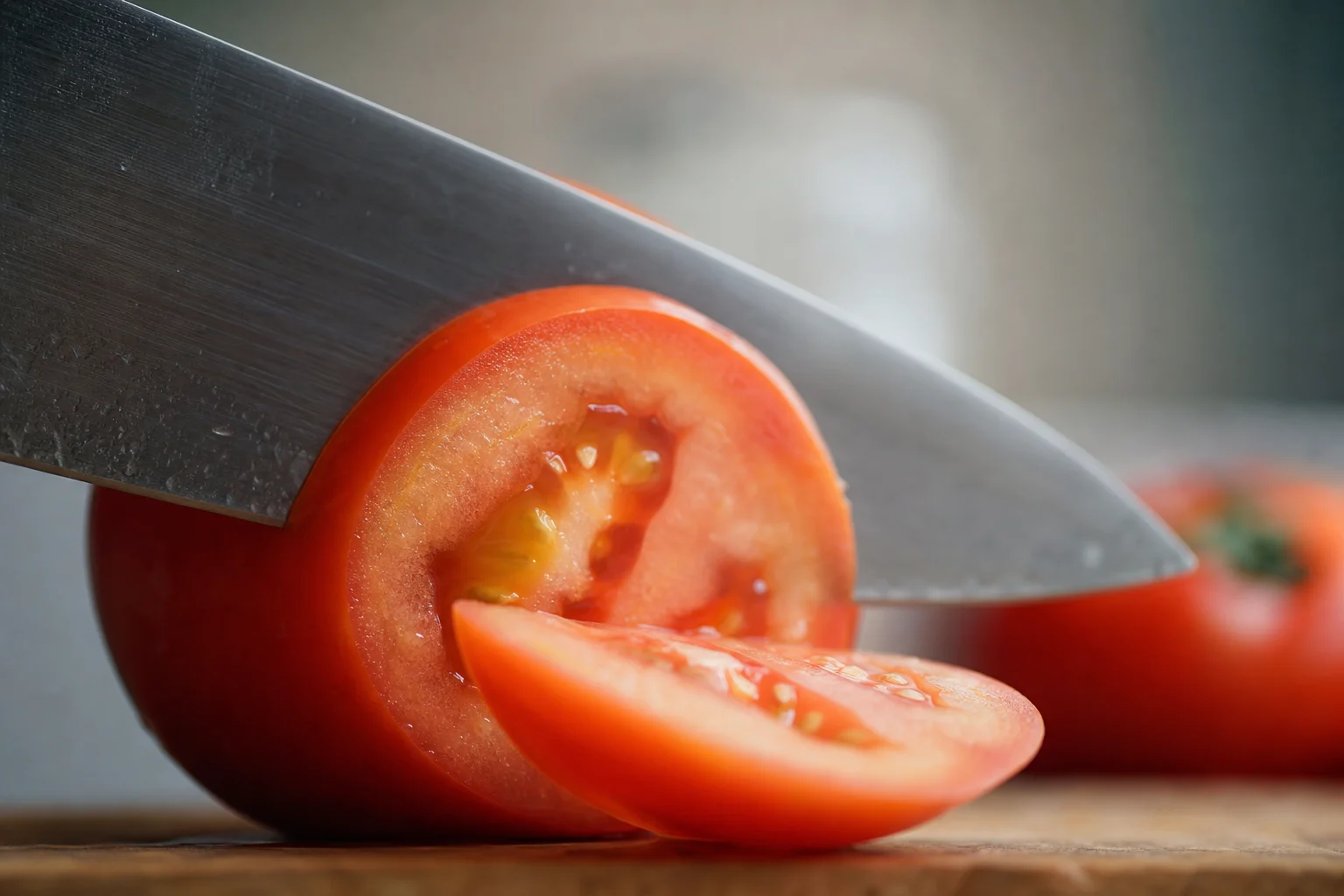
The classic tomato slice test reveals how well a blade penetrates skin and how thinly it can slice straight from the box. All five knives arrived factory sharp, but the quality of that sharpness varied significantly.
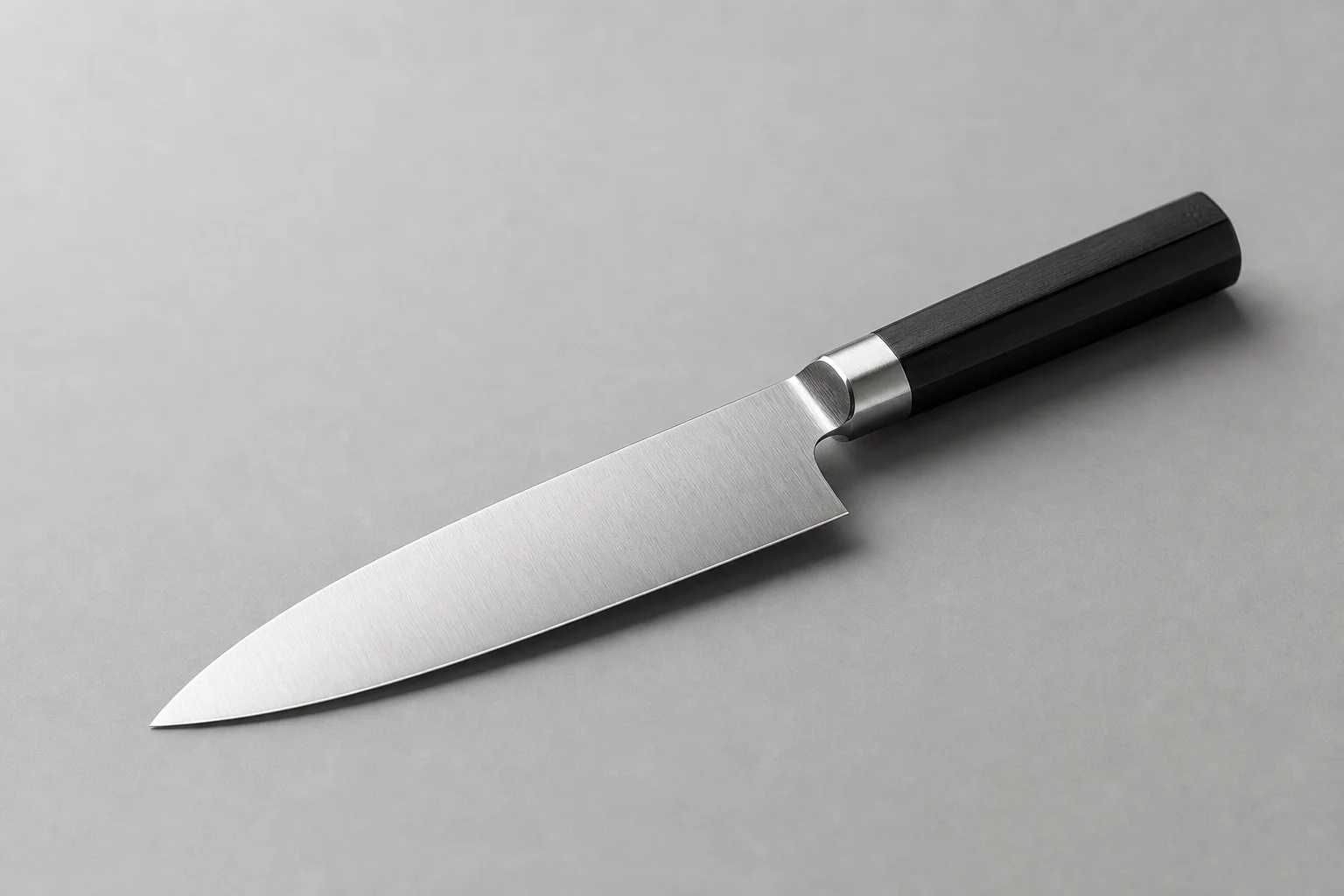
The Zylus Comfort 7.25 felt lightweight and lacked the weight needed to slice cleanly. The blade would glide through at some points but then require additional pressure, indicating uneven sharpness or poor blade geometry.
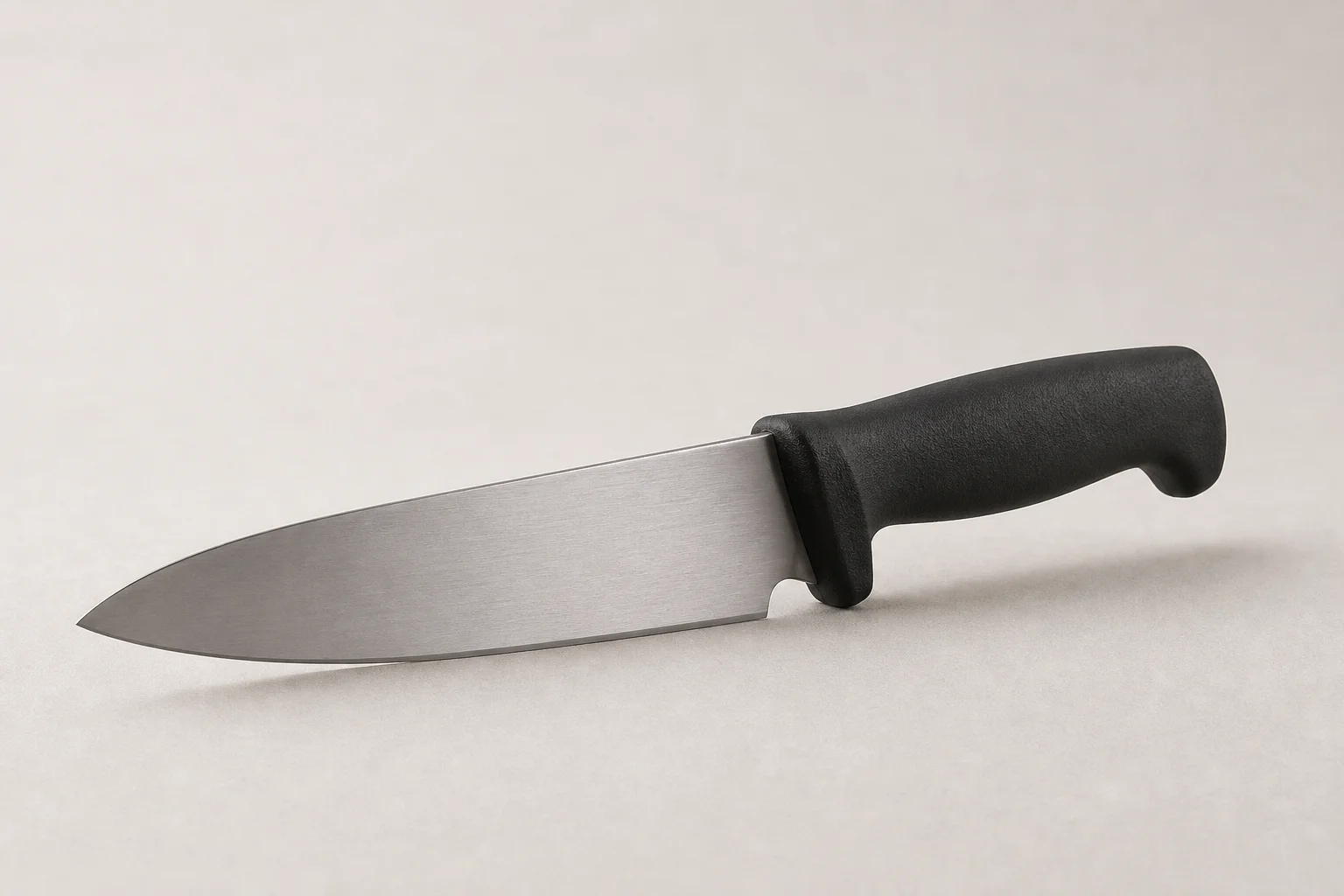
The Mercer Culinary Millennia arrived with a bigger, heavier, chunkier rubber handle. The weight felt substantially better than the Zylus, though the thickness of the blade meant thinner slices were harder to achieve. It was factory sharp but lacked finesse.
The Wüsthof Classic 8-inch was the first knife that felt genuinely balanced. Picking it up revealed an immediate difference: the blade glided through the tomato like butter, effortlessly producing thin, clean slices. The weight, balance, and sharpness worked in harmony.
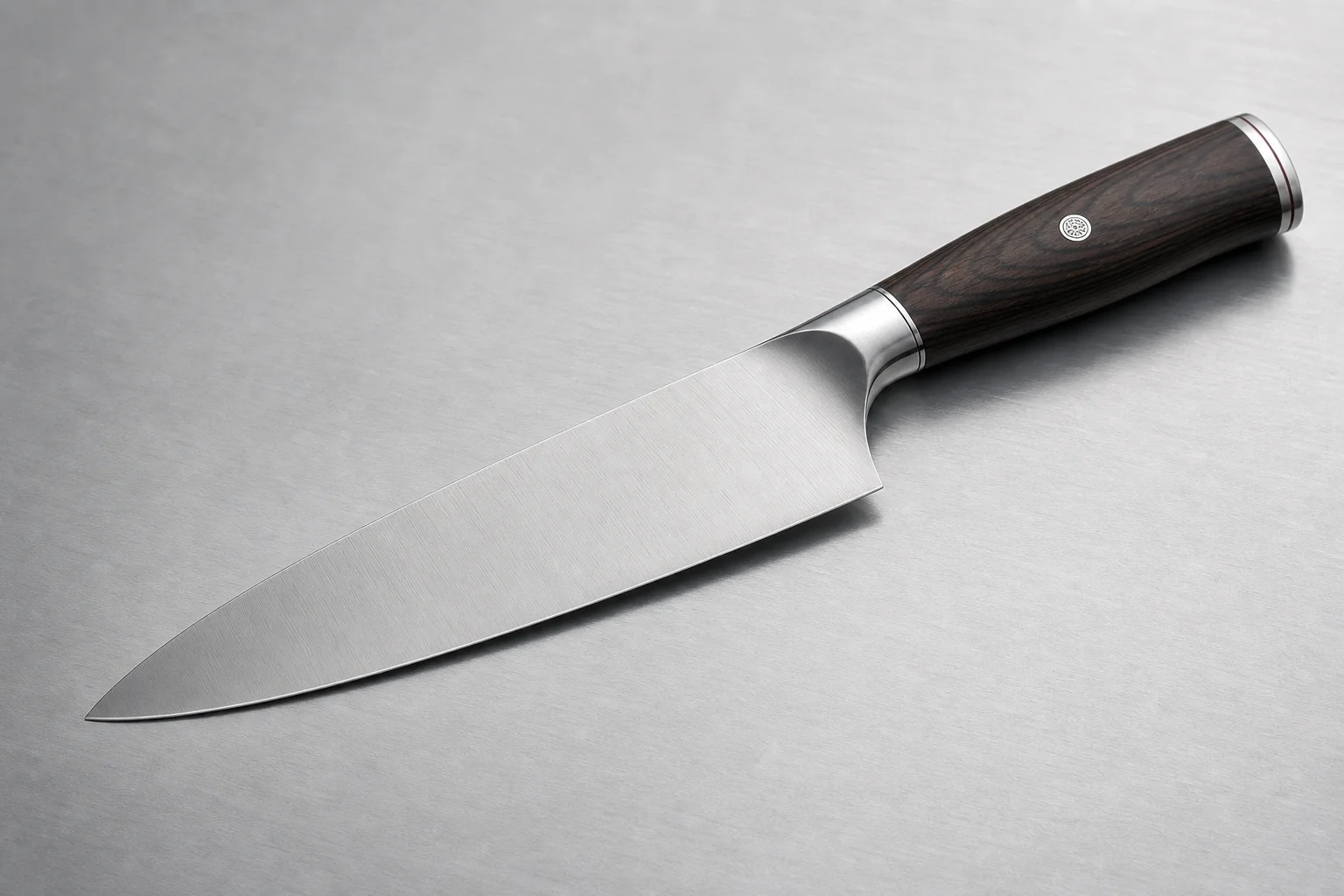
The Shun Cutlery Classic 8-inch produced slices with slightly more resistance than the Wüsthof, comparable to butter just removed from the refrigerator. The blade was audibly cutting through the skin, and the sharpness was evident but with a firmer Japanese character rather than the buttery German glide.
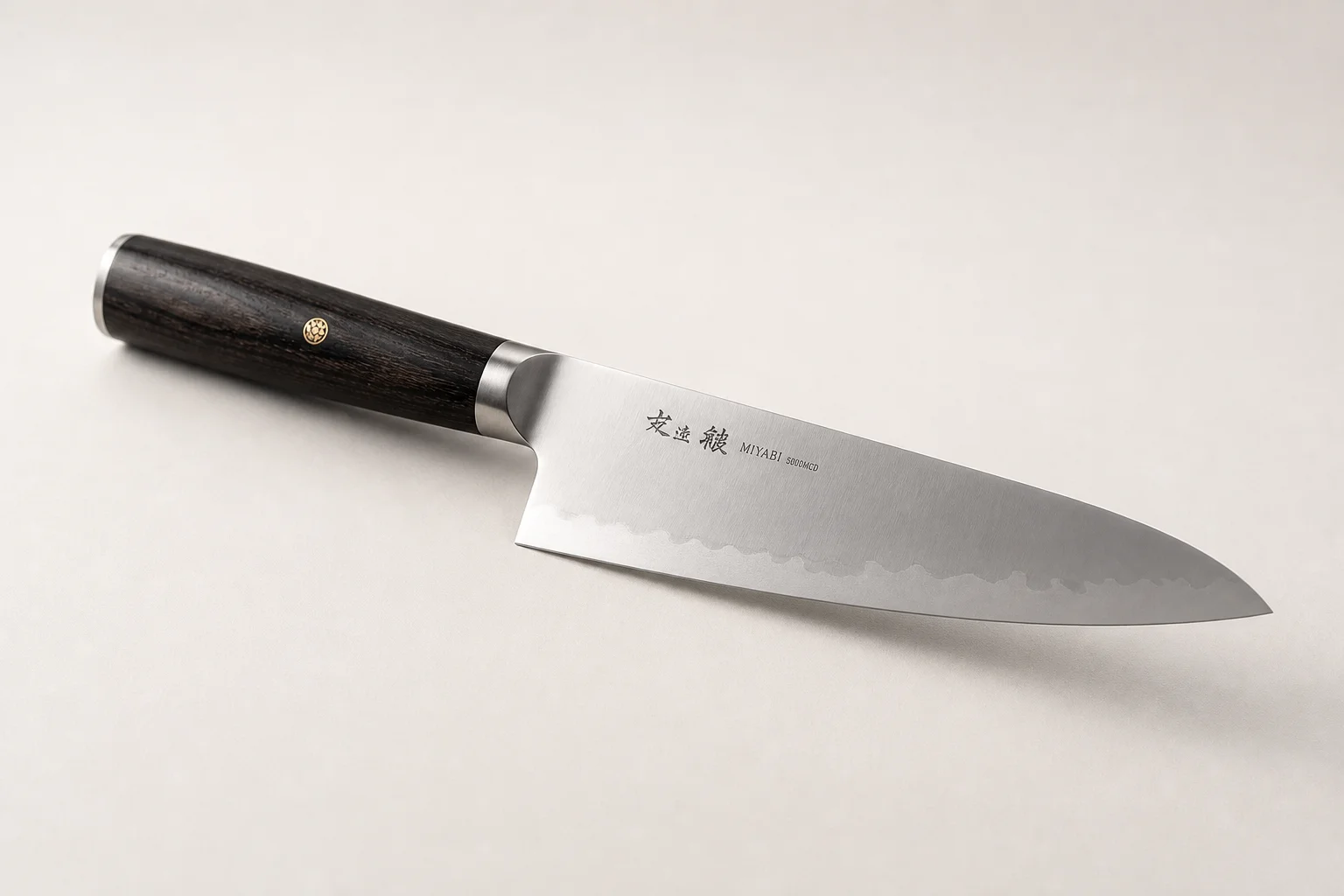
The Paudin 8-inch offered a comfortable hold and glided straight through with audible precision. It produced lovely thin slices and demonstrated excellent sharpness straight from the box.
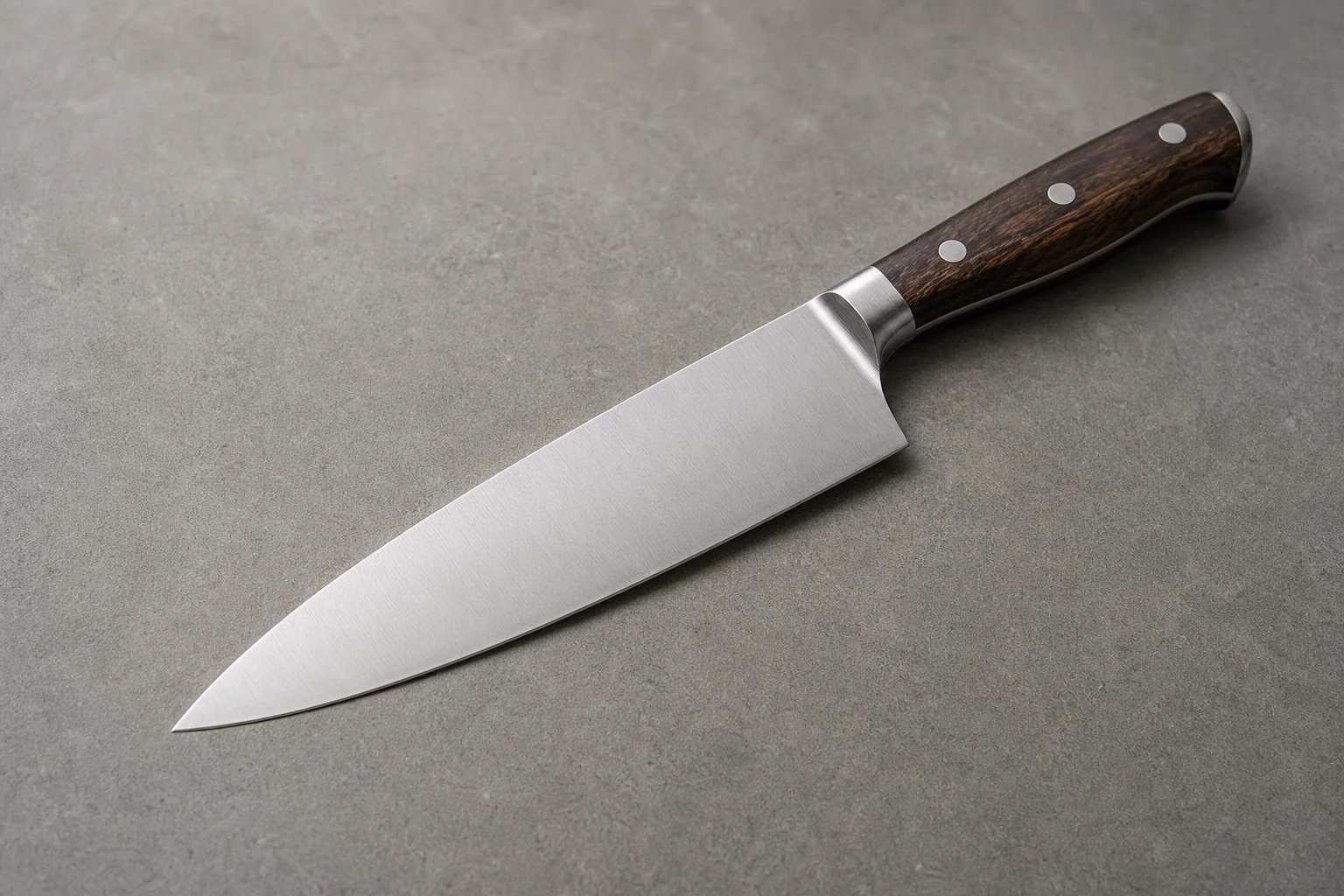
Sharpness ranking: 1. Wüsthof, 2. Paudin, 3. Shun, 4. Zylus, 5. Mercer.
Comfort and Ease of Use: Repetitive Tasks
Sharpness matters only in isolation. Real kitchen work demands comfort during repetitive tasks: julienning carrots, dicing shallots, and mincing garlic. The anatomy of the knife becomes critical here. The bolster (the thick transition from blade to handle) and its angle relative to the blade significantly affect hand comfort and control during extended use.
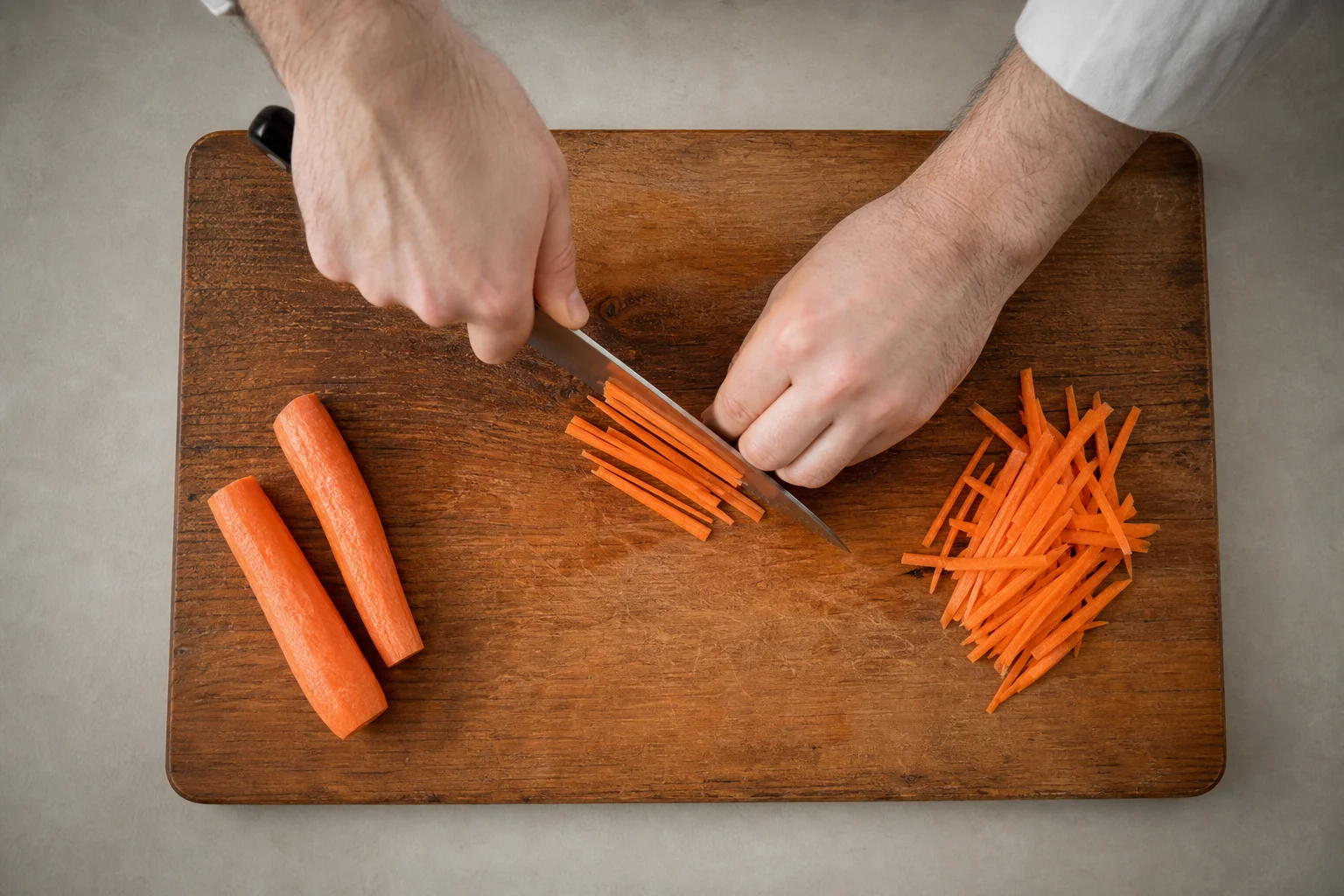
The Zylus presented a funny curve that made it difficult to establish a rhythm. The blade would catch on the board, and the light weight meant less power for crushing and mincing. The dimple on the blade, marketed as ergonomic for mincing, proved ineffective.
The Mercer’s large blade was genuinely useful for crushing and mincing, but the rubber handle had an odd stickiness, the weight felt unbalanced, and the bolster angle was awkward. Comfort did not emerge as a strength.
The Wüsthof felt smooth and incredibly nice to hold. The bolster transitioned smoothly without catching fingers, and the knife was comfortable for rocking and chopping. The weight and balance made it suitable for extended repetitive work without fatigue.
The Shun featured a rounded bolster that felt comfortable in the hand. The blade felt longer than the handle, and the light weight meant you could work for hours without tiring. However, the slightly harsher bolster edge raised concerns about blistering during very repetitive cutting, and some knife rub was noticeable.
The Paudin was nicely balanced with a lovely tip and excellent control. The slightly edged bolster did not make it quite as smooth as the Wüsthof, but it remained comfortable and responsive.
Comfort ranking: 1. Wüsthof, 2. Shun, 3. Paudin, 4. Mercer, 5. Zylus.
Versatility Testing: Meat and Fat
The final test involved thinly slicing rump steak into stir-fry pieces, challenging the knives to handle both meat and fat without sticking or binding to the board.
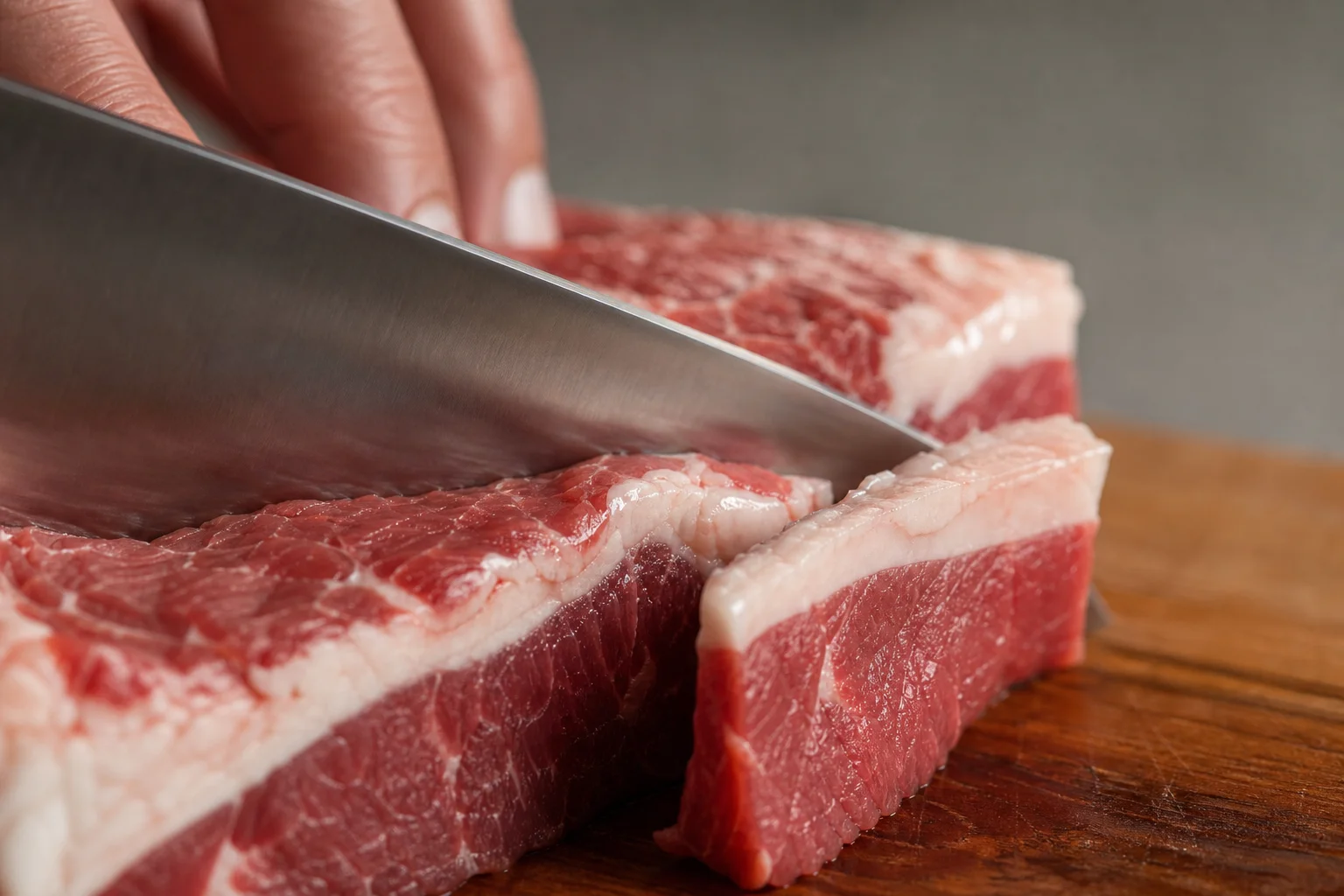
The Zylus struggled with the task, getting stuck on the board despite adequate sharpness. The lightweight blade lacked the presence needed for confident meat work.
The Mercer, despite its bulk, performed well on meat. The weight and size made it feel like a dedicated meat knife, and it sliced through both meat and fat effectively. For someone doing occasional cooking, this knife worked nicely.
The Wüsthof was an absolute dream on steak. Really sharp, with excellent weight and balance, it cut through both meat and fat equally with zero issues. The smooth cut quality was exceptional.
The Shun produced very smooth cuts with no issues going through fat. It excelled at finer details and offered excellent all-round performance, though it was slightly less comfortable than the Wüsthof for heavier work.
The Paudin was buttery and very smooth, with a better angle than the Shun. It proved to be an excellent all-rounder, handling fish, vegetables, and meat with equal competence, though not quite as comfortable as the Wüsthof.
Versatility ranking: 1. Wüsthof, 2. Shun, 3. Paudin, 4. Mercer, 5. Zylus.
Final Rankings and Value Assessment
After testing, the testers ranked the knives based on overall performance, comfort, and value for money.
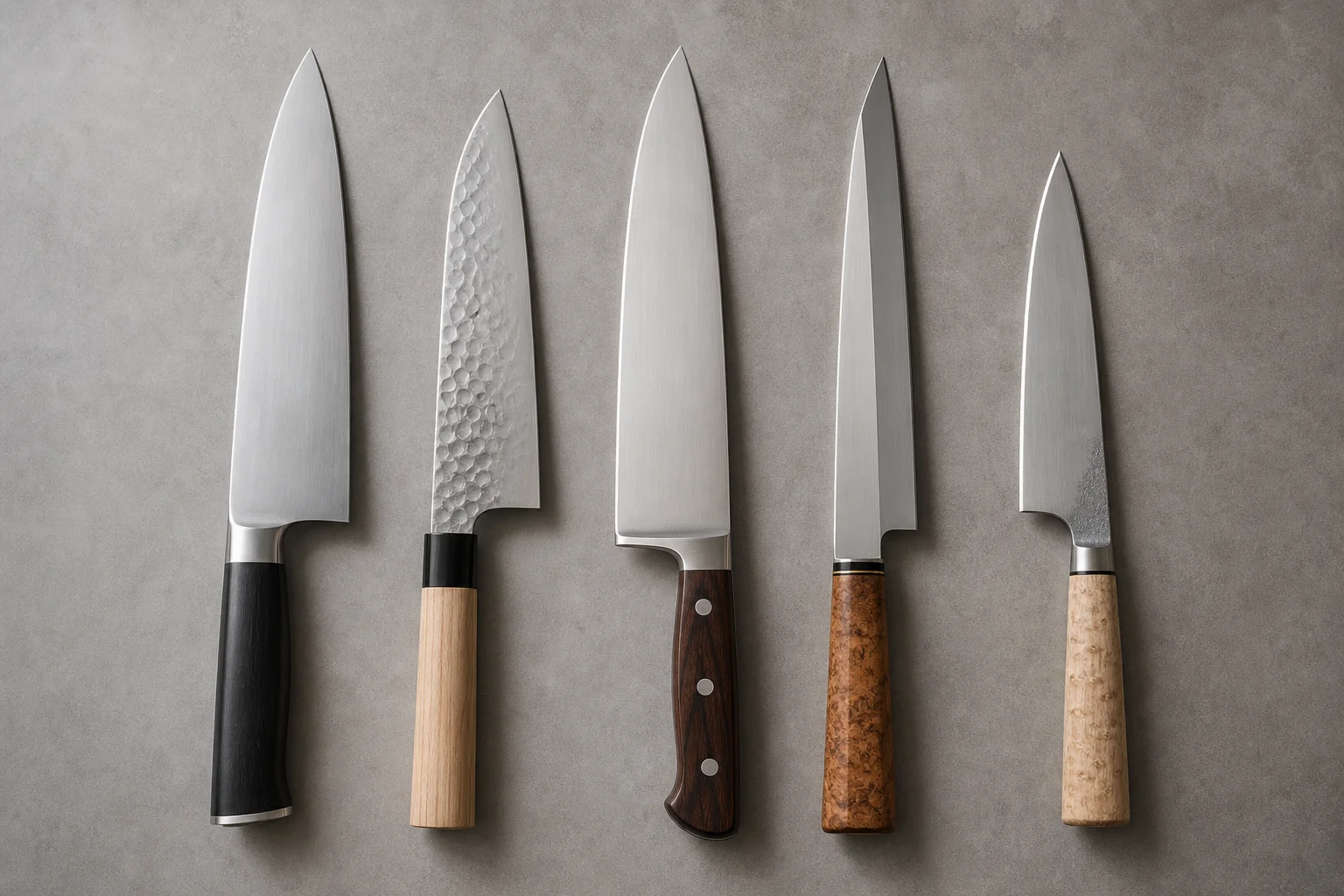
The Zylus Comfort 7.25 (£11.50) ranked fifth. While cheap and acceptable out of the box, it lacks the performance and durability for serious kitchen work. It suits first-time buyers or students furnishing a kitchen on a tight budget, but do not expect longevity.
The Mercer Culinary Millennia (£27.22) ranked fourth. It is a chunky, bold all-rounder that performs adequately but remains uncomfortable for extended use. It works well for midweek cooking when prep time is short, but ergonomics suffer during heavy prep sessions.
The Paudin 8-inch (£21) ranked third. At this price point, the quality is remarkable. It comes in a lovely presentation box and offers performance nearly matching knives costing five times as much. The main trade-off is slightly less comfort than the premium options, but the value proposition is exceptional.
The Shun Cutlery Classic 8-inch (£199.99) ranked second. It is an excellent knife with beautiful sharpness, comfort, and finer detail work. However, the price is difficult to justify. It does not perform nine times better than the Paudin, and the cost makes it a luxury purchase rather than a practical investment.
The Wüsthof Classic 8-inch (£112) ranked first. It represents the sweet spot: a durable, versatile knife that balances performance, comfort, and price. Wüsthof knives stand the test of time and will last a lifetime with proper care. The middle-ground pricing reflects genuine quality without premium branding markup.
Conclusion
Amazon’s ratings align closely with real-world performance testing. The Wüsthof topped both the tester rankings and Amazon’s ratings with a 4.8-star average from 2,611 reviews. Before buying a chef knife online, consider what you will use it for and whether this is a lifetime purchase or a temporary tool. Feel knives in person if possible to understand your preference for bolster shape, handle material, and weight distribution. The most expensive option is not always the best value, and some mid-range knives offer exceptional performance for the price.
Further reading
Related Reviews
Kitchen Tools
Benriner Japanese Mandoline Review: A Sharp Tool for Precise Vegetable Slicing
A practical guide to using a Japanese mandoline safely and effectively, with tips for achieving consistent, crisp results in the kitchen.
Kitchen Tools
Best Cheese Slicers: Five Practical Options for Consistent Slicing
Five cheese slicers with different designs and features, from multi-blade versatility to wire-based precision, each suited to different kitchen needs and cheese types.
Kitchen Tools
Best Chef's Knives for Home Cooking: Four Practical Options at Different Price Points
A practical guide to choosing a chef's knife, with four tested options ranging from budget-friendly to premium Japanese steel.