Fountain Pens
Chollima 2110 Review: A Rare Vintage Fountain Pen from North Korea
A close look at a rare 1970s vintage fountain pen, covering its design, unusual bulb filler, and a writing experience unlike any other gold nib.
Introduction
Some pens are interesting because they are excellent. Others are interesting because they exist at all. The Chollima 2110 falls firmly into the second camp: a vintage fountain pen from North Korea, most likely manufactured in the mid to late 1970s, that very few Western collectors have ever had the chance to examine in detail.
This one arrived on loan from a generous collector, and after spending time with it, I can say it is a genuinely unusual artifact. Chollima is a state-sponsored brand that spans everything from tractors and trailers to fountain pens, and the name refers to the Chollima movement of the late 1950s, a state campaign for economic development. The symbol of that movement was a mythical winged horse from Chinese literature, said to travel a thousand li in a single day.
Who This Product Is For
This pen is not for someone shopping for their next daily writer based on writing comfort. It is for collectors, fountain pen history enthusiasts, and anyone drawn to rare and unusual stationery artifacts. If you enjoy the story a pen tells as much as how it performs, the Chollima 2110 is a compelling conversation piece. If you want a smooth, refined nib out of the box, look elsewhere.
Design and Build
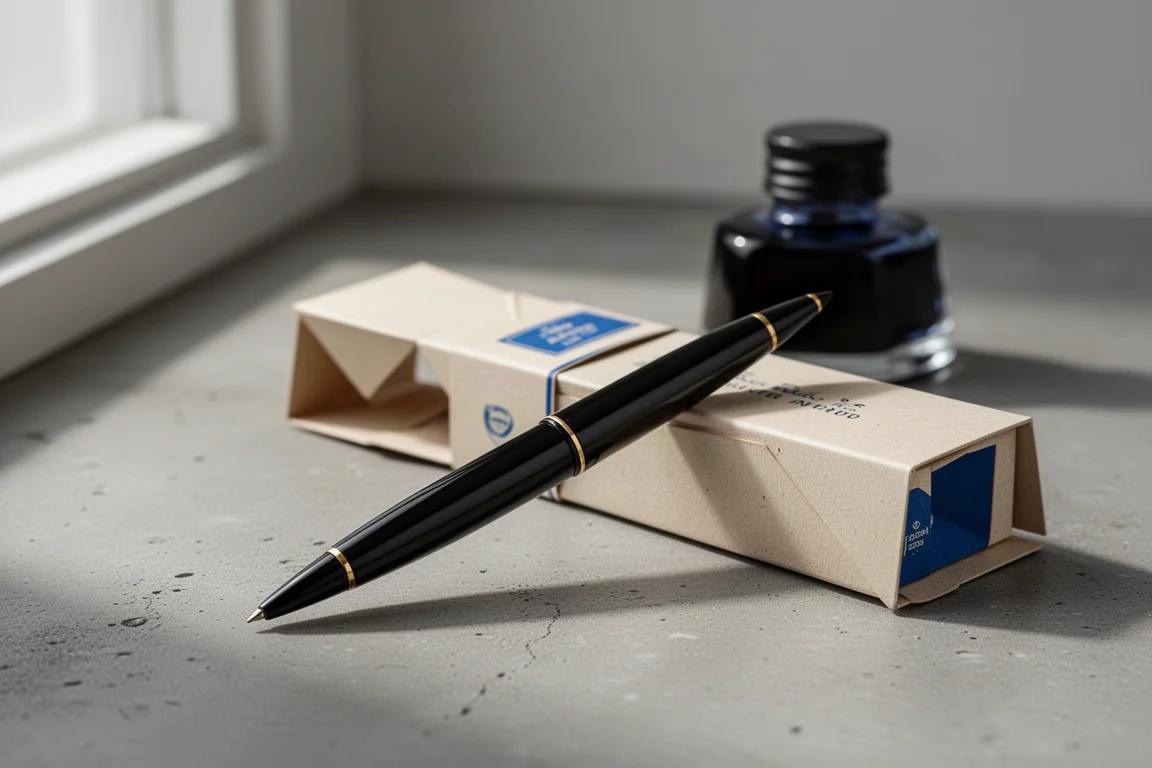
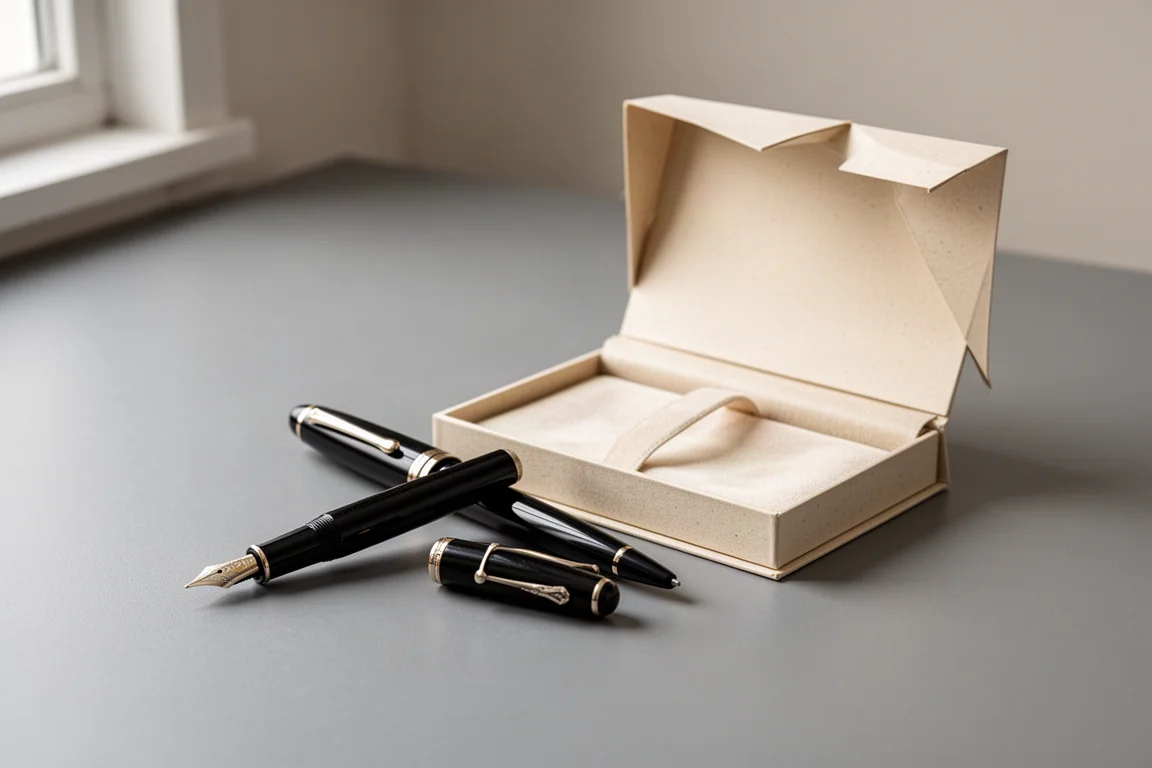
The pen arrives in a folded paper box with the brand name and “fountain pen” written in Korean. The overall design echoes Pilot pens of the same era, and other Chollima models of the period were openly copies of the Parker 51. In that sense, this is very much an interpretation of existing mid-century designs rather than an original silhouette.
The cap is a snap cap with a small gold-toned finial at the top and a gently angled shoulder that straightens near the end. The springy clip accommodates materials of varying thicknesses, though this example shows some tarnish consistent with its age. The black resin barrel tapers at an even angle toward a second gold-toned piece at the end. A small pseudo band breaks up the black, and a short step separates cap from barrel.
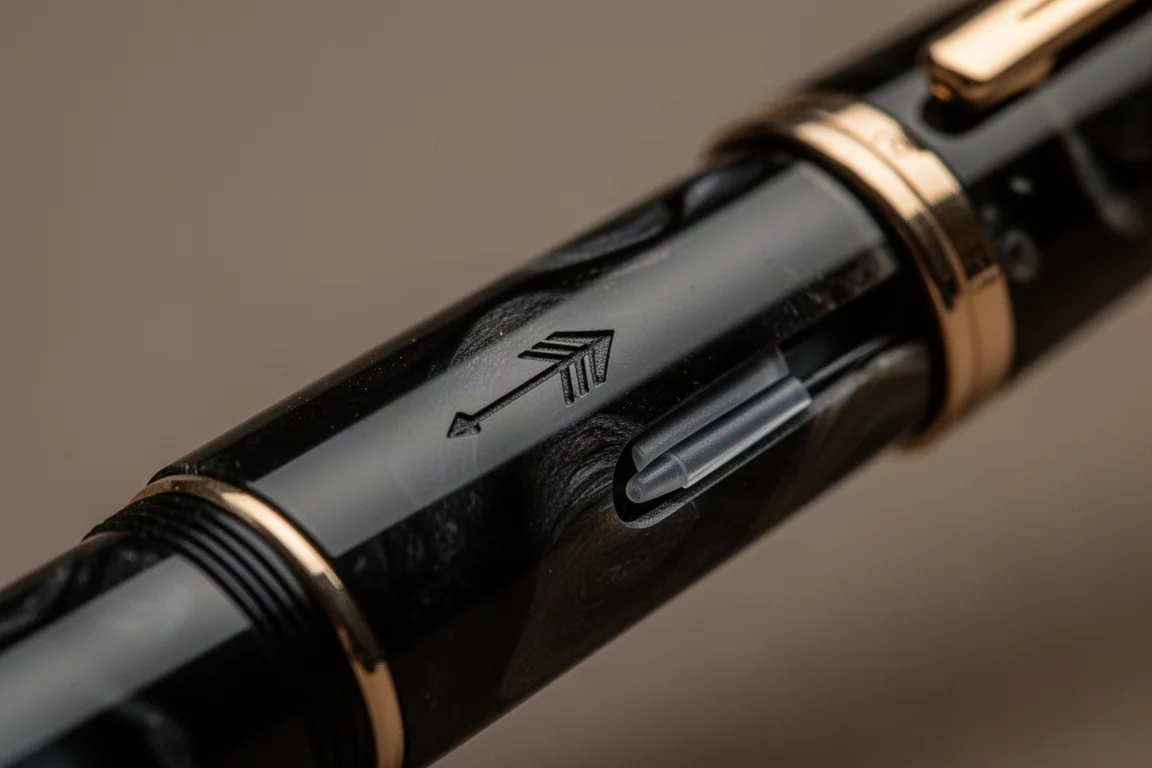
The section deserves attention. It is a decent length but on the thin side, and it accommodates a wide variety of grip styles. If you grip further back, the transition never gets in the way. The arrow motif inlaid into the top of the section is done remarkably well: it is smooth and you cannot feel it under your fingers.
The nib is the headline spec: a 12 karat gold nib with Korean text naming the company and the gold content, paired with a plastic feed that is partially hooded on the bottom and more exposed on top. The pen is comfortable in the hand and well balanced, plenty long enough to use unposted. The cap posts deeply and, being so light, it does not back-weight the pen or throw off the balance. That smooth, rounded cap transition sits comfortably even against the crook of the hand, which makes this a good poster if that is your habit.
Inking It Up
The Chollima 2110 is a cartridge converter pen, and this example came with its original bulb converter still fitted. The mechanism is genuinely interesting: a small internal pipe rises from the chamber, and squeezing the bulb draws ink up through that pipe and into the barrel. There are nice ink windows for monitoring levels.
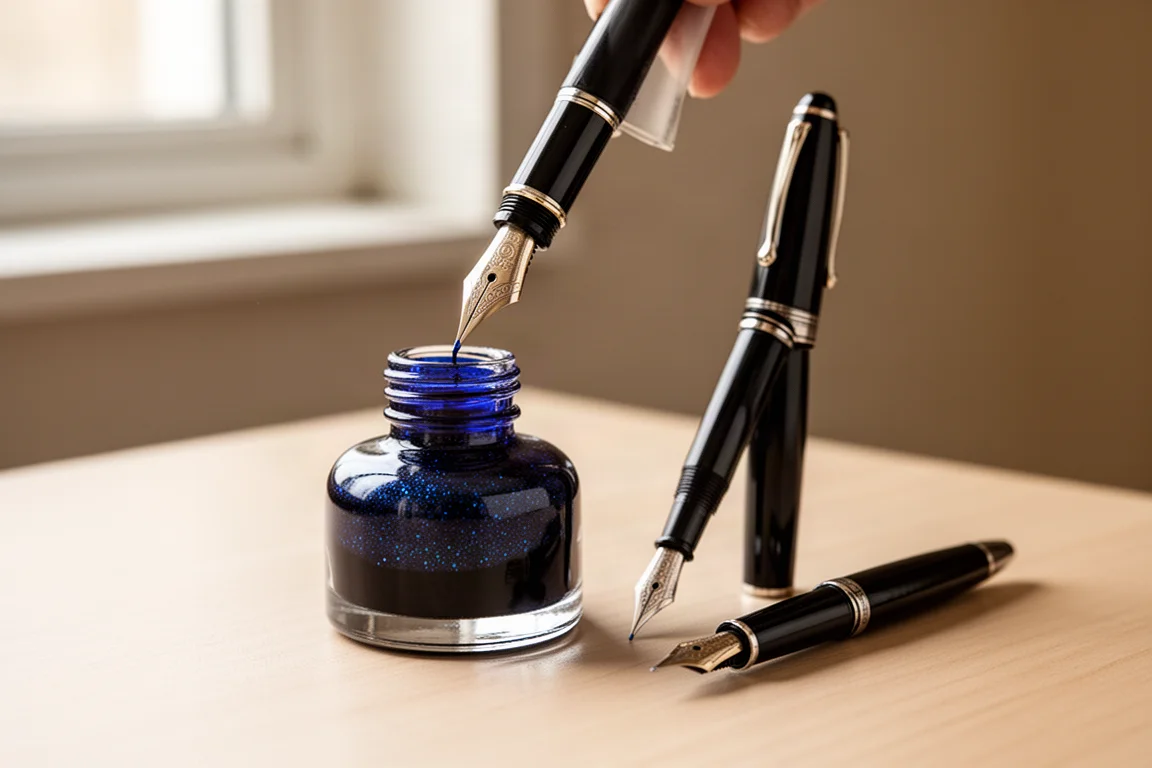
I was curious whether a decades-old filler would still work, so I inked it up on camera with Dominant Industry’s Milky Way Blue, a South Korean ink with a subtle blue-silver shimmer. To my surprise, the bulb converter pulled ink up the tube and filled nicely without any fuss. It is a small thing, but watching a 1970s filler work as intended on its first try is satisfying.
Size and Comparisons
The 2110 sits in familiar mid-century territory size-wise. Alongside a modern Parker 51, a Parker Vacumatic, a TWSBI Diamond 580, an Asvine V126, a Lamy Al-Star, and a Faber-Castell Loom, it reads as a full-length but slim pen. Compared uncapped against the Parker 51 and the Faber-Castell Loom, the profile is similar in length, with a noticeably tapered barrel. It is a pen that will feel at home for writers who like slimmer vintage profiles rather than modern girth.
Writing Performance
Here is where the story gets complicated. I would guess this is a fine nib, and the writing experience is, frankly, hard to control. It is extremely firm. I have never felt a gold nib like this. Despite the 12 karat marking, it behaves far stiffer than any gold nib I have used, with no flex whatsoever, and it is scratchy enough that the tip has been known to rip paper fibers into the tines.
The nib almost seems to take the pen where it wants to go rather than where you intend. Reverse writing, with the tapered underside, behaves almost like a fude nib. Ink flow, to its credit, is decent and consistent, and for a vintage pen it writes reliably.
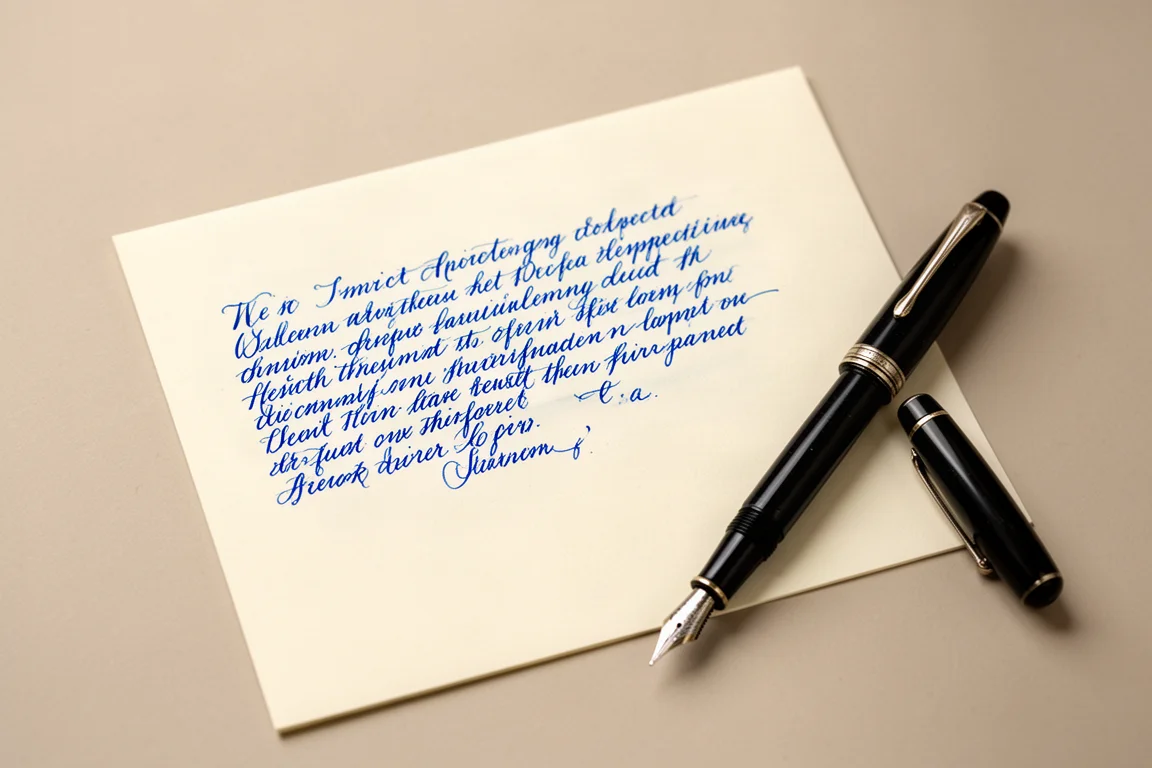
In short: it writes, it flows well, and it is a fascinating experience, but I cannot describe it as pleasant. For a gold nib, it is significantly more firm than expected, and that mismatch is part of what makes this pen such a curiosity.
Buying Advice
These pens, and similar Chollima models, surface periodically on eBay, typically ranging around $100 to $125. At that price, you are buying history and rarity, not writing quality. Buy it if the provenance and the story appeal to you, and treat the nib as part of the charm rather than the selling point. Vintage pens are not usually my thing, but this somewhat rare offering was genuinely enjoyable to examine.
Conclusion
The Chollima 2110 is a fascinating piece of fountain pen history: a well-balanced, thoughtfully designed 1970s pen with a clever bulb converter, an unexpectedly stiff 12 karat gold nib, and a story few other pens can match. It is not a comfortable writer, but as a collector’s artifact it stands alone.
Product link
View more details for Chollima 2110
This product is mentioned in the review. Check the specifications, options, and compatibility before buying.
View more details for Chollima 2110Further reading
Related Reviews
Fountain Pens
Best Budget Fountain Pens Tested: 9 Pens, One Clear Winner
A hands-on comparison of nine affordable fountain pens for everyday writing, calligraphy, and sketching, with a clear standout for flexible nib fans.
Fountain Pens
Aurora Optima Review: An Italian Piston Filler That Punches Above Its Price
A 14k gold nib, ebonite feed, and a beautifully deep oraloid body make the Aurora Optima one of the most rewarding piston fillers around.
Fountain Pens
Cross Bailey Light Review: The Entry-Level Fountain Pen Worth Keeping at the Office
A plastic-bodied Cross with a metal clip, snap cap, and famously smooth extra fine steel nib. Around $15, available almost everywhere, and easy to recommend.