Cookware
Carbon Steel vs Stainless Steel Pans: Which One Deserves a Spot in Your Kitchen?
A practical side-by-side look at carbon steel and stainless steel cookware, covering heat performance, maintenance, versatility, and price, with two standout pans from Made In and All-Clad.
Introduction
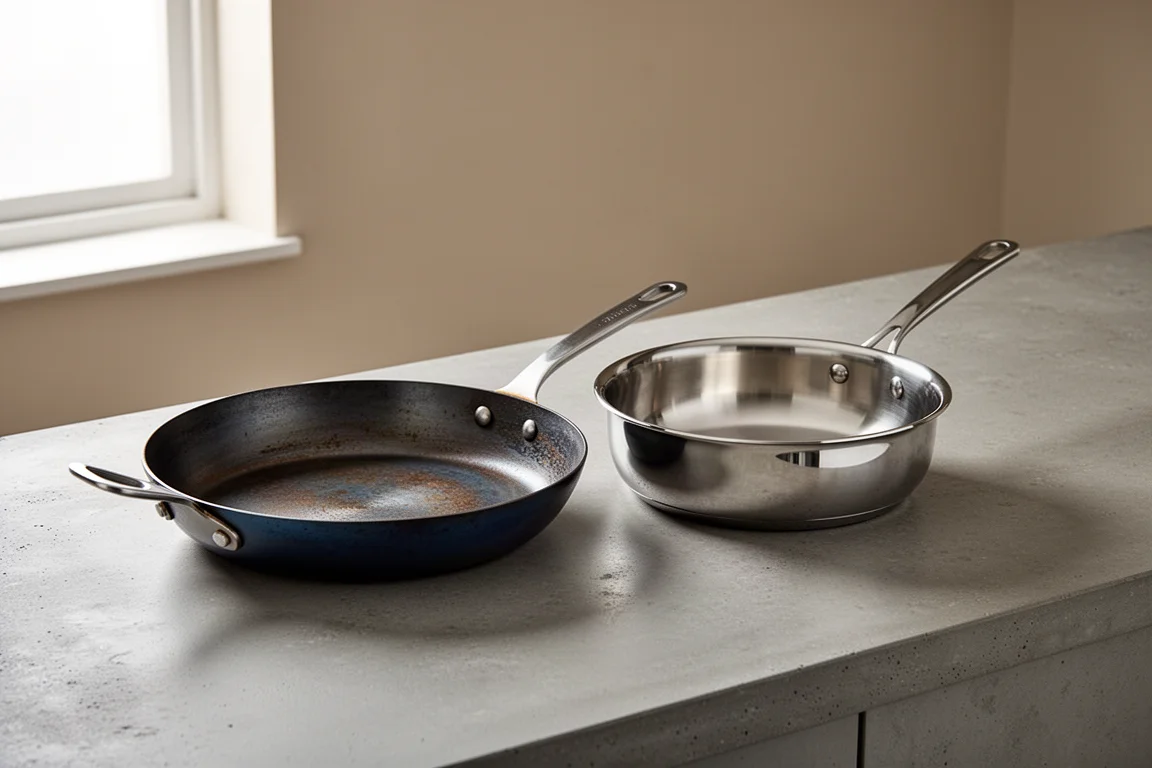
Carbon steel and stainless steel pans have a lot in common. Both are durable, versatile workhorses that excel at searing and browning meats, and either one can last a lifetime. But there are meaningful differences in construction, heat behavior, maintenance, and price that can swing your decision either way. This comparison breaks those differences down, and highlights two pans worth a closer look: the Made In Blue Carbon Steel Frying Pan and All-Clad stainless steel pans.
Construction and Design
Most carbon steel pans are made the same way. Manufacturers start with a flat, heat-treated sheet of carbon steel, cut it into a circle, punch it into the shape of a pan, and attach the handle to the base with two rivets. Carbon steel itself is an alloy of roughly 99% iron and 1% carbon.
Stainless steel cookware is more complicated. Because stainless steel doesn’t conduct heat well on its own, most brands bond exterior layers of steel to a conductive core such as copper or aluminum. This bonding process is called cladding, and the resulting cookware is marketed as multi-clad or fully clad. Some brands layer the conductive material throughout the pan, while others bond it only to the base, which means the sides won’t heat as evenly.
The practical takeaway: because most carbon steel pans are just carbon steel, performance is similar across brands. Stainless steel pans vary significantly in materials and construction, so their performance varies too.
The other key material difference is chromium. Most stainless steel cookware contains about 18% chromium, which protects the steel from rust and corrosion caused by moisture and acidic foods. Carbon steel doesn’t contain enough chromium to be corrosion resistant, so it’s prone to rust and discoloration, especially when the seasoning layer wears thin.
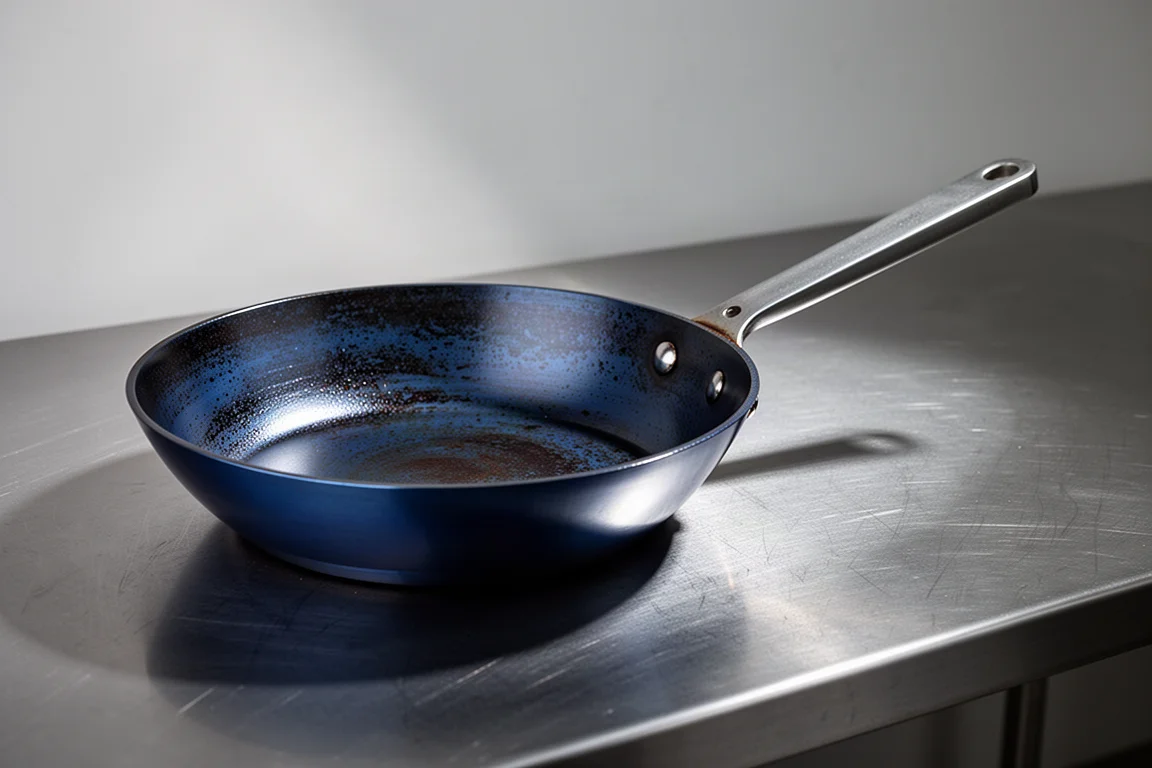
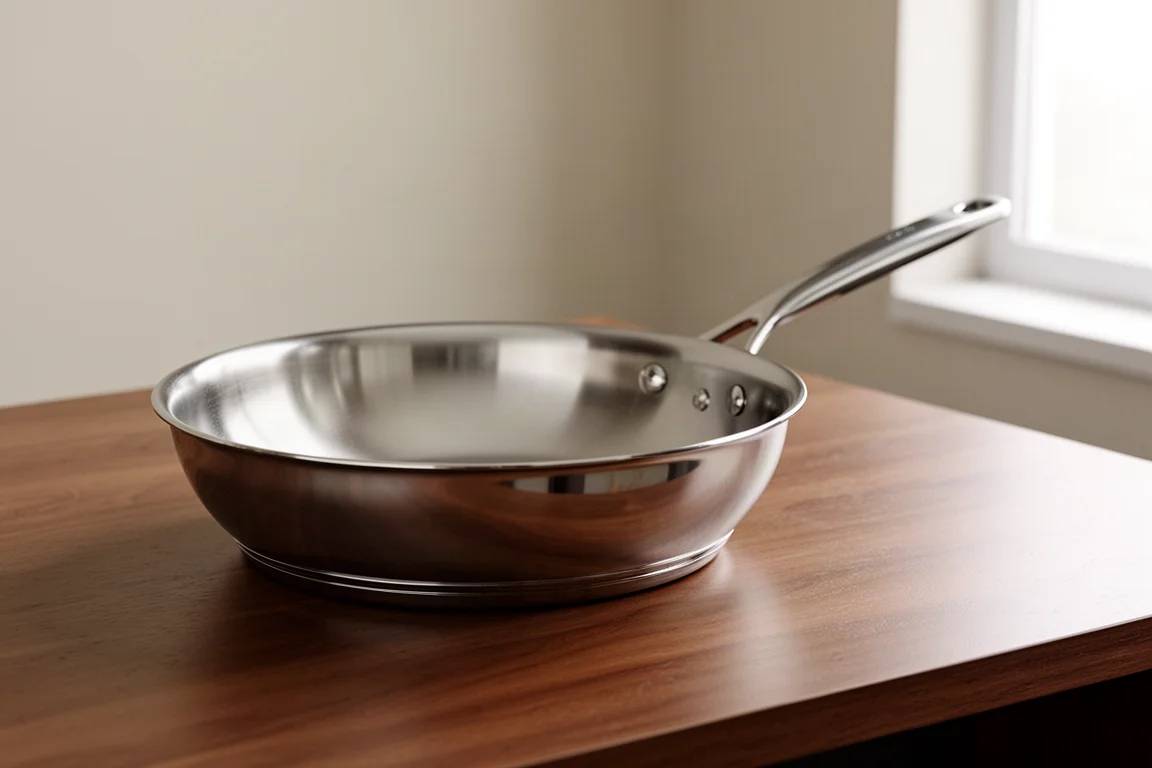
That also explains the appearance difference. Carbon steel starts out with a smooth gray or blue exterior but becomes blotchy over time before darkening into a more uniform look with use. Stainless steel comes out of the box with a polished finish and can keep that look for years.
Heat Performance
Fully clad stainless steel pans distribute heat more evenly than carbon steel because of their aluminum or copper core. Carbon steel heats up quicker and more evenly than cast iron thanks to its thinner design, but it has lower thermal conductivity than aluminum or copper. That said, after a minute or two of preheating, both types distribute heat evenly, and it’s rare to experience hot or cold spots with either.
Heat retention depends mostly on thickness. Carbon steel pans are constructed similarly across brands, so they retain heat to a similar degree. Stainless steel varies more: thicker pans with more bonded layers hold heat better than cheaper, thinner ones. That matters when searing, since you want a pan that holds its temperature when a cold steak or burger patty hits the surface.
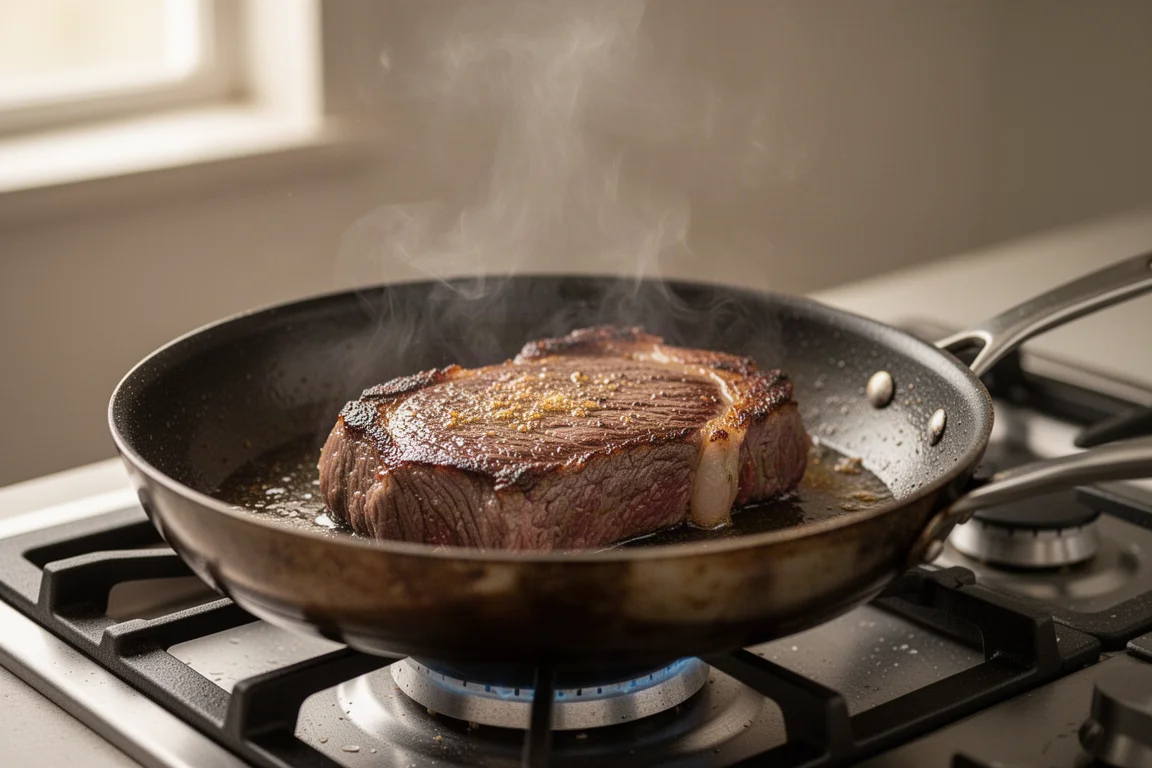
Where carbon steel has a real advantage is heat tolerance. It’s a staple in professional kitchens for a reason: you can leave it on hot burners for extended periods, and you can even use it on the grill or over a campfire. Most carbon steel pans tolerate up to 600 degrees Fahrenheit, but some go much higher. The Made In blue carbon steel frying pan is oven safe up to 1200 degrees Fahrenheit. Most stainless steel pans withstand up to 500 degrees Fahrenheit, though All-Clad stainless steel pans handle up to 600 degrees.
Both types respond quickly to temperature changes. Carbon steel gets its responsiveness from thin walls and light construction, while stainless steel gets it from the conductive aluminum or copper core. If you want the ultimate responsiveness, a stainless steel pan with a copper core or copper exterior has significantly higher thermal conductivity than aluminum or carbon steel.
Cooking Versatility and Food Release
Both types are highly versatile. They work on all cooktops, including induction, and are safe in the oven and under the broiler. You can sear, brown, sauté, broil, braise, and even bake in either one.
The major limitation for carbon steel is acidic food. A squeeze of lemon or a splash of wine won’t hurt, but prolonged exposure to acidic ingredients like tomato sauce will strip the seasoning right off the cooking surface. Stainless steel has virtually no limitations: it won’t react with acidic ingredients, which makes it the better all-purpose pan.
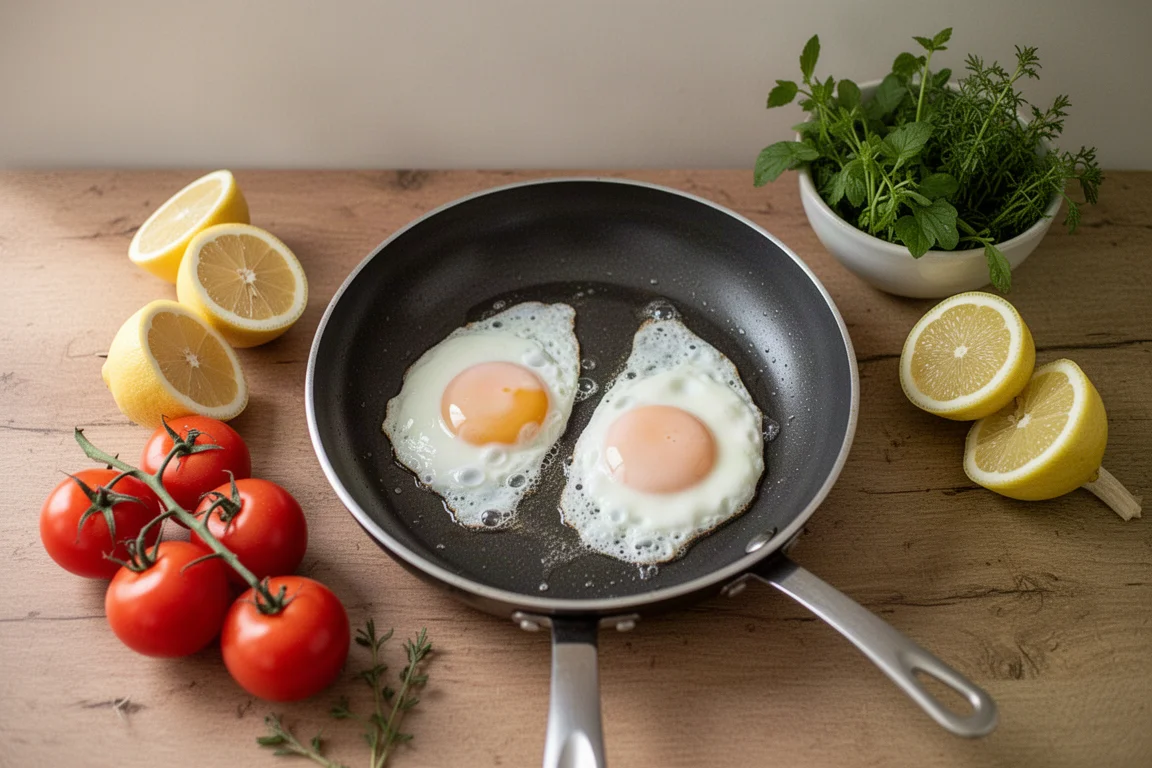
The trade-off is food release. Delicate foods like eggs and fish can stick to stainless steel if you don’t use proper technique. Carbon steel doesn’t have that problem because the seasoning layer acts as a non-stick coating. Seasoning isn’t difficult, but it takes time and needs to be redone whenever the pan becomes sticky, rusty, or discolored.
Cleaning and Maintenance
Carbon steel can’t go in the dishwasher, and soap will ruin the seasoning. The good news is that hand washing is fairly easy: the slick seasoned surface releases food quickly, so a soft cloth with warm water usually does the trick. For stuck-on bits, sprinkle salt in the pan, rub with a paper towel, and rinse.
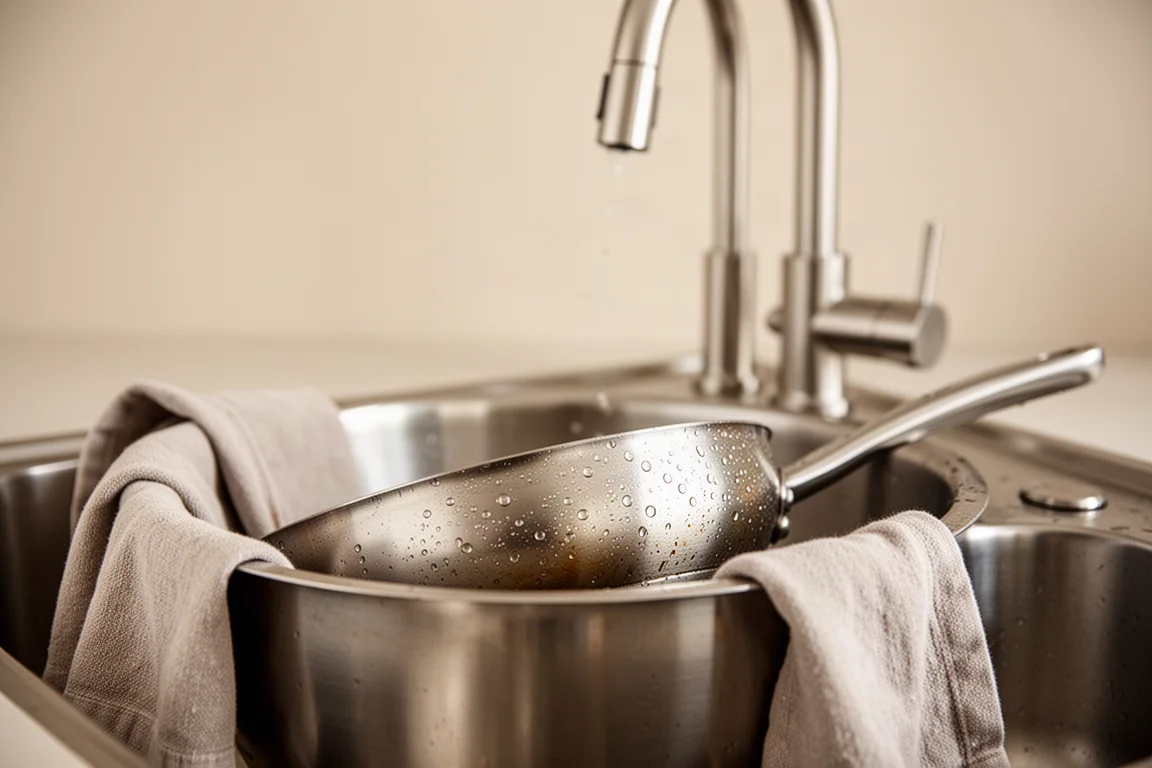
Stainless steel needs no seasoning, can be washed with soap, and most pans are dishwasher safe, though hand washing is still the gentler option. The catch is that stainless steel can actually be harder to clean because the surface isn’t as slick as seasoned carbon steel.
Availability and Price
Stainless steel is widely available across every cookware category: frying pans, saucepans, sauté pans, stock pots, and more. Nearly every brand has a stainless steel collection. Carbon steel is much less prevalent and generally limited to frying pans, skillets, and woks.
Price is where carbon steel wins. Most carbon steel pans run around 50 to 70 dollars, with some as low as 30, and they can be up to 70% cheaper than stainless steel equivalents. Stainless steel prices vary drastically by brand and collection, from around 25 dollars to well over 200 depending on materials, layers, thickness, finish quality, and where it’s made. Overall, the average 12-inch carbon steel pan costs less than the average 12-inch stainless steel pan.
Best Carbon Steel Pick: Made In Blue Carbon Steel Frying Pan
The Made In blue carbon steel frying pan stands out for its exceptional heat tolerance, rated oven safe up to 1200 degrees Fahrenheit, well beyond the 600 degrees most carbon steel pans can handle. That makes it a natural fit for high-heat searing, grill-adjacent cooking, and anyone who wants a pan that shrugs off abuse. Like all carbon steel, it will develop a blotchy patina before darkening into a more uniform finish, and it needs regular seasoning and thorough drying to prevent rust. For the price of a typical carbon steel pan, it’s a compelling way to add a slick, high-heat skillet to your lineup.
Best Stainless Steel Pick: All-Clad Stainless Steel Pans
All-Clad stainless steel pans handle up to 600 degrees Fahrenheit, above the 500-degree limit of most stainless steel pans, and benefit from fully clad construction that distributes heat evenly across the base and sides. Because stainless steel doesn’t react with acidic ingredients, you can cook anything in them, from tomato sauce to wine-based pan sauces, without worrying about damaging the surface. They also keep their polished look for years with far less maintenance than carbon steel. Expect stainless steel pricing, which varies by collection, but you’re paying for durability, even heating, and near-total versatility.
Which Should You Buy?
The truth is, this isn’t an either-or decision. These two types of cookware complement each other. With stainless steel, you can cook any ingredient, including tomato sauces and dishes loaded with acidic ingredients. With carbon steel, you get a slicker surface that lends itself to stir fries, sautéing, and delicate foods like eggs. Both are excellent for roasting, searing, browning, braising, boiling, and baking.
If you’re only buying one piece of cookware and need it for all types of meals, go with stainless steel. It requires less maintenance and you can cook anything in it. If you’re building a set, a strong approach is a stainless steel set complemented by one carbon steel pan for high-heat and delicate-food work.
Conclusion
Carbon steel and stainless steel pans are both lifetime cookware, just with different personalities. Carbon steel offers higher heat tolerance, natural non-stick release, and lower prices, at the cost of seasoning upkeep and an acidic-food limit. Stainless steel offers even heating, total versatility, and easy care, at a higher price and with more sticking on delicate foods. Pick based on how you cook, and don’t be afraid to own both.
Further reading
Related Reviews
Cookware
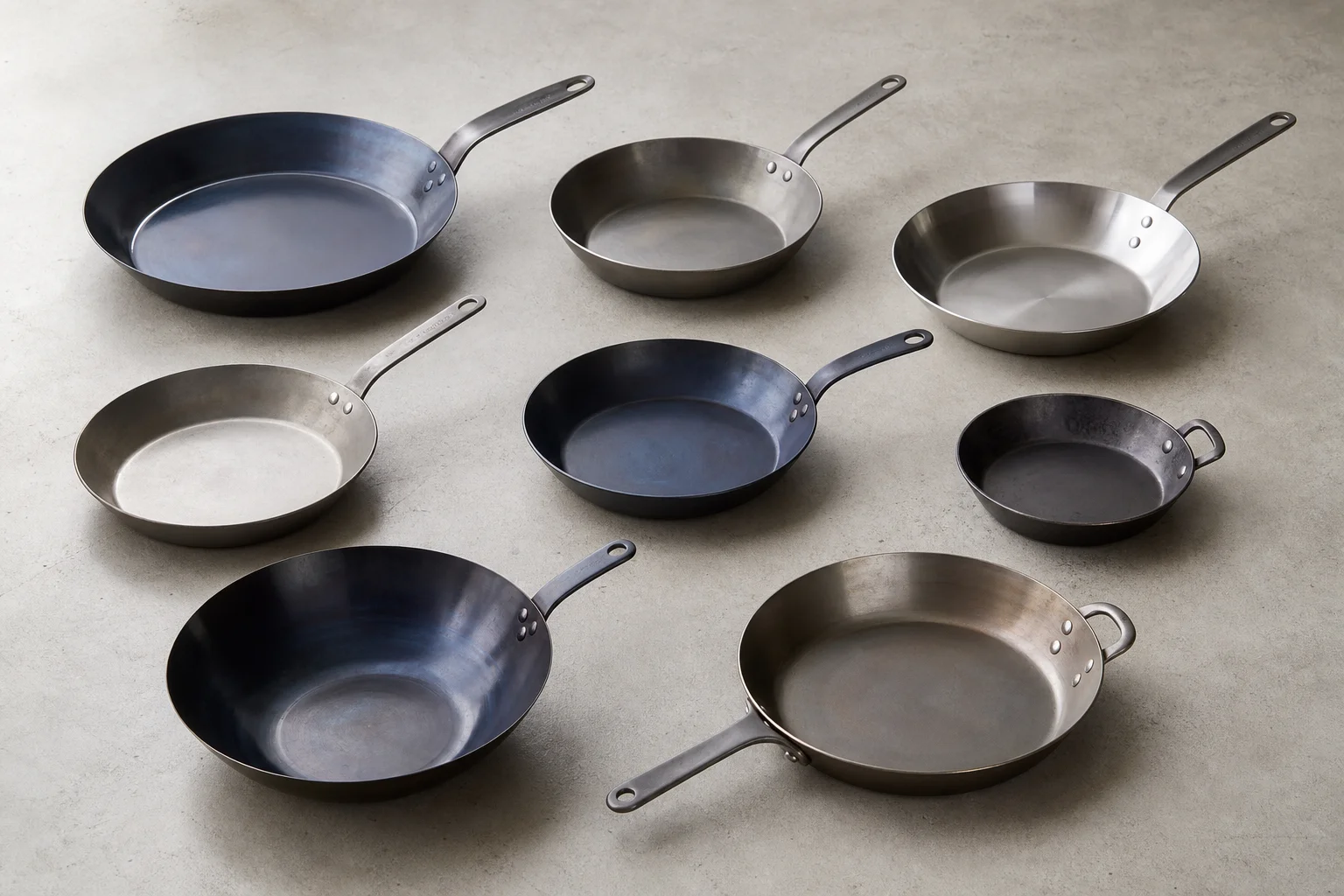
Best Carbon Steel Pans Tested: Which Brands Deliver Real Value
We tested eight popular carbon steel pans with controlled durability, heat, and cooking tests. Here's which ones perform best and which to avoid.
Cookware
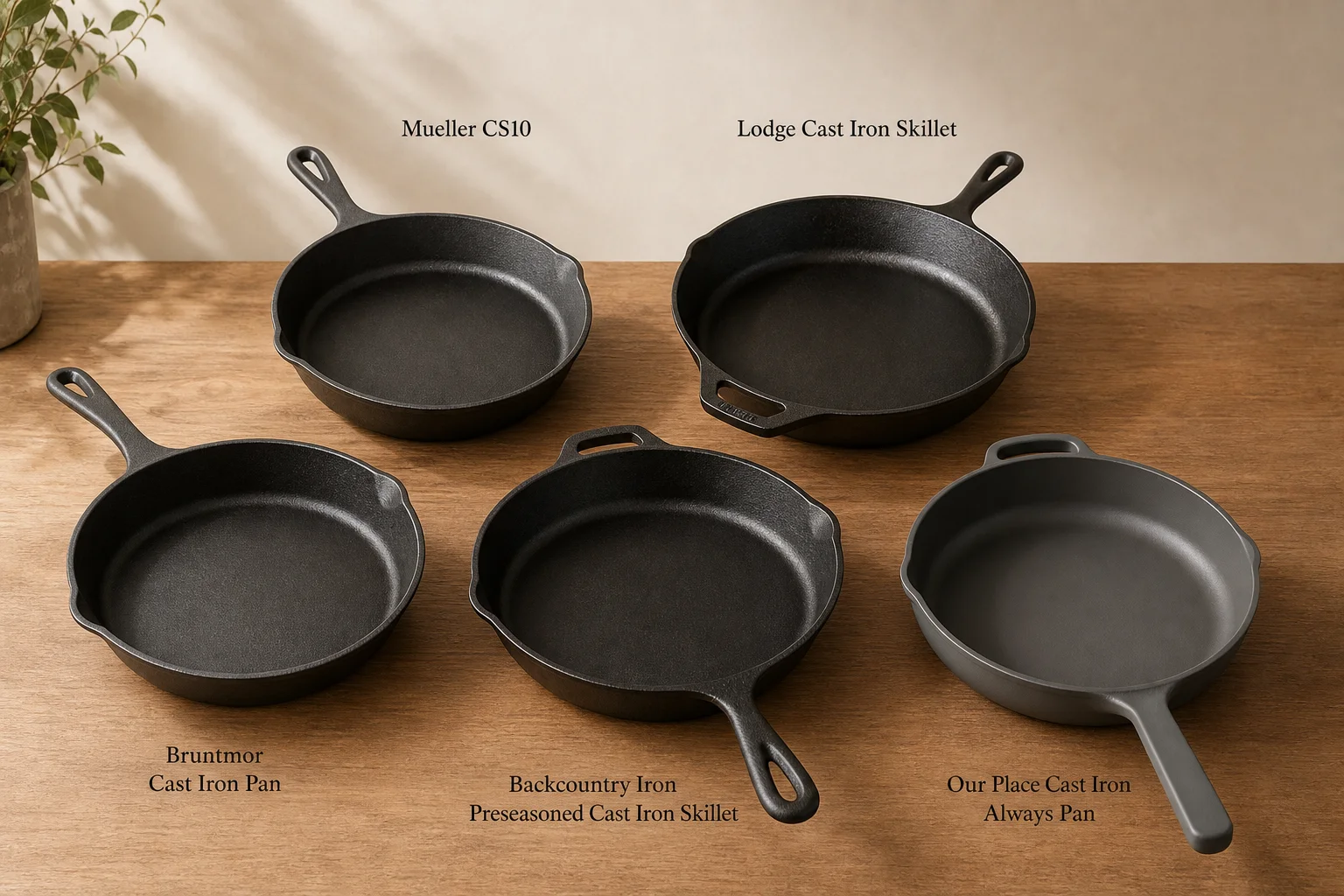
Best Cast Iron Pans 2026: Five Options from Budget to Premium
A practical breakdown of five cast iron skillets, from affordable Mueller to premium Our Place, with clear strengths and trade-offs for different cooking needs.
Cookware
Best 12-Inch Cast Iron Skillets: Premium Craftsmanship vs. Reliable Budget Option
Two standout 12-inch cast iron skillets tested for heat retention, surface finish, and durability. One premium choice and one budget-friendly alternative that both deliver.