Running Shoes
Do Carbon Running Shoes Help Slower Runners? Three On Models Compared
A pace-by-pace look at when carbon race shoes actually pay off, with three On running shoes tested across easy, marathon and 5K speeds.
Introduction
Carbon-plated race shoes sit at the top of almost every distance running range, and the marketing around them is aimed squarely at the pointy end of the field. That raises a fair question for everyone else: if you are running a slower marathon, a long off-road race, or a triathlon, is a carbon shoe actually doing anything measurable for you, or are you better served by a durable cushioned trainer?
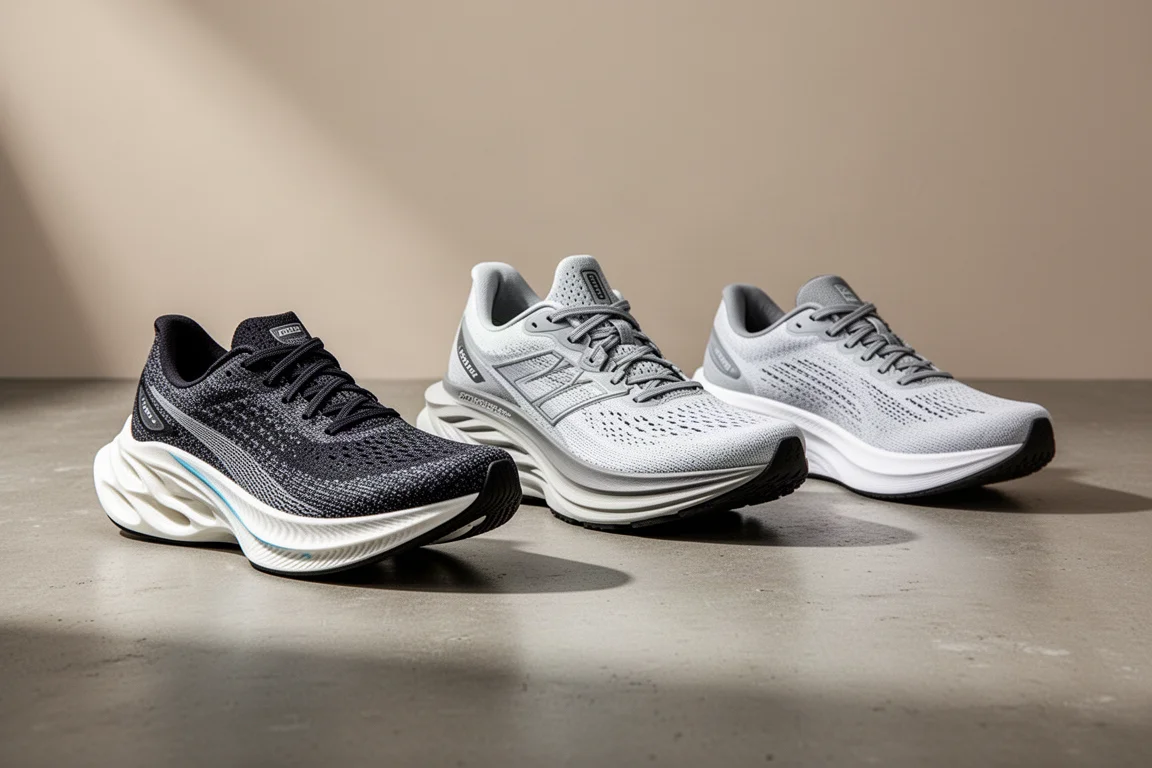
That question was put through a set of treadmill testing with three runners at distinctly different paces, using the On Cloudboom Echo 3 as the carbon option and two standard training shoes as the baseline. The headline result is that the carbon shoe lowered oxygen cost for everyone, at every pace tested, but the size of that gain changed a lot depending on how fast the runner was going.
How We Evaluated These Shoes
Each runner completed three paces in a normal training shoe and then repeated the same three paces in the carbon race shoe. The paces were a comfortable easy effort, a marathon or half marathon effort, and a hard 5K effort, giving a spread from roughly 6:30 per kilometre down to around 3:35 per kilometre across the group.
Two measurements came out of the sessions. The first was respiratory exchange ratio, the relationship between oxygen consumed and carbon dioxide produced, which shows how much of the effort is being fuelled by fat versus carbohydrate. The second was running economy, expressed as millilitres of oxygen per kilogram of body weight per kilometre, which is effectively the oxygen cost of covering a given distance.
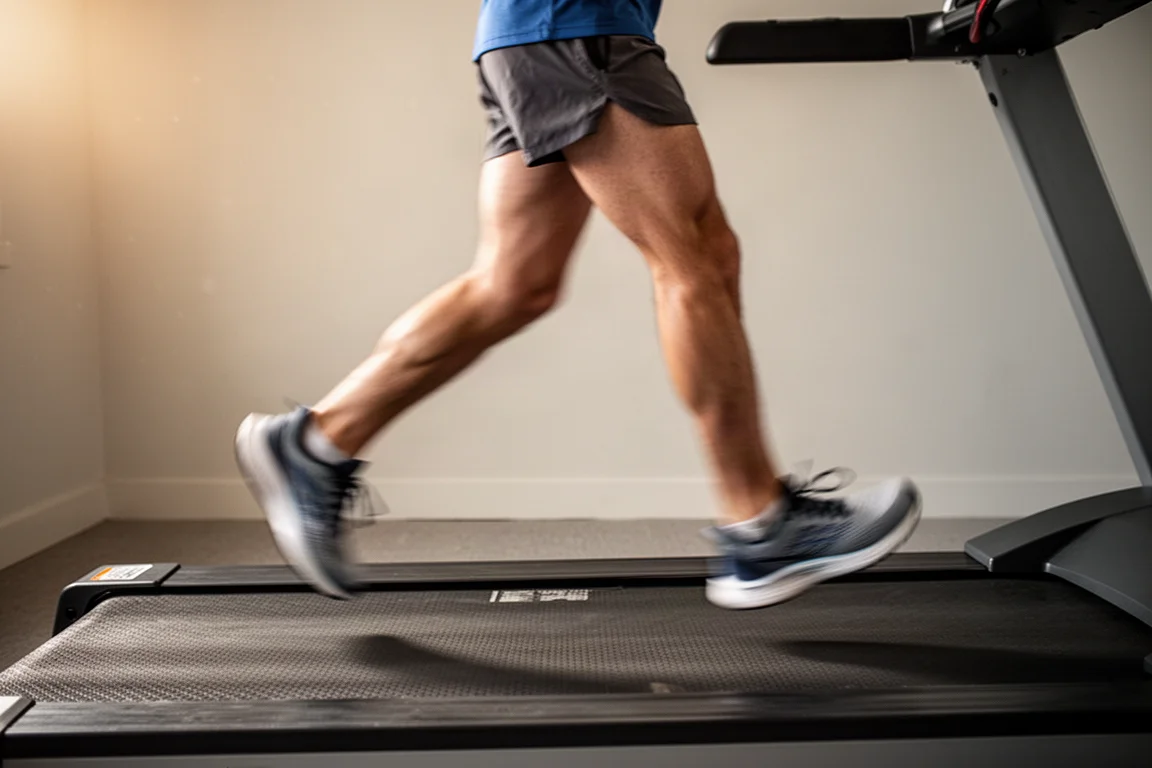
On respiratory exchange ratio, the result was consistent across the whole group: it was lower in the carbon shoe for all three runners at all three paces, which points to a lower oxygen cost and a slight shift toward the fat-burning end of the spectrum. Running economy was where the picture became more nuanced, and where pace started to matter a great deal.
On Cloudboom Echo 3: The Carbon Race Shoe
The On Cloudboom Echo 3 is the carbon-plated racer in this comparison, the shoe already being worn at the front of professional fields. It is the model that tends to appear late in a triathlon or at the end of a hard block, when legs are already carrying fatigue and a shoe is being asked to hold form rather than create it.
In testing, the pattern was that the faster the runner went, the more the shoe gave back. For the quickest tester in the group, running economy improved progressively as pace increased, with the clearest advantage at the hardest 5K effort. At the slower easy and marathon-effort paces, the cost of running came down, but only slightly, and the difference was small enough that it had to be weighed against the price of the shoe and how quickly a race-day midsole wears down.
There is also a familiarity factor worth knowing about. One tester had done almost all previous running in a carbon shoe at a fairly quick pace, and the economy numbers were less clear cut at unfamiliar speeds, which suggests that getting the most out of a plated shoe may take some adaptation time rather than being instant on the first run.
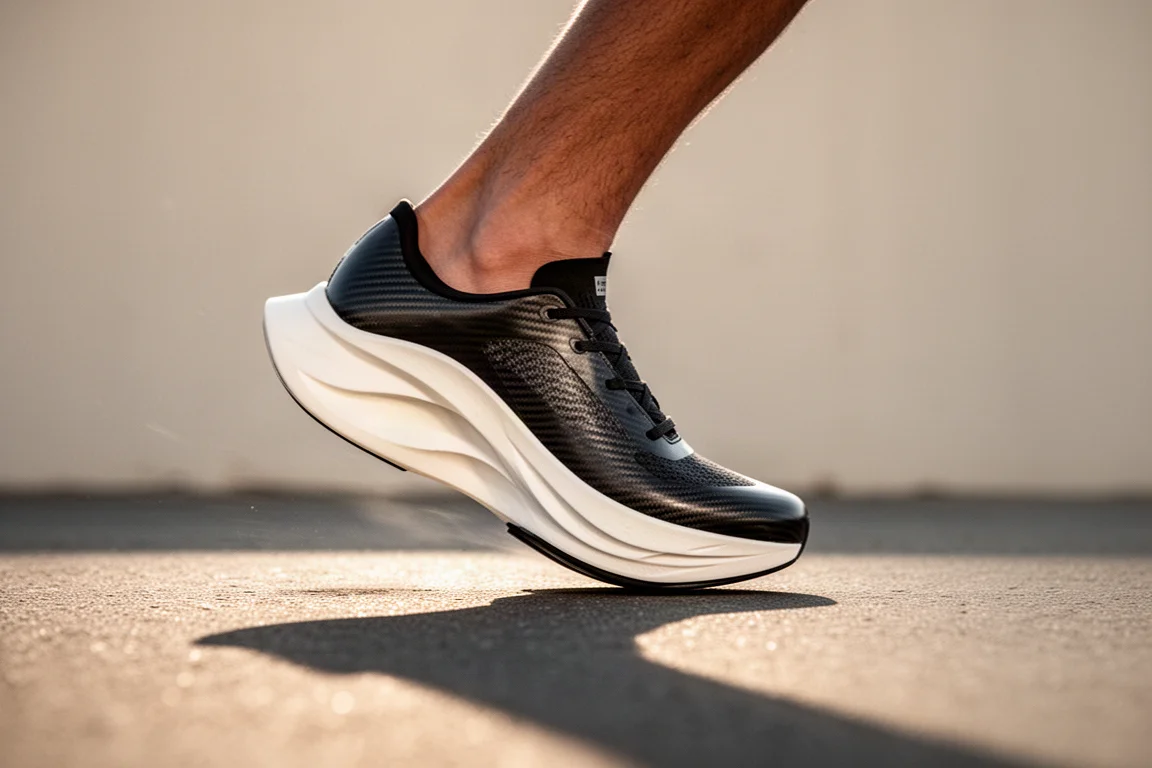
If you race short and fast, or you are chasing a personal best over 5K to half marathon and want every small margin available, this is the shoe category doing the most work for you.
On Cloudmonster: The Max-Cushion Trainer
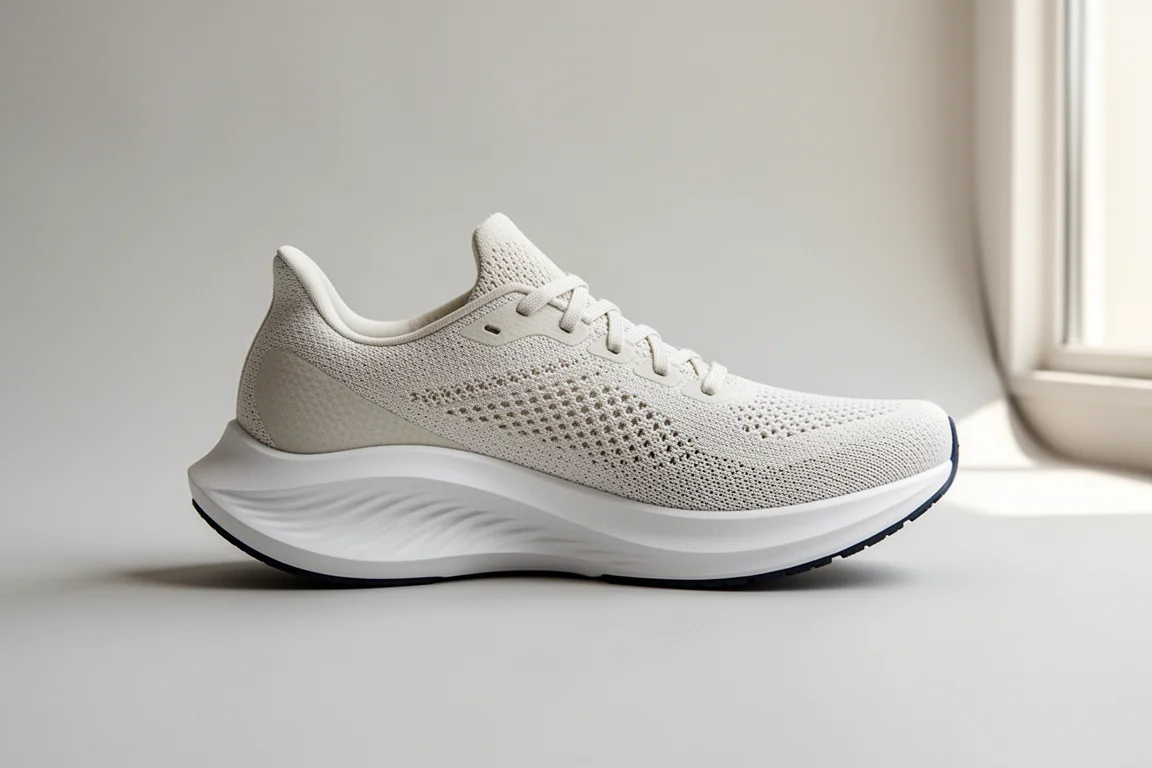
The On Cloudmonster is a maximum-cushion trainer with a substantial stack and a decent amount of energy return, built around a 6 mm drop. It is the kind of shoe that covers most easy running and a good portion of quality work without leaving legs beaten up the next day.
In this test it served as the everyday baseline for two of the runners, including the heaviest and slowest of the group, whose marathon-effort pace sat around 6:30 per kilometre. That runner did record a benefit from the carbon shoe, but a very small one, and the practical takeaway was that the gain was hard to justify against the cost and the shorter lifespan of a plated racer.
The reason is straightforward enough. A carbon race shoe carries roughly the same amount of foam regardless of who is standing on it, while stack height is capped by competition rules. A heavier or slower runner does not get more foam to work with, so the advantage that comes from compressing and returning that foam is smaller. For long, slow efforts, a cushioned trainer that stays comfortable and lasts is often the more sensible choice.
On Cloudrunner: The Everyday Trainer
The On Cloudrunner is a lower-profile everyday trainer, used here as the shoe for daily mileage and general training. It represents the other side of the decision: a straightforward, neutral daily shoe that is not trying to be a race weapon at all.
For the fastest tester in the group, the training shoe was actually the shoe that had produced a half marathon personal best, which is a useful reminder that carbon plates are not a substitute for fitness and that plenty of strong results are set in ordinary trainers. The training shoe also held its own on comfort across the slower paces, and durability is on its side, which matters if you are putting in high weekly volume.

If most of your running is steady, social or long-distance base work, a shoe like this remains the logical daily pick, with a carbon racer reserved for the few efforts a year where you are genuinely chasing time.
What the Pace Data Suggests
Putting the numbers together, the conclusion is not that carbon shoes are pointless for slower runners, but that the size of the benefit scales with speed. Everyone tested used less oxygen in the carbon shoe, and that was true at every pace, but for the slower runner at easy and marathon efforts the difference was marginal, while the faster runner saw the advantage grow as the pace got harder.

That makes the buying decision fairly practical. If your racing is short and fast, or your goal race pace is quick, a carbon racer is money well spent. If your target is a slow marathon, a long triathlon, or a heavily fatigued late-race effort, the gain exists but is small, and you may prefer to keep your cushioned trainer for those days and save the plated shoe for shorter, sharper efforts.
One further point that came out of the sessions is adaptation. A carbon shoe can feel different underfoot at paces you have not run in it before, with a higher stack and a more pronounced rocker changing where you land and how you push off. Doing a handful of training runs in a race shoe before race day, at something close to target pace, is a sensible way to avoid fighting the shoe when it matters.
Conclusion
Carbon-plated shoes lowered oxygen cost for every runner tested, at every pace, so the technology is not exclusive to elites. The nuance is that the gains are largest at high speed over short distances and become marginal at slow paces over long distances, where a durable cushioned trainer is often the better value. Matching the shoe to the effort, and putting in a few preparatory runs before racing in it, is the approach most likely to pay off.
Further reading
Related Reviews

Running Shoes
Best Road-to-Trail Running Shoes: Three Versatile Options for Mixed Terrain
A practical guide to three road-to-trail running shoes that handle both pavement and mild trails, with clear strengths and trade-offs for different runner types.

Running Shoes
Best Running Shoes for Achilles Tendonitis: Three Options Explained
Three running shoes with different heel drops and support features designed to help reduce Achilles tendon pain during walking and running.

Running Shoes
Best Running Shoes for Women: Five Top Choices Ranked
A ranked guide to five women's running shoes, from versatile daily trainers to high-performance racing options, with real strengths and trade-offs for each.