Art Supplies
Caran d'Ache Pablo vs Faber-Castell Polychromos vs Holbein: Which Colored Pencil Set Fits Your Art?
A detailed side-by-side comparison of three professional oil-based colored pencil sets, covering core sizes, lightfastness, blending, layering, and real artwork results.
Introduction
Caran d’Ache Pablo, Faber-Castell Polychromos, and Holbein Artists’ Colored Pencils are three professional sets that occupy very similar territory. All three are marketed toward serious colored pencil artists, all three offer large full-range sets, and all three are in-house lightfast tested on a three-star system rather than the Blue Wool or ASTM systems.
To make the comparison as fair as possible, every test and every piece of artwork was completed on the same paper: Strathmore 300 Series Bristol Vellum for the swatch and blend tests, and Derwent Lightfast paper for the finished apple drawings. All three pieces were drawn from the same traced outline, using colors as closely matched as each range allows. No odorless mineral spirits and no colorless blenders were used anywhere, only the pencils themselves.
The right choice here depends less on raw numbers and more on the kind of artist you are: your preferred paper, your genre, and whether you like a harder or softer core. That said, there are real, measurable differences between these three, and this guide lays them all out.
The Specs at a Glance
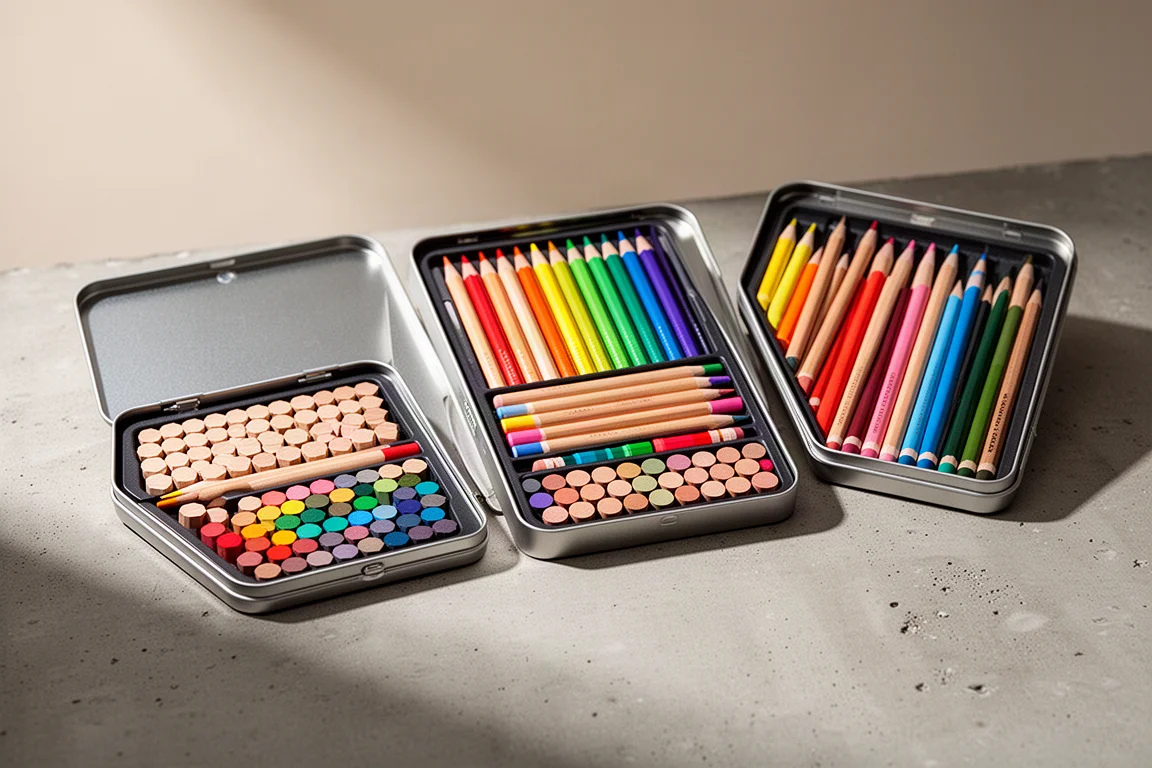
The Caran d’Ache Pablo uses a hexagonal barrel with a 3.7 mm core and a roughly 6.9 mm barrel. The full set is 120 pencils. Of those, 45 carry a three-star lightfast rating (the highest), 68 are two-star, and 7 are one-star. Lightfast ratings are printed on the barrels, and the barrels are painted the same color as the core, so pigment identification is easy.
The Faber-Castell Polychromos uses a round barrel with a 3.8 mm core and a 7.7 mm barrel. The full set is also 120 pencils, and this is the strongest of the three on paper quality: 103 pencils are three-star, 15 are two-star, and only 2 are one-star. Ratings are again printed on the barrel, which is painted to match the core.
The Holbein Artists’ Colored Pencils set is the largest at 150 pencils, 30 more than either competitor. It uses a round barrel with the biggest core of the three at 3.9 mm, and a 7.7 mm barrel. Six of the 150 pencils are luminous and carry no lightfast rating, so ratings are assessed across 144 pencils: 72 are three-star, 60 are two-star, and 12 are one-star. The barrel is lacquered the same color as the core for easy visual identification.
One practical note: if you buy a set of any of these three, expect to spend a significant amount. All three are premium-priced, so getting the right information before spending matters.
Sharpening and Core Feel
Feel is where these three sets genuinely diverge. On the Bristol vellum test paper, the Pablo delivered the most pigment with the lightest touch of the three, and on the swatch test it read as slightly more heavily pigmented than both the Polychromos and the Holbein. However, the Pablo core also felt the hardest of the three, with a slightly drier feel during layering and blending, almost like using pastel pencils (though nowhere near that extreme).
Sharpening was the one clear weakness for the Pablo. Using a handheld sharpener, the pencil felt jittery while turning, though there was no core snapping or breakage. With a hand-crank or electric sharpener, that issue likely disappears entirely.
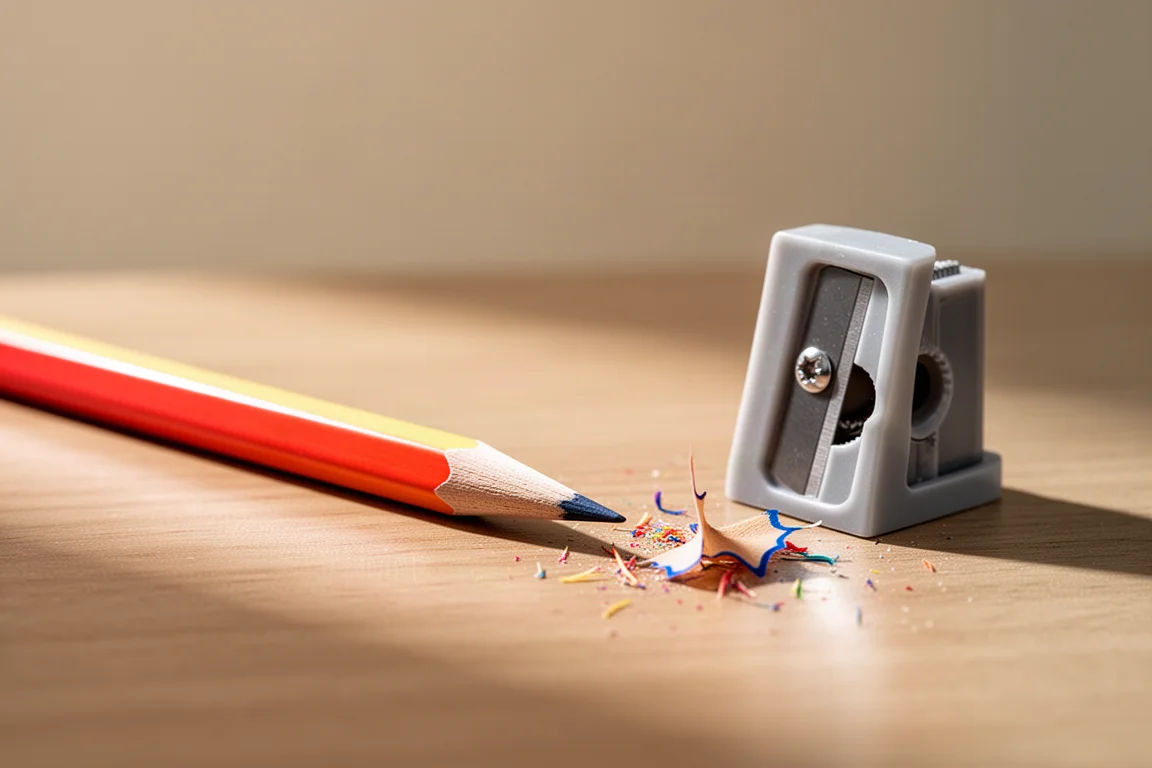
The Faber-Castell Polychromos felt noticeably smoother on the paper, with an oilier, almost gluey-smooth quality to the core, closer to the feel of mixing thick paint than the drier Pablo. Both the Polychromos and the Holbein sharpened to a much finer, more defined point than the Pablo, which matters more than it sounds: with light layering and a very light touch, a sharp point glides over the paper texture and delivers cleaner results.
Blending and Layering Performance
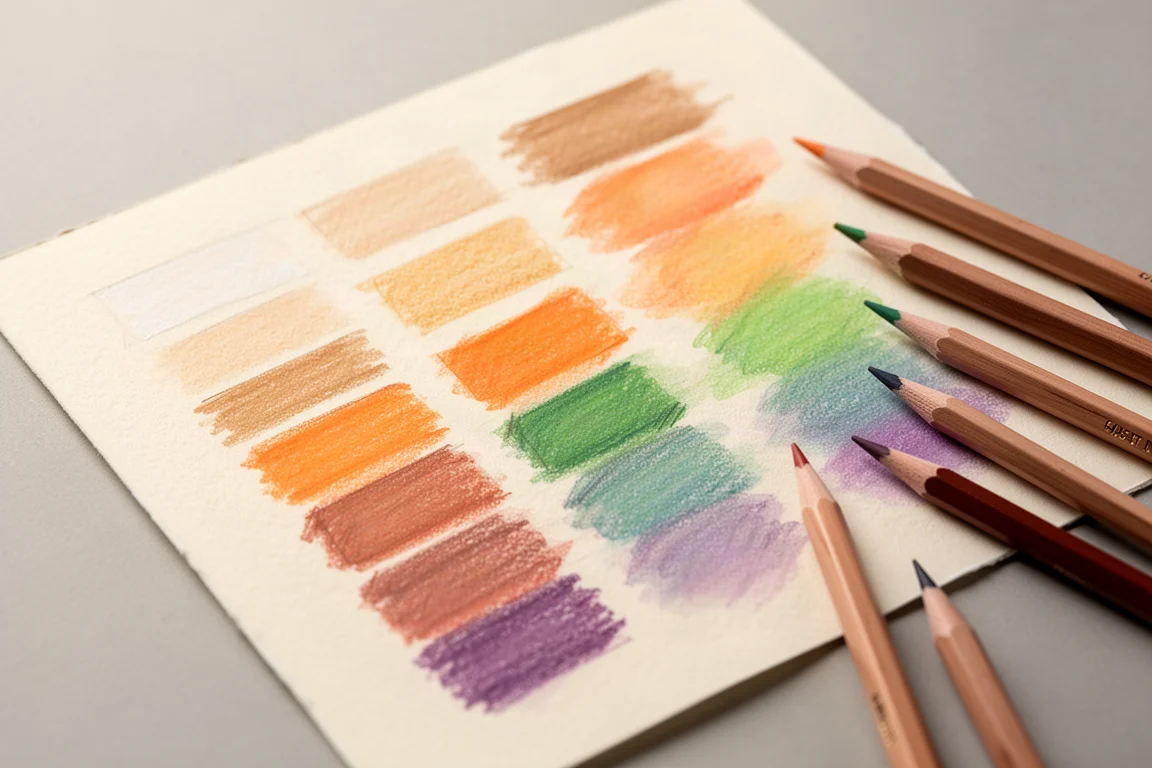
All three sets are heavily pigmented, and all three blend well on vellum paper, producing good third colors. The test used yellow, blue, and red blends to check how close each brand’s resulting secondary colors were to each other, since the greens across the three ranges matched each other the least.
The Polychromos produced three distinct blended colors: an orange, a green, and a purple, all clean and usable.
The Holbein, which has the softest core of the three, arguably performed best here. The blended orange was more definitive, the green was more definitive, and the purple was particularly nice. If blending rich, confident third colors without solvents is a priority, the Holbein has a genuine edge in this test.
Real Artwork Results: The Apple Test
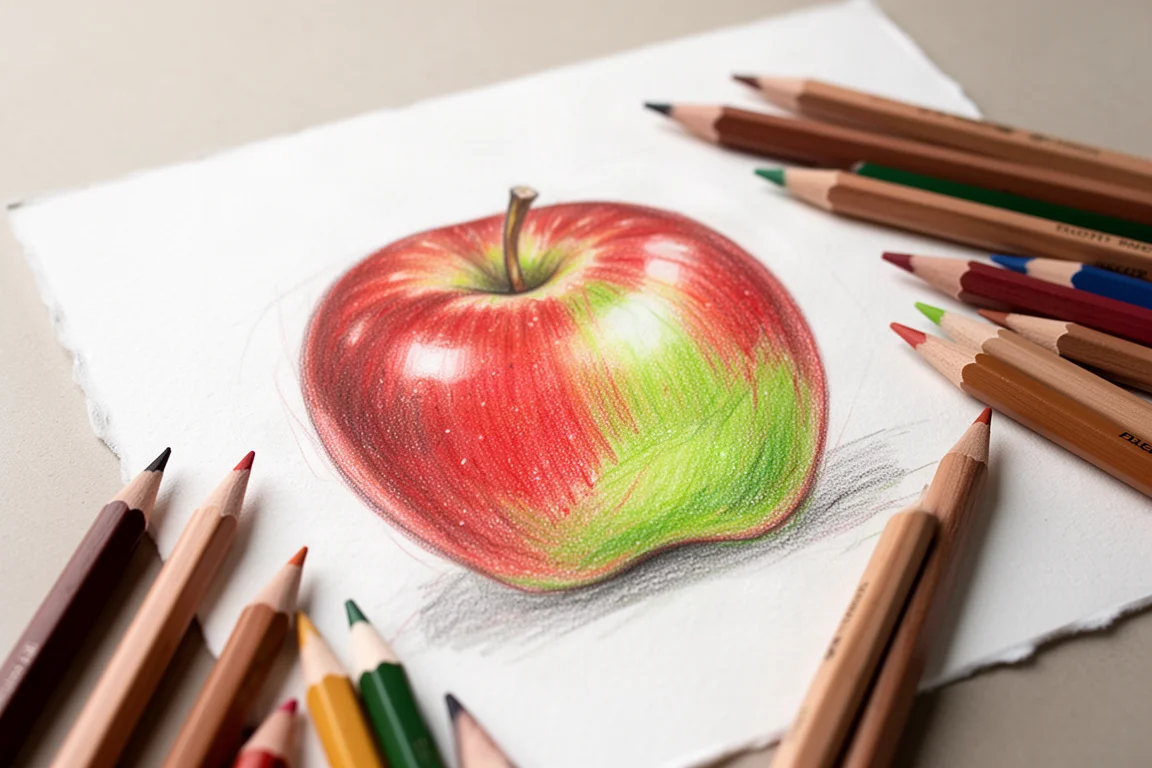
Swatches only tell part of the story, so each set was used to draw the same apple on Derwent Lightfast paper, an excellent, high-quality surface for colored pencil work where layering feels effortless.
With the Pablo, layering on the Derwent Lightfast paper was effortless, and interestingly, in the finished artwork the Pablo no longer looked more pigmented than the others. The swatch impression did not carry through to the drawing, which is exactly why completing actual artwork matters more than swatch tests alone when evaluating pencils.
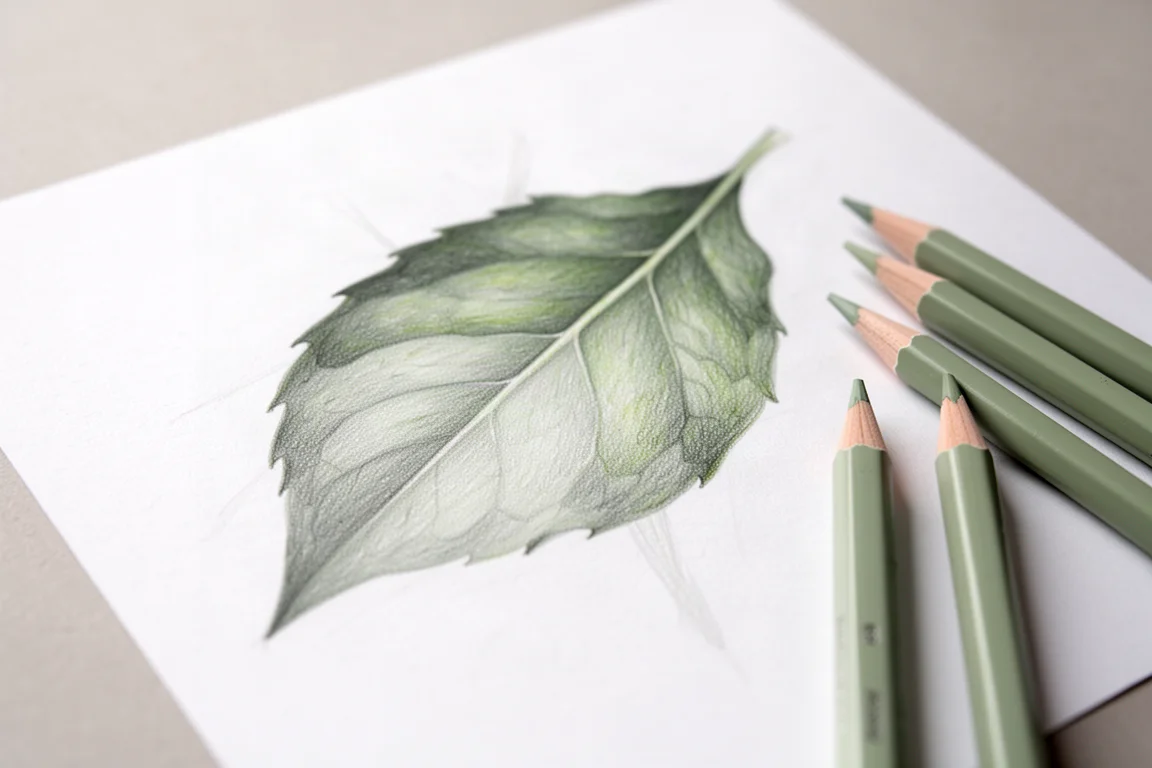
The Faber-Castell Polychromos piece came out beautifully, with effortless layering and blending using pencils alone. Both the Polychromos and the Holbein also held a sharper, more defined point throughout the drawing than the Pablo did.
The Holbein apple was the most saturated of the three. Colors simply looked richer on the page, even with nearly identical color choices across all three drawings. But the real standout for the Holbein was botanical work: the set’s very light pastel tones at the bottom layer of the 150 count, specifically misty green, willow green, and opal green, made it possible to achieve pale gray-green tones on the underside of a leaf that neither the Pablo nor the Polychromos could match. The Polychromos’ earth green, a gray-green, simply was not right for that particular piece. For botanical artists who need subtle depth in leaf veins and near-white pale greens, the Holbein’s pastel range is a genuine advantage.
Which Set Should You Buy?
Choose the Caran d’Ache Pablo if you want the most pigment delivered per light layer in the swatch sense, and you sharpen with a crank or electric sharpener rather than a handheld one.
Choose the Faber-Castell Polychromos if you want the smoothest core feel, the finest sharpened points, and the strongest lightfastness record of the three, with 103 of 120 pencils at the top three-star rating.
Choose the Holbein if you want the largest set (150 pencils), the biggest core, the most saturated color in finished artwork, the softest blending feel, and especially the pale pastel greens that make botanical art shine.
Conclusion
All three sets are professional, heavily pigmented, and capable of beautiful finished work on quality paper. The differences are real but nuanced: core hardness and sharpening behavior favor the Polychromos and Holbein, saturation in finished work and pastel tones favor the Holbein, and lightfastness statistics favor the Polychromos. Match the pencil to the kind of artist you are, and any of these three will serve you well.
Product link
View more details for Caran d'Ache Pablo
This product is mentioned in the review. Check the specifications, options, and compatibility before buying.
View more details for Caran d'Ache PabloFurther reading
Related Reviews
Art Supplies
Art Pop Watercolor Pencils 48-Color Set: A Thoughtfully Designed Student-Grade Option
The Art Pop 48-color watercolor pencil set blends well, dissolves smoothly, and includes artist-friendly details like barrel-printed color names, all at an affordable price.
Art Supplies
Artics Acrylic Markers 3mm Review: Versatile Paint Markers With a Few Caveats
A 48-color set of water-based acrylic paint markers that blend while wet, dry permanent, and keep the price low, though safety transparency remains a question.
Art Supplies
Best Art Supplies Worth Your Money: Pencils, Pens, Paints, and Paper That Earned Their Spot
After years of daily use and testing, these are the pencils, pens, watercolors, gouache, brushes, sketchbooks, and erasers that stand above the rest.