Art Supplies
Caran d'Ache Museum Aquarelle vs Holbein Watercolor Pencils: Which Set Deserves Your Palette?
Two artist-grade watercolor pencils go head to head on pigment load, transparency, solubility, and dry behavior to help you pick the right set.
Introduction
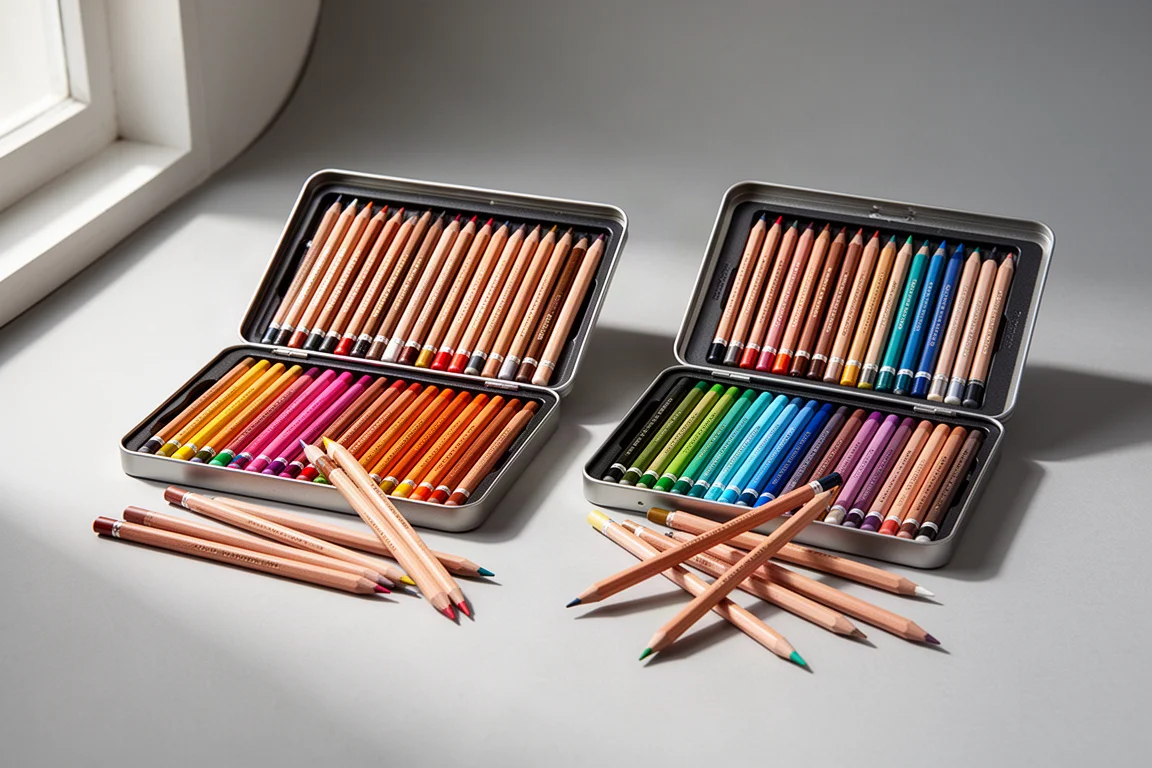
Watercolor pencils sit in an interesting space: they are portable like a pan set, but they behave like drawing tools you can also paint with. Two of the strongest options in this category are the Caran d’Ache Museum Aquarelle, widely considered one of the best water-soluble pencil ranges on the market, and the newer Holbein watercolor pencils, a fresh arrival that has not yet had time to adjust its color range based on public feedback.
This comparison focuses on how both sets handle in real use: pigment saturation, transparency, solubility, mixing behavior, and dry performance, plus a side-by-side artwork test on identical drawings.
Why Watercolor Pencils Are Worth It
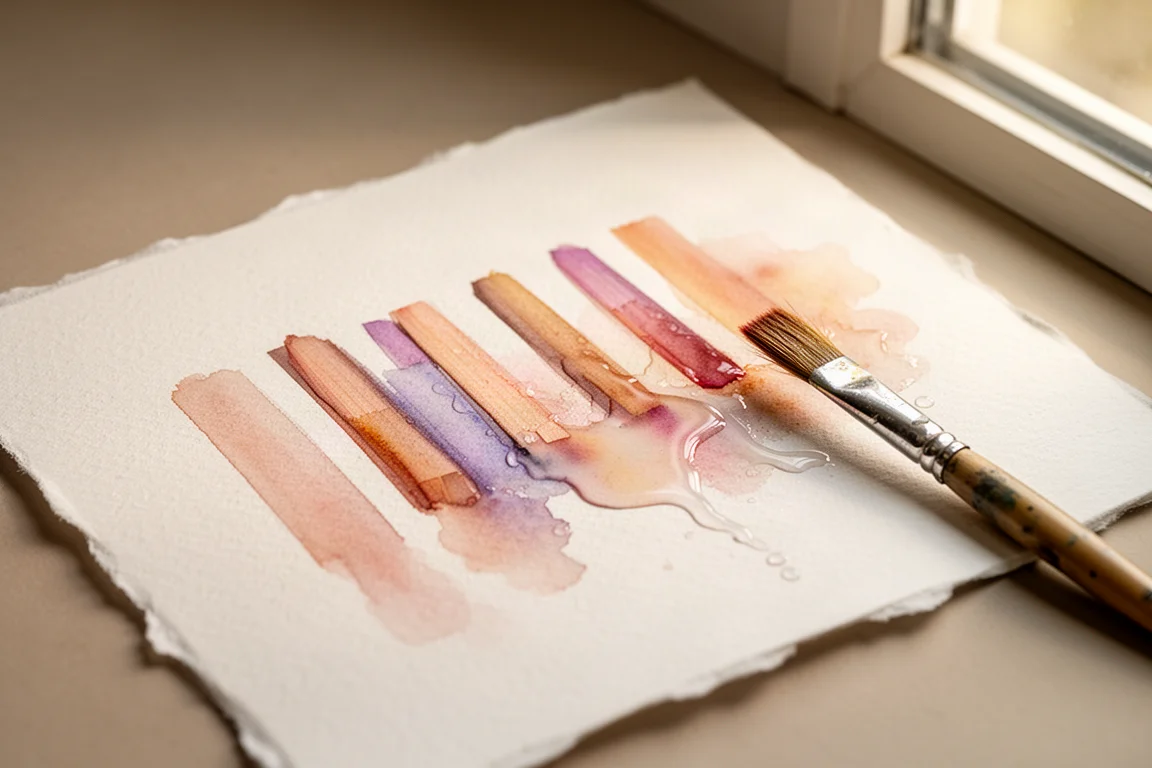
A fair question: if you are out and about, why not just carry a set of watercolor pans? The answer comes down to versatility. Water-soluble pencils let you apply pigment directly to your sketchbook page and activate it with a brush, and unlike pans, they let you come back after the wash has dried to add linework, depth, and texture in their dry form. That finishing pass is something a pan set simply cannot do on its own.
A compact accessory like the Caran d’Ache watercolor palette expands this further. It is small enough to slot into a sketchbook, has a textured side for mixing pencil pigment and a smooth side for water-soluble markers, and lets you create exactly the color you want before applying it, including washes that are difficult to achieve when applying pencil directly to paper.
Set Sizes and First Impressions
The Caran d’Ache Museum Aquarelle tops out at a 76-pencil set, the largest the range offers. Holbein’s largest set contains 50 pencils. Both ranges are sold open stock, which you would expect from artist-quality pencils, so you can replace or add individual colors as needed.
On straight swatches, the difference is immediately visible. The Museum Aquarelle pigment load looks noticeably heavier, richer, and more vibrant than the Holbein pencils, which read as more transparent. Neither approach is wrong; some watercolor artists prefer transparency, others want a stronger, more opaque experience. For a rough analogy from regular colored pencils, the Holbein behave somewhat like the more transparent Faber-Castell Polychromos, while the Museum Aquarelle lean toward the more opaque end.
Pigment Saturation and Activation
For a direct test, near-matching colors from each range were activated on hot press watercolor paper. The pairings were: vermilion versus vermilion hue, scarlet versus quinacridone scarlet, periwinkle blue versus mineral violet, mid cobalt blue versus cobalt blue hue, spring green versus leaf green, and golden yellow versus permanent yellow deep.
Across the board, the Museum Aquarelle produced richer, more saturated color as the pigment dissolved, while the Holbein washed out into noticeably more translucent coverage. With the Holbein vermilion hue, some residue of the original pencil strokes remained visible under the activated pigment; most other Holbein colors showed only traces of it.
Mixing and Solubility on the Palette
Mixing yellow and blue on the palette exposed the clearest difference between the two ranges. With the Holbein pencils, small chunks of pigment simply refused to dissolve, even after spending time in water, and some were still visible on the brush afterward. The same behavior showed up during artwork tests.
Running the same yellow-and-blue mix with the Museum Aquarelle produced a few tiny specks, but nothing like the larger undissolved chunks from the Holbein, and there was no residue left on the brush.
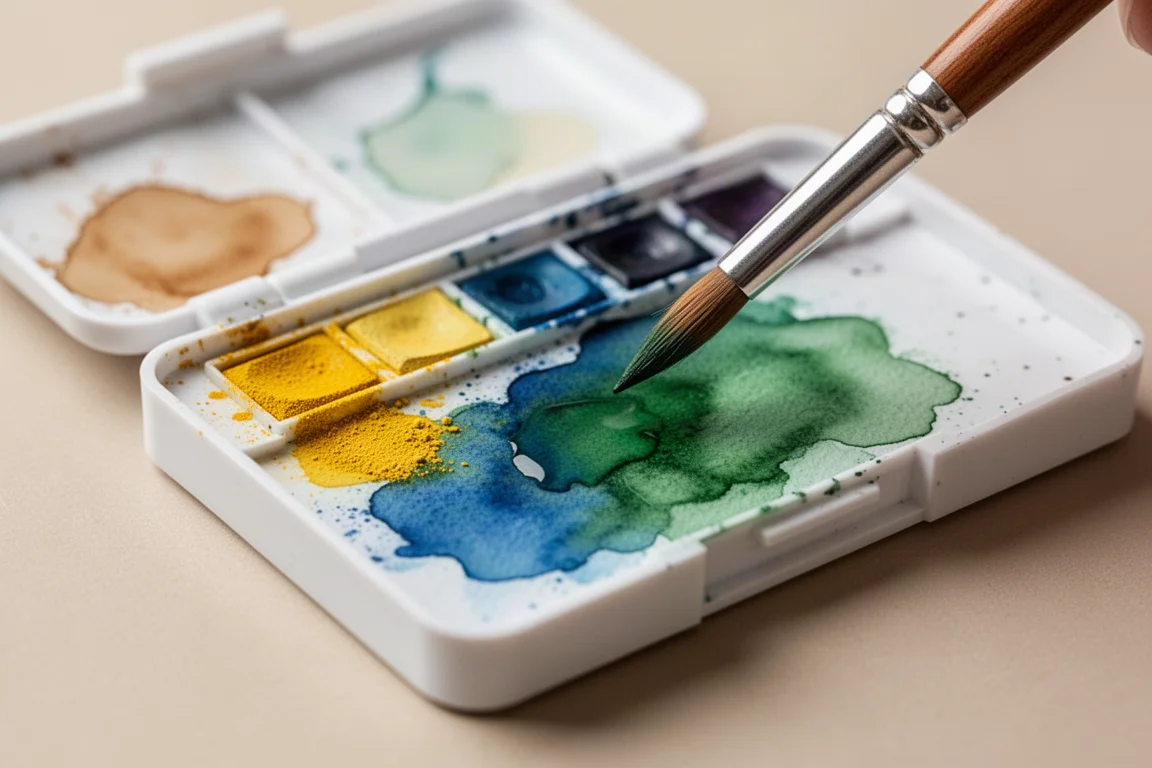
The palette itself proved its worth here: once the desired green was mixed, it could be darkened further with blue on the spot, something that is difficult to control when layering directly on paper. The result was a clean, even, translucent wash that is hard to get from pencil applied directly to the page.
Dry Behavior and Core Hardness
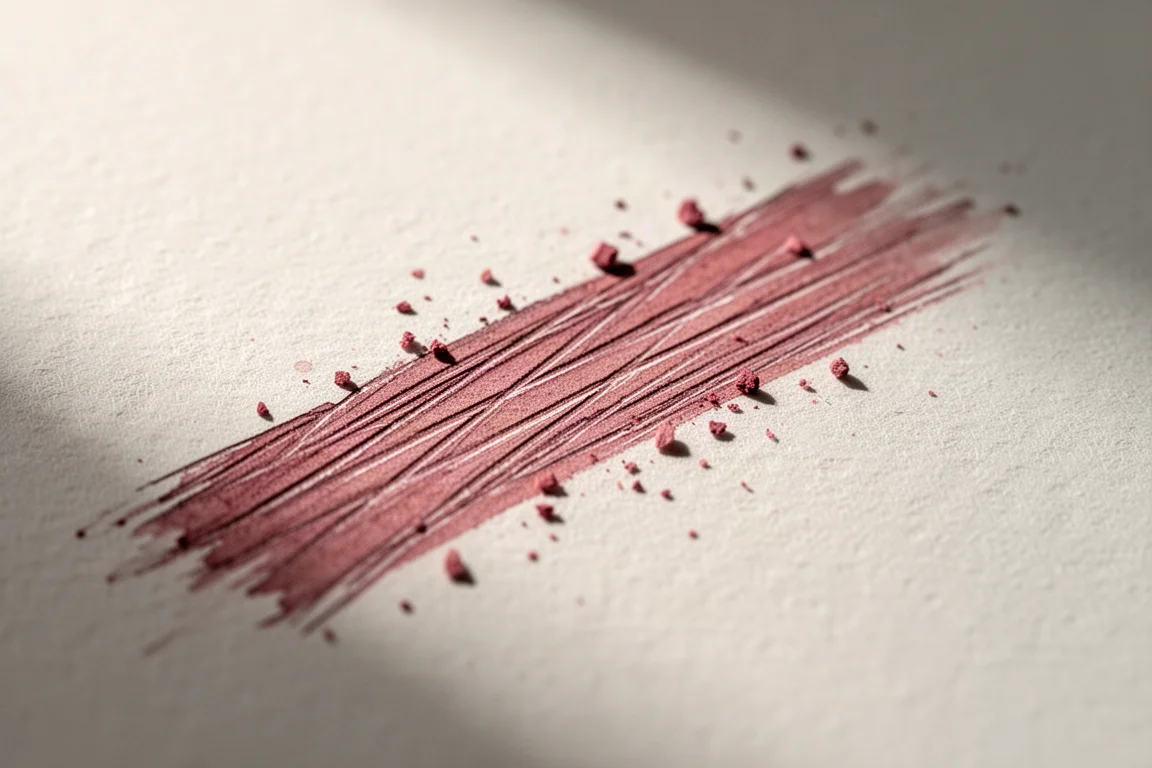
The Holbein core is noticeably harder than the Museum Aquarelle core, and that hardness may explain the undissolving chunks. Under close inspection during dry application at medium pressure, the Holbein pencils left fine scratch-like lines in the paper running in the direction of the stroke, as though small hard bits of core were dragging across the surface. This ties back to the same solubility issue: bits that break off appear strong and do not break down easily.
The Museum Aquarelle showed none of these scratch lines in the same test. They do still produce some crumbs, but crumbing is not really a problem for water-soluble pencils, since broken-off pigment is supposed to dissolve in water and become part of the paint. The Holbein simply crumbled more, and those crumbs were the ones most likely to survive contact with water.
Real Artwork Results
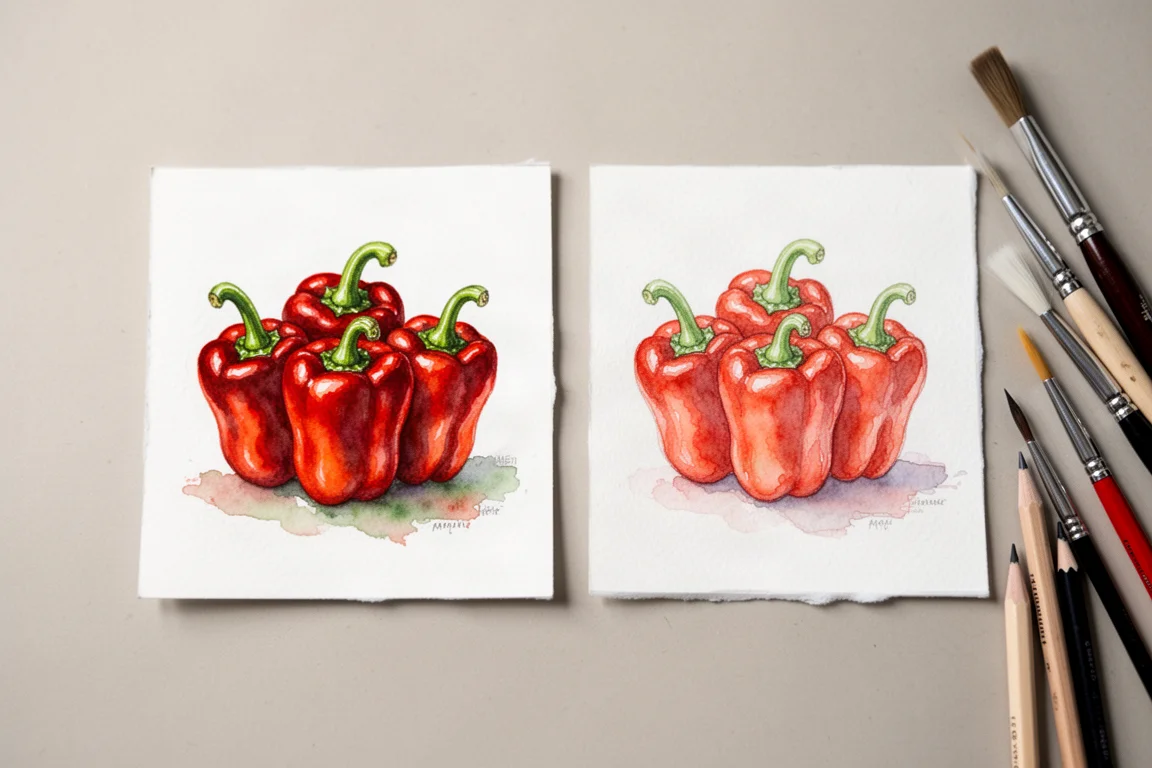
To see how the differences play out on an actual piece, identical drawings of three peppers were colored with each set on hot press paper, one side with the Museum Aquarelle and one with the Holbein, with the pencils as the only variable.
For most eyes, the Holbein reds lacked a punchy, pillar-box red intensity that the Museum Aquarelle delivered easily. The Holbein greens were genuinely nice, and the yellows were fairly similar between the two sets. Because everyone perceives color differently, the best test is to look at side-by-side work yourself and judge which tonal range suits your style.
Which Set Should You Buy?
If maximum pigment saturation, clean solubility, and a soft core are your priorities, the Caran d’Ache Museum Aquarelle remains the benchmark. Its 76-color top set is the largest of the two ranges, and smaller sets are available if you want to start modestly.
If you prefer a more transparent watercolor feel, a harder core, and a range designed to align with a manufacturer’s existing watercolor tubes and pans, the Holbein watercolor pencils are an appealing newer option, with 50 colors at the top of their range and open-stock availability.
Lightfastness data and current pricing for each set size are best checked against up-to-date listings, since prices on artist supplies move over time.
Conclusion
Both are excellent artist-grade pencils, and this comparison is closer than the results might suggest. The Caran d’Ache Museum Aquarelle edged ahead on saturation, solubility, and dry finish, while the Holbein offer genuine appeal for artists who favor transparency and color consistency with an existing watercolor line. Choosing between them ultimately comes down to whether you want rich, opaque washes or a lighter, more transparent watercolor experience.
Product link
View more details for Caran d'Ache Museum Aquarelle
This product is mentioned in the review. Check the specifications, options, and compatibility before buying.
View more details for Caran d'Ache Museum AquarelleFurther reading
Related Reviews
Art Supplies
Art Pop Watercolor Pencils 48-Color Set: A Thoughtfully Designed Student-Grade Option
The Art Pop 48-color watercolor pencil set blends well, dissolves smoothly, and includes artist-friendly details like barrel-printed color names, all at an affordable price.
Art Supplies
Artics Acrylic Markers 3mm Review: Versatile Paint Markers With a Few Caveats
A 48-color set of water-based acrylic paint markers that blend while wet, dry permanent, and keep the price low, though safety transparency remains a question.
Art Supplies
Best Art Supplies Worth Your Money: Pencils, Pens, Paints, and Paper That Earned Their Spot
After years of daily use and testing, these are the pencils, pens, watercolors, gouache, brushes, sketchbooks, and erasers that stand above the rest.