Camping Gear
Car Camping Gear That Feels Like an RV: Six Comfort-First Picks
Six car camping pieces that deliver RV-level comfort without the RV, from a stand-up tent and a hybrid sleep system to a cooler that keeps a group fed.
Introduction
Comfort while camping usually comes down to a choice: bring an RV, or accept that a tent is going to feel like a compromise. There is a middle path. A carefully chosen set of car camping gear can cover most of what an RV provides, including a place to stand up, a proper cooking station, cold drinks, and a sleep system that holds up until morning, and it can still fit in the trunk of a car.
The six pieces below carry most of that weight. Each one solves a specific comfort problem that shows up on almost every trip, and together they turn a weekend in a tent into something closer to a small mobile bedroom with a kitchen attached.
What to Look For in Car Camping Gear
Because a car carries the load, weight and packed size matter far less than they do on a backpacking trip. That shifts the priority to comfort: standing height inside the tent, a sleeping surface thick enough to keep hips and shoulders off the ground, and cooking gear that behaves predictably when you are hungry and tired.
Ventilation is the other half of the comfort equation. A tent with large windows and doors on opposing sides can be opened up on a hot day to pull a cross-draft through the interior, which matters more than insulation on most summer trips. Modularity is worth paying attention to as well, since pieces that work alone on a solo trip and combine with a partner’s on a shared one save both money and storage space.
Finally, consider how a piece behaves when it is not in use. Car camping gear spends most of the year packed away, so tents and pads that compress into a manageable bundle are easier to live with between trips. The picks below were chosen with those priorities in mind.
Nemo Aurora High-Rise: A Tent You Can Stand Up In
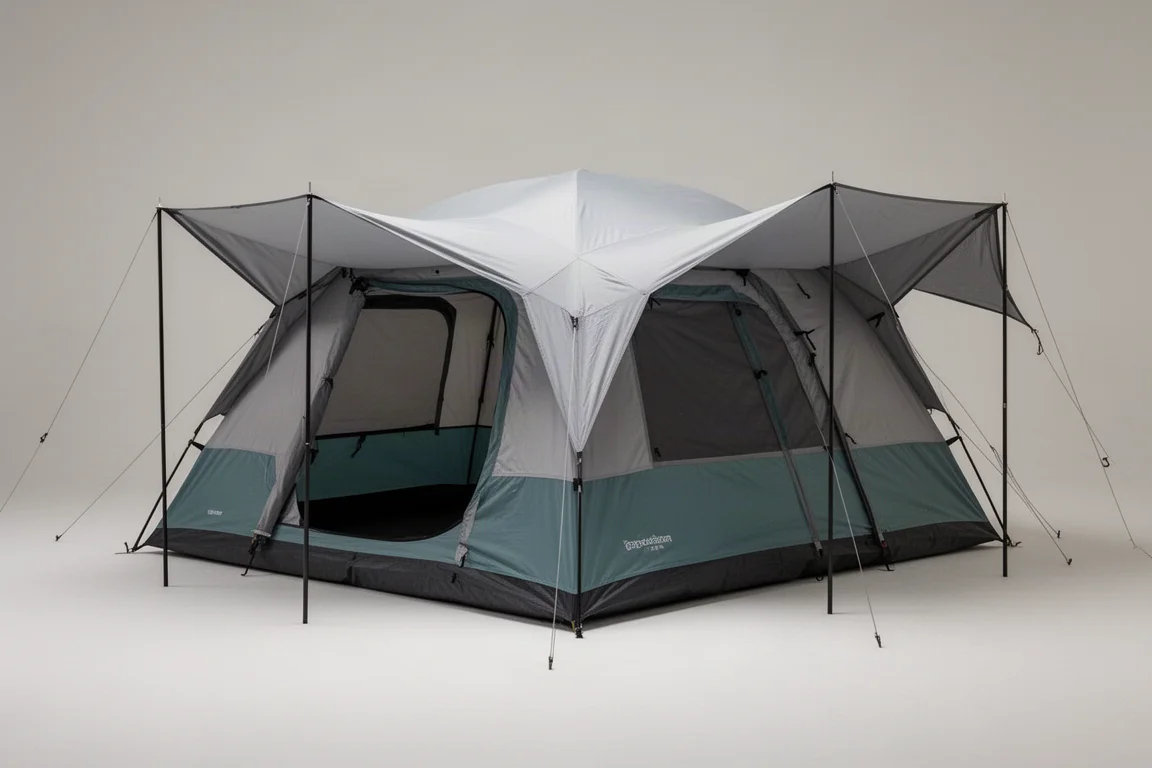
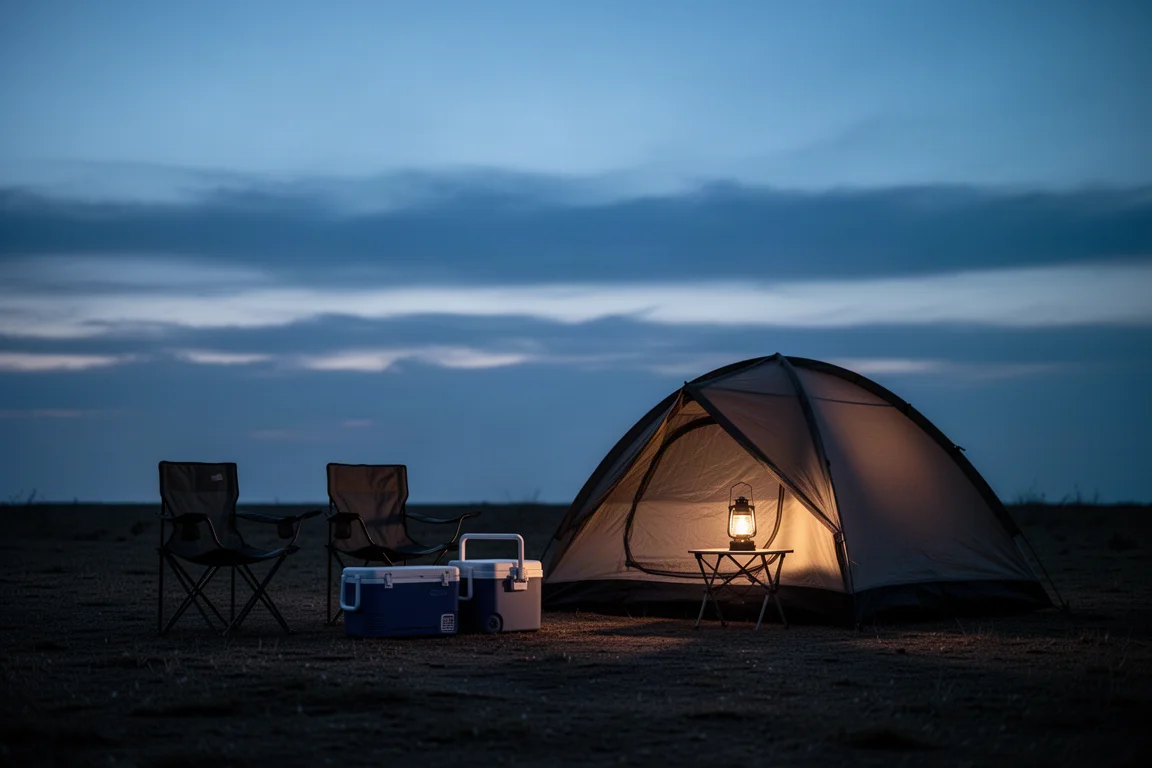
The Aurora High-Rise is a tall tent with a simple promise: you can stand up and move around inside it instead of crawling. The six-person version offers enough floor area for a queen-size mattress along with extra gear such as a dog bed or a bassinet, and its interior height makes changing clothes or settling in at night far less awkward. It also packs down small enough to store without dedicating an entire shelf in the garage to it.
Ventilation is where this tent earns its keep on warm trips. Two large windows on opposing sides create a cross-draft, and two large doors let you open the whole shelter up when the weather allows. That combination keeps the interior from turning into an oven on a hot afternoon, and it gives you options on still, sticky nights when airflow matters most.
Yeti 45 L Cooler: Cold Storage for a Group
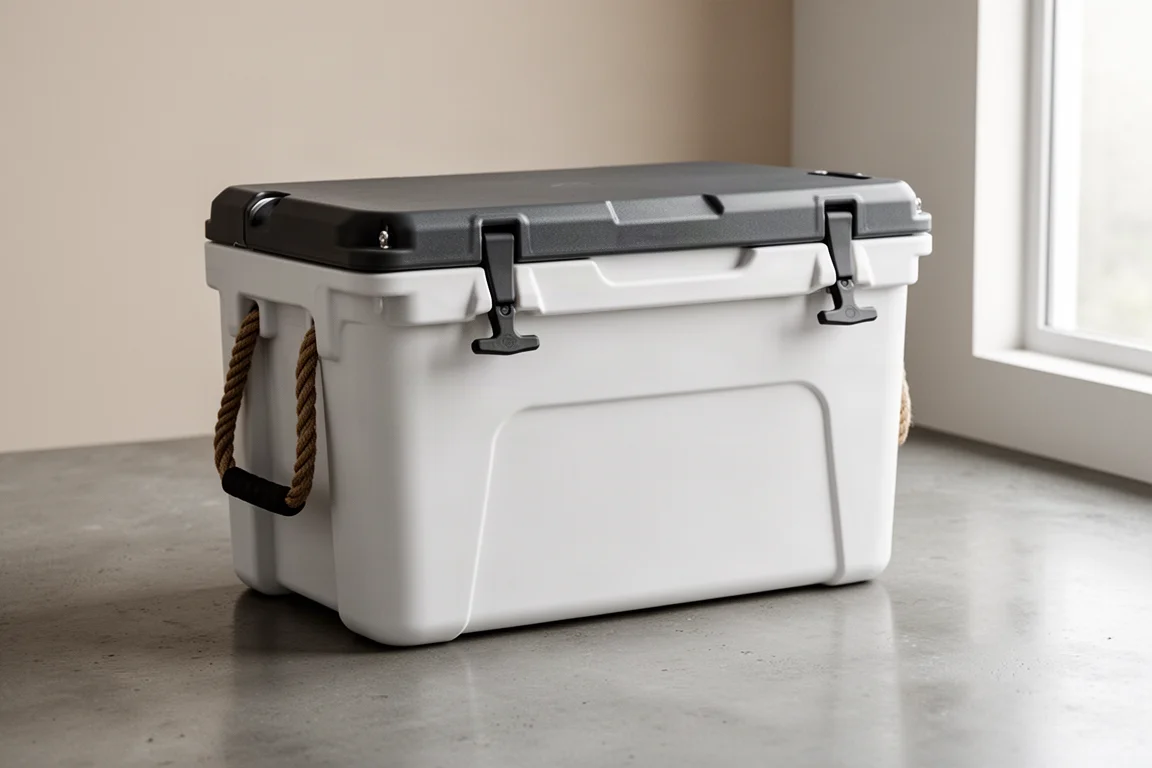
Cold drinks and fresh food are one of the clearest dividing lines between a rough camping trip and a comfortable one. This 45-litre cooler is sized for roughly four people on an overnight trip, and it fits 28 cans with ice. In practice that means dinner ingredients and drinks for a small group without needing a second cooler in the car.
It earns its place by holding temperature reliably across a full trip rather than through any single feature. For car camping, where the cooler stays upright in the trunk and gets opened a few times a day, that consistency is exactly what you are paying for. Tucking a few non-alcoholic beers into the ice alongside the food is a small luxury that makes an evening at camp feel considerably more relaxed.
Coleman 2-Burner Stove: A Familiar Cooking Station
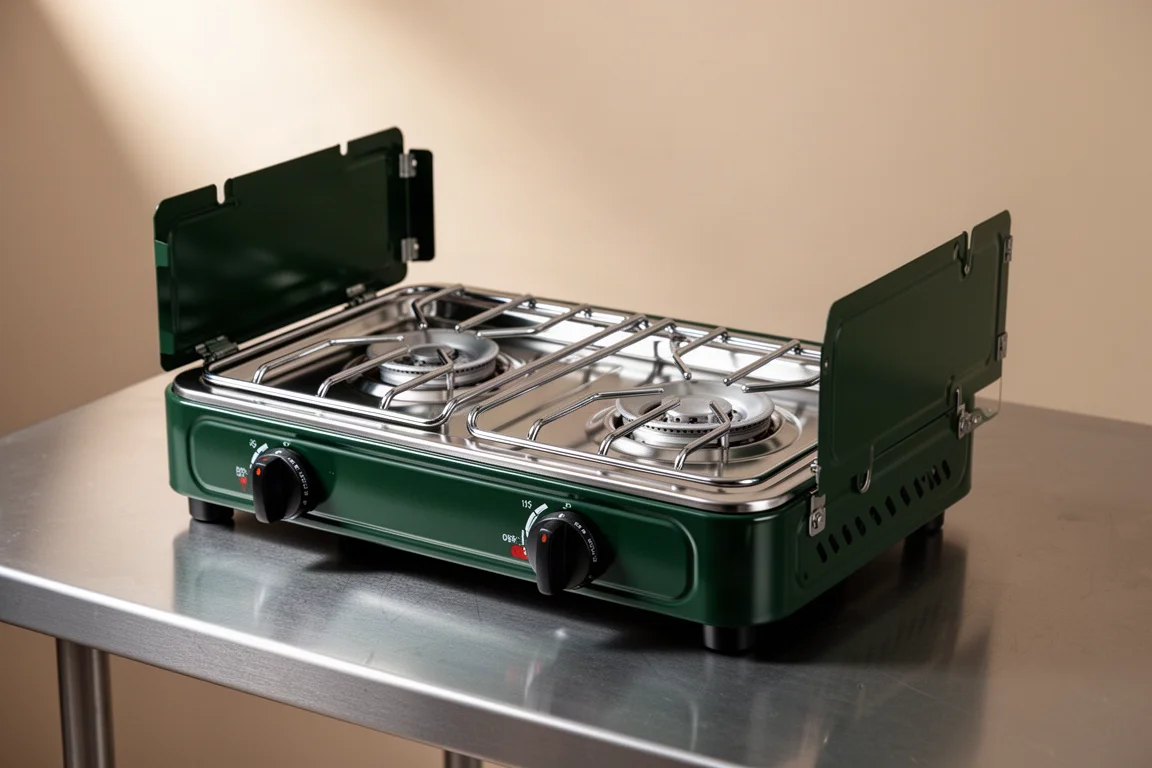
A two-burner stove is the workhorse of a car camping kitchen, and this one adds a grill surface on top, which is enough to cook a steak and a pot of vegetables at the same time. It runs on the same propane you would use for a barbecue, so refuelling is straightforward and the fuel is easy to find almost anywhere.
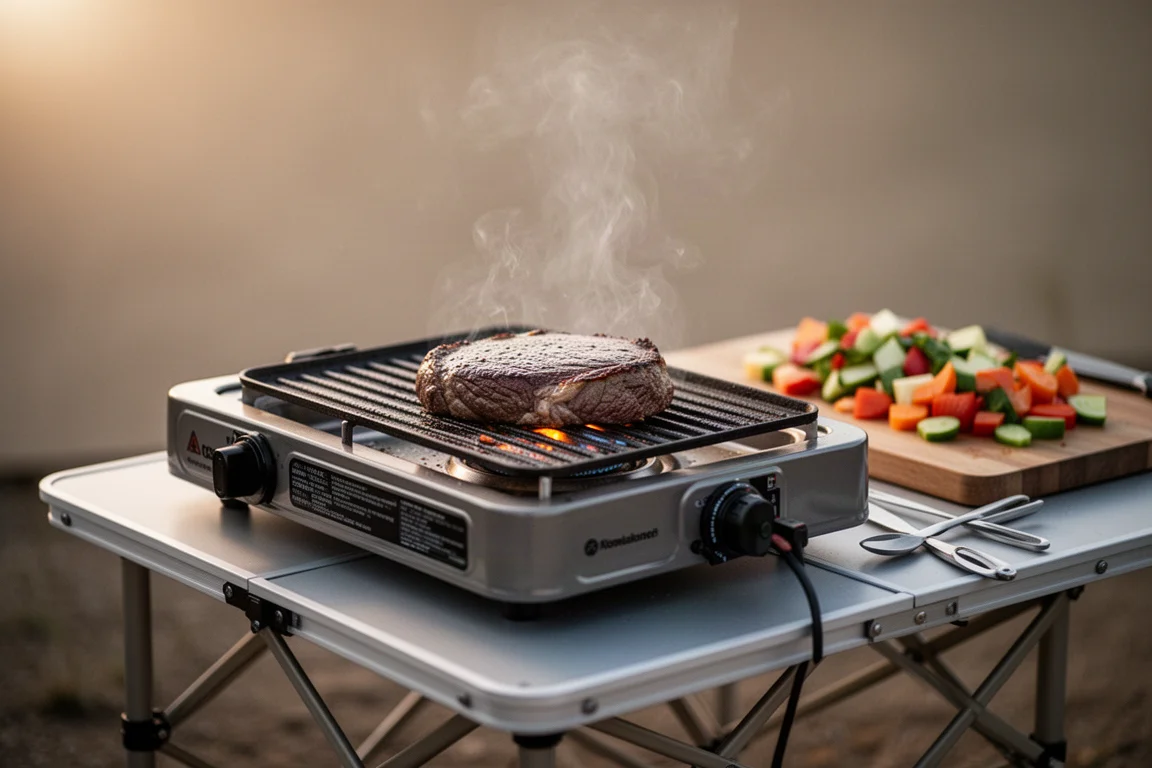
The honest caveat is that camp stoves of this type take some practice to control. Heat output is not as precise as a home range, so anything that needs a steady simmer will require attention rather than a set-and-forget approach. Pairing the stove with a folding camp table makes the whole setup much easier to work with, especially at sites that do not come with a picnic table.
Nemo Roamer XL: The Center of a Comfortable Sleep System
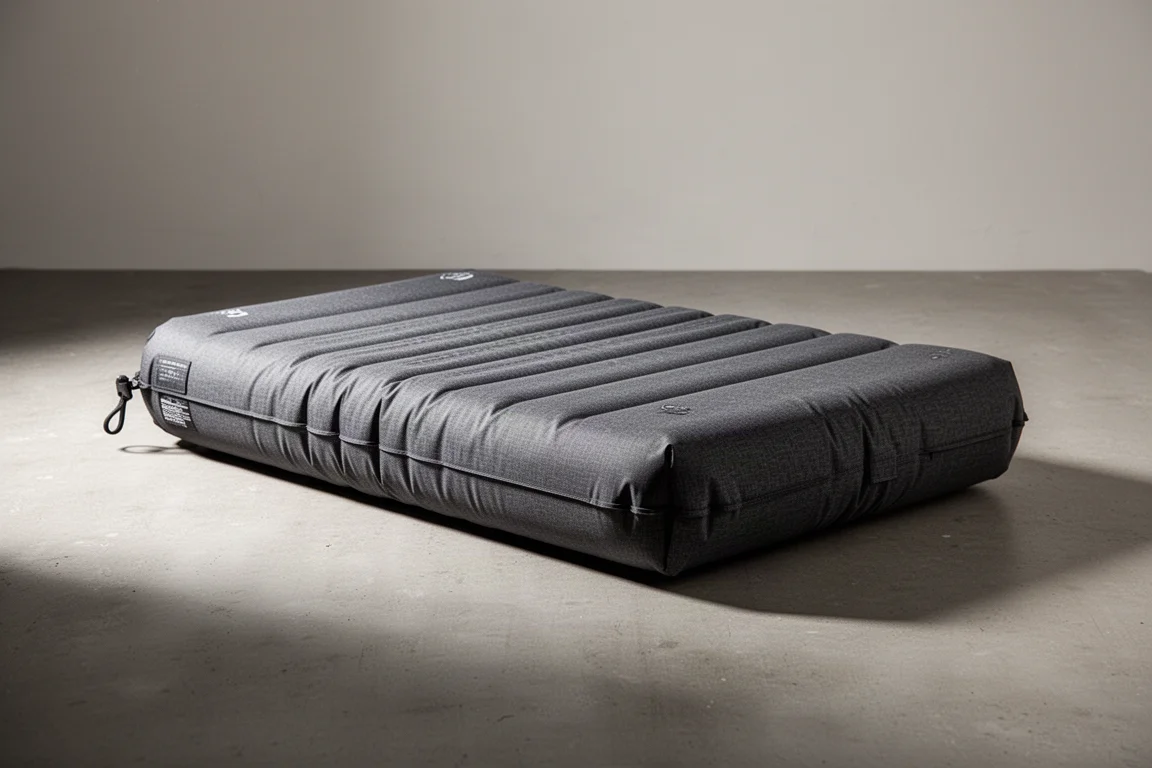
Sleep is where most camping setups fail, and it is the area worth spending the most on. The Roamer XL uses a hybrid air and foam construction: the air chamber keeps the pad compact and gives it firmness, while the foam layer provides support and cushioning. The result is a pad you sink into slightly without sinking so far that you wake up with a sore back.
The dimensions matter as much as the construction. At 30 inches wide and 4 inches thick, it gives you room to roll over and enough depth that broader shoulders and wider hips do not bottom out against the ground. It is also available in a double-width version, and the toggles along the sides let two XL pads connect into one larger sleeping surface, so the same pad works for a solo trip or a shared one.
Purple Pillow: Home Comfort, Packed
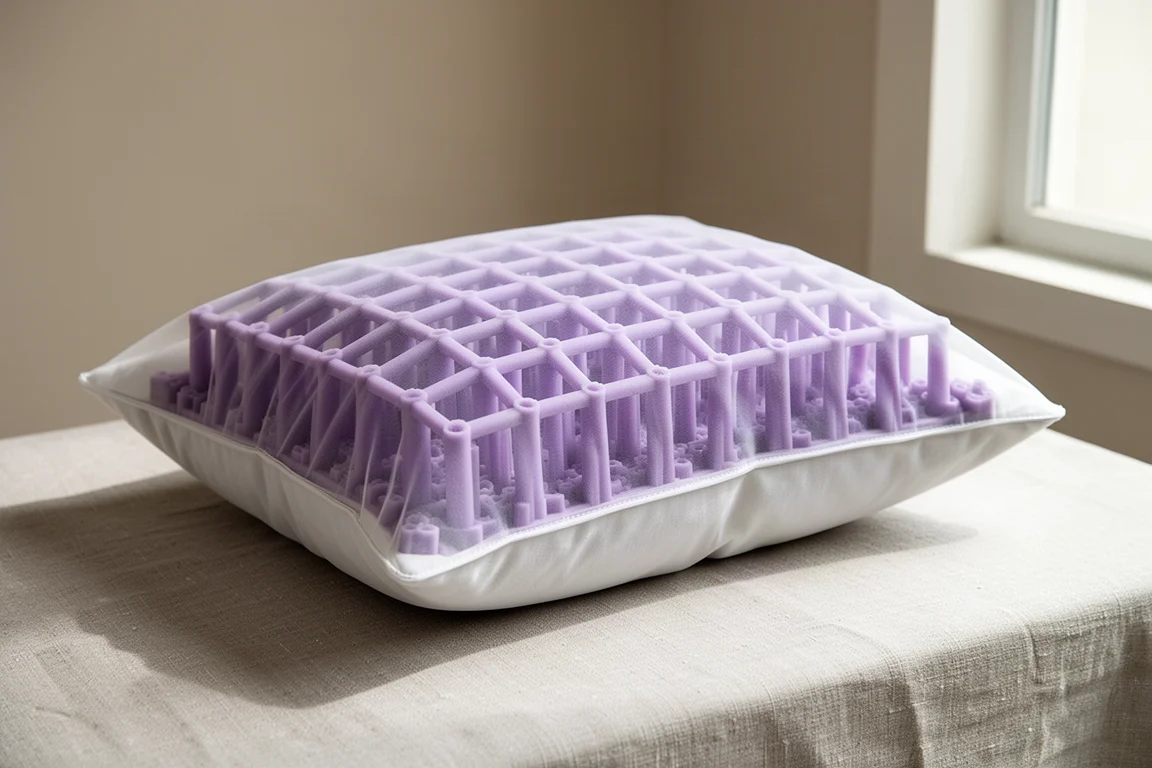
Pillows are the piece most people compromise on, and the easiest fix is simply to bring the one from your bed. This pillow has an unusual grid surface that looks odd at first glance and feels genuinely supportive in use, which is exactly what you want after a long day outside.
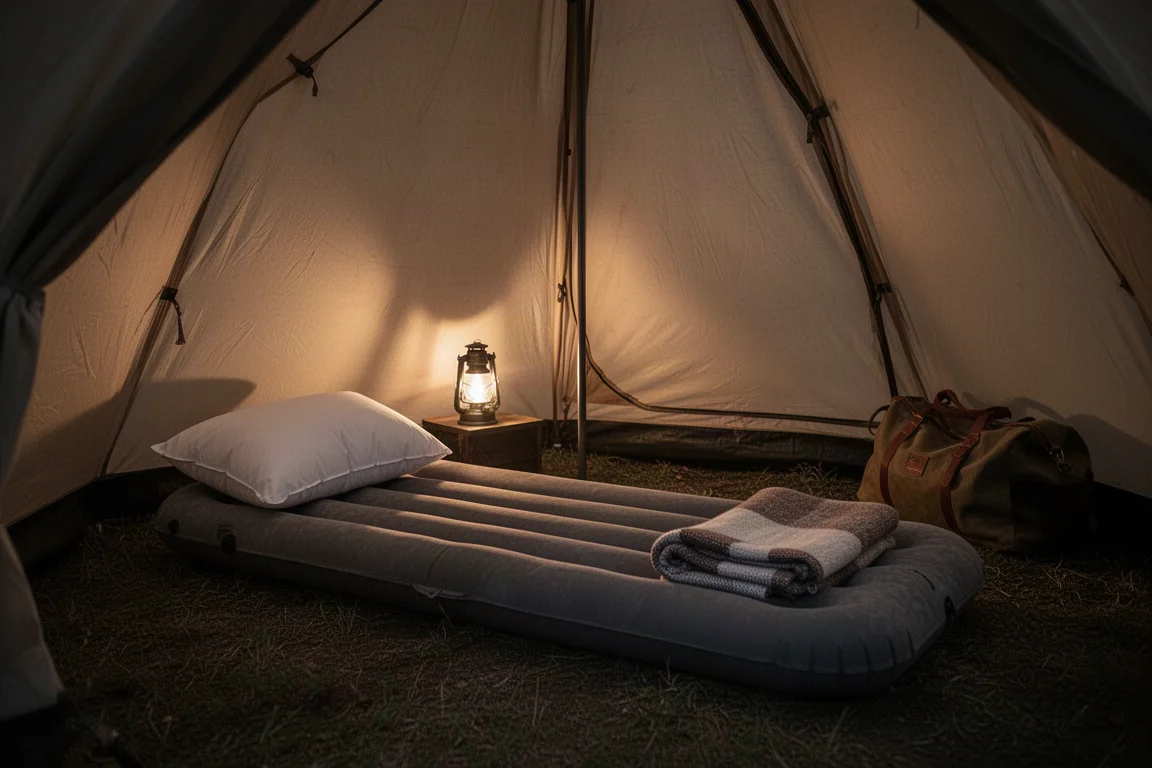
The advantage of using a familiar pillow is that nothing about your sleep position changes when you move from bedroom to tent. It is not a packable travel pillow and it will take up space in the car, but for car camping that trade is almost always worth making. Paired with a thick, supportive pad, it closes most of the gap between sleeping at home and sleeping outdoors.
Flextail Tiny Repel: Quiet Bug Relief
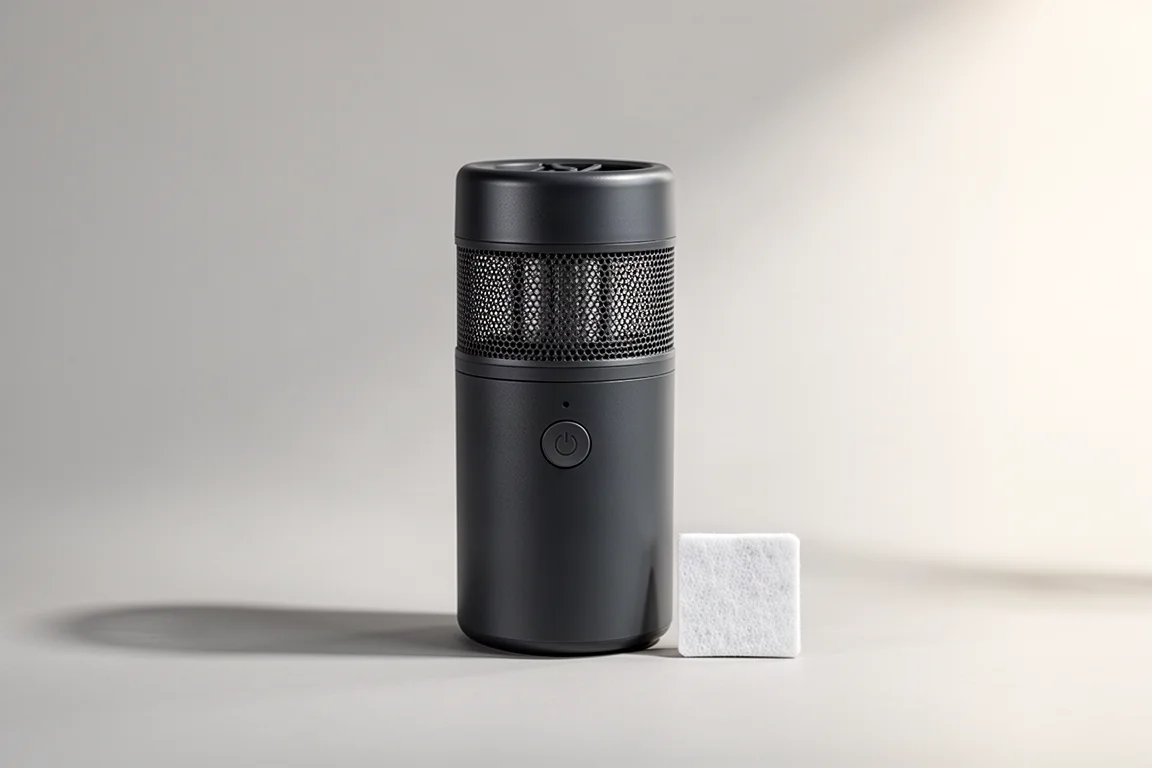
Bugs do not need to be severe to ruin an evening, and full mesh walls are overkill when only a few mosquitoes are drifting around. This compact repellent device creates a small protected zone using replaceable pads that heat up and release a repellent, which keeps mosquitoes from settling on you and biting rather than eliminating them outright.
It is light, it takes up almost no space, and it requires very little planning to use. Think of it as the middle option between doing nothing and sealing yourself inside a screened shelter, which makes it a sensible addition for shoulder-season trips when insect pressure is mild but noticeable.
Buying Advice: Building the Setup in Stages
If you are building this kind of setup from scratch, start with sleep. A supportive mattress and a pillow you already trust will do more for your enjoyment of a trip than any other purchase, because a bad night outdoors colours everything that follows. Shelter comes next, and a tall tent with real ventilation is the difference between a hot, cramped night and a comfortable one.
Cooking gear and cold storage can follow over time. A two-burner stove and a properly sized cooler make full meals possible, and smaller items such as a compact repellent round out the kit without adding much cost. Power is the last piece to consider: a portable power station and solar panels are not necessary for a weekend, but they let you run a fan through a hot night, keep phones and laptops charged, and extend trips well beyond a couple of days. For anyone who uses a CPAP machine at home, that same power capacity can make sleeping outdoors viable again.
Conclusion
An RV solves comfort with size and money. This setup solves it with a handful of well-chosen pieces that fit in a car: a tent you can stand up in, a mattress that supports you properly, a cooler that keeps food cold, and a stove that can cook a real dinner. None of it is exotic, and none of it requires a trailer. For most people who camp a few times a year, that is the more sensible route to being genuinely comfortable outdoors.
Further reading
Related Reviews
Camping Gear
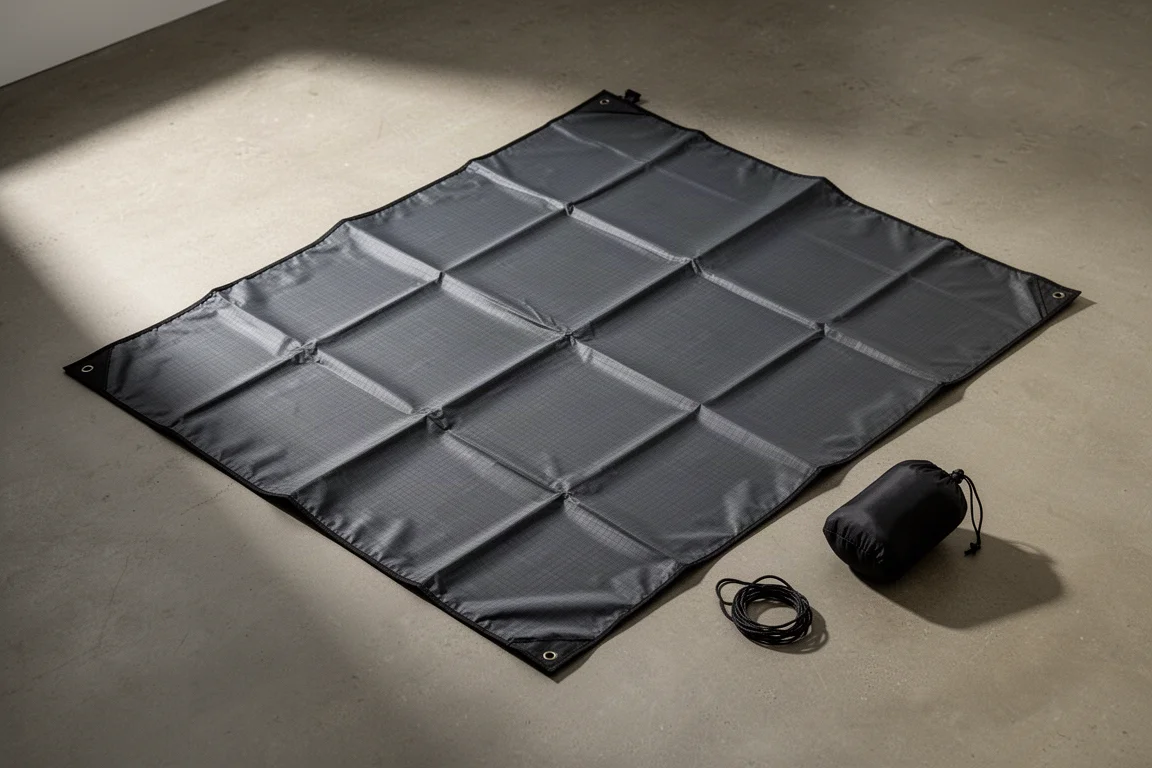
3FUL Ultralight Ground Sheet Review: A Two-Person Footprint Worth Packing
A 6.7 oz two-person ground sheet in ripstop silnylon, priced around $30. Here is what it protects, what it does not do, and who should pack it.
Camping Gear
Backcountry Light Dual-Function Tarp and Floor Review: A Footprint First
A dual-purpose tent floor and tarp that keeps falling rain off you, but cannot block wind. Here is where it works and where it does not.
Camping Gear
Best 2-Person Camping Mattresses for Couples: 10 Options Compared
A practical comparison of ten two-person camping mattresses, covering self-inflating pads, air pads and air mattresses for couples.