Camping Gear
Camping Gear Tested in Wind and Rain: Inflatable Tent, Heater, and Cot Pad
A large air-supported hot tent, a compact portable heater, and a cot pad go through a windy, rainy night to show what each one really delivers.
Introduction
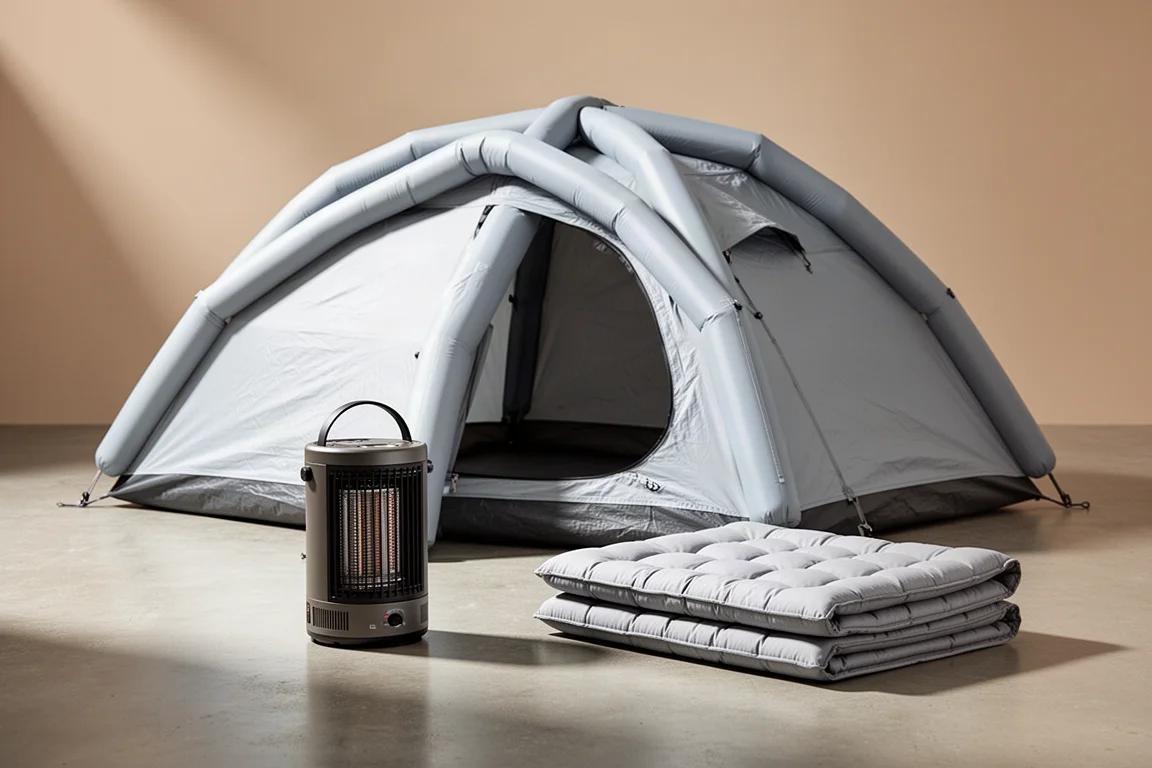
A night of strong wind and steady rain is a fair test for any camping setup, and it is a particularly revealing one for gear that depends on air pressure, heat output, or a thin layer of padding. Three products were used together on a windy forest campsite for exactly that reason: an air-supported inflatable tent, a compact portable heater, and a cot pad designed to soften a sleeping cot.
Conditions were demanding without being extreme. Daytime temperatures sat around 45°F, the evening settled near 40°F, and the overnight low was expected to reach about 34°F. Wind pushed through the trees until roughly 3:00 in the morning, and light rain fell on and off through the night before turning heavier in the early hours.

Each product was used in the role it was built for, and each one turned out to have a clear strength and a clear limit. The tent delivered unusual space and stayed dry at a price that is low for its category. The heater performed well within its intended room size and was honest about where that performance ends. The cot pad worked exactly where it was supposed to and nowhere else.
How These Products Were Evaluated
Testing happened on a real overnight trip rather than on a showroom floor. That matters, because camping gear is usually asked to solve several problems at once: keeping weather out, holding warmth in, and staying comfortable enough to sleep through the night.
Four things shaped the assessment.
- Setup: how quickly and confidently each item could be deployed in gusting wind.
- Weather performance: whether the tent stayed dry through a night of light rain and a heavier morning spell.
- Thermal performance: how much difference the heater made at around 40°F, and how it was likely to behave closer to 34°F.
- Comfort: whether the cot pad genuinely improved sleep compared with a bare cot.
Price was weighed against each product’s category as well, since the value question for an inflatable tent is very different from the value question for a cot accessory.
MC2 Mount Inflatable Tent Review
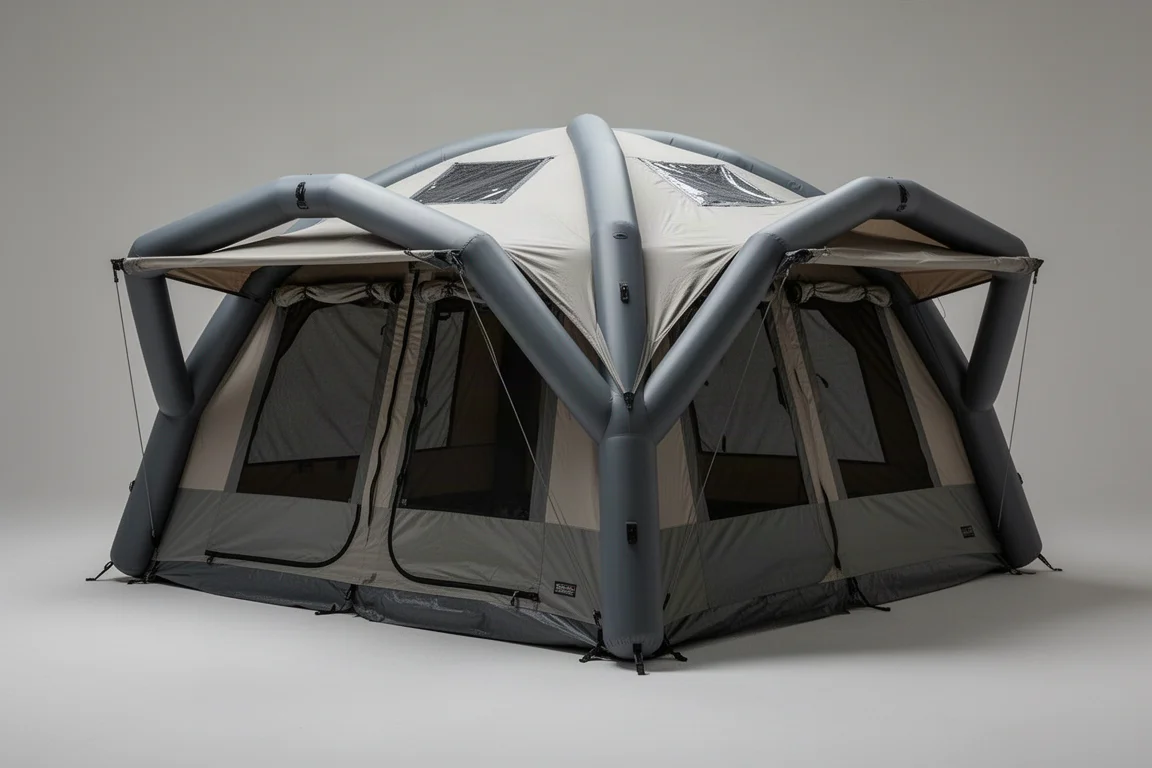
The MC2 Mount inflatable tent is an air-supported design, which means the structure is held up by inflated fabric beams instead of poles. It is a large tent, the biggest inflatable model covered here, and the interior is generous enough that a spoken word produces a noticeable echo. Setup is straightforward and quick.
The tent is built as a hot tent, so a wood stove can be used inside it. It is also a three-season design with plenty of mesh, multiple windows, two doors, and two clear vinyl windows. That interior volume is the headline feature, and the clear windows give the walls a far more open feel than most tents manage.
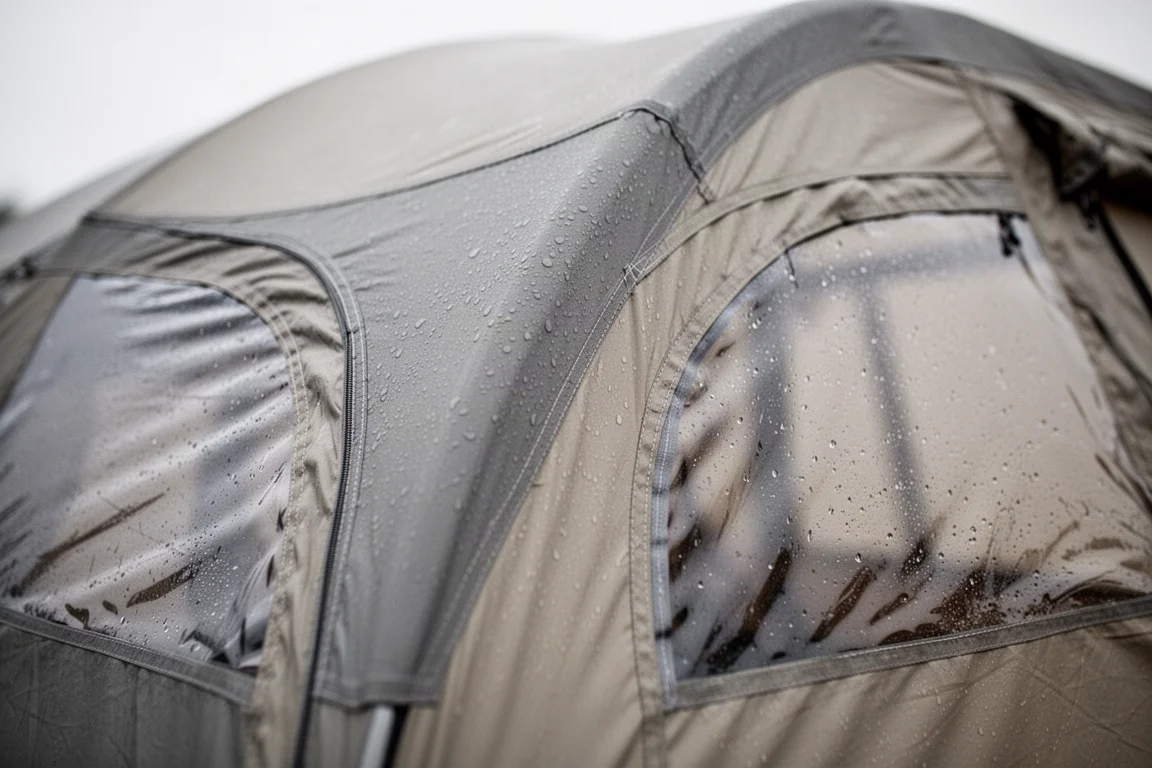
Weather performance held up well. After a night of light but persistent rain and a heavier spell in the morning, the tent showed no leaking, and ventilation inside was excellent. The clear vinyl windows are the detail worth watching over the long term. Tent makers in the early 2000s tried similar vinyl windows widely, and the industry struggled both to keep them from leaking and to stop the vinyl from drying out, cracking, and eventually failing. That history does not mean these windows will fail, but it does make them the part of the tent most worth inspecting after every trip.
Air-supported tents are not a new idea. The concept has been around for more than 20 years, and military field testing of air-supported tents for soldiers roughly 12 to 15 years ago did not lead to adoption. That testing was ultimately scrapped and no contracts followed. The reason is structural. An air beam is fabric glued together, essentially a shaped balloon, and the whole shelter depends on that glue staying airtight. Air-supported tents are fragile, they can be punctured, and a leak is difficult to find and difficult to repair. Setup is somewhat faster than a pole tent, and that is close to the only real advantage.
Glue quality is what determines how long the beams hold, and there is no practical way for a buyer to verify it beforehand. A conventional backpacking tent can reasonably last 7 to 10 years, or as much as 12, depending on how it is used and stored. An inflatable tent is a larger gamble, which is why spending should be capped. Around $500 is a sensible ceiling for this category, and the MC2 Mount tent sits at roughly that figure. Inflatable tents from other brands commonly cost two to three times as much.
Kovia Cupid Heater Review
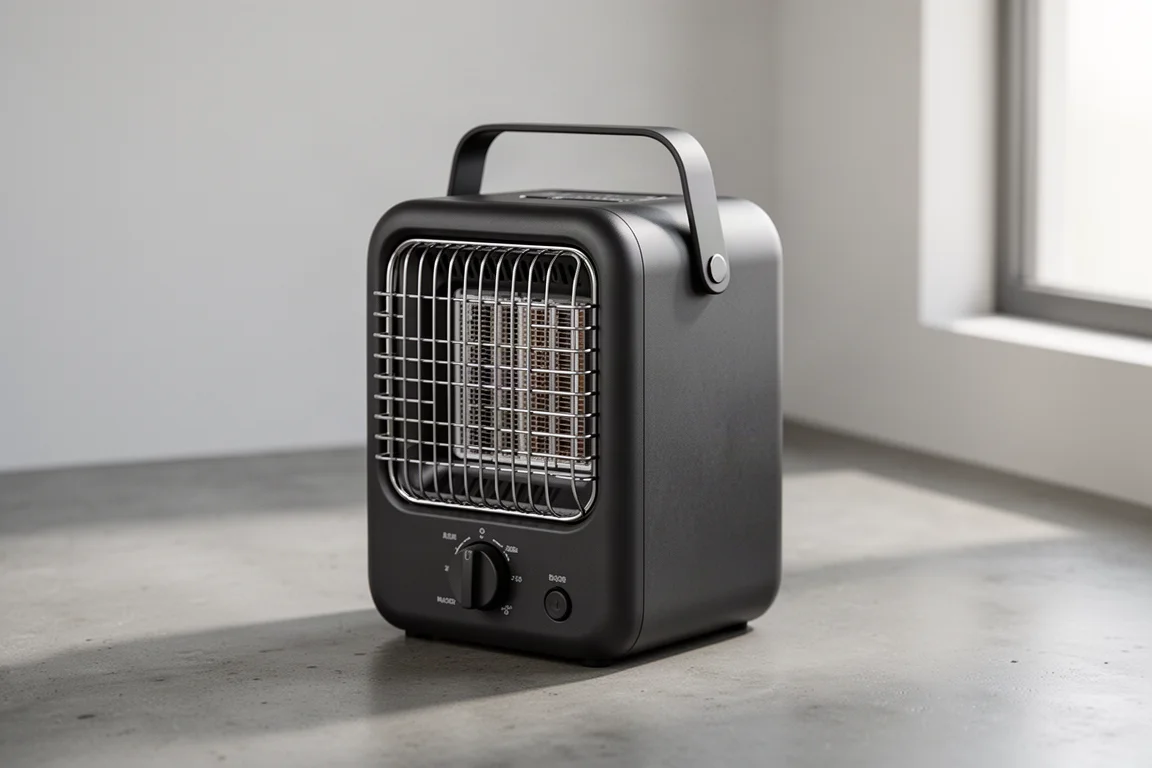
The Kovia Cupid is a small portable heater that produces a surprising amount of heat for its size. It is designed for smaller spaces, and that design intent matters enormously when it is placed inside a tent as large as the MC2 Mount.
On its highest setting, the Cupid took the edge off inside the tent at around 40°F and kept the space warm enough to stay comfortable in a fleece, but only just. With the overnight temperature heading toward 34°F, the same heater would not be enough to heat a tent of that volume. It is a capable small-space heater rather than a large-tent solution, and matching heater output to tent size is the entire lesson.
The unit was used deliberately as a control test before moving to a larger heater from the same brand, which gave a useful reference point for how much heat a tent of this size actually requires. For context on the brand, Kovia introduced its larger propane heater to South Korea around 2014, in a market where propane was not readily available for camping and kerosene heaters were the norm among luxury campers. The company then brought that larger heater to North America, specifically Canada and the United States.
Teton Sports Cot Pad Review
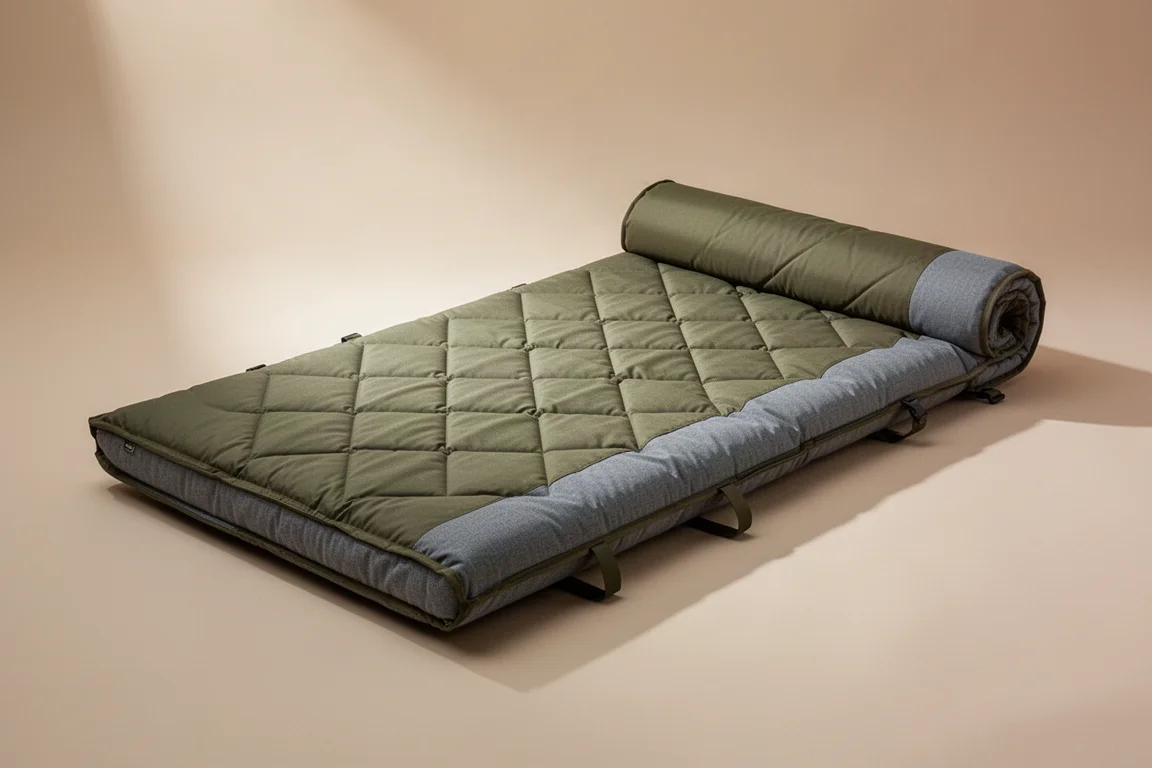
The Teton Sports cot pad is designed to add comfort to a camping cot and to keep the sleeper warmer. The company states that it can be used on the ground as well as on a cot, and those two claims do not hold up equally.

On the ground, the pad added essentially nothing and performed poorly. It did not deliver the cushioning or insulation that a ground mat needs to provide, and it is not worth carrying for that purpose.
On a cot, it works. It is noticeably more comfortable than lying directly on the cot surface, and it does keep the sleeper warmer through a cold night. Treated as a cot accessory rather than a dual-purpose mat, it does the job it was built for, and that is the frame in which it makes sense.
Overall Buying Advice
These three products answer different questions, and each one is worth buying only when the question matches.
For the tent, the case is space and price. A large air-supported hot tent with two doors, two clear windows, and strong ventilation for around $500 is genuinely difficult to match in the inflatable category, where comparable tents often cost two to three times more. The trade-off is durability risk. Glued air beams are fragile, punctures are possible, leaks are hard to trace, and glue quality is not something a buyer can check before purchase. Anyone who wants the lowest long-term risk should choose a pole tent instead. Anyone who accepts the gamble should keep the spend near $500 and inspect the vinyl windows and the beams after every trip.
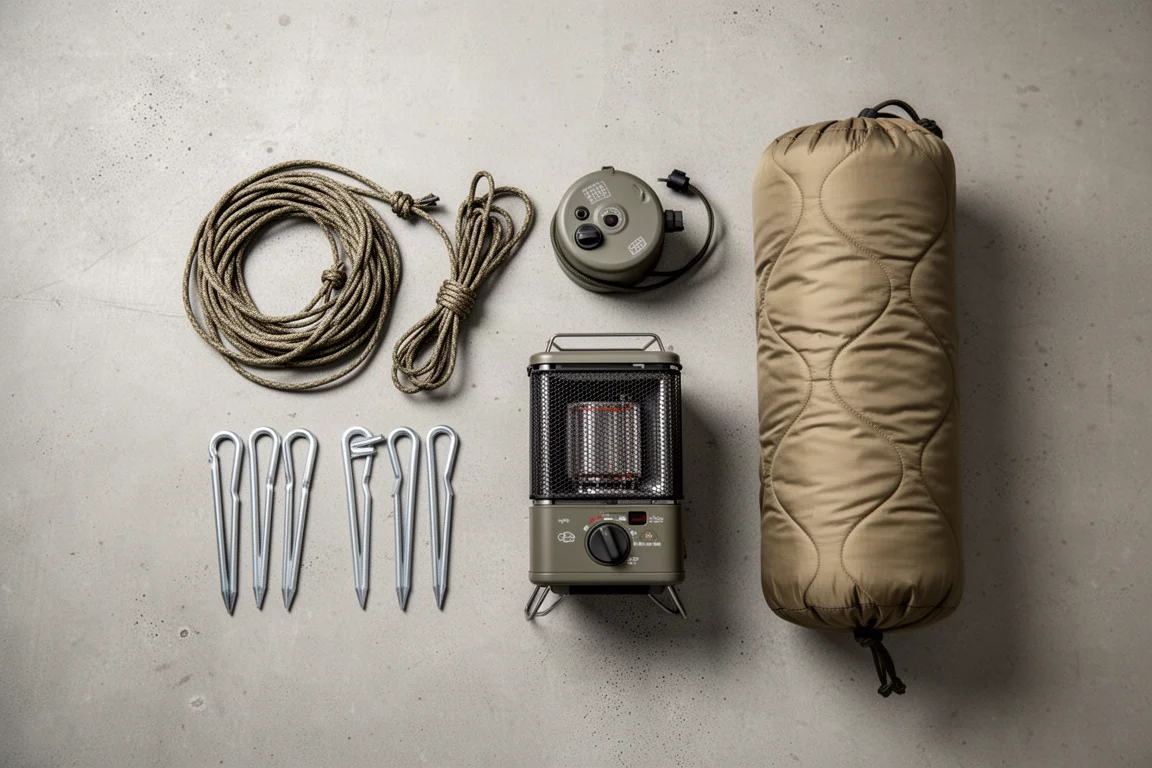
For the heater, the advice is simpler: match the output to the space. A small heater like the Kovia Cupid is a good fit for a compact tent, and it will take the edge off a larger one without genuinely heating it. A large tent needs a larger heat source.
For the cot pad, buy it for a cot. The Teton Sports pad adds real comfort and warmth on a cot and does very little on the ground, so it makes sense as a cot upgrade rather than a standalone sleeping mat.
Conclusion
An air-supported tent, a compact heater, and a cot pad each showed a clear personality across one windy, rainy night. The MC2 Mount inflatable tent delivered unusual space and stayed dry through the rain, with its clear vinyl windows as the long-term question mark. The Kovia Cupid heater warmed a space far larger than it was designed for, just barely, and made the case for sizing heat output to tent volume. The Teton Sports cot pad earned its place on a cot and not on the ground.
For campers who want a large, comparatively inexpensive inflatable hot tent and who accept the fragility that comes with glued air beams, this combination covers a cold, wet night reasonably well.
Further reading
Related Reviews
Camping Gear
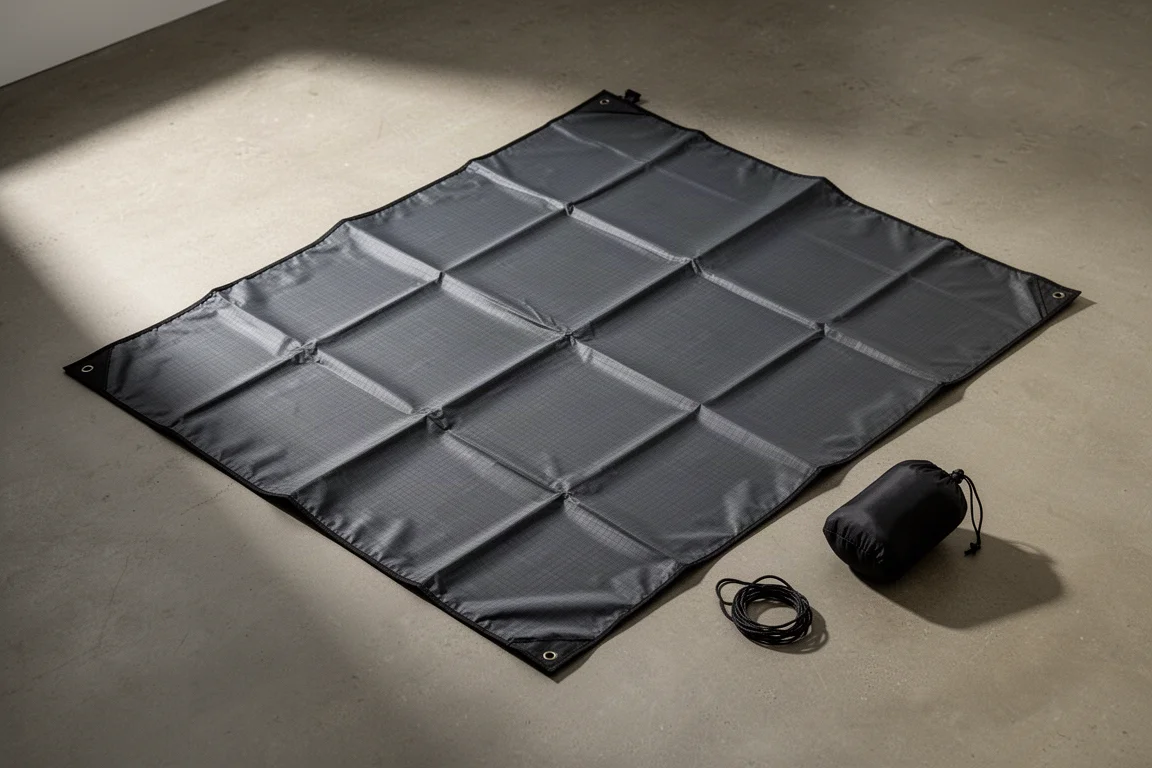
3FUL Ultralight Ground Sheet Review: A Two-Person Footprint Worth Packing
A 6.7 oz two-person ground sheet in ripstop silnylon, priced around $30. Here is what it protects, what it does not do, and who should pack it.
Camping Gear
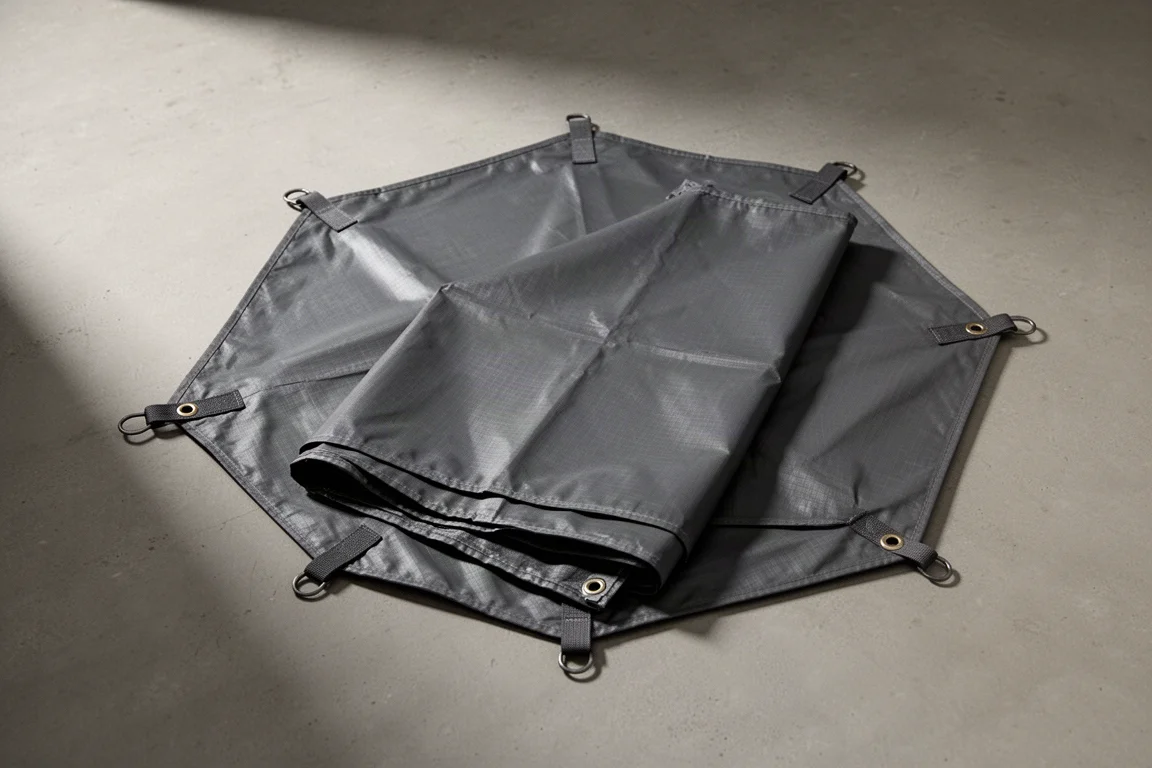
Backcountry Light Dual-Function Tarp and Floor Review: A Footprint First
A dual-purpose tent floor and tarp that keeps falling rain off you, but cannot block wind. Here is where it works and where it does not.
Camping Gear
Best 2-Person Camping Mattresses for Couples: 10 Options Compared
A practical comparison of ten two-person camping mattresses, covering self-inflating pads, air pads and air mattresses for couples.