Camping Gear
Camping Comfort: Three Gear Upgrades for Easier Family Trips
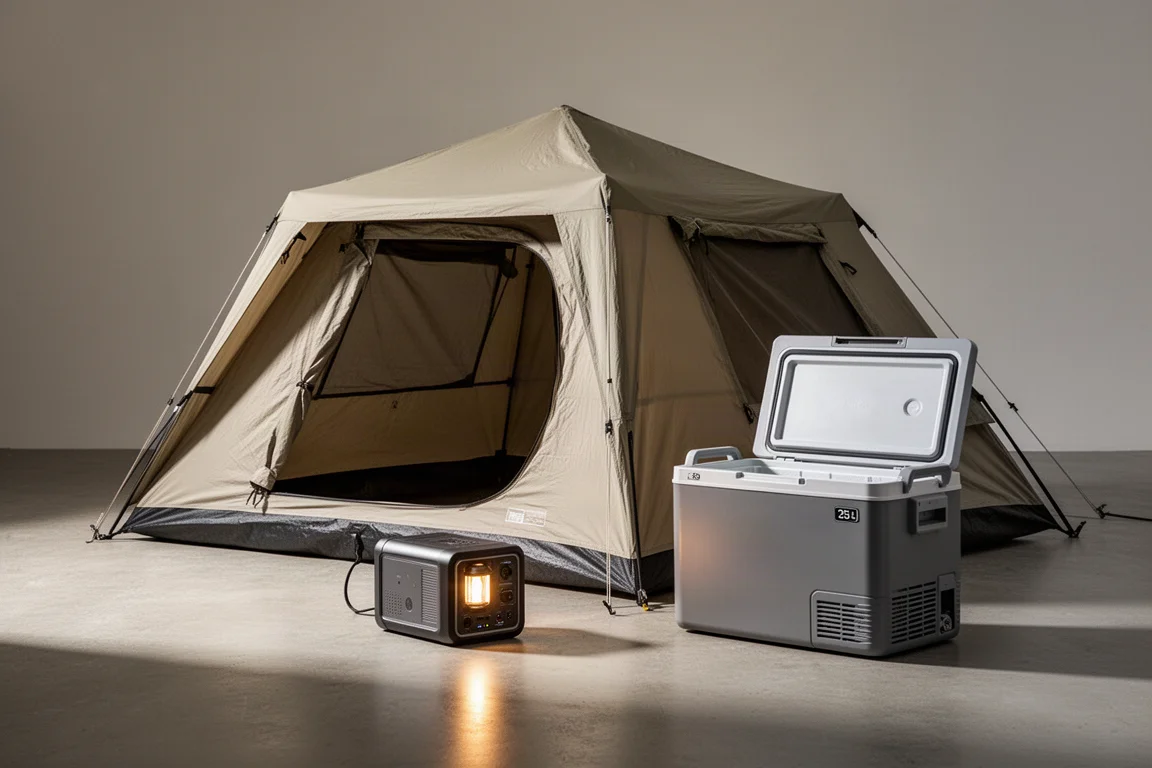
A four-person tent with room to move, a compact power station, and a 35L portable fridge. Three camping upgrades that make family car camping noticeably more comfortable.
Introduction
Camping is far more enjoyable when comfort is treated as a goal rather than something to sacrifice. That matters even more with children along, where a cold night or a cramped tent can turn a good trip into a long one.
Three upgrades do most of the work. A tent that is bigger than the headcount suggests, a compact power station to keep small electronics and tent lighting running, and a portable fridge that removes ice and meltwater from the food equation entirely.
Why Comfort Beats Minimalism
There is nothing wrong with packing light, and sometimes roughing it is part of the appeal. But on a family car camping trip, the calculation changes. If there is room in the vehicle for something that makes the trip more comfortable, there is rarely a good reason to leave it behind.
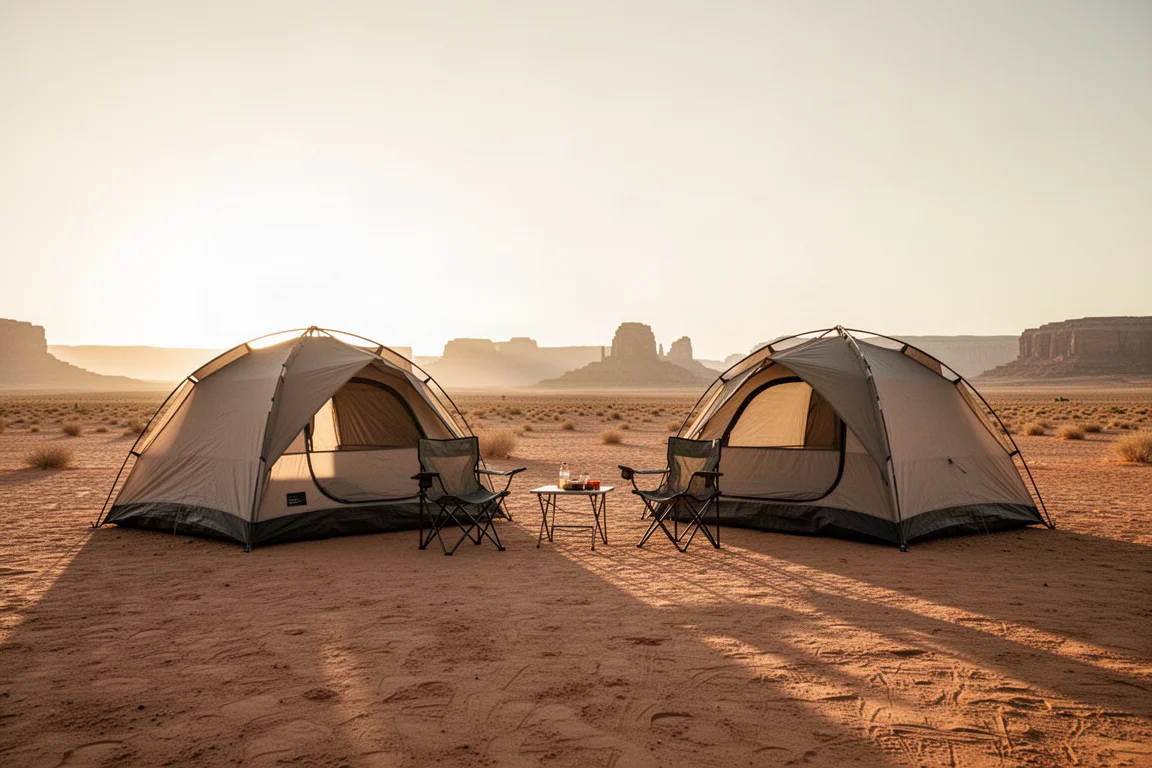
Space is the single biggest comfort factor. Extra floor area gives everyone a personal bubble, keeps bags and bedding from piling into one corner, and makes the tent feel closer to a room than a storage box. One practical approach is to split the group across two smaller tents instead of one enormous one, since two modest tents are often easier to pack and easier to fit onto a campsite than a single very large model. Very large tents also narrow down which pitches will actually accept them.
Sleeping Comfort: Small Habits With a Big Payoff
Sleep systems come down to personal preference, and the only reliable way to find yours is trial and error. Quilts, mummy-style bags, and classic rectangular sleeping bags all suit different sleepers.
Two simple habits consistently help. First, bring a pillow from home, which costs nothing and makes a noticeable difference for adults and children alike. Second, let kids bring their own blanket and a favourite stuffed animal, which makes an unfamiliar tent feel more familiar.
The one place not to cut corners is insulation underneath you. A cheap uninsulated air mattress will leave you cold through the night, and it can also fail outright, leaving you on the ground. A better sleeping pad, or a comforter or quilt from home with real insulation, is what keeps the night warm.
Nemo Highrise 4-Person Tent: Space You Can Walk Around In
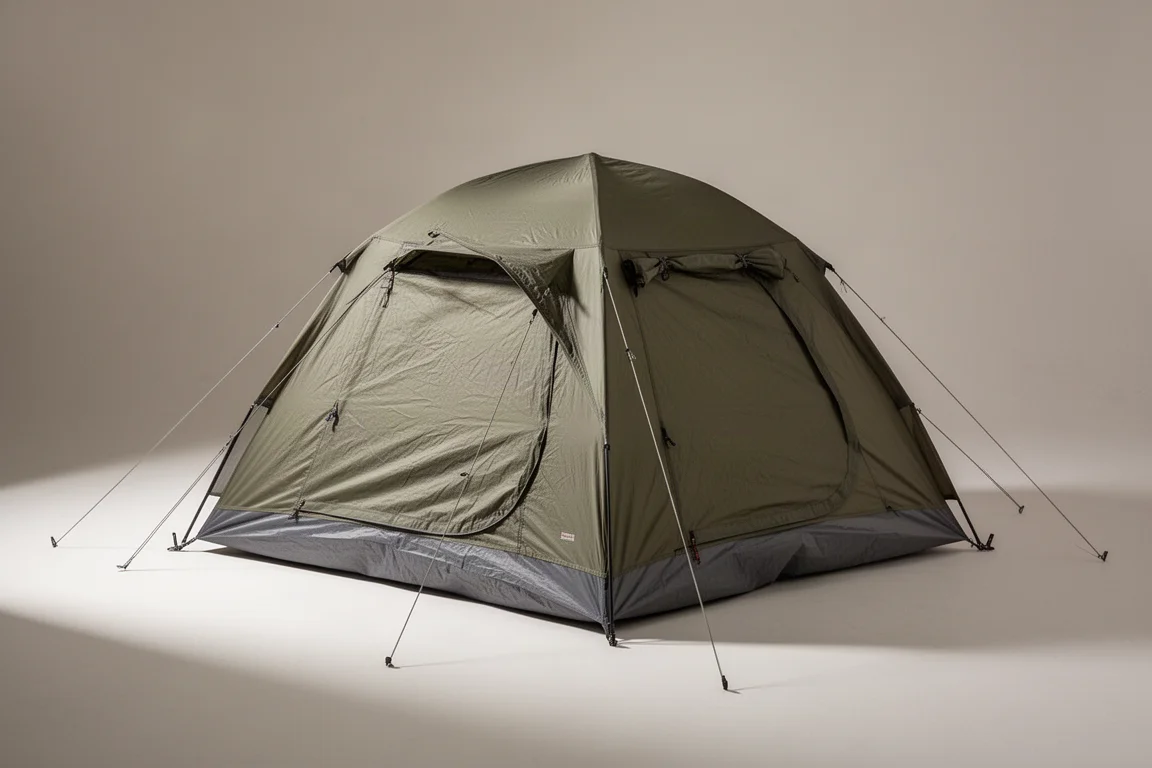
The Nemo Highrise is a four-person tent, and the useful detail is how much floor space remains once it is furnished. With a cot, a second bed, and a child’s sleeping setup inside, there is still room to walk around rather than climb over gear.
That fits the sizing rule well. For four people, a six-person tent is a sensible minimum, and going up a size is usually better than going down. The Highrise shows why: the benefit is not the headcount on the label, it is the clear space left over.
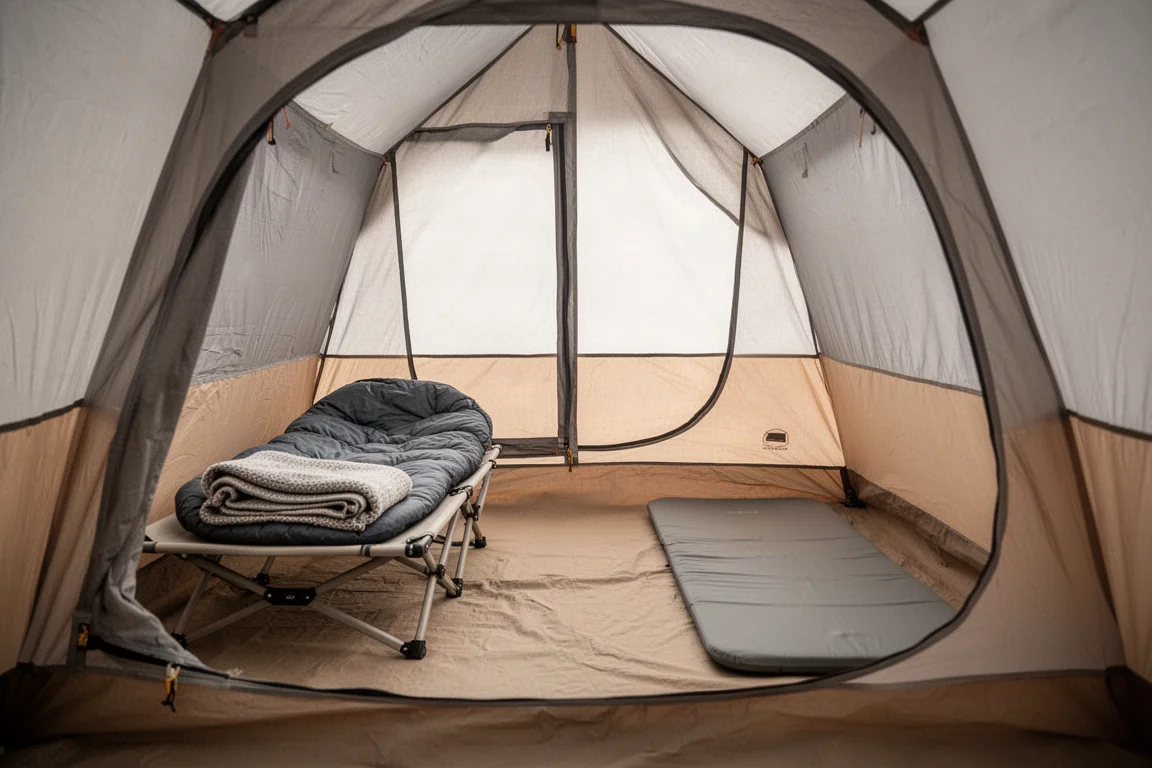
For families, that leftover space is what makes mornings and bedtime manageable. Bags, clothes, and bedding all have somewhere to sit, and the tent still feels open rather than packed to the walls.
Gresell T200 Portable Power Station: Small Power for Big Convenience
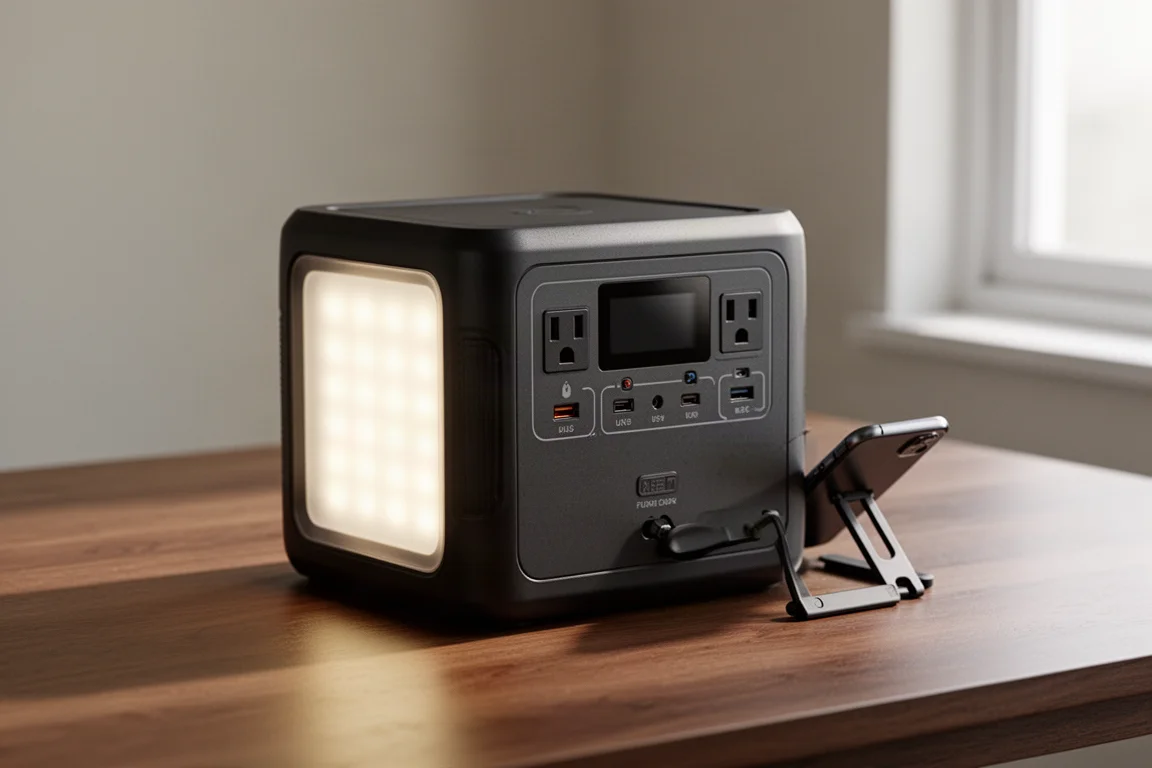
The Gresell T200 is a compact portable power station rated at 240 watts with 153.6 Wh of capacity, which makes it a good match for keeping small electronics charged and powered at camp. It offers five output ports, including a USB-C port with 100 watts of output, and two ways to recharge it: USB-C, solar, or a 12V connection in the car. Power comes from a lithium iron phosphate battery, a chemistry chosen for reliability and long service life.
Two extra features earn their place on a camping trip. A built-in LED light offers several modes, including standard lighting and an SOS setting, so the unit can light up a tent while everyone gets changed for bed. A phone stand on the side turns the station into a spot to prop up a phone for a movie.
If you want to keep it topped up away from mains power, an 80W folding solar panel is available separately and packs down small.
Iceco 35L Portable Fridge: No Ice, No Mess
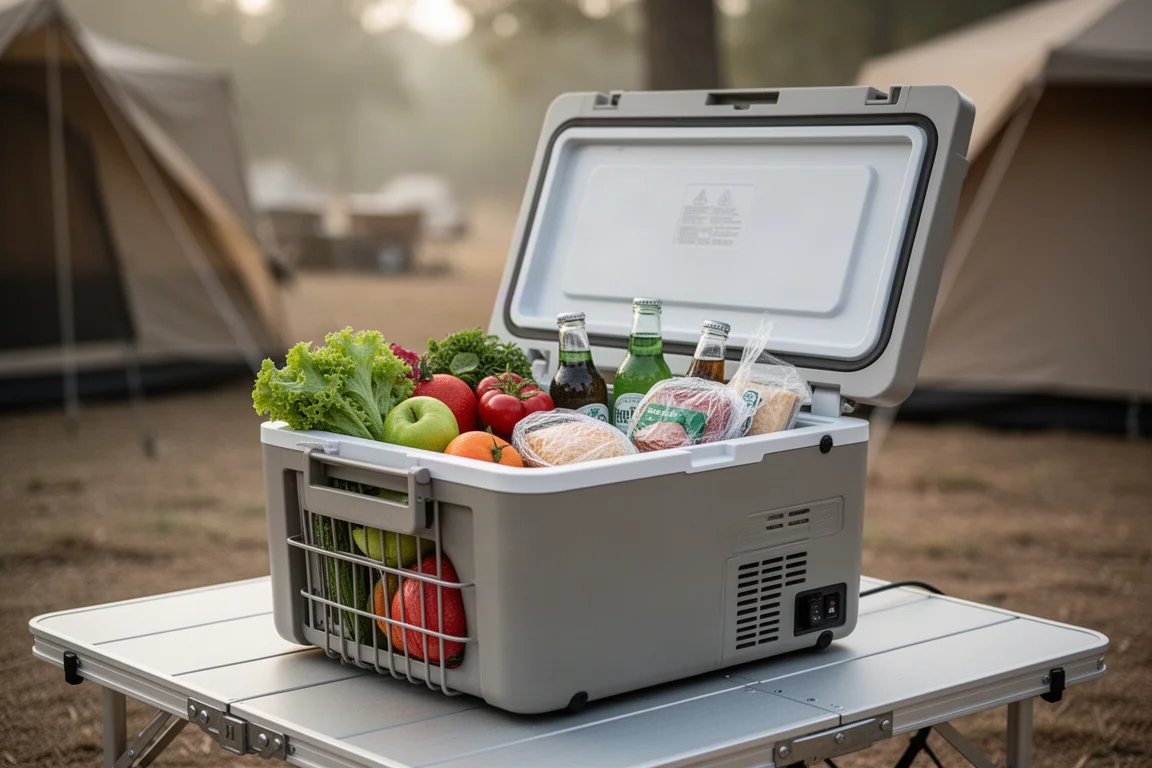
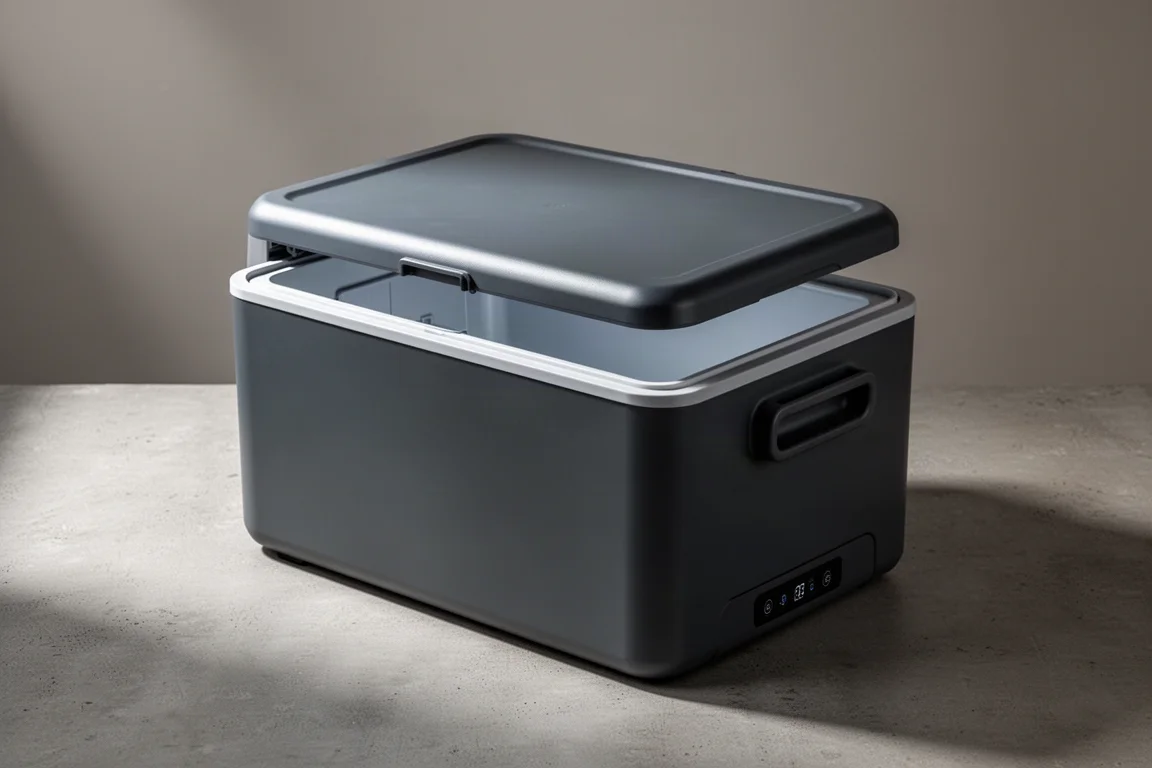
Once a portable fridge enters the setup, going back to a cooler is hard. The Iceco 35L is sized well for a small family, and the benefits are mostly about what it removes: no ice taking up interior space, no food sitting in meltwater, and no small hands rummaging through ice and soaking everything else in the process.
The practical gains add up over a trip. More fresh food fits, and because nothing is floating in water, leftovers can go straight back into the home fridge when the trip ends instead of being thrown out over food safety doubts. The fridge is also useful beyond camping, which makes it easier to justify for picnics and day trips.
One requirement is worth planning for. A fridge like this needs a power source, and most vehicles do not have a dual battery setup, so a portable power station becomes part of the cost. Campers who get out several times a year, or who want the fridge for other outings too, tend to find that trade-off worthwhile.
Camp Kitchen Comfort Without a Huge Investment
Good food does more for a camping trip than almost anything else, and car camping gives you the room to cook the same meals you would make at home rather than relying on freeze-dried options.
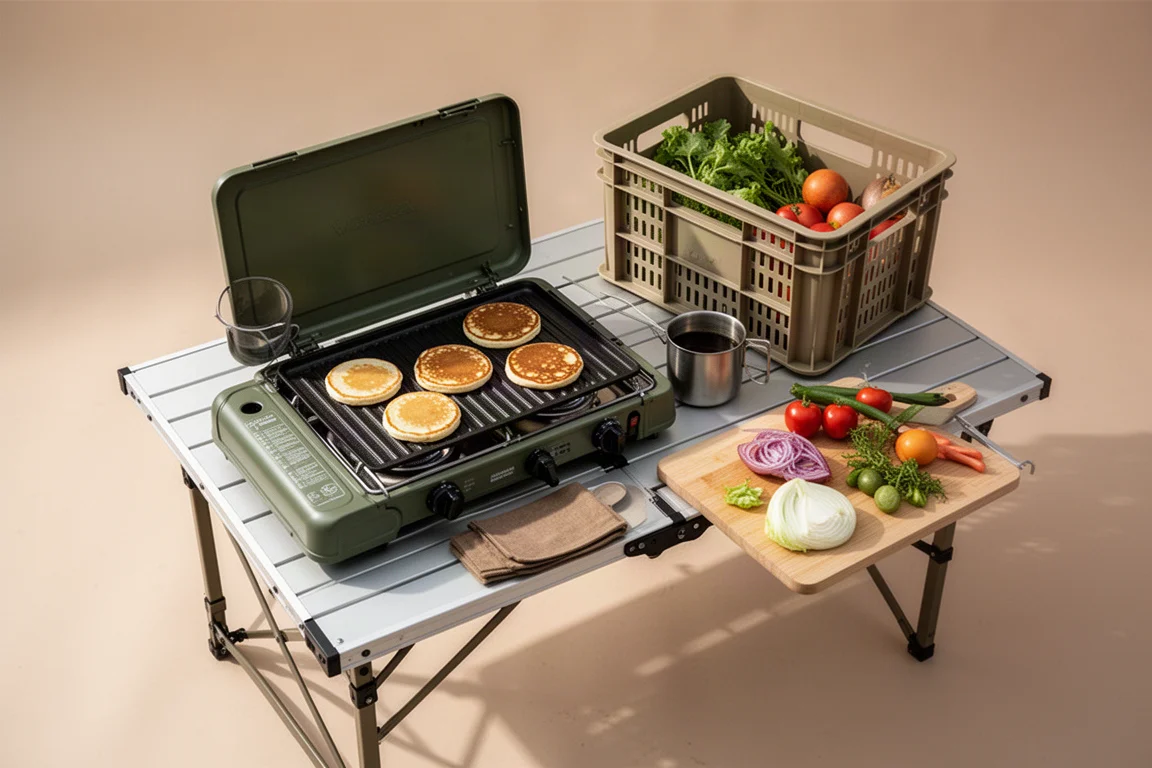
A two-burner stove is the anchor of that setup. It takes a griddle for pancakes and bacon, and swaps out for a pot without much fuss. A roll-top table that folds down like a camp chair handles the cooking surface, and a second smaller table alongside it creates the prep area that makes cooking for a family workable. Storage crates keep ingredients and tools organised and easy for children to find, and a dedicated bin keeps the site tidy.
Counter space is the real insight here. Camp kitchens get cramped for the same reason home kitchens do, and an inexpensive extra table solves it.
Buying Advice
Start with sleep and space, because those two decide whether anyone actually rests. A tent sized one step above your headcount, plus proper insulation underneath you, covers the majority of comfort complaints. A pillow from home and a favourite blanket for each child finish the job for very little money.
Power comes next. A small station like the Gresell T200 suits phones, tablets, lighting, and other small electronics, and its built-in lantern light removes the need for a separate tent light. If you plan to run a fridge, size the station accordingly and consider how you will recharge it, whether that is USB-C, a 12V car outlet, or a folding solar panel.
Food storage is the last piece and the one with the clearest threshold. A 35L fridge is a strong fit for a small family that camps regularly, or that wants the same convenience for picnics and road trips. If trips are rare and you do not already own a power source to run it, a cooler remains the simpler starting point. Whichever way you go, the guiding question stays the same: if you have the space to bring something that makes the trip more comfortable, bring it.
Conclusion
Comfort camping is not about hauling everything you own into the woods. It is about fixing the three things that decide how a trip feels: whether you sleep warm, whether you have room to move, and whether the food works. A tent with genuine floor space, a compact power station, and a fridge that keeps food cold and dry cover all three, and each one earns its place on a family car camping trip.
Further reading
Related Reviews
Camping Gear
3FUL Ultralight Ground Sheet Review: A Two-Person Footprint Worth Packing
A 6.7 oz two-person ground sheet in ripstop silnylon, priced around $30. Here is what it protects, what it does not do, and who should pack it.
Camping Gear
Backcountry Light Dual-Function Tarp and Floor Review: A Footprint First
A dual-purpose tent floor and tarp that keeps falling rain off you, but cannot block wind. Here is where it works and where it does not.
Camping Gear
Best 2-Person Camping Mattresses for Couples: 10 Options Compared
A practical comparison of ten two-person camping mattresses, covering self-inflating pads, air pads and air mattresses for couples.