Snowboards
Burton Counterbalance 158 Wide Review: The All-Mountain Board Everyone Loves
A directional freeride-inspired board with a snappy flex that impressed testers across three continents. Here is what to know before you buy.

Introduction
Burton built the Counterbalance 158 Wide around a clear idea: a directional shape with a snappy flex that drives and flexes through turns on deep days and groomers alike. In other words, a full Goldilocks zone board. The one thing that does not fit the Goldilocks analogy is the price: €680, or around £610, which puts it firmly in premium territory.
The question is whether the performance justifies it. Based on how widely and enthusiastically this board was embraced during testing, the answer leans strongly toward yes. It was one of, if not the most popular board in testing, and that enthusiasm held up across Europe, North America, and New Zealand.

Who This Board Is For
The Counterbalance sits in that appealing bracket of all-mountain boards that are actually powder boards tweaked slightly so they can also handle park terrain. It suits freeride-focused riders who want a surfy, fast-down-the-line feel and confidence on big drops, but who still want the option to hit jumps, rails, and park laps without swapping boards.
It is also a strong candidate for anyone who dislikes the usual adaptation period that comes with a new deck. Rather than needing a run or two, or even a week with new technology, this is a board you strap in and trust immediately. One test rider loved it on the very first ride, even while wearing ill-fitting boots and a step-on setup on the wrong size.
Main Strengths
The first thing that stands out is how intuitive the board is to place. Think about putting it somewhere and the board just goes there. There is a feeling of no latency or delay between mind and board, an effortless connection that experienced riders are always chasing.
On snow, it is light, quick, and lively while still delivering genuinely solid hold. Even on compact, velvety snow early in the day, the board locked in from the first turn, no warm-up run required. It flatters the rider rather than punishing them.

It also inspires confidence in the air. Pro feedback on this exact board highlighted that it holds well when jumping, makes big lines and jumps easy, and carries plenty of speed. For freeriding, big drops and fast lines are where it feels most at home.
Park and Rail Performance
The biggest surprise from testing was how well this freeride-leaning board rides in the park and on the rails. Despite its power and stiffness, it stays nimble, playful, and poppy, making it a genuine quiver-killer for riders who split their time between terrain and park.

Things to Consider Before Buying
The construction explains the price tag. A 700g Super Fly core keeps the board remarkably light, and 45-degree carbon stringers are placed through the flexible, torsion-heavy areas near the tips to add energy and life. Those materials are what push the price up, and they are also what give the board its distinctive liveliness.
That said, you should be comfortable with the premium positioning before committing. The Counterbalance is priced well above mainstream all-mountain decks, and while the performance matches the price, budget-conscious buyers will want to weigh it against alternatives.
Buying Advice
If you get a chance to test one, expect to leave wanting it. The Counterbalance blends real power, stiffness, and hold with a nimble, playful, poppy feel, and it covers powder, all-mountain, and park terrain convincingly.
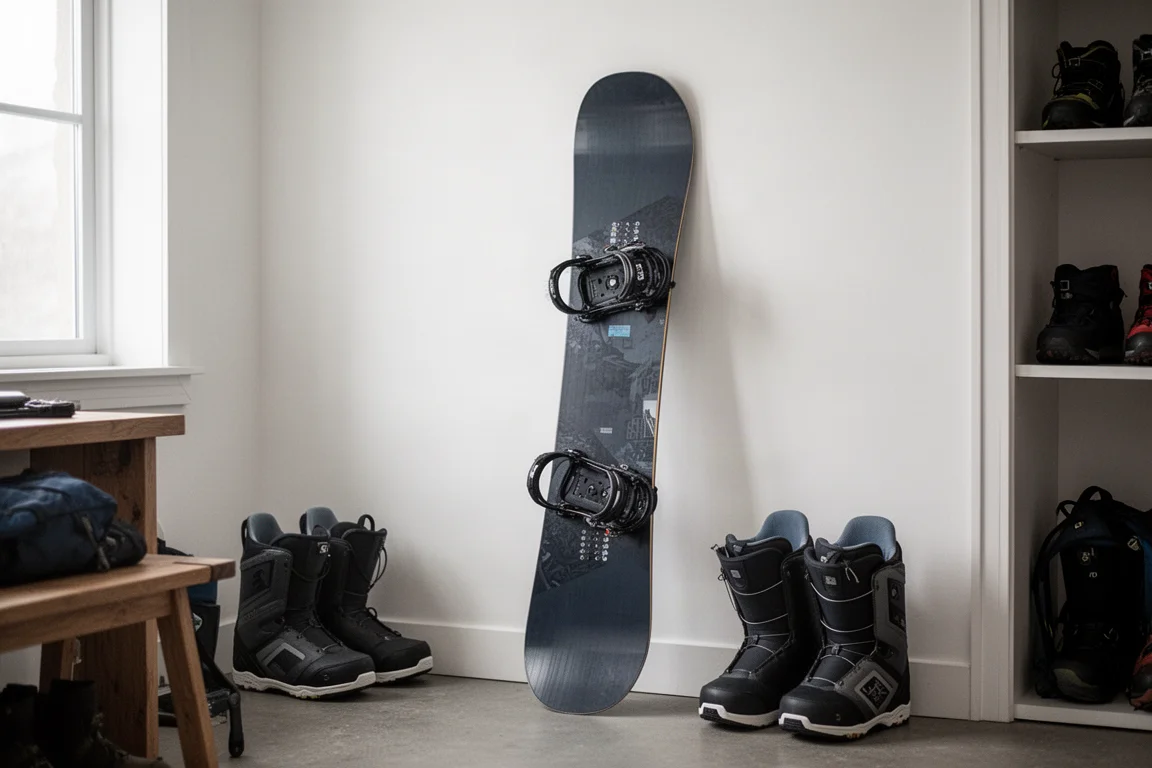
There is also a practical value argument. Compare buying two boards at around €500 each against one board at just under €700 that does both jobs well, and the Counterbalance starts to look like genuinely good value. In the same bracket of do-everything boards previously praised are boards like the Rome Stalefish and the Lib Tech Orca, which places this Burton in very good company.
Conclusion
The Burton Counterbalance 158 Wide is that rare board that manages to be light, quick, and playful while still holding firm when you push it hard. It is confidence-inspiring from the first strap-in, excellent for freeride and big lines, and surprisingly strong in the park and on rails. The price is steep, but for riders seeking one deck that does nearly everything, the performance earns it.
Product link
View more details for Burton Counterbalance 158 Wide
This product is mentioned in the review. Check the specifications, options, and compatibility before buying.
View more details for Burton Counterbalance 158 WideFurther reading
Related Reviews

Snowboards
32 Middle Earth Scott Stevens Pro Model Snowboard Review: A Park Board With a Reversed Flex
A medium traditional camber park board with carbon V reinforcement that is stiffer in the tips and more playful between the feet. Here is how it rides and who it suits.
Snowboards
32 Snafu Review: A Directional All-Mountain Freestyle Board with Serious Pop
The 32 Snafu pairs a directional camber-rocker profile with a stiffening tail for powerful carves, big ollies, and a surprisingly damp ride.

Snowboards
32 XXX Pat Fava Pro Snowboard Review: A Stiff Camber Beast for Hard-Charging Riders
A full-width traditional camber deck that rewards aggression with stability and edge power, but demands effort everywhere else.