Fountain Pens
Three Bulk Filler Fountain Pens Compared: Conid Kingsize, Cusedo Kakari, and 54T Titan Ultim
A hands-on comparison of three high-end bulk filler fountain pens that share one clever filling system, with capacity, comfort, and usability differences spelled out.
Introduction
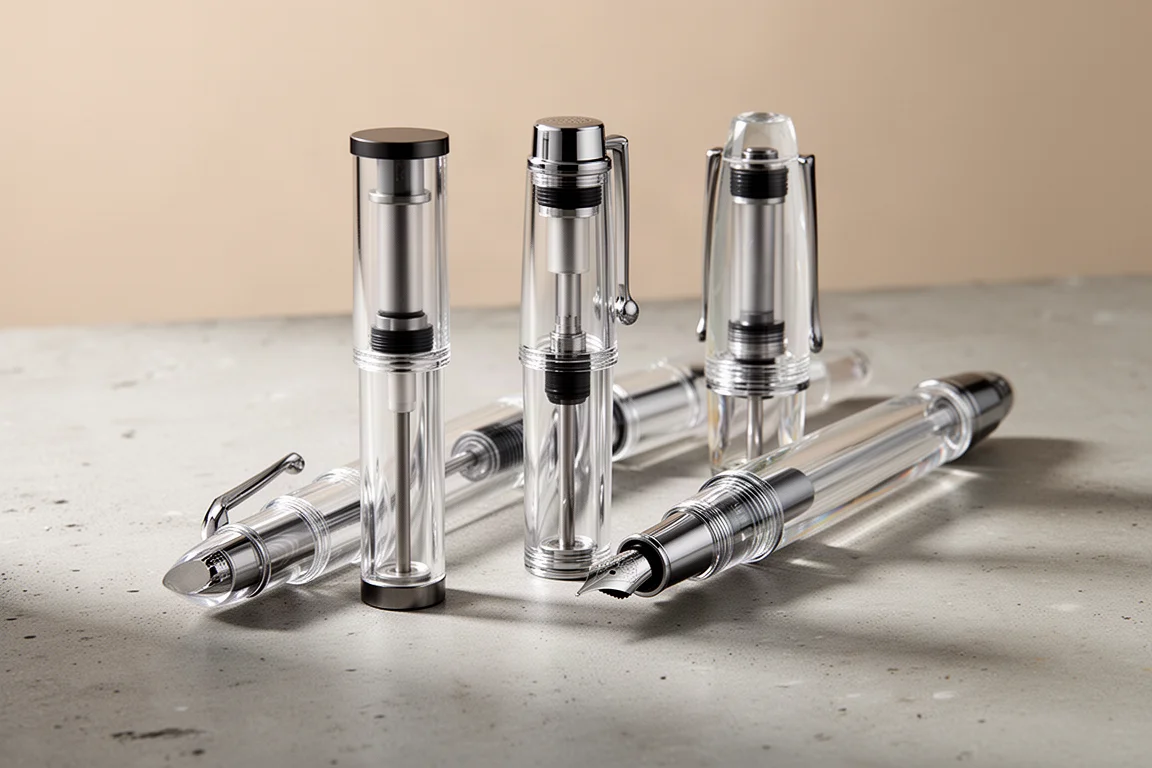
Some fountain pens are interesting because of their nibs. Others earn their place through materials, design, or sheer size. The three pens in this comparison stand out for a different reason: they all use a variation of the same filling system, and it is not a cartridge converter, a piston, or a standard vacuum filler. It is a bulk filler, a mechanism that trades a little extra effort for genuinely large ink capacity and a satisfying mechanical experience.
The three pens on the table are the Conid Kingsize Bulk Filler from Belgium, the Cusedo Kakari, and the 54T Titan Ultim. All three are large, expensive, beautifully machined writing instruments with tight tolerances, and all three reward a buyer who enjoys the ritual of filling as much as the writing itself.
How the Bulk Filler System Works
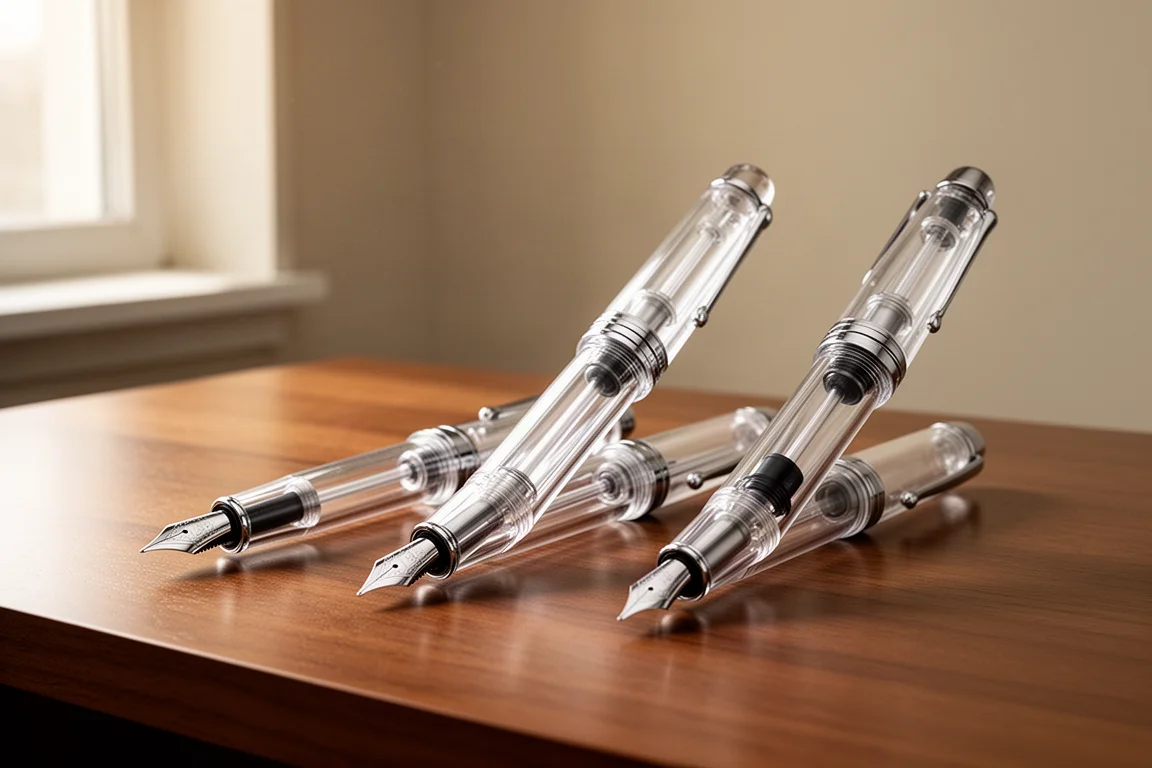
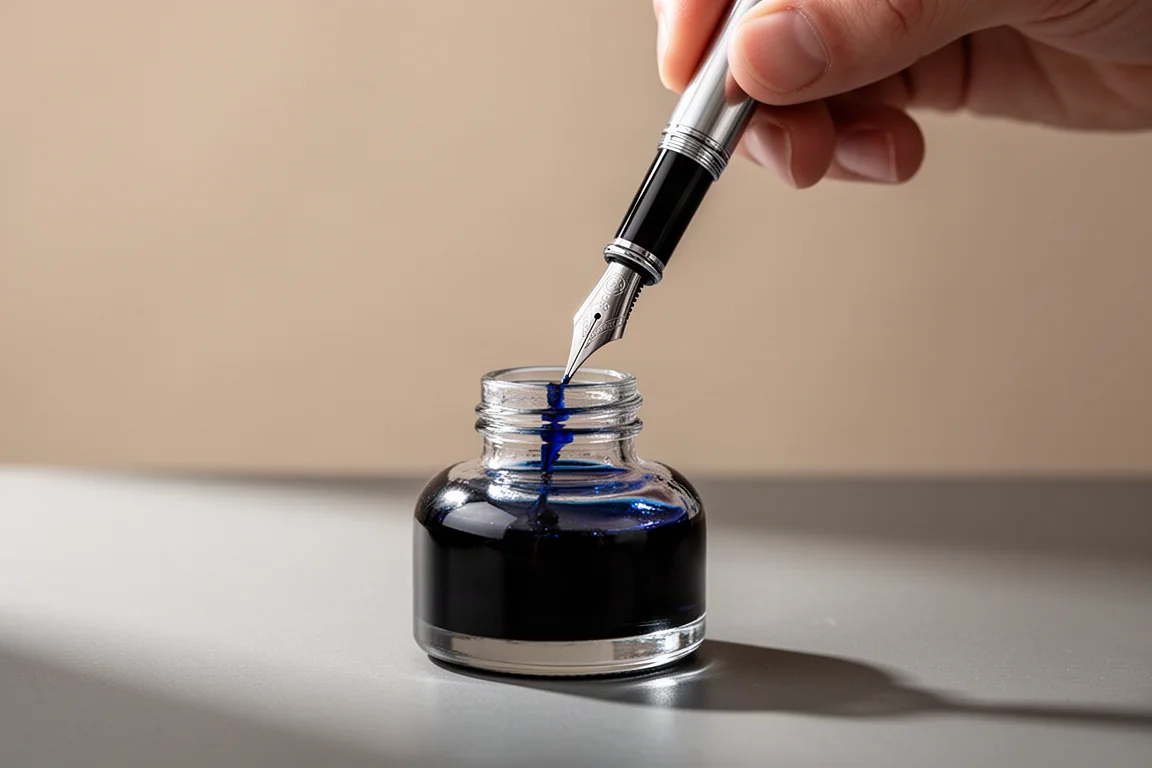
A traditional piston filler works by turning a knob that drives a seal down and then back up the barrel, with that upward stroke creating the vacuum that draws ink in. These pens do it differently. Each one uses a rod inside the barrel with a piston seal attached, and the seal has to be manually disengaged before you can operate the plunger.
On the Conid, designed by Fountainbel, you unscrew the rod, screw the end deeper so that threads engage the seal, and then unscrew a little farther to release it. From there it is simple: push the plunger down, place the nib in a bottle of ink, and pull to draw ink up. Once finished, the seal is re-engaged so the turning knob seals off a secondary ink reservoir below the primary one. That secondary reservoir is genuinely useful for flying, since you can move ink back into the primary reservoir to prevent leaks at altitude.
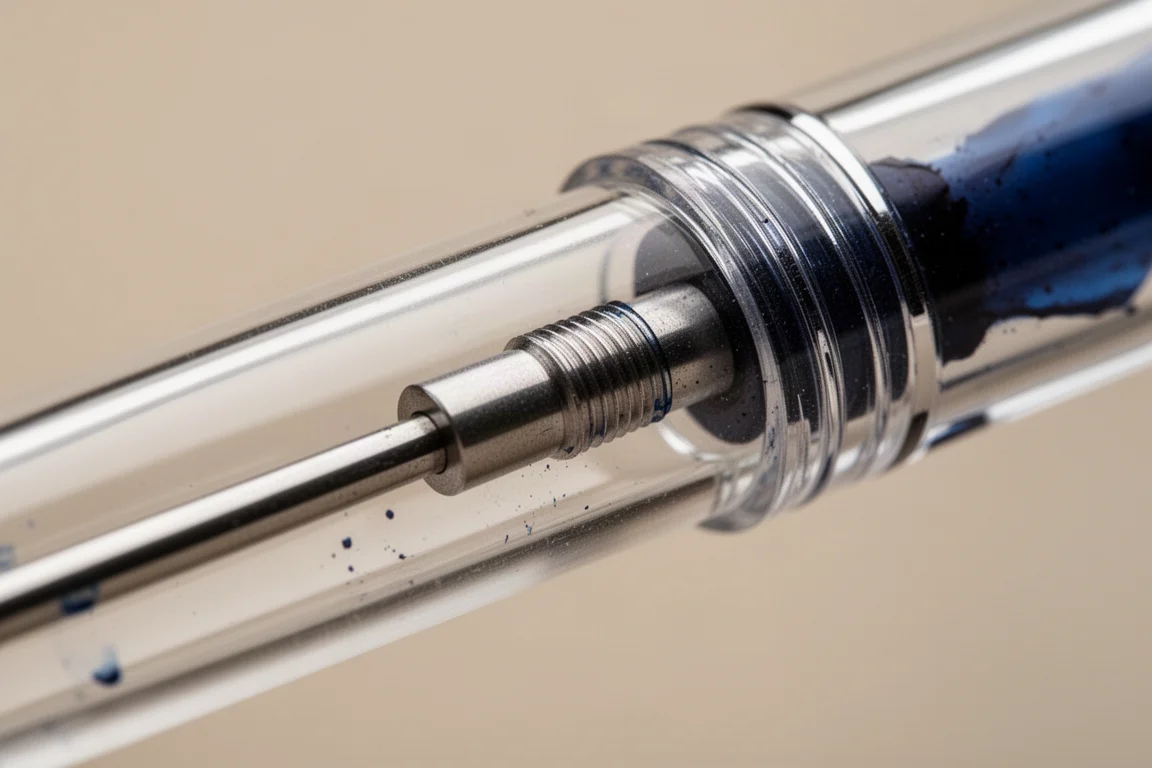
The Cusedo Kakari, designed by Ben Walsh, follows the same theme with its own interpretation. The seal has more metal to it and is screwed into the back of the barrel, and a mechanism with small rods engages grooves in the seal so the whole assembly can be pulled down before the fill. The 54T Titan Ultim takes yet another approach with a threaded end on the piston: pull the rod all the way up, keep twisting until it engages, and the seal drops down ready for the fill.
Conid Kingsize Bulk Filler
The Conid is the original, the pen that came up with this filling system, and the other two are variations on its theme. It deserves credit for that. The Kingsize is roughly the size of a Montblanc 149 in shape and presence, a very comfortable large pen with an hourglass-shaped section that works nicely in the hand. Posting makes it quite long, but unposted it is very comfortable.
The clear barrel is a highlight. With a mechanism this elaborate, a transparent barrel is really the only way to appreciate it, and it makes the secondary reservoir and piston seal easy to watch in action. Of the three pens, the Conid draws the least ink in a single pull, around 2 ml, though that is not its total capacity: with the nib-up, purge-the-air-bubble technique, you can fill the barrel entirely. One practical note: the center band on the test unit came loose and now doubles as a fidget spinner. These pens are made in limited batches on an as-needed basis and sell out quickly, which makes them expensive and hard to acquire.
Cusedo Kakari
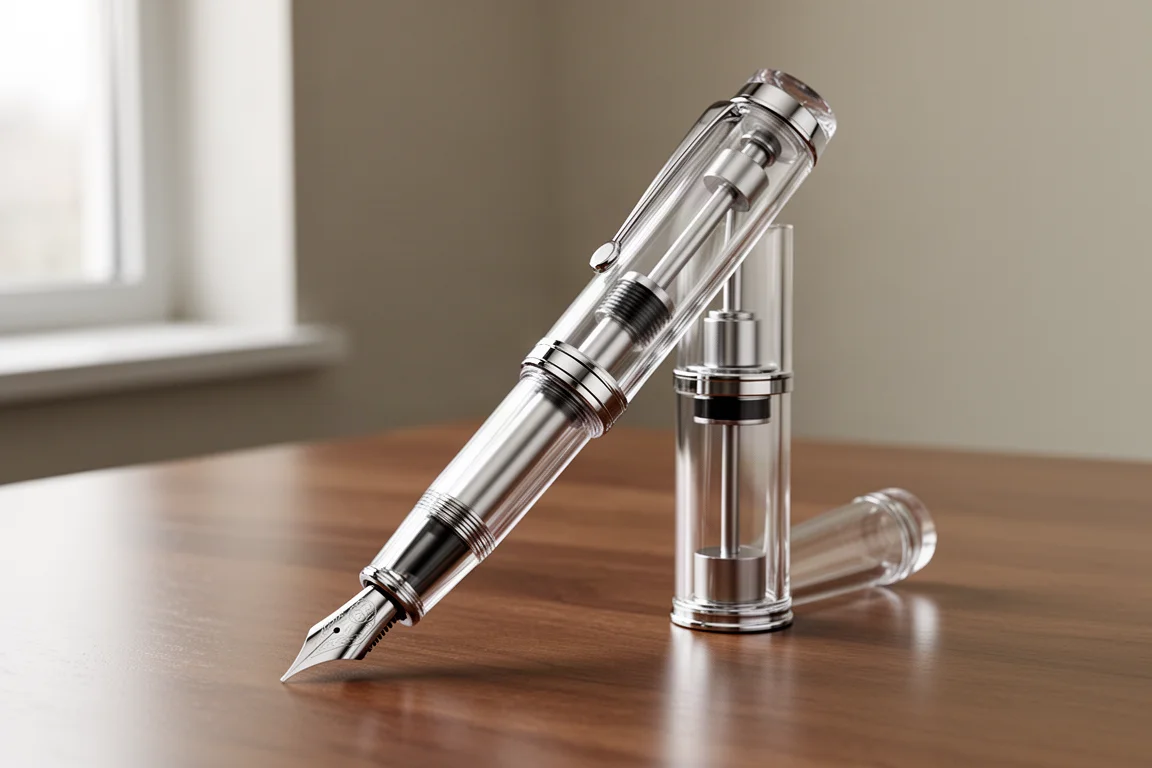
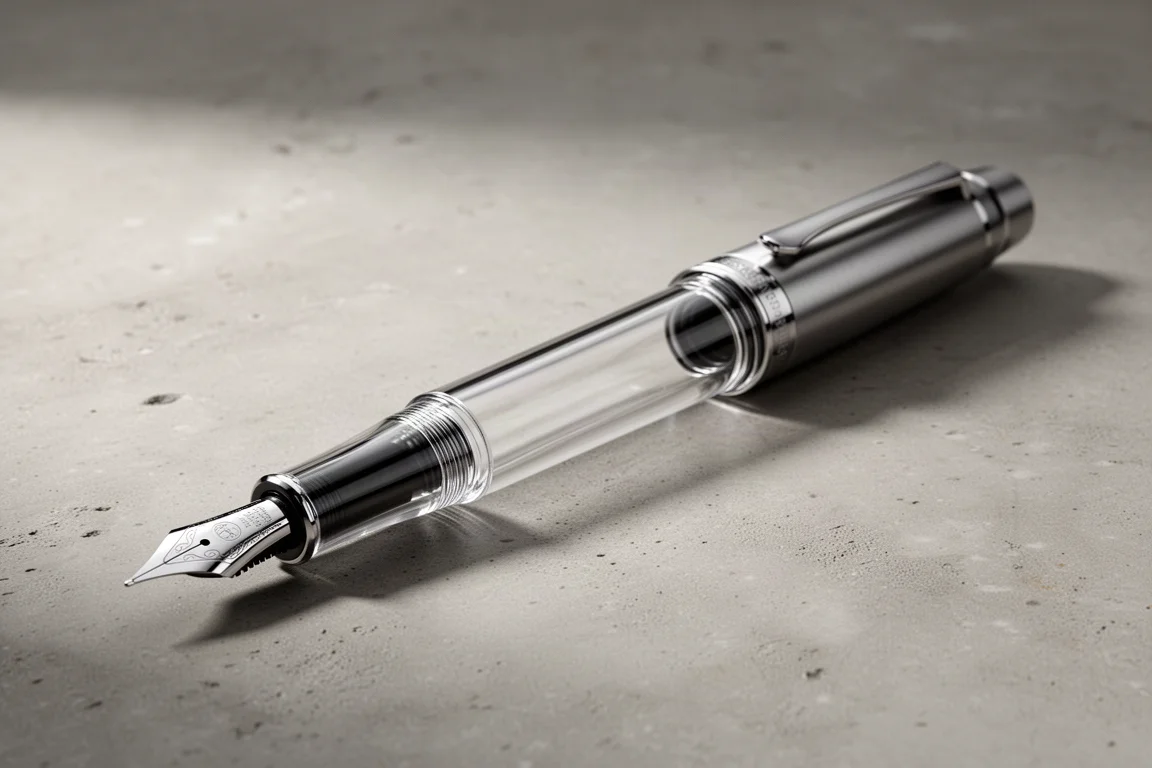
The Cusedo Kakari is the smallest of the three, which is a relative statement since none of these pens are small. That sizing makes it the most likely to agree with the widest range of hands. The section is thinner, tapers down, and flares out, giving the pen real visual gravitas, and it is a very pleasant, comfortable writer.
The titanium parts near the end make it somewhat top-heavy, so posting is not particularly practical given how long the pen becomes. The fill system draws a hard vacuum, and as a result it pulls up a lot of ink, around 3 ml per pull. The trade-off is that you have to pull quite hard. The main caveat with the filling mechanism is that the seal does not screw into the rod. The three small pins that engage the seal can occasionally slip out of their holes, meaning you push the rod alone rather than pushing the seal, and no ink is drawn. It absolutely works and the pen rides beautifully once inked, but of the three systems this is the least pleasant to operate.
54T Titan Ultim
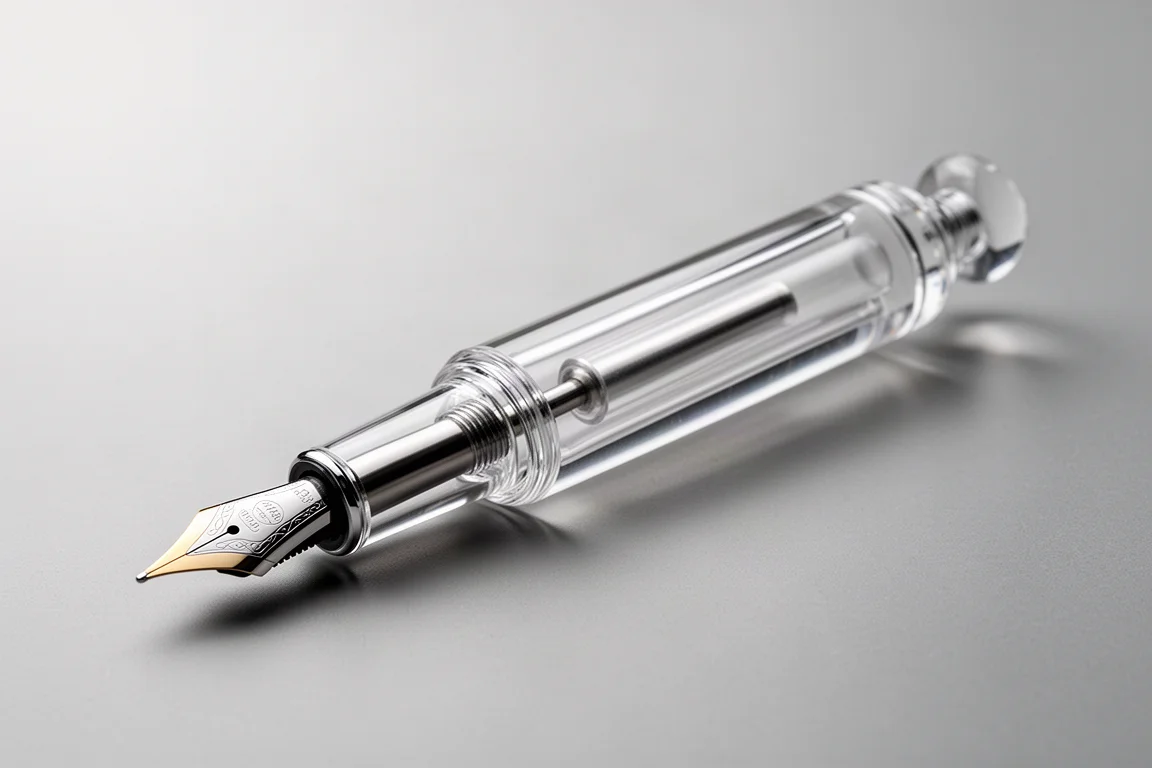
The 54T Titan Ultim is the standout for mechanical feel. Its body uses a very strong acrylic of the kind employed in aircraft, and the filling action is by far the smoothest of the three, to the point that it earns a 10 on a personal smoothness scale where the Conid sits around an 8 or 9 and the Cusedo around a 7 or 8. Pulling the plunger and pushing it back in is effortless in a way the others are not.
It matches the Conid with a number 8 nib, while the Cusedo uses a number 6 nib. It drew 3 ml of ink on a single measured pull, on par with the Cusedo and ahead of the Conid. Like the others, it can be filled completely with the two-stage technique, though that often takes two attempts. It is a large pen with titanium parts that can feel top-heavy, so smaller hands may find it weighs down at the end.
Which One Should You Buy?
All three are high-end pens at the upper end of the fountain pen price spectrum, though given the machining quality and tight tolerances, it could be a lot worse. The choice comes down to priorities.
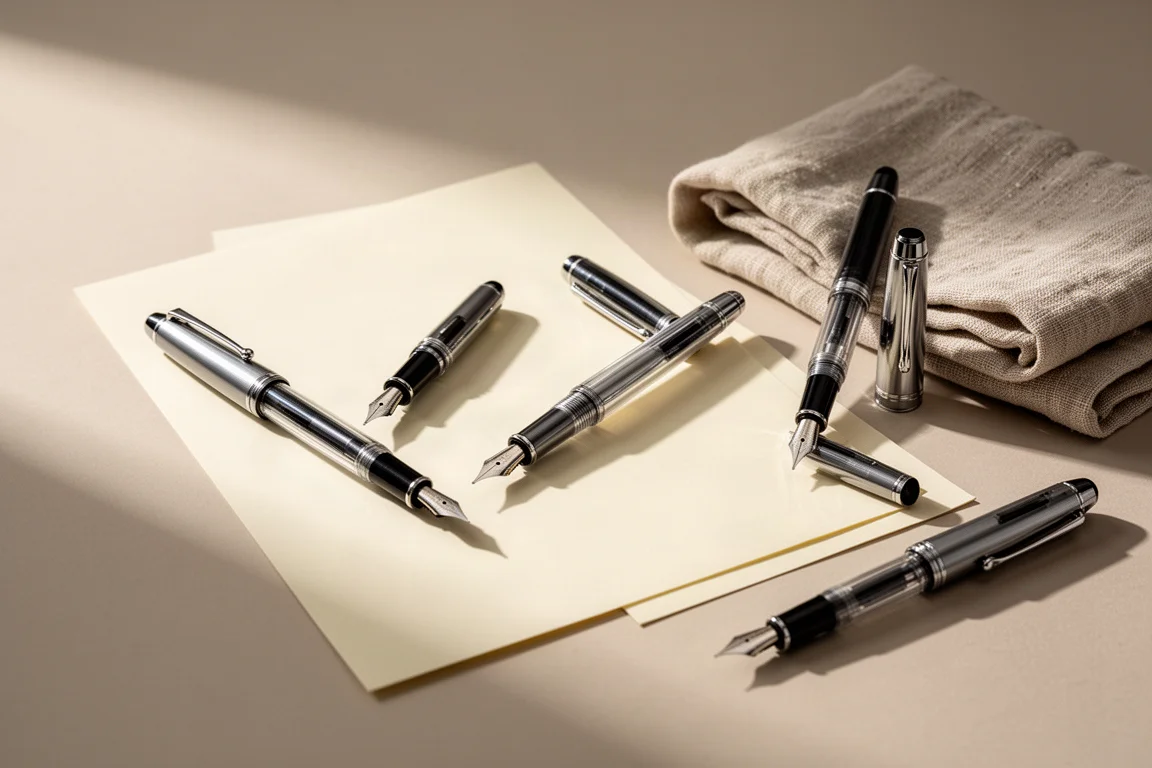
If you want the best one-size-fits-all option, the Cusedo Kakari is the most comfortable size for most people, and its hard vacuum pull delivers a generous ink load. If smoothness of operation is what you value most, the 54T Titan Ultim is the clear pick. If you want the original design and a beautiful Kingsize demonstrator, the Conid remains a lovely pen that pioneered the whole category, and smaller Conid models exist if the Kingsize is too much.
Conclusion
Three beautifully made pens, one clever filling idea executed in three ways. The Conid earns respect as the original, the Cusedo offers the most broadly comfortable size, and the 54T delivers the smoothest mechanism of the bunch. Whichever way you lean, you are paying for genuinely high-end craftsmanship, and all three deliver it.
Further reading
Related Reviews
Fountain Pens
Best Budget Fountain Pens Tested: 9 Pens, One Clear Winner
A hands-on comparison of nine affordable fountain pens for everyday writing, calligraphy, and sketching, with a clear standout for flexible nib fans.
Fountain Pens
Aurora Optima Review: An Italian Piston Filler That Punches Above Its Price
A 14k gold nib, ebonite feed, and a beautifully deep oraloid body make the Aurora Optima one of the most rewarding piston fillers around.
Fountain Pens
Cross Bailey Light Review: The Entry-Level Fountain Pen Worth Keeping at the Office
A plastic-bodied Cross with a metal clip, snap cap, and famously smooth extra fine steel nib. Around $15, available almost everywhere, and easy to recommend.