Backpacking Tents
Two Budget Backpacking Tents Under $200: Paria Zion 1P and Featherstone Backbone 2P
A freestanding one-person tent and a two-person trekking pole shelter, both under $200, compared on space, weight, ventilation, and weather protection.
Introduction
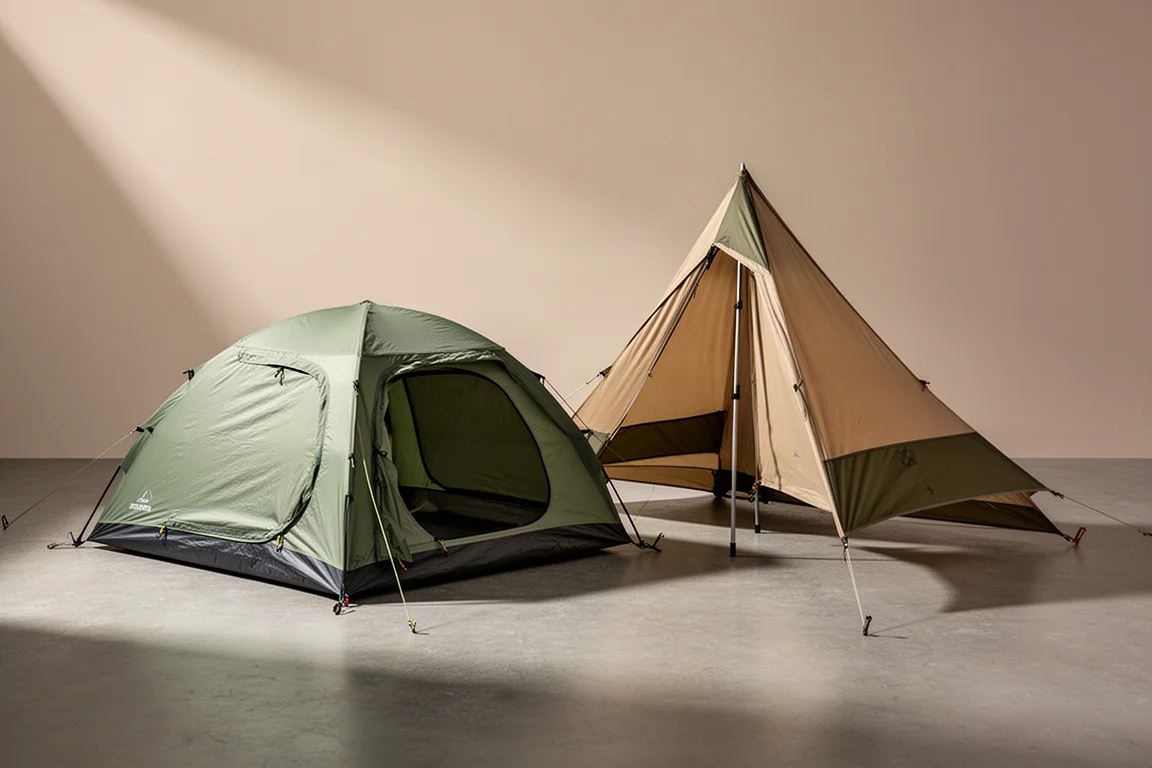
Finding a backpacking tent that costs less than $200 and still holds up night after night is a genuine balancing act. Two shelters make that balance look easier than most: the Paria Outdoor Products Zion 1-Person Tent and the Featherstone Backbone 2-Person Trekking Pole Tent.
They solve the problem in opposite ways. The Zion is a fully freestanding, double-wall tent with an included footprint, priced around $159. The Backbone is a single-wall trekking pole shelter with a very tall peak and a roomy two-person floor plan, priced under $200. One leans toward setup convenience and long-term durability, the other toward living space per dollar.
This guide walks through what each tent does well, where each one asks you to compromise, and which kind of backpacker each shelter suits best.
What to Look For in a Budget Backpacking Tent
Three things decide whether a low-cost shelter actually works in the field: how much it weighs once it is packed, how well it manages condensation, and how much usable space it gives you for the money.
Weight is the most obvious trade-off at this price. Fabric choice matters just as much: a 20-denier ripstop nylon fly with a 3,000 mm hydrostatic head is a reasonable benchmark for rain protection, while a heavier denier floor adds durability against abrasion. Ventilation design is the third piece. Mesh panels and peak vents help move moist air out, but small vents alone will not fully solve condensation, so campsite selection still matters.
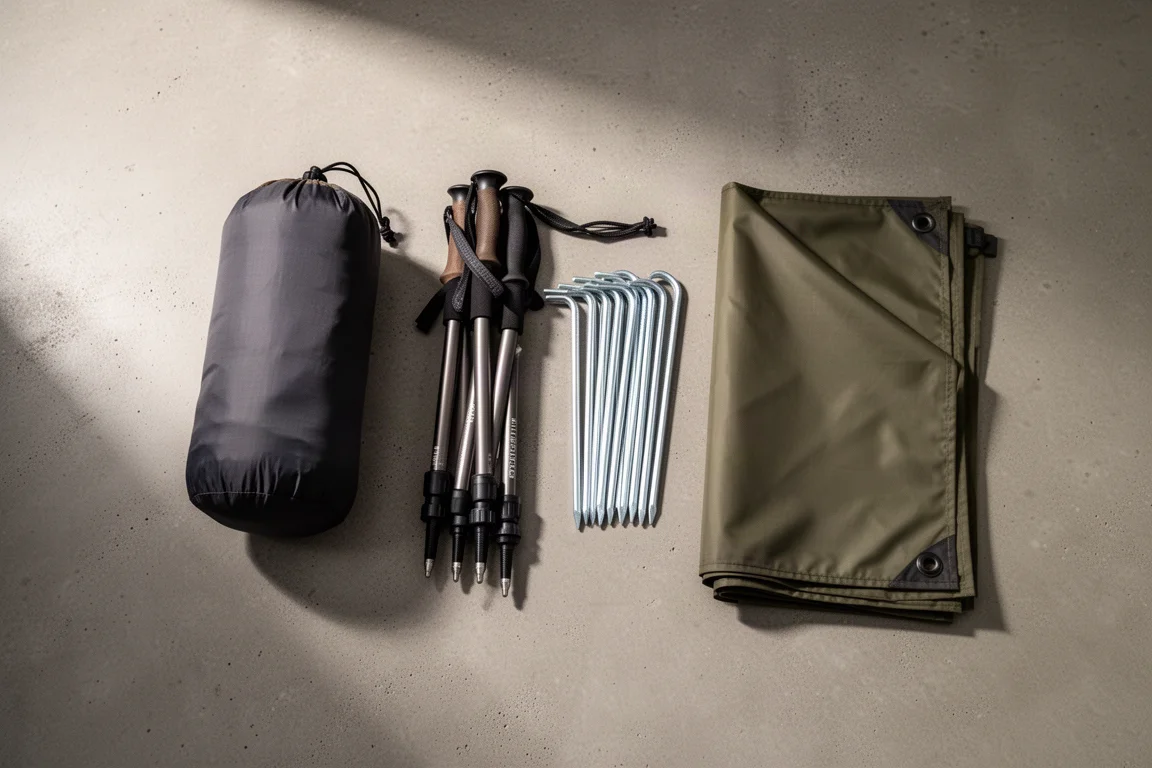
Both tents in this guide use a 20-denier nylon fly, and each one adds value in a different way.
Paria Outdoor Products Zion 1-Person Tent
Build and Materials
The Zion pairs a 20-denier ripstop nylon outer fly with a 3,000 mm hydrostatic head and a burlier 40-denier nylon floor. A footprint is included, which adds meaningful protection under the floor. The tent is double walled, so condensation that forms on the fly stays away from the inner body.
Living Space and Ventilation
The floor is fully rectangular and measures 37 inches wide by 83 inches long, generous enough for wide and long sleeping pads. Peak height is 36 inches, lower than many trekking pole shelters, but the freestanding structure means the walls stay where you pitch them rather than leaning in on you.
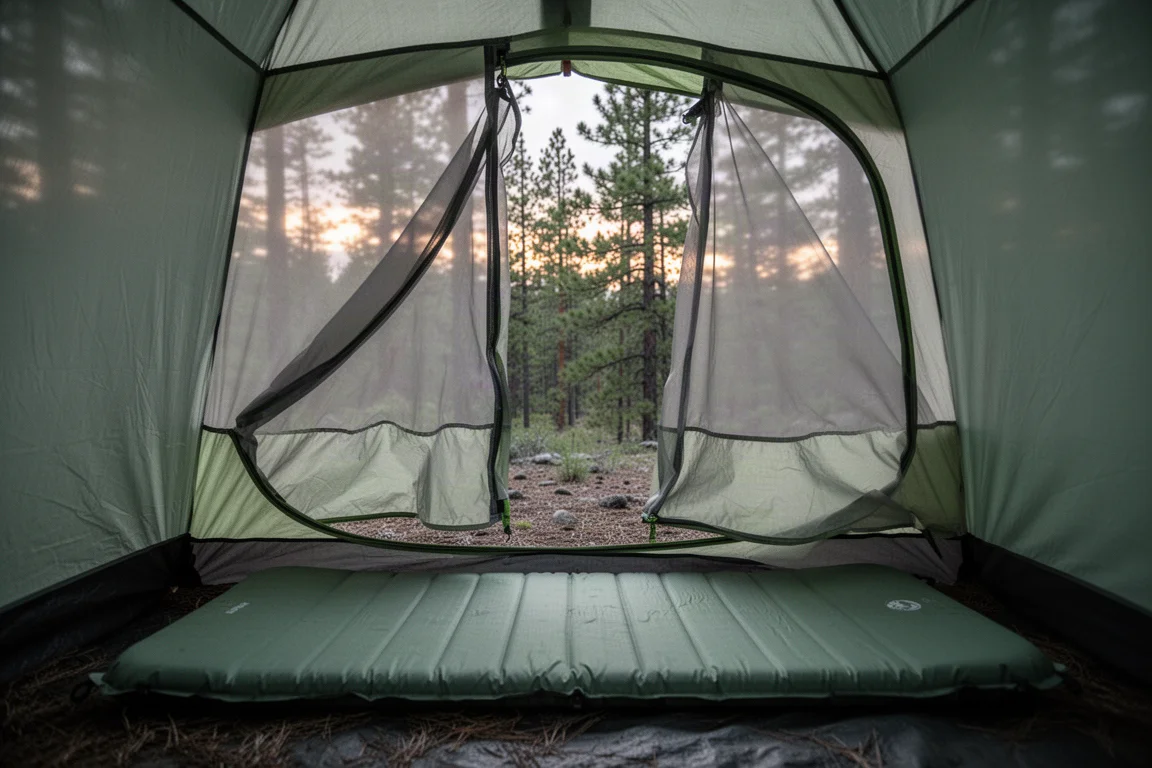
There are two doors and two vestibules, and while the vestibules are not the roomiest available, having a pair of them gives you somewhere to stash gear on either side. Vents at each end include mesh panels that help with airflow and reduce condensation.
Weight and Packability
Weight is the clearest compromise. The complete package, including all stakes, the pole repair sleeve, and the footprint, came in at just over 4 pounds, or 68 ounces on a scale. You can strip weight by leaving the footprint behind and carrying fewer stakes, but it still lands above 3 pounds for a one-person tent. For occasional trips where cost matters more than grams, that is a fair trade.
Featherstone Backbone 2-Person Trekking Pole Tent
Shape and Interior Height
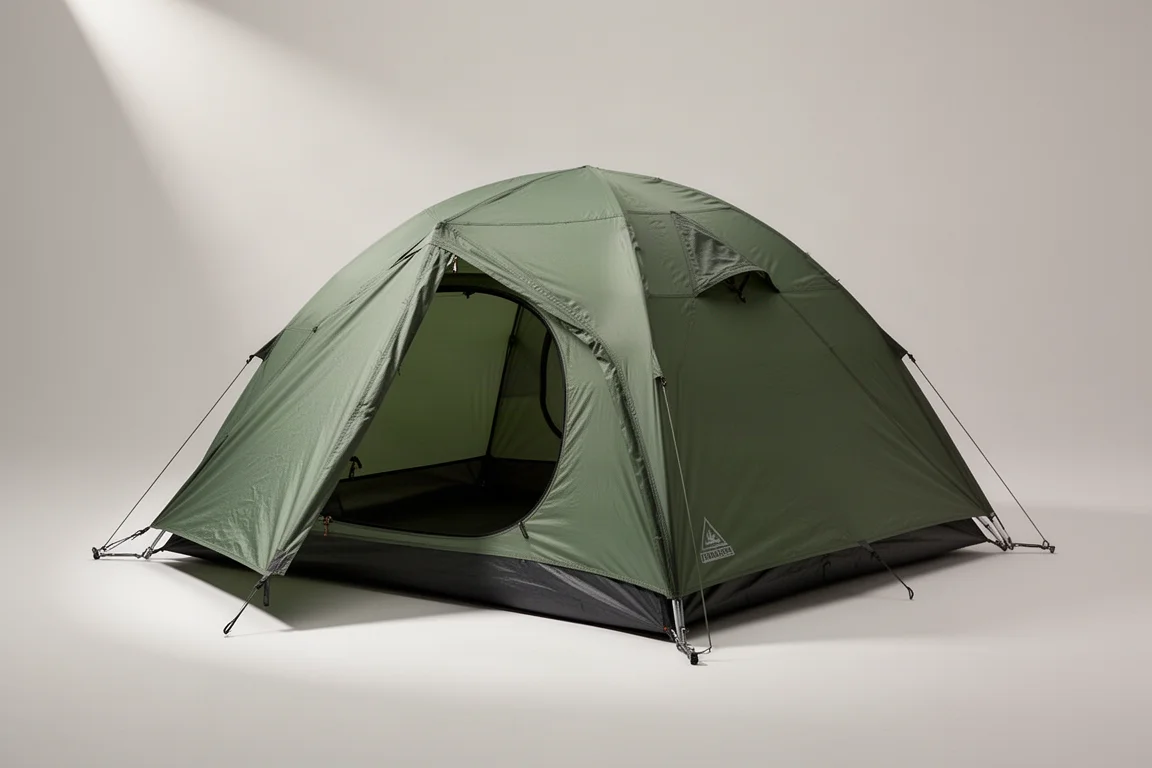
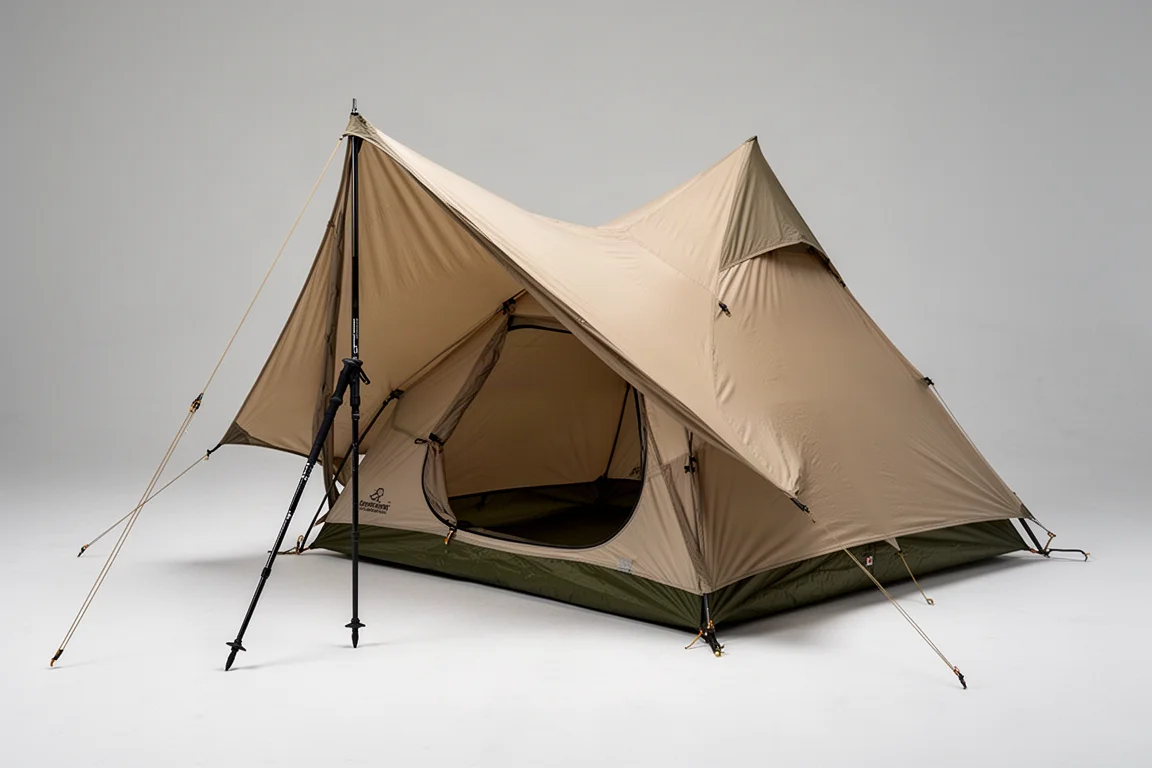
The Backbone uses a 20-denier nylon fly across the entire body as well as the floor. Its shape is the interesting part: the poles sit closer to the head end, so the tent has a dedicated head end and foot end rather than the symmetrical A-frame slope of many trekking pole tents. That offset keeps fabric off your face when you sit up, and it produces a peak height of 47 inches, which is very tall for this style of shelter.
Floor dimensions are 84 inches long, 50 inches at the head end, and 43 inches at the foot end. Two 25-inch wide pads will not fit side by side, but two 20-inch pads will, and for a single camper the interior feels like a one-person palace.
Weather Protection and Ventilation
The fly lifts away from the ground at an angle and is even steeper at the back, which opens up airflow at the head end. Dual peak vents and mesh panels work with that airflow to move moist air up and out. As with any single-wall shelter, the mesh will not do all the work on its own, so site selection and conditions deserve attention.
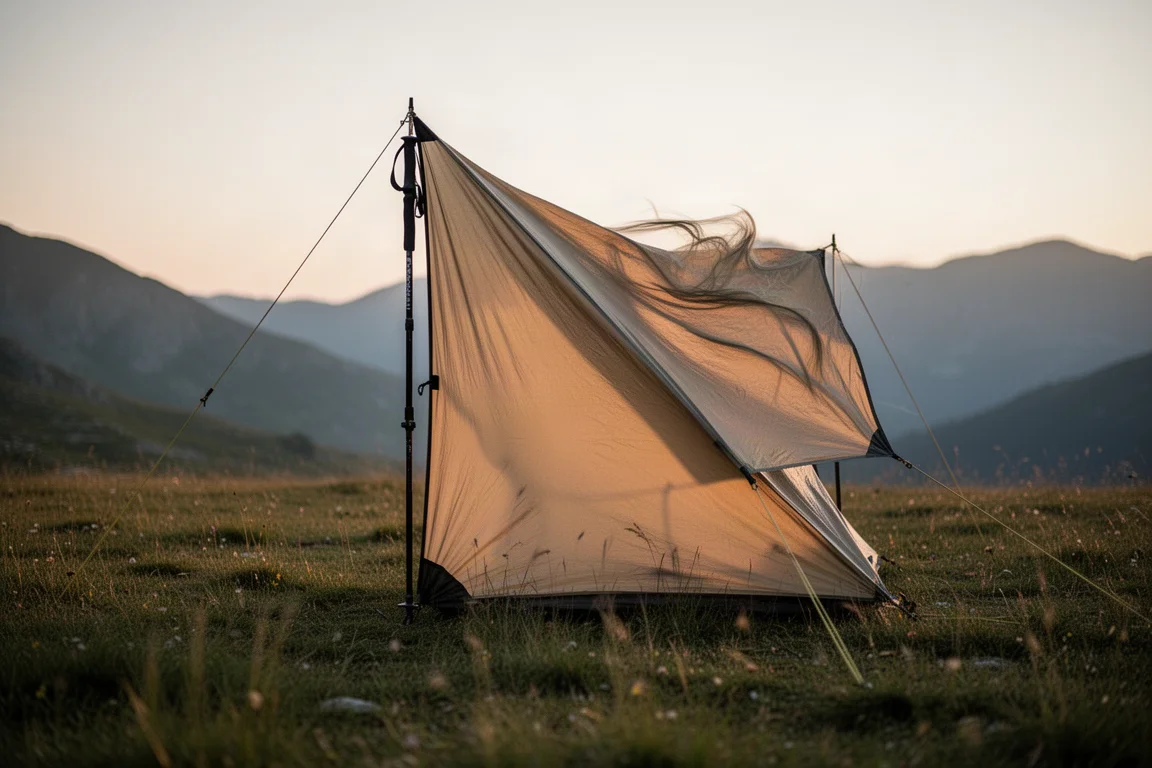
Seams are taped throughout, which is good to see at this price. The trade-off is wind exposure: the large wall panels, particularly at the foot end, can catch a lot of wind, so pitch with the prevailing wind in mind and use the guyline to stabilize the body without over-tensioning it.
Weight and Packed Size
At 3 pounds 2 ounces, the Backbone is heavier than many trekking pole tents, but it is a roomy two-person shelter at a respectable weight for the money.
Inside the Tent
Two doors and two vestibules, with noticeably more vestibule space than the Zion, make it easier to store packs and gear for two people. Large mesh doors, a mesh panel at the head end, big pockets on both sides, and hooks at the top for a clothesline, lantern, or flashlight round out the livability.
Which Budget Backpacking Tent Is Right for You?
Choose the Zion if you want a freestanding tent that pitches quickly without trekking poles, if you value an included footprint and a limited lifetime warranty from a US-based brand, and if you can accept a heavier packed weight. It is a strong fit for occasional trips and for campers who want a shelter that will last many seasons without much fuss.
Choose the Backbone if interior space and headroom matter most, if you already carry trekking poles, and if you are comfortable managing condensation through campsite choice. It gives two people a genuinely comfortable floor plan at under $200.
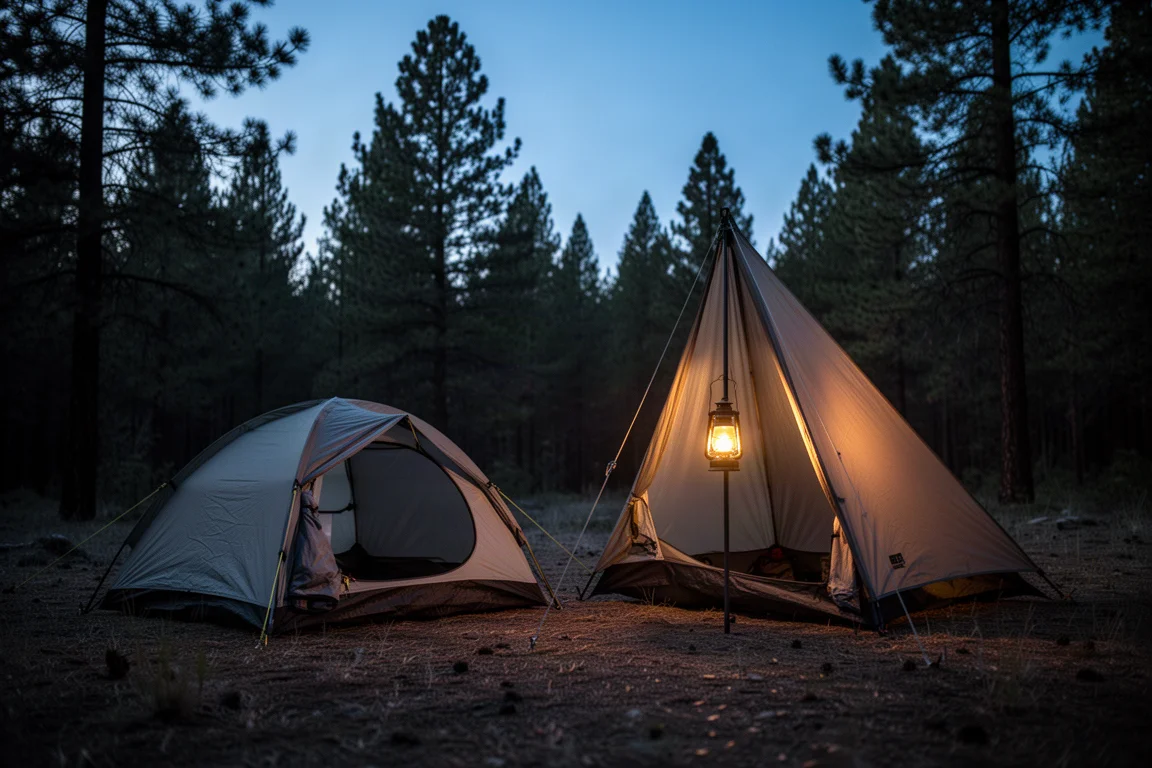
Neither tent is the lightest option in its class, and both ask you to trade weight for price. If saving every gram is the priority, look elsewhere. If you want a dependable shelter for a modest outlay, both of these deliver.
Conclusion
The Paria Outdoor Products Zion 1-Person Tent and the Featherstone Backbone 2-Person Trekking Pole Tent cover two different kinds of budget backpacker. One is freestanding, double walled, and built to shrug off years of use; the other is a tall, spacious trekking pole shelter that makes two-person camping affordable. Pick based on whether you value setup convenience or interior room, and either will serve you well under $200.
Further reading
Related Reviews
Backpacking Tents
3F UL Lanchan Pro 1 Review: A 1 lb 8 oz Single-Wall Trekking Pole Tent
A practical look at the 3F UL Lanchan Pro 1, a single-wall trekking pole shelter with a 1 lb 8 oz weight, 20D silnylon fabrics, and a roomy 90 x 31 x 49 inch interior.
Backpacking Tents
3F UL Taiji 2-Person Tent: A Convertible Backpacking Shelter Worth a Closer Look
A practical look at the 3F UL Taiji two-person tent, covering its materials, true two-person interior, fly-first pitching, and the seasonal inner swap that lets one shelter cover more of the year.
Backpacking Tents
3FUL Lanshan Twoerson Pro Review: A Light Trekking Pole Shelter That Struggled in Rain
A two-person trekking pole shelter with a 2026 redesign, pitched with sticks and put through a night of steady rain. Here is what worked, what did not, and what to check before buying.