Work Boots
Brunt Marin Comp Toe vs DeWalt vs Irish Setter: Wet-Surface Traction Put to the Test
Three months of real jobsite wear plus a wet-concrete traction test reveal a clear split between these three comp toe work boots.
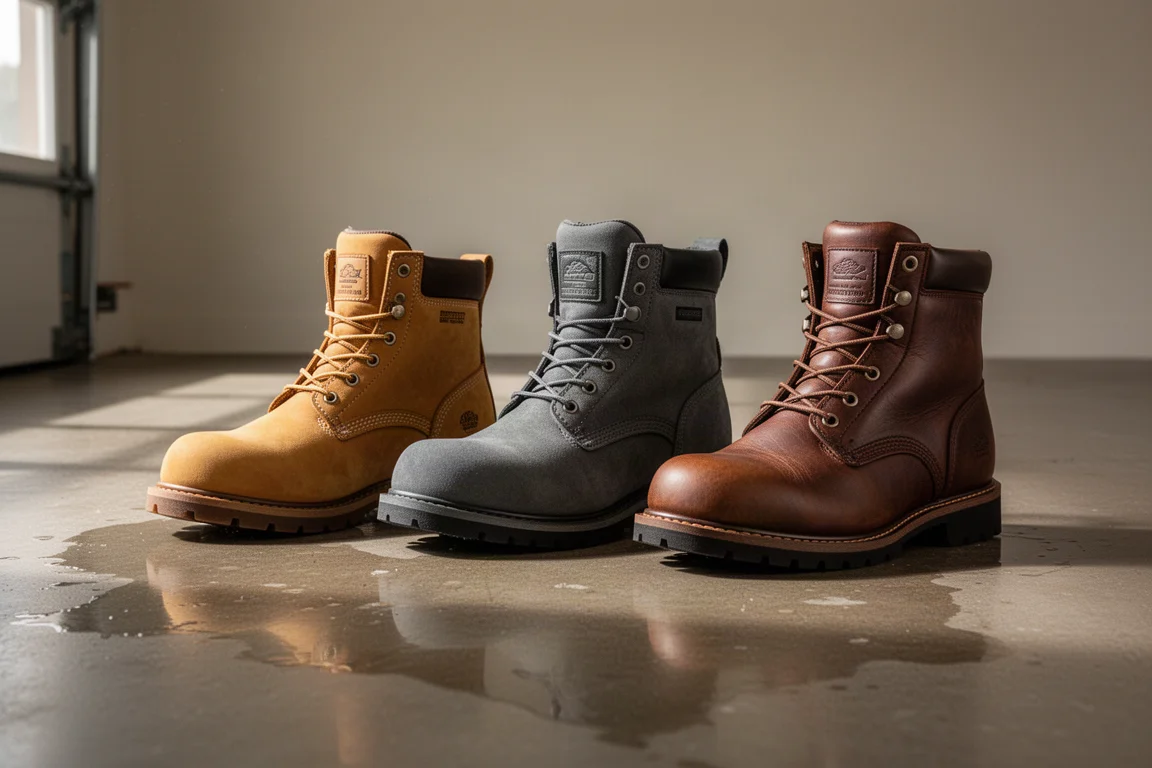
Introduction
Work boots live or die on how they handle the surfaces you actually walk on. For anyone working in a rainy climate, that means wet curbs, wet trailer steps, and puddled concrete, and slip resistance stops being a nice-to-have. After roughly three to four months of daily wear, one of these three boots earned a clear recommendation, one impressed despite a bargain price, and one fell short in a way that matters for specific types of work.
Why Wet-Weather Grip Matters
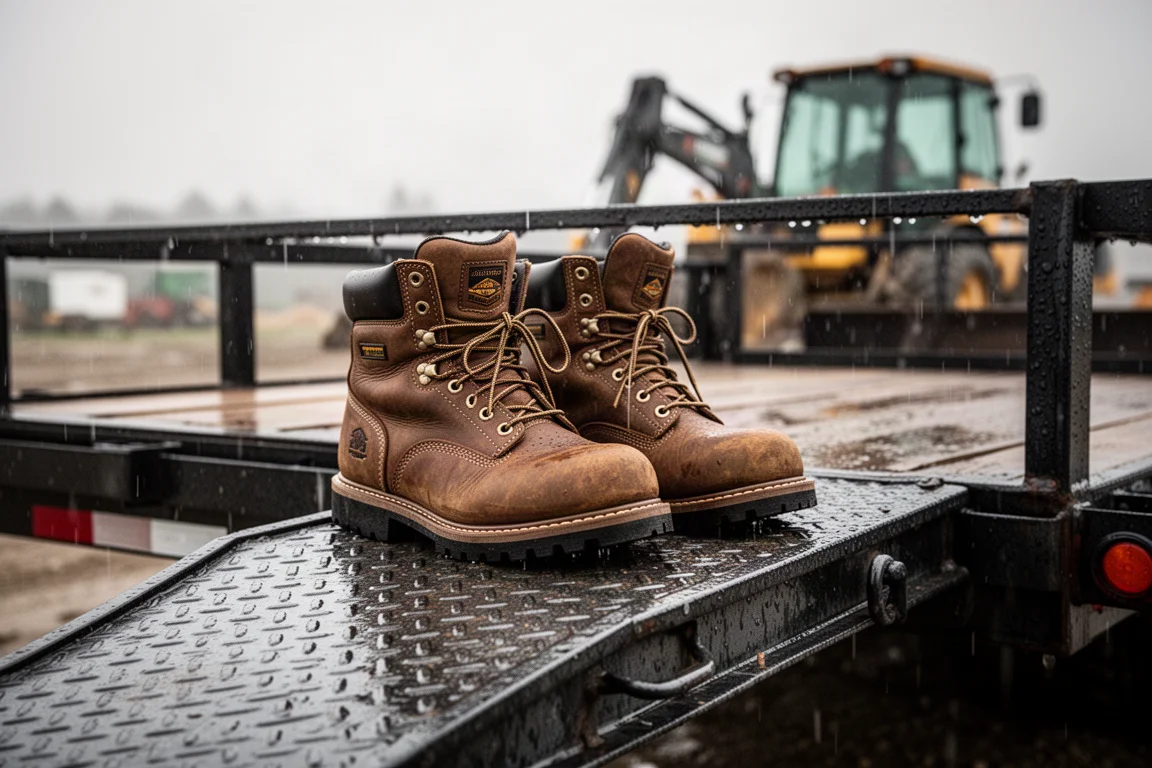
Carrying tools and equipment across a wet trailer gate or stepping down onto rain-soaked curbs is exactly when you need your soles to grab. Any boot that slides in those moments is a safety liability, regardless of how well it is built otherwise. That is the lens for this comparison: durability, build quality, and price all count, but wet traction is the deciding factor.
What the Wear Test Showed
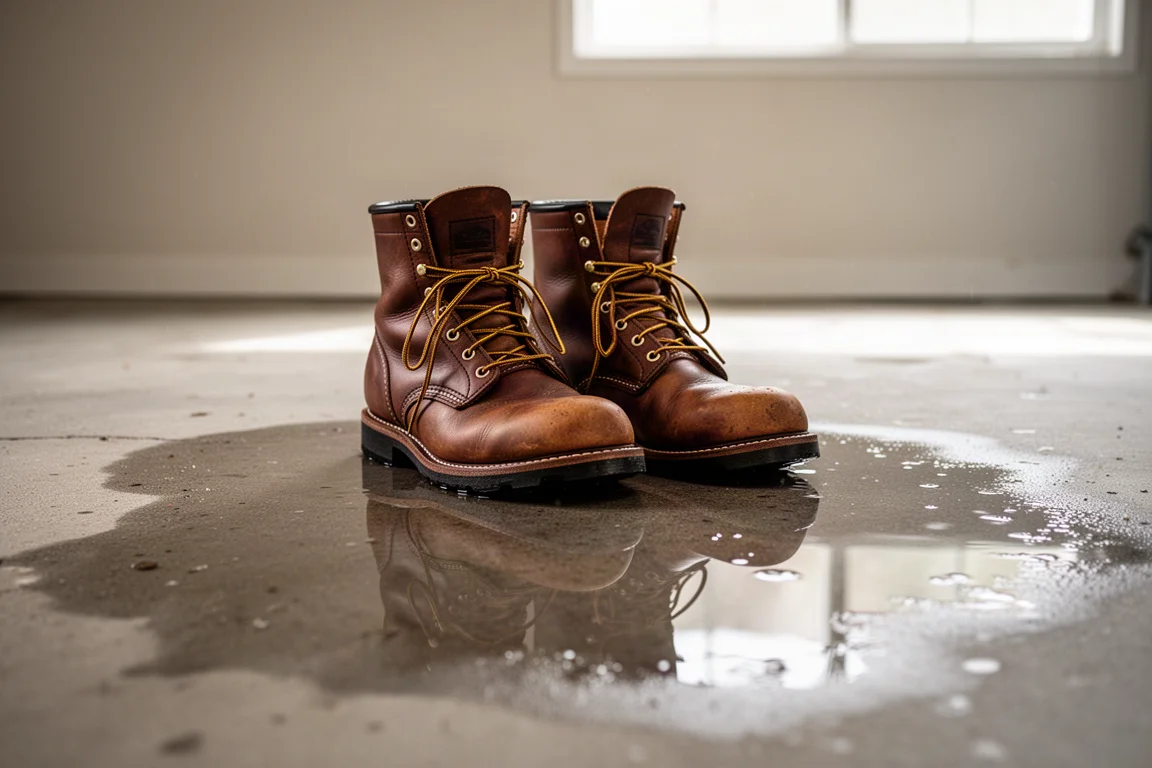
The Brunt Marin comp toe boots held up impressively over three to four months of regular use. They were worn constantly through grass, dirt, debris, and general jobsite abuse, and the uppers show only light wear. The tread has not worn down significantly, and the overall construction took the punishment well. On build quality alone, these are genuinely solid boots.
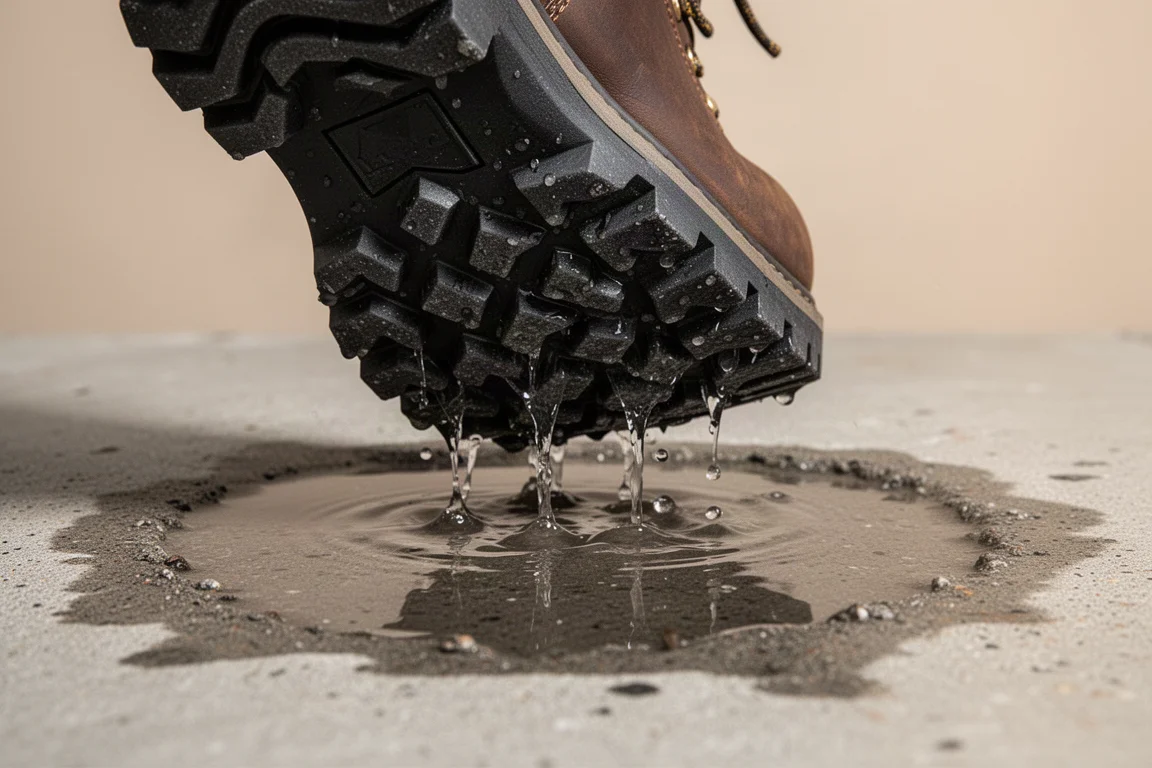
The weakness is not wear. It is what the soles were never designed to do. Nothing on the Brunt Marin advertises slip or oil resistance, and in practice that absence is very noticeable. Multiple slips occurred on wet curbs and on a wet trailer gate while carrying tools. For a boot in the $150 range, the lack of any anti-slip feature is hard to overlook.
Traction Test Results on Wet Concrete
To put the difference in plain terms, all three boots were pushed across the same wet concrete surface, simulating Florida rainfall conditions.
The DeWalt boots barely moved at all, showing strong, confidence-inspiring grip. These were bought on sale for less than half the price of the Brunt boots, and their traction on wet surfaces has consistently been excellent in everyday use, including regular trips up and down a wet trailer gate.
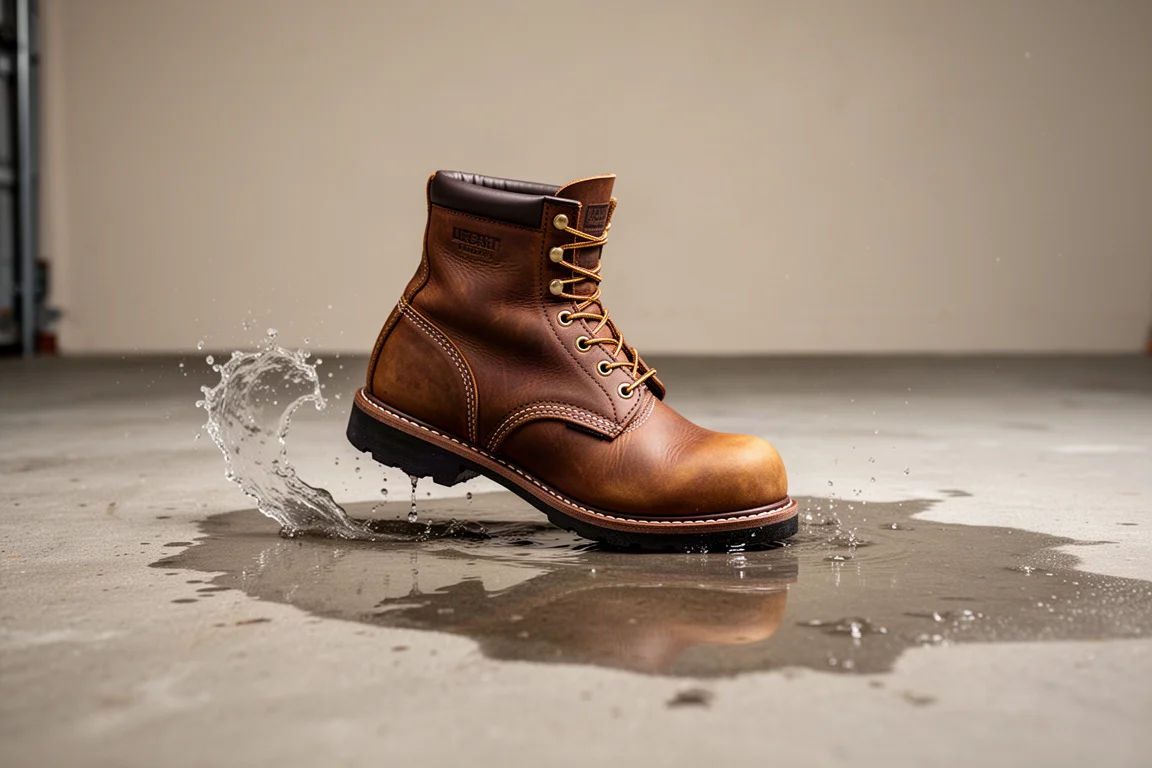
The Irish Setter boots also performed well, gripping the wet surface with very little movement and inspiring real confidence. The Brunt Marins, by contrast, slid almost effortlessly across the puddle, behaving more like they were on ice. The difference was not subtle. Pushing down on them produced almost no friction at all.
Which Boots Make Sense for Your Work
If your work takes you onto wet metal steps, wet curbs, or rain-soaked pavement, the DeWalt and Irish Setter boots are the safer picks here. Both held their ground convincingly in the wet-surface test, and the DeWalt boots in particular deliver that grip at a very accessible price point.
The Brunt Marin comp toe boots remain a reasonable option if your work rarely involves wet or slippery surfaces. The construction is durable, the comfort is fine for lawn mowing and dry-weather tasks, and if you do not need slip resistance, they may serve you well. But for anyone hauling equipment on damp days, they are not the boot for the job.
Conclusion
Good work boots need to hold up in the conditions you actually face. The DeWalt boots prove you do not need to spend big money for dependable wet-surface traction, the Irish Setters offer solid grip with a more premium leather feel, and the Brunt Marins show that strong build quality cannot compensate for a missing safety feature. Match the boot to your worksite conditions, and slip resistance should sit near the top of the checklist.
Product link
View more details for Brunt Marin Comp Toe Work Boots
This product is mentioned in the review. Check the specifications, options, and compatibility before buying.
View more details for Brunt Marin Comp Toe Work BootsFurther reading
Related Reviews
Work Boots
Keen Cincinnati vs Liberty: Which Wide Toe Box Work Boot Wins?
A detailed comparison of two popular Keen work boots reveals significant differences in construction, materials, and durability despite similar positioning.
Work Boots
12 Steel Toe Work Boots Tested: Budget Pair Against Nearly $300 Flagships
Twelve work boots go through traction, puncture, toe crush, heat, and electrical hazard testing, plus a half-mile comfort walk. The results are not what the price tags suggest.
Work Boots
Best Work Boots 2026: Our Top Picks for Comfort, Safety, and Value
Six work boots that stood out in testing, from a waterproof pick to a budget favorite and a three-time best overall winner.