Trail Running
Brooks Trail Running Shoes 2026: Cascadia Elite and Cascadia Compared
Two new Brooks trail shoes for 2026: a pinnacle trail racing shoe with Vibram Mega Grip Elite, and the long-running Cascadia updated with more cushion and Trail Adapt technology.
Introduction
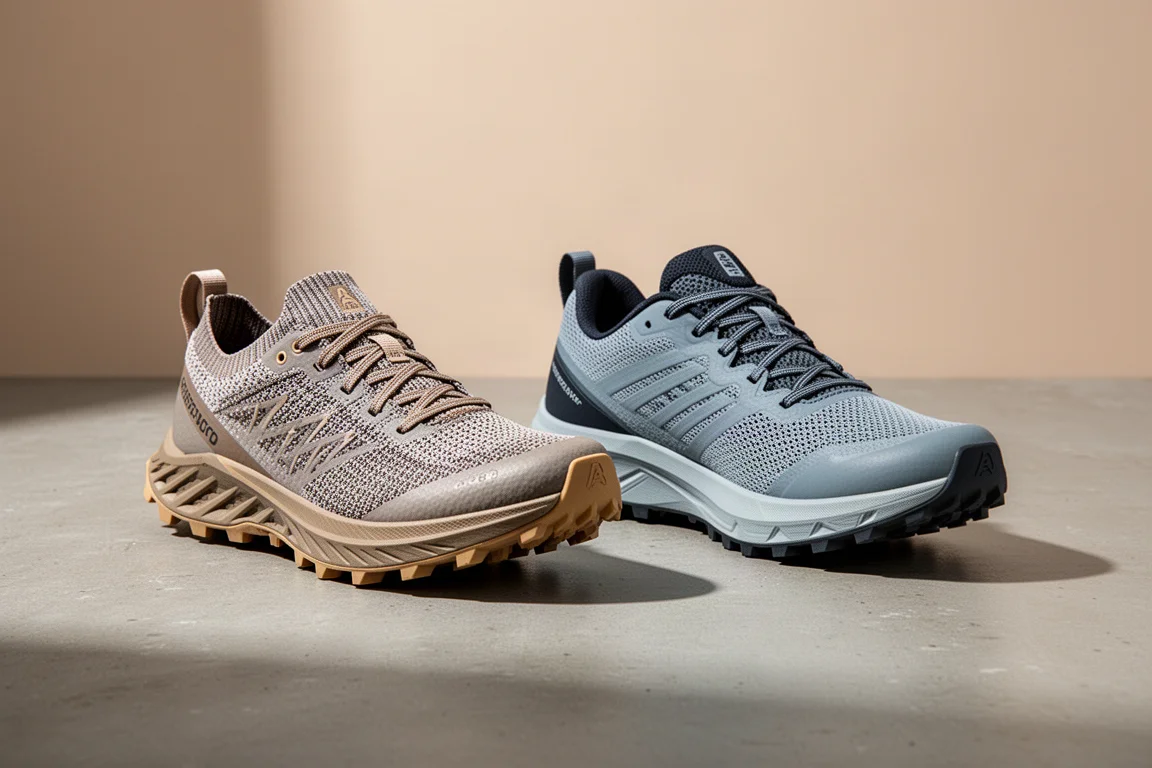
Brooks is taking trail running seriously for 2026, and two of the clearest signals are a brand-new pinnacle racing shoe and a fresh evolution of one of the longest-running trail franchises on the market. The Cascadia Elite arrives as a purpose-built long-distance trail racing shoe, while the standard Cascadia continues its 20-year run with more cushion and updated tech. Together, they cover two very different kinds of trail runners, and both earn a closer look.
The New Brooks Trail Lineup
Brooks has been reshaping how it thinks about off-road running, splitting its lineup into clear buckets: established road models, and a growing road-to-trail space for groomed gravel and easy non-technical trails. The idea is simple: many newer runners want to spend time in nature, but technical trails with rocks and steep descents can feel intimidating. An accessible entry point matters, and so does a serious race-day weapon for the athletes at the other end of the spectrum.
That philosophy shows up in how Brooks talks about trail difficulty, borrowing a ski-resort style of green, blue, and black diamond ratings to describe slope, trail width, and the mechanics a shoe needs to handle. The two shoes below sit at very different points on that scale.

Brooks Cascadia Elite: Built for Race Day
The Cascadia Elite was created with one clear goal: a pinnacle long-distance trail racing shoe that Brooks’ roughly 55 global trail athletes, from 11 different countries, can grab on race day. Developed closely with athletes through training camps and races, the design brief was blunt: the shoe should never be something the runner has to think about mid-race.
The technology stack reflects that. It uses DNA Gold, a 100% PEBA foam described as the lightest, softest, and most responsive cushioning Brooks offers, the same foam found in the Hyperion Elite road racing line. It is designed to reduce the pounding of long downhill stretches in major ultras.
Instead of a traditional one-to-one plate, which does not work the same way on trails, the shoe carries a SpeedVault+ trail plate. It is a carbon-infused, horseshoe-shaped plate that runs around the rim of the shoe, delivering propulsion and transition stiffness while still flexing enough for uphills and uneven terrain.
Traction comes from a new partnership with Vibram and the Mega Grip Elite compound, one of only two shoes on the market currently using it. The multi-surface directional lugs measure exactly 3.75mm, a height chosen to stick well in soft terrain while still riding smoothly on hard-packed surfaces. Despite the aggressive rubber, wear testing has returned shoes at 300 to 400 miles with minimal to no wear.
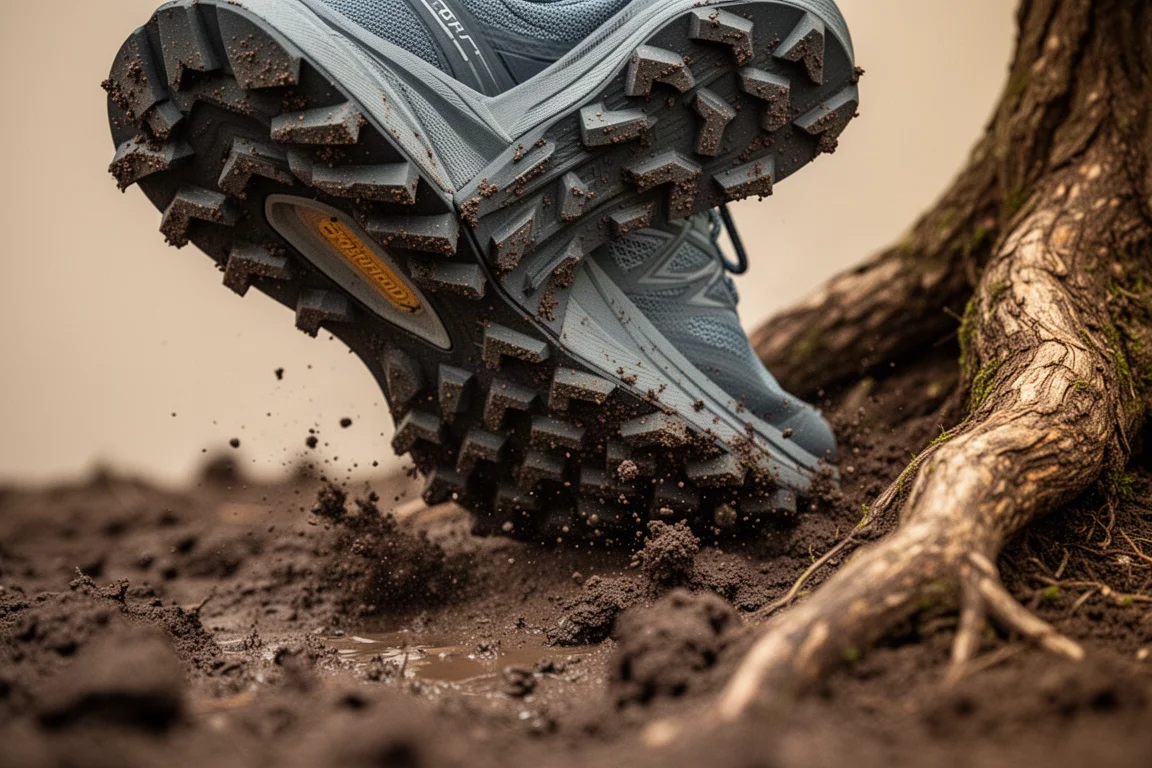
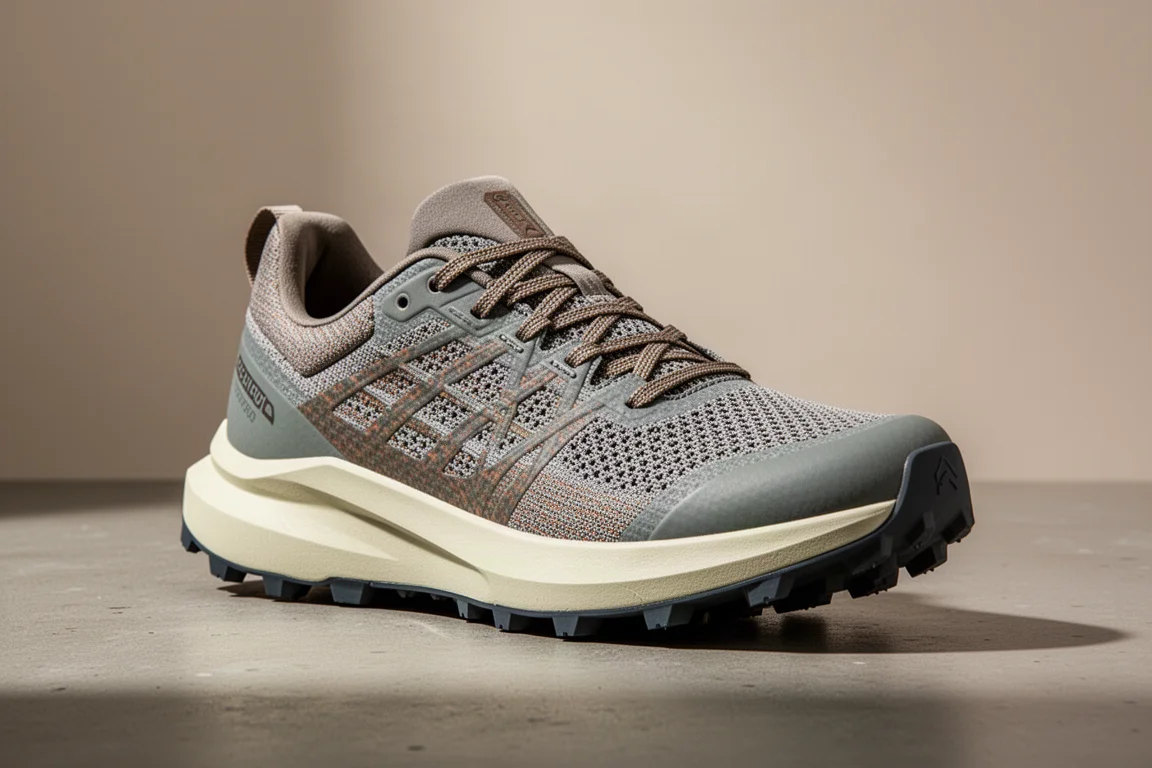
The Matrix upper pairs PU-coated yarns, which feel silky against the foot, flex easily, and drain well through stream crossings, with Kevlar yarns that lock the foot securely in place. An offset Achilles seam avoids rubbing, and the sawtooth laces stay tied, can be tucked in, and work with a knit collar and integrated bootie for a fit that feels part of the body.
Brooks Cascadia: The Workhorse Evolves
The Cascadia has been around for roughly 20 years and remains one of the longest-running trail shoes on the market, and the 2026 update stays true to its core idea: trails are random, so the shoe should adapt to anywhere you want to go. Loose rock, hard rock, sharp, smooth, and everything in between are all part of the workhorse training brief.
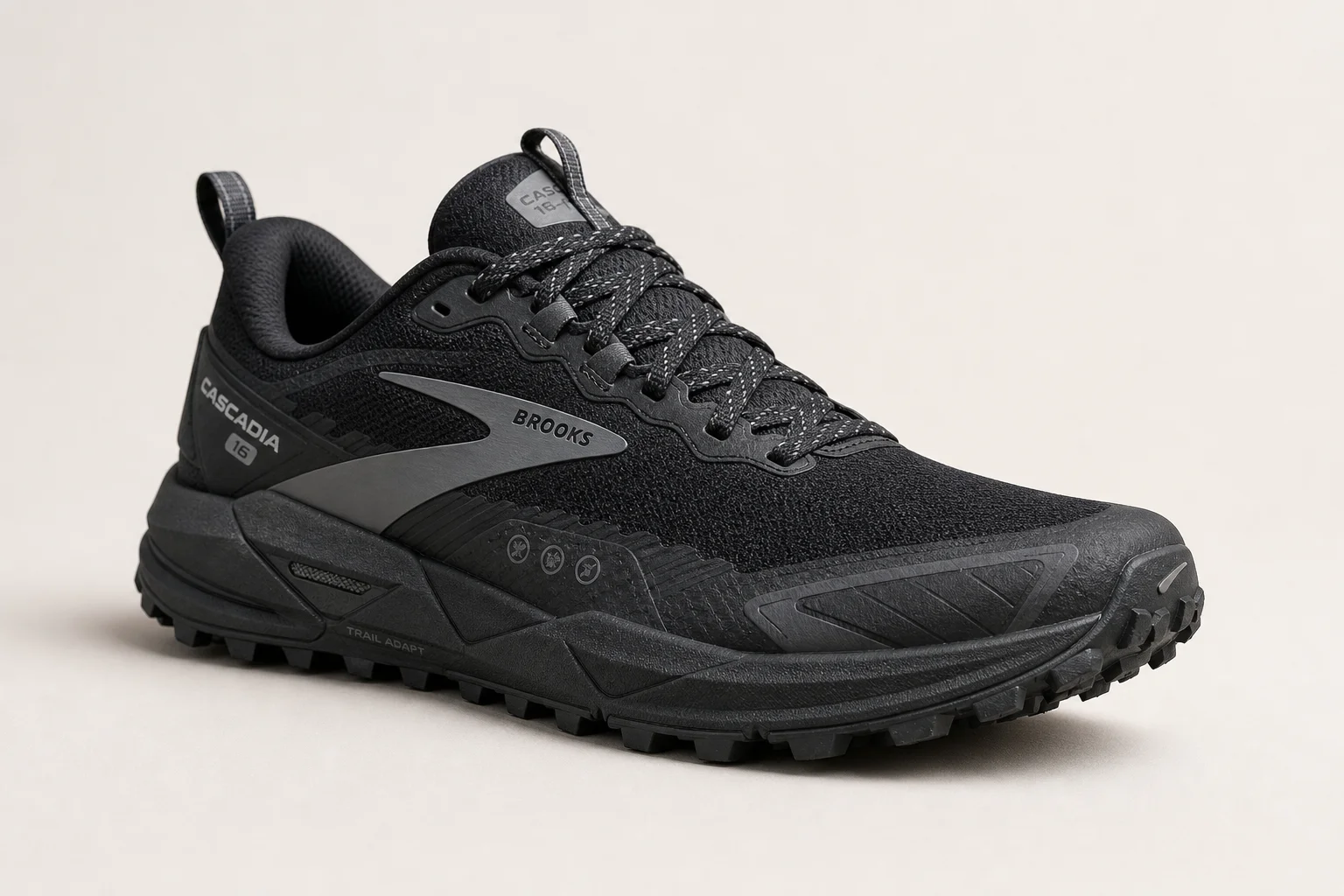
The key technology is Trail Adapt, first introduced in the Cascadia 19 and now evolved. It combines strategic geometry, flexible grooves, and multidirectional lugs to adapt to changing terrain, with flex grooves around the shoe compressing and adapting like independent suspension over rocks for a smooth, safe, stable ride.

The foam gets a genuine upgrade: moving from DNA Loft v3 on the Cascadia 19 to Flash v2, which is lighter, softer, and more responsive, with 4mm of extra cushion underfoot. Total weight stays relatively similar to the previous version. The outsole remains Vibram Mega Grip, and the upper is a double jacquard engineered mesh focused on breathability, debris resistance, and comfort.
Specs of note: the stack is 38/32 on a 6mm drop, fairly typical for a modern trail shoe. The price is $160, a $10 increase over the last version, justified by the Vibram outsole and better foam. It releases in fall 2026.
Which One Should You Buy?
The Cascadia Elite is the race-day tool: PEBA foam, a carbon-infused trail plate, Vibram Mega Grip Elite, and an ultra-strong Matrix upper with Kevlar yarns, priced at $275 and releasing March 1, 2026. It is for runners toeing the line at ultras and big mountain races who want cushioning for long descents, traction on every surface, and a shoe that simply disappears on the run.
The standard Cascadia is the everyday workhorse: adaptive Trail Adapt technology, a lighter and softer foam with 4mm more cushion, Vibram Mega Grip, and a comfortable double jacquard mesh upper, priced at $160 with a fall 2026 release. It is for runners who want one dependable shoe for the whole mix of terrain they might meet on a training week, without paying racing-shoe money.

Worth noting: Brooks has merged the Cascadia and Caldera lines into this single shoe, which is part of why the cushion went up. If you liked either of those models, this is the one to watch.
Conclusion
Brooks’ 2026 trail push covers both ends of the spectrum convincingly. The Cascadia Elite brings genuine race-day technology, PEBA foam, a purpose-designed trail plate, and Vibram’s best rubber compound, to the mountain race scene. The updated Cascadia keeps doing what it has done for two decades, now with more cushion and lighter foam. Choose the Elite when a finish-line position is on the line, and the Cascadia when you just want to go run on whatever the trail throws at you.
Further reading
Related Reviews
Trail Running
How to Choose Trail Running Shoes: A Guide to Shoe Type, Cushioning, and Drop
Learn the three most important factors when selecting trail running shoes: shoe type, cushioning level, and heel-to-toe drop.
Trail Running
Trail Running Poles: A Complete Guide to Technique, Fit, and Use
Learn why trail running poles redistribute workload, how to choose the right length and strap system, and master three essential climbing techniques for longer races.
Trail Running
Arc of Attrition Kit List: The Gear Worth Packing for a Winter Ultra
A practical look at the shoes, waterproofs, lighting, race vest and poles lined up for a brutal 100-mile winter coastal ultra, and why each piece earned its place.