Running Shoes
Brooks Hyperion Elite 5 First Run Review: A Balanced, Accessible Carbon Racer
The Hyperion Elite 5 is built entirely around Brooks' DNA Gold foam, with more bounce than the Elite 4 PB and a naturally balanced ride that suits 5K to 10K racing.
Introduction
The Brooks Hyperion Elite 5 arrives as the successor to both the Hyperion Elite 4 and the Hyperion Elite 4 PB, and it represents a small but meaningful shift in how Brooks builds its flagship racer. With the previous generation, Brooks released two versions: one with a nitrogen-infused EVA midsole, and the Elite 4 PB with a newer PEBA-based foam called DNA Gold that made it lighter, better, and faster all round. The Hyperion Elite 5 is now a carbon plate racing shoe modeled entirely around that DNA Gold foam, and the early signs are that it is the best Brooks racer yet.
The price has moved up slightly compared to the previous models: it now sits at $275, versus $250 before. UK pricing has not been confirmed, and Brooks has not always been consistent here, with some models priced lower in the UK and others the same or even higher. As with any carbon plate shoe, it is worth checking your local pricing before committing.
Design and Key Specs
Brooks says the Hyperion Elite 5 is a little lighter than the Elite 4 PB, weighing just under 200 g in a men’s US size 9. On the scales, a US size 10 pair came in slightly unevenly at 203 g and 212 g, which works out to roughly 7.2 to 7.5 oz. That is very lightweight, though not quite at the level of the very lightest shoes on the market such as the Puma Fast R3 or the ASICS Meta Speed series.
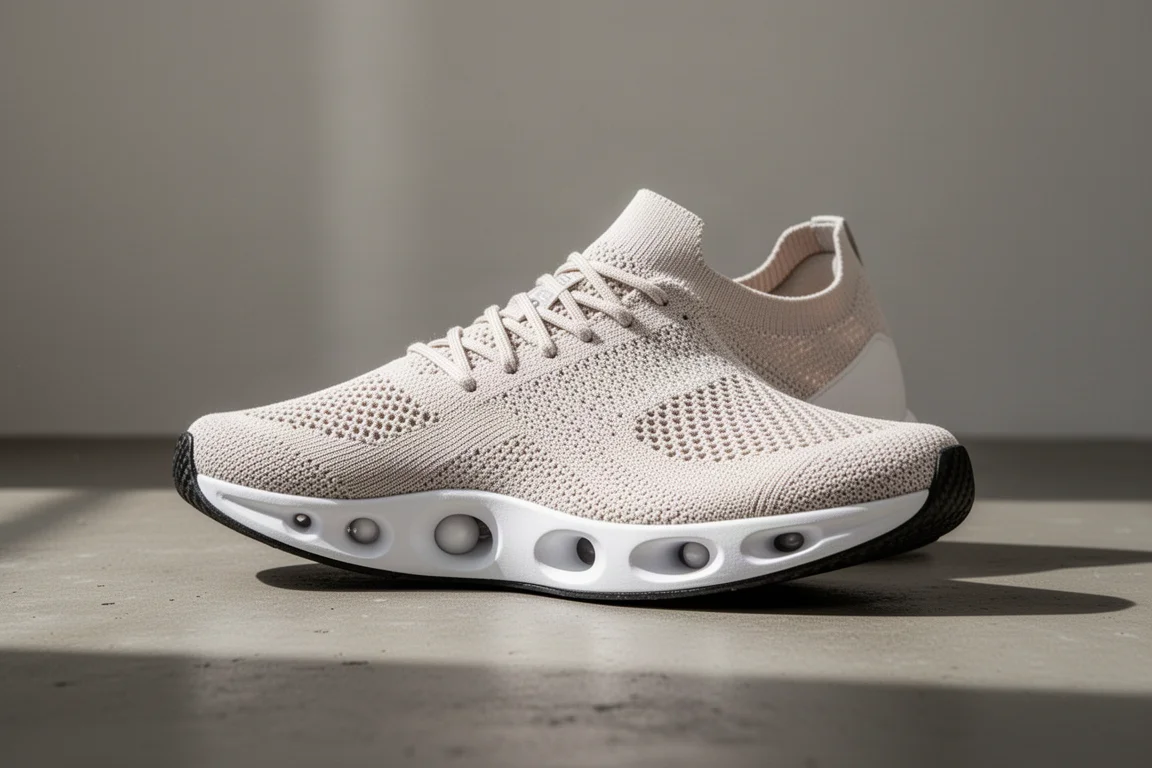
The geometry stays familiar: an 8 mm drop with a 40 mm stack height at the heel and 32 mm at the forefoot, sticking to the World Athletics limit. The midsole is full DNA Gold with a carbon plate running through it, and Brooks says the plate is optimized for each size in the range rather than simply scaled up or down. The most distinctive feature is the unusual geometry around the midfoot, where small spherical cutouts sit on either side. These reduce overall weight while still providing foam to push against for a bit of structure and stability. There is also a small foam sidewall on the medial side, a deliberate step to address the narrow pinch point that often causes stability problems in carbon plate shoes.
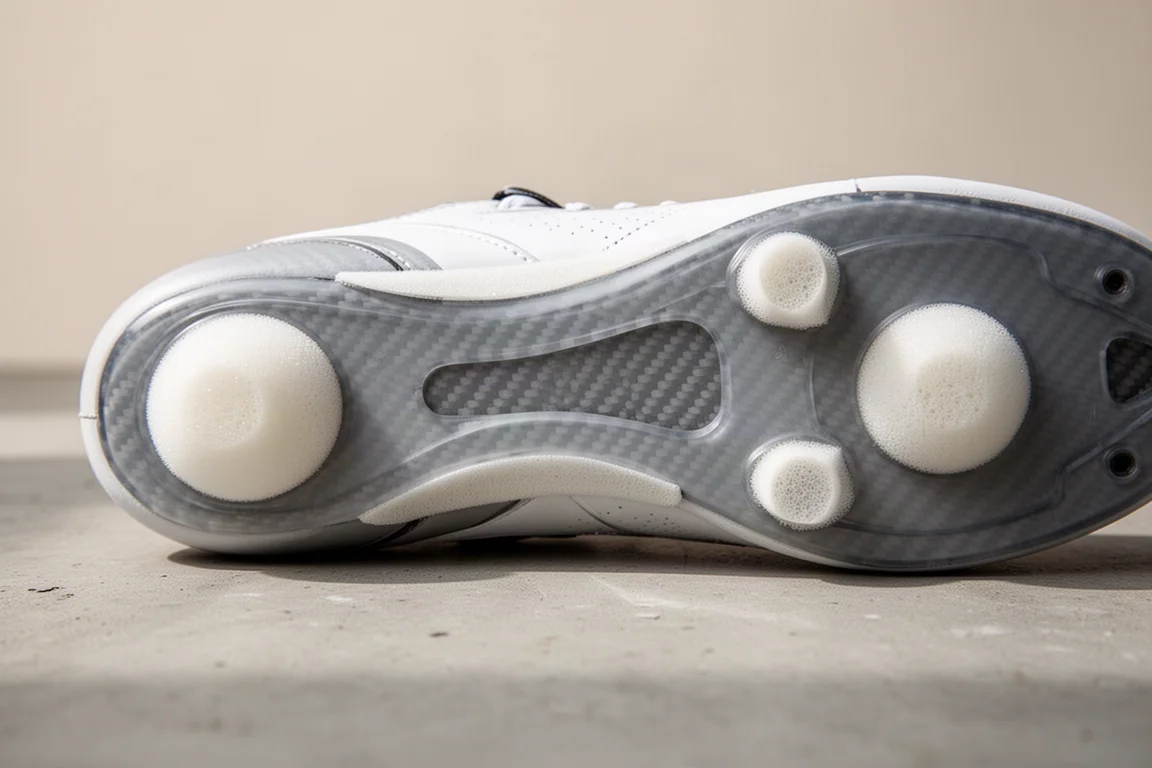
The outsole is a very thin rubber compound called Speed Tack at just 1.5 mm thick. Brooks says this frees up space for more bouncy PEBA foam in the midsole while keeping the 40 mm stack limit, though it may not be as durable as thicker outsole materials used in the past. The upper is a new flat knit TPU-coated yarn that is notably open at the front for breathability, with a little padding on the tongue and a strip of padding around the heel. There is no real heel counter for structure; it is a pure lightweight racing upper. One odd point: the upper material carries no visible brand marking, so it is not clear who actually manufactured it.
Fit and Sizing
The fit is roomy by racing shoe standards. In a UK size 8, there is clearly more space in front of the big toe and through the forefoot than in most race shoes, which tend to be leaner on the foot. Brooks generally makes slightly more accommodating shoes than some rival brands, and this is no exception. Runners between sizes may want to go down half a size, though staying true to your normal size worked well: lockdown was secure, the heel held firm, and the slightly stretchy upper adds flexibility around the forefoot to keep toes comfortable.
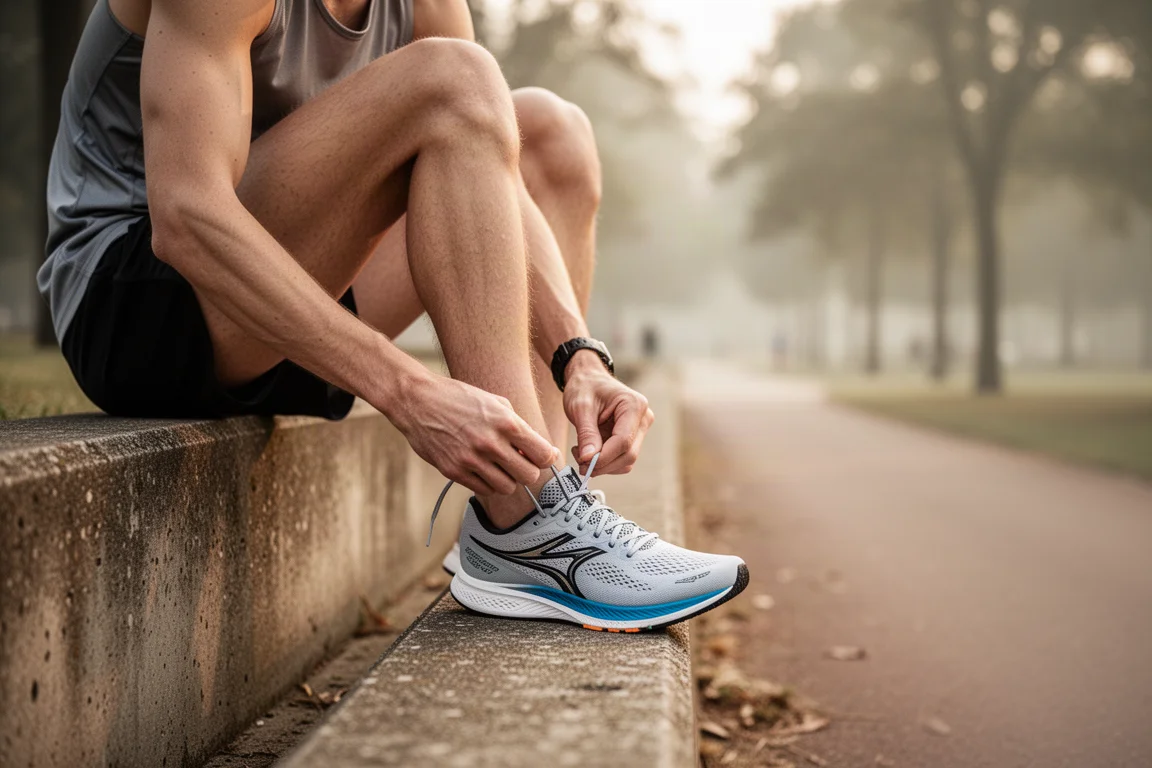
The heel area does carry a thick padded band at the back, and it is even thicker than on the previous model. On a first run it caused no problems, but anyone with sensitivity around the Achilles may want to be aware of it, as padded heel bands like this can occasionally rub. Length-wise, the fit matches the Hyperion Elite 4 and 4 PB closely, so if those shoes worked for you, your usual Brooks size should carry over.
Ride Impressions From the First Sessions
The first run was a parkrun at close to maximum effort, and the shoe delivered. It feels fast and responsive with a genuine sense of bounce, but it is not an aggressive super shoe in the way something like the Hoka Cielo X1 2.0 is. There is no pronounced rocker or sensation of the plate forcing you forward. Instead it feels natural, balanced, and quick, which makes it a more accessible super shoe for a lot of runners.
A structured fartlek session of 10 times 2 minutes on, 1 minute off reinforced that impression. Reps came out in a controlled group around 3:14 to 3:19 pace, and the shoe felt poppy, light, and springy throughout. Compared directly against the Hyperion Elite 4 PB, worn one on each foot, the Elite 5 offered a little more bounce and punch, and the extra PEBA foam in the midsole is noticeable. The geometry also seems tweaked to exaggerate the bouncy feel.

One trade-off: the shoe feels slightly less stable than the Elite 4 PB, because the spherical cutouts leave a bit more of a void at the midfoot. This shows up when rounding corners at speed, though it is far from being a crazy unstable shoe. It is also worth noting that later in a race the bounce factor fades somewhat, so runners who want sustained late-race pop may prefer something more aggressive. Durability so far looks excellent, with no signs of the thin outsole rubber peeling away, and the shoe drew compliments from other runners for its looks.
Who This Shoe Is For
Based on early testing, the Hyperion Elite 5 sits firmly in the 5K to 10K bracket. It feels great at 5K, handles 10K pace comfortably, and should be absolutely fine for a half marathon. A marathon is harder to recommend based on the shorter-distance experience, as it lacks the aggressive, tipped-forward feel and sustained bounce some runners want over long distances, though longer testing may change that view.
If you want a super shoe that sits in the middle ground, neither ultra-soft like the Saucony Endorphin Elite 2 nor aggressively rocker-biased, this is a compelling option. It is comfortable, responsive, and genuinely fast.
Buying Advice
The DNA Gold foam is the key to everything good here. It is livelier, bouncier, and lighter than the nitrogen-infused materials Brooks used previously, and it is arguably the best-balanced foam in the current racing range: a bit more squish than Puma’s Nitro Elite-style TPU foams, more response than most, and a natural roll through the stride. The Hyperion Elite 5 is a slight but real progression over the Elite 4 PB, placing Brooks firmly in the upper echelon of carbon plate racing shoes, competing in spirit with the ASICS Meta Speed series and the Puma Fast R3.
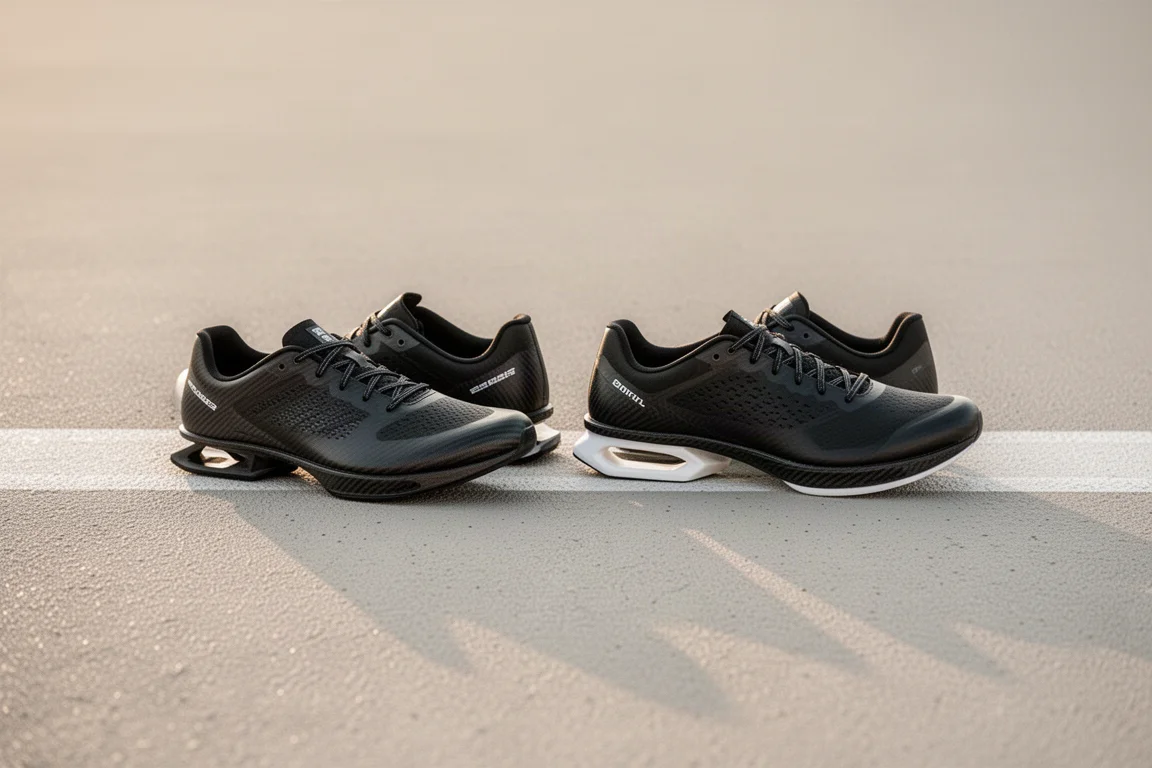
For buyers, the decision is simple. If you race mostly 5K and 10K and want a natural, comfortable, fast shoe rather than an aggressive one, the Hyperion Elite 5 is an excellent choice at $275. Stay with your normal size unless you like a very snug fit, and check your local pricing if you are outside the US.
Conclusion
The Brooks Hyperion Elite 5 is a solid, well-rounded carbon plate racer and a genuine step forward from the Elite 4 PB, thanks almost entirely to the excellent DNA Gold midsole. It will not suit runners chasing maximum aggression or late-race bounce, but for short-distance racing it is fast, comfortable, and remarkably easy to run in. As a first impression, this is one of the more likeable super shoes on the market right now.
Product link
View more details for Brooks Hyperion Elite 5
This product is mentioned in the review. Check the specifications, options, and compatibility before buying.
View more details for Brooks Hyperion Elite 5Further reading
Related Reviews

Running Shoes
Best Road-to-Trail Running Shoes: Three Versatile Options for Mixed Terrain
A practical guide to three road-to-trail running shoes that handle both pavement and mild trails, with clear strengths and trade-offs for different runner types.

Running Shoes
Best Running Shoes for Achilles Tendonitis: Three Options Explained
Three running shoes with different heel drops and support features designed to help reduce Achilles tendon pain during walking and running.

Running Shoes
Best Running Shoes for Women: Five Top Choices Ranked
A ranked guide to five women's running shoes, from versatile daily trainers to high-performance racing options, with real strengths and trade-offs for each.