Running Shoes
Brooks Glycerin Lineup Explained: Glycerin 23, GTS 23, Max 2 and Flex
Four shoes, one name. A practical breakdown of the Brooks Glycerin family to help you pick between the premium neutral trainer, the GTS stability variant, the super max stack and the flexible new option.
Introduction
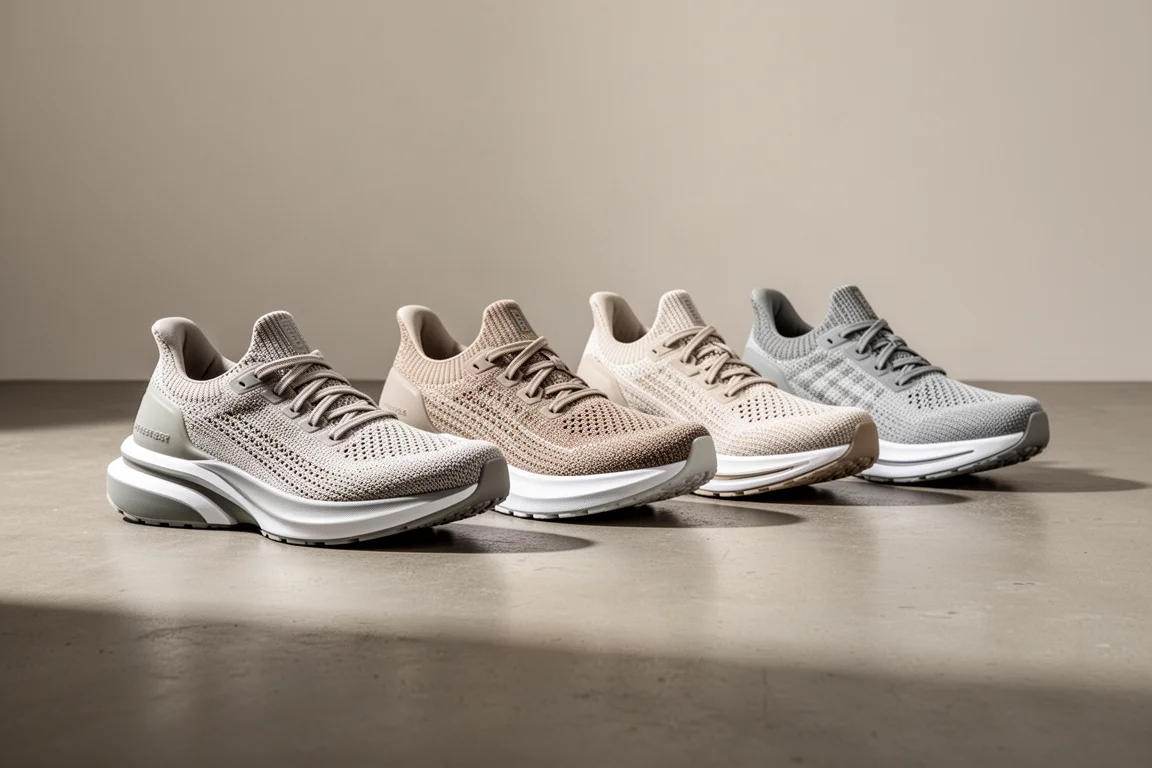
Shoe brands keep releasing families of models with very similar names but very different intentions, and Brooks’ Glycerin line is a textbook example. What used to be a single premium neutral trainer has grown into four distinct shoes: the Glycerin 23, the Glycerin GTS 23, the Glycerin Max 2 and the Glycerin Flex. Picking the wrong one is easy, so this guide breaks down what each model is actually built for.
The Glycerin Family at a Glance
Traditionally, the Glycerin has been Brooks’ premium neutral daily trainer, sitting above the flagship Ghost. The Ghost uses DNA Loft in its midsole, while every shoe in the current Glycerin lineup uses DNA Tuned, a foam tuned to be softer in the heel and a little more responsive in the forefoot. In practice, the Glycerin 23 is essentially a plusher, more premium version of the Ghost, with a softer heel, a bouncier forefoot and an upper that is more airy and spacious, since the Ghost runs a slightly lower volume.
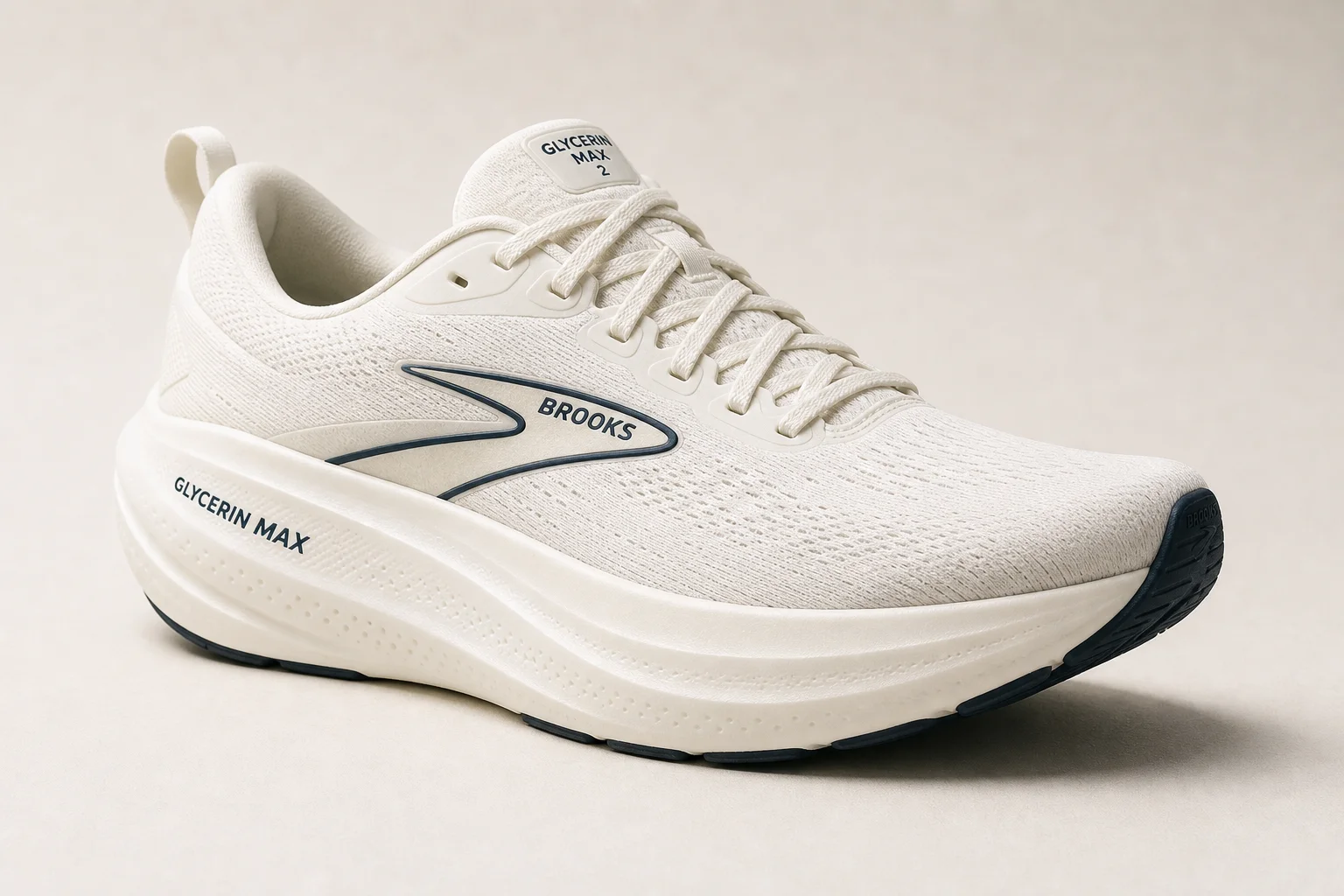
All four shoes share the DNA Tuned midsole, but they diverge sharply in stack height, stability and flexibility. The Glycerin 23 delivers a 39 mm heel, 31 mm forefoot (8 mm drop) at around 10.6 oz. The GTS 23 adds guide rails for stability at roughly 11 oz. The Max 2 climbs to 47 mm heel and 41 mm forefoot with a pronounced rocker, while the Flex sits at 38 mm heel and 32 mm forefoot with a podular outsole that frees up the platform. Here’s how each one behaves in practice.
Brooks Glycerin 23
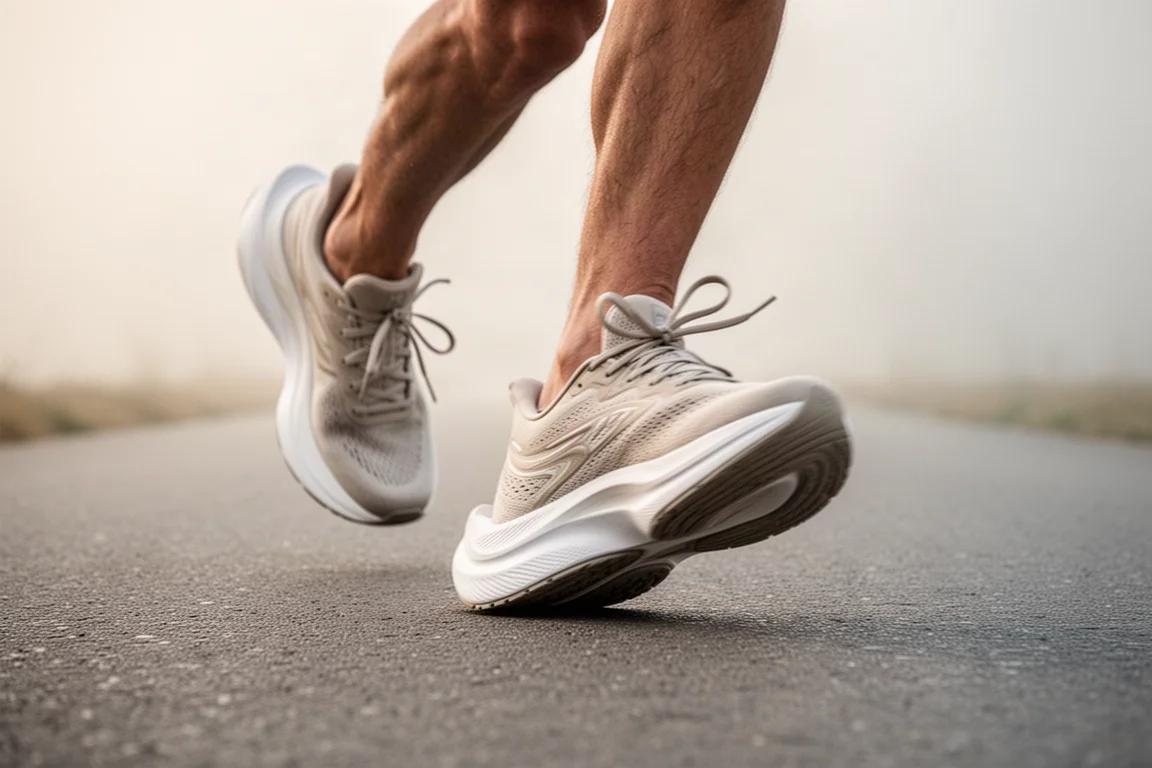
The Glycerin 23 is the traditional premium neutral trainer in the lineup, the shoe most runners would have pictured as a flagship neutral option five or ten years ago, just with a bit more cushion underfoot. The DNA Tuned midsole is the model where the heel-to-forefoot tuning is easiest to notice: the heel is genuinely soft, and the forefoot has a touch of pop. If you want plush cushioning that is not quite max-stack, this is the model built for that role.
It suits runners who want a comfortable daily trainer with a soft heel, a slightly springy forefoot and a roomier, plusher upper than the Ghost.
Brooks Glycerin GTS 23
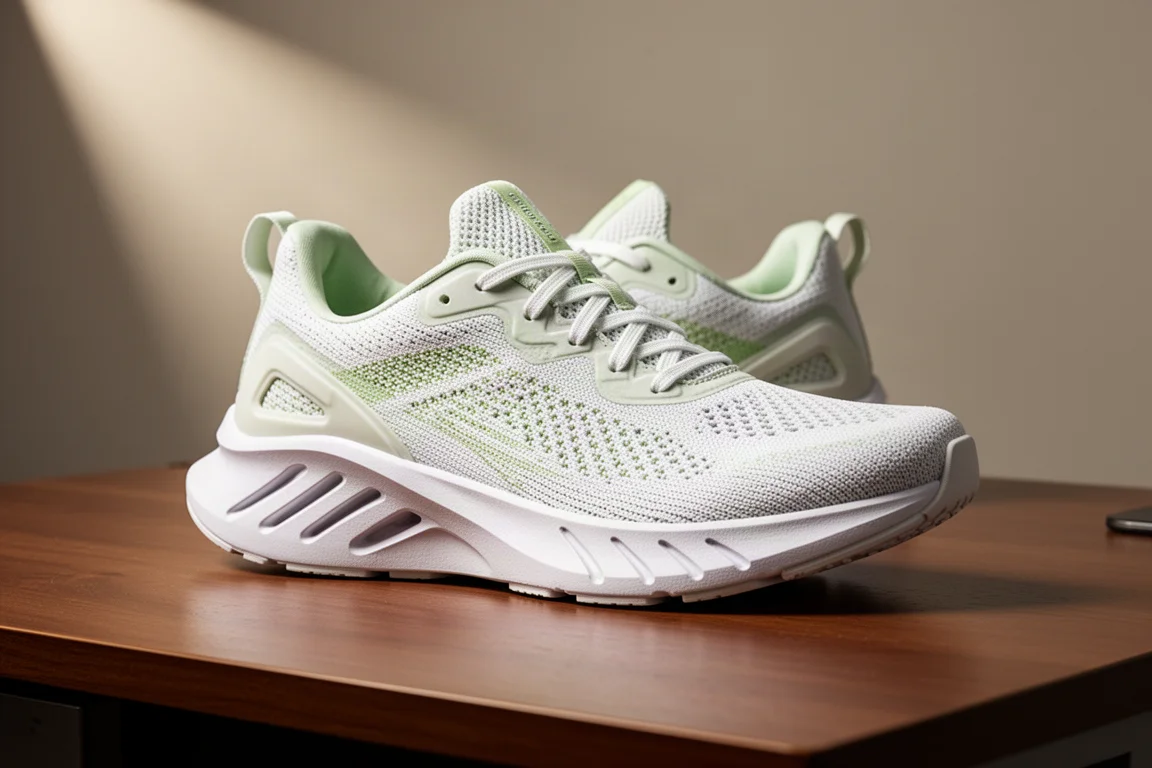
GTS stands for Go-To Stability, and the Glycerin GTS 23 is the stability variant of the mainline shoe. The specs are nearly identical to the Glycerin 23, with the weight creeping up to around 11 oz because of the added stability elements. Those elements take the form of guide rails: a firmed-up section along the medial side of the midfoot and heel, plus a second guide rail on the lateral side. The intent is to keep you centered and provide some guidance through the rearfoot into the midfoot, easing the transition forward.
Compared with the standard model, the GTS rides a little firmer because of those stability mechanisms, and that is the clearest trade-off between the two. If you want the same plush neutral platform but with a bit of guidance built in, this is the one to look at.
Brooks Glycerin Max 2
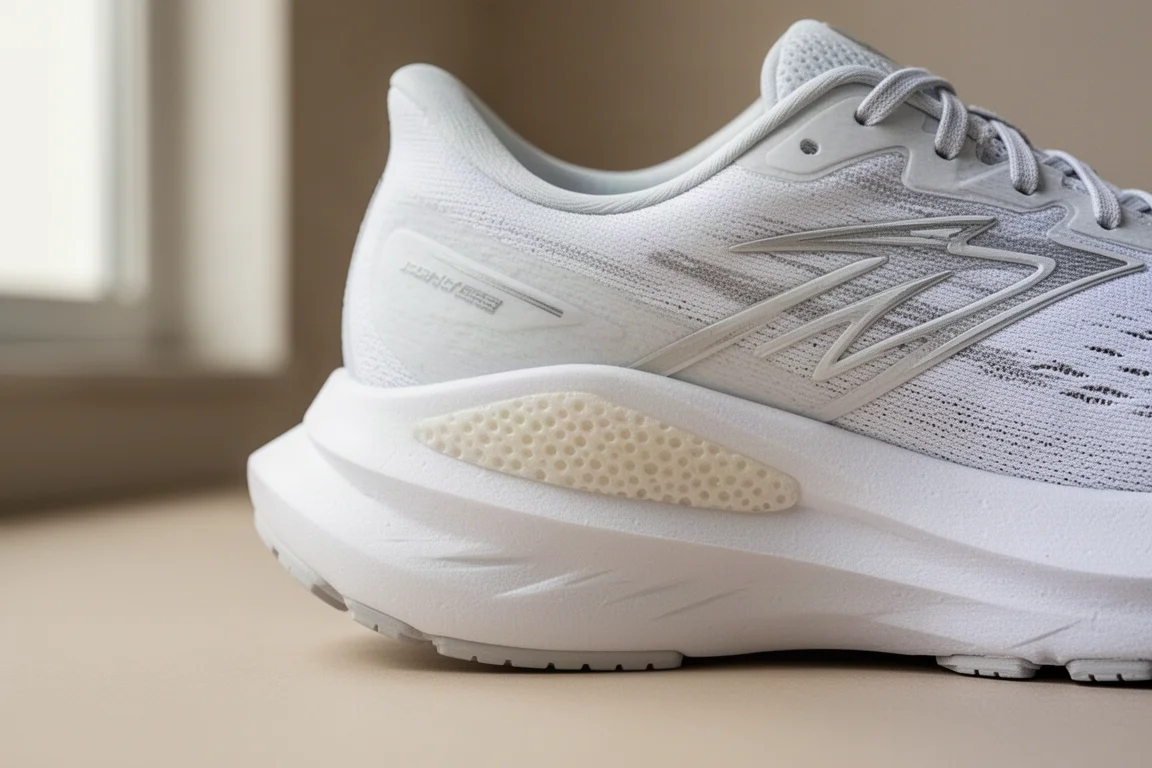
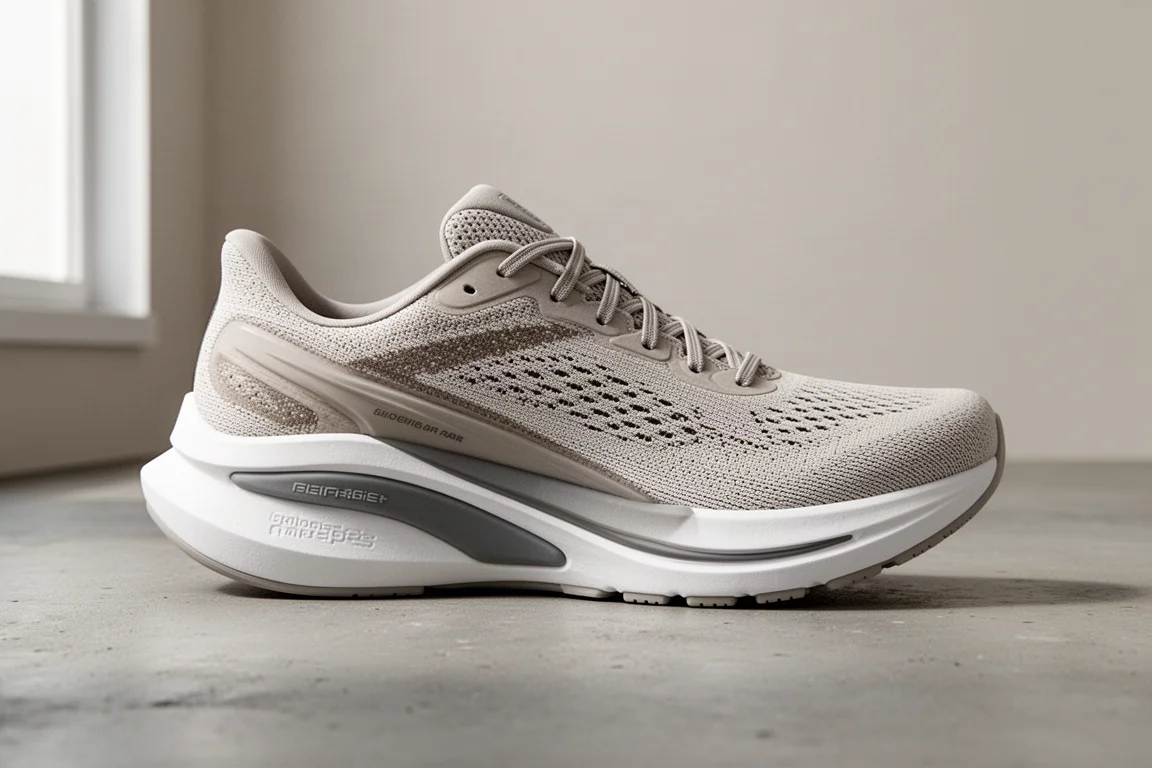
The Glycerin Max 2 is the super max entry, sitting well over 40 mm with 47 mm in the heel and 41 mm in the forefoot on a 6 mm drop platform. Despite sharing the DNA Tuned midsole, the Max 2 feels firmer than the rest of the family, likely simply because there is so much foam underfoot. What you get in exchange is plenty of protection on every landing and a much more noticeable rocker, especially in the forefoot, where the shoe rolls you forward into the next step.
At around 11 oz, this is not a light or fast shoe. It is built for rhythm: shuffling through daily miles and long runs on a premium, high-stack platform. The upper is plusher than the rest of the line with a slightly lower volume, though it can run a little warm. If you want maximum cushion and an easy-gliding ride rather than speed, the Max 2 covers it.

Brooks Glycerin Flex
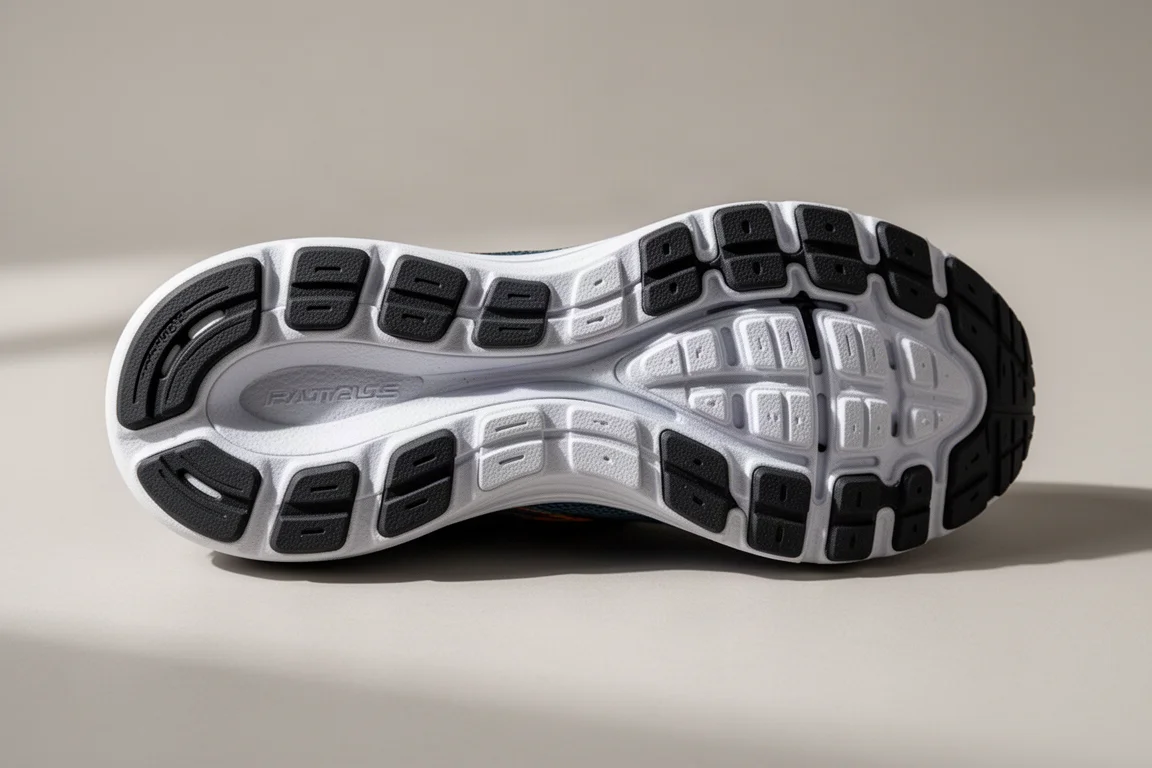
The Glycerin Flex is the most interesting of the bunch and new for 2026. Brooks set out to give the foot and ankle freedom to move, and the result is a high-stack shoe that stays genuinely flexible: 38 mm in the heel, 32 mm in the forefoot, 6 mm drop, DNA Tuned midsole and a podular outsole with a lot of give. Most shoes this flexible sit far lower to the ground, so a cushioned, high-stack shoe that moves naturally in every direction is unusual.
The good news is that the Flex does not feel overly unstable despite the flexibility, and it is also the lightest of the group at 9.1 oz, which makes it the most versatile of the four when picking up the pace. The engineered knit upper has decent stretch with good lockdown and a slightly lower volume, so the foot stays secure. One quirk: the drop feels higher than the stated 6 mm, partly because the flexibility demands more range of motion, and there is a bit of a digging sensation through the forefoot. If you like a shoe that lets you grip the ground and use your muscles, that will work in your favor. It remains a daily trainer for runners who want flexibility without giving up cushioning, though trying it on first is a good idea to see if it agrees with you.
Which Glycerin Should You Buy?
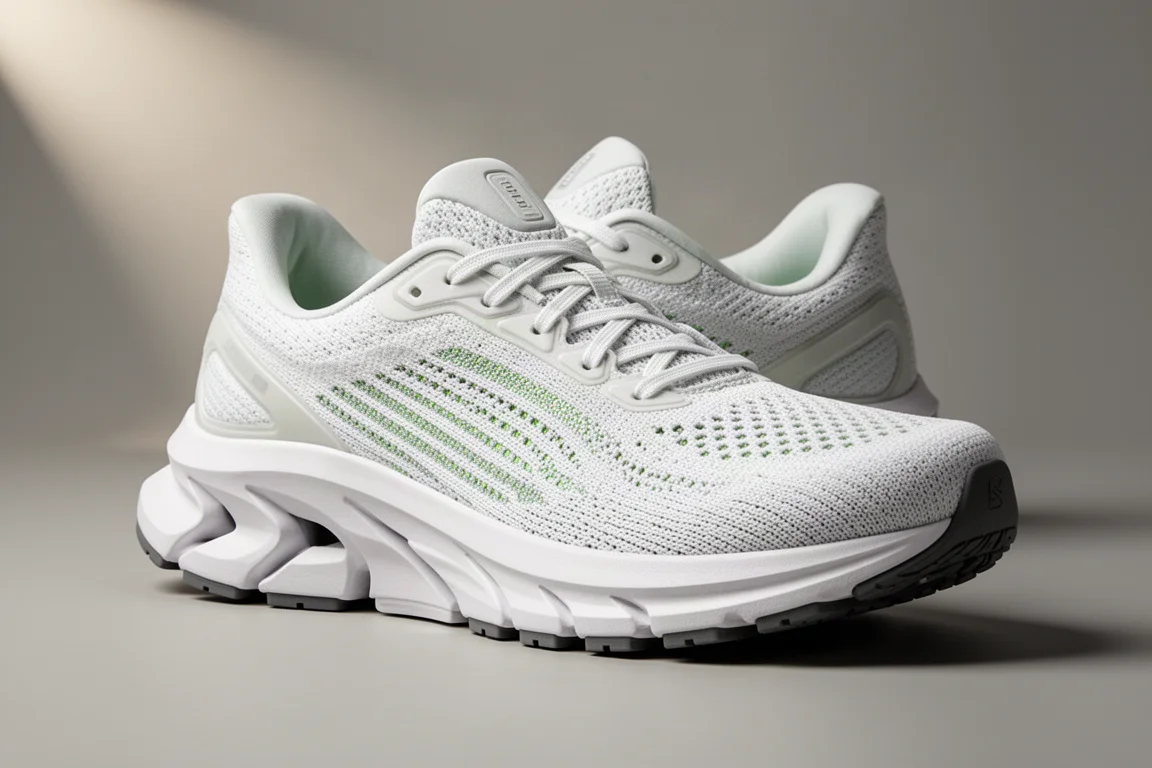
In the simplest terms: the Glycerin 23 is the traditional premium neutral trainer with a soft heel and a bit of extra cushion. The GTS 23 is that same shoe with stability guidance added. The Max 2 belongs to the super max category, well over 40 mm with a very rockered ride for easy daily miles and long runs. The Flex is the natural-feeling option, unusually flexible for its stack height and the lightest of the four. Match the ride to your needs and the name confusion largely disappears.
Conclusion
The Glycerin name now covers four different running experiences rather than one. Know whether you want plush neutrality, built-in guidance, a max-stack rocker or flexible freedom underfoot, and the right model in the family becomes obvious.
Further reading
Related Reviews

Running Shoes
Best Road-to-Trail Running Shoes: Three Versatile Options for Mixed Terrain
A practical guide to three road-to-trail running shoes that handle both pavement and mild trails, with clear strengths and trade-offs for different runner types.

Running Shoes
Best Running Shoes for Achilles Tendonitis: Three Options Explained
Three running shoes with different heel drops and support features designed to help reduce Achilles tendon pain during walking and running.

Running Shoes
Best Running Shoes for Women: Five Top Choices Ranked
A ranked guide to five women's running shoes, from versatile daily trainers to high-performance racing options, with real strengths and trade-offs for each.