Running Shoes
Brooks Ghost Trail Review: A Road-to-Trail Daily Trainer That Handles the Messy Season
The Brooks Ghost Trail takes the familiar Ghost formula and adds grip and protection for wet paths, gravel and light trails. Here is how it performs after roughly 50k of testing.
Introduction
The Brooks Ghost Trail is a new addition to the Brooks lineup, and it is essentially an off-road version of the Ghost 17 road running shoe. The idea is simple: keep the familiar Ghost ride and add a more protective upper plus a grippier outsole, so one pair of shoes can cover city parks, gravel roads, slightly muddy forest paths and the road miles in between. It costs £135 or $150, the same price as the Ghost 17, and in a UK 9 it weighs 312 g or 11 oz, a little heavier than the road shoe thanks to the redesigned outsole.
After around 50k of testing across easy runs, a long run and an easy-to-steady progression run, it performs more or less exactly as you would expect a trail version of the Ghost to perform: a balanced, dependable daily trainer with enough grip to open up routes your road shoes can no longer handle in wet weather.
Who the Brooks Ghost Trail Is For
This is not a shoe for technical trails, deep mud or rocky mountain routes. It is built as an accomplished all-terrain, road-to-trail option for runners whose daily routes mix pavement with light trails. If you run in a Ghost or Glycerin and your usual forest loops or gravel tracks have turned slick and messy for the season, this is precisely the situation the Ghost Trail is designed for. It also works as a solid hiking and fast-hiking shoe, or a comfortable walking shoe for holidays, because of that extra grip.
Upper, Fit and Comfort
The upper uses a tighter weave than the Ghost 17 to keep debris out on loose surfaces, with 3D printed overlays around the forefoot for extra structure and toe protection when you kick a stick or a stone. A fairly significant heel counter adds structure at the back of the shoe.
Fit is true to size in general. In a UK 9 / US 10, the fit felt roomy with enough space that going half a size down would also work, but sticking with your normal running shoe size is the sensible default. There is a bit of padding around the back of the shoe and a fairly stiff internal heel counter, but neither was noticeable or irritating on the run. Heel and midfoot hold were good, and the whole upper more or less disappeared once running started, which is exactly what you want.
{{image:1}}
Midsole and Ride Feel
The Ghost Trail uses the same DNA Loft v3 midsole as the Ghost 17, a nitrogen-infused EVA foam that feels poppy and responsive and has proven durable across Brooks’ range. The geometry differs slightly, with an 8 mm drop versus the road shoe’s higher drop, and a stack height of 36.5 mm at the heel and 28.5 mm at the forefoot. The ride feel, however, is very similar to the road version: that classic Brooks snap from heel to toe, with no big rocker geometry.
{{image:2}}
DNA Loft v3 is not the softest or bounciest foam on the market, and at faster paces it does not deliver much lively energy return. What it does give you is a balanced, stable platform. It is not too soft or mushy, so Brooks has not needed to bolt on extra stability elements for uneven ground or narrow singletrack. On a long run, the foam stayed consistent throughout, never bottoming out or flattening down, delivering the same response at the end as at the start.
Outsole and Grip
The TrailTack Green rubber outsole carries 3 mm lugs designed to grip well in the wet and on light trails, with flex grooves so all the extra rubber does not make the shoe too stiff. In testing, grip was consistently strong: wet stony paths, slightly muddy sections, slick paths, winding singletrack through trees and plenty of fallen leaves were all handled well, and the surface of the outsole showed no wear even on hard stony sections.
{{image:3}}
The grip extends beyond the trail too. On wet, leaf-covered pavements on the way to and from the forest, the shoe offered a reliable level of traction that removes the usual autumn and winter worry about whether road shoes will hold up. It even bites into a little bit of mud, which is more than most road shoes can claim.
What to Consider Before Buying
Know what you are buying. This is not a full trail shoe, and it will not provide the protection and grip needed for technical rocky trails or really deep mud, where a shoe with deeper lugs would be the better tool. That said, it has a fairly protective underside, so it handles mild rocky trails well.
As a daily trainer, it is best for easy runs and it shines on long runs, where it feels protective and comfortable while still letting you move faster when required. It handled around 3:45 per km pace on an easy-to-steady run without complaint. It is not a short off-road racing shoe, though it could work as a reasonable parkrun shoe depending on the course surface, offering good grip without being a slouch.
Alternative: Hoka Challenger 8
In this road-to-trail category, the Hoka Challenger 8 is a strong alternative. It is a bit softer and less stable than the Brooks, with a more rockered, smooth and fun ride that suits easy cruising well. It also has very good grip and performed slightly better on easy-to-steady style runs.
The Brooks counters with a slightly firmer, more stable ride, which some runners will appreciate especially off-road. If you prefer a softer, rockered all-terrain feel, the Challenger 8 is the one to go for; if you want that stable, sturdy Brooks platform with excellent outsole grip, the Ghost Trail holds its own.
{{image:4}}
View more details for Hoka Challenger 8
Buying Advice
The Ghost Trail is a solid choice for Ghost and Glycerin users who have reached the point in the year where favourite routes are no longer suitable for road shoes. It picks up daily training runs on mixed terrain with enough grip, a bit of protection and long-stretch road comfort, and it could even serve as a decent long-distance trail racer if you expect a range of terrain. If you are after maximum softness and a livelier ride, look at the Challenger 8 instead.
View more details for Brooks Ghost Trail
Conclusion
The Brooks Ghost Trail delivers a familiar, dependable Brooks ride with a lower drop, a balanced and stable midsole, and a genuinely well-designed outsole that grips on wet pavements, gravel and light trails. It is not the most exciting or lightest shoe on the market, but as a road-to-trail daily trainer for the messy season, it does its job very well.
Further reading
Related Reviews
Running Shoes
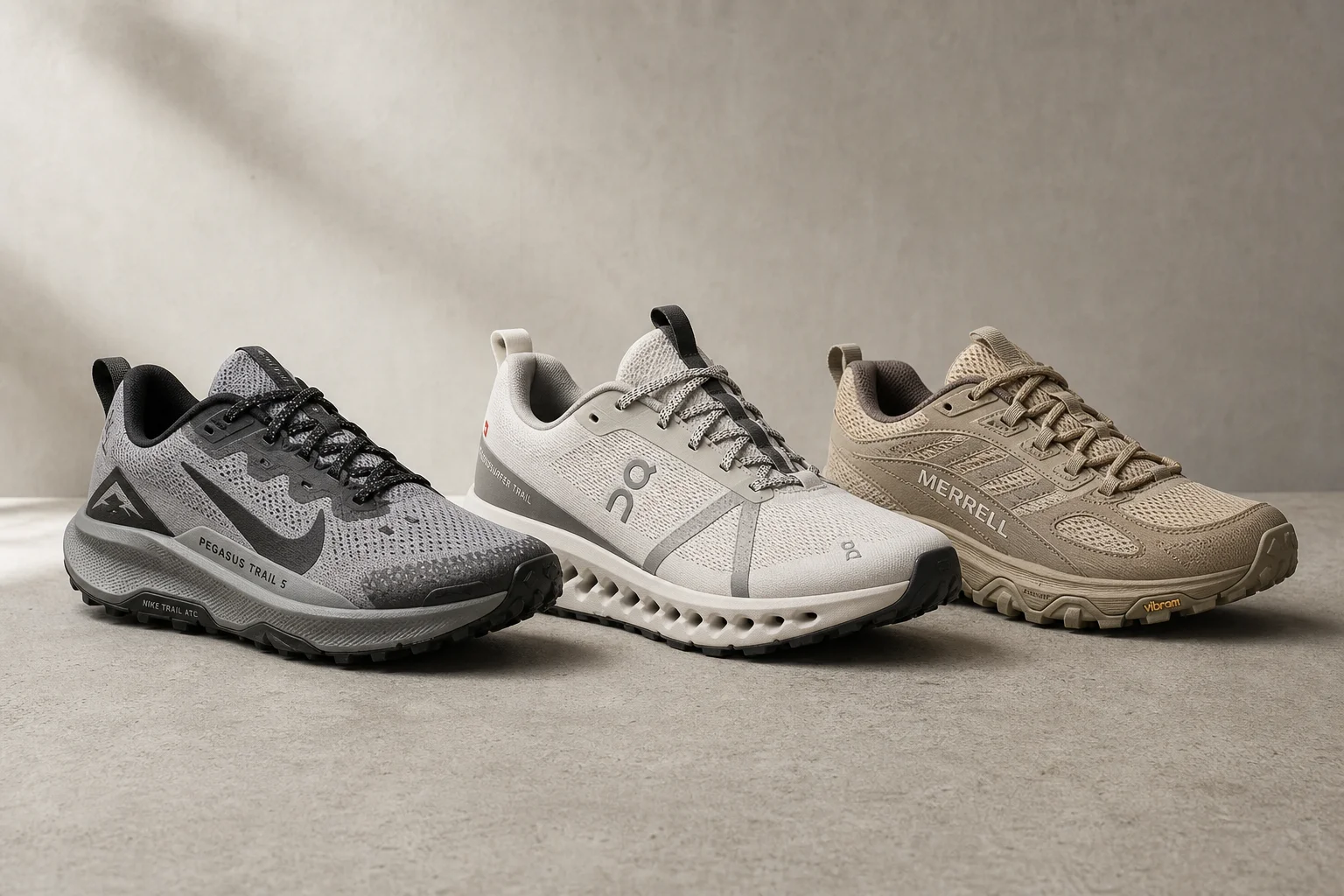
Best Road-to-Trail Running Shoes: Three Versatile Options for Mixed Terrain
A practical guide to three road-to-trail running shoes that handle both pavement and mild trails, with clear strengths and trade-offs for different runner types.
Running Shoes
Best Running Shoes for Achilles Tendonitis: Three Options Explained
Three running shoes with different heel drops and support features designed to help reduce Achilles tendon pain during walking and running.
Running Shoes
Best Running Shoes for Women: Five Top Choices Ranked
A ranked guide to five women's running shoes, from versatile daily trainers to high-performance racing options, with real strengths and trade-offs for each.