Coffee Equipment
Breville vs De'Longhi Espresso Machines: Which Brand Fits Your Coffee Style
A detailed comparison of seven popular espresso machines from Breville and De'Longhi, examining their approach to precision, convenience, and design philosophy.
Introduction
Choosing between Breville and De’Longhi espresso machines often comes down to a fundamental question: do you want to be the barista, or do you want to enjoy the result? Both brands are established leaders in home espresso, but they approach the craft from distinctly different angles. Breville emphasizes precision, control, and the satisfaction of crafting every detail. De’Longhi prioritizes convenience, consistency, and elegant simplicity. Understanding these philosophies helps you find the machine that matches your coffee ritual.
Barista Express vs La Specialista Arte and Opera
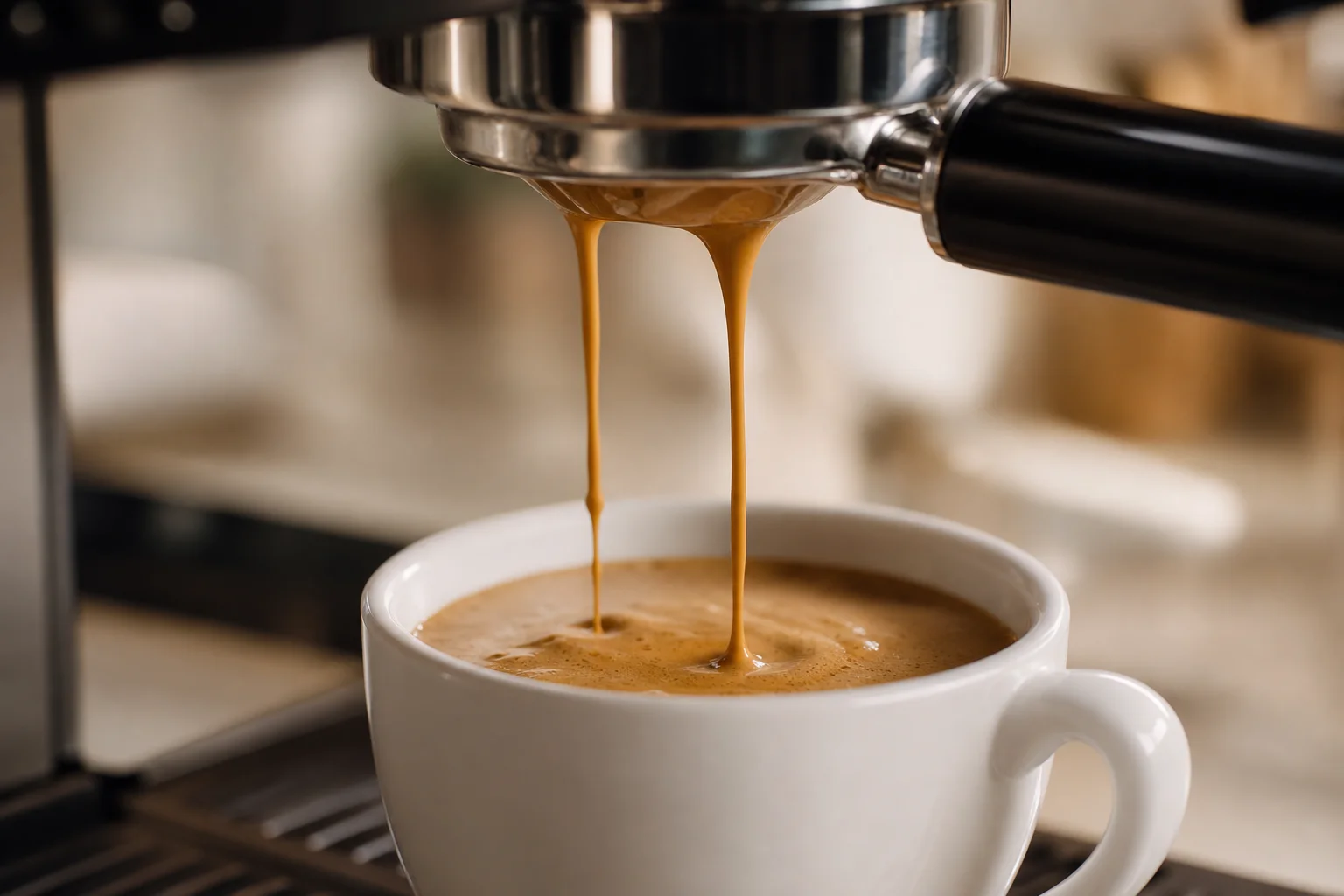
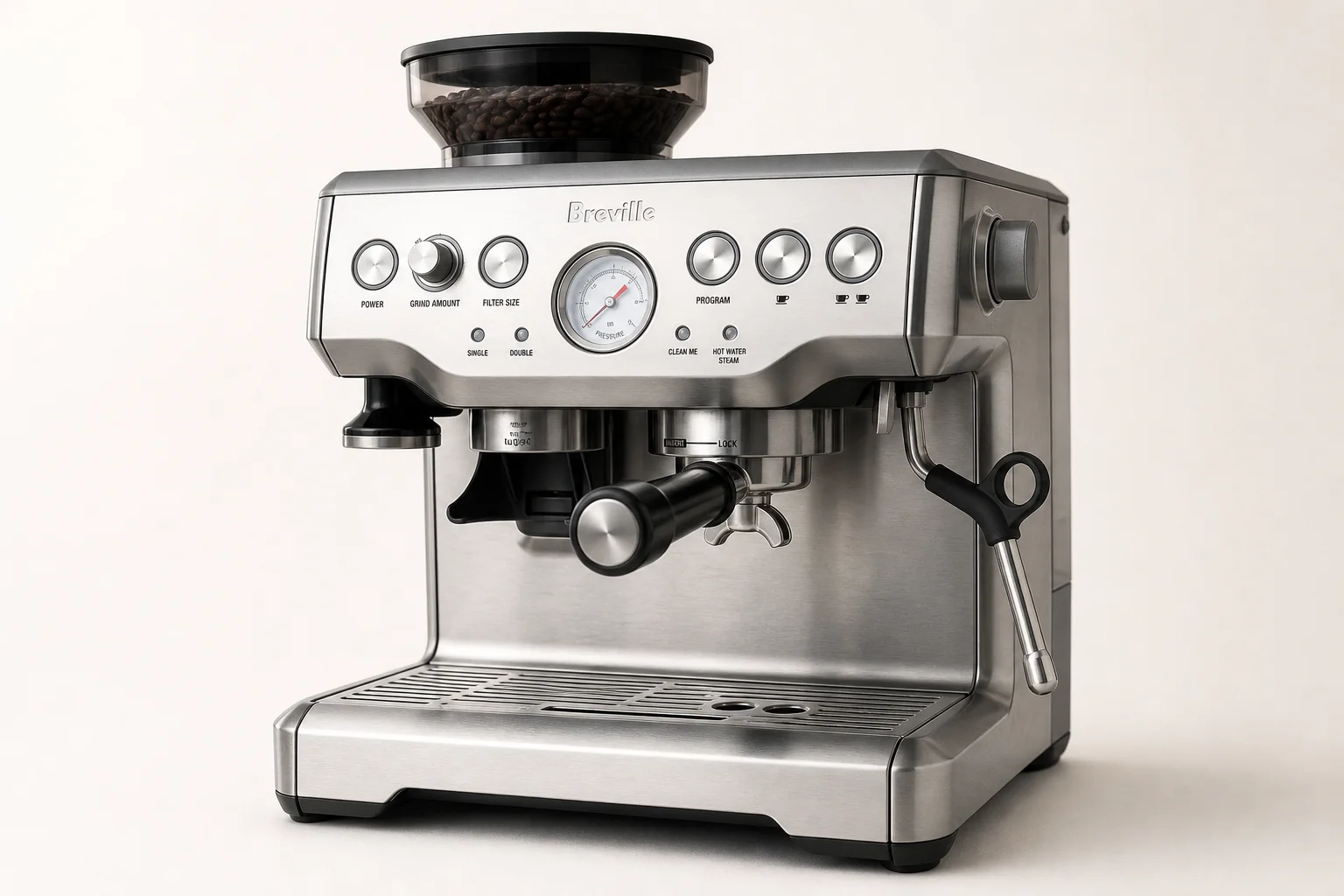
The Breville Barista Express is built for the coffee enthusiast who wants professional-level tools and control. Its conical burr grinder offers 18 grind settings, allowing fine-tuning from coarse to powder fine. The 54 mm portafilter is close to commercial standard size, creating a larger, more even coffee bed that can develop complex flavors. Paired with PID temperature control that keeps water within a tight range, every shot delivers consistency: golden honey with thick caramel crema.
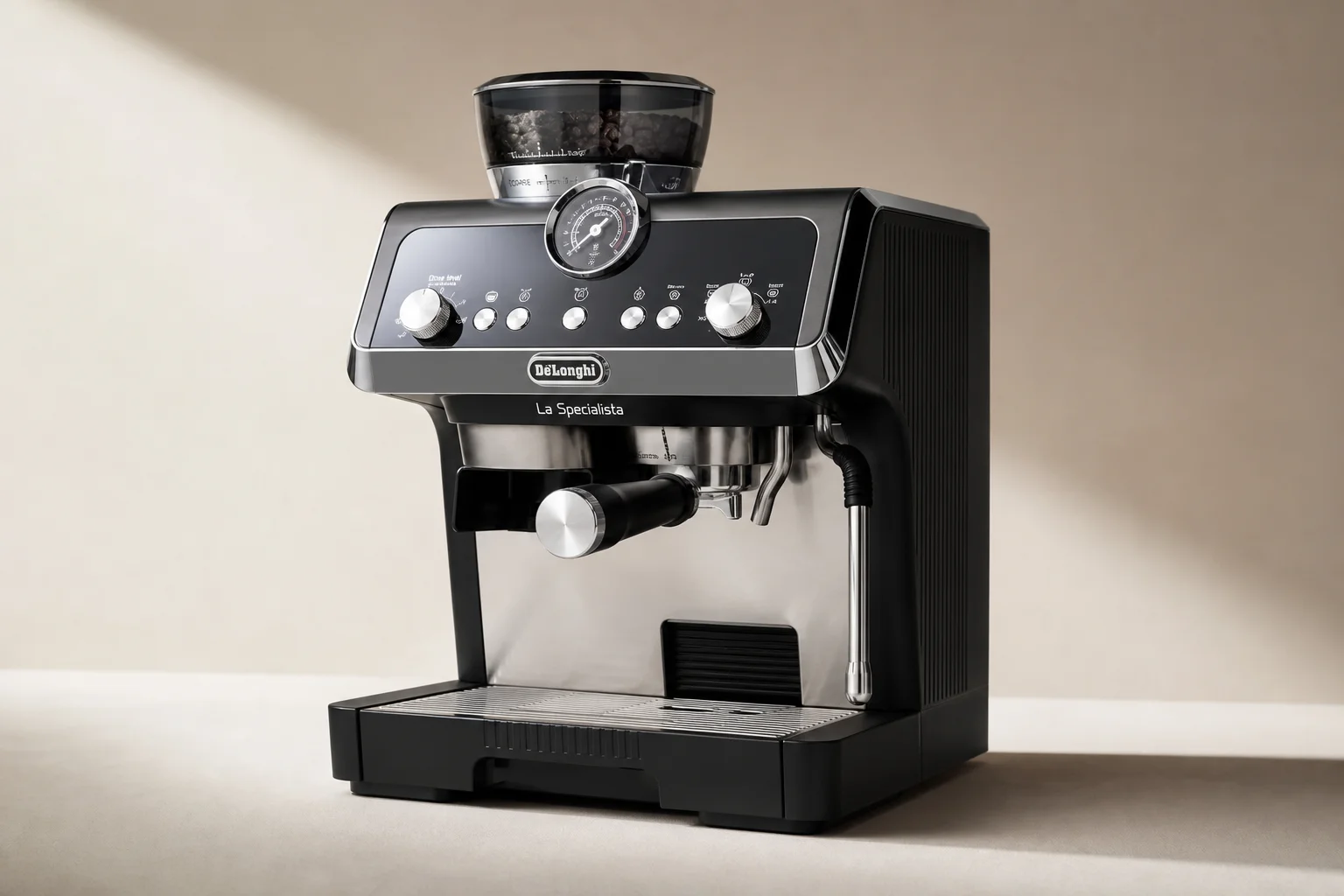
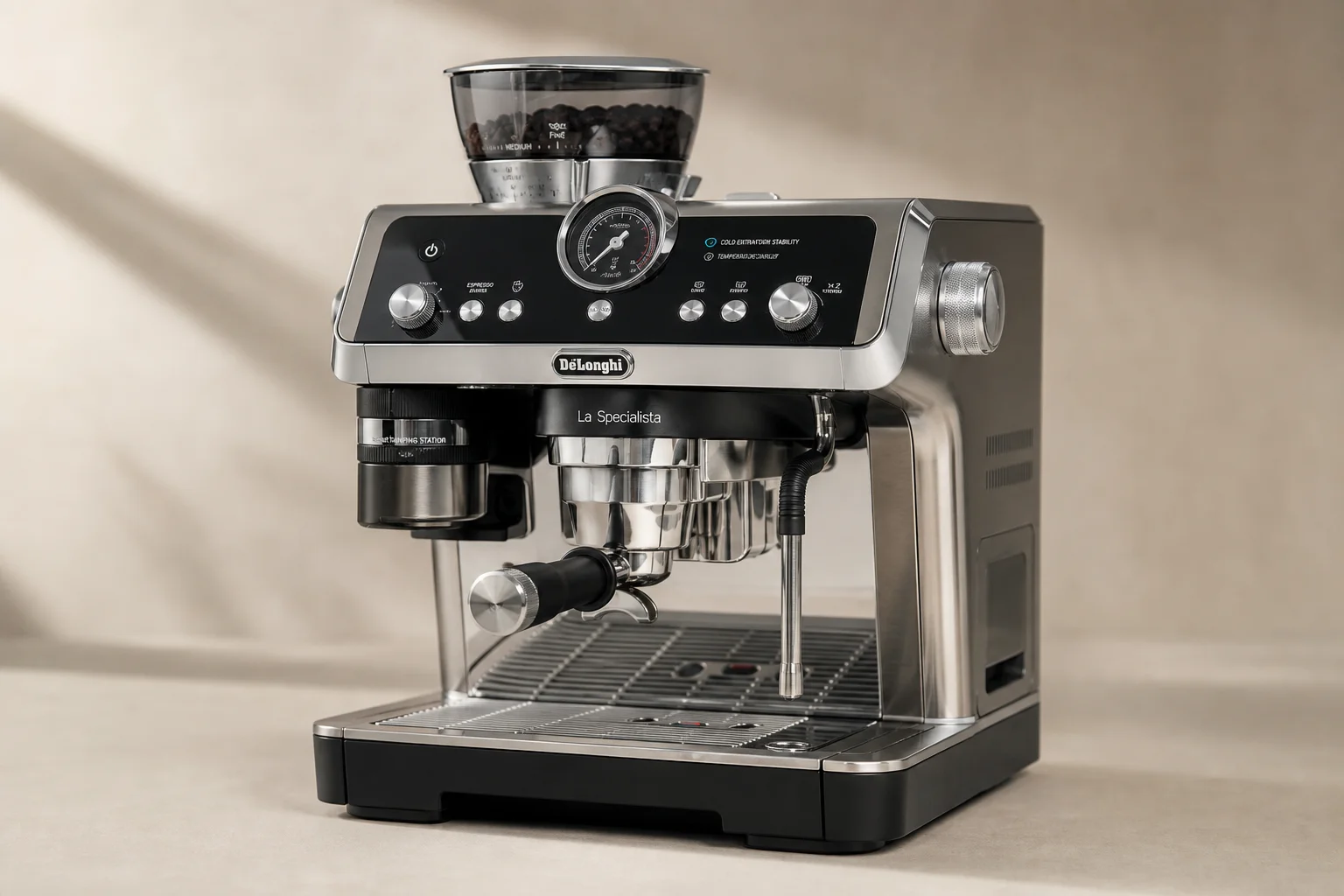
The De’Longhi La Specialista Arte takes a different approach, designed for balance between control and guidance. Its grinder has eight settings paired with a dosing system that maintains consistency without overwhelming beginners. Manual tamping is still required, but De’Longhi includes a tamping guide and accessories to help. The result is a slim, stylish machine that offers hands-on experience without excessive complexity.
The La Specialista Opera is the newest and most advanced in the De’Longhi lineup. It retains the built-in grinder and dosing system but adds cold brew extraction, over-ice espresso, a smart tamping system, and dual heating that allows simultaneous brewing and milk steaming. The Opera targets someone seeking cafe versatility at home, not just traditional espresso and cappuccino.
Barista Touch vs Magnifica Evo
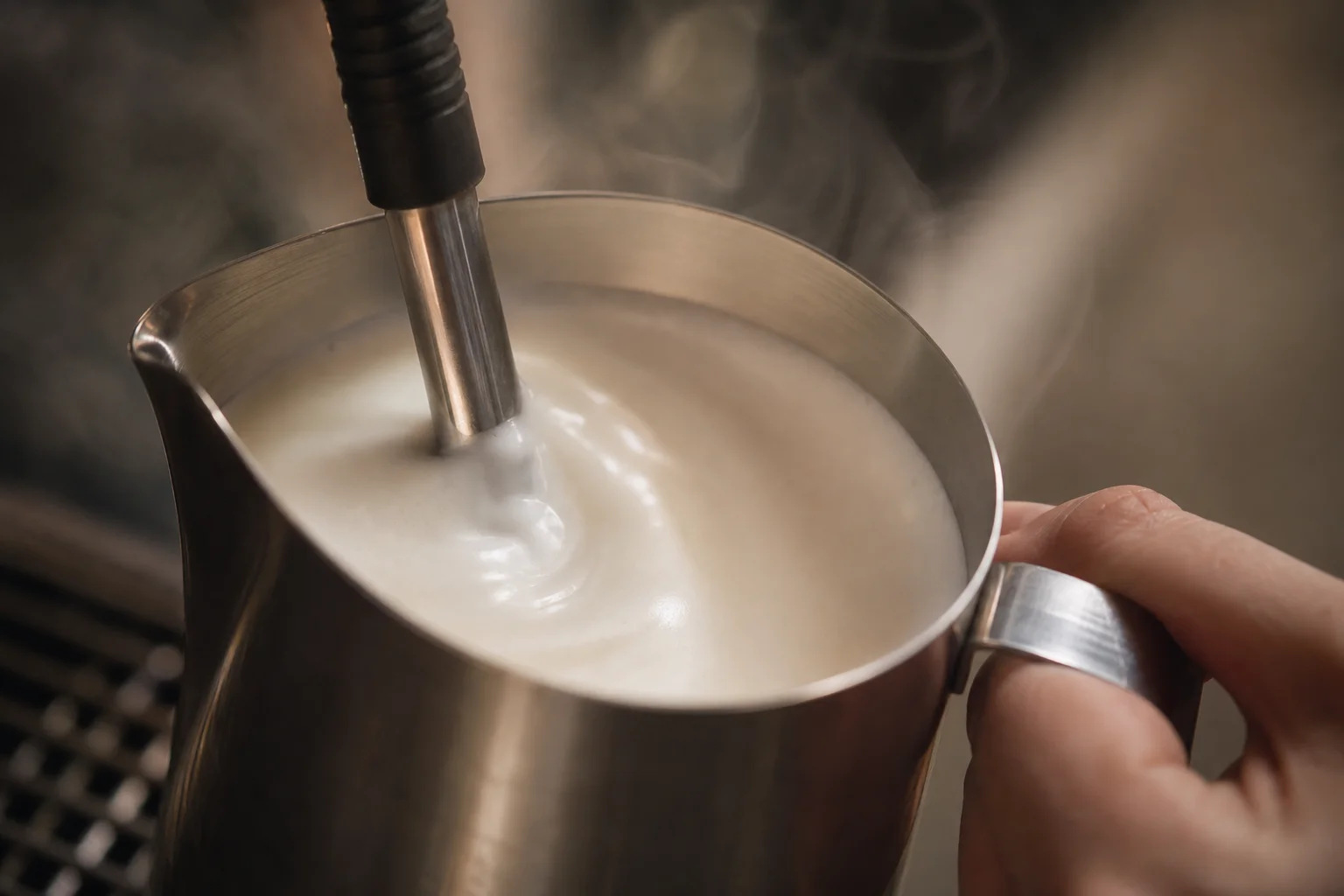
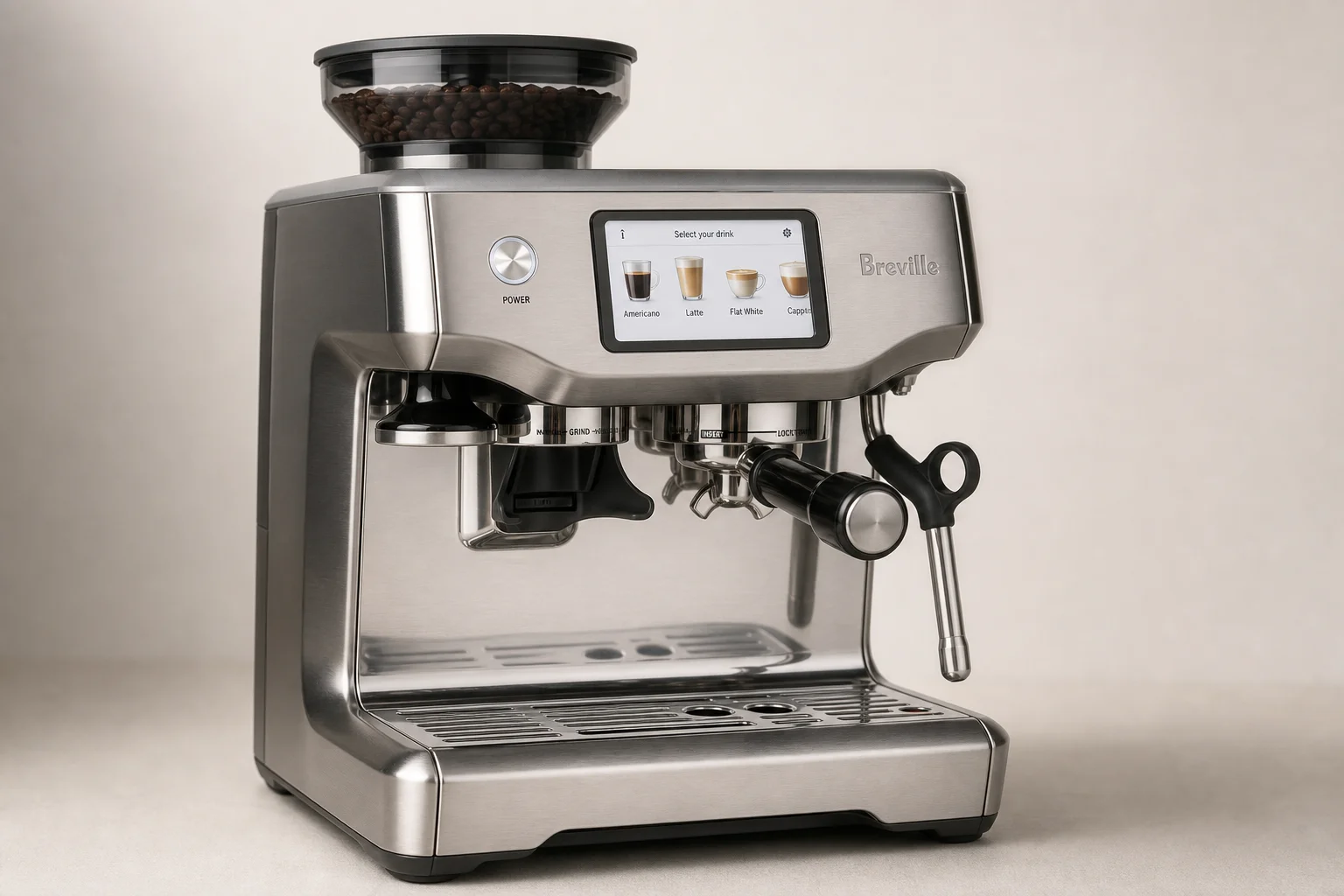
The Breville Barista Touch brings cafe control into your kitchen through a vibrant touchscreen interface. You can swipe through drink options, adjust strength, milk texture, and temperature, then save favorite recipes. The integrated grinder ensures fresh grounds every time. The automatic steam wand senses milk temperature and stops at your precise setting, whether 60 degrees for a velvety latte or slightly hotter for a cappuccino. The result is glossy, silky microfoam perfect for latte art or smooth flat whites.
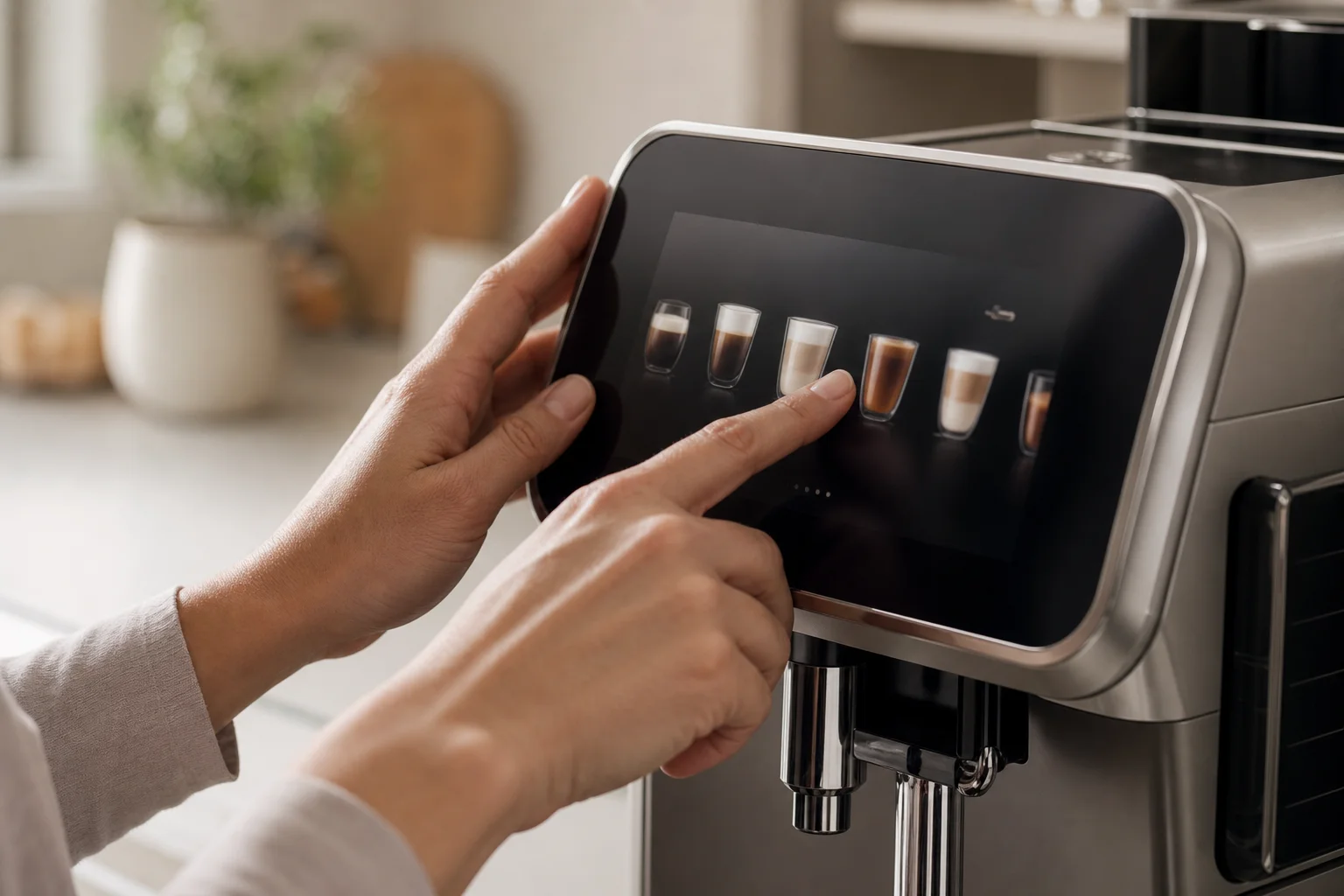
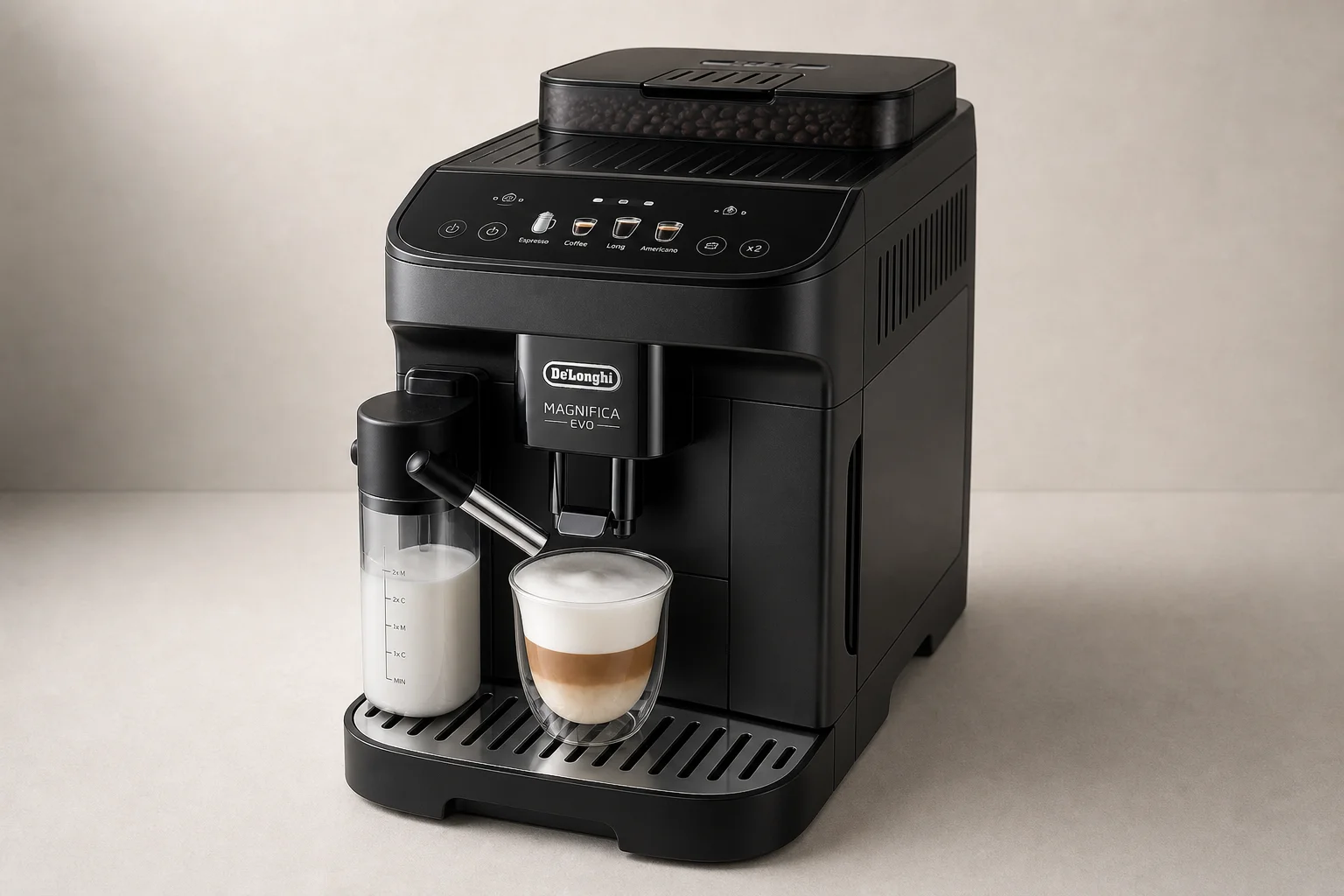
The De’Longhi Magnifica Evo is a true bean-to-cup machine built for simplicity. Press one button and it grinds, doses, tamps, brews, and froths milk directly into your cup. The milk system produces light, airy foam especially suited to cappuccinos. There is no temperature or texture adjustment; the machine handles everything. The flavor is smooth, balanced, and consistent, delivering comforting espresso every morning.
Breville gives you freedom to customize and save multiple drink profiles, perfect for households with different preferences. De’Longhi keeps it simple with one-touch icons for espresso, cappuccino, and latte, ideal for anyone who wants great coffee without thinking about it.
Bambino vs Dedica: Compact Powerhouses
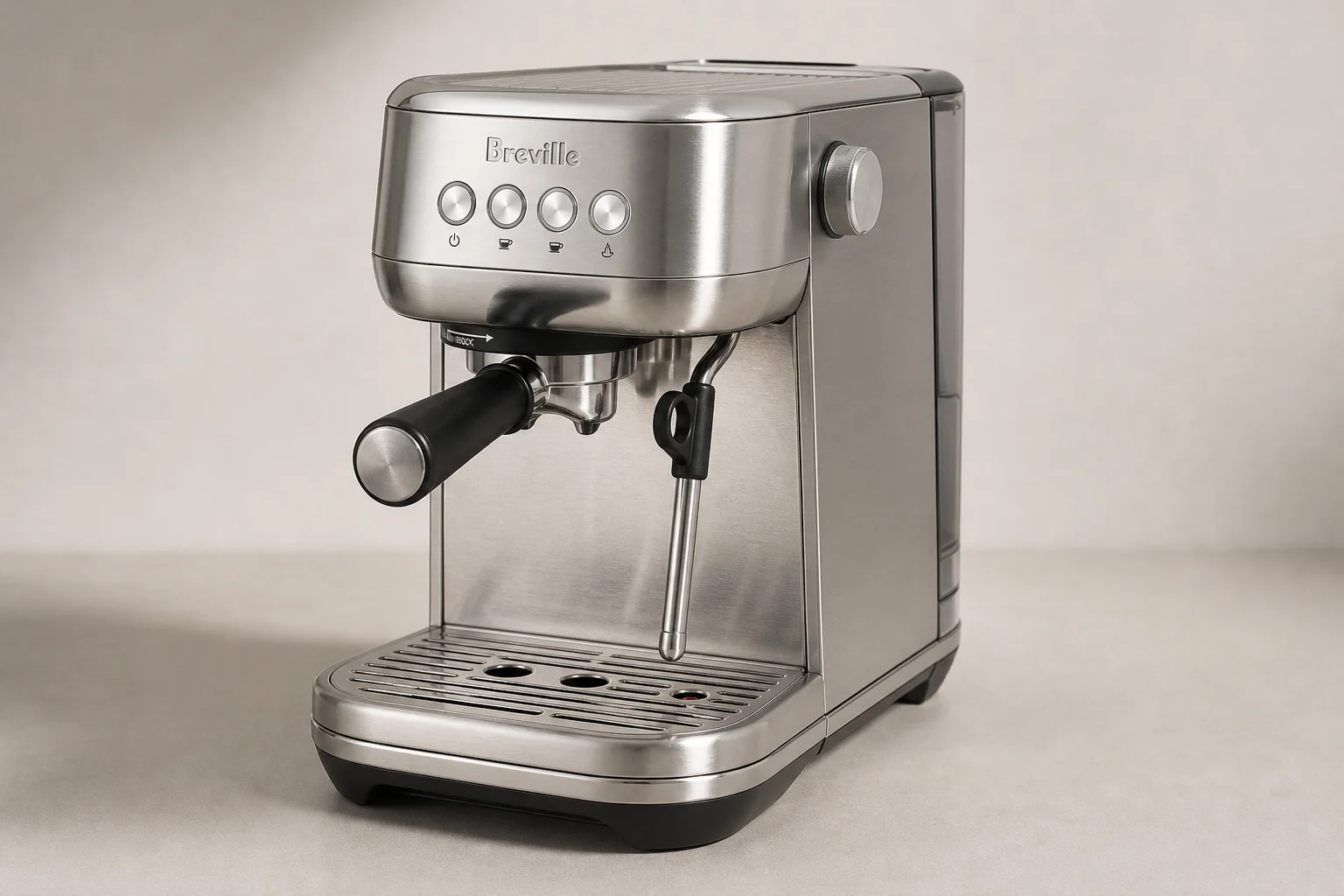
The Breville Bambino is lightning fast thanks to its ThermoJet heating system, ready to brew in about 3 seconds. From power-on to pulling a shot takes almost no time. The 54 mm portafilter and low-pressure pre-infusion create layered, balanced espresso with flavors that unfold smoothly. The steam wand is surprisingly powerful for such a small machine, capable of creating silky microfoam that rivals larger, more expensive models. It feels like a professional tool condensed into a compact package.
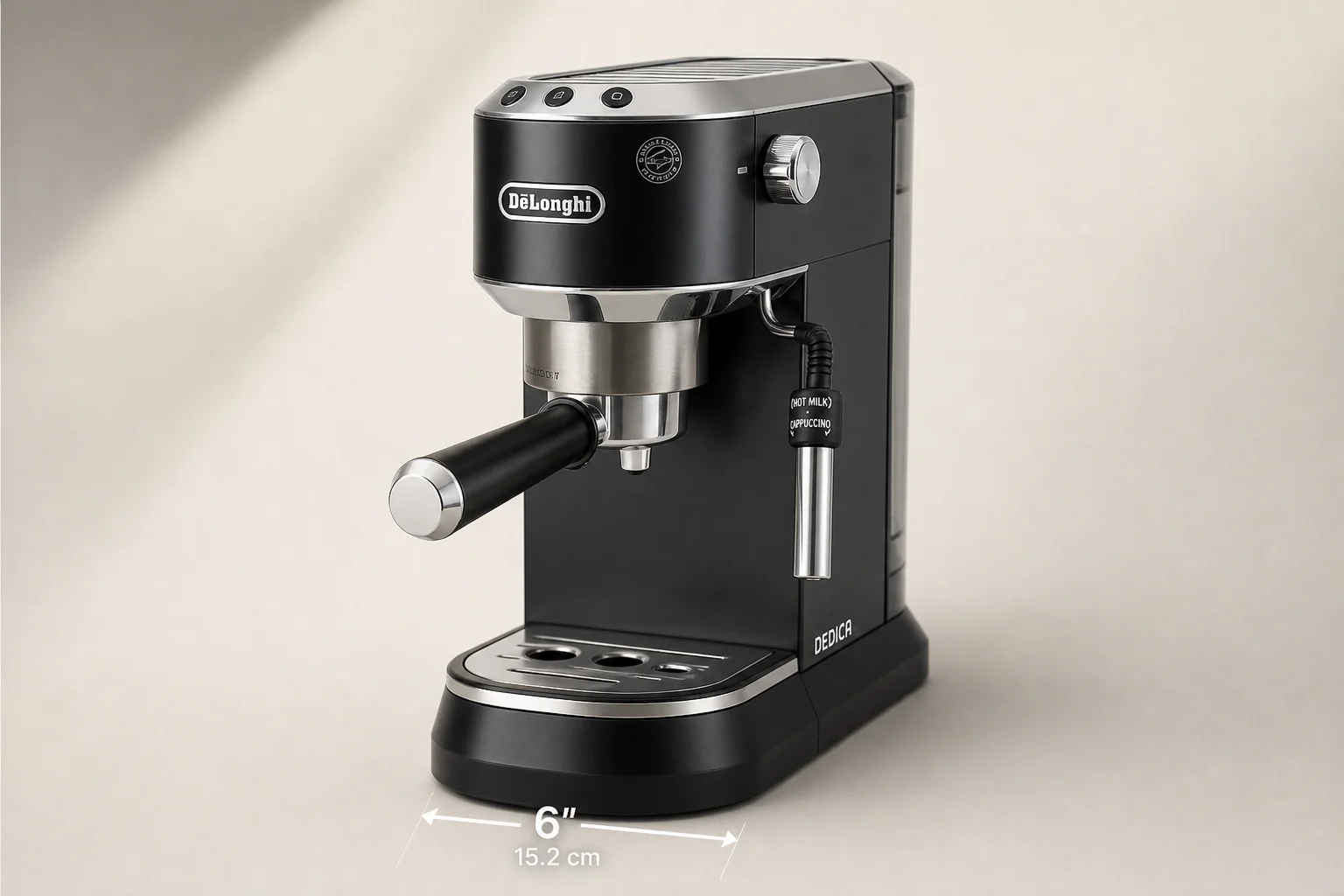
The De’Longhi Dedica prioritizes elegance and practicality. At just 6 inches wide, it is one of the slimmest machines available, fitting easily into any kitchen. Its thermoblock heating system is quick, and the pressurized portafilter is forgiving, producing thick crema even if grind or tamp is imperfect. The milk frother is straightforward and easy to use, producing light, airy froth perfect for cappuccinos.
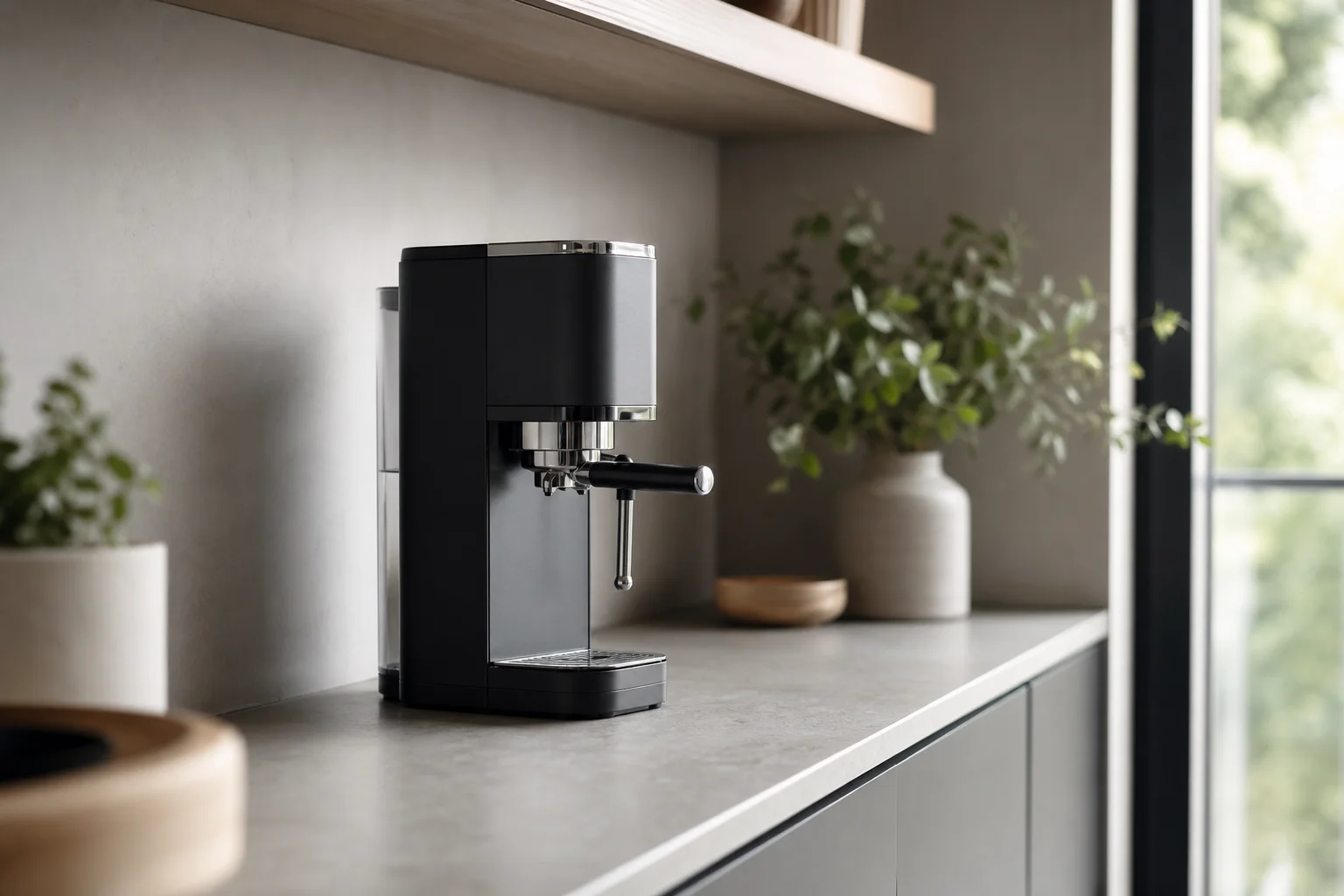
The Bambino suits someone who wants to practice barista skills in a small space. The Dedica suits someone who wants stylish, compact convenience with minimal fuss.
Design Philosophy and Brand Character
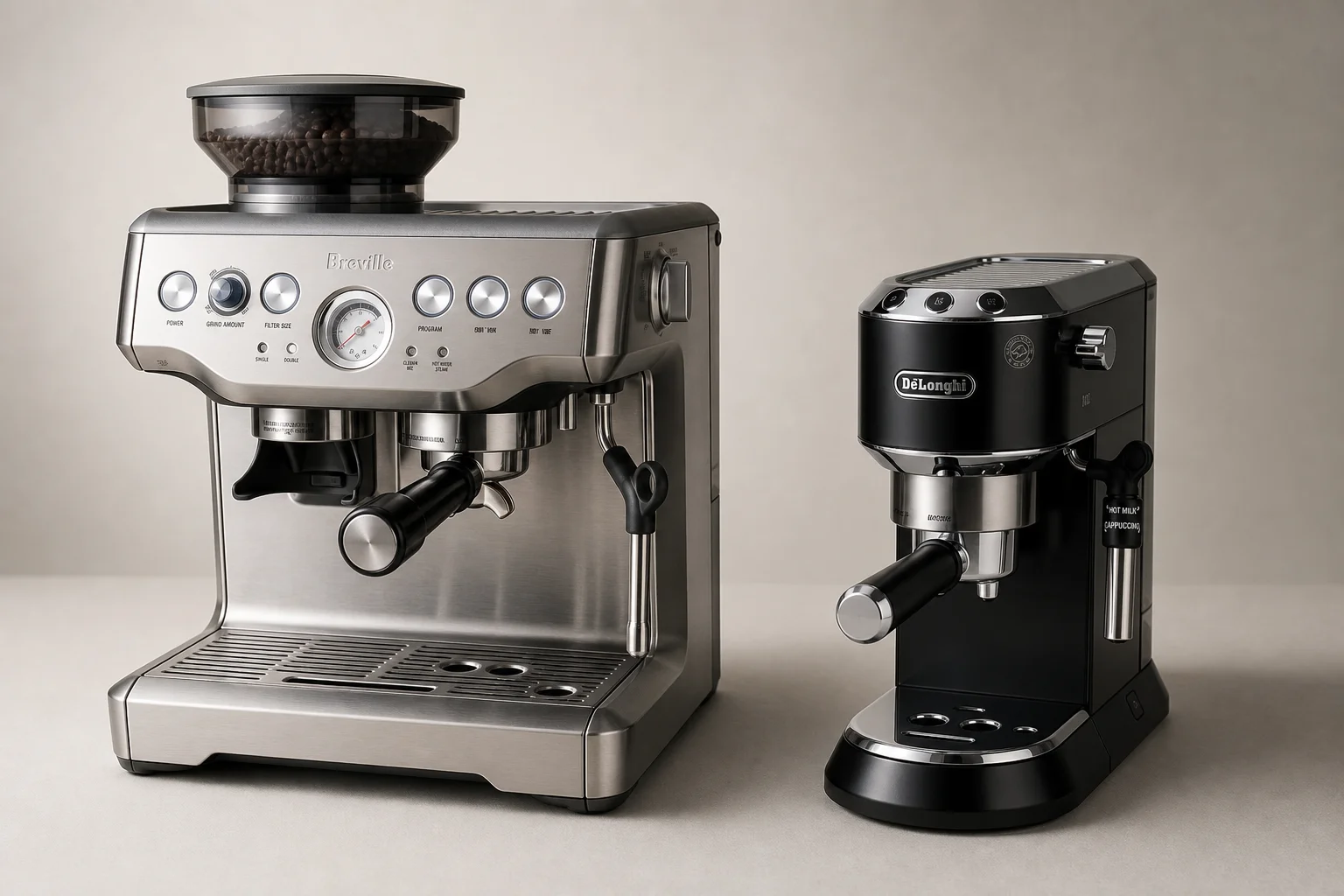
The design language of each brand reveals much about their approach. Breville machines tend to be bulkier, with brushed stainless steel and a professional appearance that makes you feel like you are standing behind a cafe counter. Knobs, gauges, and portafilters have weight and substance that reinforce that professional vibe. De’Longhi machines are slimmer, more compact, and carry sleek Italian flair, designed to blend into your kitchen gracefully without dominating your counter.
Making Your Choice
Breville machines are built for the coffee lover who wants precision, control, and the satisfaction of crafting every detail of the drink. De’Longhi machines are built for the coffee lover who wants convenience, consistency, and the assurance of great coffee with minimal effort. Neither brand is better across the board; the choice depends on how you want to enjoy your coffee ritual. Are you the barista, experimenting and perfecting, or the guest at your own cafe, pressing a button and savoring the result?
Conclusion
When weighing Breville against De’Longhi, you are really choosing between precision and convenience, between craft and simplicity. Both deliver excellent espresso, but through fundamentally different philosophies. Consider your daily routine, your kitchen space, and whether you find joy in the process of making espresso or in the final cup. Your answer will guide you to the machine that truly fits your coffee style.
Further reading
Related Reviews
Coffee Equipment
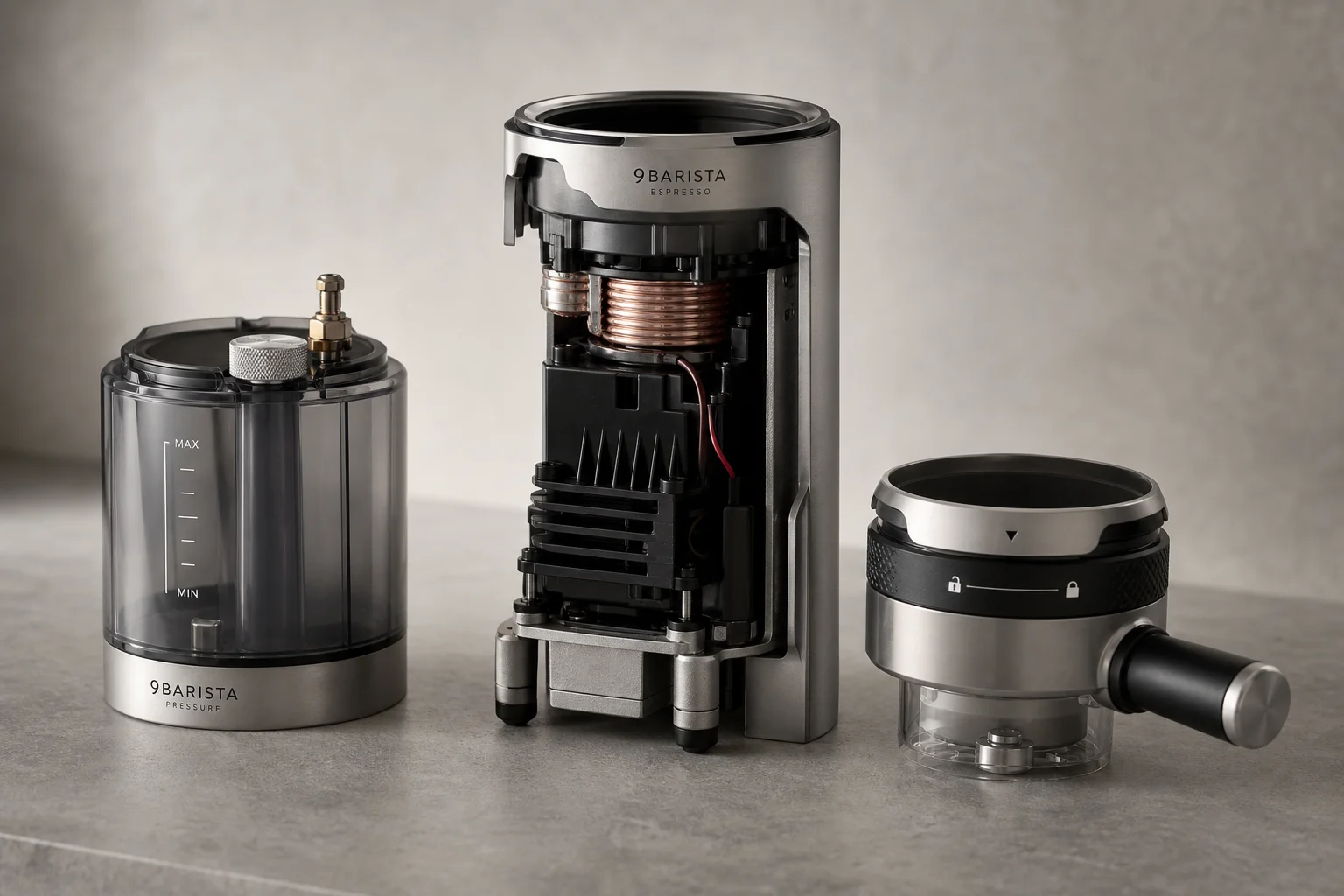
9Barista Espresso Machine Review: Stovetop Espresso for Single-Cup Enthusiasts
A cleverly engineered stovetop espresso maker that generates nine bars of pressure without electricity. Excellent coffee quality, but requires patience and suits solo drinkers only.
Coffee Equipment
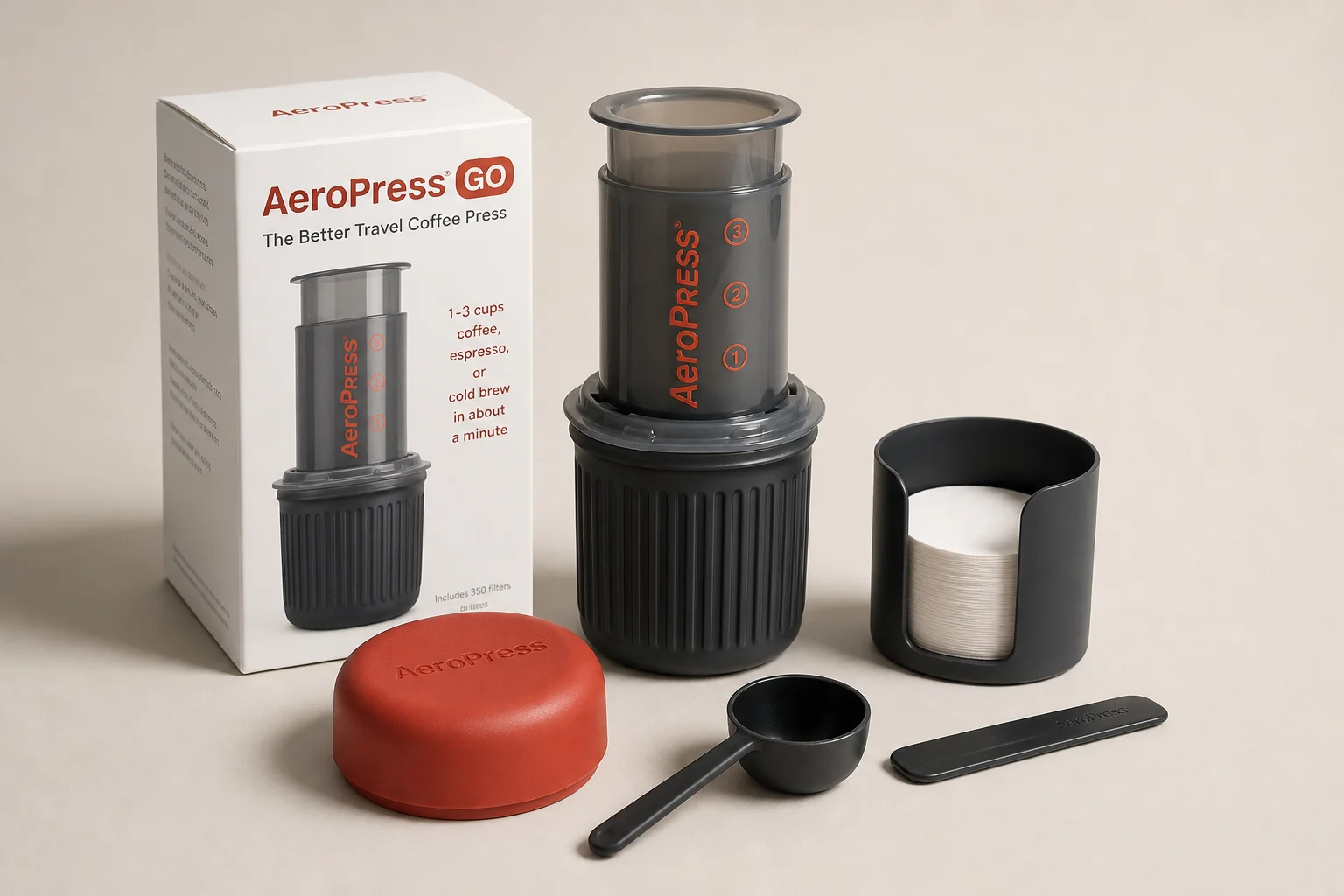
Aeropress Go Review: A Compact Travel Brewer That Solves One Specific Problem
The Aeropress Go shrinks the original design and adds an integrated cup, but it may not address the travel challenges most coffee enthusiasts actually face.
Coffee Equipment
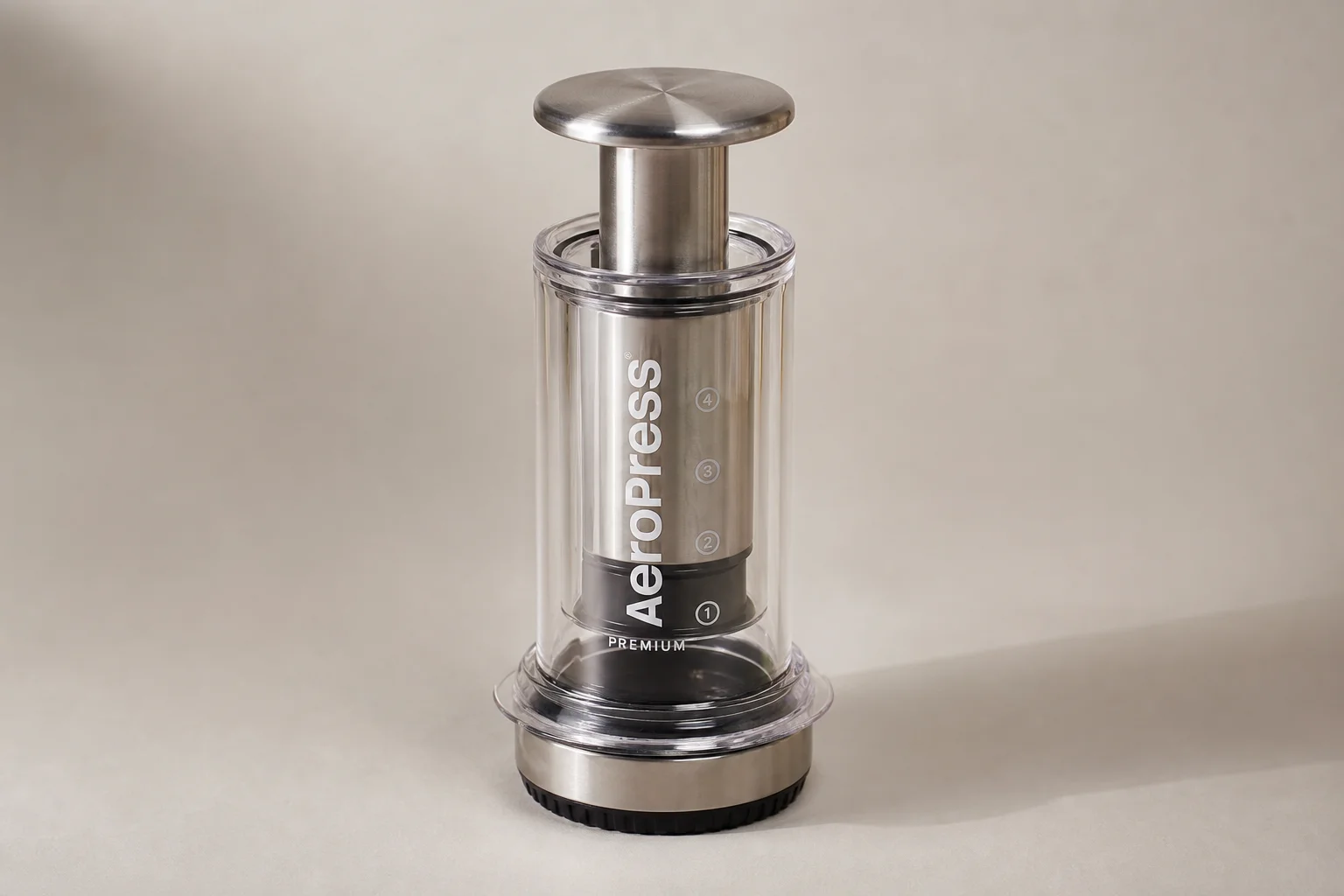
AeroPress Premium Review: Premium Materials, Practical Trade-offs
The AeroPress Premium brings glass and metal construction to a beloved brewer, but trades portability and durability for a more refined feel. Here's what changes in the cup and what matters before you buy.