Baking Equipment
Bread Machines vs Hand Kneading: Which Method Is Right for You
Compare bread machines and hand-kneaded bread with recommended equipment for each approach. Learn the trade-offs and find the method that fits your lifestyle.
Introduction
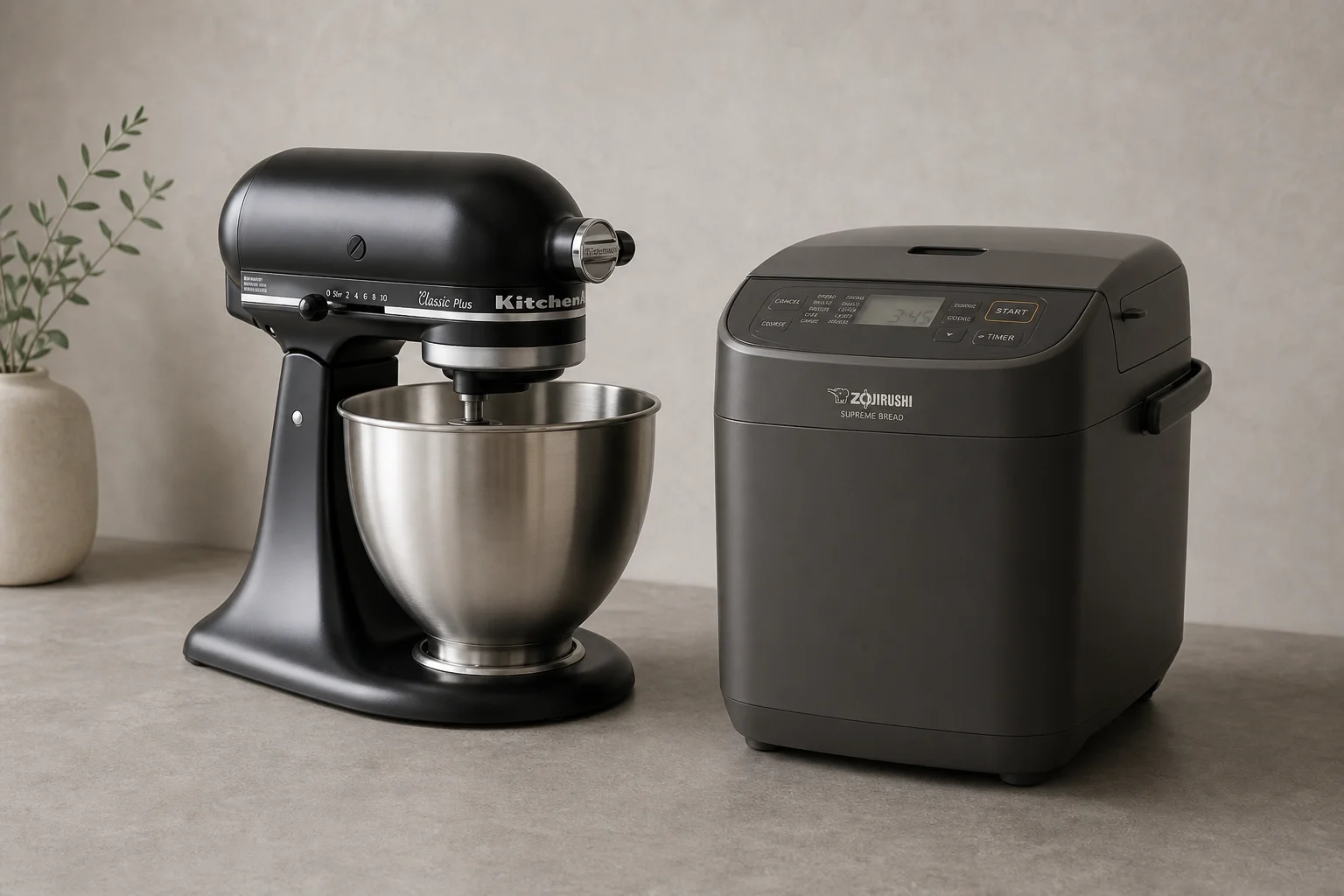
Making fresh bread at home offers two distinct paths: the hands-on control of hand-kneading with a stand mixer, or the set-and-forget convenience of a bread machine. Both methods produce excellent results, but they require different equipment and offer different benefits. Understanding the strengths and limitations of each approach helps you choose the method that fits your lifestyle and baking goals.
Making Bread by Hand: Equipment and Process
Hand-kneading bread gives you complete control over shaping, scoring, and the final appearance of your loaf. You don’t need much equipment to get started. A simple bowl and your hands are technically sufficient, but a stand mixer makes the process significantly easier, especially when working with stiff doughs like bagel dough or high-hydration doughs that stick to your hands.
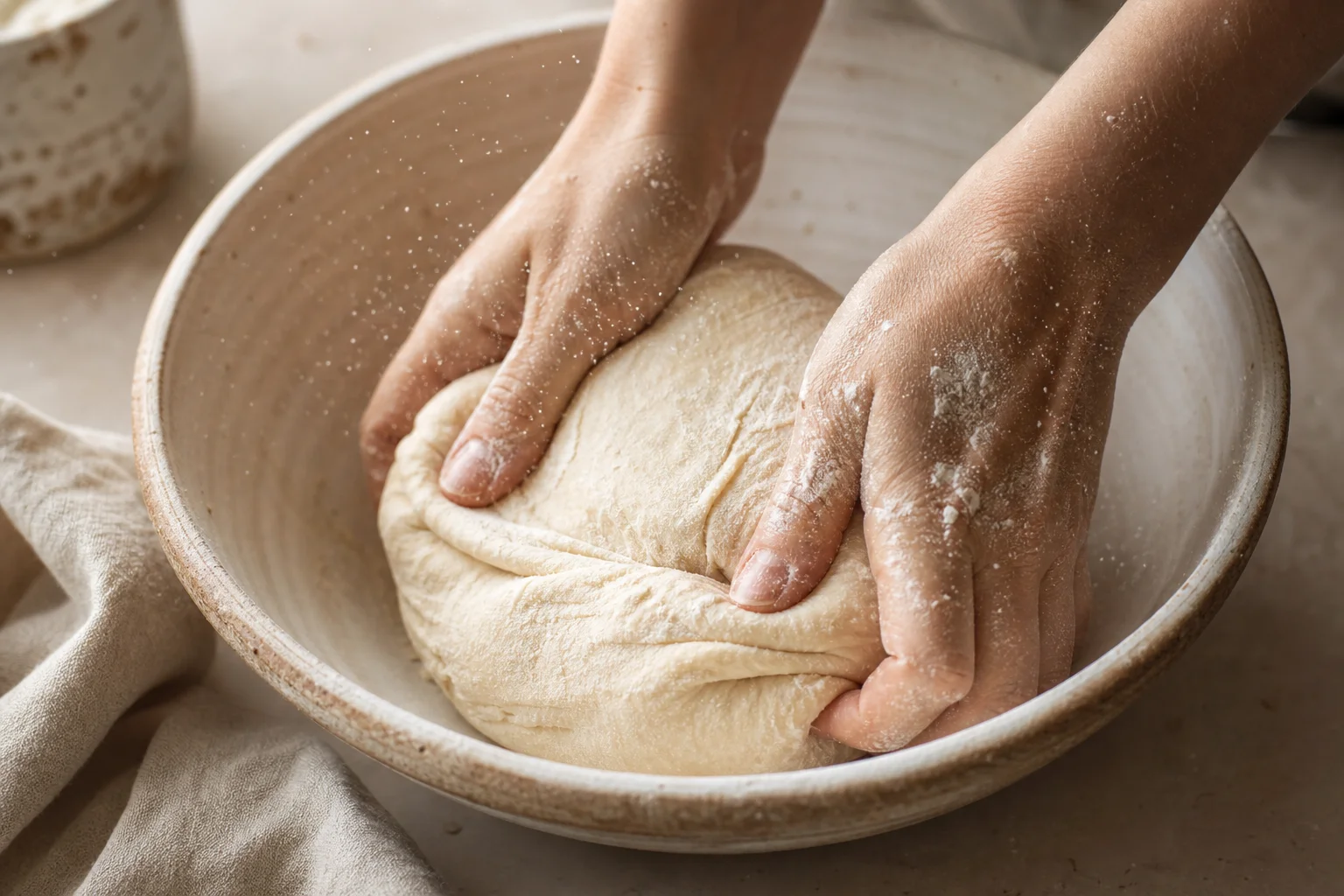
The stand mixer approach uses planetary action, where the attachment spins in place while circulating around the bowl. This motion covers the full bowl and incorporates ingredients evenly. Quality matters here: some mixers have large gaps between the attachment and the bowl bottom, leaving unmixed flour at the bottom. Better models have attachments that reach nearly to the bottom and sides, reducing the need to stop and scrape.
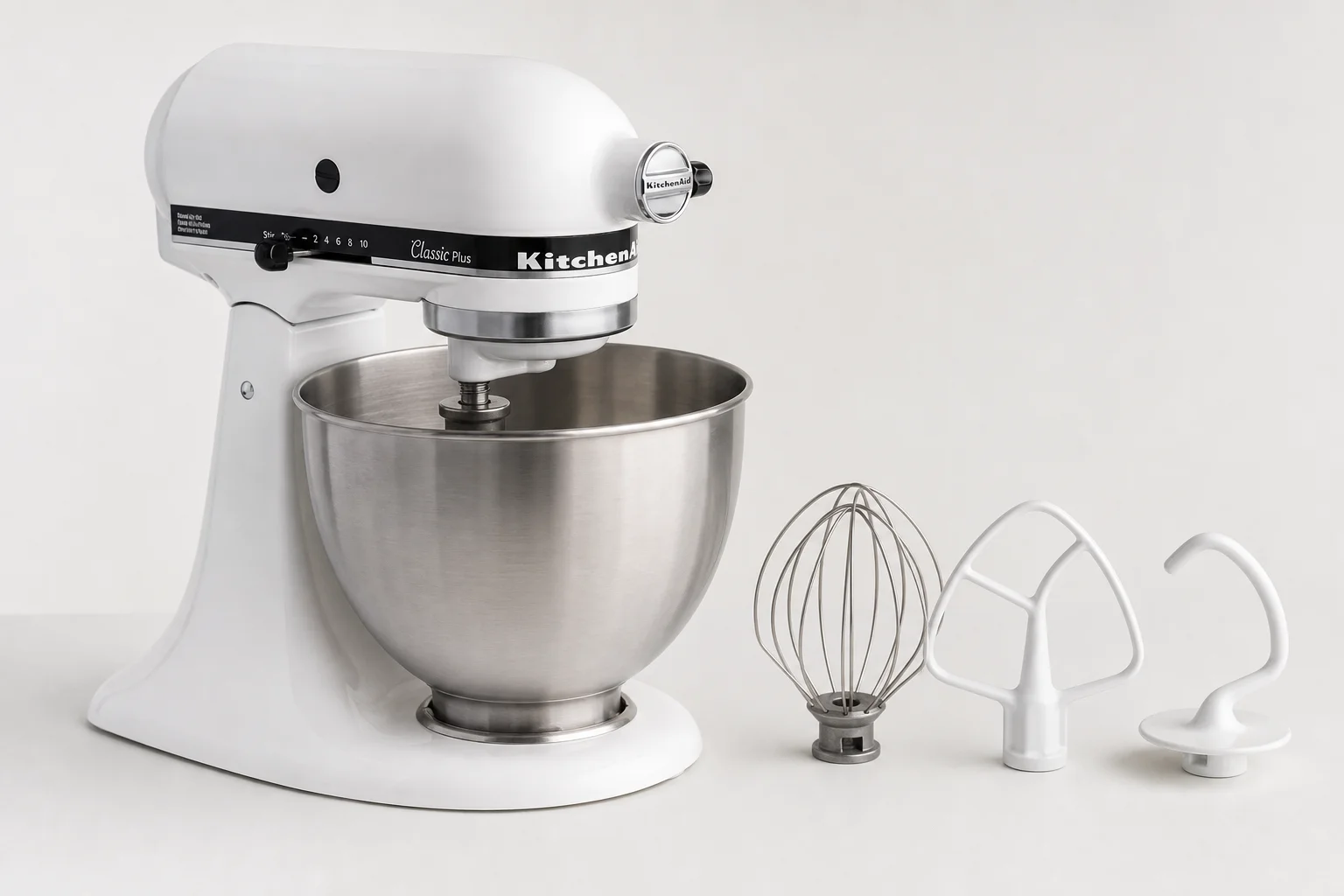
The KitchenAid Classic Plus Stand Mixer
The KitchenAid Classic Plus is a tilt-head stand mixer with a four-and-a-half-quart bowl. It stood out in testing for its ability to handle whipping, creaming, and kneading tasks that more expensive models also perform. The tilt-head design makes it simple to access the bowl: a single lever lifts the head out of the way without requiring you to reach around or hunt for controls.
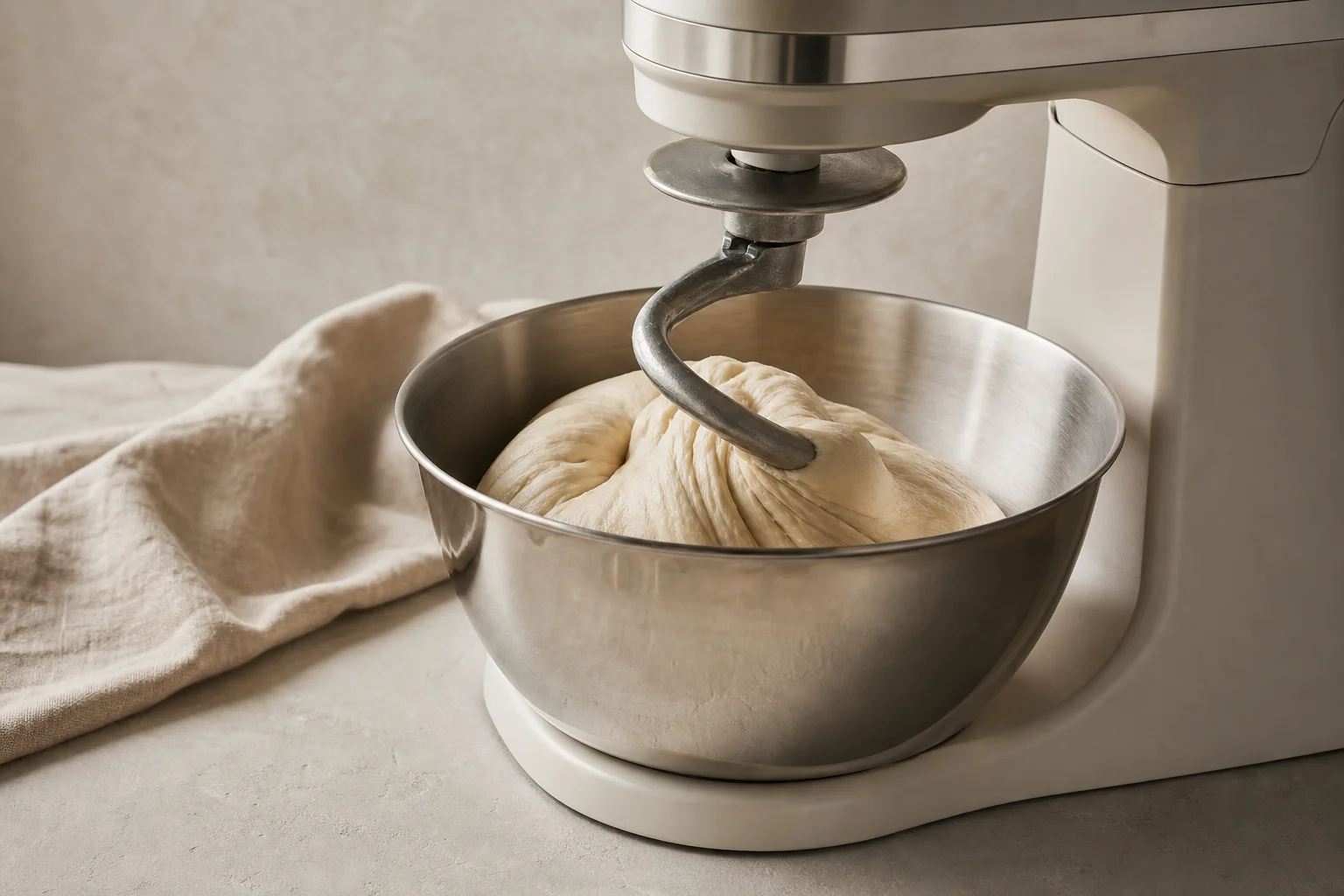
Speed control is straightforward, with numbered settings from zero to ten. The lowest setting is labeled “stir,” which is essential when starting with dry ingredients to avoid flour flying out of the bowl. The mixer comes with three attachments: a whisk, a flat paddle, and a dough hook. For simple doughs, the paddle alone is sufficient, but the dough hook becomes necessary for stiffer doughs.
One practical note: the advertised bowl size (four-and-a-half quarts) measures to the very top of the bowl. In reality, usable capacity is closer to three to three-and-a-half quarts, since filling to the brim causes splashing during mixing.
Hand-Kneading Workflow and Pans
After mixing in the stand mixer, the dough rises in the bowl, then gets shaped into a pan for final proofing and baking. The choice of pan affects both the finished appearance and cleanup.
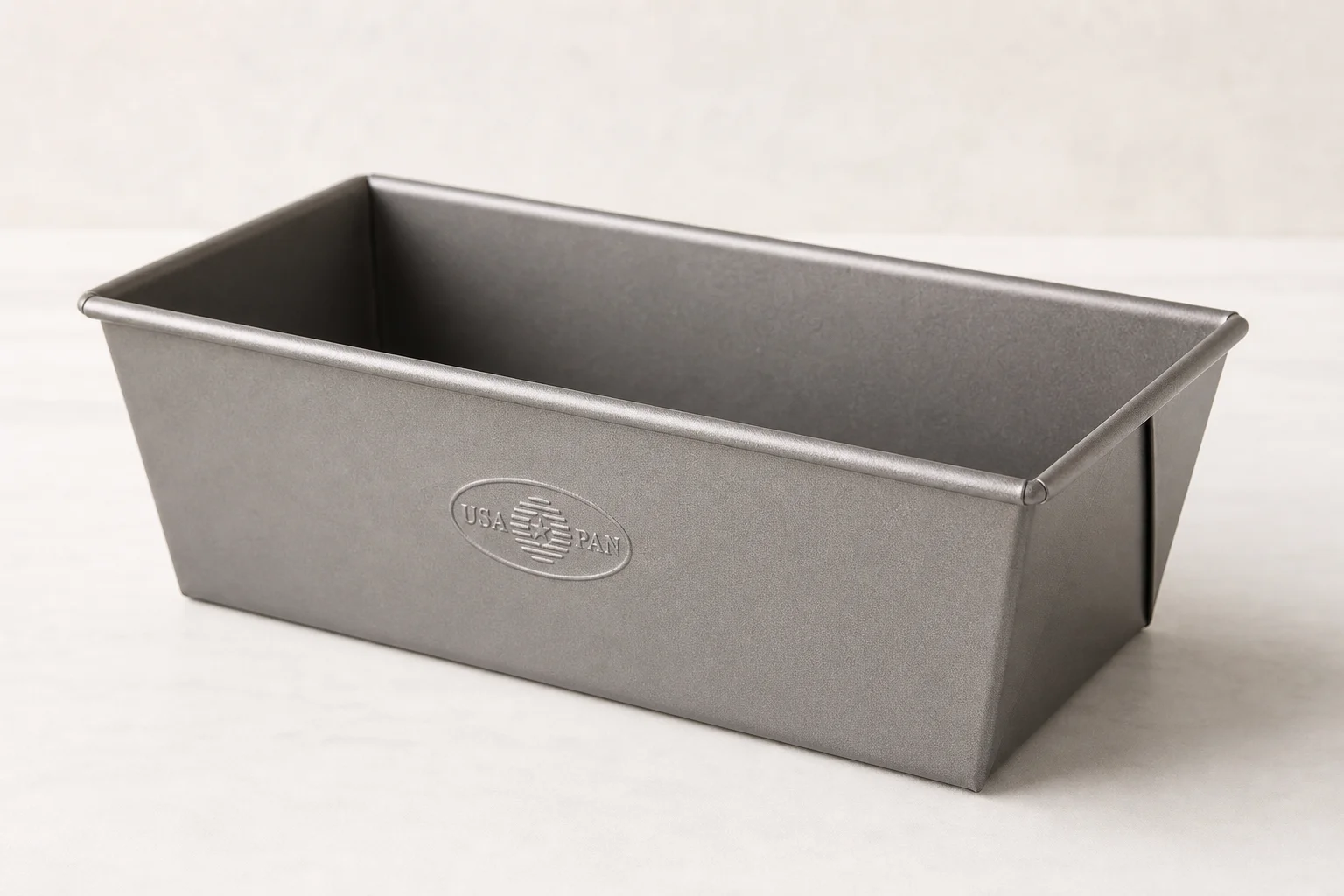
The USA Pan bread pan is sturdy and easy to manipulate, with a folded construction that creates crisp edges and a defined loaf shape. The metal is visibly folded at the corners, which is a characteristic of this manufacturing method. It releases beautifully and produces baked goods with excellent shape definition.
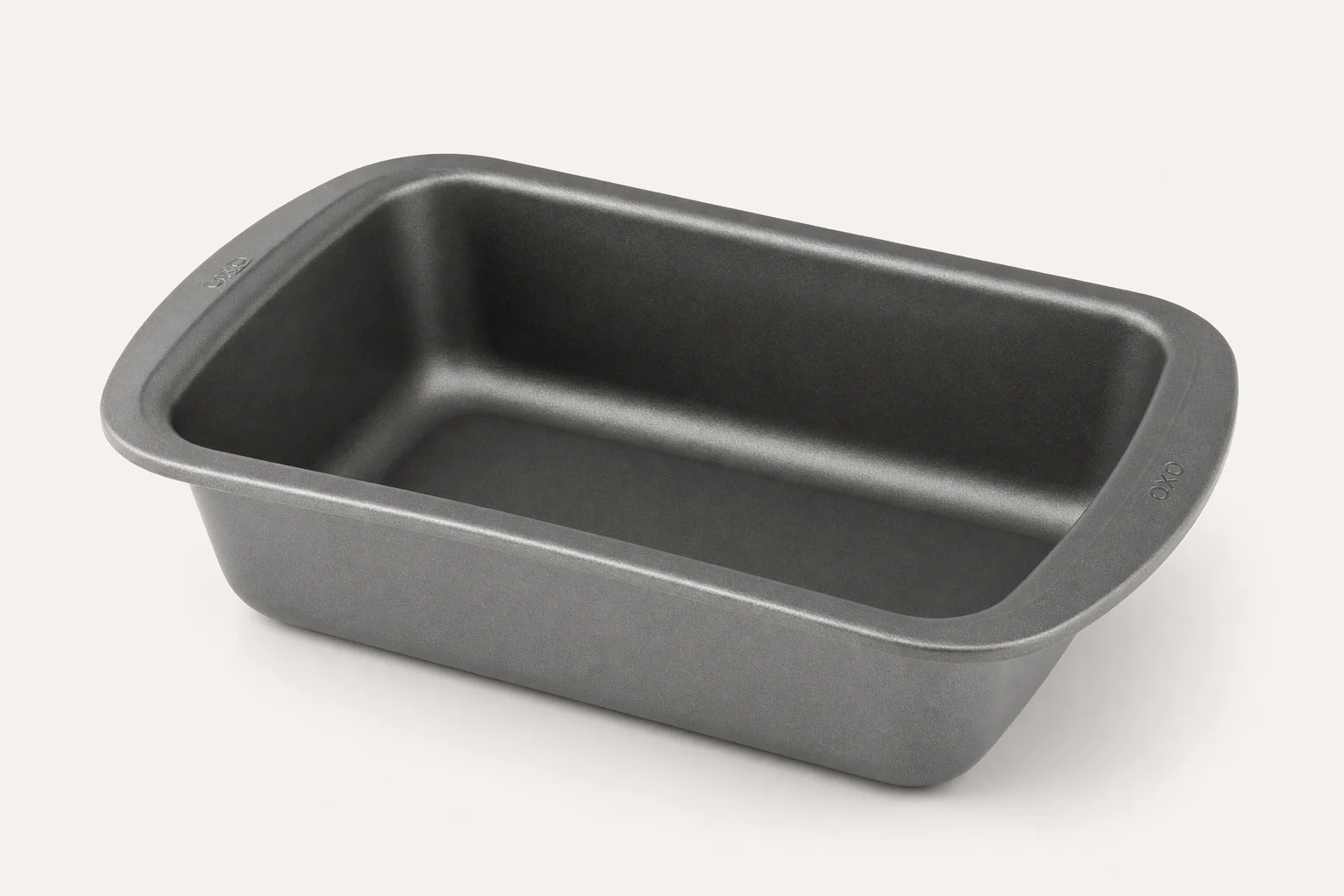
The Oxo bread pan is a molded alternative with slightly more rounded corners and a smoother interior. This design makes cleanup easier since flour doesn’t get trapped in sharp corners, but the finished loaf has less defined edges. Most test kitchens prioritize the appearance of the finished baked good over pan cleanup, making the USA Pan the preferred choice for visual results.
Finishing Touches for Hand-Kneaded Bread
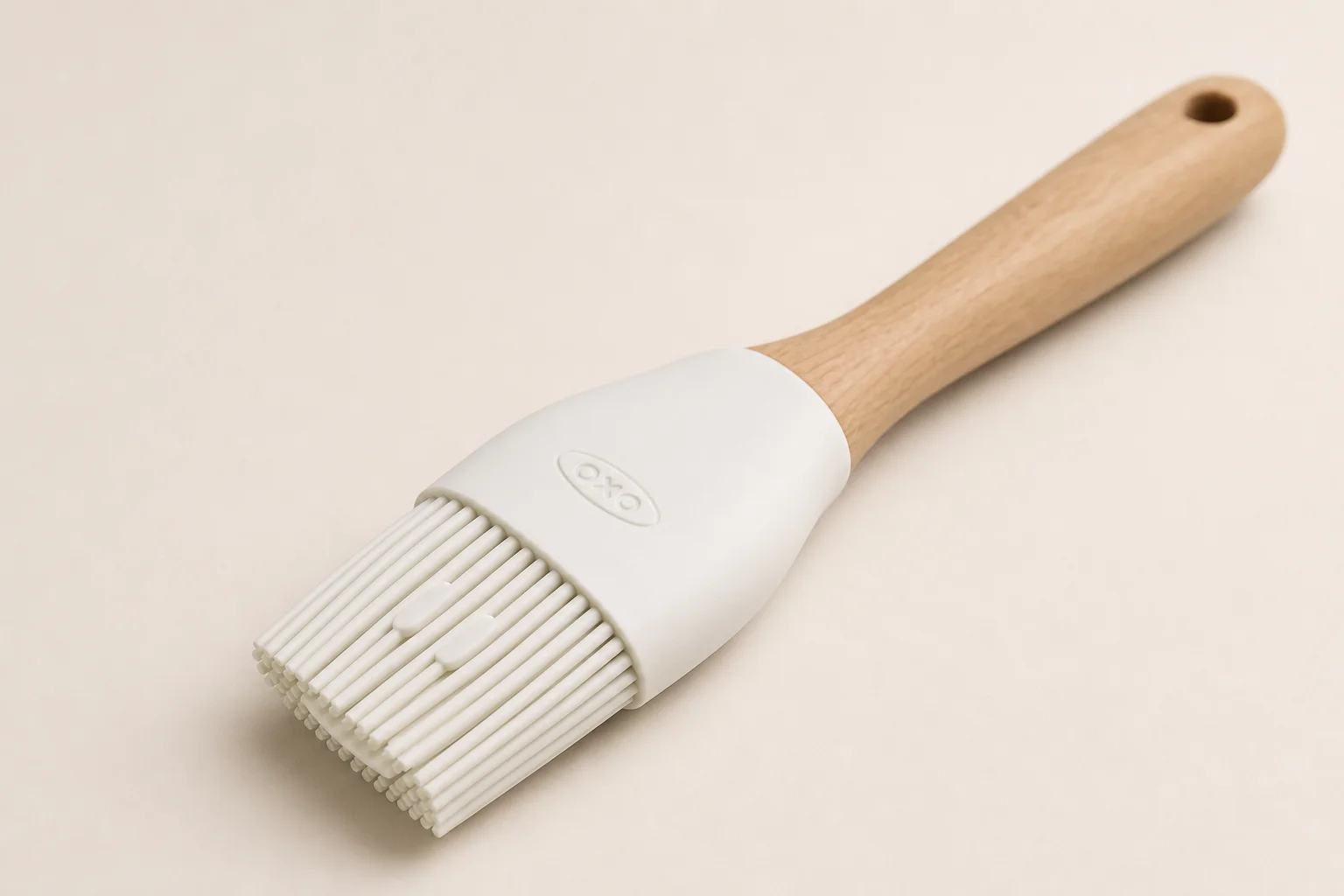
Before baking, an egg wash adds shine and color to the crust. The Oxo silicone pastry brush is designed for this task, with small tabs in the center of the bristles that help hold the egg wash. Being silicone, it can go directly into the dishwasher after use.
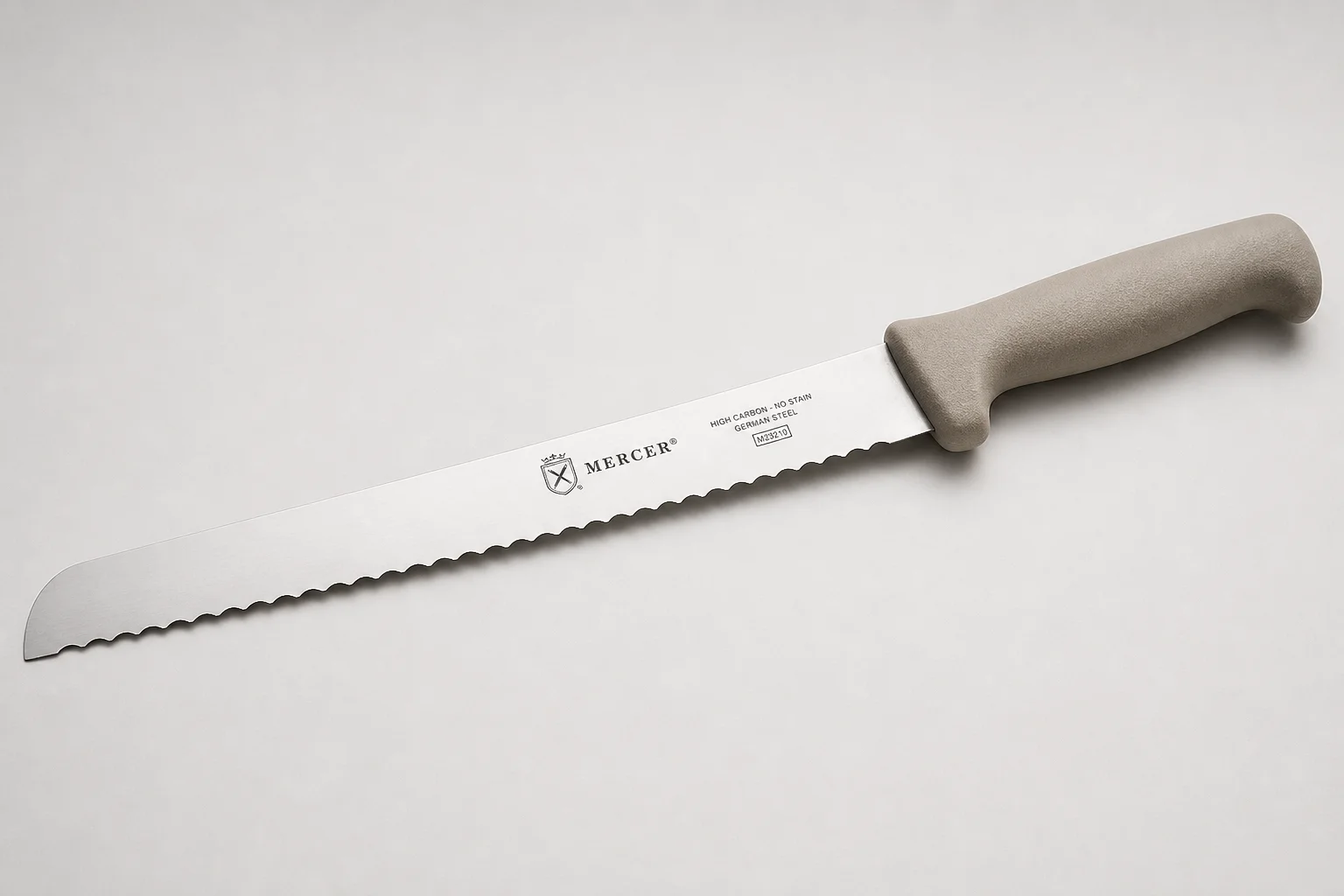
Once baked and cooled, a quality bread knife makes slicing clean and easy. The Mercer bread knife is over ten inches long, which is essential for large artisan loaves. The scalloped edge stays sharp and precise, cutting through the crust without squishing or ripping the interior crumb.
Bread Machine Convenience: The Zojirushi Supreme
Bread machines automate the entire process, from mixing through baking. They excel at producing consistent results for white breads, sweet breads, rye, and even chocolate babka. They are ideal for people who want fresh, homemade bread without the time commitment of hand-kneading.
The Zojirushi Supreme bread machine stood out among tested models, even outperforming a higher-end model from the same manufacturer. It features a clean, intuitive interface with preset buttons for Basic, Quick, Wheat, and Dough cycles. A Homemade button allows you to dial in custom kneading, rising, and baking times. The display clearly shows what stage the machine is in, removing guesswork.
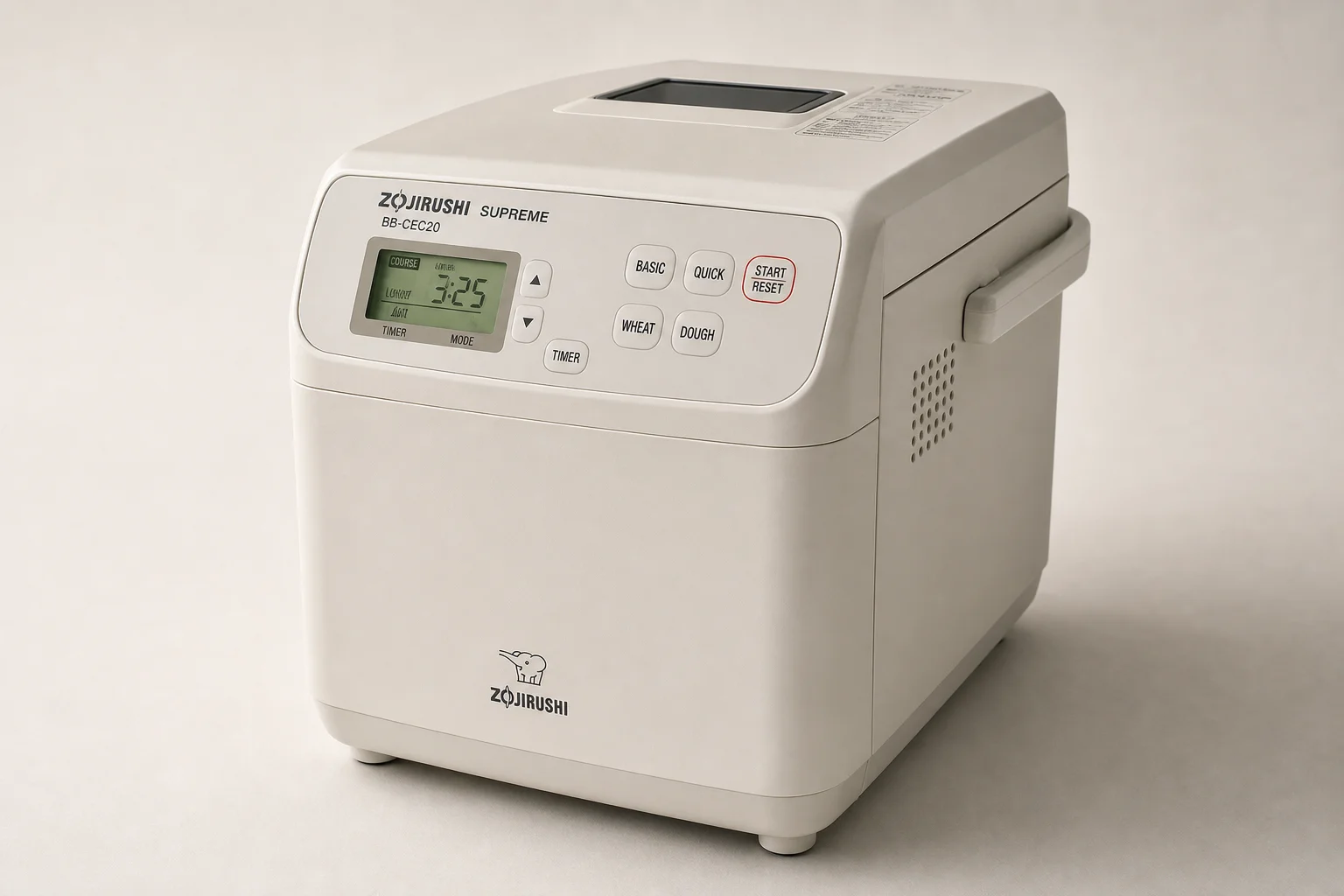
Using a bread machine is straightforward: add ingredients in the order specified by the recipe, close the lid, and press start. The machine handles all mixing, kneading, rising, and baking. One important tip applies to all bread machines: always add ingredients in the exact order the recipe states. Salt can inhibit yeast activity if added out of sequence, and ingredient order affects how evenly everything mixes.
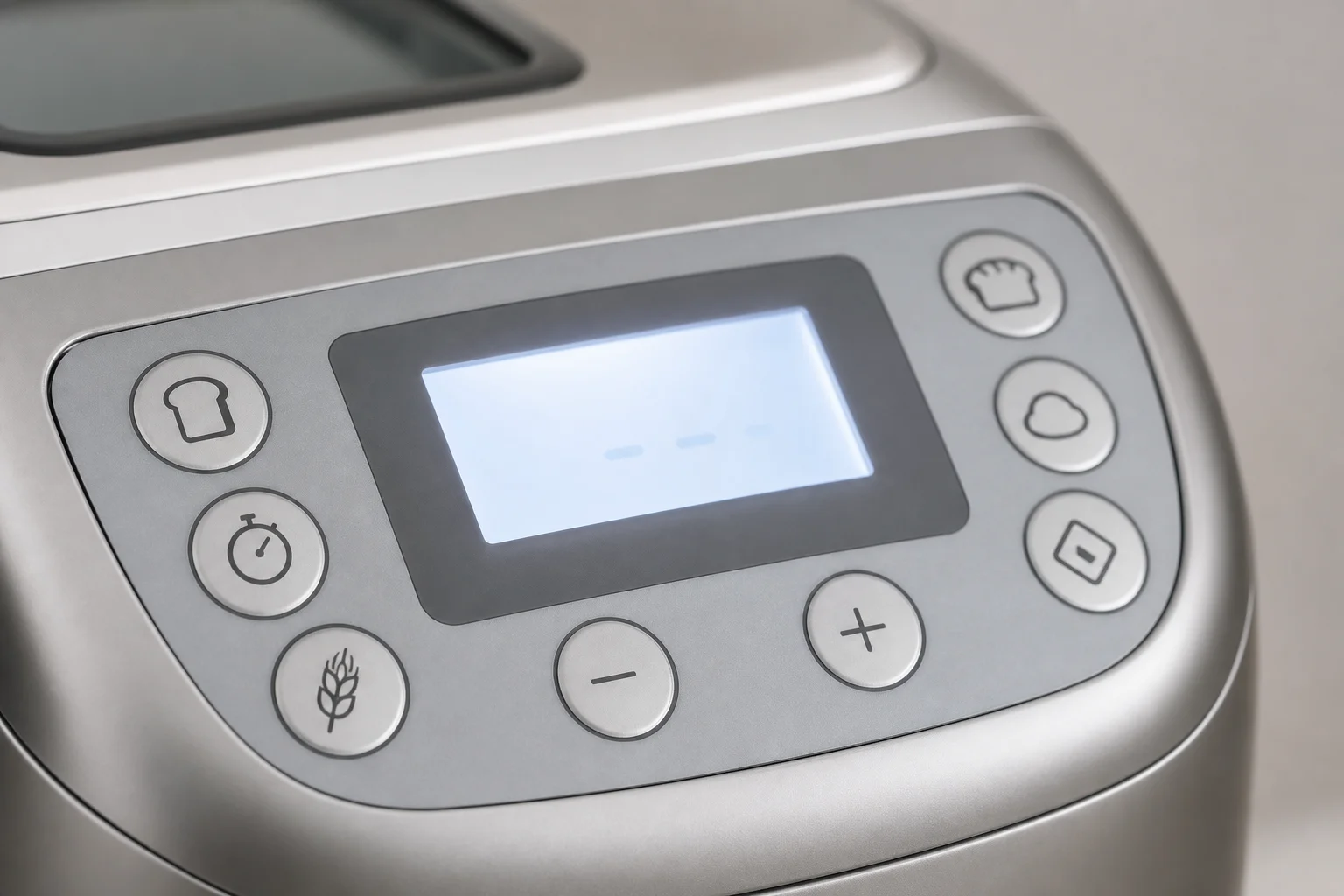
The Hamilton Beach Bread Machine: Best Budget Option
The Hamilton Beach bread machine is a less expensive alternative that consistently produces excellent loaves. It has a shorter power cord than some competitors, but this minor inconvenience is offset by reliable results and ease of use. The machine produces taller loaves than the Zojirushi, which some bakers prefer for larger sandwiches, though the Zojirushi’s more classic rectangular shape is generally preferred.
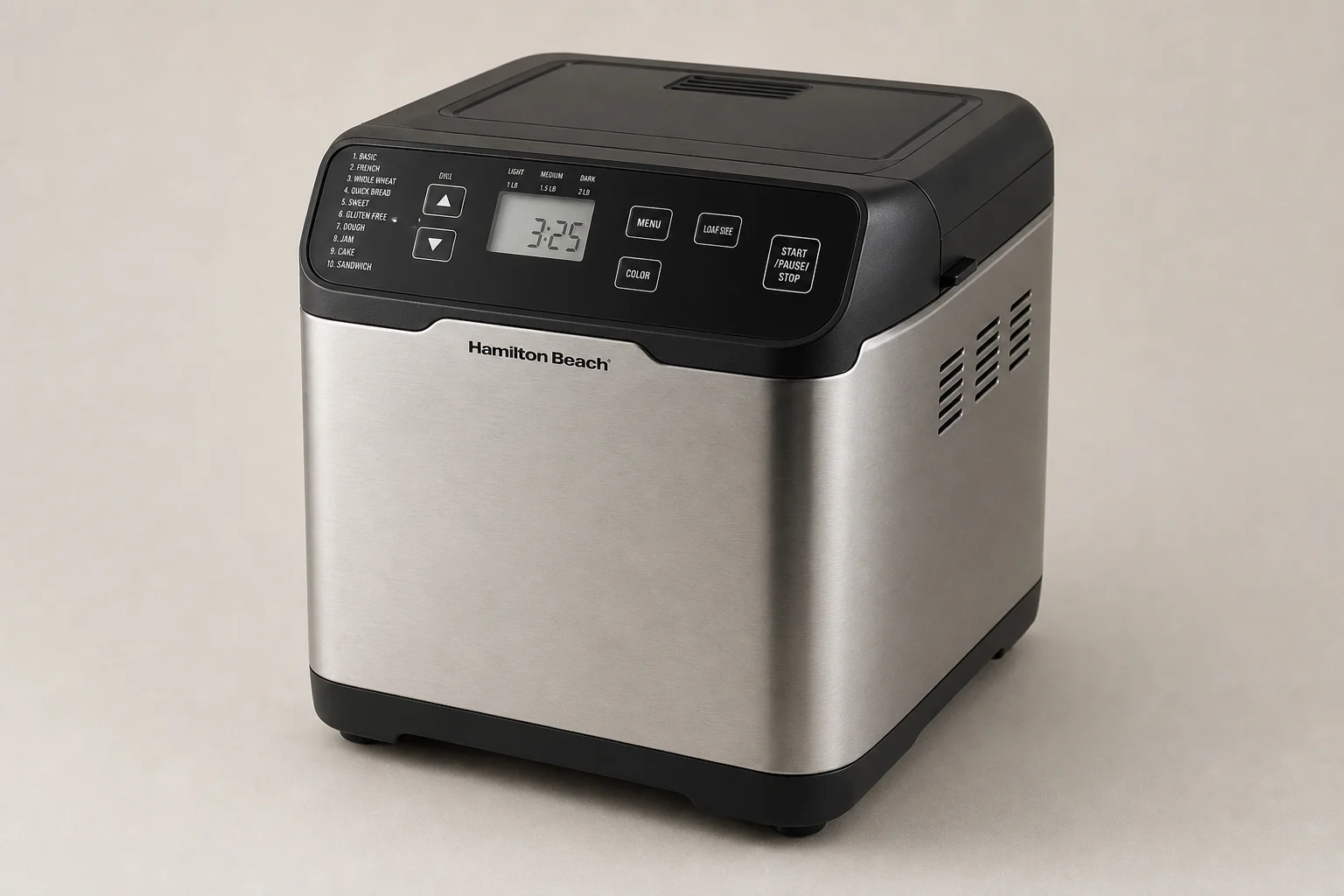
Both machines come with their own recipes and work equally well with custom bread machine recipes. Testing showed that even when making raisin bread, the Zojirushi distributed raisins evenly throughout, whereas other models sometimes clumped them unevenly.
Results and Trade-Offs: Which Method Wins
Hand-kneaded bread offers superior control over shaping and appearance. You can create any shape you want, score the top for visual appeal, and achieve a perfectly formed loaf. The process requires more hands-on effort and time, but the results are entirely under your control.
Bread machines produce evenly crumbed loaves with minimal effort. The trade-off is that you are limited to the shape of the machine’s pan. Most machines leave small paddle marks on the bottom of the loaf, but these are invisible once the bread is sliced. The top may not be perfectly even, and some machines produce loaves that hit the window at the top if the pan is too small, creating unappealing crackly tops.
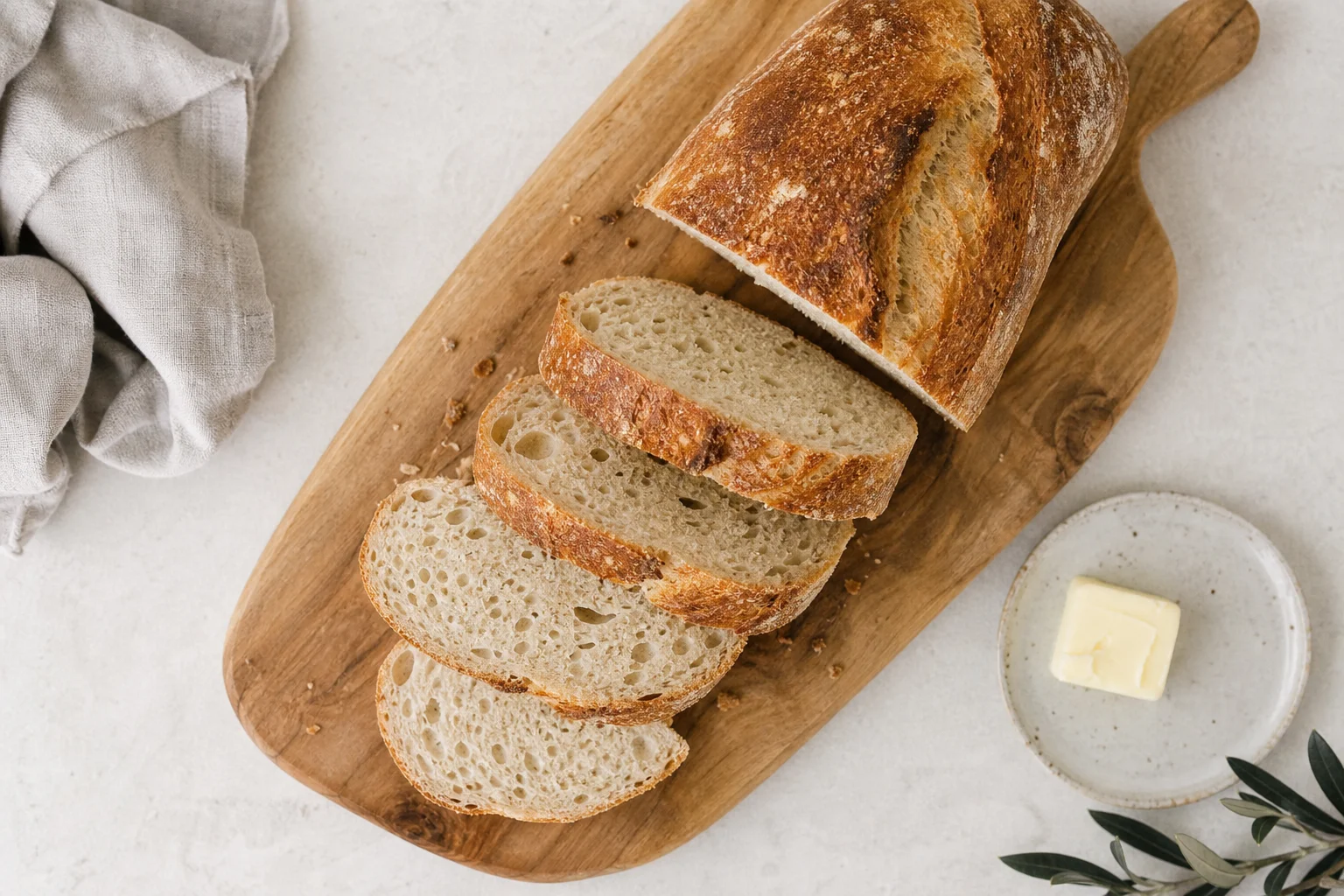
If you want fresh, homemade bread but lack the time or energy for hand-kneading stages, a bread machine is the right choice. If you enjoy shaping dough, working on scoring techniques, and having complete control over the final appearance, the hand-kneading route with a stand mixer and quality pans is worth the extra effort.
Conclusion
Both methods produce delicious bread. The choice depends on your priorities: choose hand-kneading if you value control and appearance, or choose a bread machine if convenience and consistency matter more. Either way, fresh homemade bread is well within reach.
Further reading
Related Reviews
Baking Equipment
Best Baking Sheets for Cookies: Five Top Options Compared
A practical roundup of five baking sheet sets with clear strengths and trade-offs to help you choose the right one for your cookie baking needs.
Baking Equipment
Best Gear for Small-Batch Baking: Essential Tools and Appliances
A complete guide to the essential equipment and specialized tools for baking cookies, cakes, and desserts for one or two people, including scales, mixers, pans, and small appliances.
Pickleball Paddles
2025 Paddle Awards: The Best Pickleball Paddles of the Year
A category-by-category breakdown of the best pickleball paddles of 2025, covering value, control, all-court, power, and paddle of the year.