Camping Fridges
BougeRV Rocky 40 Dual Zone 12V Fridge/Freezer Review: Is a 12V Fridge Worth It?
A practical look at the BougeRV Rocky 40 Dual Zone 12V fridge and freezer, from dual zone cooling and battery backup to the cost and power demands to weigh first.
Introduction
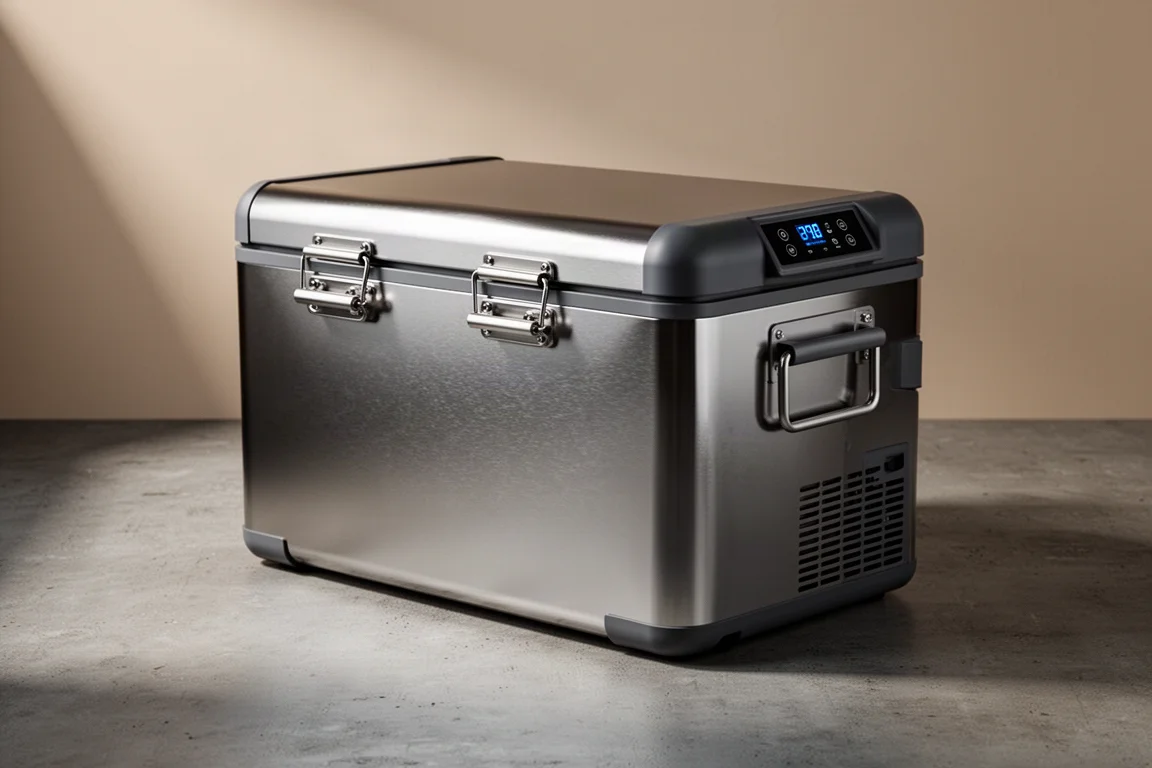
A 12V compressor fridge changes the way you pack for a camping trip. Instead of buying ice, draining meltwater and hoping the food at the bottom of the cooler stays cold, you plug in a unit that holds a set temperature for days at a time. The BougeRV Rocky 40 Dual Zone is the smallest model in the Rocky series, a 41-quart fridge and freezer combo that was run continuously across five days of family car camping. It is priced at $549, with an optional battery pack available separately for around $200.
What follows is a breakdown of what the Rocky 40 does well, where it asks more of you than a cooler would, and which campers it suits best.
Who This Fridge Is For
The Rocky 40 is aimed at campers who want refrigeration rather than ice management. At 41 quarts it is a practical size for a family, and the dual zone layout means one side can hold frozen food while the other stays at fridge temperature. That opens up things a cooler struggles with, such as ice cream on a summer trip or meat kept reliably cold across several days.
Its footprint helps as well. At 28 inches long, 18 inches wide and 16 inches tall, it fits into fairly small spaces, including compact SUVs and small trucks. For campers who count every inch of cargo room, that matters as much as capacity.
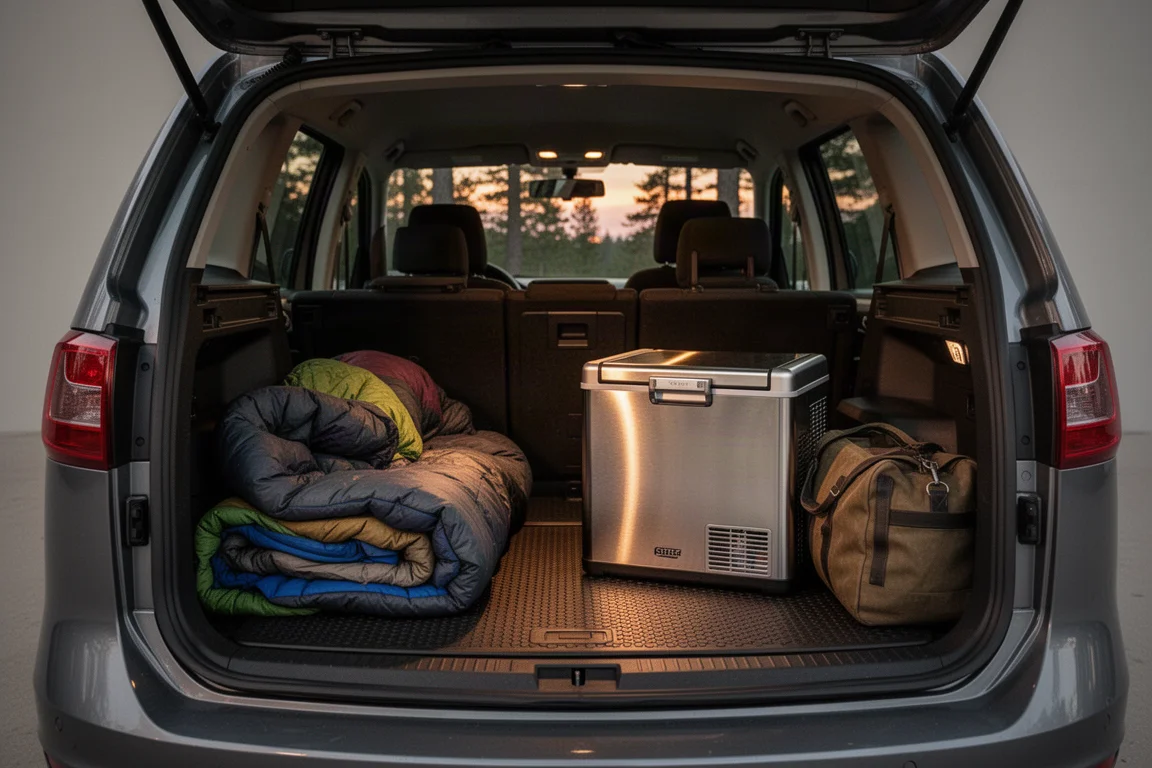
Because the unit holds a set temperature rather than relying on ice, food does not sit in meltwater and does not need to be rearranged around a shrinking block of ice.
Dual Zone Cooling and Temperature Control
A divider inside the Rocky 40 splits the compartment into two independently controlled zones. In the configuration used on this trip, the right side ran at -4°F as the freezer and the left side at 28°F as the refrigerator, cold enough to keep items firmly frozen on one side while the other side stays at normal fridge temperatures.
There is one quirk worth knowing. The right-hand zone has to be the freezer whenever it is set colder than the left, and the right side is the larger of the two. If you would prefer the bigger compartment to run as the fridge, the layout does not allow it. Remove the divider entirely and the unit becomes a single-temperature fridge or a single-temperature freezer.
Controls are straightforward. Temperature is easy to set, and the unit switches between Eco and Max modes. Three levels of battery protection, low, medium and high, let you decide how far the fridge may draw a battery down before shutting itself off, which protects a vehicle battery from being drained past the point where it can start the car.
The Optional Battery Pack and Solar Input
The feature that separates the Rocky 40 from many other 12V fridges is the optional battery pack. It has a 173 Wh capacity, plugs directly into the side of the fridge, and can run the unit for roughly five hours without any other power source. That removes the need to keep it tethered to a power station for short stretches.
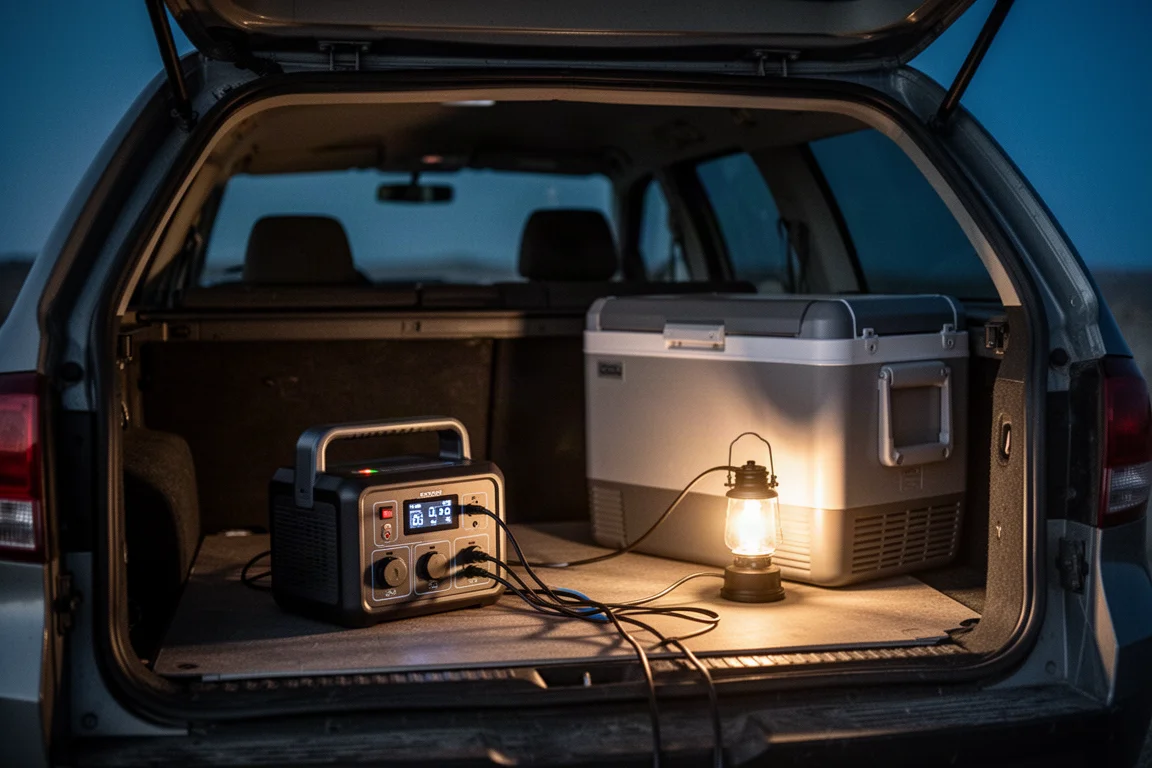
It also acts as a fail-safe. Some power stations shut off in cool weather when the fridge cycles infrequently, leaving the fridge unpowered for hours at a time. With the battery attached, the fridge keeps running instead.
The battery pack includes a solar input that accepts up to 100 watts, so a panel can top it up while you are camped. Combined with the fridge’s own efficiency, that makes the setup considerably more portable than a fridge that must stay plugged into a station.
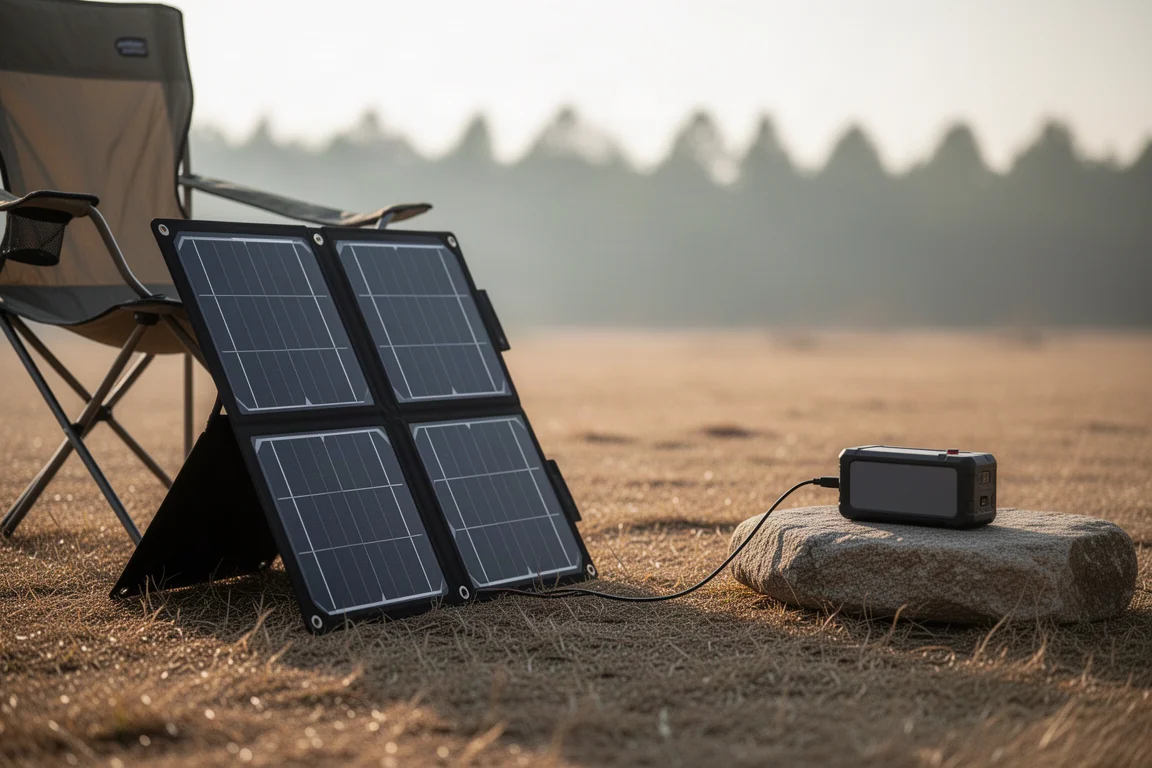
For trips where the fridge stays in one place for days, the solar input means the battery can recover without being carried back to a wall outlet.
Build Quality and Everyday Use
The body uses a stainless steel finish. It picked up a few light scratches from gear being set on top, but it resists fingerprints and did not become a problem in direct sun, where a metal exterior might be expected to make the compressor work harder. Three cutouts along the lid edge serve as drink holders, giving the unit a second life as a campsite tabletop, and the body is strong enough to sit on.
The lid is removable and can be switched to open from either side. It also opens in a direction that leaves more clear space to reach in and out, a small detail that becomes noticeable over a multi-day trip. The spring-loaded handles sit flush against the sides when not in use, so nothing protrudes into valuable cargo space. A bottle opener is built in as well.
Power Draw and Efficiency
Efficiency is one of the stronger arguments for this unit. In Eco mode the fridge draws 45 watts or less while the compressor is running, and with the two zones split between freezer and fridge temperatures, an overnight stretch of around eight hours used roughly 25 percent of a 1,152 Wh power station. That is a manageable figure for campers who already travel with a station and want to add refrigeration without doubling their power needs.
One interior detail could be improved. The compartment liner is plastic rather than metal, and a metal interior would likely help the unit hold temperature a little more efficiently.
Things to Consider Before Buying
Cost is the first thing to weigh. At $549, the Rocky 40 is considerably more expensive than a cooler of similar capacity, and the optional battery adds roughly $200 on top. A comparable 50-quart premium cooler often lands in the $250 to $300 range. Whether that gap is worth it depends on how much you currently spend on ice and how often you camp.
A cooler also has very little that can break. It is insulation and plastic, with latches and hinges as the only real wear points. A 12V fridge adds a compressor, electronics and controls, so there is more that can eventually fail.
Power is the other consideration. The fridge needs a consistent supply, either from a power station or from a vehicle’s 12V outlet. Many vehicles cut power to that outlet once the engine is off, which means a station, or the optional battery, becomes part of the cost of ownership.
Portability matters too. A loaded fridge with a compressor inside is heavier than an equivalent cooler, and moving it around requires power nearby. Not every 12V fridge offers an optional battery pack, so the Rocky 40 is more flexible than most in this respect, but it is still a unit that prefers to stay put in the back of a vehicle or in a tent vestibule.
Buying Advice
The Rocky 40 makes the most sense for campers who go out often, stay out for several days at a time, and already carry a power station or are willing to invest in one. For that group, the combination of consistent temperature, a genuine freezer zone, and a battery pack that can be topped up with solar addresses the weaknesses of ice-based cooling.
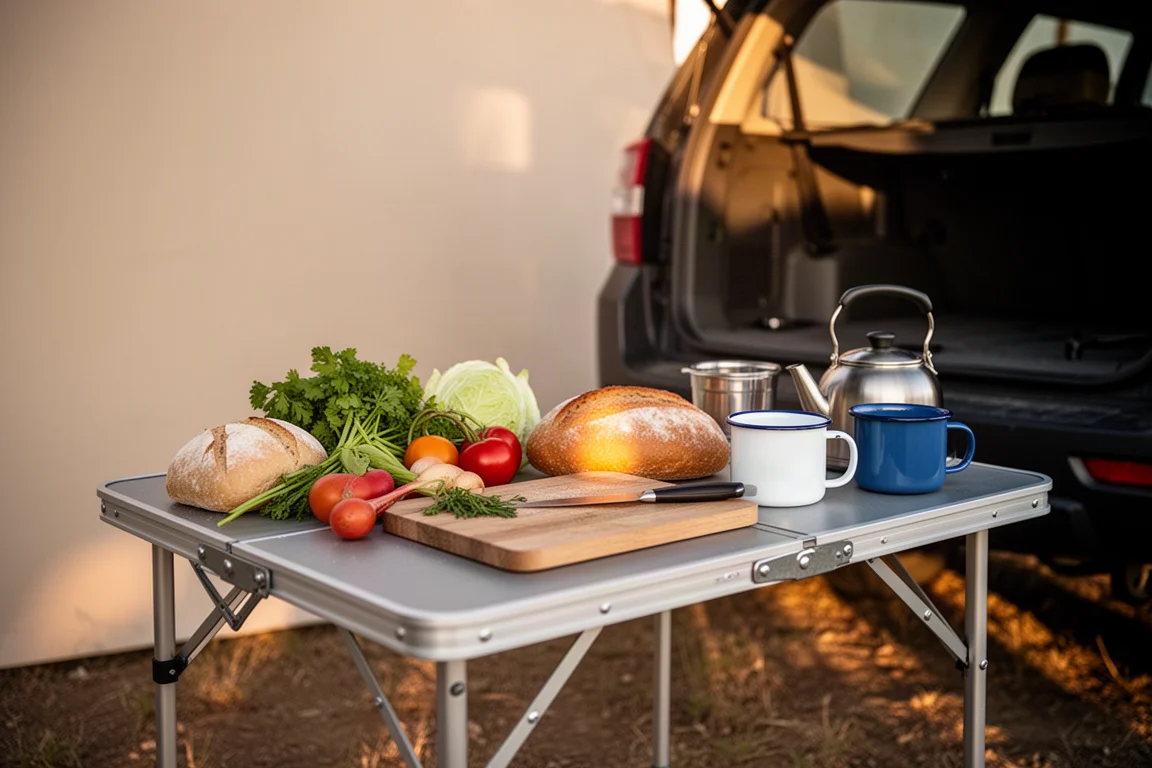
If your trips are short, infrequent, or involve carrying everything by hand to a campsite, a cooler remains the simpler and cheaper answer. The fridge rewards people who camp regularly enough that ice runs and spoiled food become real costs of their own.
Conclusion
The BougeRV Rocky 40 Dual Zone delivers what a 12V fridge is supposed to deliver: steady temperatures, a freezer that actually freezes, and no ice to manage. Its dual zone layout, compact footprint, efficient Eco mode and optional 173 Wh battery pack with solar input make it a well-rounded option for family car camping. The caveats are the ones that apply to the category, namely a higher upfront cost than a cooler and a genuine dependence on consistent power. For campers who fit the use case, that trade is easy to justify.
Product link
View more details for BougeRV Rocky 40 Dual Zone 12V Fridge/Freezer
This product is mentioned in the review. Check the specifications, options, and compatibility before buying.
View more details for BougeRV Rocky 40 Dual Zone 12V Fridge/FreezerFurther reading
Related Reviews
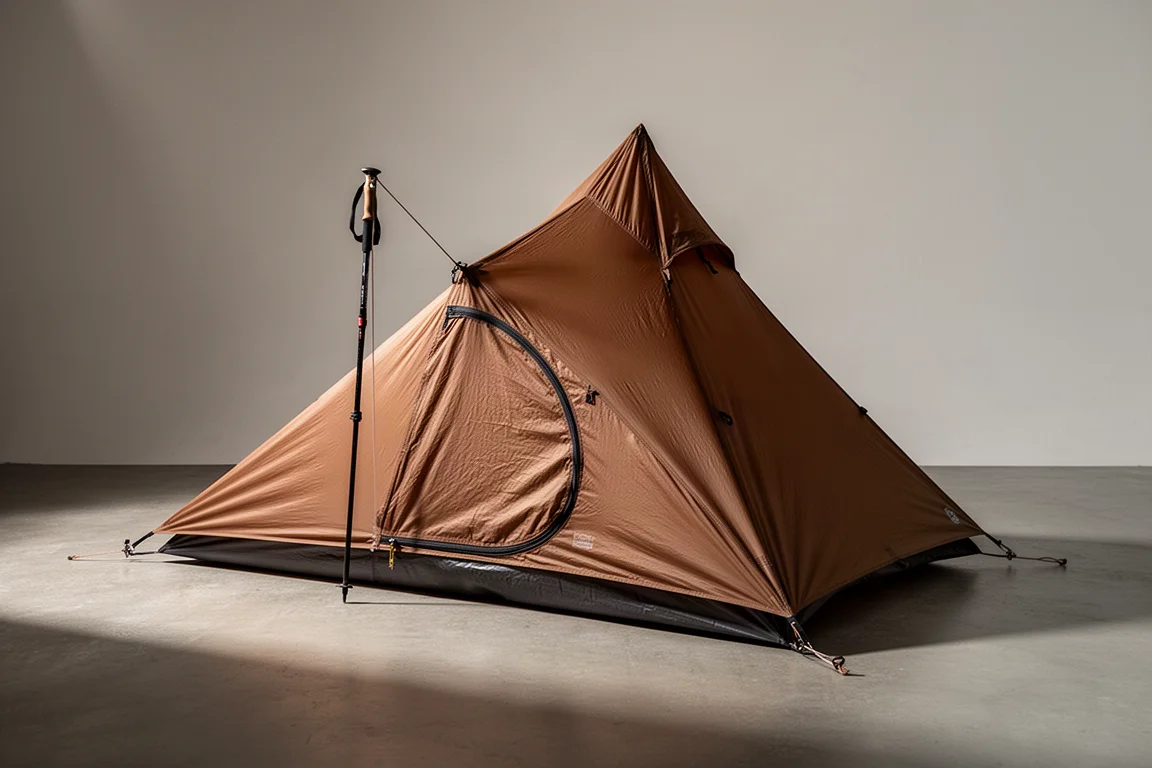
Backpacking Tents
3F UL Lanchan Pro 1 Review: A 1 lb 8 oz Single-Wall Trekking Pole Tent
A practical look at the 3F UL Lanchan Pro 1, a single-wall trekking pole shelter with a 1 lb 8 oz weight, 20D silnylon fabrics, and a roomy 90 x 31 x 49 inch interior.
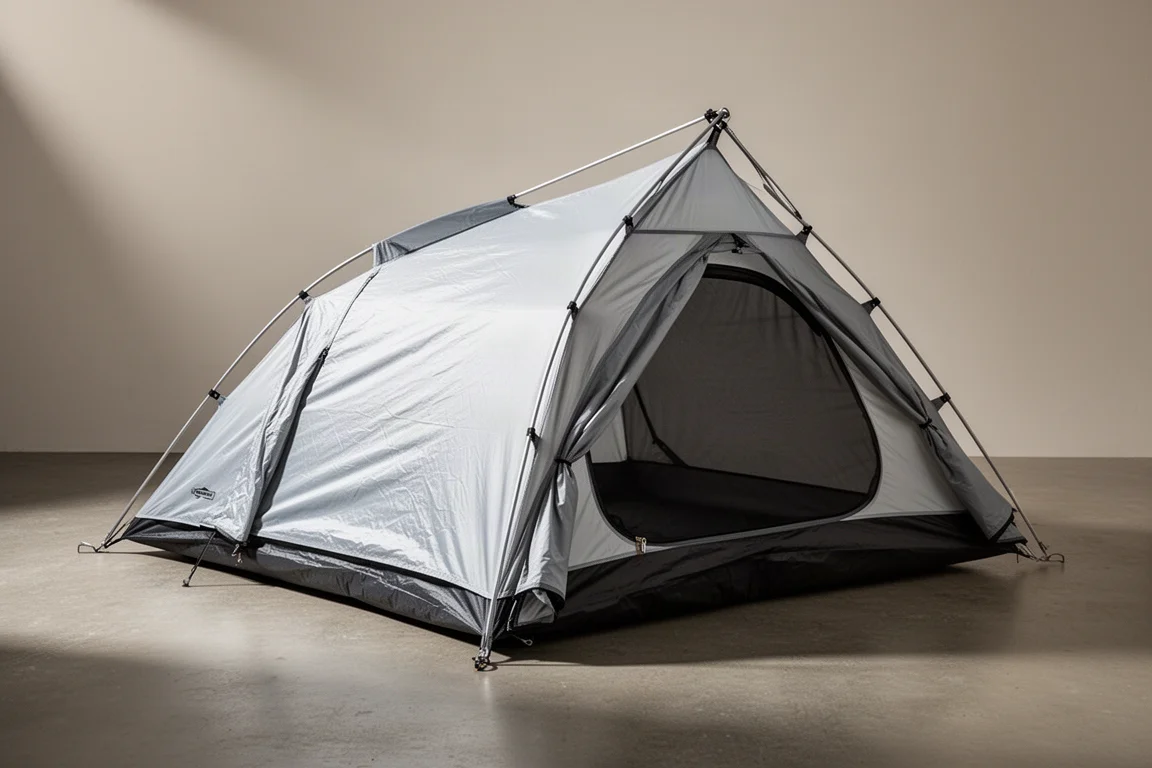
Backpacking Tents
3F UL Taiji 2-Person Tent: A Convertible Backpacking Shelter Worth a Closer Look
A practical look at the 3F UL Taiji two-person tent, covering its materials, true two-person interior, fly-first pitching, and the seasonal inner swap that lets one shelter cover more of the year.
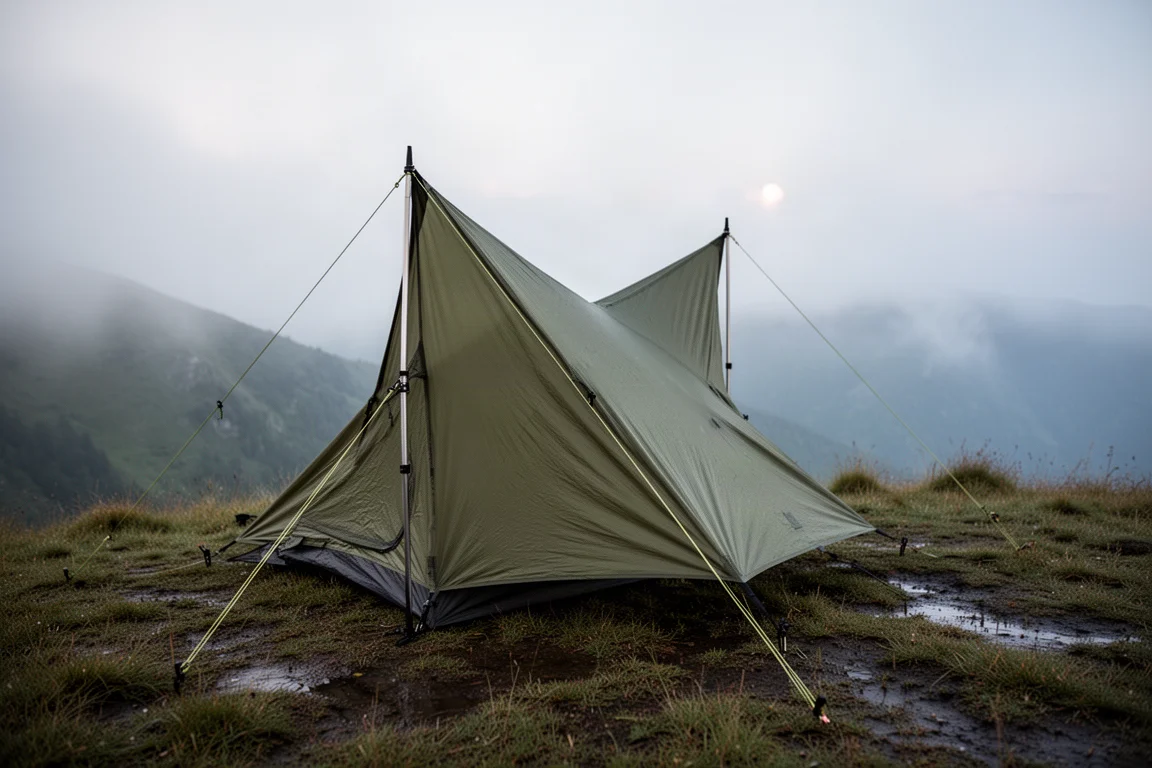
Backpacking Tents
3FUL Lanshan Twoerson Pro Review: A Light Trekking Pole Shelter That Struggled in Rain
A two-person trekking pole shelter with a 2026 redesign, pitched with sticks and put through a night of steady rain. Here is what worked, what did not, and what to check before buying.