Art Supplies
Boku Undo Japanese Watercolors: A Practical Review of the Shadow/Black Range
A hands-on look at the Boku Undo Shadow range watercolors, covering how they behave on paper, their safety documentation, and who they suit best.
Introduction
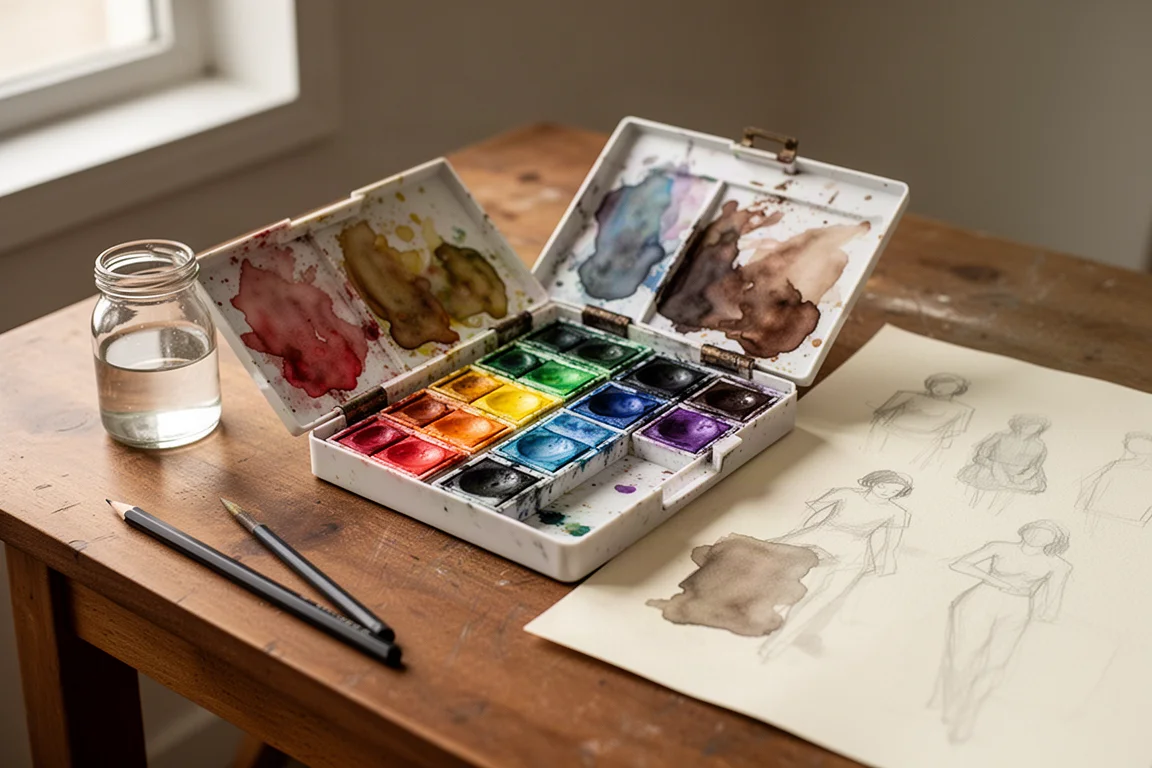
Boku Undo is a traditional Japanese paint maker best known for Sumi-e ink painting supplies, and their watercolor pans occupy an unusual niche: an ink-based paint sold in a range of pre-tinted shadow colors. The Shadow/Black range we’re looking at here contains six tints, each designed to help you lay down convincing shadows without mixing from scratch. If you’ve ever wished your shadow washes leaned warm, cool, or somewhere in between without extra palette work, this set is built around exactly that idea. After spending time swatching and sketching with it, here’s how it actually performs.
What’s in the Shadow Range
The set covers six distinct tints: a reddish, a yellowish, a greenish, a bluish, a purplish, and a brownish shade. Rather than one neutral grey, you get a spectrum of shadow tones, which is genuinely practical. If you want a cool shadow, reach for the blue or purple; a warm shadow, the red or brown. That can save you mixing time, especially in a sketchbook workflow where you’re painting figures or scenes quickly.
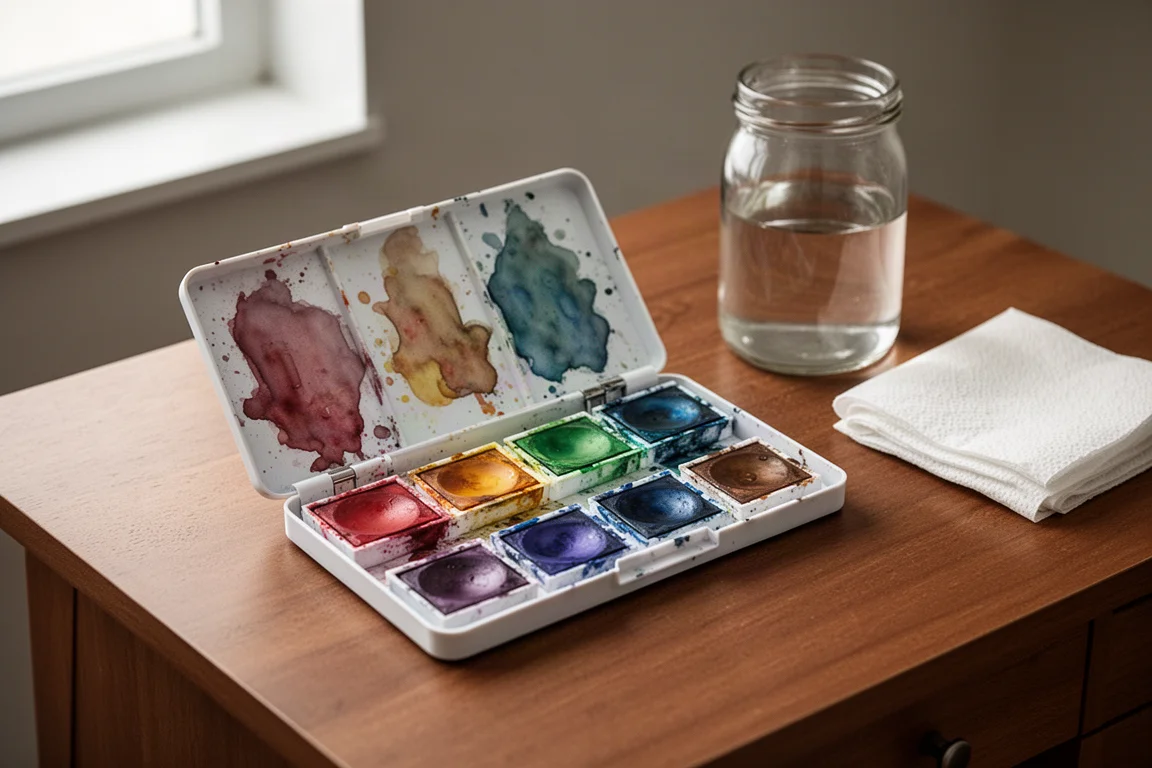
The color itself is good, with strong pigment presence, and the pans dissolve easily in water with no fuss. One thing worth noting is that these paints shade toward the darker side of their tone, which is very much by design for a shadow range. The trade-off is that hitting a clean mid-range tone takes a bit more care than you might expect.
Safety and Documentation
Because these are traditional Japanese paints, most of the manufacturer’s information is published only in Japanese, which makes tracking down pigment and safety data a chore. The brand’s own safety data sheet is available through the Dick Blick website, and it classifies the paints in the class 2 carcinogen area. That classification is ambiguous on its own, indicating a substance that may or may not be linked to cancer risk, and realistically you’d need to ingest the paint or inhale particles for it to matter. For normal watercolor use, the paints are generally considered safe.
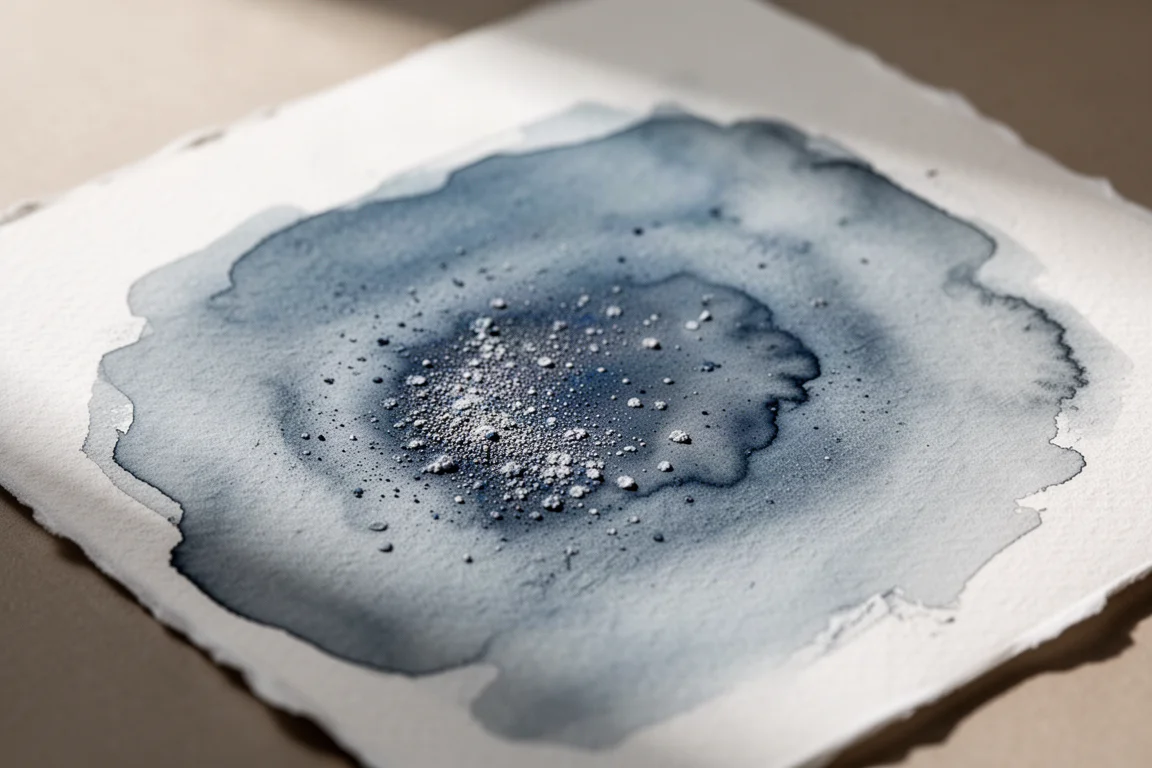
It’s also worth knowing that these paints show visible sediment, with pigment settling in the pans and in your washes as they dry. That granulating character is part of the appeal for many artists, but if you prefer perfectly flat, even washes, keep it in mind.
How They Handle on Paper
In use, these paints are easy to like. They go down smoothly, dissolve nicely, and the pigment strength holds up well in a wash. The defining trait, though, is that everything shades to the darker side. Even the lighter tints bias dark, so dialing in a mid-tone takes deliberate dilution control rather than a heavy hand. That’s a handling habit more than a flaw, and it’s worth practicing before you take the set into finished work.
Painting Shadows in a Sketch
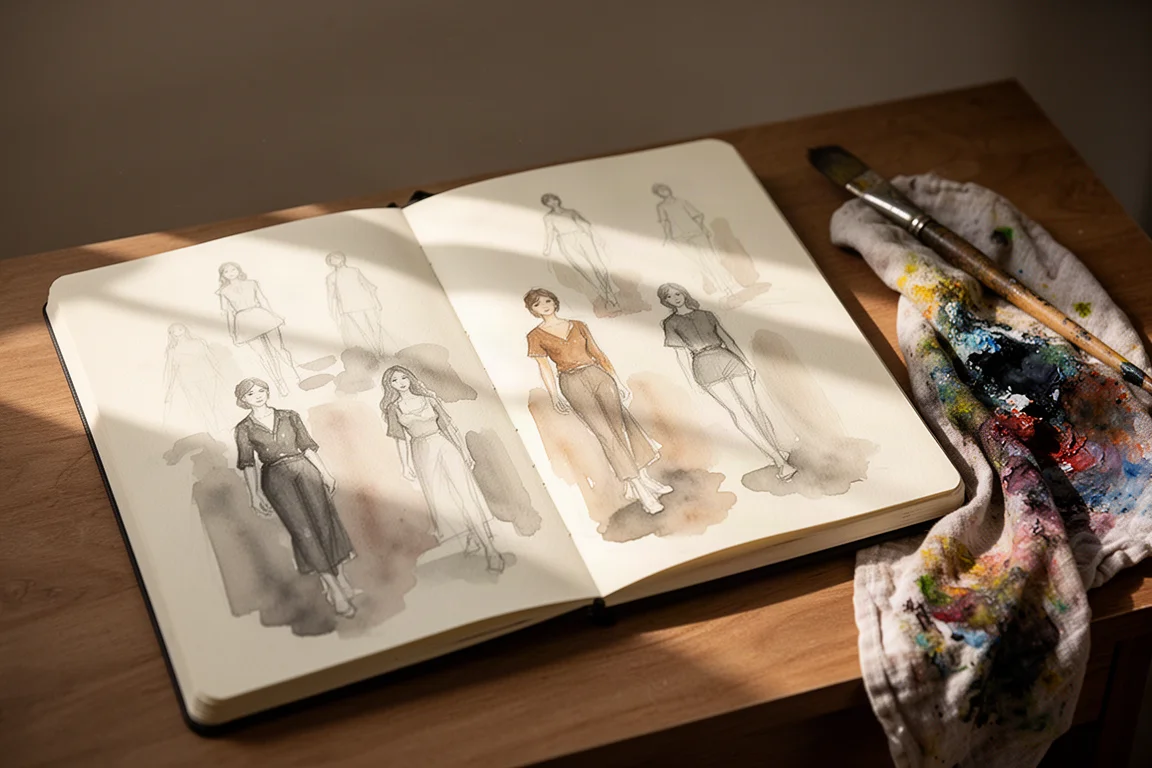
Where this set earns its place is in sketching. Painting figure studies with shadow shapes under people and objects is a natural fit, and a simple shadow line drawn along the feet is enough to ground figures so they don’t float in space. The bluish tint in particular behaves much like the familiar Payne’s grey many sketchers already use, making it an easy entry point into the set.
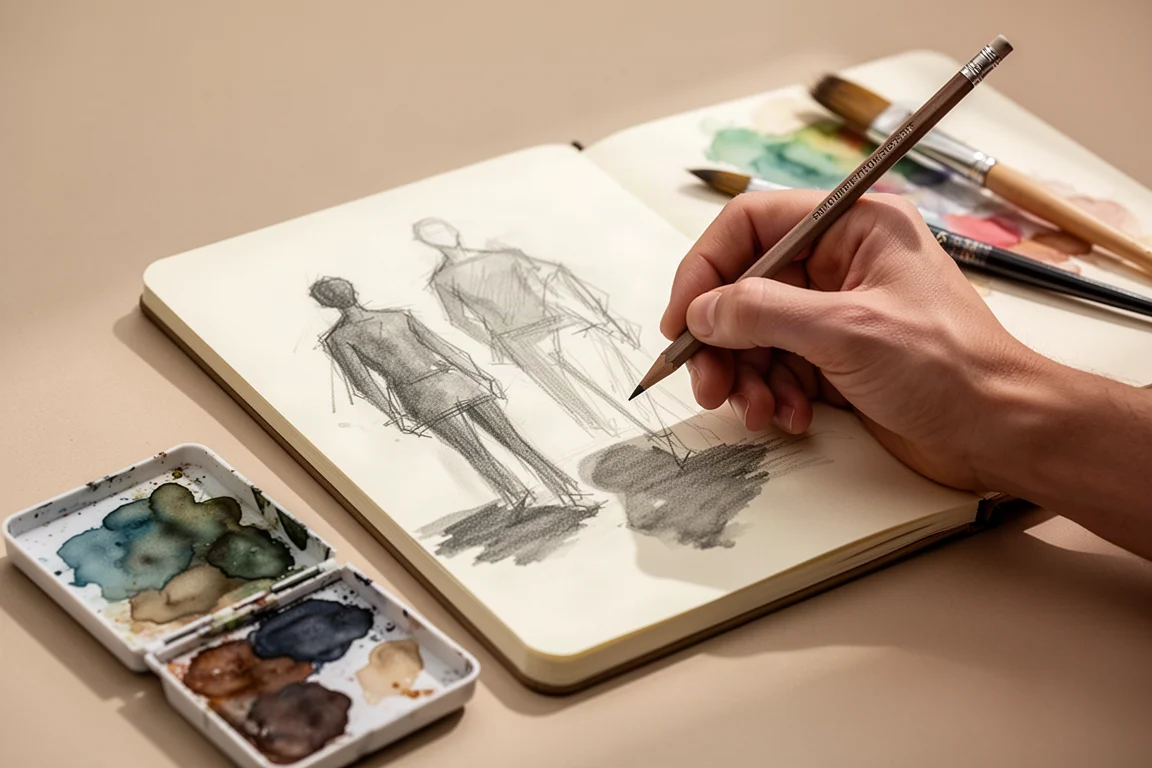
For architectural-style figure renderings, where people appear small and off in the distance, these tints are honestly fun to work with. The main novelty is the ink-based formulation combined with the ready-made range of shadow hues, letting you choose warm or cool shadows straight from the pan.
Things to Consider Before Buying
The biggest hurdle is information access. The brand’s website is in Japanese only, so details like pigment data and safety documentation take effort to find. The class 2 carcinogen classification is worth knowing even if the practical risk in normal use is low. And the strong dark bias means mid-range tones are harder to achieve than with conventional watercolors. None of these are dealbreakers, but they’re the reasons this set suits sketchers more than painters chasing precise color control.
Buying Advice
This set makes the most sense for sketchbook artists, urban sketchers, and anyone who paints a lot of figures or scenes needing quick, grounded shadow work. If you regularly reach for Payne’s grey or mixed shadow greys, the ready-tinted pans will feel like a genuine convenience.
If your work depends on consistent mid-tones or you want fully documented pigment data in your own language, a conventional watercolor set will serve you better. The novelty here is real, but it’s a novelty that fits specific workflows.
Conclusion
The Boku Undo Shadow range is a likeable, well-behaved set of traditional Japanese watercolors with a clear purpose: laying in shadows fast, in six useful tints. It dissolves easily, carries strong pigment, and is genuinely fun for sketching practice. The dark bias, sedimenting character, and limited documentation are worth weighing, but for sketchers who want warm and cool shadows on tap, it’s a distinctive set worth trying.
Product link
View more details for Boku Undo Japanese Watercolor Paints (Shadow/Black Range)
This product is mentioned in the review. Check the specifications, options, and compatibility before buying.
View more details for Boku Undo Japanese Watercolor Paints (Shadow/Black Range)Further reading
Related Reviews
Art Supplies
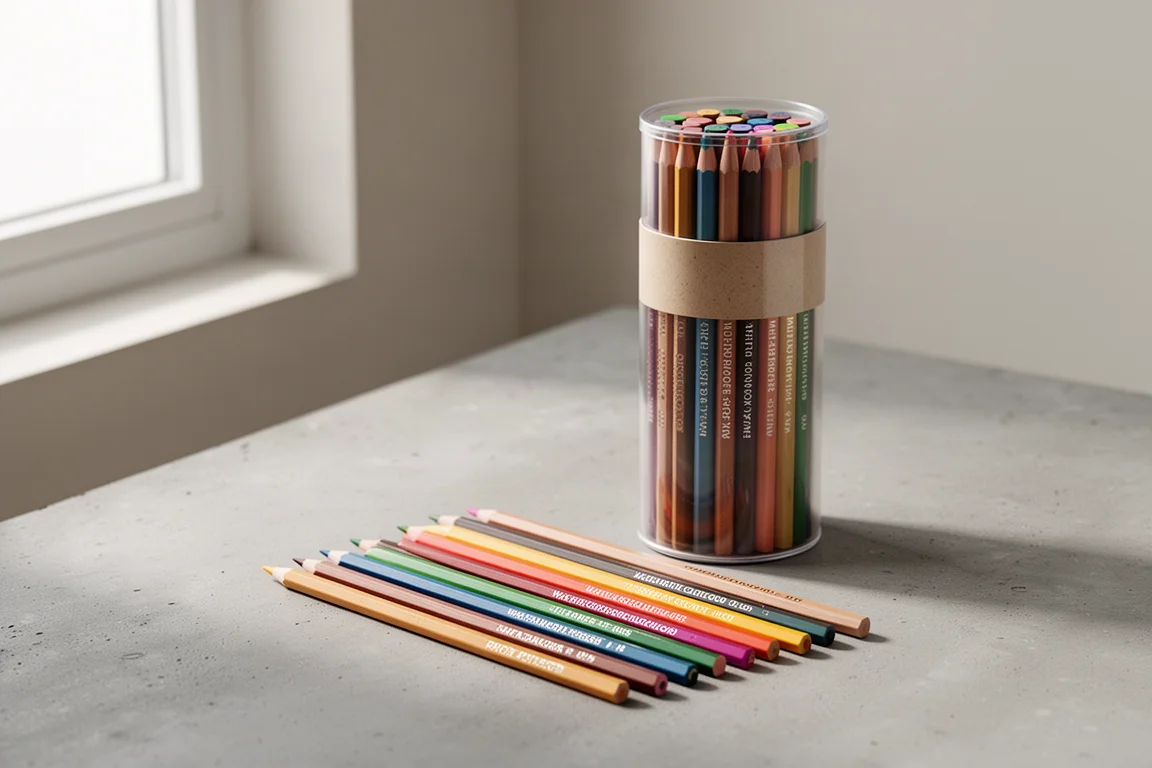
Art Pop Watercolor Pencils 48-Color Set: A Thoughtfully Designed Student-Grade Option
The Art Pop 48-color watercolor pencil set blends well, dissolves smoothly, and includes artist-friendly details like barrel-printed color names, all at an affordable price.
Art Supplies
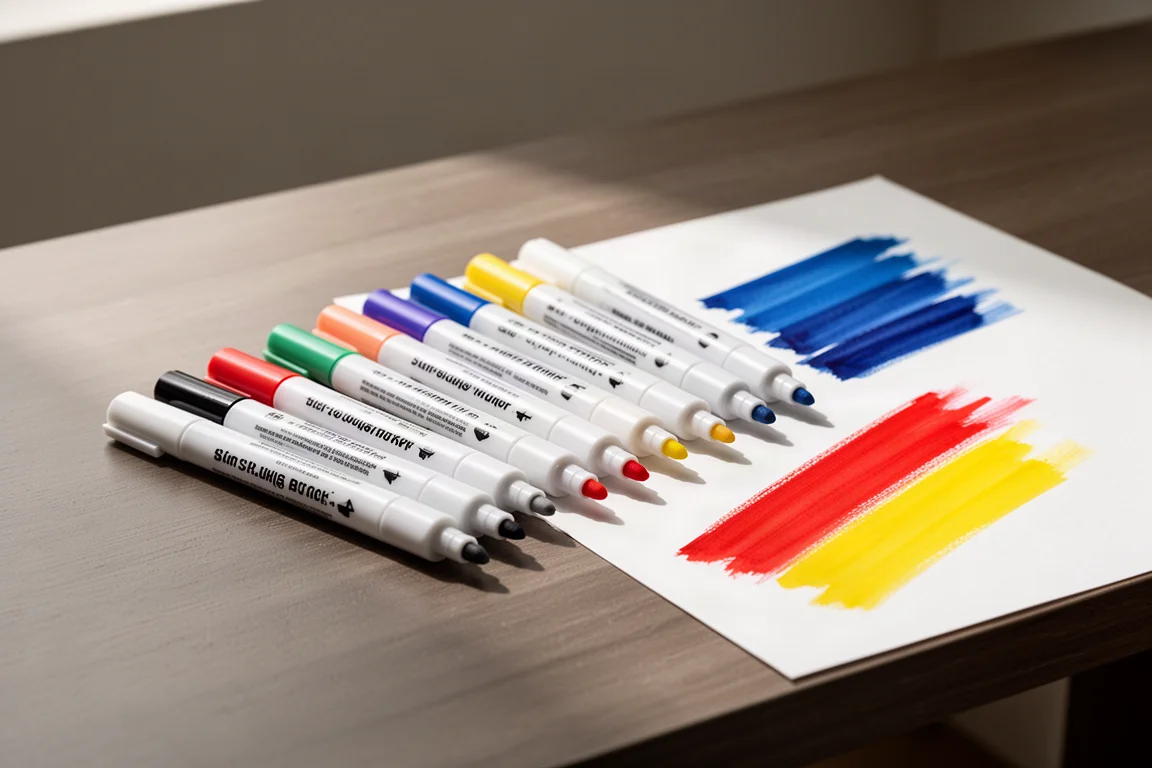
Artics Acrylic Markers 3mm Review: Versatile Paint Markers With a Few Caveats
A 48-color set of water-based acrylic paint markers that blend while wet, dry permanent, and keep the price low, though safety transparency remains a question.
Art Supplies
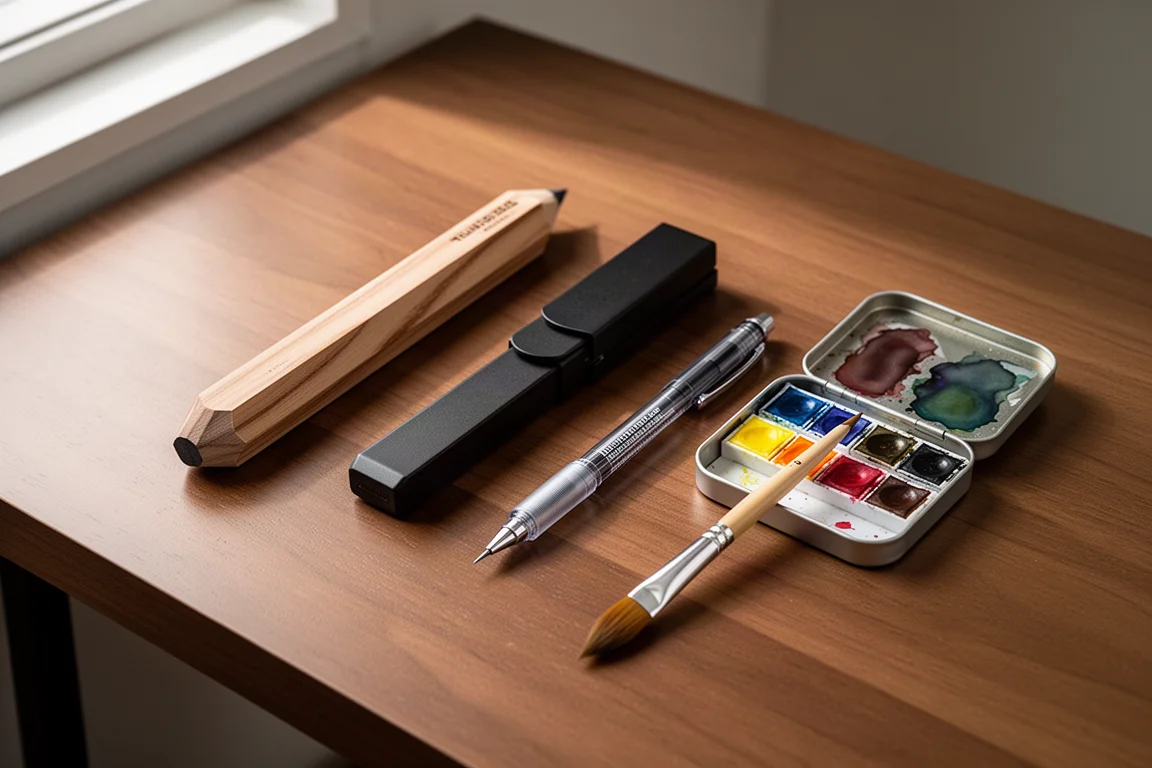
Best Art Supplies Worth Your Money: Pencils, Pens, Paints, and Paper That Earned Their Spot
After years of daily use and testing, these are the pencils, pens, watercolors, gouache, brushes, sketchbooks, and erasers that stand above the rest.