Skiing
Blizzard Anomaly 102 vs Rustler 10: Which Blizzard Ski Fits Your Skiing?
Two Blizzard skis with similar dimensions and very different personalities: a close look at the Anomaly 102 and the Rustler 10, and who each one is really built for.
Introduction
Blizzard rebuilt its all mountain collection for 2025, retiring the Brahma, Bonafide and Cochise names and replacing them with four Anomaly models: the 84, 88, 94 and 102. The Anomaly 102 is the widest of the four, and in some ways the most unusual, because it does not map neatly onto a single ski from the old lineup. Its width sits between where the Bonafide and the Cochise used to be, and there was no 102 mm Blizzard before it.
That makes the Anomaly 102 a genuinely standalone ski. It also makes it easy to confuse with the Rustler 10, which is close in width and shares some of the same construction vocabulary. Both skis use a True Blend wood core and a Flux Form metal layup, and both are built for skiers who want to spend their days away from the groomed runs. Once you look past the shared names, they are built for very different skiers.
This guide covers what sits inside each ski, how they behave on snow, and who should be choosing which one.
What Separates the Anomaly 102 and the Rustler 10
On paper the two skis read like siblings. Both sit around 102 mm underfoot. Both use a True Blend core and a Flux Form metal layup. Both are directional, with a flattish tail. That is roughly where the similarities end.
The Anomaly 102 uses Blizzard’s True Blend All Mountain core, a mix of beech and poplar stringers. The denser beech stringers run longer through the centre of the ski, while the sides use more poplar with shorter beech stringers. The Rustler 10 uses a True Blend Free core, a less dense and airier build.
Blizzard also tunes each True Blend core to the individual model, and to each length within a model, so a shared family name does not mean a shared core. That level of specificity is unusual, and it is one reason the two skis feel so different despite the similar labels.
The metal layups diverge even more. The Anomaly 102 carries two sheets of metal: one full sheet below the core, and a second layer above it divided into three longitudinal sections. The centre section sits directly on top of the core beneath a layer of fibreglass, and the remaining outer sections run as strips along the sides. The Rustler 10 uses far less metal, with one sheet underfoot and two narrower sheets running along the edges.
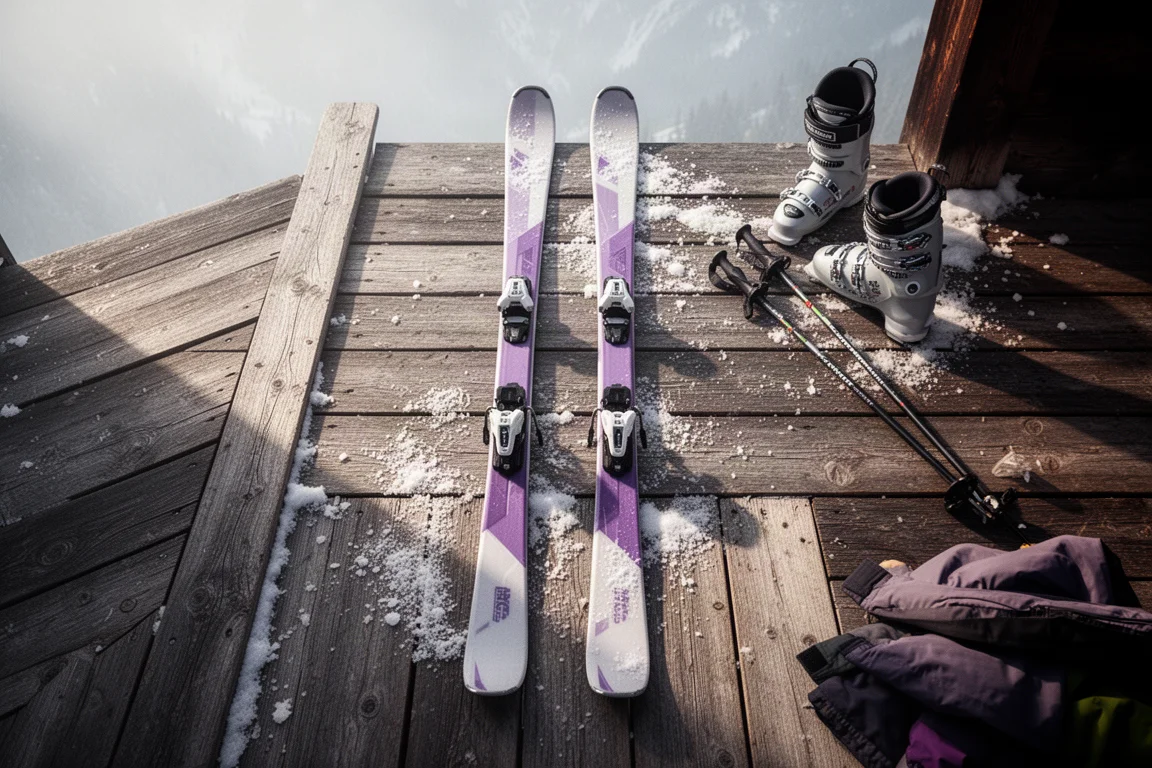
The result is a large difference in weight and flex. The Anomaly 102 weighs around 2,270 g in a 188 cm length. The Rustler 10 comes in under 1,900 g in a 180 cm length. Even accounting for the 8 cm difference in length, that is close to a 300 g gap. The Anomaly 102 is also noticeably stiffer, while the Rustler 10 bends far more easily, particularly in the tail.
Blizzard Anomaly 102: Construction and Shape
Core, Metal and Overall Feel
The Anomaly 102 is a dense, sturdy ski. The combination of a beech-heavy True Blend All Mountain core and a three-part upper metal laminate gives it a solid, planted character that is obvious both in the hand and on the snow.
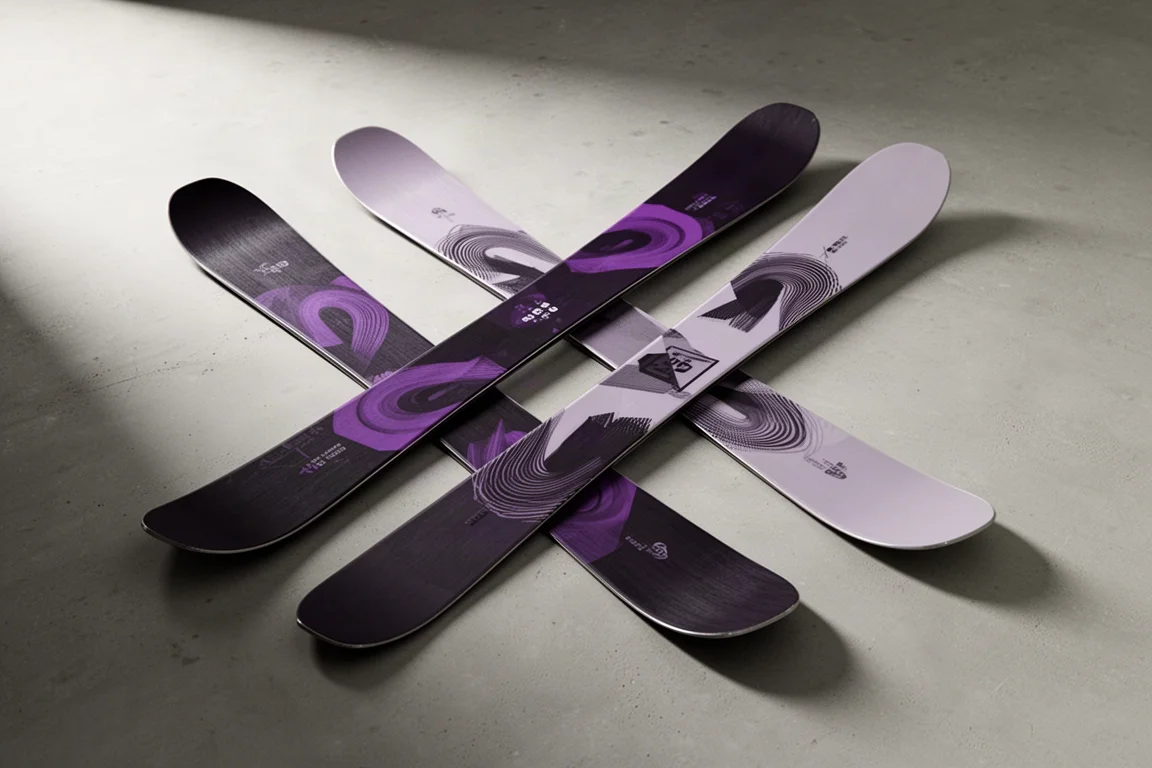
The current graphic keeps the purple colourway that has long suited this ski. Abstract turn shapes replace the older turn graphic, with one large powder slash turn set across the lower half of the ski.
Shape, Rocker and Turn Radius
Shape is where the Anomaly 102 separates itself most clearly from the Rustler 10. The ski is flat almost everywhere. There is camber underfoot, but it is not a high, springy camber, and the profile stays relatively low. The tip carries a substantial amount of rocker, yet there is very little splay, so the edge stays engaged well forward. The tail follows the same pattern: plenty of rocker by length, but very little splay.
There is no taper in the shape at all. It is all sidecut, and the ski is listed with a 21 m turn radius. In practice that number reads short rather than long. The Anomaly 102 prefers to run at or beyond its stated radius and does not behave like a quick-turning 21 m ski. Available lengths are 176, 182, 188 and 192 cm, with nothing shorter than 176.
Blizzard Anomaly 102 on Snow
On groomers, the Anomaly 102 asks for speed. At a moderate pace it is not especially rewarding, and shorter turns take real effort. Once you commit to a longer radius and carry momentum, the ski comes alive: it holds a strong edge, snaps into tight carves when it is pushed, and gives back plenty of energy. Stiff boots, strong legs and solid technique all help.
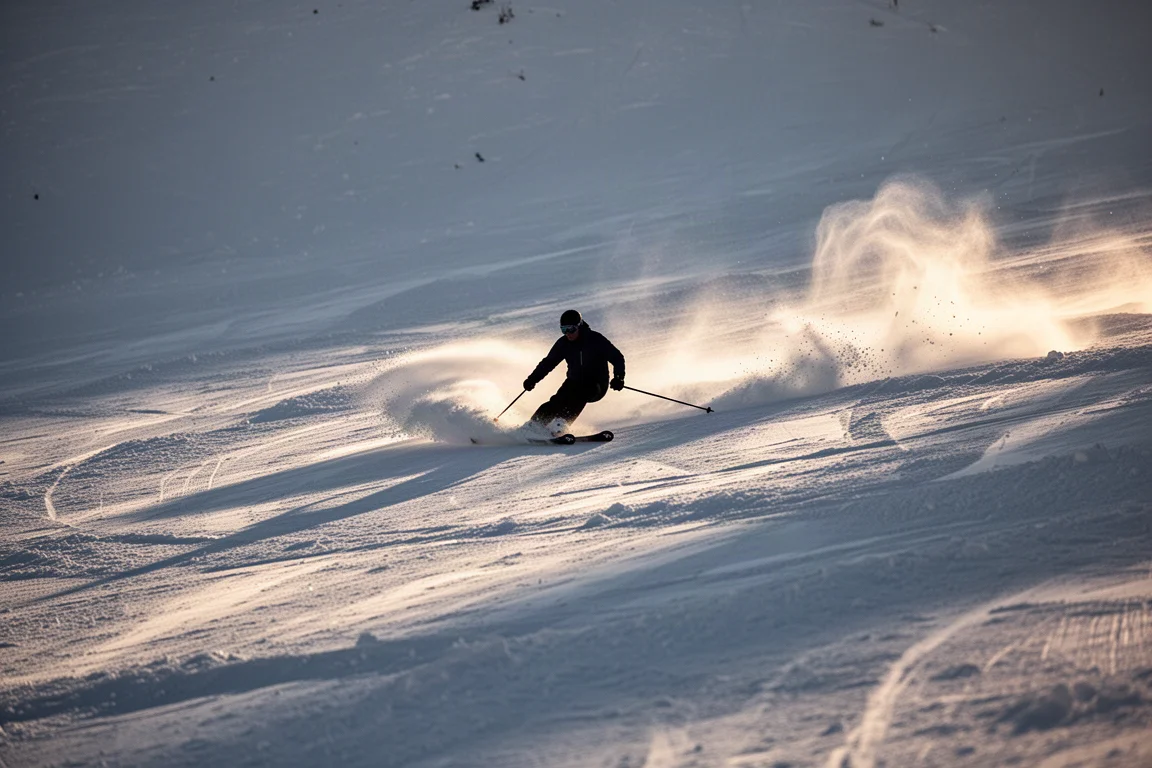
Where the Anomaly 102 is at its most rewarding is in variable snow. Late in the day, when the surface is a mix of firm patches and pushed-around soft snow, it does not flinch. It tracks well, absorbs terrain, and lets you ski with purpose without constantly adjusting your balance. For skiers who like to point a ski and let it run, that quality is the main appeal, and it is a direct line back to the Bonafide.
Off piste, the Anomaly 102 is more capable than its reputation suggests. Straight-lining and absorbing terrain is where it excels, and it can be thrown sideways when needed, but it takes power and force to do it, and it responds best to a high edge angle and plenty of angulation. It will float in powder, though it is not gentle about it, and it is happiest in shallower soft snow where it can stay engaged. In deeper snow, a more shapely ski is simply more enjoyable.
Blizzard Rustler 10: Construction, Weight and Flex
Core, Metal and Flex
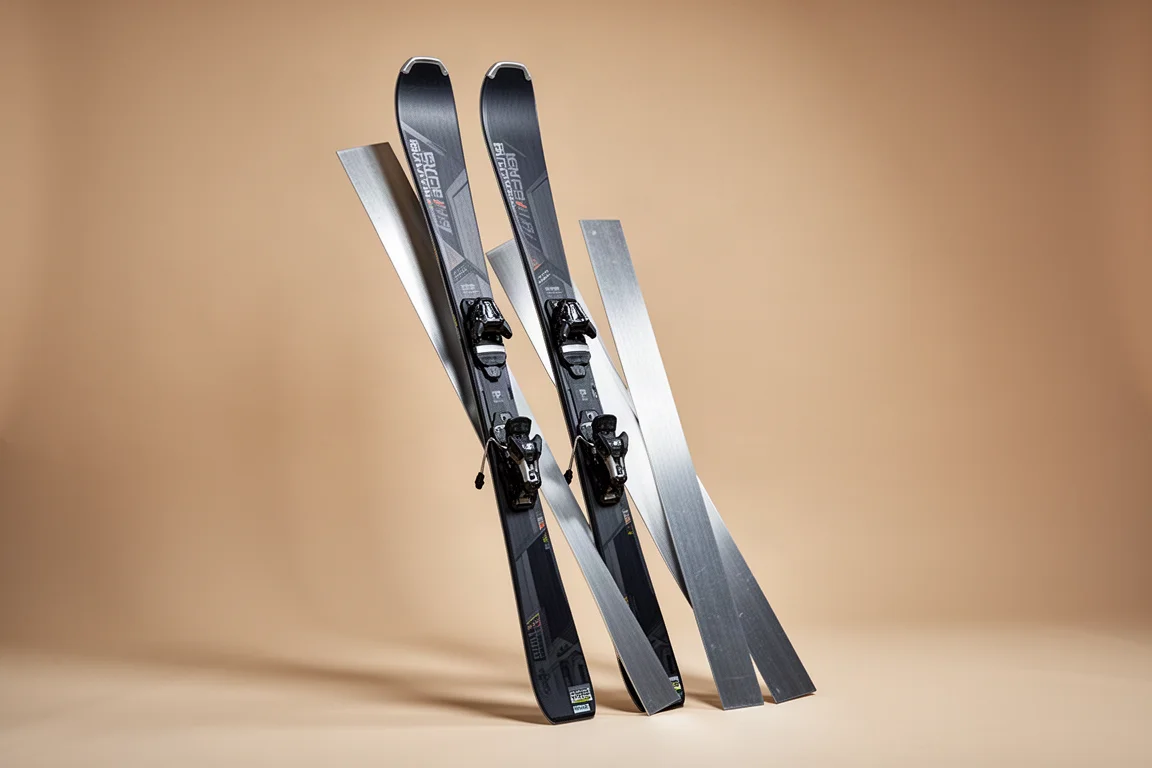
The Rustler 10 is built around the True Blend Free core, a less dense construction than the True Blend All Mountain core in the Anomaly 102. Its Flux Form metal layup uses one sheet of metal underfoot plus two sheets along the edges, a fraction of the metal in the Anomaly 102.
That shows up directly in how the ski flexes. The Rustler 10 has noticeably more bend than the Anomaly 102, especially in the tail. It is also lighter: under 1,900 g in a 180 cm length, against roughly 2,270 g for the Anomaly 102 at 188 cm.
Shape and Turn Radius
The Rustler 10 carries far more splay in its rocker profile, at both the tip and the tail, which brings it close to a partial twin tip. It also has a lot of early taper in the shape. The turn radius is shorter as well, at 17.5 m, with the 188 cm length listed at 18 m.
The overall picture is a ski that is rounder in its turn shapes and much easier to bend into a variety of arcs.
Blizzard Rustler 10 on Snow
On groomers, the Rustler 10 is the friendlier of the two. It snaps into tight carves when asked, and it does not demand the same speed or commitment as the Anomaly 102 to feel rewarding. It is a lighter, more relaxed ski to spend a full day on.
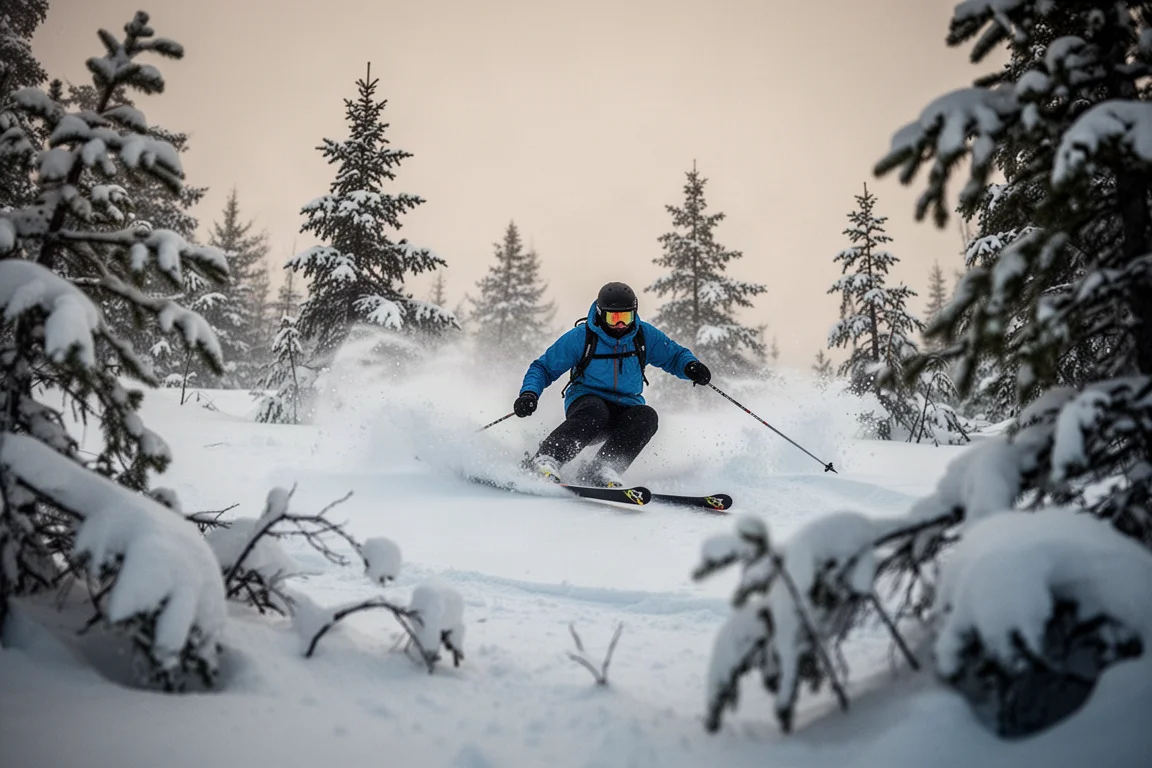
Off piste, the difference becomes even clearer. The extra rocker and taper make the Rustler 10 easy to drift, smear and wash through turns, and its softer tail lets it release without a fight. It is a playful ski that suits a wide range of terrain, and it is far more forgiving when the snow gets deep or the line gets tight.
That combination is why the Rustler 10 is the ski most people will get along with. It covers more ground for more skiers, and it does so without asking for a race background or a very specific style.
View more details for Blizzard Rustler 10
Anomaly 102 vs Rustler 10: How They Compare to Other Skis
Placing the Anomaly 102 alongside other directional skis in the same width range makes its character easier to read. The Nordica Enforcer 104 is a close comparison, since both sit under the same parent group, and the two are similar in stiffness and weight. The Anomaly 102 feels like the more directional, charging ski of the pair, while the Enforcer 104 has a slightly sharper tail and a shape that is less willing to drift. For skiing woods and off-piste terrain, many skiers will find the Enforcer 104 the easier choice.
The Mantra 102 is the other obvious reference point. The Mantra turns more readily, while the Anomaly 102 is more of a straight-line charger. The Mantra 102 is arguably the better pure powder floater and can be more challenging off piste, so the two trade strengths rather than one simply beating the other.
At the far opposite end of the spectrum sits the Elan Ripstick 102. Despite a similar width, a directional shape and a comparable colour palette, the two skis are complete opposites in feel. The Ripstick is light and easy to bend; the Anomaly 102 is heavy, stiff and demanding.
There is also a step down in burliness available from skis such as the Stockli Storm Rider 102, the Declivity X 102 and the Rossignol Sender Soul 102, all of which are lighter and carry more rocker. The Center 102 is lighter again and stiff in the tail, but it does not sit in the same league as the Anomaly 102, the Mantra 102 or the Enforcer 104.
Buying Advice: Which Blizzard Ski Is Right for You
The honest answer is that the Anomaly 102 is a specialist ski and the Rustler 10 is not. The Anomaly 102 rewards skiers who already know they want a powerful, directional, big mountain charger: former Bonafide and Cochise owners, skiers coming from a race background, and strong, aggressive skiers who like to ski fast and let a ski run.
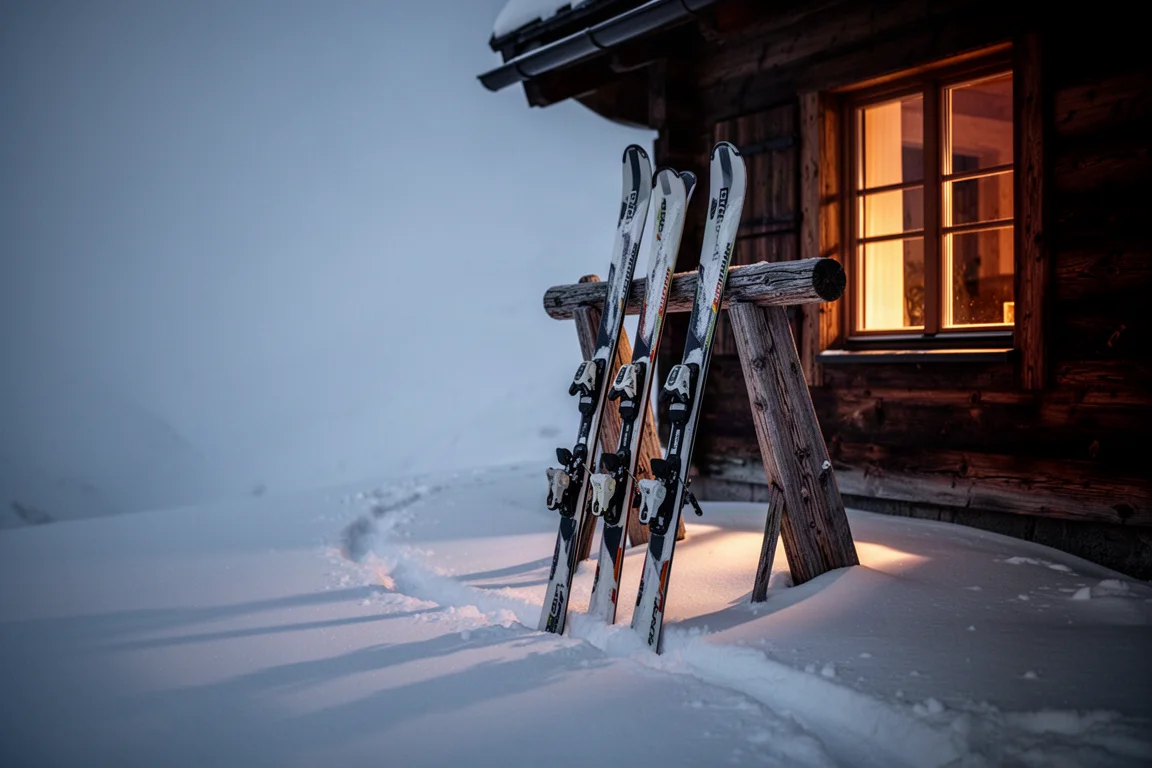
If that does not describe you, the Rustler 10 is almost certainly the better purchase. It is lighter, easier to bend, more playful off piste, and far more forgiving across different conditions and different levels of effort. It is the ski that will suit the overwhelming majority of skiers looking at this width.
It is worth remembering that a demanding ski is not automatically a better ski. The Anomaly 102 exists to serve a narrow, committed group of skiers, and for them it is an excellent tool. For everyone else, the Rustler 10 delivers more of what makes a day on the hill fun.
Conclusion
Two Blizzard skis, one width range, two very different briefs. The Anomaly 102 is dense, stiff and built around speed and variable snow, and it asks for strength, skill and commitment in return. The Rustler 10 is lighter, looser and more versatile, and it will flatter a much wider range of skiers.
Choose the Anomaly 102 if you already know that is the ski you want. Otherwise, the Rustler 10 is the safer and more enjoyable place to put your money.
Further reading
Related Reviews
Skiing
2027 Ski Top Sheets: The Best-Looking Skis of the New Season
A fun, opinionated look at the 2027 ski lineup and the top sheets that stand out most, from the Nordica Enforcer 104 to the Rossignol Sender series.
Skiing
Armada Declivity 92 vs Peak 88: Two All-Mountain Skis, Two Very Different Characters
A staff-favorite carving machine and an approachable Bode Miller signature ski, compared for different levels of skier.
Skiing
Atomic 100mm Ski Line Compared: Maverick 100 TI, Bent 100, and Backland 100
Atomic's three 100mm skis share a similar outline, so the real choice comes down to construction, weight, and terrain. Here is how the Maverick 100 TI, Bent 100, and Backland 100 differ.