Terrarium Kits
Bioart Terrarium Kit Review: A Self-Contained Glass Garden You Build Yourself
A practical look at the Bioart self-contained terrarium system, covering what arrives in the box, how the planting process works, and what to weigh before buying.
Introduction
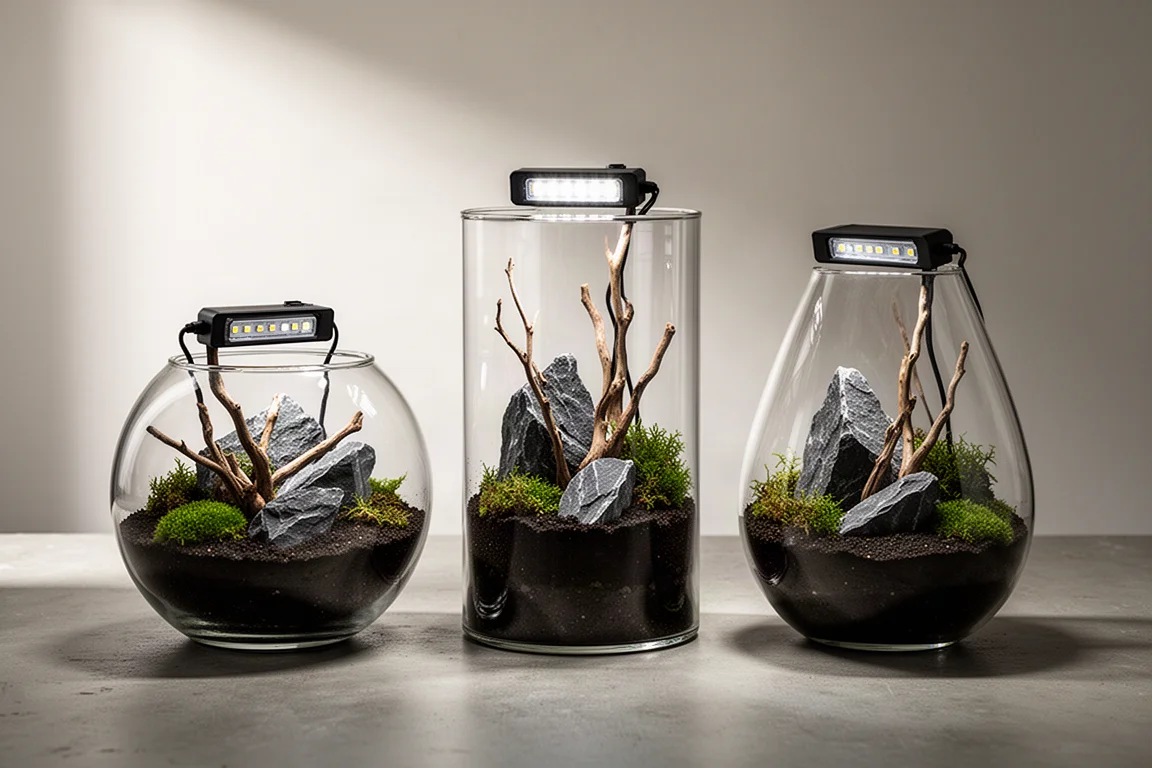
The Bioart terrarium system is a self-contained growing kit that you assemble yourself. Each set arrives with a glass vessel, a small LED light unit with an integrated fan, a USB plug and a controller, along with the soils, stones, wood and plants needed to build a miniature landscape inside the glass.
Because the supplied plants are aquatic species, the kit sits somewhere between indoor gardening and aquascaping. They can be grown in the moist substrate and left as a display, or lifted out later and moved into an aquarium once they are better established.
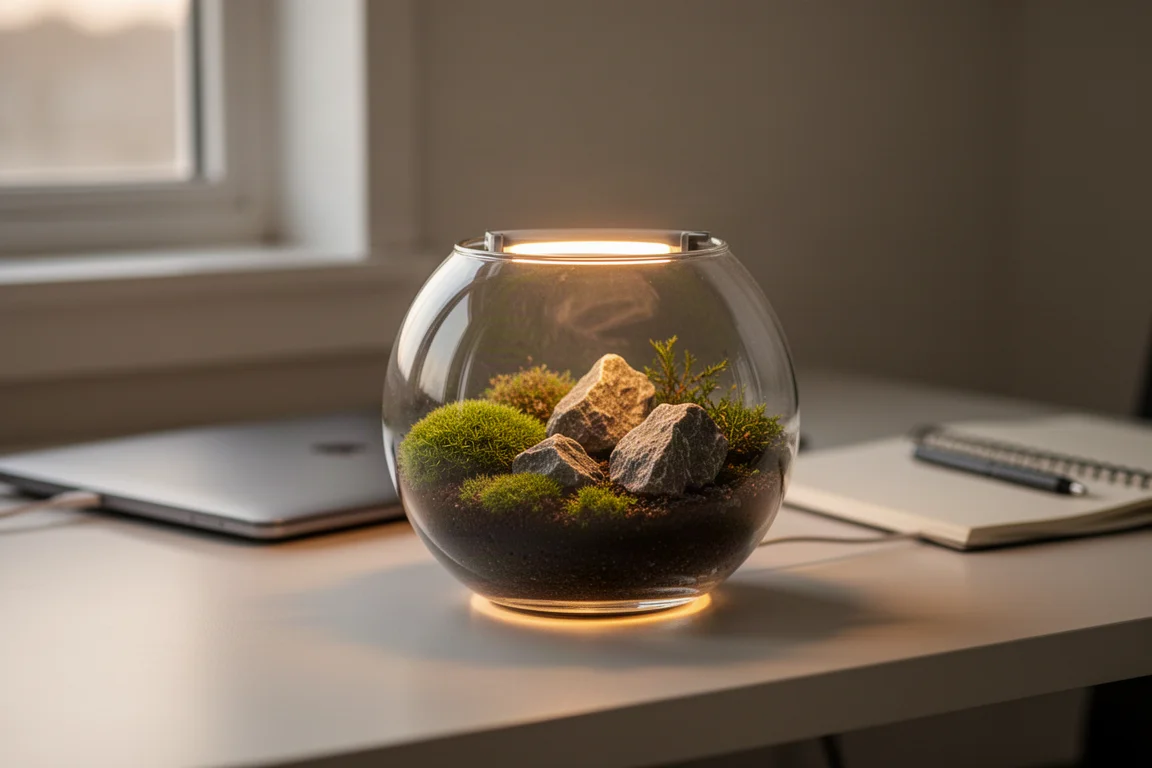
What makes the format appealing is how little infrastructure it needs. There is no filter, no water volume to manage and no livestock to look after. You place the hardscape, tuck in the mosses and stems, add a shallow layer of water, and the light keeps the arrangement illuminated.
Who This Terrarium Kit Is For
For anyone who wants living greenery in a small space, the kit solves a common problem. Desks, side tables and shelf corners rarely have room for a full aquarium or a large planter, but a single glass vessel fits comfortably and still shows visible growth.
It also suits aquascaping hobbyists who enjoy the arranging side of the hobby. Building a scape from dragon stone, small wood branches and mosses is very close to what you would do in a planted tank, but without the water chemistry, the filtration or the risk of disturbing livestock while you work.
It is less suited to anyone hoping for a maintenance-free ornament. The system is designed to be adjusted: vents opened or closed, water topped up, and plants swapped if a species does not settle. Anyone who wants something to switch on and forget may find the first few weeks more hands-on than expected.
Main Strengths
The vessel is made of real glass rather than plastic, which matters more than it might sound. Glass keeps its clarity over time, does not scratch as easily, and gives the arrangement a proper weight on a desk. Small feet on the base lift the vessel slightly and help it sit steady.
The light unit sits on top of the vessel and includes a fan that runs quietly while it is on. The fan keeps the inside of the glass from misting up, which means the plants stay visible rather than disappearing behind condensation.
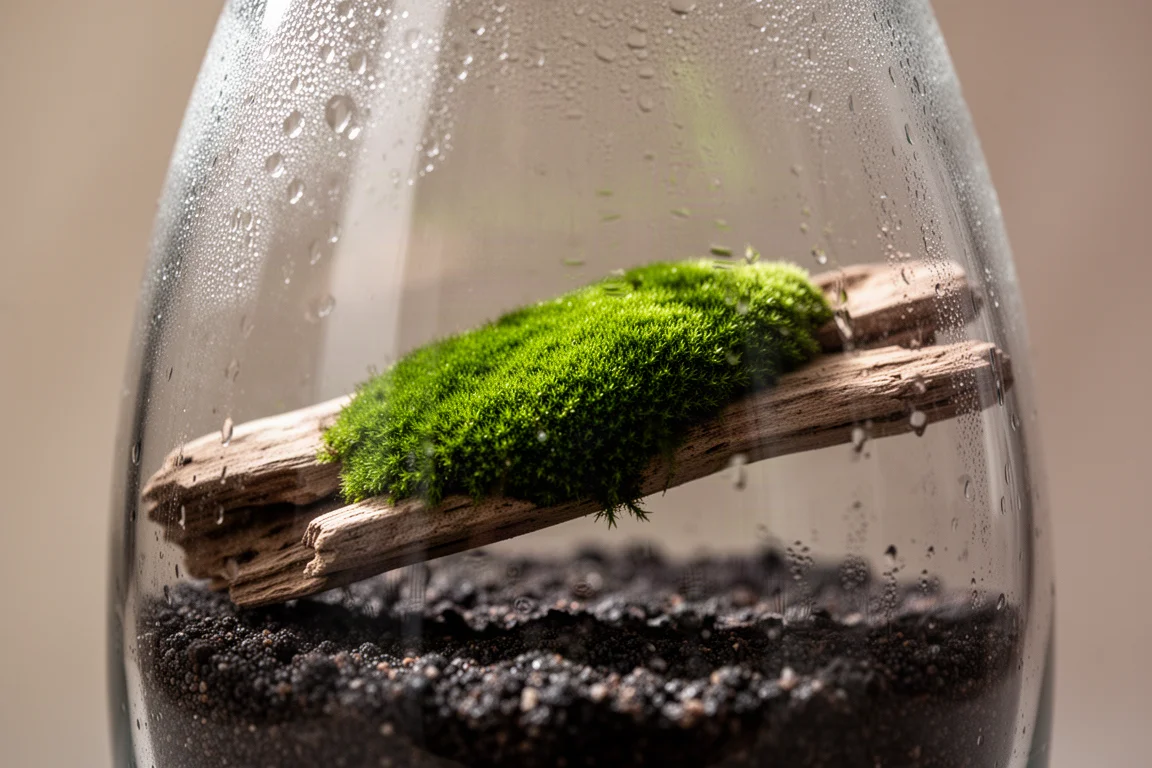
The controller adds a surprising amount of control for a kit of this size. There are timer options of roughly three, nine and twelve hours, a button to cycle through LED groupings, and a brightness adjustment that runs from dim through to full output.
Vents on the top of the unit open and close to change how much moisture escapes, so humidity can be tuned to what the plants need. The included hardscape and substrates give plenty of choice, with rounded pebbles, gravel, dragon stone, lava rock, several types of wood and different soils.
Planting without a water column is easier than working in a filled aquarium. Mosses and epiphytes stay where they are placed instead of floating away, and pieces can be repositioned freely while the layout is still being decided.
Design Details That Stand Out
The three vessel shapes each suggest a different approach. The round bowl pairs naturally with rounded river pebbles, the tall vessel suits angular stone arranged at an angle, and the teardrop shape works with a mix of both, with rounder elements low and taller pieces behind.
The small wood pieces are worth noting. Nano branches keep the scale believable inside a small glass vessel, and the thinner pieces with a bit of height and character read better than uniform fragments.
Planting is done with the hardscape already in place, and the instruction manual walks through the build step by step. A thin layer of soil under the gravel gives rooted plants somewhere to send their roots, while mosses and ferns can be pressed onto wood and stone.
What Comes in the Kit
Each set is packaged with an instruction manual, the glass vessel, the light unit with its fan, a USB plug and the controller. Substrates include gravel, rounded black pebbles, volcanic soil and sand, and the hardscape selection covers dragon stone, lava rock and several wood types.
The plant selection leans on tissue-culture and lab-grown species supplied in a nutrient liquid, including mosses with different textures, small ferns, carpeting species and stems that add color and height. Rinsing the nutrient gel off before planting is a sensible habit carried over from aquarium planting.

Because three vessels are included, the kit invites three different themes rather than one repeated layout. Using a different substrate and a different style of hardscape in each vessel makes the set feel like a small collection rather than a matching trio.
Things to Consider Before Buying
Expect a settling-in period. Humidity is the main variable, and it takes a few days of observation to see whether the mosses are holding moisture, whether condensation is forming on the glass, and whether the vents should be opened or closed further.
Some species are more of an experiment than others outside a water column. Carpeting plants rooted into the substrate are the most likely to take, while floating mosses placed high on hardscape may need replacing if they do not adapt.
Each vessel needs a power outlet nearby for the light, which limits placement to a desk, shelf or side table within reach of a cable. Three vessels also take up a noticeable amount of surface area once they are spaced apart.
Finally, this is not a replacement for a planted aquarium. The kit is designed for a shallow layer of water and plants that grow in humid air, so anyone wanting fish or a full underwater scape should treat it as a separate project.
Buying Advice
Start by matching the hardscape to the vessel. Round pebbles in a round bowl and angular stone in the tall vessel read as deliberate, while mixing shapes at random tends to look accidental.
Use a thin soil layer beneath the gravel if you plan to plant into the substrate, and keep the majority of the planting on wood and stone where roots are not required. This keeps the layout flexible and makes it easy to move a plant if it struggles.
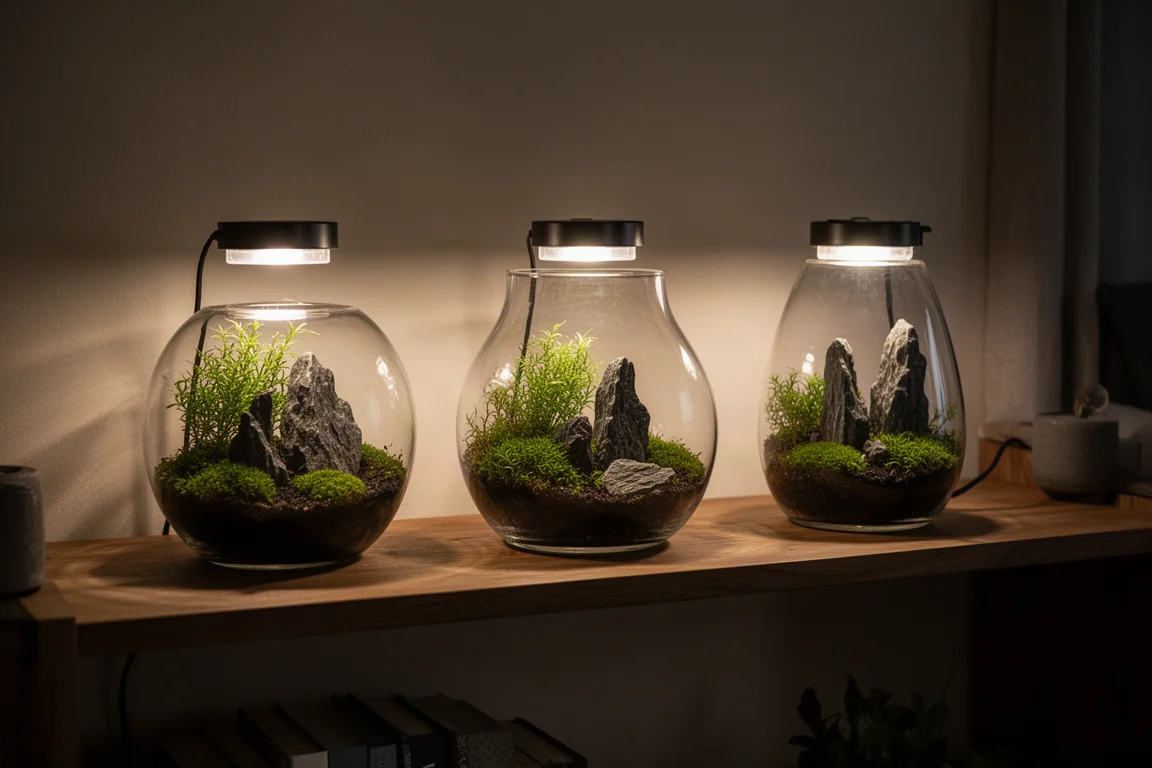
Set the timer to a moderate schedule rather than full output all day, adjust the vents gradually rather than all at once, and top up water in small amounts. The aim is a stable, slightly humid environment with visible condensation on the glass but no standing water above the substrate.
Keep the instruction manual to hand for the first build. The steps are straightforward, but the planting order matters more than it first appears.
Conclusion
The Bioart terrarium system is a well-considered kit for anyone who wants a small, illuminated garden they build themselves. Real glass, a quiet light with a fan, flexible timer and brightness controls, and a broad selection of substrates, stone, wood and plants give it more range than a simple ornament.
The trade-off is attention. Humidity, watering and plant selection all need a little tuning in the early weeks, and not every species will settle equally well. For anyone who enjoys the process as much as the result, that is part of the appeal.
Product link
View more details for Bioart Self-Contained Terrarium System
This product is mentioned in the review. Check the specifications, options, and compatibility before buying.
View more details for Bioart Self-Contained Terrarium SystemFurther reading
Related Reviews
Aquariums
Aqua Marin 1200 Planter Review: A Four-Foot Open-Top Aquarium Worth the Space
A close look at the Aqua Marin 1200 Planter, a four-foot open-top aquarium with a factory-fitted frosted back panel, a built cabinet, and a six-way switched power strip included.
Aquariums
Aqua Marin 1200 Review: A Four-Foot Open-Top Aquarium With a Cabinet Worth Showing Off
A complete four-foot open-top aquarium package with a pre-built cabinet, frosted back panel, and a fitted six-way switched socket strip, at a price that undercuts most expectations.
Aquarium Substrates
Aqua Soil Review: A Planted Aquarium Substrate Built for Rearranging
Aqua Soil compared with a dirted substrate in a long-running planted tank test, and what that means for aquascapers who replant often.