Bikepacking
Complete Bikepacking Setup for Desert Routes: Tested on the Golden Jack Rabbit
A lightweight, practical bikepacking configuration for hardtail mountain bikes, tested on an 80-mile desert route with sand, rock, and zero water sources.
Introduction
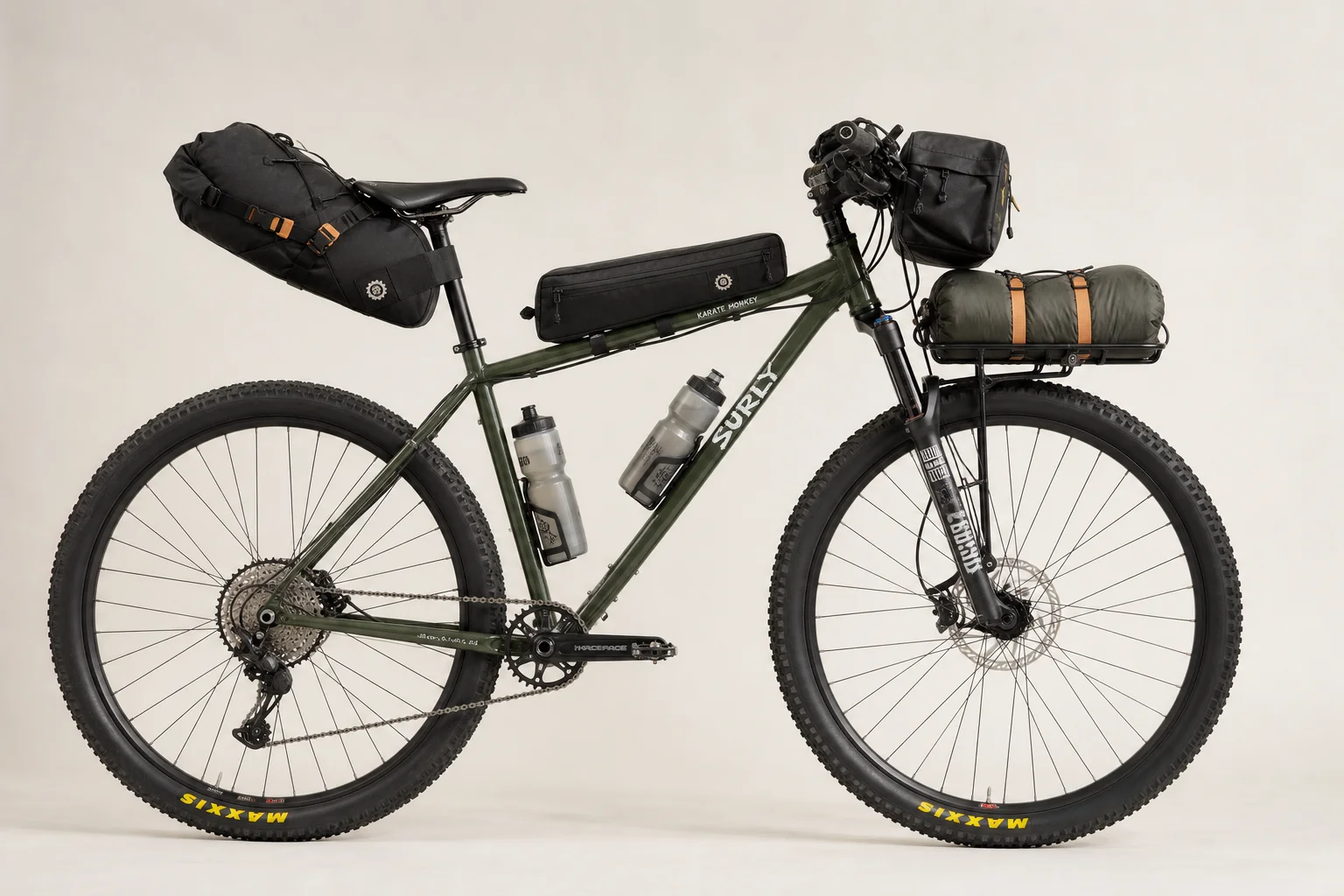
Bikepacking setups evolve with each trip, and some experiments work better than others. The Golden Jack Rabbit route in Southern California offered the perfect testing ground for a complete hardtail mountain bike configuration. At 80 miles of sand and rocky terrain with zero water sources, the route demanded careful gear placement and reliable storage solutions. This setup proved so effective that it will serve as the foundation for many future trips.
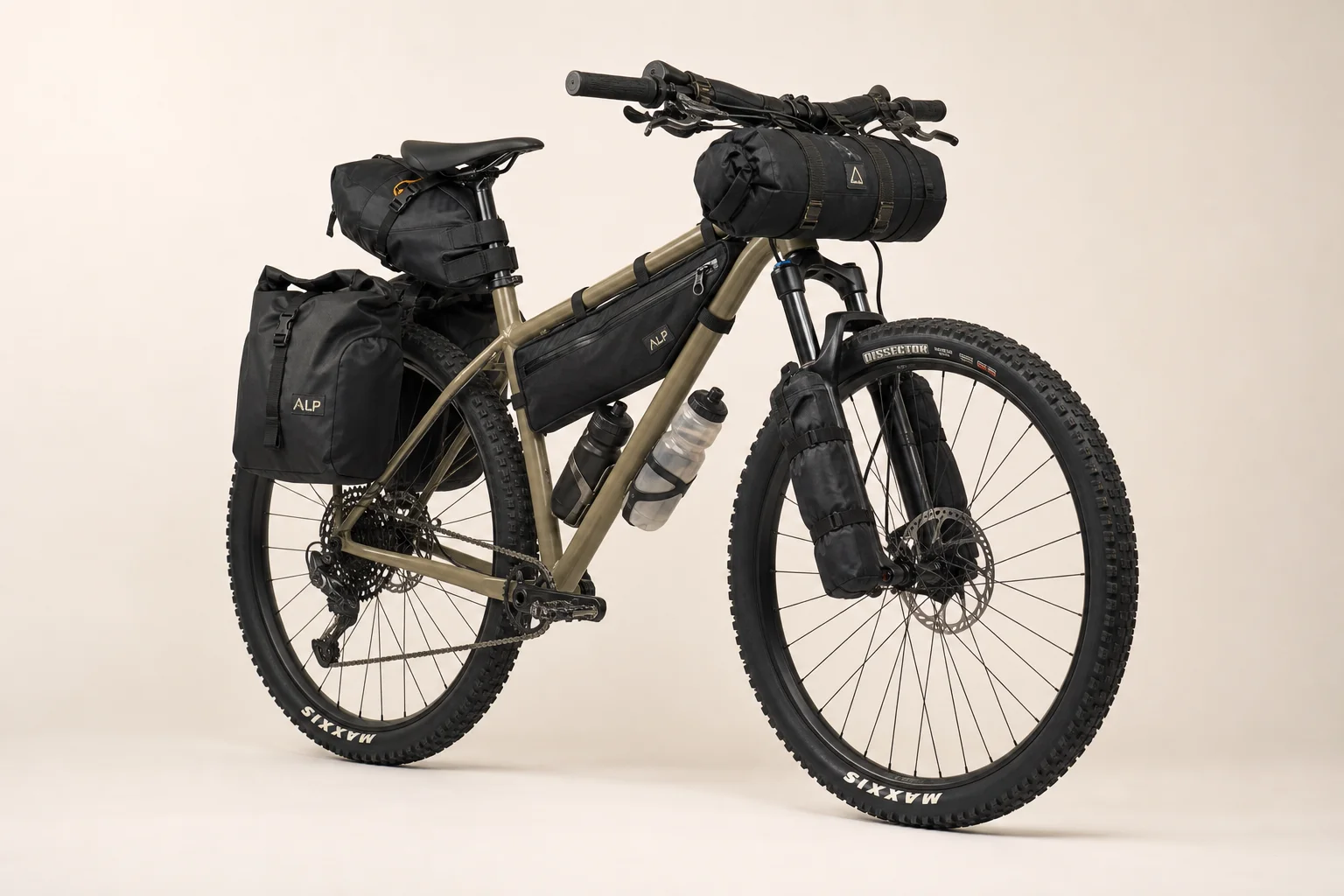
The Bike and Frame Setup
The foundation is an Ibis DV9 hardtail with 120mm front suspension, a practical choice for mixed terrain where single-track performance matters less than stability over sand and rock. The bike’s frame geometry and mounting points shaped every storage decision that followed.
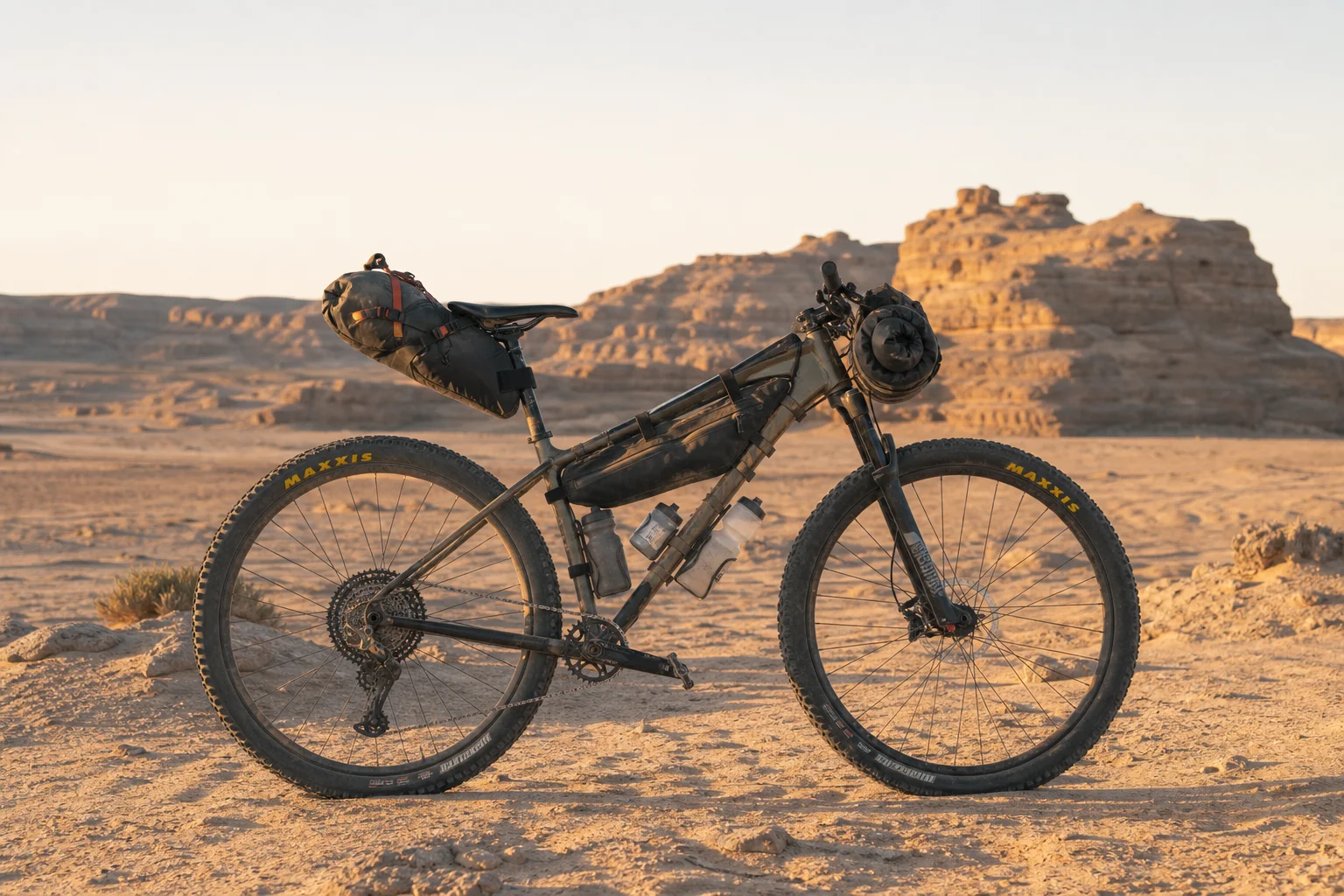
The hardtail format meant relying entirely on external bags and racks rather than frame-integrated storage. This approach required careful weight distribution to maintain handling and prevent the bike from feeling top-heavy on technical descents.
Front-End Storage: Handlebar Bag and Sleep System
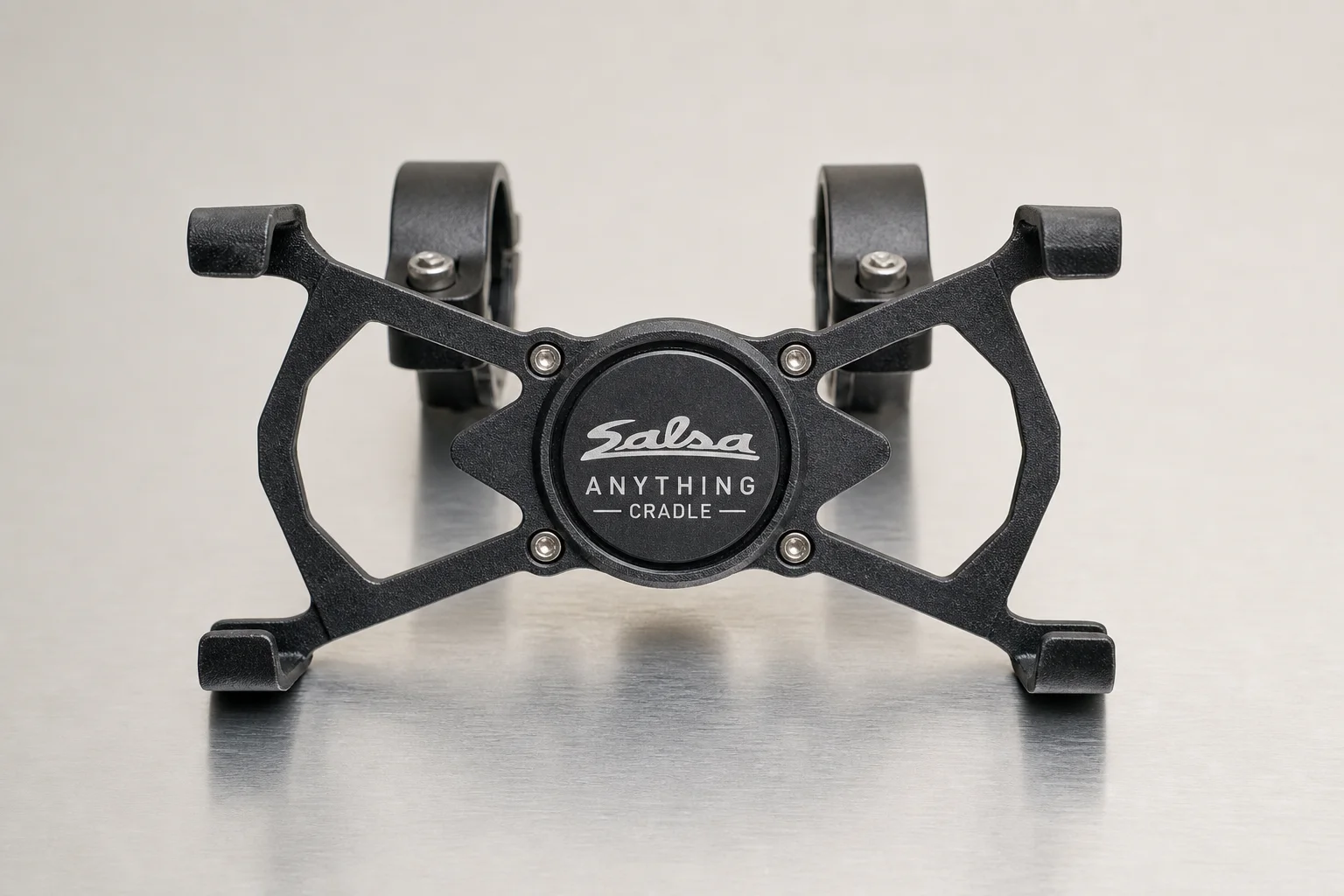
The front end carries the sleep system and filming gear. A rolled sleeping bag, sleep pad, and baby bag are bundled together and secured to a Salsa Anything Cradle, which mounts directly to the fork. This keeps the heaviest items low and centered.
A Porcelain Rocket handlebar bag sits in front of the cradle, holding a drone, cameras, and battery pack. This bag has proven reliable over years of use and straps on securely without requiring frame bolts.
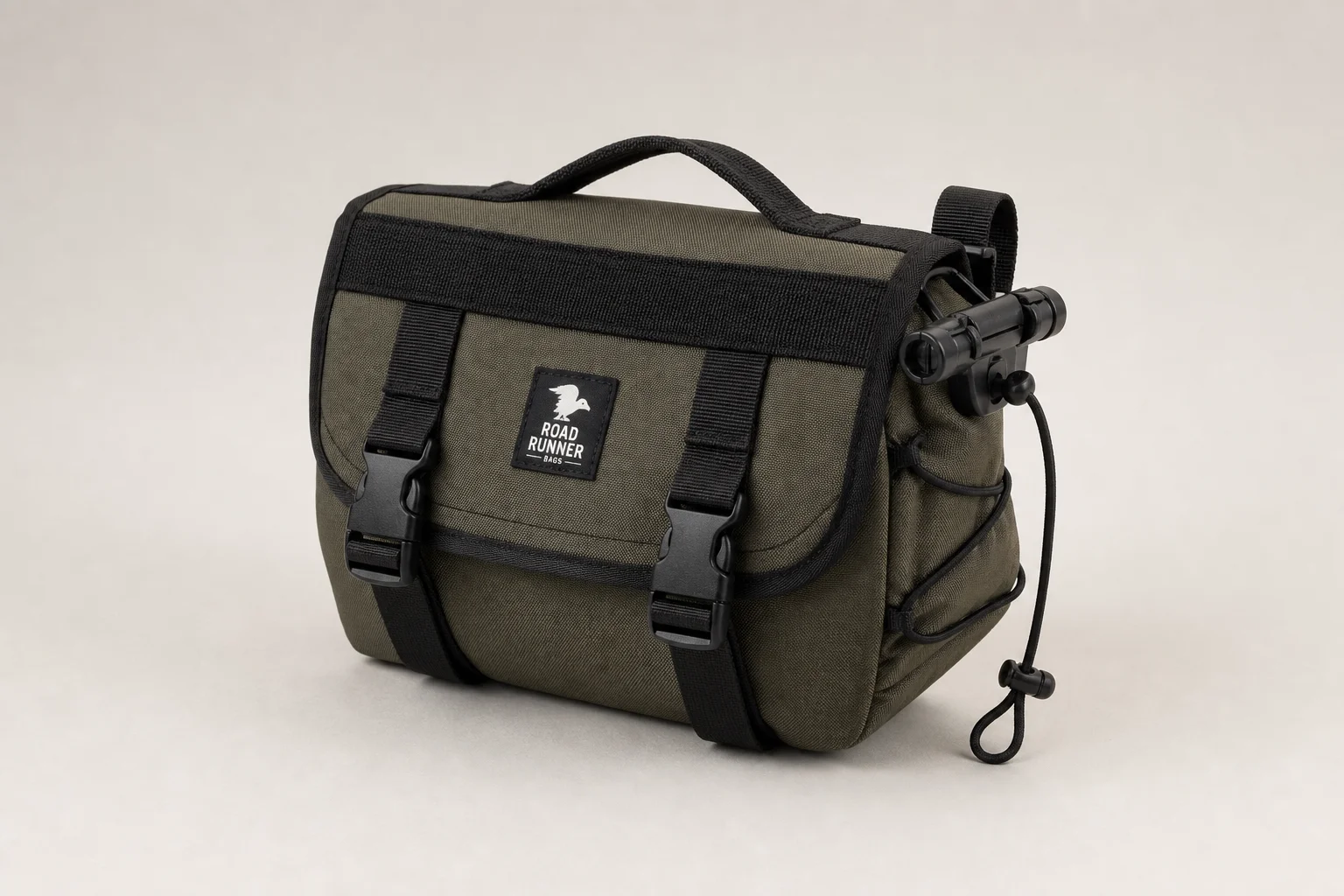
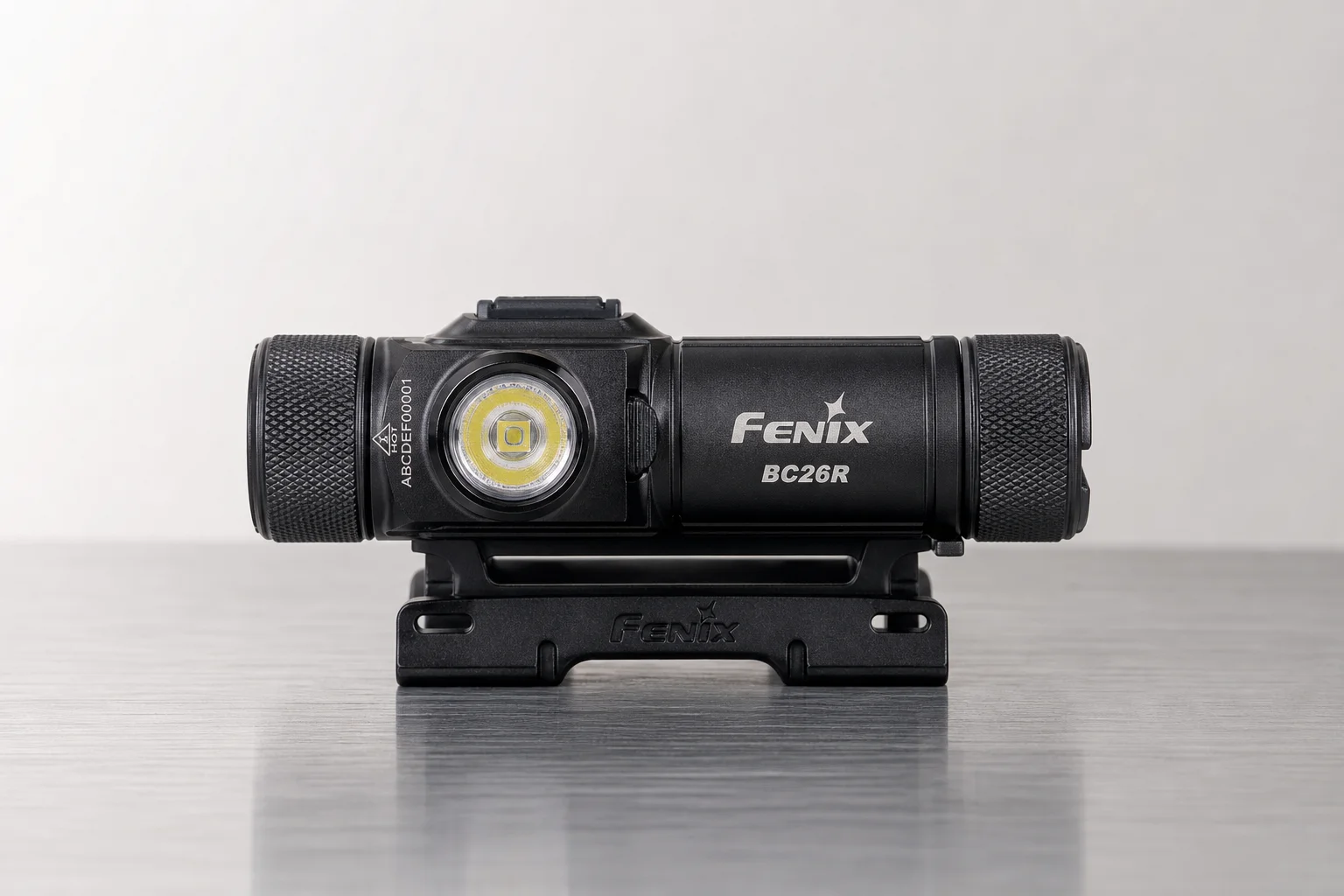
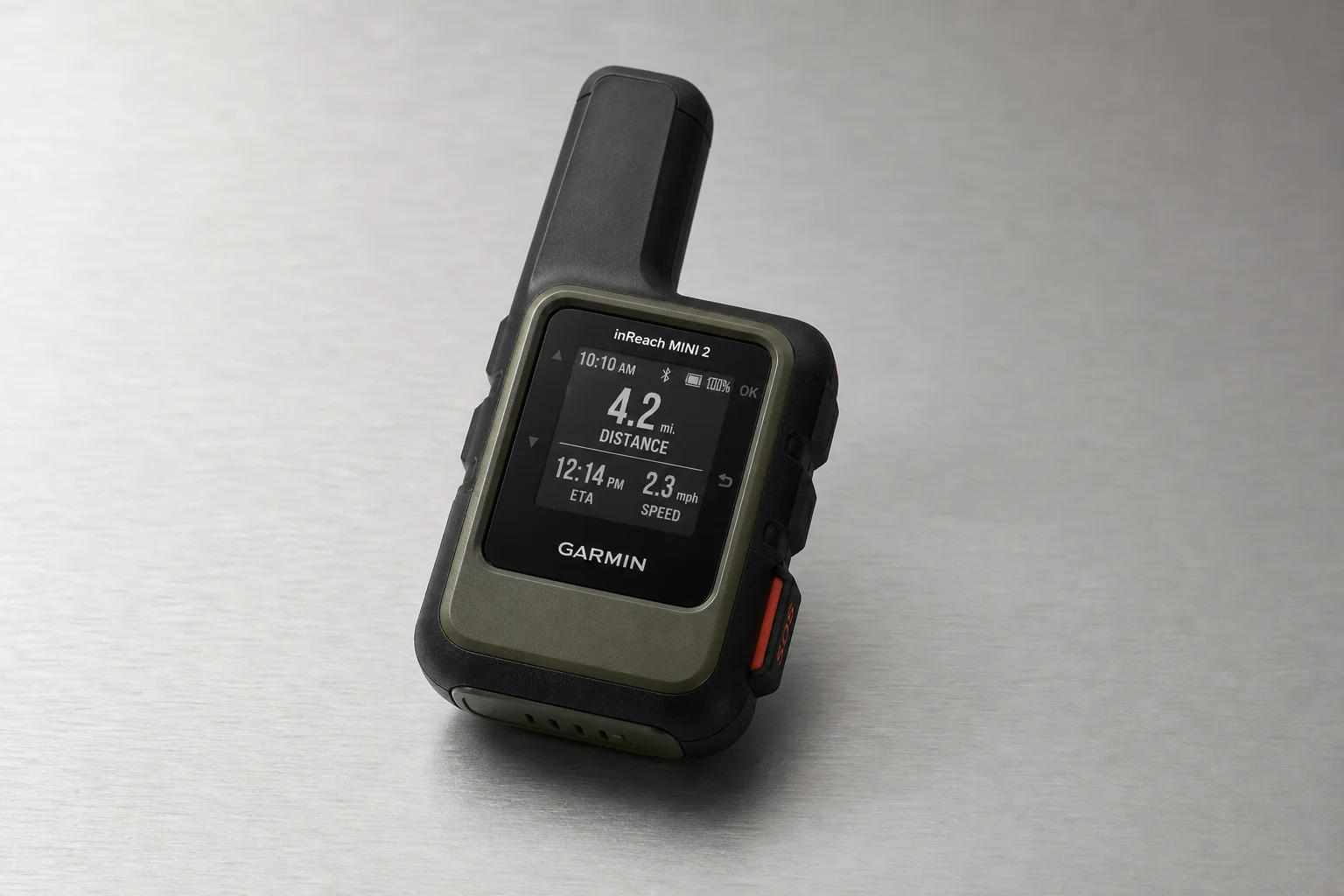
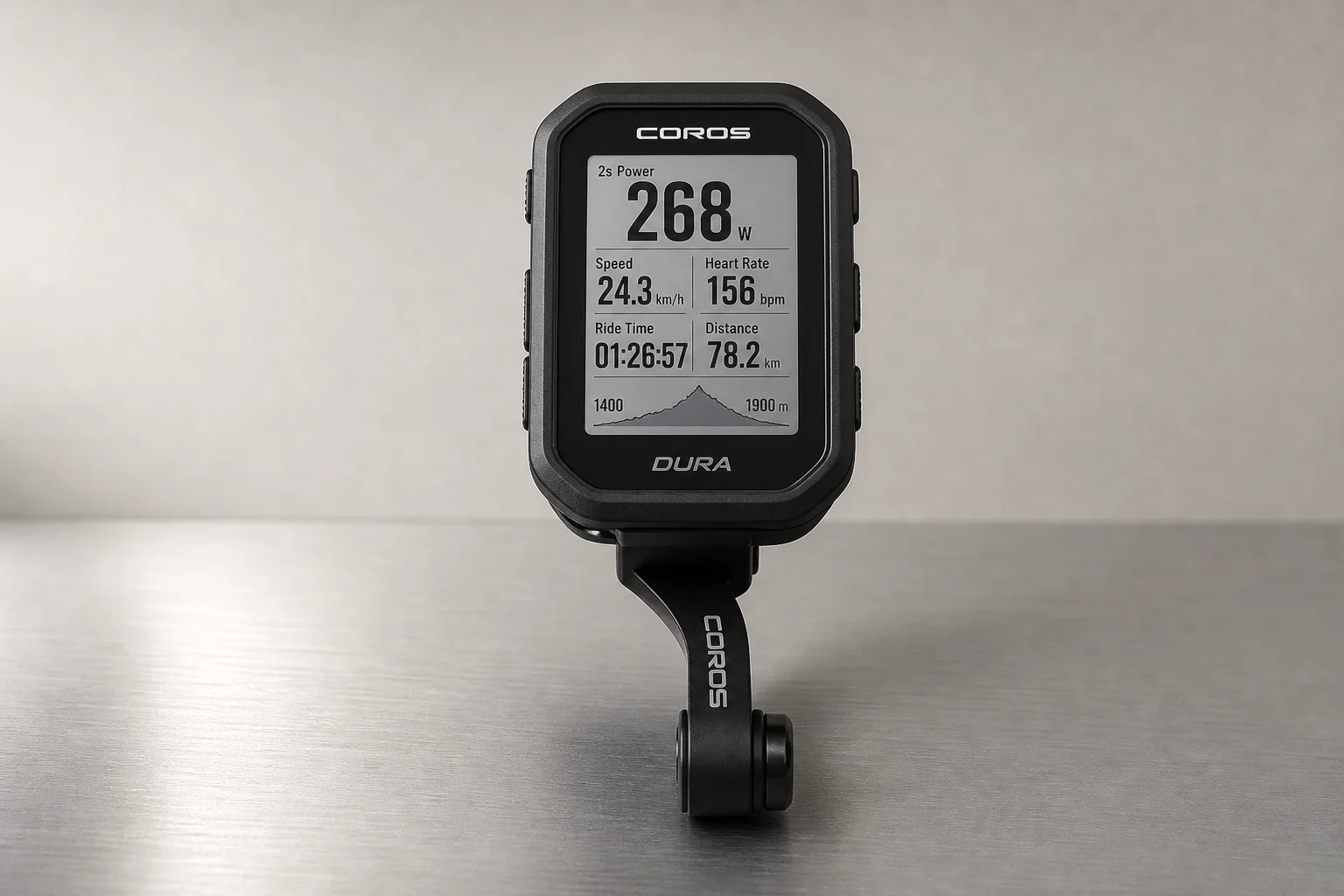
The handlebar setup also includes K-Creek bar ends, a Fenix BC26R headlight for night riding, a Garmin InReach tracker for remote communication, and a Coros Dura cycling computer for navigation and performance data.
Mid-Frame Storage: Top Tube and Seat Tube Bags
Two strap-on bags handle food and miscellaneous items. A Revelate Designs Feed Bag and a Revelate Designs Top Tube Bag both secure to the frame without bolts, making them ideal for bikes without pre-drilled mounting points. Both bags carry food throughout the ride.
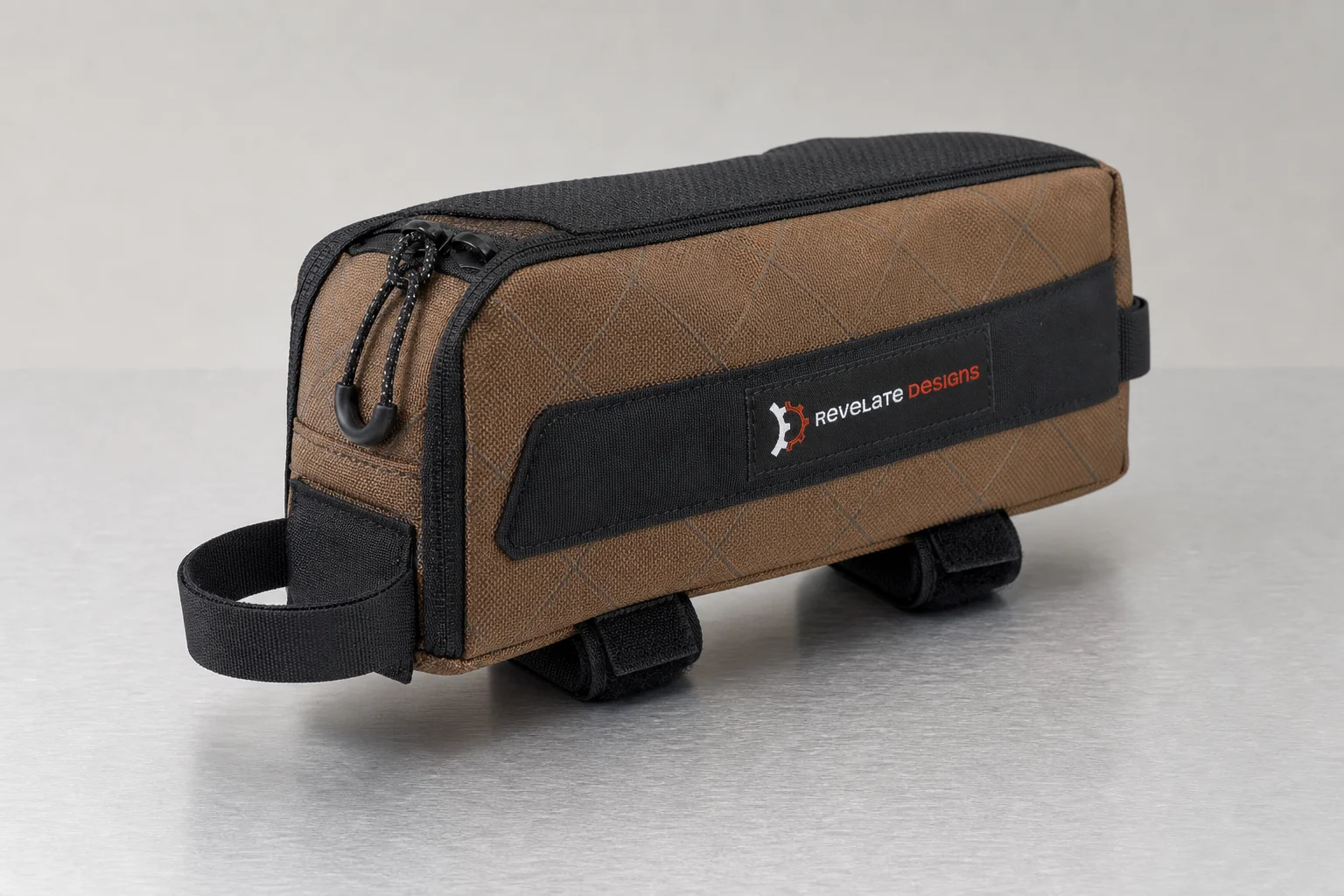
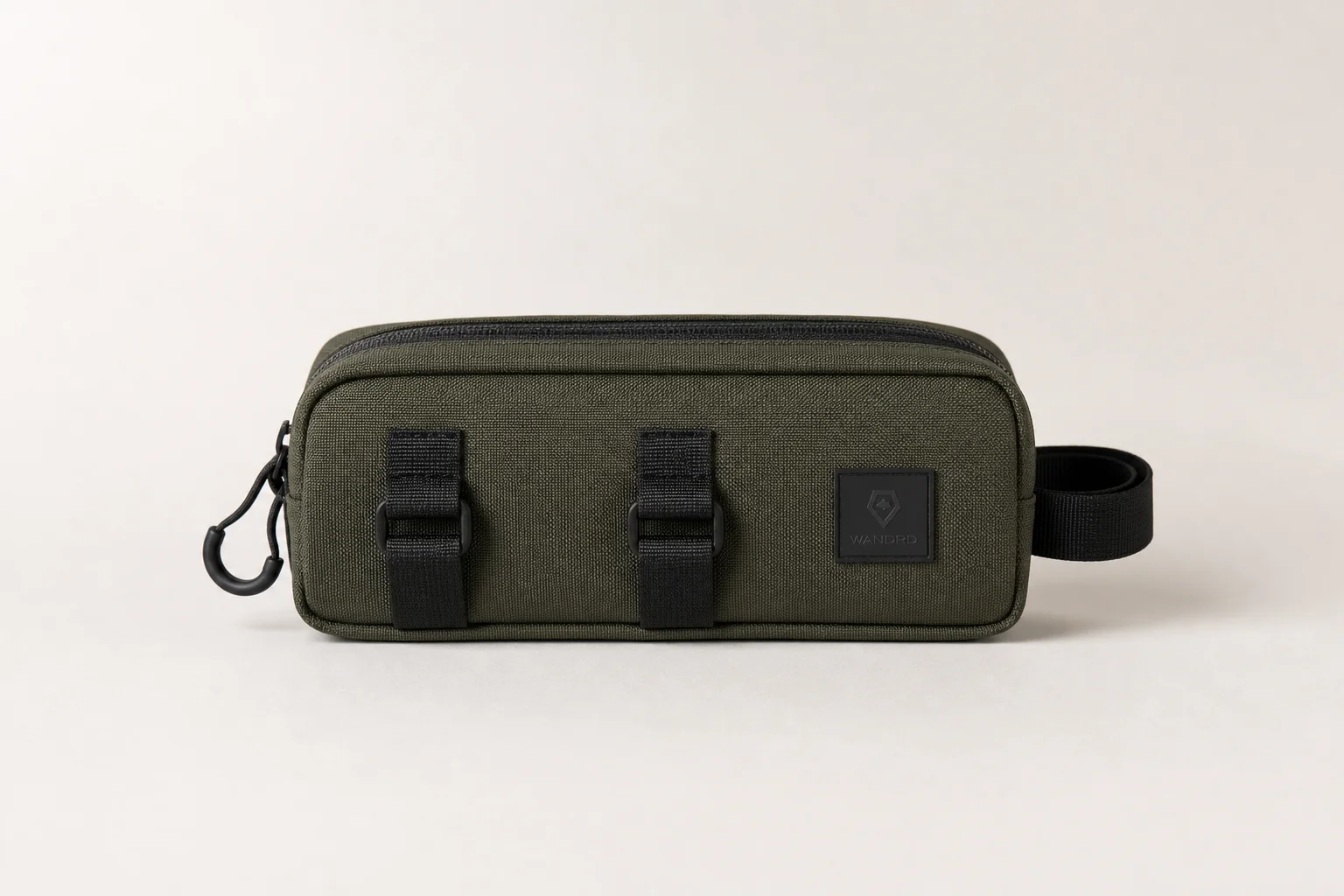
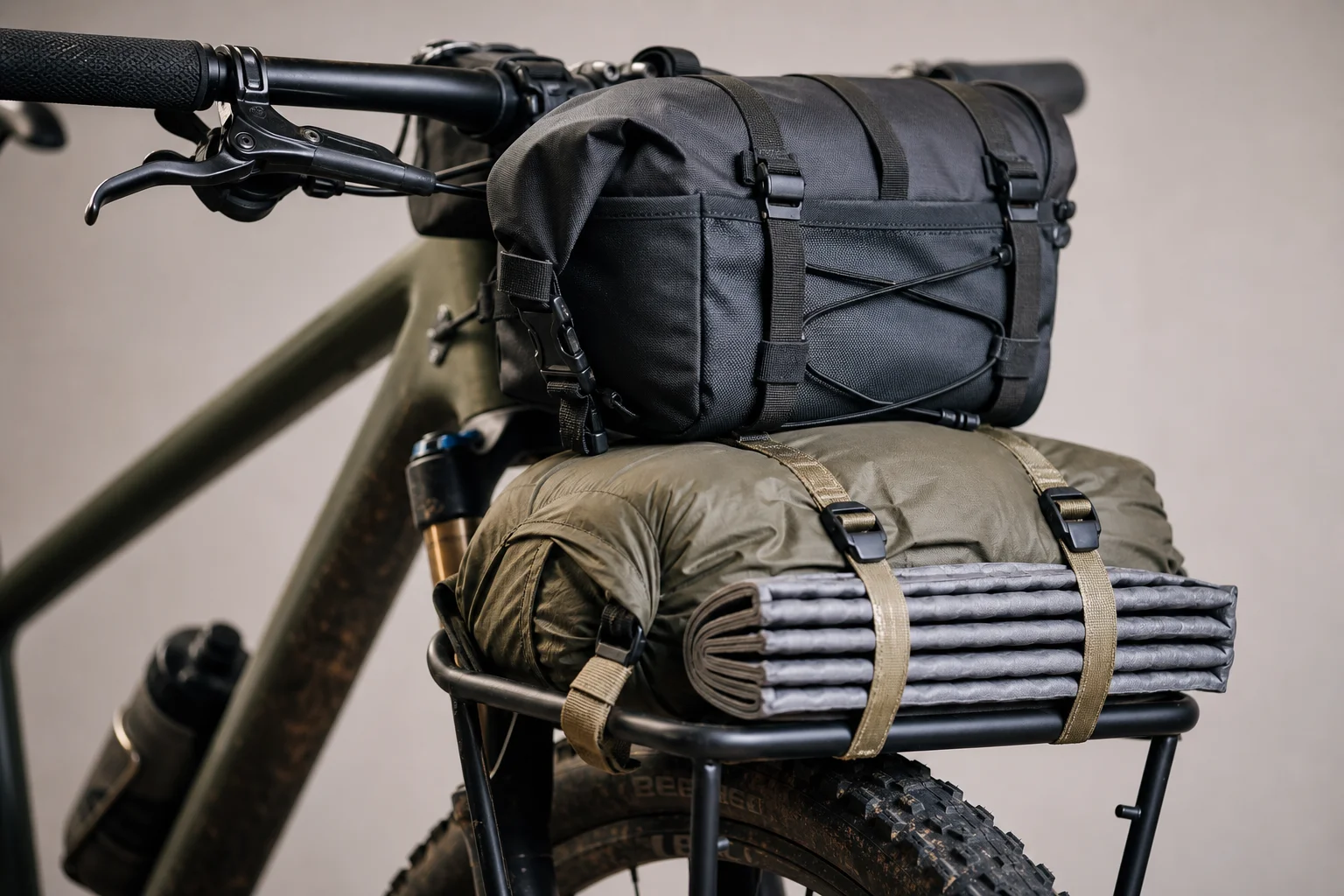
Below these sits a mystery bag acquired years ago that happens to be the only storage that fits alongside the water bottles. It holds miscellaneous gear, tent poles, two bottles, a manual pump for emergency backup, and serves as a catch-all for items that don’t fit elsewhere.
Pump and Tool Storage
A Rogue Panda tool pouch mounts low on the frame, holding essential repair tools. Above it, a Rogue Panda gas tank bag stores tools, chain lube, spare tire sealant, and a Cycplus AS2 Pro electric pump. The electric pump is the primary inflation tool; the manual pump serves only as emergency backup.
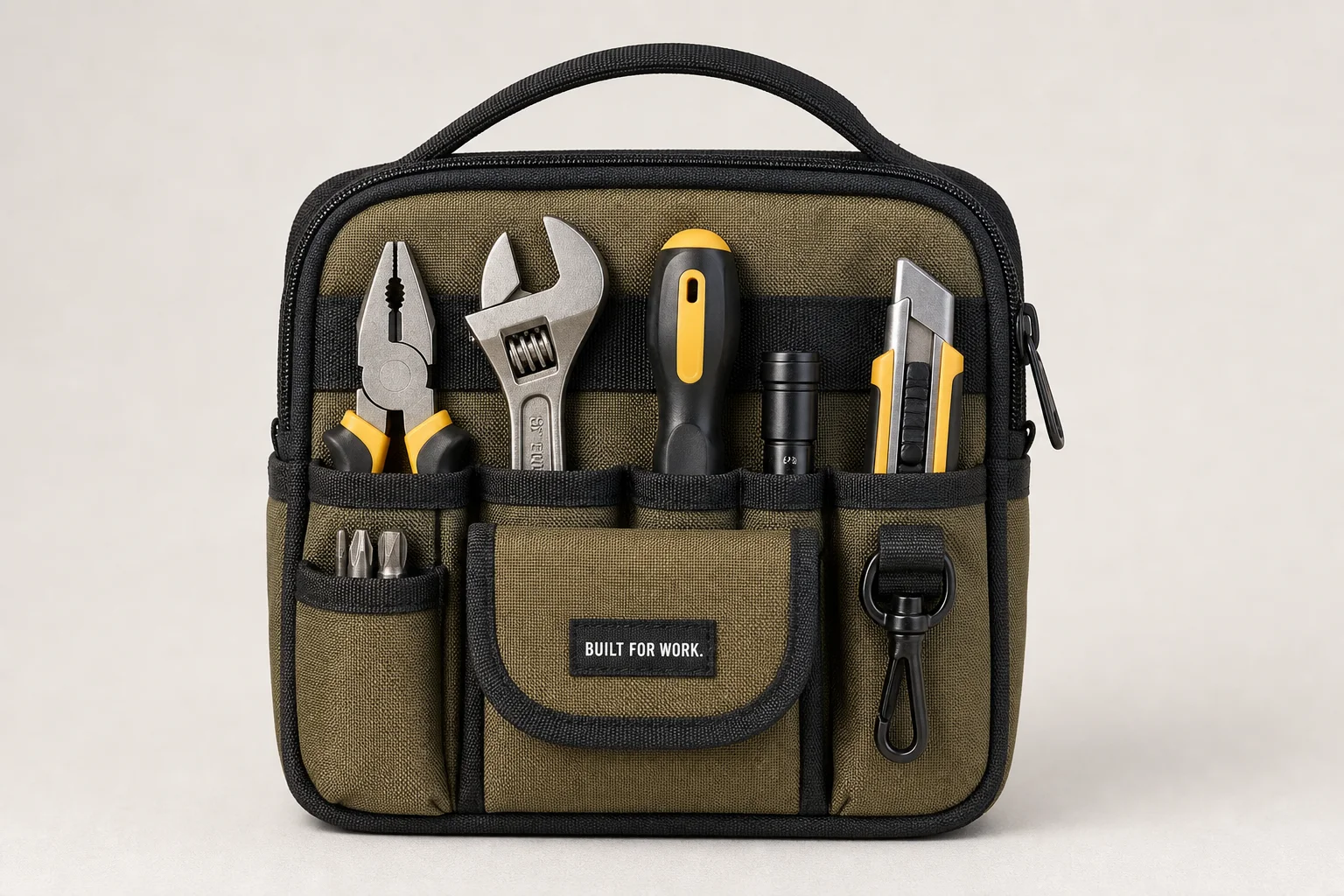
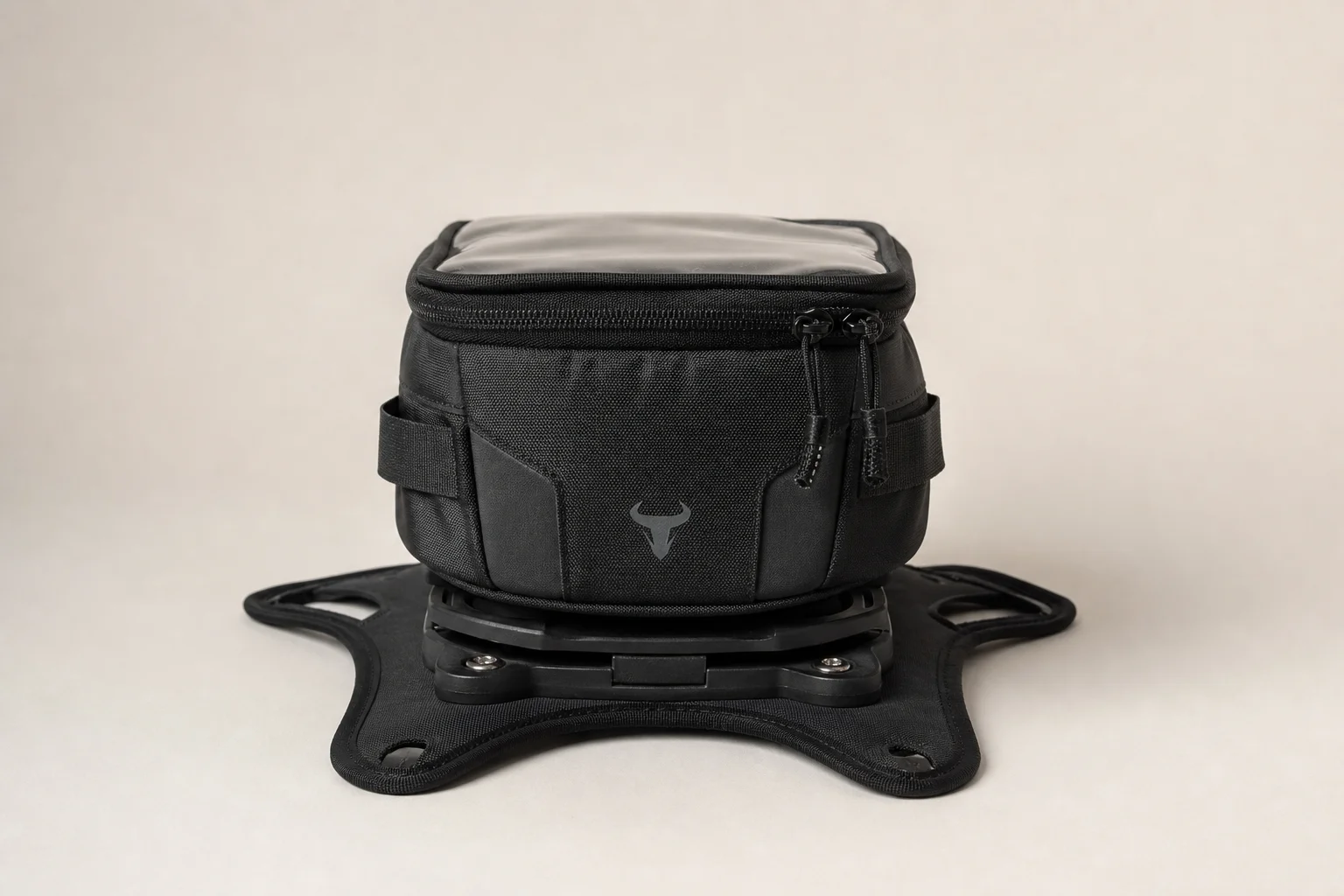
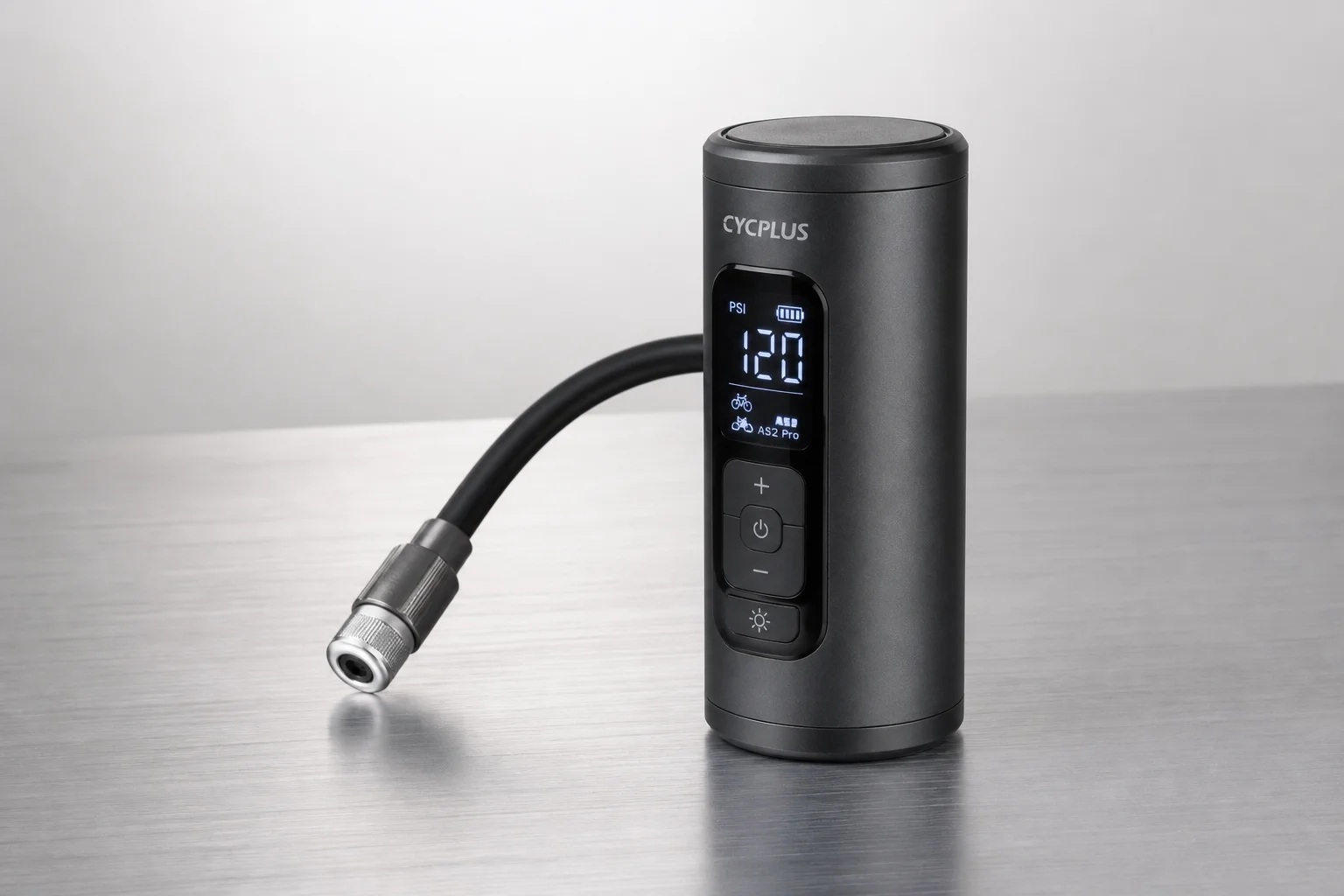
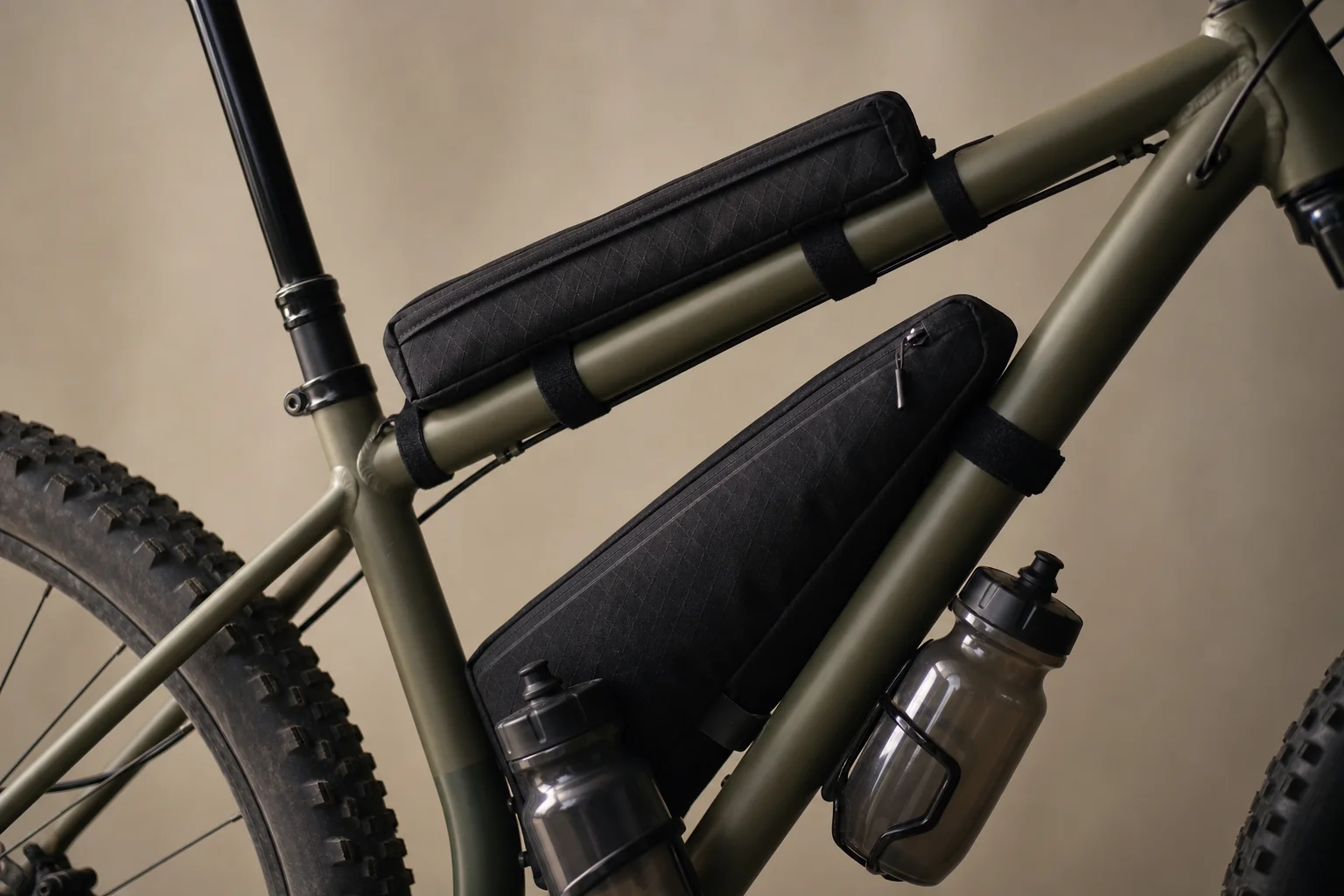
This dual-pump approach balances convenience with redundancy. The electric pump handles routine inflation quickly, while the manual pump ensures the ability to inflate tires if the battery fails.
Rear Storage and Lighting
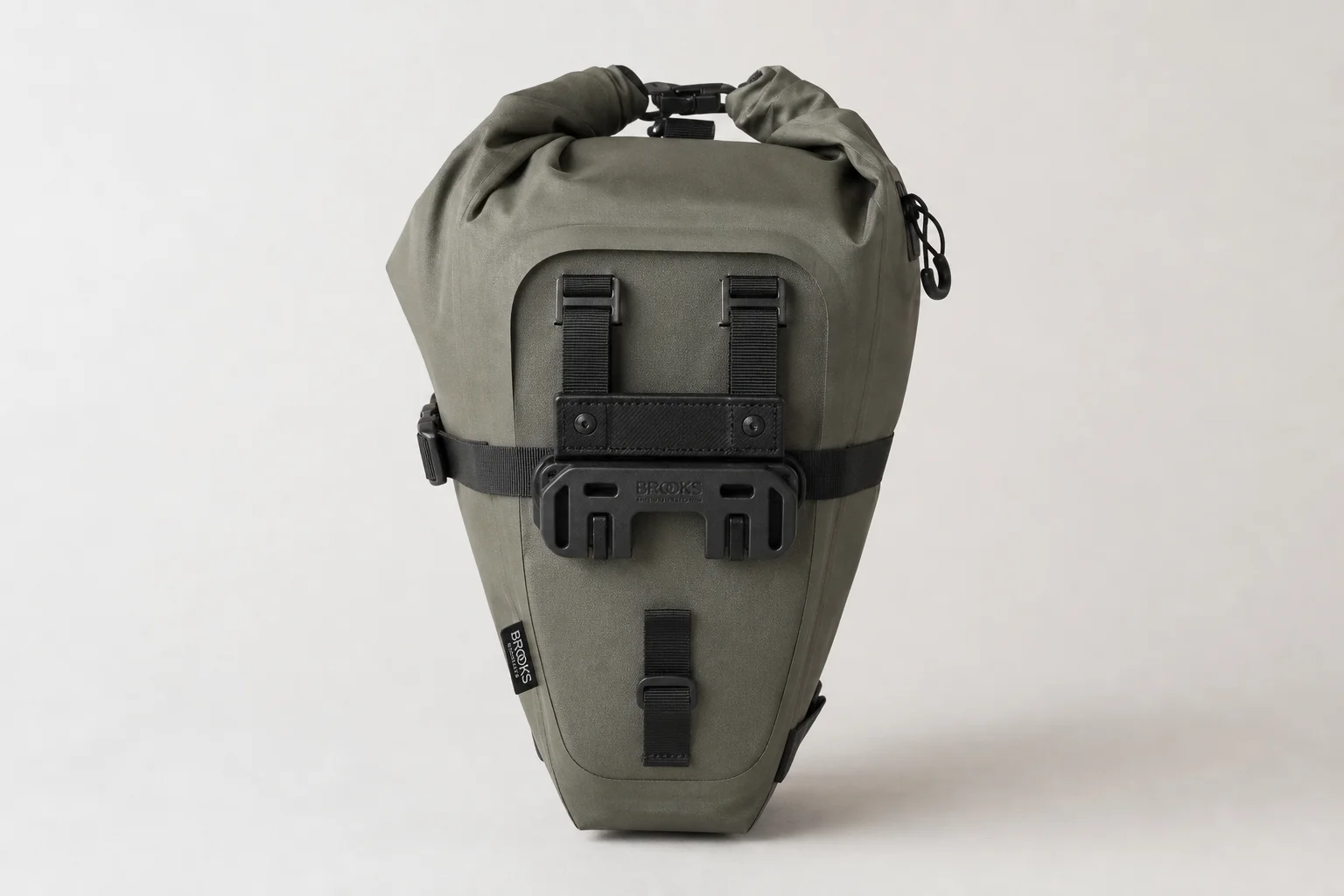
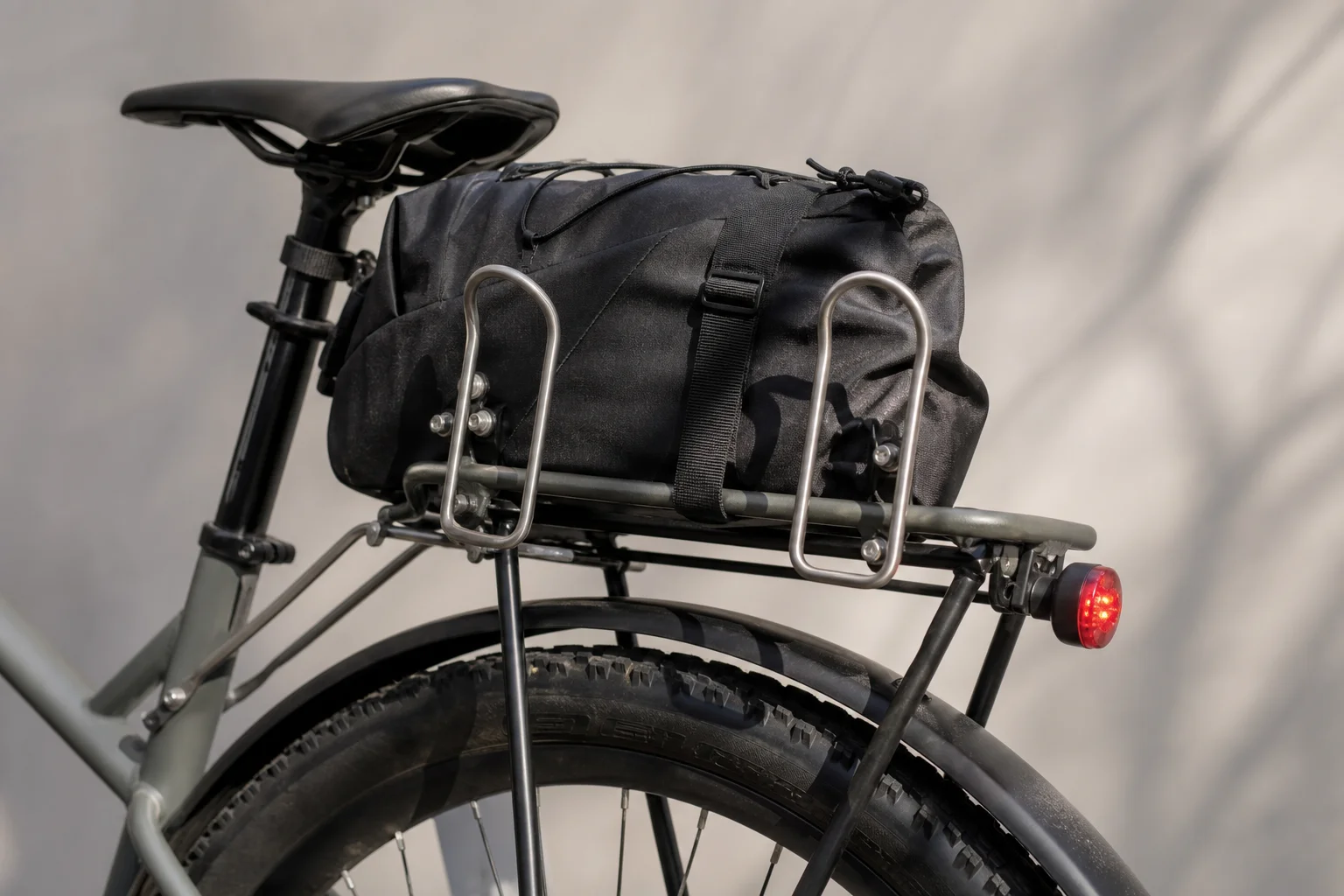
A Mica Rat Tail rack mounts to the rear, allowing three bolt-on bottle cages to be positioned where they would otherwise be impossible. This clever use of the dropper post clearance adds significant water capacity without compromising frame geometry.
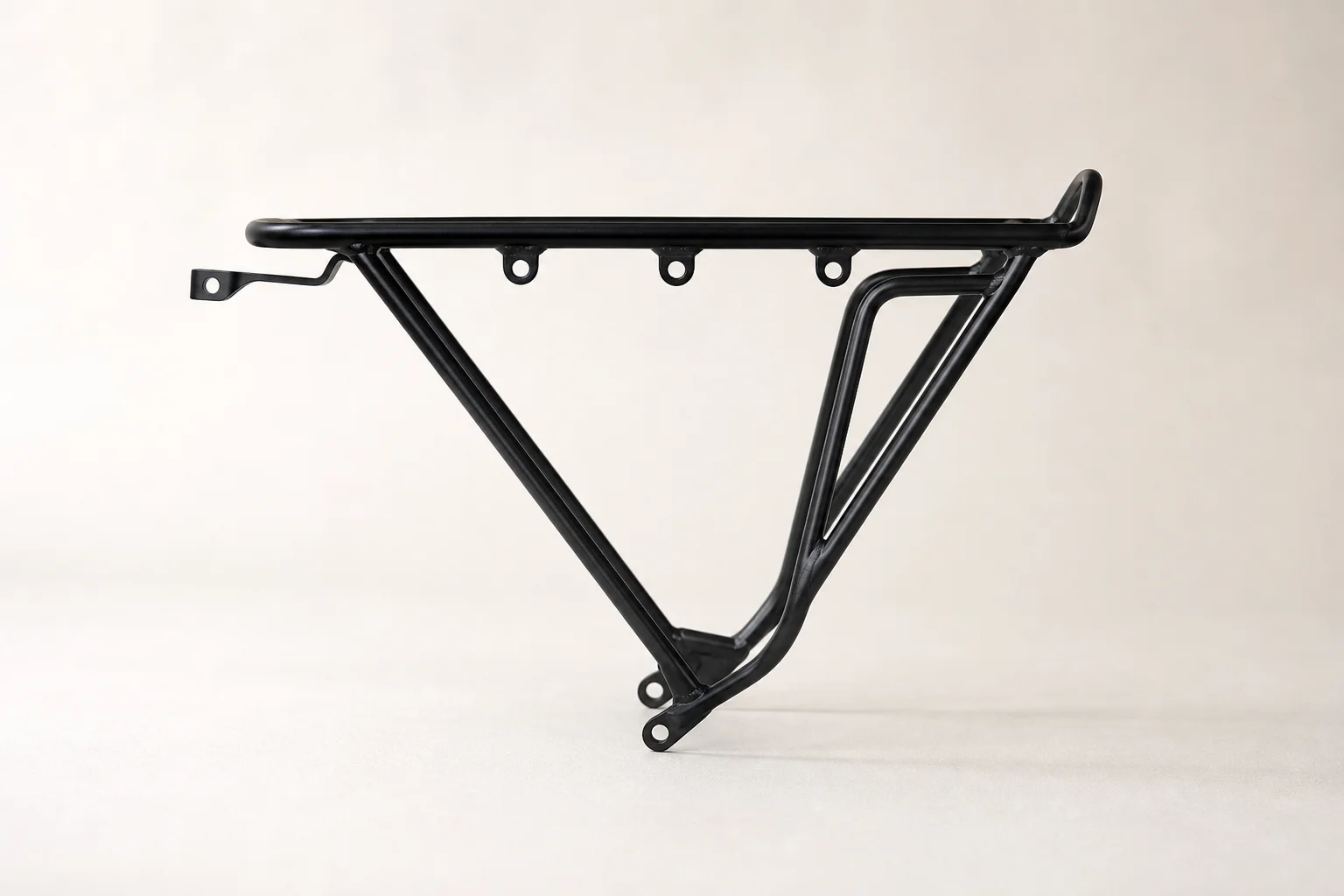
The Revelate Designs saddle bag attaches to the rear rack and holds a puffy jacket, dry clothes for sleeping, extra gloves, and a rain jacket. Even in the desert, a rain layer provides both weather protection and an extra insulation option when temperatures drop.
A blinky light mounts at the rear via a hole drilled into an existing mount on the rack, providing visibility for evening riding and camp visibility.
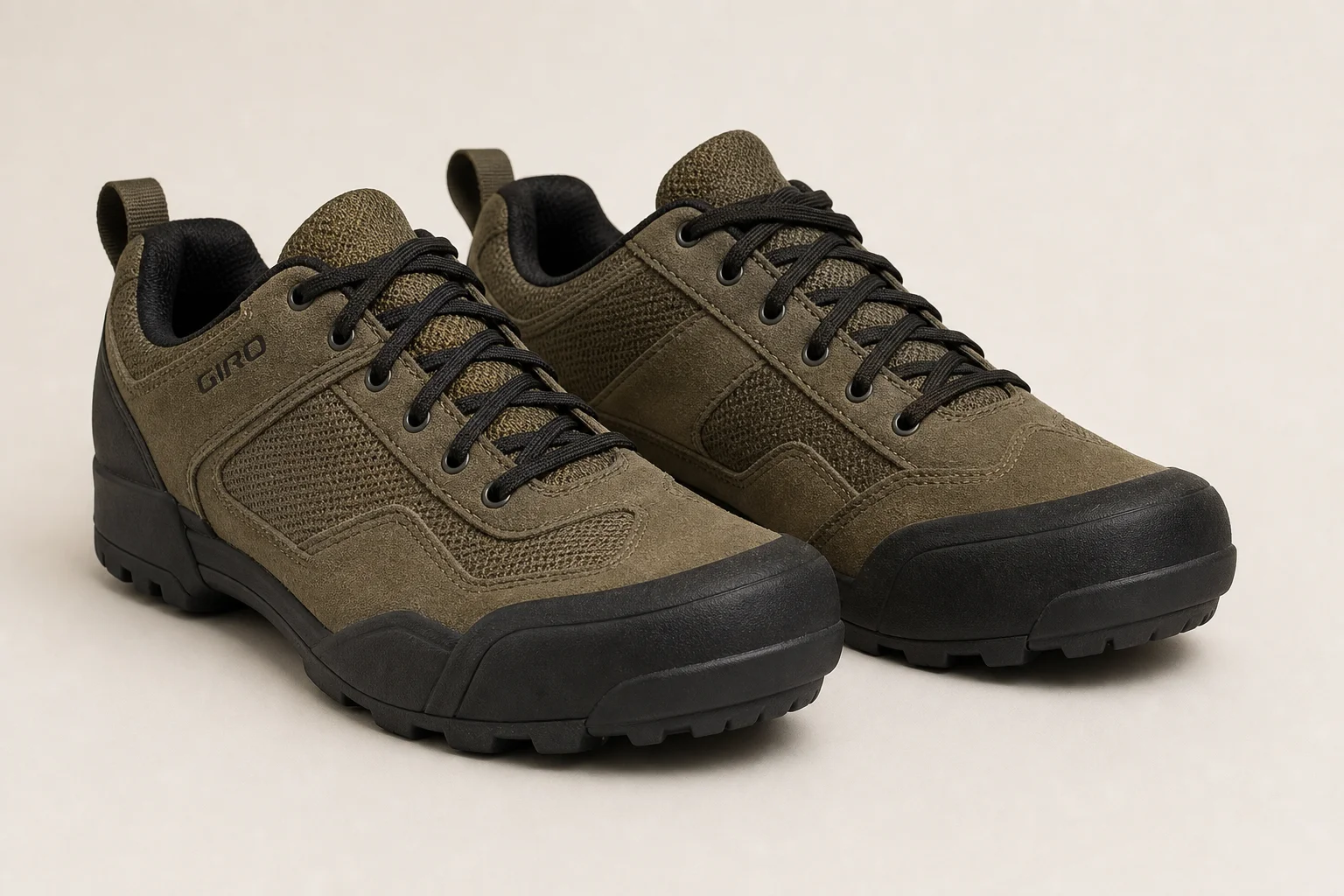
Footwear and Backup Capacity
Bert Camp shoes complete the setup. While not a typical choice for bikepacking, these shoes proved comfortable for both pedaling and hiking, making them ideal for mixed terrain where walking sections are inevitable.
Beyond the bike, a discontinued Pedal Cycling vest carries 1.5 liters of water and six Uncrustables snacks. A collapsible 1-liter bottle in a jersey pocket provides additional emergency capacity. This backup system ensures sufficient water for the entire 80-mile route with no resupply points.
Conclusion
This setup succeeded because every component serves a clear purpose and fits logically into the overall system. The combination of frame-mounted bags, racks, and external storage creates a lightweight, balanced configuration that handles sand, rock, and extended self-sufficiency without unnecessary complexity. For future desert routes and similar terrain, this foundation will require only minor adjustments.
Further reading
Related Reviews
Bikepacking
Bikepacking Gear Updates 2026: What Changed After Two Years
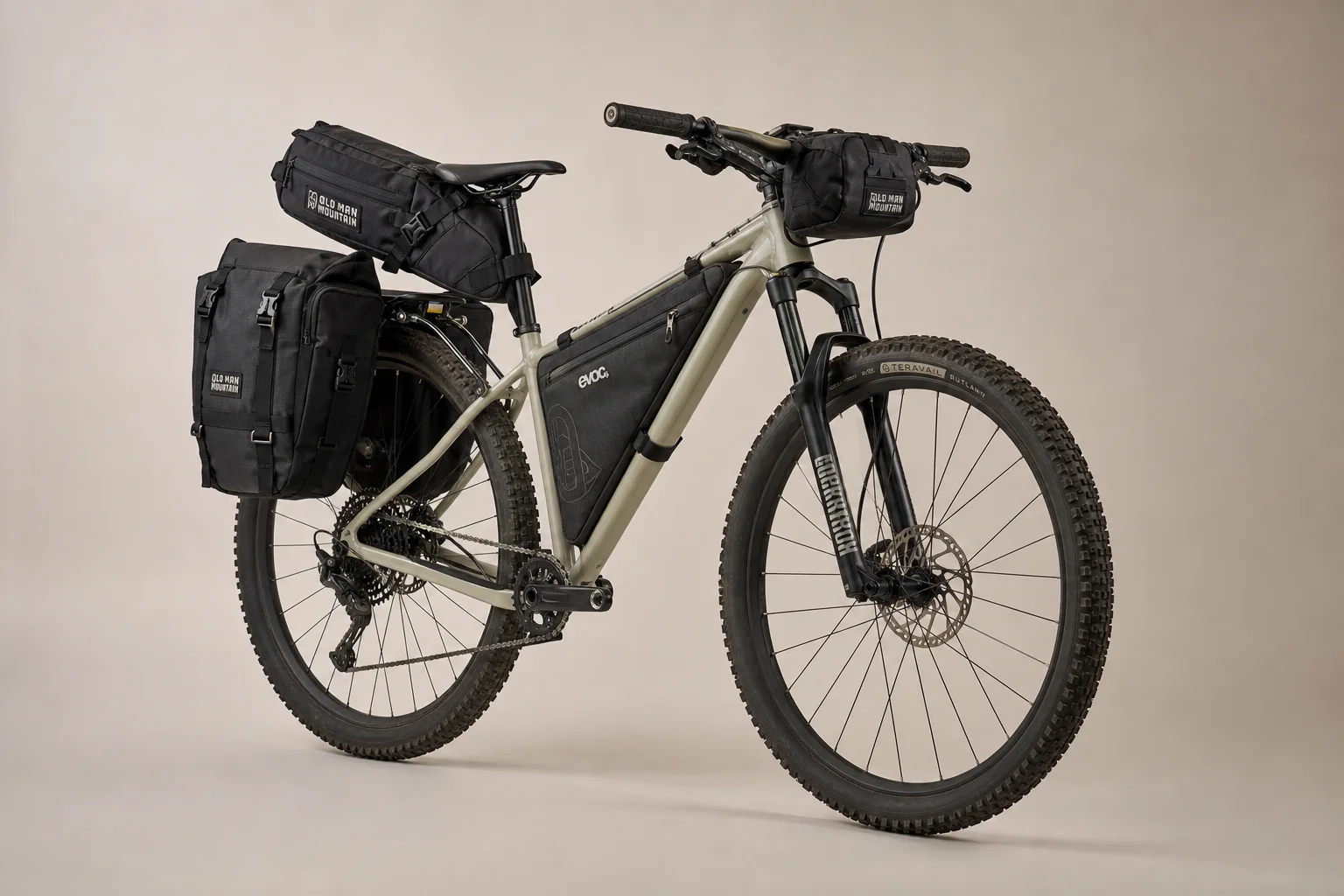
A practical update on bikepacking setup changes, from new bikes and fork mounts to handlebar bags and dropper posts, with honest assessments of what worked and what didn't.
Bikepacking
Bikepacking Setup Comparison: Trail, Gravel, and Downhill Bikes Tested
We tested Old Man Mountain racks and bags on three different bike types to see which setup works best for bikepacking adventures.
Bikepacking
Bikepacking Setup for Hardtail Mountain Bikes: A Tested Golden Jack Rabbit Route Build
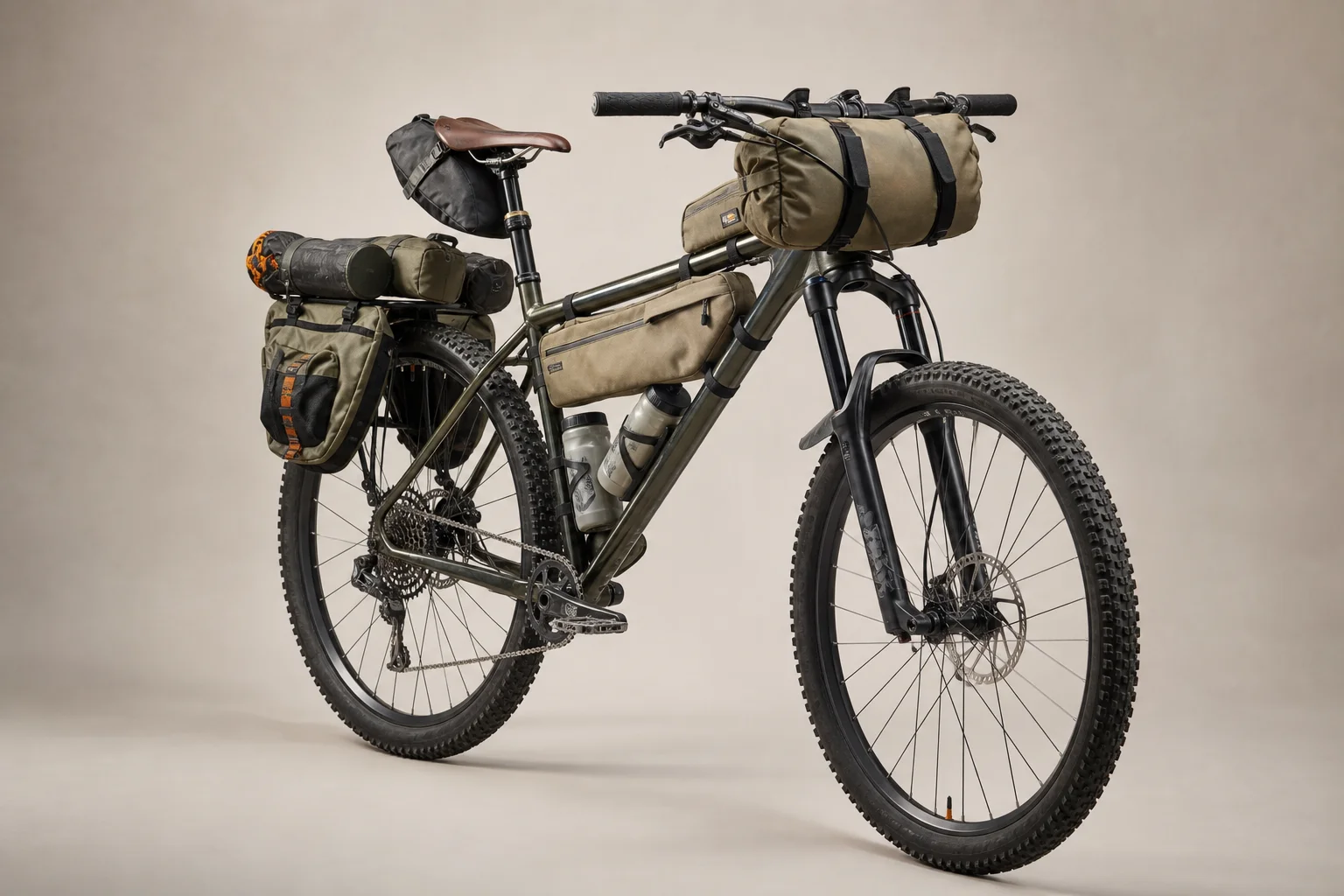
A complete bikepacking setup for hardtail mountain bikes, tested on the Golden Jack Rabbit route with practical bag placement, water carrying, and gear organization strategies.