Power Stations
Big Blue Cell Power: A Portable Power Station Worth Watching
A compact LiFePO4 power station with 2,500W output, industry-standard ports, and a launch price that undercuts the competition.
Introduction
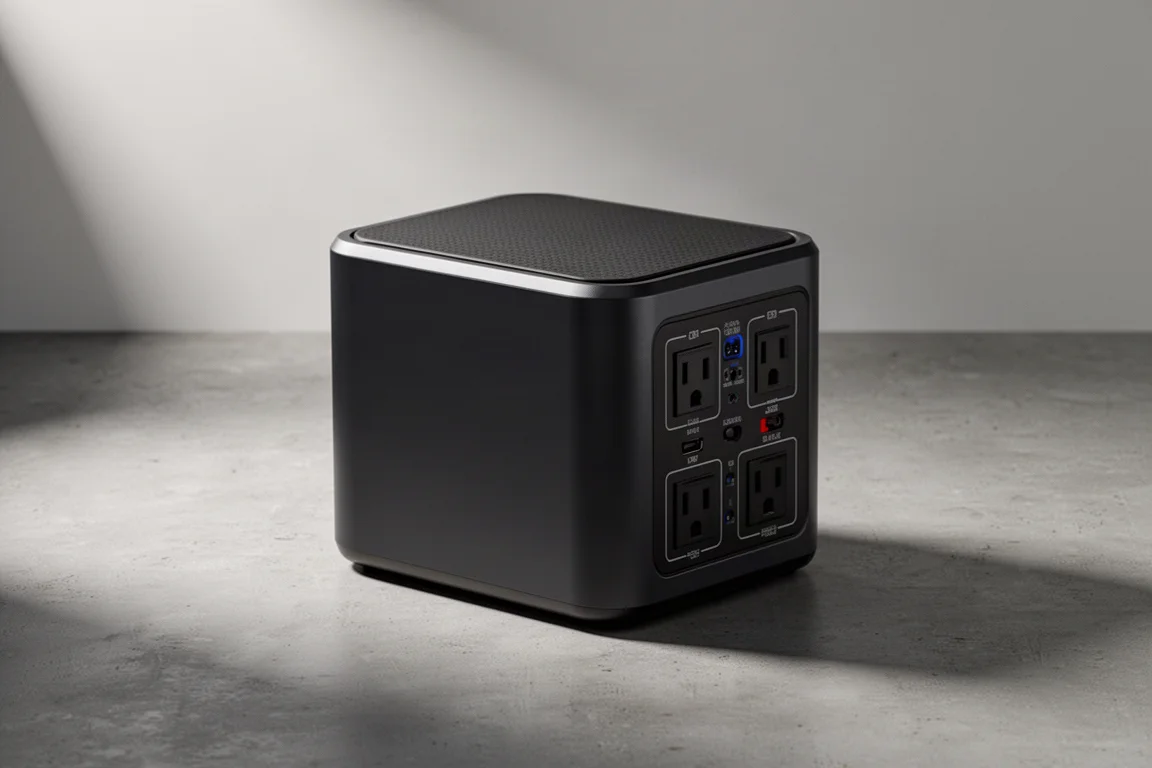
There is no shortage of portable power stations on the market, but very few manage to combine a genuinely compact footprint with serious output, and fewer still do it at a price that makes sense. The Big Blue Cell Power portable power station manages both, and it does so without the over-designed, “tough guy” styling that so many competitors lean on. It is a no-frills, well-built box that does exactly what a power station should do.
What the Big Blue Cell Power Is
The Big Blue Cell Power is a portable power station built around LiFePO4, or lithium iron phosphate, battery chemistry. That matters more than almost any spec sheet line item: LiFePO4 cells handle deep discharge and offer far more recharge cycles than typical lithium packs. The unit is rated for 3,500 recharge cycles, which is the number to look for if you plan to cycle the battery regularly rather than leave it in a closet.
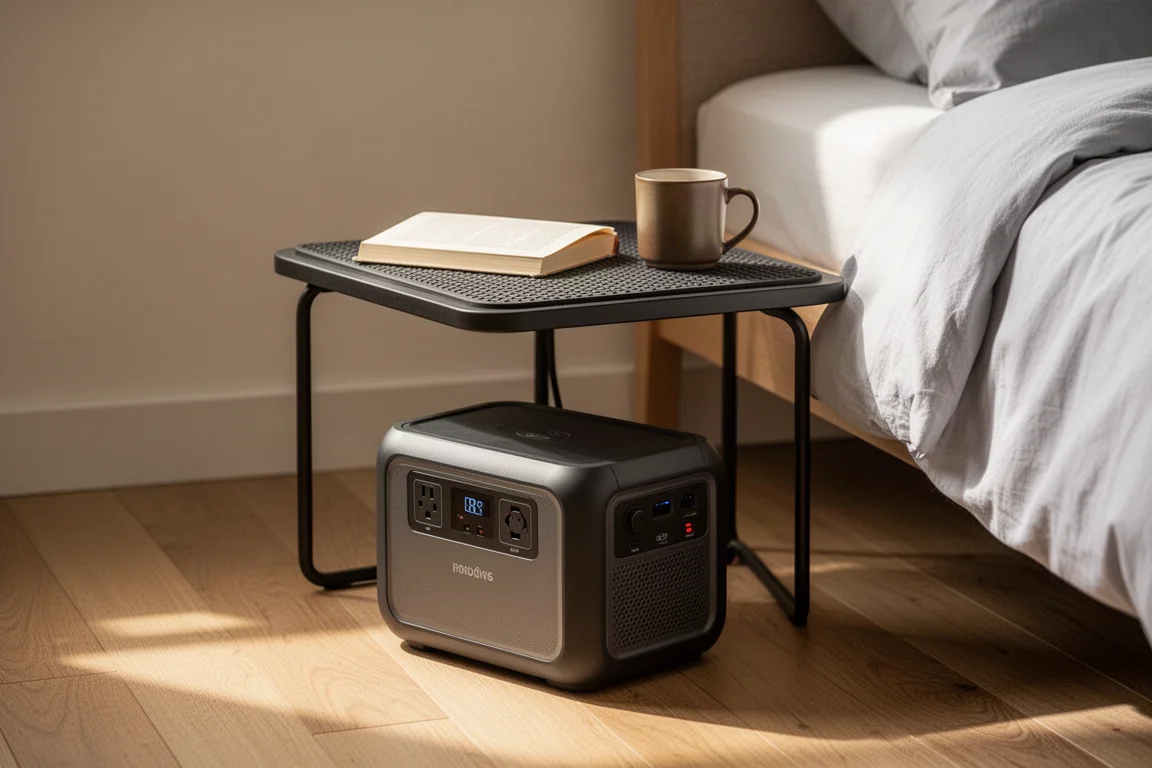
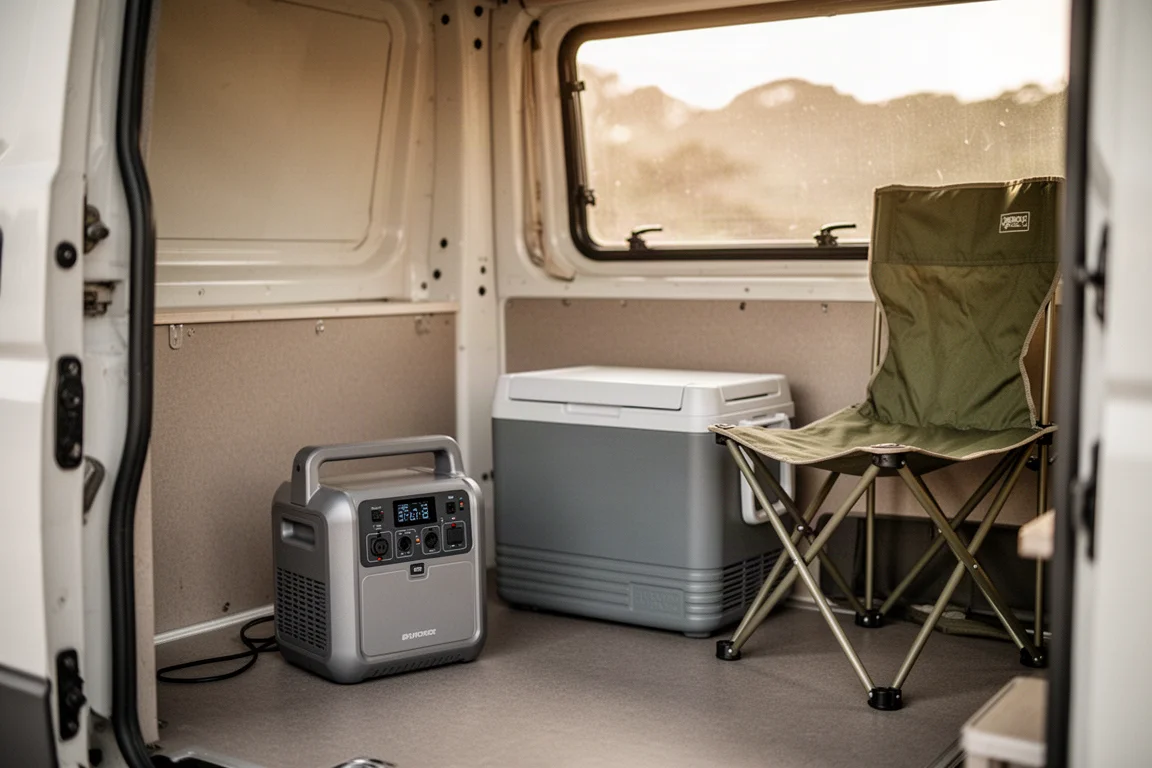
Physically, it is a tidy, extra-compact package weighing about 25 kilograms. It is sturdy without being bulky, and the build quality stands out. One small but genuinely useful touch is the rubberized mat on top, which lets you set things on it. It works as a small table next to a bed, in a van, or in a camper rig, which turns what would otherwise be a brick taking up space into usable surface area.
Ports and Output
Output is rated at 2,500W with a 5,000W peak, delivered through six AC ports on one side. That is enough to run real loads, not just chargers: a 9-amp power tool ran without issue. On the front you get two fast USB chargers, two 45W USB-C ports, and two 100W USB-C ports, which means laptops like MacBooks can be charged at full speed without adapters. Two DC 5.5mm, 5-amp ports round out the layout.
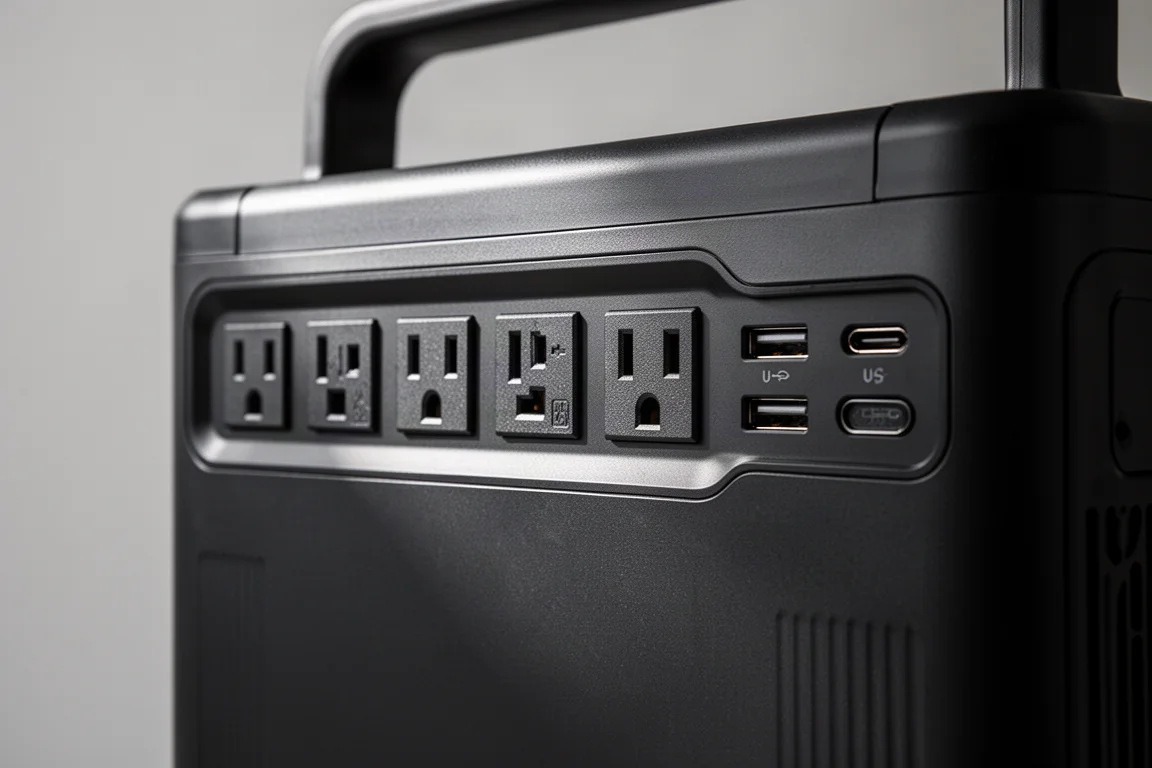
Everything uses industry-standard connections, which is rarer than it should be in this category. Many power stations use proprietary plugs or unusual standards that force you into adapters. This one just plugs into everything.
Charging Options
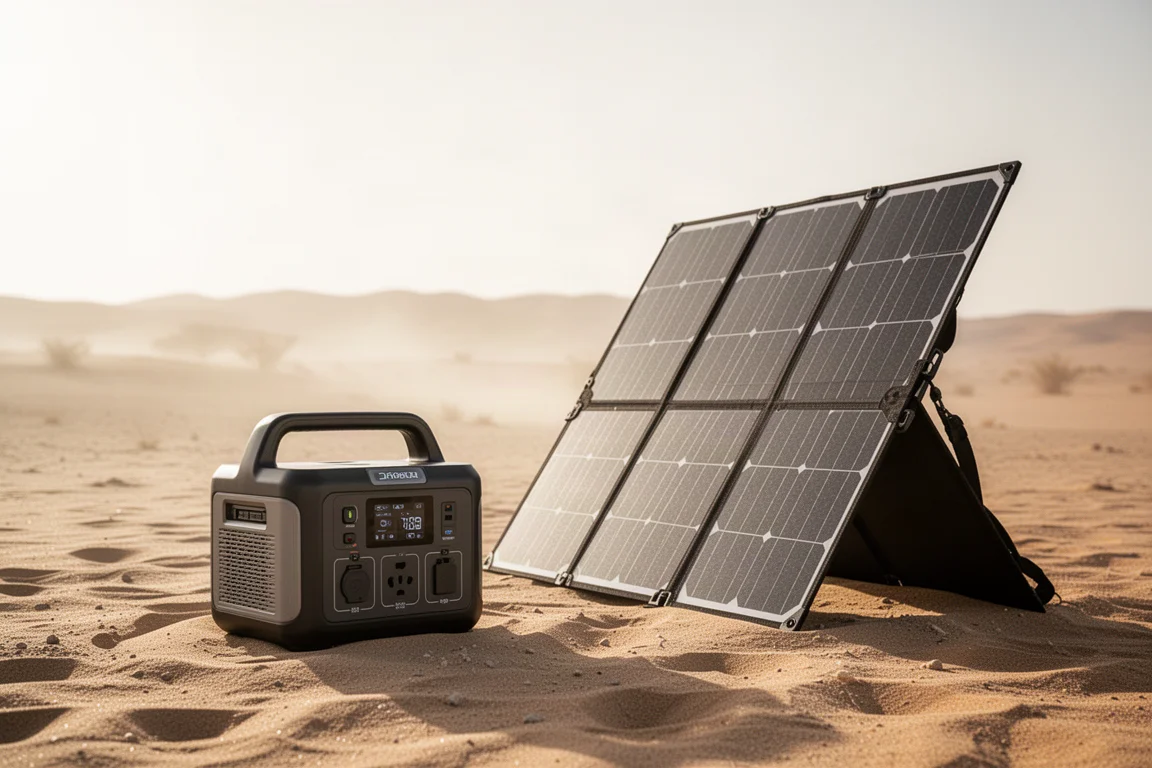
Charging is flexible. Three DC inputs accept up to 1,200W from six solar panels, and you can combine solar with AC charging at the same time. A car charger input is also included, so solar, wall, and vehicle charging are all covered. Most of the accessories you need come in the box.
The unit also pairs with a wireless app for control and monitoring. The app is a nice bonus rather than a reason to buy, but if two comparable units are on the shelf, the one with an app is the one to pick.
Who It Is For
This is not a replacement for a large gas generator, and it is not trying to be. It is built for going remote with solar panels, for emergency backup at home during brownouts, and for RV and overland use. Think desert trips, beach days with a portable electric cooler, or keeping essentials powered when the grid wobbles. It also suits apartment living, where a quiet, fume-free backup beats a gas generator every time.
Pricing and the Deal
The regular list price once the unit is established is $2,000, which is roughly on par with comparable units in this size and spec class. A popular competing model with similar capabilities currently runs around $1,600, so at the early-bird price of $999 for the first 300 buyers, the savings are substantial, around $600 against that competitor. If you miss the first 300, the crowdfunding price of $1,199 is still a strong deal for a station of this size and specification.
For anyone wary of crowdfunding launches, it helps to know the company behind it is established, already sells smaller power products and solar cells, and is using the campaign simply to launch a bigger unit. Real units have shipped to reviewers, so this is not vaporware.
Buying Advice
If you are shopping for a power station and can catch the early-bird window, this is about as good as the value proposition gets in this class. If you miss it, weigh the $1,199 crowdfunding price against the $1,600 to $2,000 alternatives, and factor in what matters most to you: LiFePO4 chemistry, standard connectors, six AC ports, and serious USB-C output all come standard here.
Conclusion
The Big Blue Cell Power does the fundamentals well: solid construction, LiFePO4 battery chemistry, plenty of standard ports, flexible charging, and a compact, table-friendly form. At the launch pricing it is an easy recommendation for campers, overlanders, and anyone who wants quiet home backup, and even at list price it belongs in the conversation with the better-known options.
Product link
View more details for Big Blue Cell Power
This product is mentioned in the review. Check the specifications, options, and compatibility before buying.
View more details for Big Blue Cell PowerFurther reading
Related Reviews

Power Stations
Anker SOLIX F3800 Plus Review: A Powerful 6,000W Power Station With Some Trade-Offs
The Anker SOLIX F3800 Plus delivers a robust 6,000W inverter, fast solar charging, and solid UPS performance, but high idle draw and a hefty weight give buyers real things to consider.
Power Stations
Best Portable Power Stations Under 2000Wh: 2025 Lab Tested Recommendations
Nine portable power stations tested in real-world conditions, from compact 500Wh units to capable 2000Wh models. Unsponsored recommendations for camping, emergencies, and creative work.

Power Stations
BLUETTI Charger 2 Review: A 1200W DC-to-DC Charger for Van Life and Overlanding
The BLUETTI Charger 2 combines 800W alternator charging with 600W solar input for a 1200W total, but compatibility and price deserve a closer look.