Backpacking Tents
Big Agnes Pitch Pine VST 1.5 vs TarpTent Rainbow: Choosing Between Two Ultralight One-Person Tents
A practical comparison of two single-wall polyester one-person tents, one at $650 with welded seams and a 1.5 layout, the other at $284 with pole options and a freestanding conversion.
Introduction
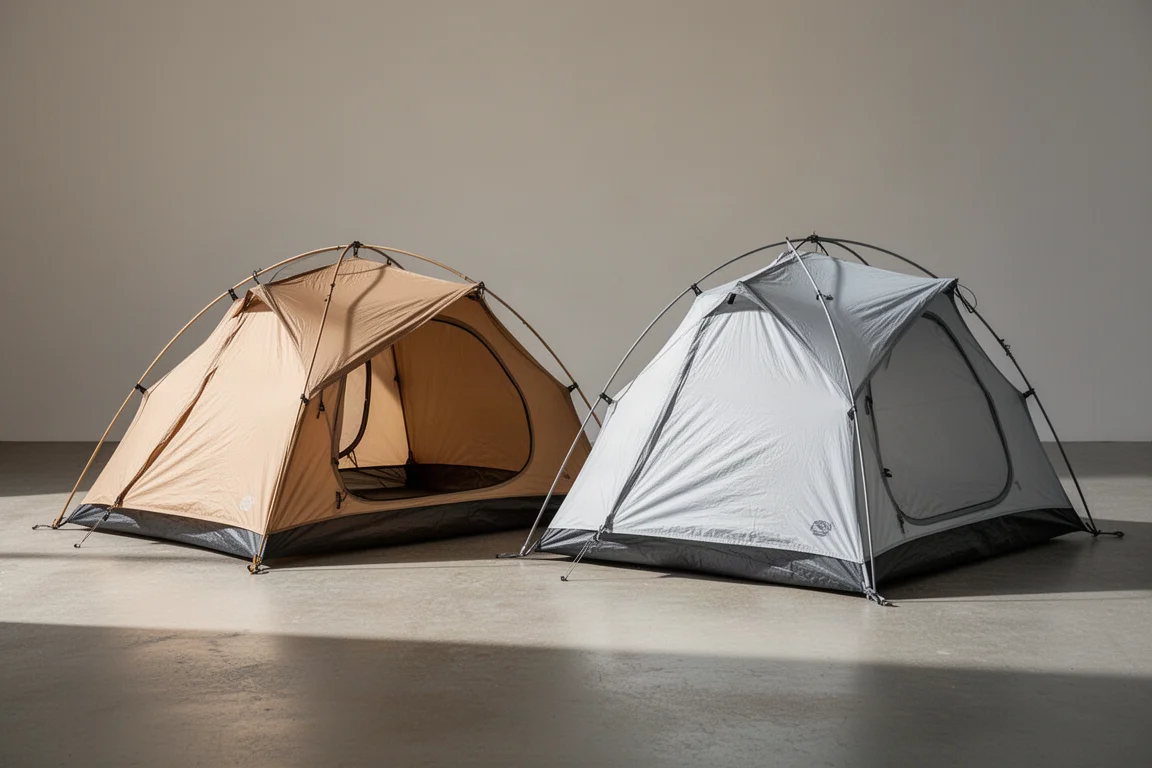
At first glance, the Big Agnes Pitch Pine VST 1.5 and the TarpTent Rainbow look like answers to the same question. Both are single-wall, one-person backpacking tents built from polyester fabrics, both use a similar semi-freestanding structure with a single main pole and a brow pole across the peak, and both land in roughly the same weight class.
The difference is money. The Pitch Pine VST 1.5 is priced at $650, while the Rainbow starts at $284 in its standard configuration, a gap of about $366. That gap is not explained by size or category. It comes down to how each tent is made, how the interior is laid out, and what each design expects you to value.
How These Two Single-Wall Tents Compare
Both tents are single-wall designs, which means the fly and the inner body are the same layer. That saves weight but puts more pressure on ventilation and fabric choice. The Pitch Pine VST 1.5 uses a 20 denier polyester fabric with a polyester ripstop, while the Rainbow uses a 20 denier nano polyester ripstop. Neither relies on nylon for the main body.
Each tent is semi-freestanding. A single main pole arcs from one corner to the opposite corner, and a brow pole across the top spreads the peak to create usable interior volume. Both tents accept a 25 inch wide sleeping pad without difficulty.
The structural differences show up in the details. The Pitch Pine holds its pole with clips rather than a sleeve, and the Rainbow runs its main pole through a sleeve, which helps stabilize the tent dimensionally against wind coming from different directions.
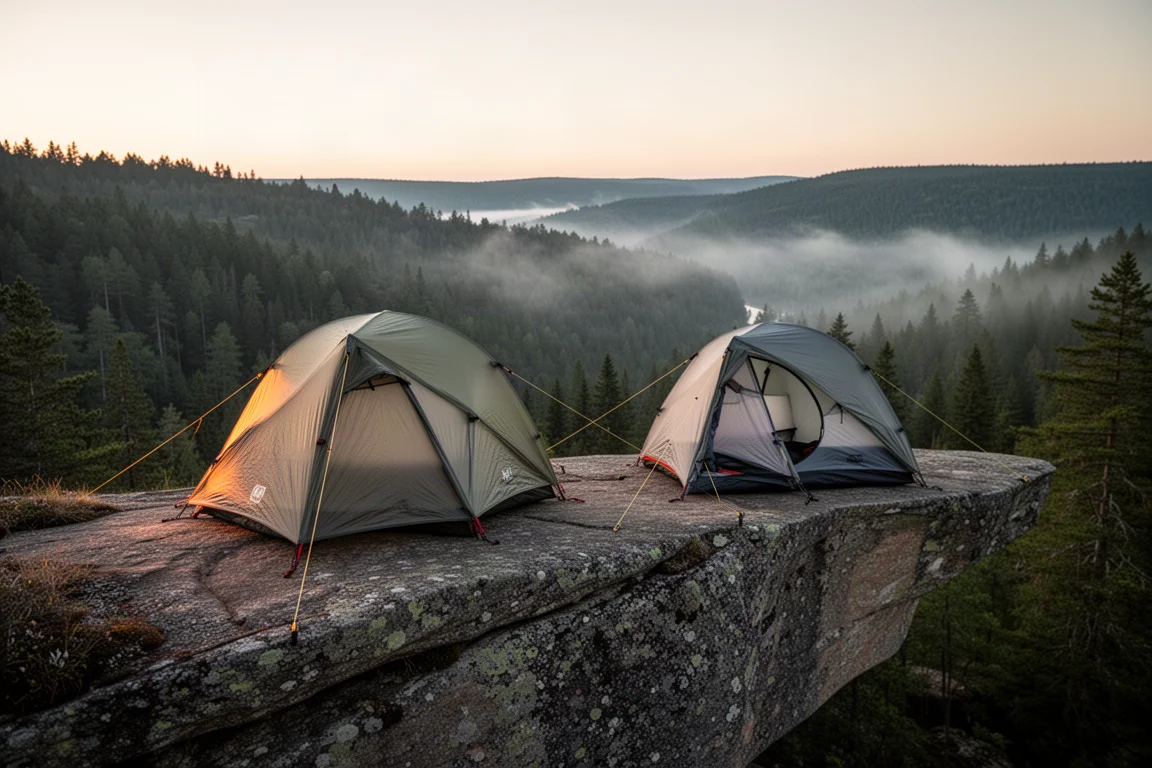
The two tents also diverge on floor construction and end walls, and that is where a lot of the day-to-day comfort in a one-person shelter is decided.
Big Agnes Pitch Pine VST 1.5: Welded Seams and a 1.5-Person Layout
The Pitch Pine VST 1.5 is the more expensive of the two, and the clearest reason is manufacturing. The seams where the panels meet are welded rather than sewn, which increases production cost and build time. Welded seams also remove the stitched perforations that would normally need seam tape or seam seal, which matters to anyone who has chased a slow leak along a taped seam.
The 1.5 in the name refers to the floor layout. The main floor measures 28 inches wide by 88 inches long with a 40 inch peak height, close to standard for a one-person tent. The extra half comes from an additional 16 inches of space toward the back of the tent, which adds gear storage and reduces the closed-in feeling that a straight 28 inch rectangle can create.
Total weight is 31 ounces. The tent has one door and one vestibule, a watertight zipper, peak ventilation, and mesh around the bathtub floor to keep air moving. The vents run through the top of the tent, so the opening stays covered and rain cannot blow straight in. Smaller details are handled too, including twisted grosgrain webbing that resists fluttering and rattling in wind. The tent held up in overnight winds of 35 to 45 miles per hour, although it is not intended as a shelter for exposed high altitude use.
A few things could be better. The interior pockets are small, with one at the bottom and one at the head end. The mesh door tucks into a sleeve with a magnet rather than rolling and toggling out of the way. And because the pole runs corner to corner, sleeping at a slight angle is the best way to maximize space, since the front panel comes down close to your face.
TarpTent Rainbow: A Long-Standing Ultralight Design
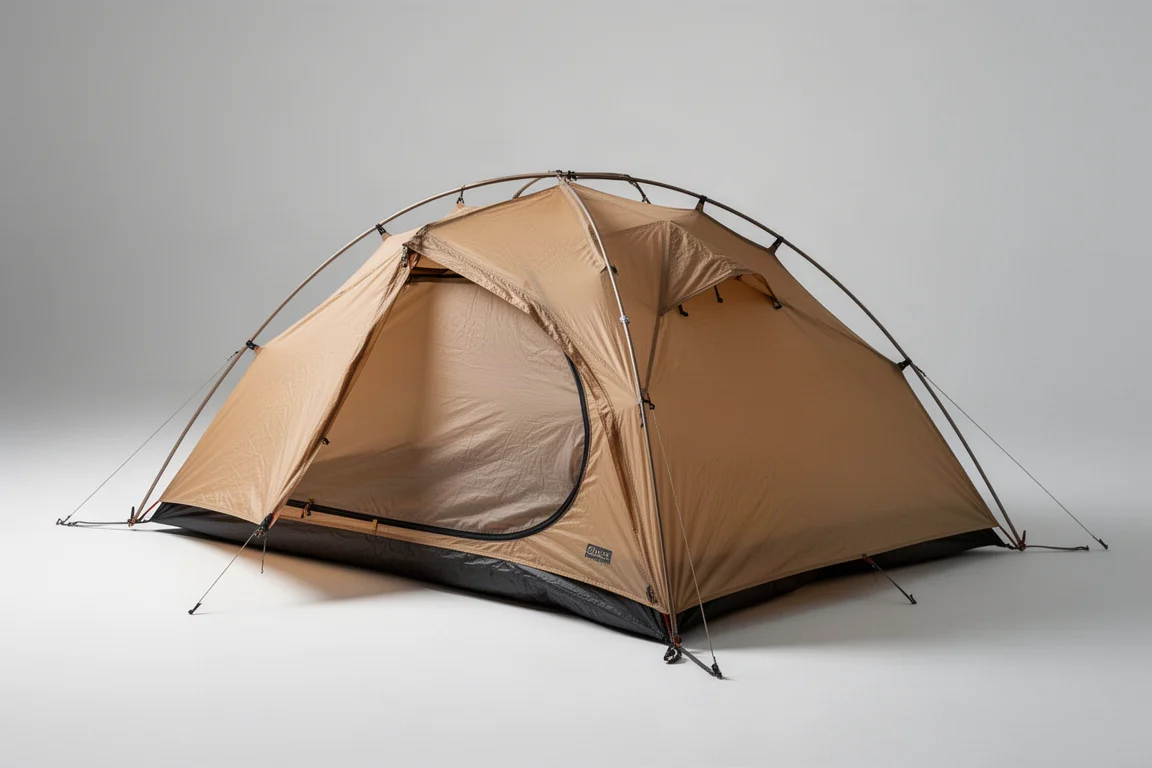
The Rainbow has been on the market for many years and comes in a family of versions, including the standard Rainbow, the Double Rainbow, double-walled options, and Dyneema builds. Even within the standard version, you can choose between a carbon fiber pole and two sizes of aluminum pole, which lets you trade a little money for a little weight. The carbon fiber pole option still keeps the tent under $300, and with that pole the Rainbow weighs just under 33 ounces.
The floor is 88 inches long and 36 inches wide through the entire length, a change from the 40 inch width the tent used for years, and it now matches the width of the Dyneema version. Because the width stays consistent rather than tapering, there is no need to sleep on a diagonal, and the full length remains available for gear or for a 25 inch pad. Peak height is 42 inches, and the ends of the tent are noticeably more vertical than the Pitch Pine, which adds volume at the head and foot so a sleeping bag or quilt is less likely to press against the walls. Usable length holds up well even about 12 inches up from the floor.
The main pole runs through a sleeve, which helps stabilize the tent against wind direction, and stability improves further with the thicker aluminum pole option. The floor is a 30 denier double ripstop nylon with a high hydrostatic head, which should hold up over time.
Versatility is the Rainbow’s strongest card. It is semi-freestanding out of the box, but accessory pieces included with the tent let you attach trekking poles at the head and foot ends to make it fully freestanding, which widens the range of places it can be pitched. The Pitch Pine does not offer that option.
The Rainbow is not perfect. The peak vents are small and often collapse on themselves, so they do not move much air. The aluminum ferrule on the carbon pole can also shift, which may require a pole sleeve repair.
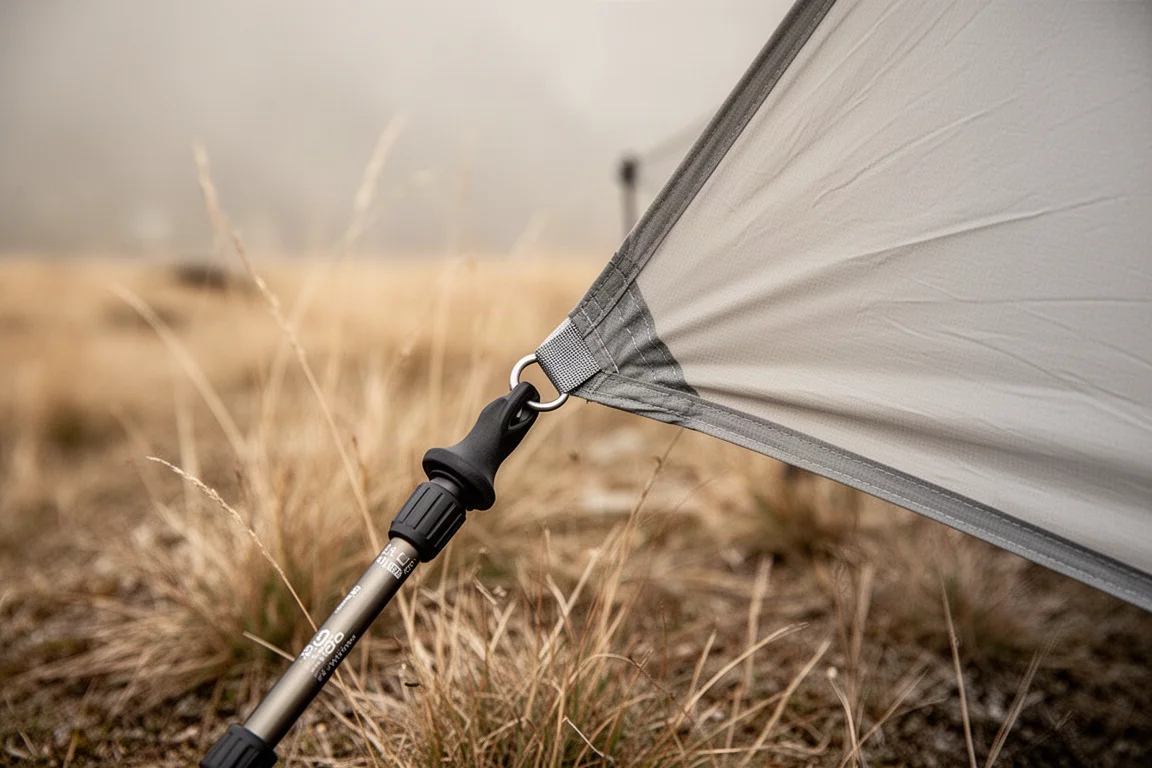
For backpackers who want a lightweight shelter they can configure their own way, that flexibility is a large part of the value.
Space, Weight, and Interior Comfort
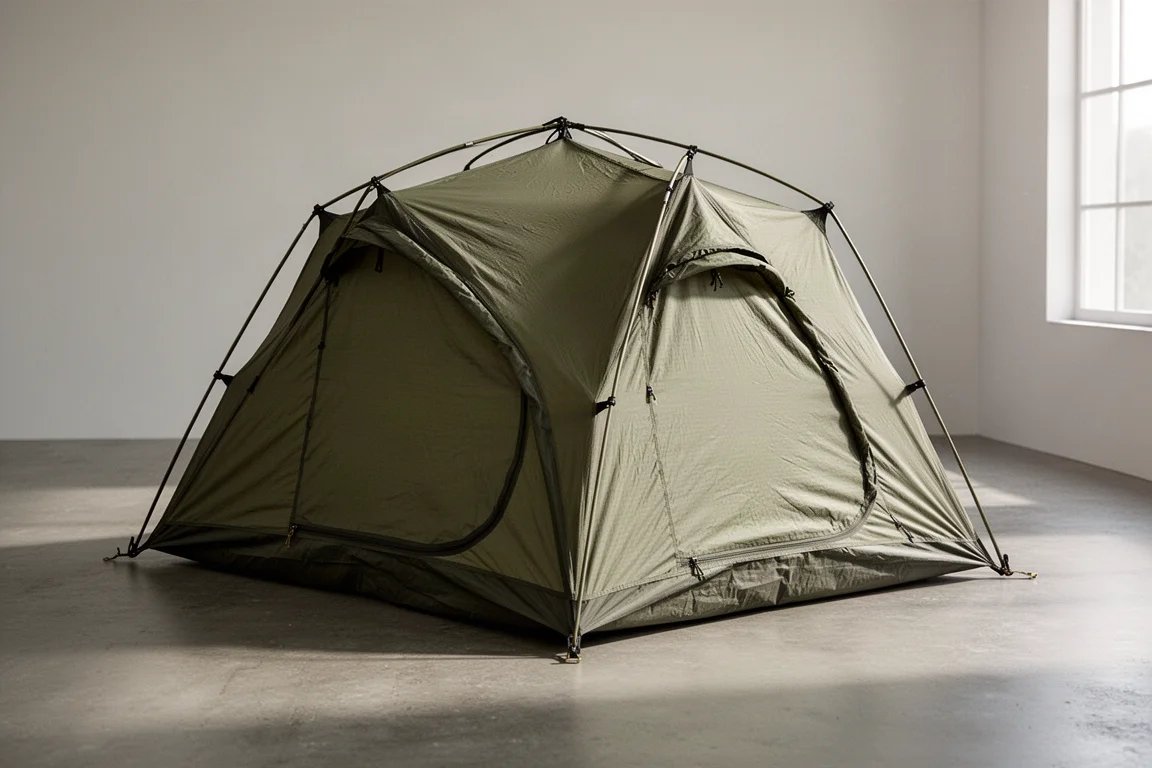
On paper the two tents are close. The Pitch Pine weighs 31 ounces, and the Rainbow with the carbon fiber pole weighs just under 33 ounces, so both sit near the two pound mark. Floor length is identical at 88 inches.
The difference is in how that space is distributed. The Pitch Pine uses a narrower 28 inch floor with an extra pocket of space at the back, which adds storage and a sense of openness but encourages a slightly diagonal sleeping position. The Rainbow uses a constant 36 inch width, which is easier to live with, but it gives up some side-to-side room at the peak compared with the Pitch Pine brow pole.
Peak height favors the Rainbow at 42 inches against 40 inches. Head and foot clearance favors the Rainbow as well, thanks to the more vertical end walls.
Ventilation, Pockets, and Weather Protection Details
Both tents are single wall, so ventilation is not a minor concern. The Pitch Pine routes its peak vents through the top of the tent so the opening stays covered in rain, and it lines the area around the bathtub floor with mesh to keep air moving through the body. The Rainbow relies on small peak vents that tend to collapse, so airflow is less convincing in practice.
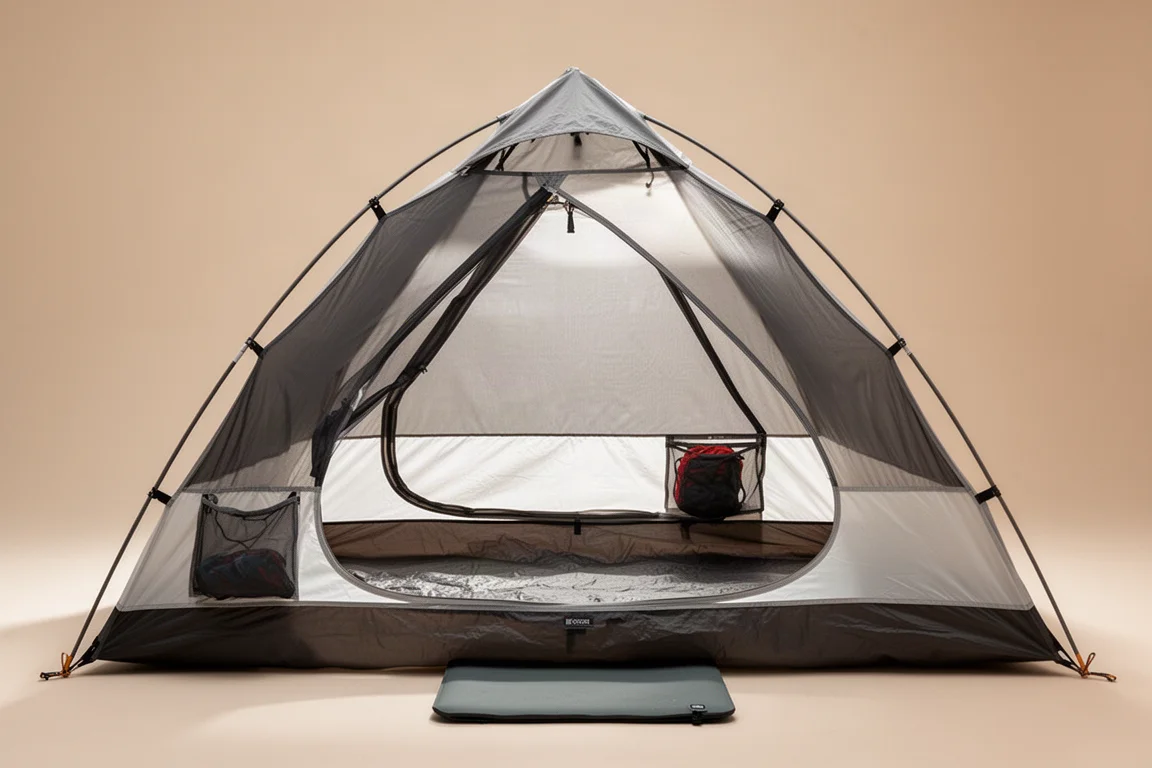
Storage is modest in both. The Pitch Pine has a small pocket at the bottom and another at the head end, and the mesh door tucks into a sleeve with a magnet. The Rainbow does not add much more in the way of pockets, but its vertical end walls mean gear and sleeping bags are less likely to touch the fabric.
On weather protection, both tents use polyester bodies that resist stretching and sagging when wet. The Pitch Pine pairs that fabric with welded seams, which removes the stitched perforations that normally need sealing. The Rainbow pairs its polyester body with a 30 denier double ripstop nylon floor and a high hydrostatic head.
Who Each Tent Suits
The Pitch Pine VST 1.5 suits backpackers who want a roomy one-person shelter with careful construction details and are willing to pay for welded seams and the 1.5 floor layout. It is a good match for three-season trips where wind is a factor but full exposure is not.
The Rainbow suits backpackers who want a lightweight shelter at a lower price and who value being able to choose a pole and convert the tent to a fully freestanding pitch. That combination of price, weight, and flexibility has kept it a reference point in ultralight backpacking for years.
Overall Buying Advice
Both tents work, and the decision comes down to what you are paying for. At $650, the Pitch Pine VST 1.5 sits in price territory normally occupied by Dyneema shelters, and that comparison is the hardest part of its case, since its body is a 20 denier polyester rather than Dyneema. What the money buys is welded construction, a 1.5 floor layout with extra gear space, through-ventilation at the peak, and a set of build details that show attention.
At $284, the Rainbow delivers a similar weight, a longer-proven design, a wider constant floor width, a taller peak, more vertical end walls, and the option to go fully freestanding with trekking poles. Its weak points are the peak vents and the pole ferrule, both of which are livable or repairable.
If budget matters and you want the most shelter per dollar, the Rainbow is the easier choice. If you want the roomier interior, the welded seam construction, and the price is not a barrier, the Pitch Pine VST 1.5 is a genuinely well-executed tent.
Conclusion
Two single-wall polyester one-person tents, about $366 apart. The Pitch Pine VST 1.5 earns its price through welded seams, a roomy 1.5 layout, and detailed build quality, though $650 places it against Dyneema shelters. The Rainbow earns its reputation through a long-standing design, flexible pole options, a freestanding conversion, and a price under $300. Choose based on whether you are buying construction and interior space, or value and versatility.
Further reading
Related Reviews
Backpacking Tents
3F UL Lanchan Pro 1 Review: A 1 lb 8 oz Single-Wall Trekking Pole Tent
A practical look at the 3F UL Lanchan Pro 1, a single-wall trekking pole shelter with a 1 lb 8 oz weight, 20D silnylon fabrics, and a roomy 90 x 31 x 49 inch interior.
Backpacking Tents
3F UL Taiji 2-Person Tent: A Convertible Backpacking Shelter Worth a Closer Look
A practical look at the 3F UL Taiji two-person tent, covering its materials, true two-person interior, fly-first pitching, and the seasonal inner swap that lets one shelter cover more of the year.
Backpacking Tents
3FUL Lanshan Twoerson Pro Review: A Light Trekking Pole Shelter That Struggled in Rain
A two-person trekking pole shelter with a 2026 redesign, pitched with sticks and put through a night of steady rain. Here is what worked, what did not, and what to check before buying.