Ski Gear
Best Women's Mid-90s All-Mountain Skis: Eight Versatile Options for 2026
A practical guide to eight women's mid-90s all-mountain skis, covering construction, weight, strengths, and the type of skier each one suits.
Introduction
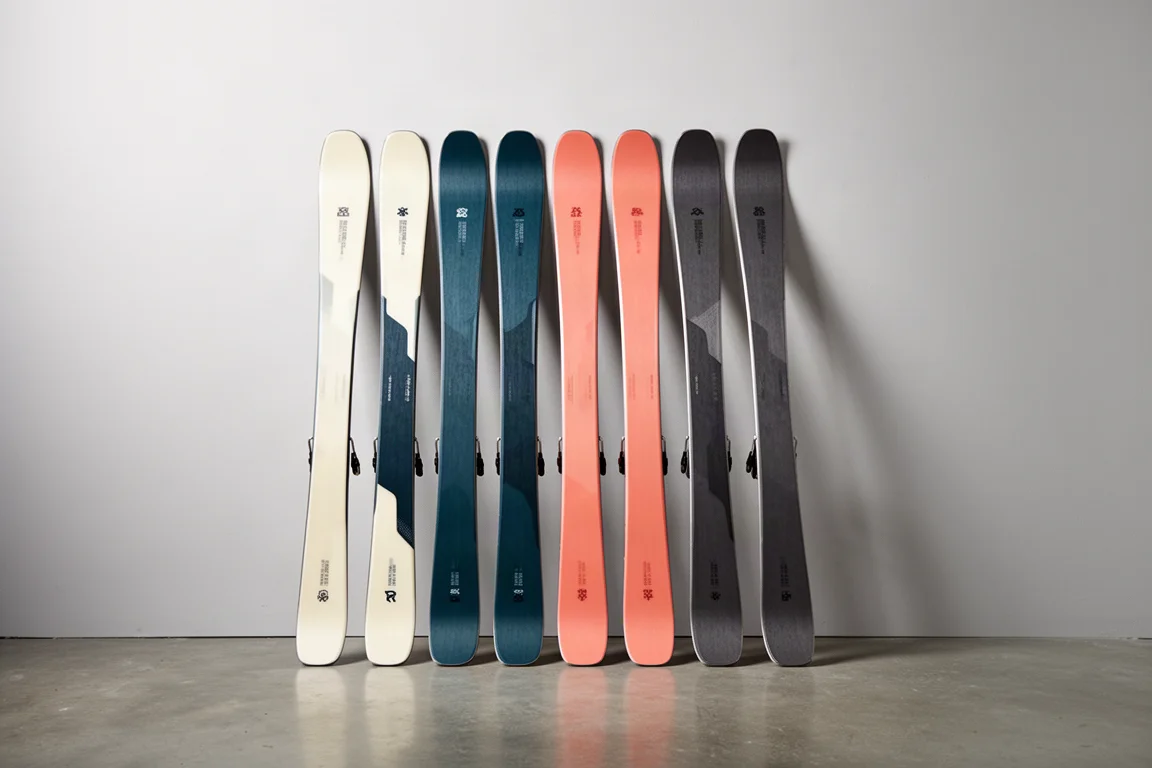
The mid-90s all-mountain category is one of the most useful places to shop for a single pair of skis. A waist width in the 93 to 97 mm range gives enough surface area to stay afloat in softer snow while keeping the ski quick enough to carve on groomed runs. That balance makes it a realistic one-ski choice for a wide range of skiers and a wide range of mountains.
Women’s skis in this category are less different from their men’s counterparts than the marketing often suggests. Many models share their construction with a men’s ski, with the main differences being shorter length offerings, different graphics, and in some cases slightly narrower widths. That matters at the shop: a women’s ski is not automatically a softer or more forgiving ski, and several of the models below are built with a genuinely stiff, high-performance flex.
The eight skis covered here were chosen because each has a clear personality. Some are light and playful, some are damp and planted, and some sit squarely in the middle. Matching that personality to how you actually ski matters more than any single specification on a spec sheet.
What to Look For in a Women’s Mid-90s All-Mountain Ski
Weight and flex matter more than width once you are inside this category. A ski in the 1,400 to 1,550 g range feels quick and easy to move around, but a very light ski with a very stiff flex can also feel chattery if you are not fully engaging the edge. Heavier builds, generally those with more metal, feel quieter and more stable at speed but ask for more input from the skier.
Tail shape is the other big divider. A flatter, squared-off tail tracks straight and finishes a turn cleanly, which suits directional skiers who spend most of their time on groomed runs and softer leftovers. A more rounded or twin-tip tail releases more easily and feels more playful in moguls, trees, and park laps. Neither is better; they simply suit different styles.
Where the metal sits is worth understanding too. Some skis run metal the full length underfoot, some wrap it around the edges as a frame, and some place it along the sides of the core. Each approach changes how the ski grips, how much energy it returns, and how much of the tip and tail stays free to flex.
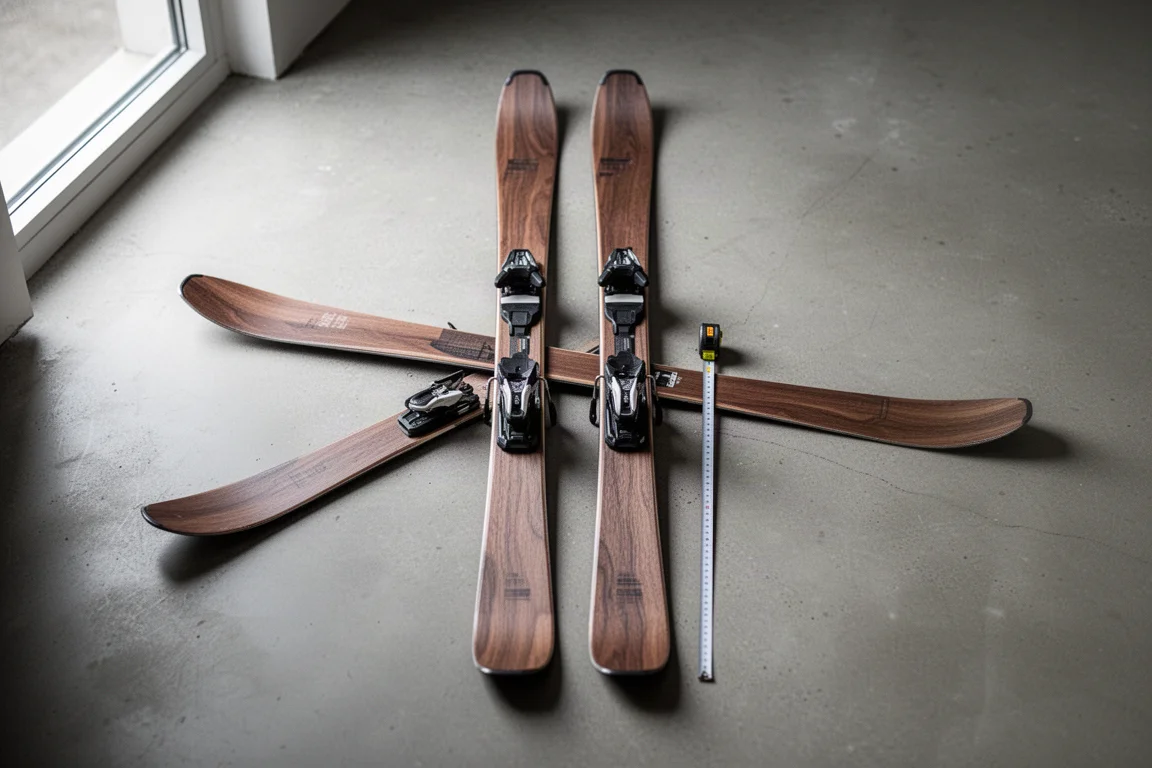
Rocker profiles vary just as much. A long, low rocker line that starts near the binding gives a ski a lot of float and a loose, easy feel, while a shorter tip rocker with camber underfoot keeps more edge in contact with the snow. If you ski mostly firm groomers, favor the second. If you chase soft snow, the first will be more fun.
Armada ARW 94: Best for Freestyle-Leaning All-Mountain Skiing
The ARW 94 has moved well beyond its park-only reputation. The current build uses a karuba wood core with an ash insert underfoot, which replaced a full ash core and gives the ski noticeably more energy, pop, and response. It is still a very fun park ski, but it is no longer limited to that part of the mountain.
The construction story is the Wedge Wall sidewall. The sidewalls are built first, then pressed into the core using a tongue-and-groove arrangement that runs horizontally before the whole assembly is pressed vertically. Part of the sidewall ends up locked into the core, which improves durability and produces a smoother flex from tip to tail. That cohesion matters because the ash insert underfoot is paired with a lighter wood elsewhere in the core.
At roughly 1,700 g in a 171, the ARW 94 stays on the lighter side for its width, and it is the most twin-tip oriented ski in this group. It is a construction twin to the men’s ARV, and a wider 100 mm version is also offered for skiers who want more float.
Atomic Maven 93 C: Best Lightweight Carbon Build
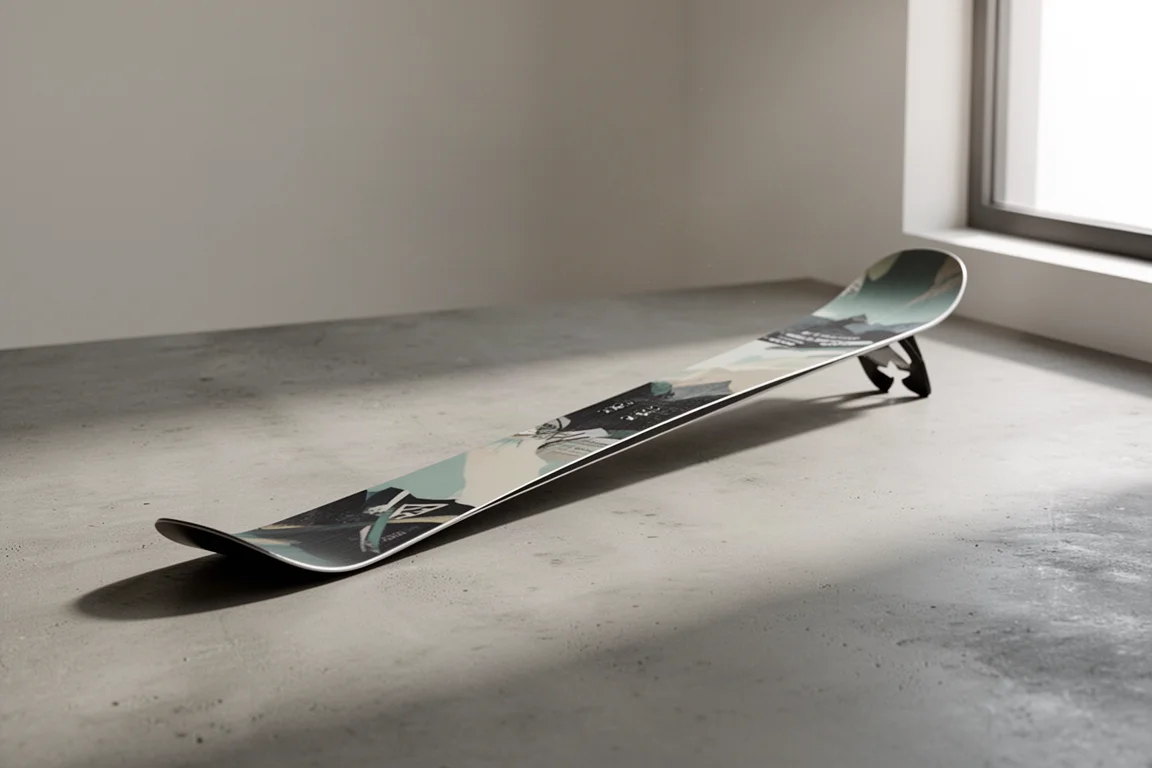
The Maven 93 C is a standalone women’s model rather than a construction twin, and it is built around a poplar wood core with a carbon backbone. Where the men’s Maverick skis use titanal laminates, the Maven uses carbon, which keeps the weight down while adding energy and pop to a very similar shape.
The profile is thin, and the ski runs a full sidewall underfoot before transitioning to a cap in the tips and tails. That transition point is also where the rocker begins, which keeps swing weight low at both ends. The result is a ski that is exceptionally light and maneuverable without feeling soft underfoot.
The carbon gives the Maven a stiff flex relative to its weight, and that strength-to-weight ratio is the reason it stands out in this group. It is easy to flick around, it holds up well as a mogul ski, and it is one of the lightest options here, though progressing skiers may find it a touch stiff in the bumps. It suits an advanced intermediate or advanced skier who wants precision without a heavy ski.
Because it is light and precise, the Maven rewards a skier who stays active and works the front of the bump rather than one who leans on a soft tail. The thin profile and the carbon backbone are what produce that unusual combination of low weight and a stiff, responsive flex.
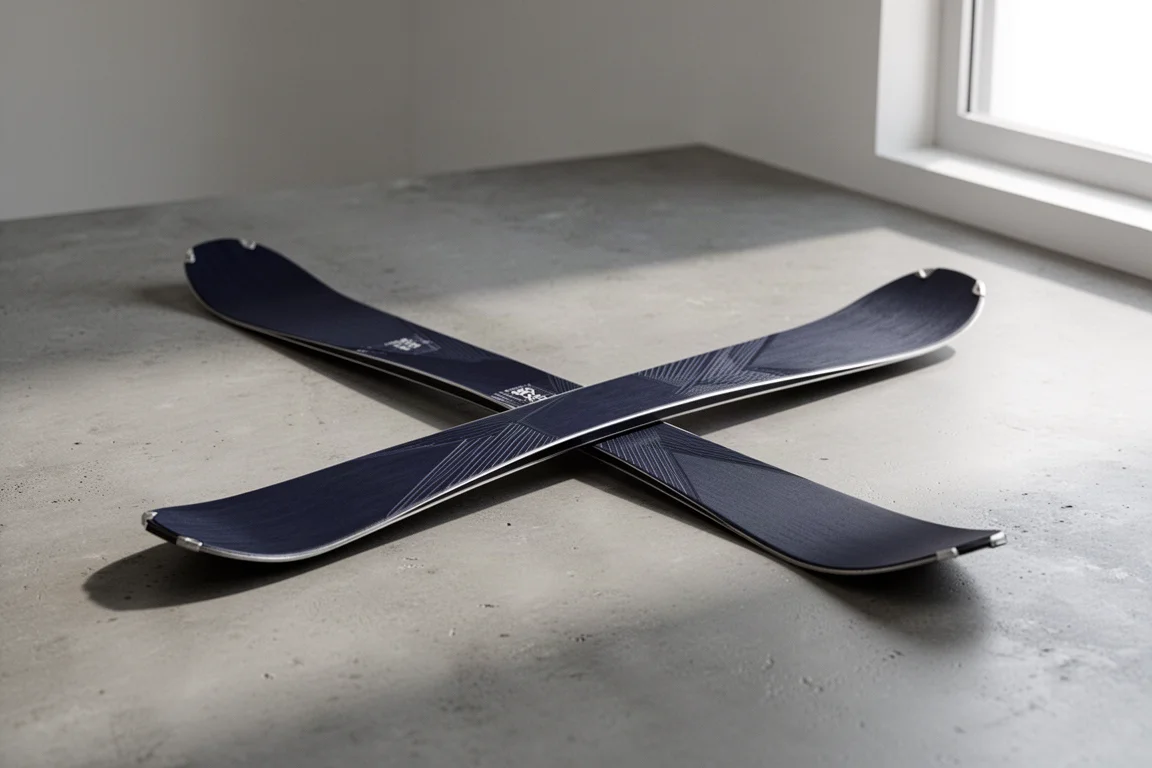
Blizzard Sheeva 9: Best for Edge Grip and Energy
The Sheeva 9 was redesigned with a more freeride-focused approach, and the changes to the 9 are larger than those to the 10 and 11. The outgoing Sheeva 9 was narrower and had less tail rocker. The current version moves from 92 mm to 96 mm underfoot and is closer in shape to the Sheeva 10, with a rounder overall feel and more float.
The build centers on Blizzard’s FluxForm construction. Fiberglass sits underfoot and metal is placed along the sides of the ski rather than through the middle. The TrueBlend wood core adds stiffer stringers through the center using denser beech wood, which helps with vibration damping. The metal stops short of the tips and tails, leaving both ends free to flex.
That combination produces excellent edge grip on firm snow along with a lively, energetic rebound out of the turn. The metal application scales with width across the line: the narrower models carry the most metal and lean toward on-piste performance, while wider versions shift further toward soft-snow use.
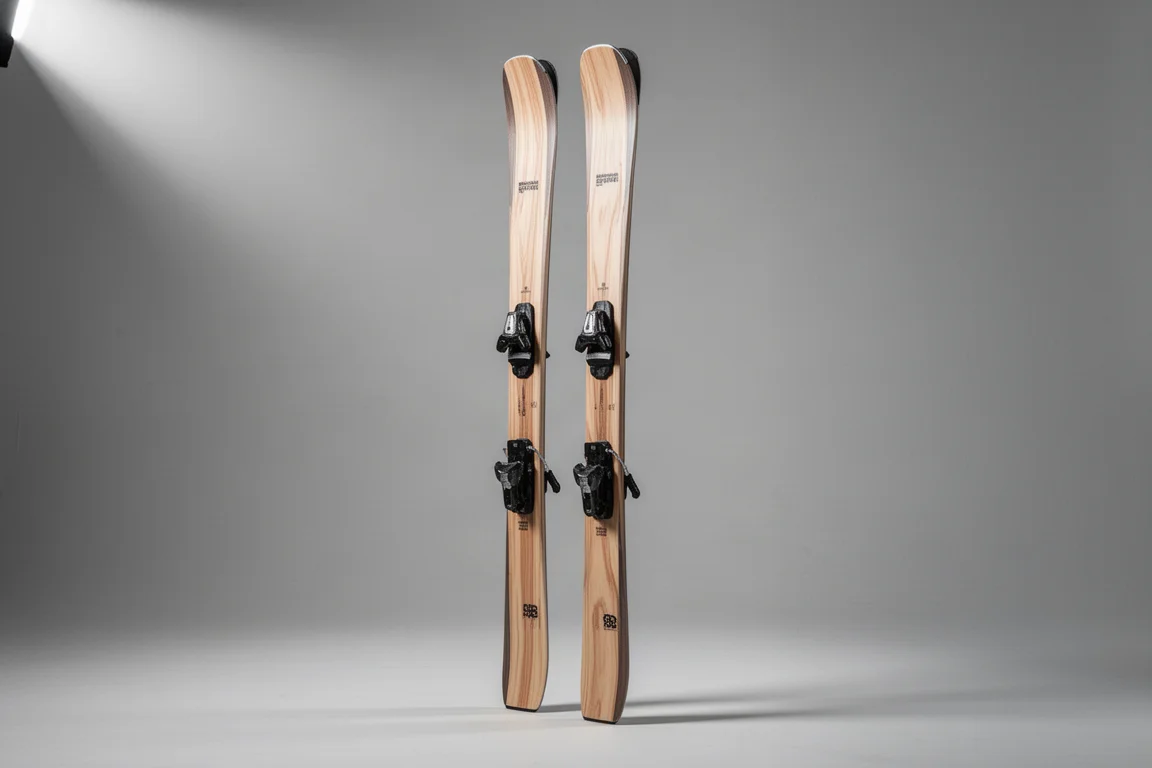
Elan Ripstick 94: Best for Smooth, Natural Turn Transitions
The Ripstick 94 uses the same build as the Ripstick 96, with dimensions that shrink as the length gets shorter, landing at 94 mm underfoot. Elan builds these as asymmetric skis with a dedicated right and left, and the asymmetry runs through both the construction and the profile.
The headline technology is the carbon tube construction. A lightweight wood core is milled out along the inside edge, and two carbon tubes are set into those channels following the side cut, so the carbon sits under stress rather than in a straight line. The inside edge carries more carbon and is cambered more, while the outside edge is rockered more, which lets the two edges work together instead of fighting each other.
At around 1,500 g, the Ripstick 94 is very light, but it does not feel like it. The ski gets progressively stiffer as it goes up on edge and smoother the deeper you get into a turn, and it stays free of the hooky, catchy feel that asymmetric designs can sometimes have. The profile is flatter and more directional than the freestyle-inspired skis here, and the ski is approachable enough for a broad range of abilities while still giving experts room to push.
Because the uphill and downhill edges behave differently by design, turn transitions feel unusually natural. The downhill ski holds a firm edge while the uphill ski stays looser and drifts, which is what makes the Ripstick 94 so easy to move between turn shapes and snow conditions.
View more details for Elan Ripstick 94
Head Kore 97: Best for Strong Skiers Who Want Low Weight
The Kore 97 is built around a very stiff flex, which has been the defining trait of the Kore line since it launched, paired with a weight of about 1,550 g. Two full horizontal carbon layers are used, one flat layer near the base and a curved layer on top, and the curved application adds stiffness beyond what a flat laminate provides on its own.
The flex is consistent from tip to tail, which separates it from skis that soften noticeably toward the ends. It is quick in moguls and transitions cleanly back onto firmer snow. Head also names Kore models after their reference length, so a Kore 97 measures a true 97 mm underfoot at one specific length, and the same build is offered across a wide range of widths.
That stiff, light combination suits two kinds of skiers particularly well: those who make shallow, flat-edge turns, and those who commit to deep, high-edge-angle carves. Skiers whose edge angles fall between those two extremes tend to feel more chatter from the ski, which is worth knowing before you commit.
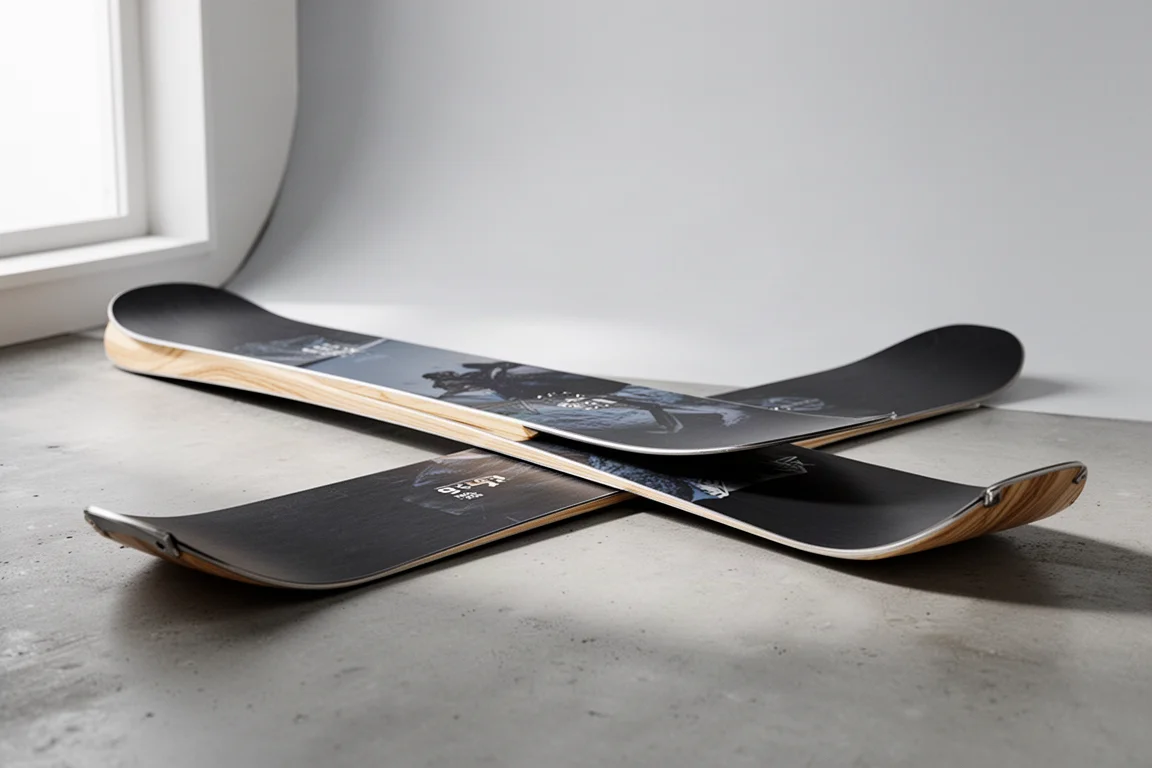
K2 Mindbender 96C: Best Soft-Snow Friendly Option
The Mindbender 96C was added to fill the space between the 89 Ti and the 99 Ti, giving the Mindbender line a mid-90s width in a carbon build. The women’s line previously started wider with the 106C, so this is a new option rather than a replacement.
The construction uses K2’s carbon spectral braid, applied with a tighter weave in the forebody and a looser weave toward the tail. The stringers straighten out in the tail, which adds longitudinal stiffness at the back of the ski while the front stays more flexible. A long tip rocker and the added width up front are what make the ski float, and the carbon is there to maintain torsional stiffness across that width.
It is easy to get up on edge, it works well in moguls, and it feels energetic and lively in soft snow while staying damp and stable. It is not the strongest carver in this group on firm groomers, where a more directional ski will hold an edge better. The build is shared with the men’s 96C.
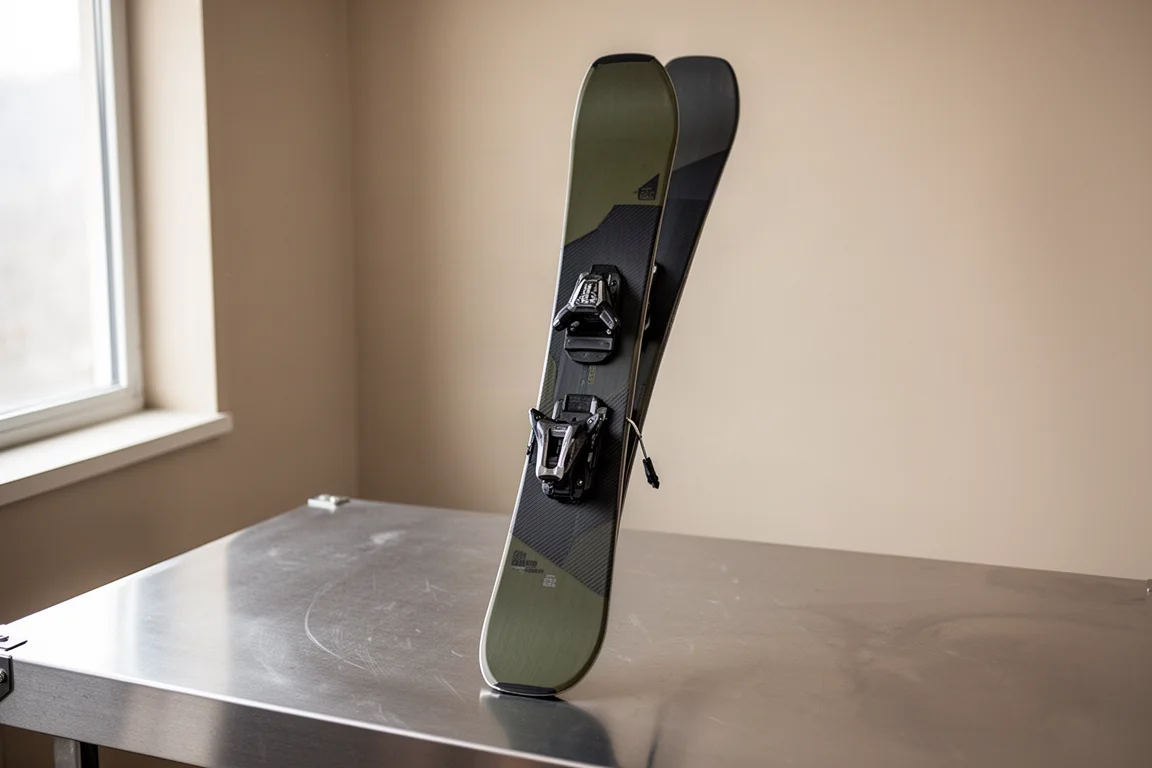
Stöckli Nela 96: Best for a Quiet, Composed Ride
The Nela 96 sits at the top of this group in build quality, and the way it manages vibration is the reason. Stöckli fills the epoxy between every adhesive layer with rubber dust, which gives the ski an even, solid feel through the flex. The top sheet is metal as well, so the binding and boot contact metal first, adding another layer of damping.
The shape is decidedly directional: a flat, squared-off metal tail and minimal camber, with the metal top sheet running the length of the ski. That makes it exceptionally smooth, quiet, and consistent, and it is a ski that feels composed in a way few others in this category match. Even the way it sounds underfoot is part of the experience.
The trade-offs are price and off-piste agility. The Nela 96 sits around $1,200 and is well over a thousand dollars, which puts it in a different budget bracket from most of this group. Its flat, squared tail also makes rapid successive turns off piste more work than a rounder tail would, so it is best suited to groomed runs and softer snow rather than tight, technical terrain.
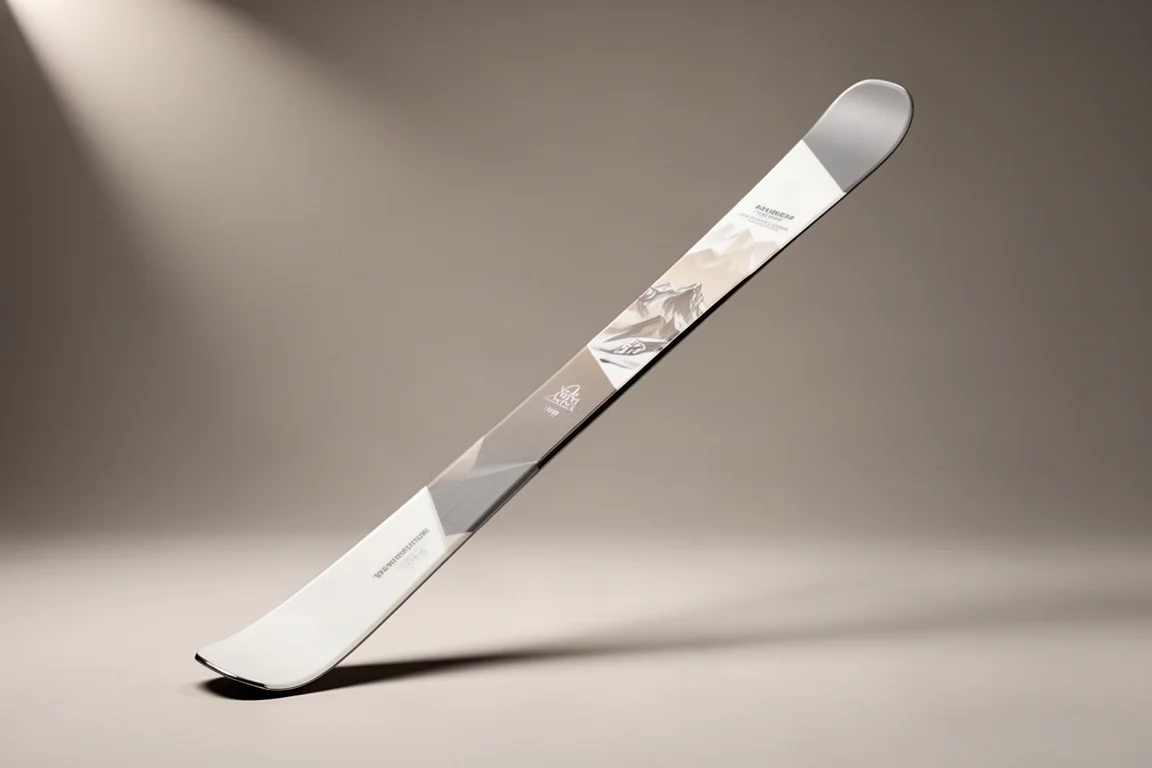
Völkl Blaze 94: Best All-Around Versatility
The Blaze 94 is the most well-rounded ski in this group. It started life positioned as a hybrid touring ski, and the tail still carries a skin fixation notch, but it has settled into a role as a light, highly versatile all-mountain ski that works perfectly well with an alpine binding at the resort.
A full-width metal plate sits underfoot rather than a small binding retention plate, which adds torsional stiffness without adding much weight, and the ski comes in just under 1,500 g. The rocker line is unusually long: the profile is nearly flat when decambered, and the rocker starts essentially at the mount point and continues a long way into the tail.
That profile makes the Blaze 94 very damp for its weight, with suspension in the tip and tail that absorbs vibration. It floats well, carves fast turns competently, and is excellent in trees and moguls. Its range from a lower-level skier to a high-level one is wider than most skis here, which is exactly why it is so easy to recommend.

It also makes a useful contrast with the heavier, more metal-heavy skis in the same width. Where a stiffer, damper build wants to find the bottom of the snowpack and hold a line, the Blaze 94 stays on top and stays maneuverable, which is a meaningful difference on a soft-snow day.
Buying Advice: Matching the Ski to the Skier
Start with where you actually ski. If most of your days are on groomed runs with occasional soft snow, a directional ski with a flatter tail and more metal underfoot will give you the edge grip and stability you are looking for. If you spend your time in trees, moguls, and soft leftovers, a lighter ski with a longer rocker line and a more forgiving tail will be more enjoyable more often.
Then match the flex to your style rather than your ability label. The Head Kore 97 and the Atomic Maven 93 C both pair low weight with a stiff flex, and both reward skiers who commit to the edge. The Blaze 94 and the K2 Mindbender 96C are easier to ski across a wider range of input levels. The Stöckli Nela 96 is the most composed and the most expensive, and the Nordica Santa Ana 93 style of directional, metal-forward build rewards a strong, on-trail skier.
Budget is the final filter. Most skis in this category land in the mid-range to upper mid-range bracket, while the Nela 96 sits well over a thousand dollars. If you are deciding between a $700 ski and a $1,200 ski, be honest about whether you will actually use the extra performance, because a ski that matches your style at a lower price will be more satisfying than a more capable ski that asks for input you do not want to give.
Finally, remember that many of these models are construction twins with a men’s ski, so the differences often come down to length availability and graphics. If the women’s version does not come long enough for you, the men’s equivalent is frequently the same ski in a longer size.
Conclusion
The mid-90s all-mountain category is wide enough to hold genuinely different skis, and that is a good thing. The Armada ARW 94 and the Blizzard Sheeva 9 lean playful and energetic, the Atomic Maven 93 C and Head Kore 97 trade weight for stiffness and precision, the Elan Ripstick 94 smooths out turn transitions with its asymmetric build, the K2 Mindbender 96C favors soft snow, the Stöckli Nela 96 delivers the quietest ride, and the Völkl Blaze 94 does a little of everything well.
Pick the one whose personality matches your terrain and your style, and you will get far more out of it than you would from a ski that simply scores well on paper.
Further reading
Related Reviews
Ski Gear
2023 Blizzard Hustle vs Rustler: Six Freeride Skis Compared
Blizzard's 2023 Hustle collection rebuilds the Rustler shape with a lighter core and no metal. Here is how all six skis differ, and which one suits your riding.
Ski Gear
2023 Skis of the Year: Atomic Maverick 88 TI, Salomon QST 106, and Look SPX 12 Pro
Three standout ski picks for all-mountain carving, powder days, and reliable binding performance, with practical buying notes for 2023 models.
Ski Gear
2025 Nordica Enforcer 104 Review: A Directional Charger Replaces the 104 Free
The 2025 Nordica Enforcer 104 drops the Free name and the twin-tip personality, gaining weight, stiffness and composure in rough snow. Here is what changed and who it suits.