Skiing
Best Women's All-Mountain Skis Around 100mm: Eight Models Compared
Eight women's all-mountain skis in the 95mm to 104mm range, with what each one does well, where it gives up ground, and which type of skier it suits.
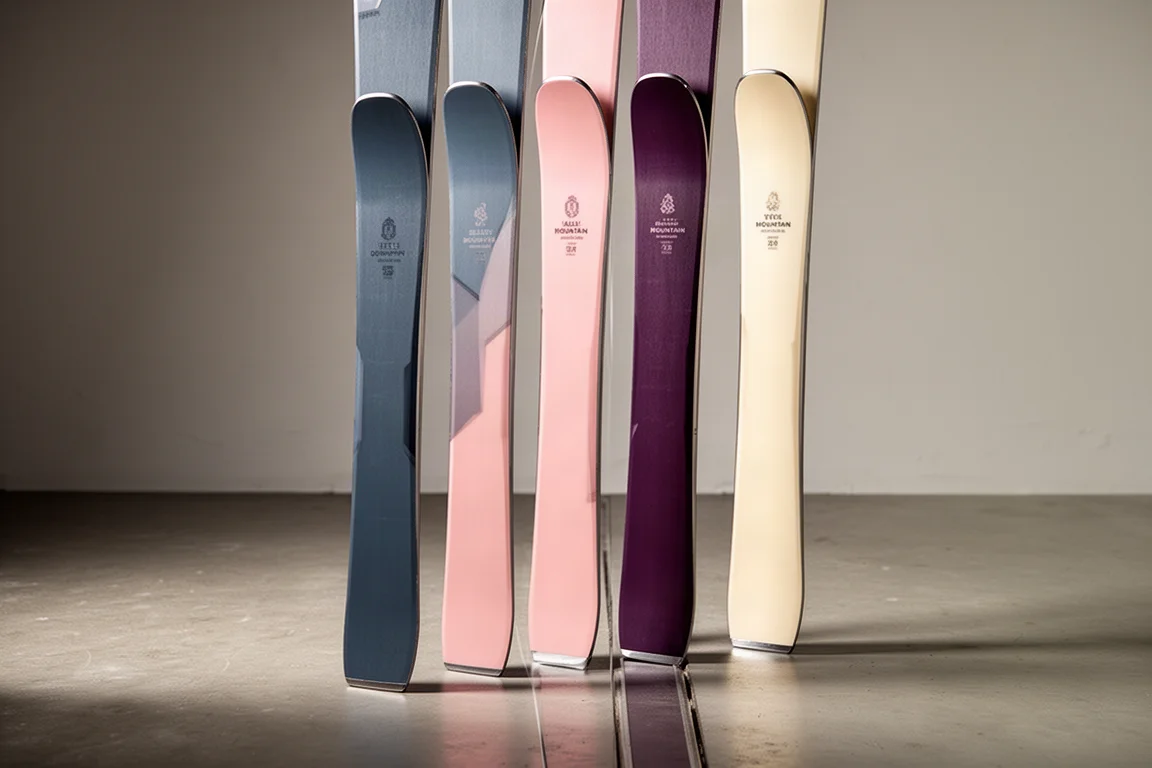
Introduction
The 100mm waist range has become one of the most versatile places to shop for a women’s all-mountain ski. There is enough width to float in soft snow, enough sidecut to carve on groomers, and enough rocker to make tight terrain feel manageable. A single pair in this range can cover most days on the mountain.
The catch is that this category is far from uniform. Two skis with nearly identical waist widths can feel completely different depending on how much rocker they carry, how much metal sits inside them, and how stiff the tail is.
The eight models below are grouped from narrowest to widest. Some are built for technical skiers who want quick reactions and a strong finish to every turn. Others are built for playful, surfy skiing in trees and bumps. A few sit deliberately in between.
One detail worth knowing before you read: the number in a ski’s name does not always match its waist width. Several models here measure a few millimeters narrower than their name suggests in shorter lengths, because they share a mold with a unisex ski. If exact underfoot width matters, check the specific length you plan to buy.
How to Think About This Width
As you move from roughly 95mm to roughly 104mm underfoot, several things change at once. Tip and tail rocker get longer, the tips and tails get more taper, and the ski becomes more oriented toward soft snow. It also becomes more playful and easier to release from the tail.
Construction matters just as much as width. Some skis here use full sheets of metal, which adds dampness, stability and weight. Others use shaped or segmented metal, or vertical metal struts, or carbon in place of metal entirely. A ski built on carbon instead of metal can be very light and very responsive, but it will not feel as damp as a metal ski at speed.
Tail shape is the clearest single predictor of how a ski will feel. A flat, stiff tail finishes a carved turn with precision, but it will not smear or wash out on demand, and it can be tiring if your technique is not there yet. A rockered tail releases easily and encourages a surfier style, at some cost in power out of the turn.
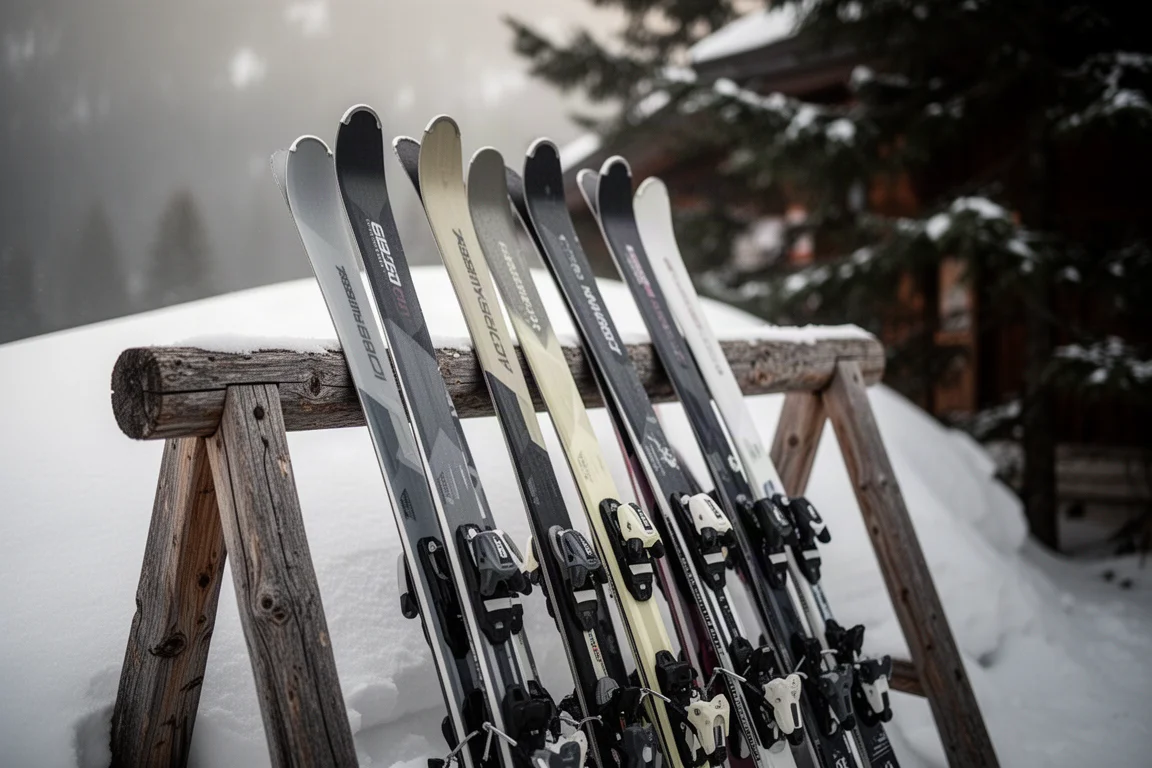
Weight is the other practical variable. The lightest ski in this group is around 1500g and the heaviest is around 1900g. Lighter skis are easier to flick around in trees and bumps. Heavier skis tend to feel more planted and more stable at speed. Neither is better on its own; it depends on where and how you ski.
Head Kore 97 W: Light, Stiff, and Quick
The Kore 97 W is one of the lightest skis in this group and also one of the stiffest. It is a directional ski rather than a twin tip, and in the length tested it measures 95mm underfoot. That makes it quicker edge to edge on groomers than the name suggests.
The stiffness comes from carbon rather than metal, which is what keeps the weight around 1500g while still delivering a strong, reactive flex. The trade-off is that a ski this light and this responsive also reacts to mistakes. It suits a skier with solid technique who wants fast feedback, and it can feel like a lot of ski for someone still developing that technique.
For the current season, a top sheet was added to the construction. Earlier versions omitted it, which made the ski prone to chipping and gave it a slightly pingy feel. The added material smooths the ride noticeably and improves durability, so anyone who disliked the older feel may want to revisit it.
Fischer Ranger 96: A Balanced All-Mountain Blend
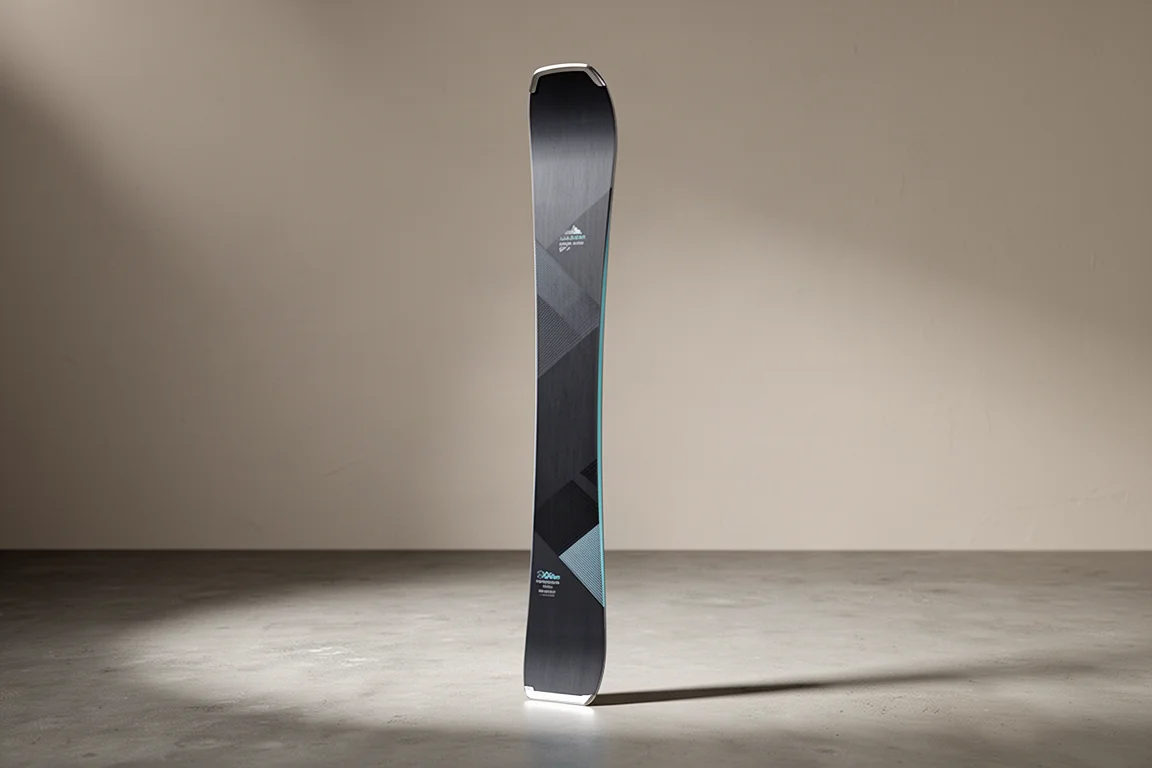
The Ranger 96 takes a different approach. It uses a wood core with a shaped metal laminate and a flex cut underfoot, which puts power and vibration damping through the middle of the ski while leaving the tips and tails softer and looser. The result is a ski that feels strong underfoot but still playful at the ends.
Tip rocker is moderate and the tail is flatter, though there is still some rocker back there. The tail is noticeably stiff, so the ski wants a skier who finishes turns rather than one who skids them. Even so, it is more forgiving and supple than the Kore 97 W, and it feels approachable across a wide range of ability levels.
There is no longer a separate men’s and women’s version of this ski; the same construction is offered in different colorways. It weighs over 1700g, which reflects the metal in the build. Expect a blend of stability, power and agility rather than a narrow specialist.
Völkl Secret 96: Precision for Strong Skiers
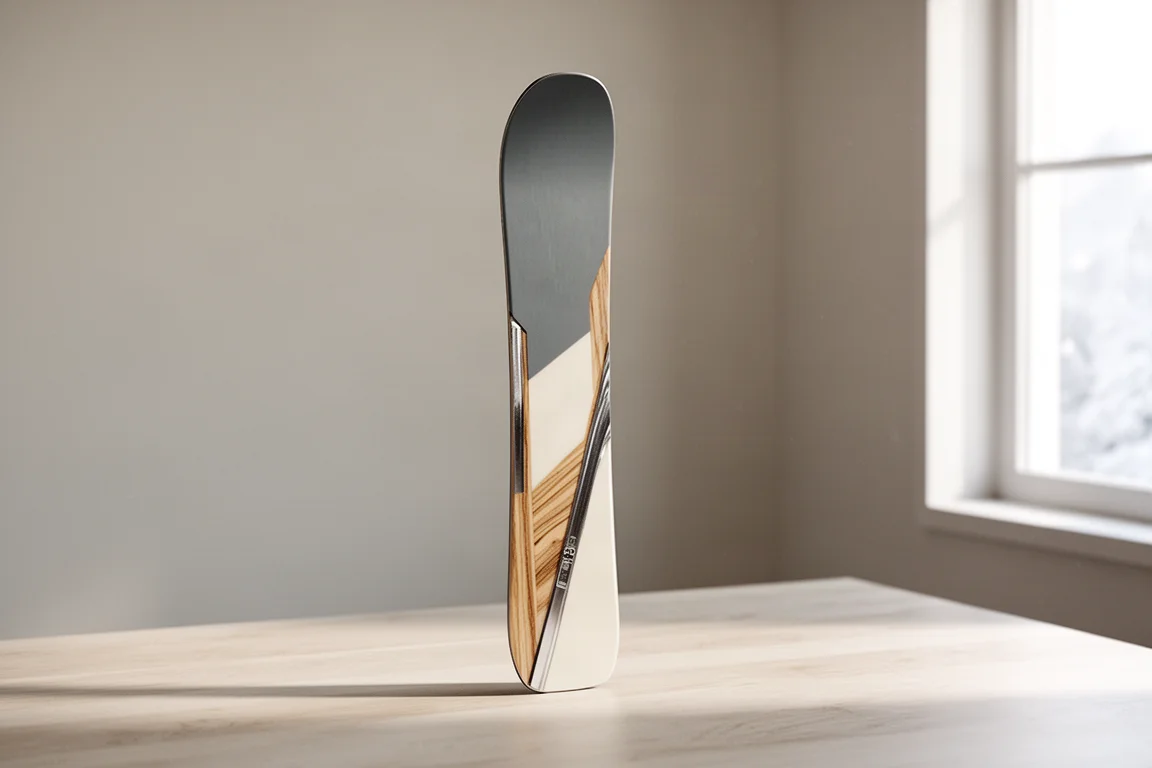
The Secret 96 is one of the most precise skis in this comparison. It uses a tailored titanal frame and a tailored carbon tip, along with a titanal binding platform underfoot. The frame deliberately does not link underfoot, which allows the ski to keep flexing through the middle while the metal reinforces the tips and tail.
Torsional stiffness is where this ski stands apart. Turn initiation is immediate and very accurate, and it holds an edge on firm snow with a level of grip that few models here can match. It also carries a multi-layer wood core and weighs close to 1850g.
That weight and stiffness come at a cost. The Secret 96 is demanding and fatiguing, particularly when you are trying to flick it side to side in trees. It rewards an aggressive skier who already has strong technique, and it is not a ski that will help you develop that technique.
The overall flex pattern feels similar to the Kore 97 W, but the extra weight and torsional rigidity push it into a more strenuous category. Skiers coming from a racing background often find it easy to drive. Skiers coming from lighter, softer skis often find it exhausting.
View more details for Volkl Secret 96
Blizzard Black Pearl 97: Approachable Performance
The Black Pearl 97 is a directional ski with a modest amount of tip rocker and very little tail rocker. Instead of metal, it relies on a True Blend pieced wood core that laminates different density woods side by side, plus a generous amount of carbon. That combination produces a stout flex without the weight penalty of a full metal laminate.
Because the feel comes from carbon and wood rather than metal, this ski is rewarding at slower speeds. Metal-heavy skis often need some speed before they come alive, and the Black Pearl 97 does not. It still weighs close to 1900g, so it is no lightweight, but it is a touch easier to ski than the strongest metal skis in this group.
It is a genuinely well-rounded option. A technical, advanced skier can drive it hard, and an athletic intermediate will find it intuitive. For anyone who likes the idea of a wider, more versatile version of a familiar carving-oriented shape, this is an obvious place to look.
Nordica Santa Ana 98: Power and Maneuverability
The Santa Ana 98 uses terrain specific metal: full width through the tips and tail, narrowed through the middle of the ski. Combined with a dense wood core, that gives it one of the strongest overall feels here, and it weighs around 1900g. It may even feel stronger than the Secret 96.
What sets it apart is the shape. It shares its geometry with the Enforcer 100, a benchmark for blending power with maneuverability. The rocker line and sidecut are drawn so that the effective edge grows as you increase edge angle, which means the ski can pivot when ridden flat and then lock in as you drive it harder.
The practical result is a ski that does not force you to choose between an all-mountain feel and a freeride feel. It carves clean arcs, handles powder days, and stays composed in crud. It is heavy and stiff, so it is not the easiest ski here, but for a stronger skier it strikes a rare balance.
Salomon QST Lumen 98: Loose, Surfy, and Stable
The QST Lumen 98 is one of the loosest, surfiest and most floaty skis in this group. Tip and tail rocker are both generous, taper is dramatic, and the turn radius has been shortened to around 15m. The shape alone makes the ski look agile, and it delivers on that.
The construction is a wood core with a CFX material blend and a double sidewall underfoot. That combination keeps the ski stable and responsive in the cambered section while the rockered extremities stay easy to flick around. It weighs around 1850g, so there is real substance underfoot despite the loose feel.
This is an intuitive, approachable ski. An intermediate can enjoy it right away, and an advanced skier can push it harder and still get the playfulness back. It is not a dedicated carving ski, since there is no metal in the build, but it handles groomers and higher speeds better than its shape suggests.
The dramatic taper does shorten the effective edge, which is why the ski releases so easily, but the double sidewall and material blend keep it from feeling vague. It is a good example of a design that commits to a specific style rather than trying to do everything.
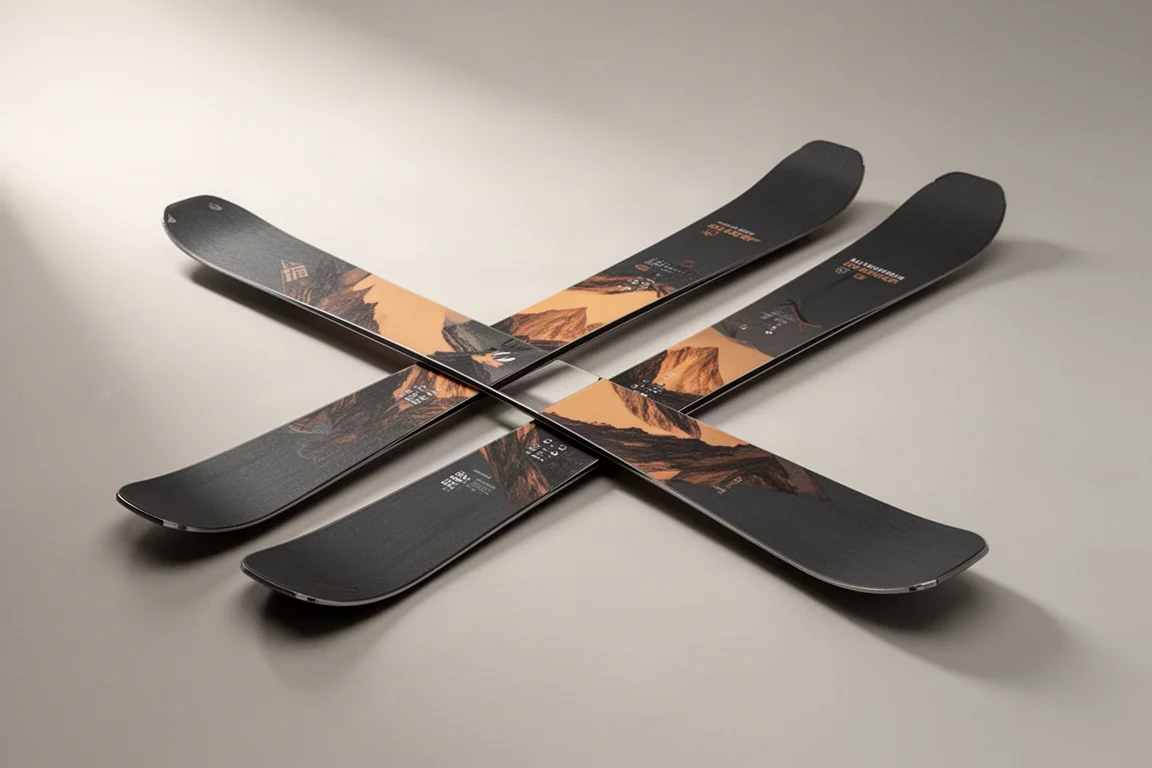
Elan Ripstick 102 W: Light, Smooth, and Confidence-Building
The Ripstick 102 W uses carbon rods in a three-dimensional layout rather than metal, and it weighs around 1640g. The flex is even and round, with plenty of snap and energy. For a ski with no metal, it is remarkably smooth, and the vibration damping is among the best in this group.
It is also built as a left and right pair, with camber on the inside edge and rocker on the outside. That asymmetric build produces strong edge grip and a quick, intuitive turn entry. Few other brands apply this approach as broadly across a line.
The payoff is approachability. An intermediate can use this as the widest ski they have ever owned and feel confident on it, while an advanced skier still has enough performance to push against. It is a versatile, forgiving ski that does not ask much of the rider.
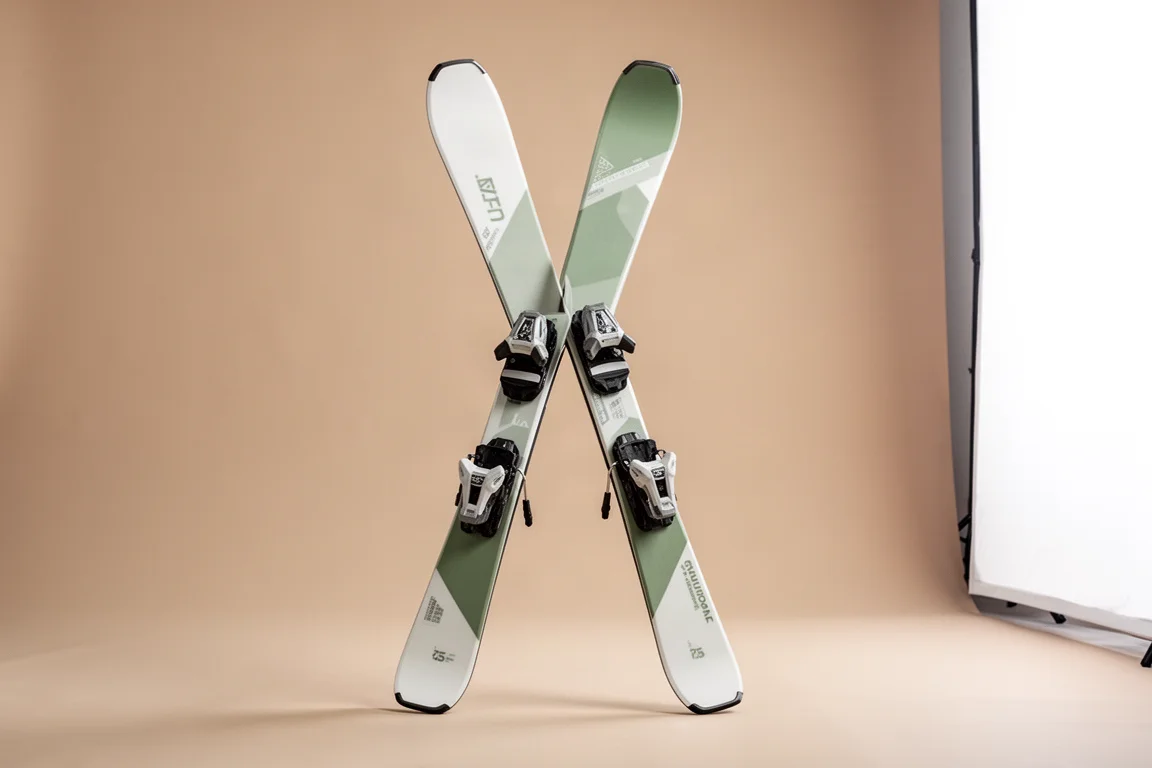
Line Pandora 104: Light and Floaty
The Pandora 104 is the lightest ski in this comparison at around 1500g, and it carries a floaty, directional shape rather than a twin tip. There is some rise in the tail, but the overall profile is far more directional than the freestyle-inspired shapes often associated with this brand.
The flex is soft and lively, with plenty of pop and energy, and the shape makes soft snow easy work. It mirrors the outgoing Sick Day 104, so the performance is familiar rather than experimental. It is easy to ski, which makes it a sensible first step into wider skis.
For anyone worried that a wider ski will feel like too much, this is the reassuring option. It is not a demanding ski, but it is not a beginner-only ski either. A strong skier can still have a very good time on it, particularly on softer days.
The combination of low weight and a directional rocker profile makes it easy to slash and smear turns, and it stays manageable when conditions firm up. It is a good reminder that width alone does not determine how a ski behaves.
Buying Advice: Matching the Ski to the Skier
Start with the tail. If you want a ski that finishes a carved turn cleanly and holds on firm snow, look at the flatter, stiffer tails: the Head Kore 97 W, the Völkl Secret 96, the Blizzard Black Pearl 97 and the Nordica Santa Ana 98. If you want a ski that releases easily and encourages a surfier style, look at the Salomon QST Lumen 98, the Elan Ripstick 102 W and the Line Pandora 104.
Then weigh up mass. If you ski tight trees and bumps, or you want a ski you could also set up with a hybrid touring binding, lighter is better. If you prioritize stability at speed and edge grip on firm snow, the extra weight is worth carrying.
Then be honest about your technique. Several skis here are genuinely demanding. The Secret 96 and the Santa Ana 98 reward strong, aggressive skiing and punish sloppy turns. The Ranger 96, the Black Pearl 97, the Ripstick 102 W and the Pandora 104 are considerably more forgiving.
Finally, consider what you already own. If you have a narrow carving ski for firm days, a wider, more playful ski makes more sense as a second pair than another stiff, directional model. If you want one ski to cover everything, a mid-weight option with moderate rocker and a moderately stiff tail is usually the safest bet.
Conclusion
The 100mm range offers more genuine variety than almost any other part of the market. The Head Kore 97 W is the light, quick, technical choice. The Fischer Ranger 96 blends power and playfulness for a wide range of skiers. The Völkl Secret 96 is the precision instrument for strong, aggressive skiers. The Blizzard Black Pearl 97 and the Nordica Santa Ana 98 take two different routes to a powerful all-mountain feel, one built around carbon and wood and the other around metal. The Salomon QST Lumen 98, the Elan Ripstick 102 W and the Line Pandora 104 lean toward loose, playful, soft-snow skiing.
None of these is universally better than the rest. The right pick comes down to how you like a tail to release, how much weight you are willing to manage, and how much the ski is going to ask of you on the days when your technique is not at its best.
Further reading
Related Reviews
Skiing
2027 Ski Top Sheets: The Best-Looking Skis of the New Season
A fun, opinionated look at the 2027 ski lineup and the top sheets that stand out most, from the Nordica Enforcer 104 to the Rossignol Sender series.
Skiing
Armada Declivity 92 vs Peak 88: Two All-Mountain Skis, Two Very Different Characters
A staff-favorite carving machine and an approachable Bode Miller signature ski, compared for different levels of skier.
Skiing
Atomic 100mm Ski Line Compared: Maverick 100 TI, Bent 100, and Backland 100
Atomic's three 100mm skis share a similar outline, so the real choice comes down to construction, weight, and terrain. Here is how the Maverick 100 TI, Bent 100, and Backland 100 differ.