Tools
Weighted Impact Sockets Put to the Test: Three Designs Compared
We compare three heavy-hitting impact socket designs, from a solid S7 tool steel monster to a modular flywheel set and a hollow drum socket, with real torque results.
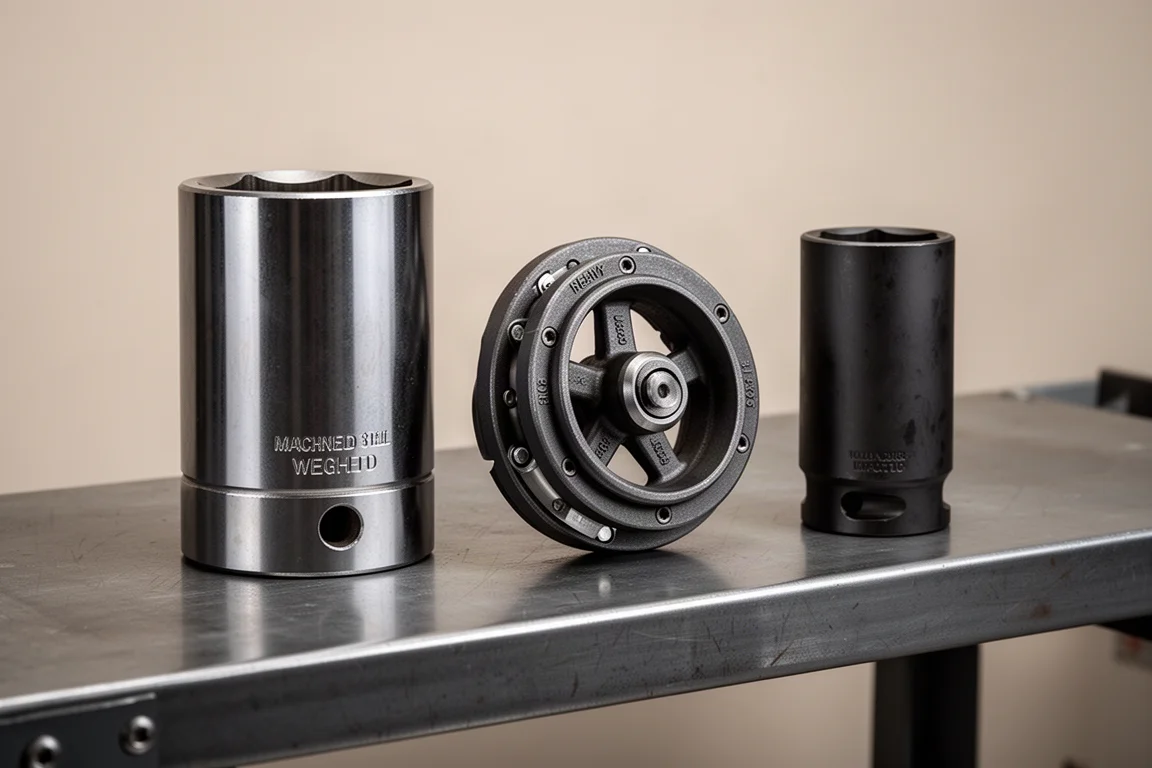
Introduction
Weighted impact sockets promise something simple: more torque delivered to the bolt head by turning the socket itself into a flywheel. We recently put three very different takes on the idea head to head against a standard 19 mm deep socket on a calibrated test rig, using the same air impact wrench for every run. The results were more interesting than anyone expected, including a few surprises in how each design behaves when the bolt gets seriously tight.
Why Weighted Sockets Exist
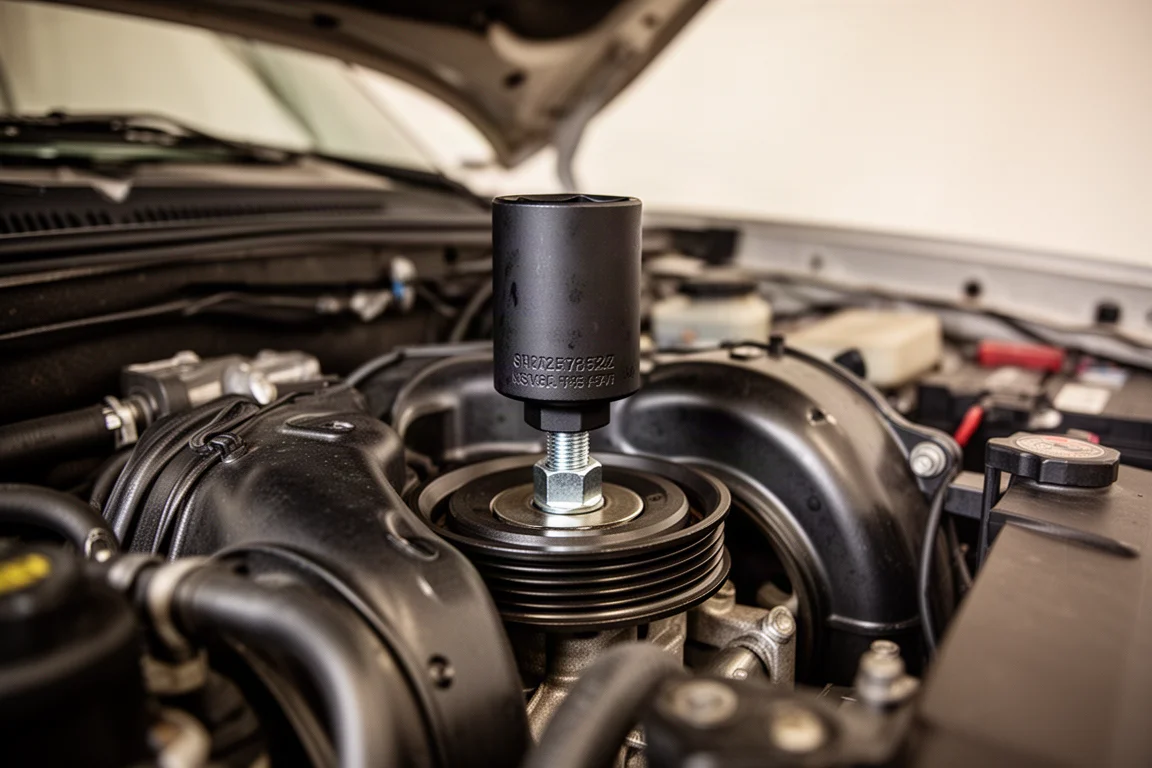
Anyone who has fought a Honda 19 mm harmonic balancer bolt knows the pain of a fastener that swallows impact wrenches for breakfast. Weighted sockets attempt to fix that by adding rotating mass, which changes how the impact’s blows translate into rotation at the fastener head. We have tested homemade versions before, including one with lead melted into the body, and while raw weight alone helped very little, better-engineered designs clearly do more than that.
Testing Approach
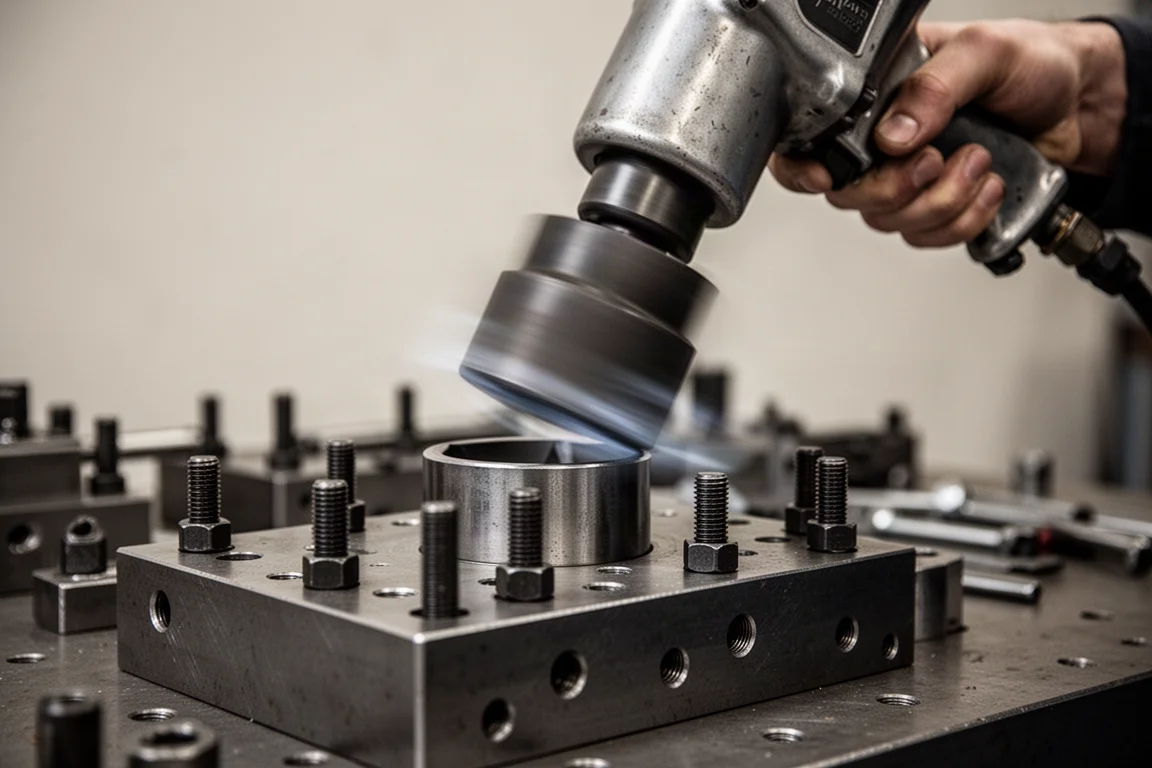
The benchmarks used a 38 mm reverse-thread hardened class 12.9 test bolt with a 19 mm head, designed to survive repeated high-torque runs that would destroy ordinary fasteners. Every socket ran on the same air impact wrench at the same calibration, with a 5-second test window to keep runs clean and avoid stalling chatter on stuck fasteners. A baseline run with a standard 19 mm deep socket came in at 523 ft-lbs, which gives all the numbers below a fixed reference point.
Busted Nuts 19 (BN9)
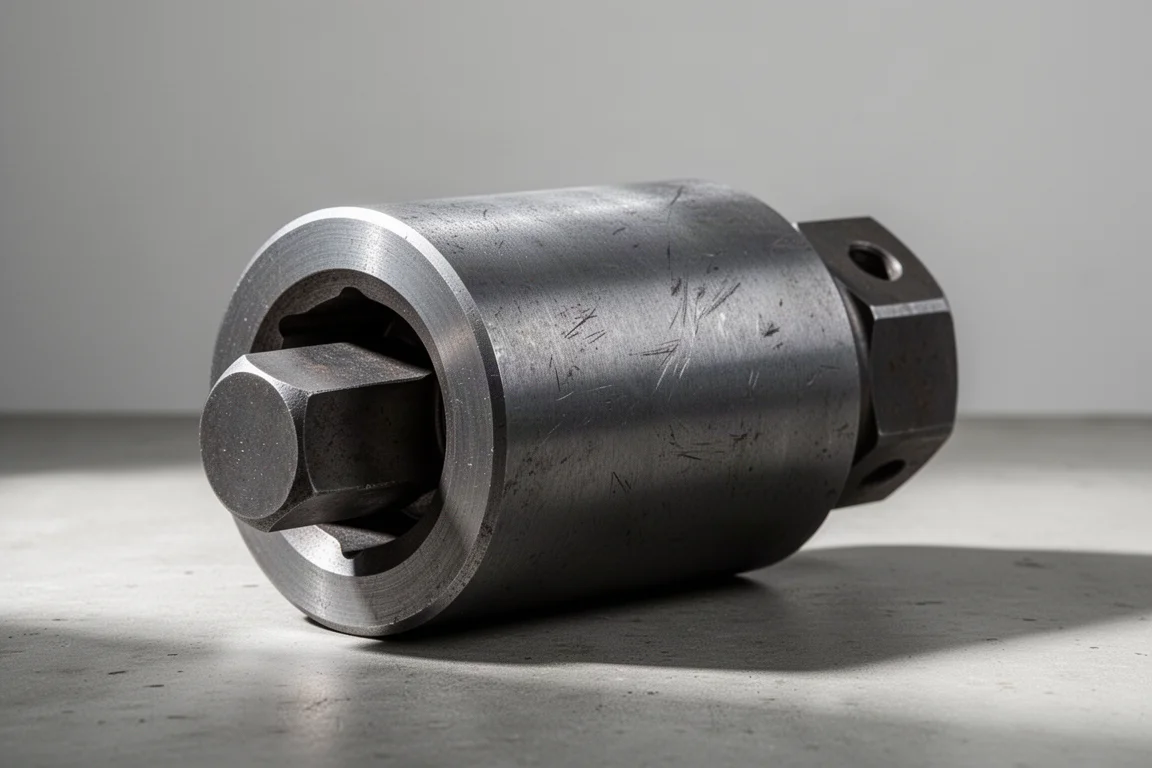
The Busted Nuts 19 is the final boss of 19 mm sockets. Machined from a solid round of S7 tool steel and hardened to around 48 HRC, it is dramatically heavier and larger than any conventional socket, even compared to a 1.5-inch drive option. The hex is cut just over 19 mm and slightly tapered to seat firmly on a bolt head, and it fits inside Honda crank pulley applications where most weighted designs cannot.
On the dyno it comfortably beat the standard deep socket and landed between the other two weighted designs early on. Then came a striking experiment: when its hex was sanded down to create a more traditional clearance relationship with the bolt head, torque jumped from 654 to 736 ft-lbs, beating everything tested that day. The trade-off is that the snug hex grip makes the socket prone to sticking on the bolt, sometimes needing wedges and a hammer to walk it off.
K Tool 4-Piece Metric Ultimate Torque Socket Set
The K Tool set takes a modular approach: a flywheel weight ring clips onto the sockets with a spline and ball detent retention design, so you can add the mass when you need it and run them as ordinary lug nut or crank pulley sockets the rest of the time. Bought for around $110, it managed 692 ft-lbs in testing, not record-breaking but solidly in the mix.
A cleverly simple experiment showed what the flywheel ring actually contributes. Removing the weight and using the socket bare produced data identical to a standard 19 mm deep socket, which means the ring itself accounted for a gain of roughly 122 ft-lbs in torque delivery to the fastener. In high-speed footage the flywheel is not rigidly fixed and shows visible jostling, yet the design still performed better on the dyno than expected. Its main drawback is retention: the tight square drive fit made it the least effective of the three designs in side-by-side tests, and it can hop when the fastener is very tight.
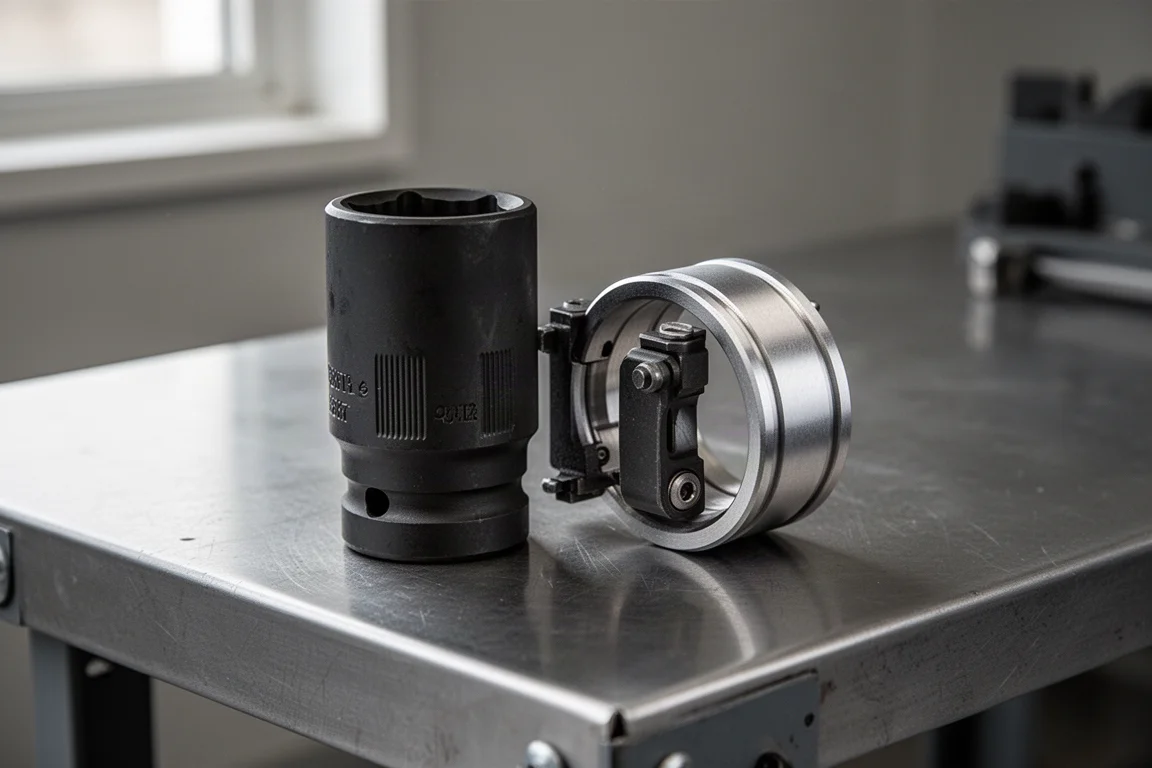
Astro 19mm Hollow Drum Weighted Socket
The hollow drum design is the quiet overachiever here. Our earlier testing with homemade weighted sockets found that a hollow cylinder shape outperformed even expensive retail alternatives, and that discovery eventually led to a commercial version existing. On the dyno it hit 736 ft-lbs on the air wrench, matching the best of the day, and it scored 770 ft-lbs versus the 523 ft-lb baseline in the 5-second cordless test.
High-speed footage showed a distinctive rhythm: the mass moves as one unit, striking the fastener with a whack, retreating slightly, then accelerating forward for the next blow without wasting energy or breaking cadence. That controlled shimmy appears to be the key to how this design works, and it translated directly into consistent results across both air and cordless testing.
Overall Buying Advice
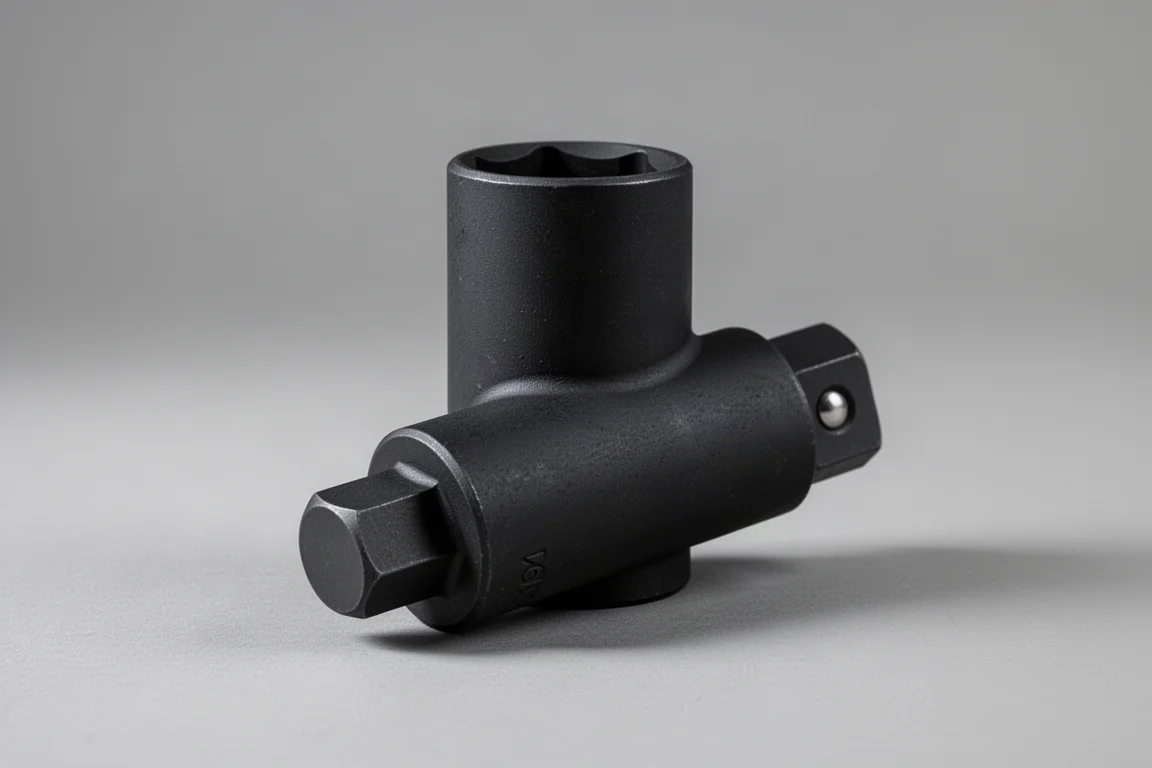
If you want the strongest single result and need something sized for a Honda crank pulley bolt, the Busted Nuts 19 delivers the most torque on tight fasteners, but expect it to grip the bolt head and occasionally need persuasion to release. The K Tool modular set offers flexibility for mixed use, letting you add weight only when required, though it gave up some peak performance to simpler designs. The Astro hollow drum socket is the most consistent all-rounder, posting the top cordless number with a design that just keeps working regardless of which impact wrench feeds it.
One additional finding worth knowing: adding torsion from a hook spanner while impacting actually reduced the BN9’s output, dropping it to between 640 and 704 ft-lbs. Resisting the natural wiggle of these sockets appears to rob them of the rhythm that makes them work. A standard Milwaukee high torque also revealed harmonic quirks, with very heavy sockets occasionally falling out of sync with the impact’s hitting rate, a phenomenon seen with other sizes and wrenches too.
Conclusion
Weighted sockets are no gimmick when the design is right. Mass and rigidity both matter, but so does clearance between socket and bolt head, and there is probably a Goldilocks ratio that makes every nut bust. For now, the hollow drum design stands out as the most reliable performer, the BN9 as the biggest single-shot hitter, and the K Tool set as the flexible pick for a mixed toolbox.
Further reading
Related Reviews

Tools
Best Contractor Grade Tape Measures 2026: Eight Models Tested Head to Head
We tested eight contractor grade tape measures from Milwaukee, DeWalt, Crescent Lufkin, Tajima, Stanley, Irwin, Gelan, and Craftsman to find the best value and performance.

Tools
Best Precision Screwdriver Sets 2026: Manual and Electric Options Compared
We compare 19 precision screwdriver sets, from budget manual kits to electric drivers, to find the strongest bits and best value.

Tools
Best Stud Finders 2026: Five Popular Models Put to the Test
We tested five popular stud finders on drywall, firewall, and lath and plaster surfaces to see which ones really find studs and avoid false readings.