Tools
Utility Knife Roundup: Five Knives, Five Very Different Lessons
Five utility knives compared for safety, grip, and blade handling, including a self-retracting Milwaukee and some knives to be careful with.
Introduction
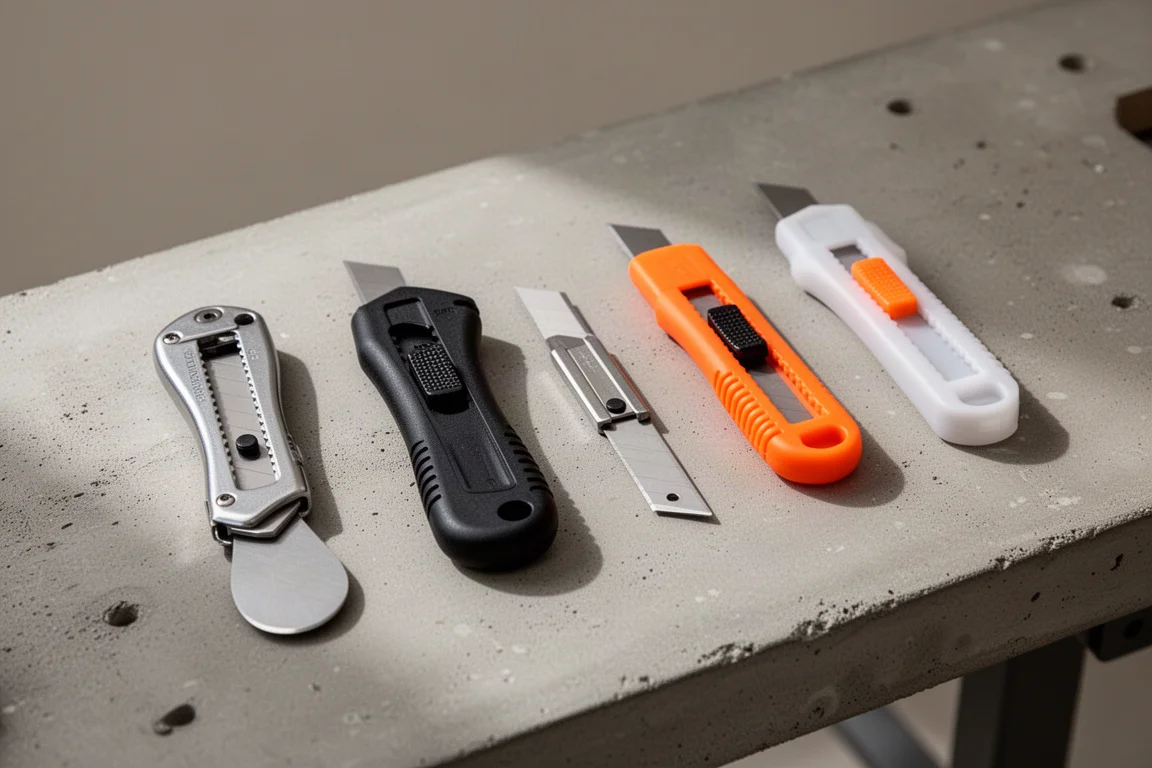
Utility knives look interchangeable, but after spending time with five of them, the differences matter more than you would expect. Some of these knives are genuinely well thought out. Some are so poorly designed they should probably come with a warning. The key lesson from this comparison: a blade that stays out when you do not want it to, or a body that flexes apart under pressure, is a bigger deal than most product listings suggest.
This roundup covers the Milwaukee 48-22-1512 self-retracting utility knife, the Stanley FatMax, the Stanley 299, a Fiskars utility knife, and an X-Acto self-retracting model.
Evaluation Criteria
We judged each knife on four things: how safely the blade is managed when the knife is dropped or set down, how securely it can be held during a real cut, how easy the blade change process is, and whether the design asks you to fight the tool to do basic cutting. Grip and blade retention turned out to separate the good from the bad more than anything else.
Milwaukee 48-22-1512 Self-Retracting Utility Knife
The Milwaukee 48-22-1512 is a metal-bodied self-retracting utility knife, likely aluminum or zinc based on the feel, with two headline features: tool-free blade changes and a lanyard hole so you are less likely to lose it. It uses a standard thumb ramp slider, and the included blade has rounded corners, which is worth noting because the packaging imagery shows a blade with sharp corners that does not match what comes inside.
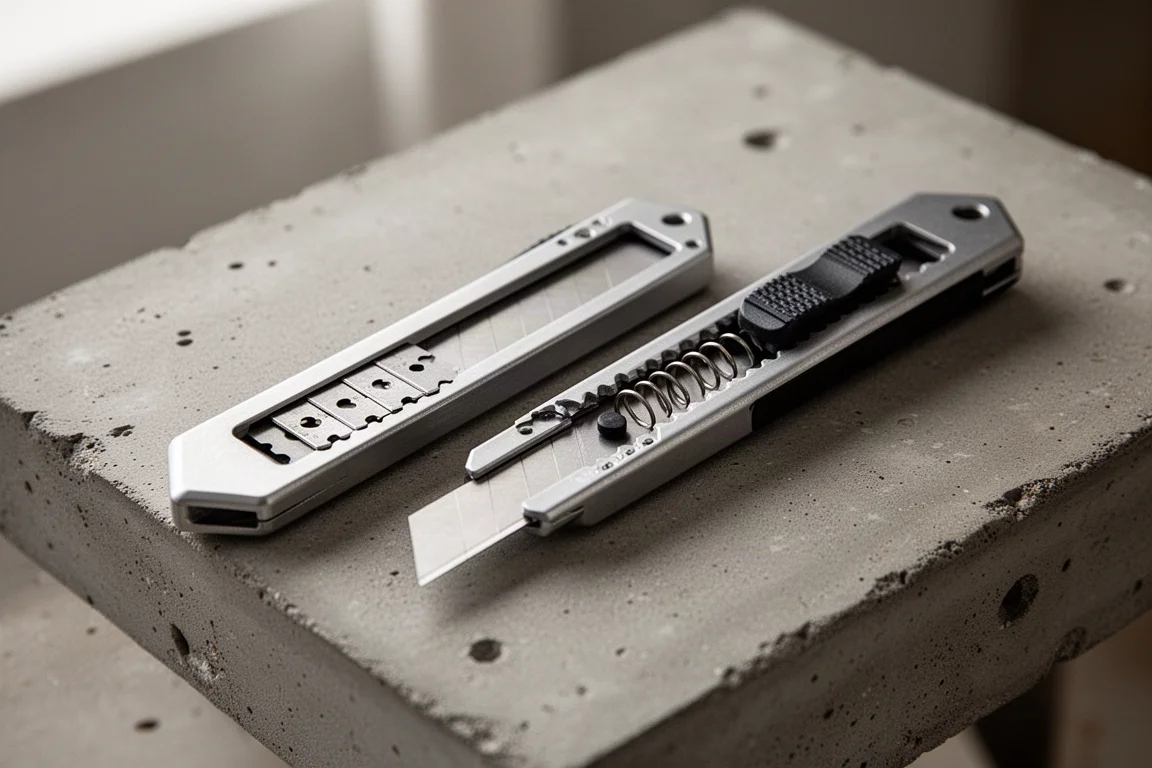
The defining trait is that the blade will not stay out. Let go of the slider and the blade retracts immediately. There are ways to keep it deployed while cutting, including holding it in the default thumb position, pinching from underneath for upward cuts, or gripping from the side, but your thumb is always committed. That means if you need that hand for something else, like holding onto handlebars while shifting on a bike, you lose the control you would normally have.
Inside, the mechanism is well built with a strong spring, and there is room for blade storage, holding up to five extra blades. Unlike some competitors, the body does not fall apart in your hand. The honest advice: this is a good, solid knife, but do not buy it unless a permanently self-retracting blade is exactly what you need, whether that is a company policy, a jobsite requirement, or a safety standard. If you do a lot of cutting, a knife designed to stay cutting-ready serves you better.
Stanley FatMax Utility Knife
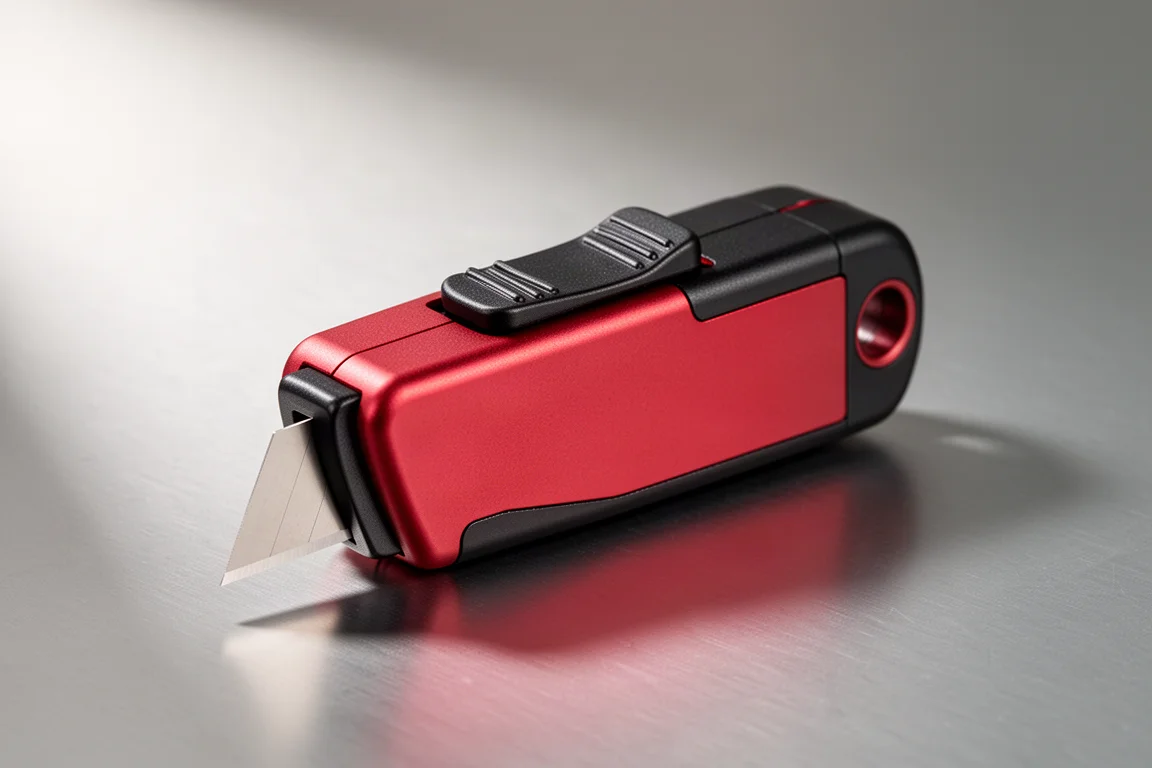
The Stanley FatMax has known flaws. The blade exposure and general handling leave room for criticism, and it is fair to say this is not a knife without problems. It is included here mainly as context: many of the complaints about poorly managed blades trace back to knives in this category where the blade sits out with no reliable control over it.
If you already own one, treat it with respect, and if you are choosing between this and something with better blade management, the choice is not difficult.
Stanley 299 Utility Knife
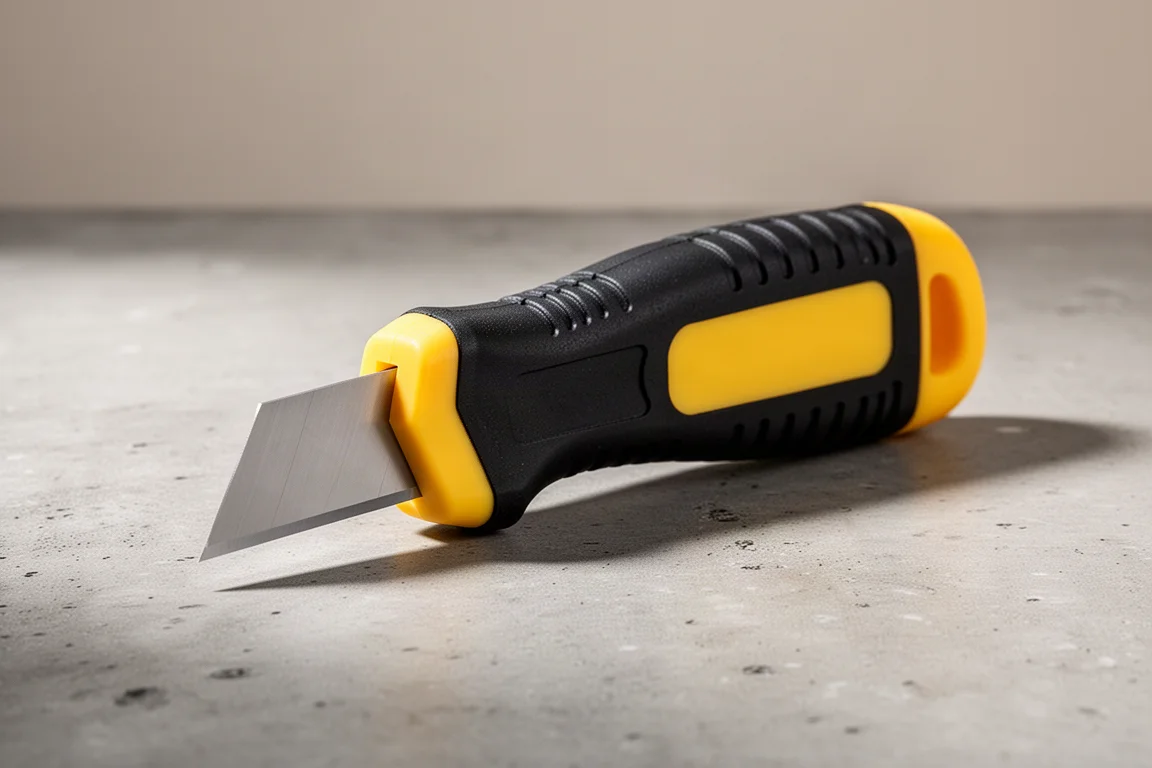
The Stanley 299 might be the most dangerous tool in the bag. It is non-retractable and slippery, and the blade sits out permanently. If you drop it into a bag or box, the heavier back end tends to fall first, leaving the blade pointing straight up, ready to cut whoever reaches in next. Changing the blade is its own ordeal: it takes a screwdriver and a frustrating amount of time to take the thing apart and pull the blade out safely.
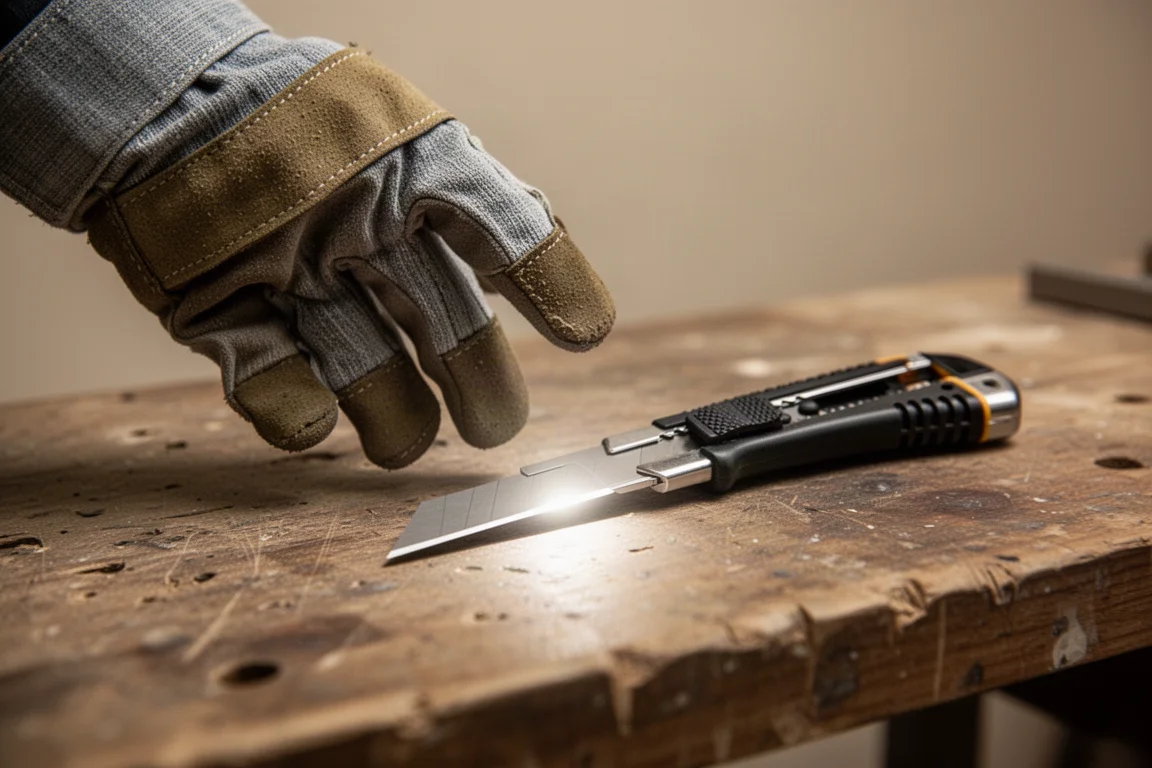
There may be some niche use for it, but as a general-purpose utility knife, this design is a genuine hazard. If you own one, at minimum store it where the exposed blade cannot catch anyone.
Fiskars Utility Knife
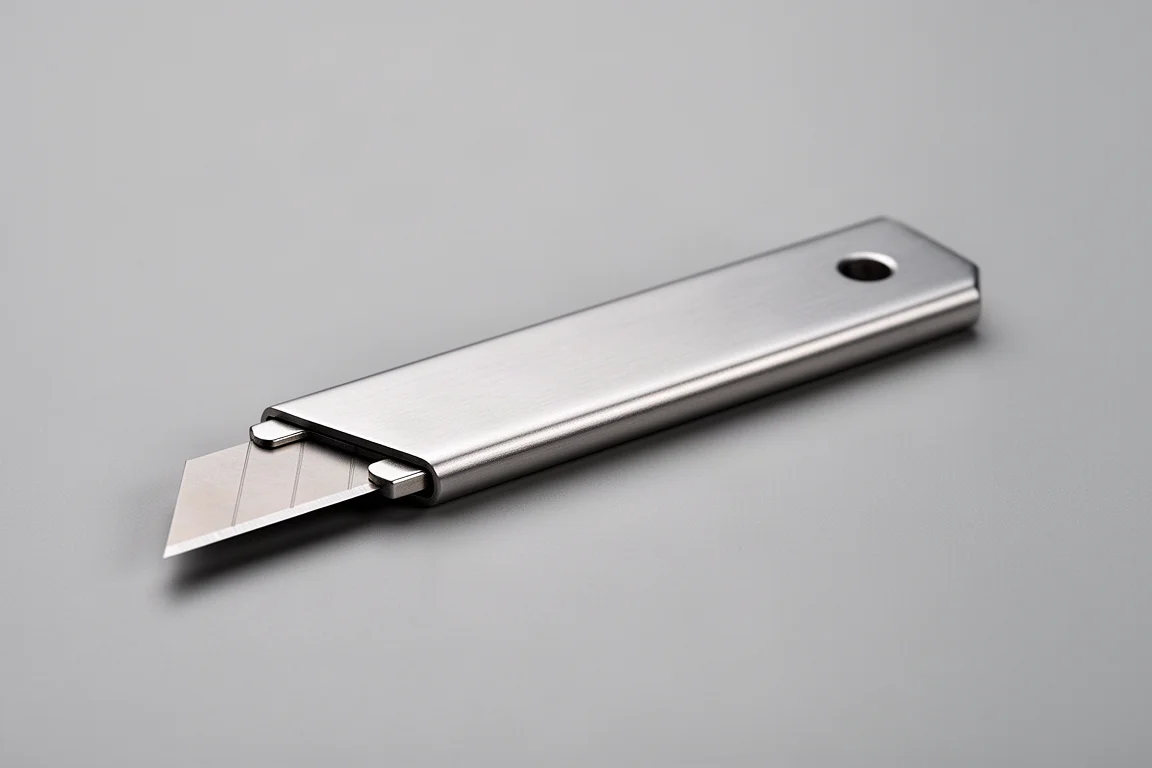
The Fiskars is the current favorite of the group, and it earns that position by being the knife that simply cuts without drama. The grip is solid, the blade stays where you put it, and the design does what a utility knife is supposed to do: cut with confidence, repeatedly, without asking you to hold a slider down or wrestle the blade out of the housing.
If you want one knife from this comparison to handle everyday cutting jobs, this is the easy recommendation.
X-Acto Self-Retracting Utility Knife
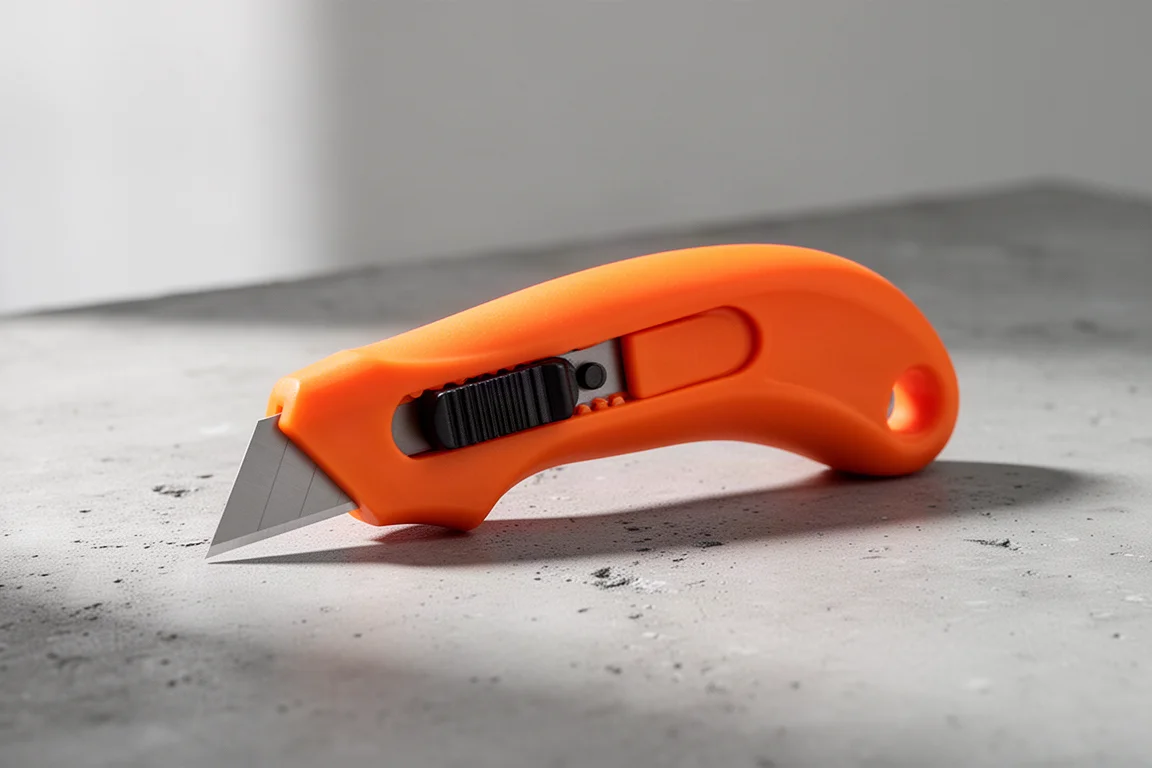
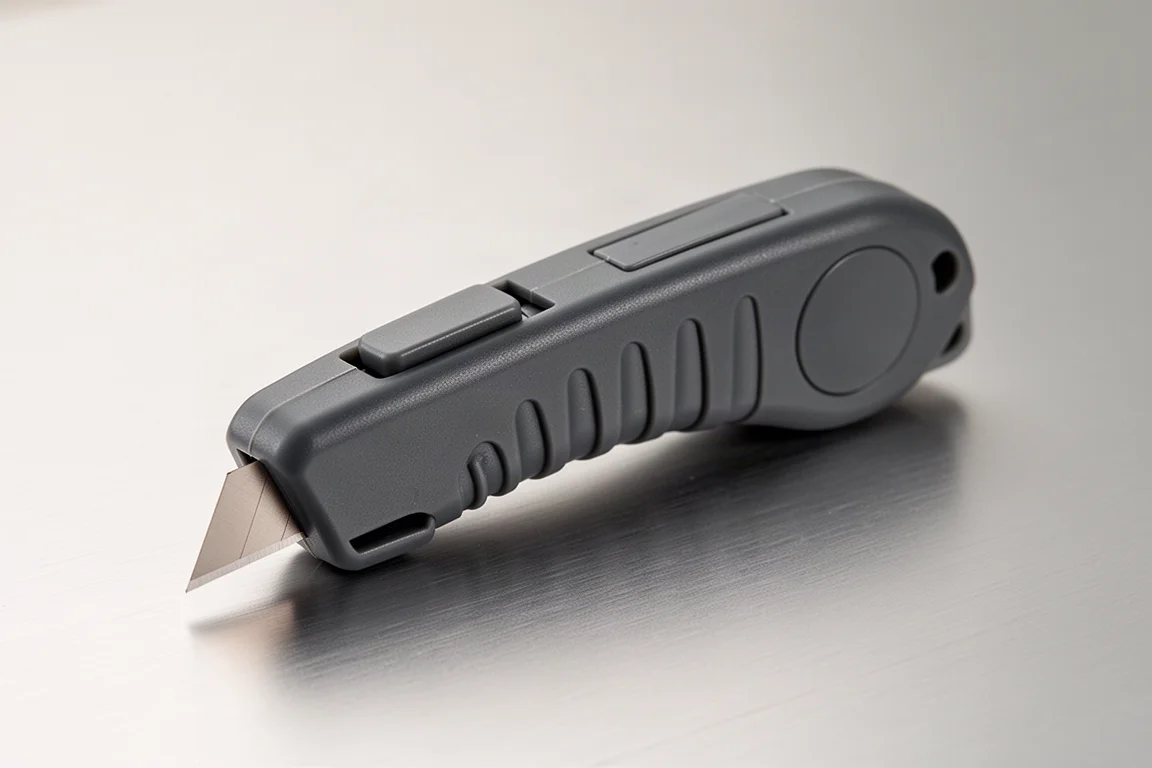
The X-Acto self-retracting model is almost entirely plastic, with the only non-plastic parts being a screw and the razor blade. It looks decent and has nice finger grooves, but the grooves do not actually work because your hand has to move around during a cut. The retraction button is so weak that it barely holds the blade, and the blade is retained only by plastic detents.
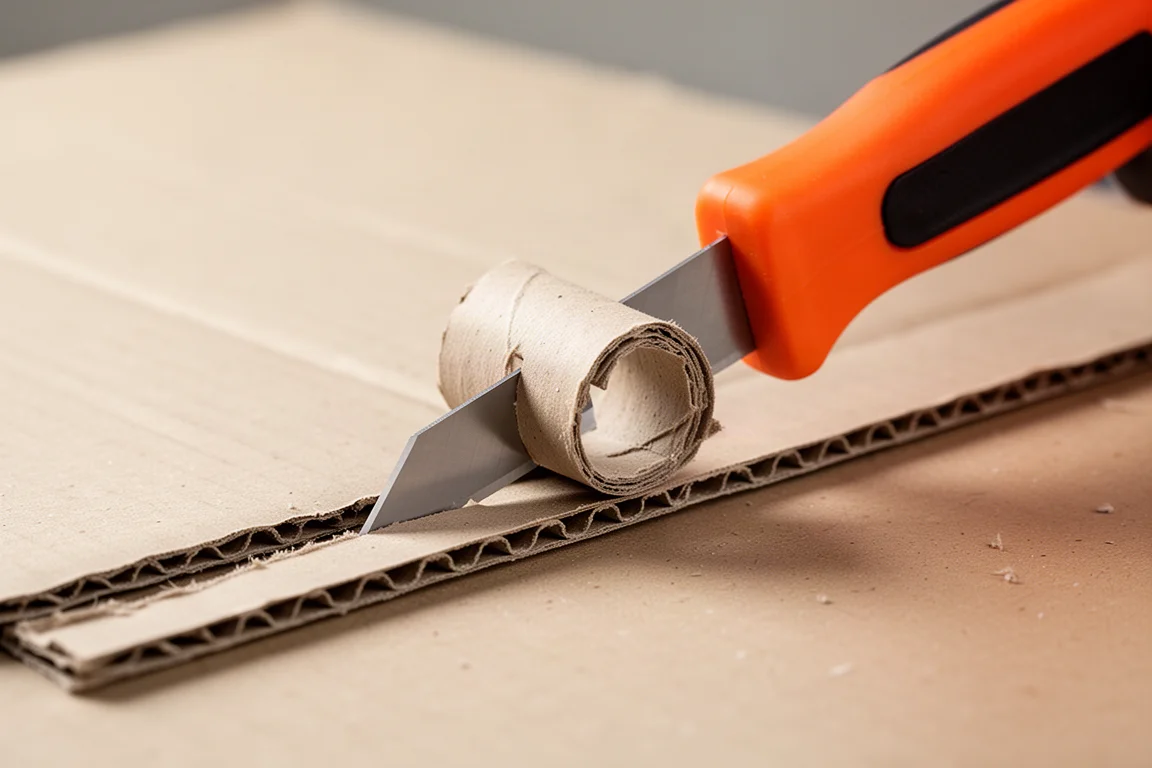
Under any real force, something gives. The halves can separate in your hand, the blade can slip out, the two pieces can come apart with the blade flying between them, or the mechanism can give up and slam forward. You can hear the body creaking just holding it. This is an accident waiting to happen, and we cannot recommend it.
Buying Advice
The core trade-off across this comparison is safety versus control. A self-retracting blade disappears the moment you let go, which is genuinely valuable when policies or injury risk demand it, but it takes your thumb out of the control equation and forces a wider, less secure grip. If you rarely cut and mostly want to avoid incidents, that trade can be worth it.
If you cut often, choose a knife designed to cut: a secure grip, a blade that stays put when you want it out, and a body that will not flex apart. The Fiskars fits that description best in this group. Avoid anything slippery, non-retractable with an always-exposed blade, or built from flimsy plastic detents, because those designs increase the odds of the exact injuries a self-retracting knife exists to prevent.
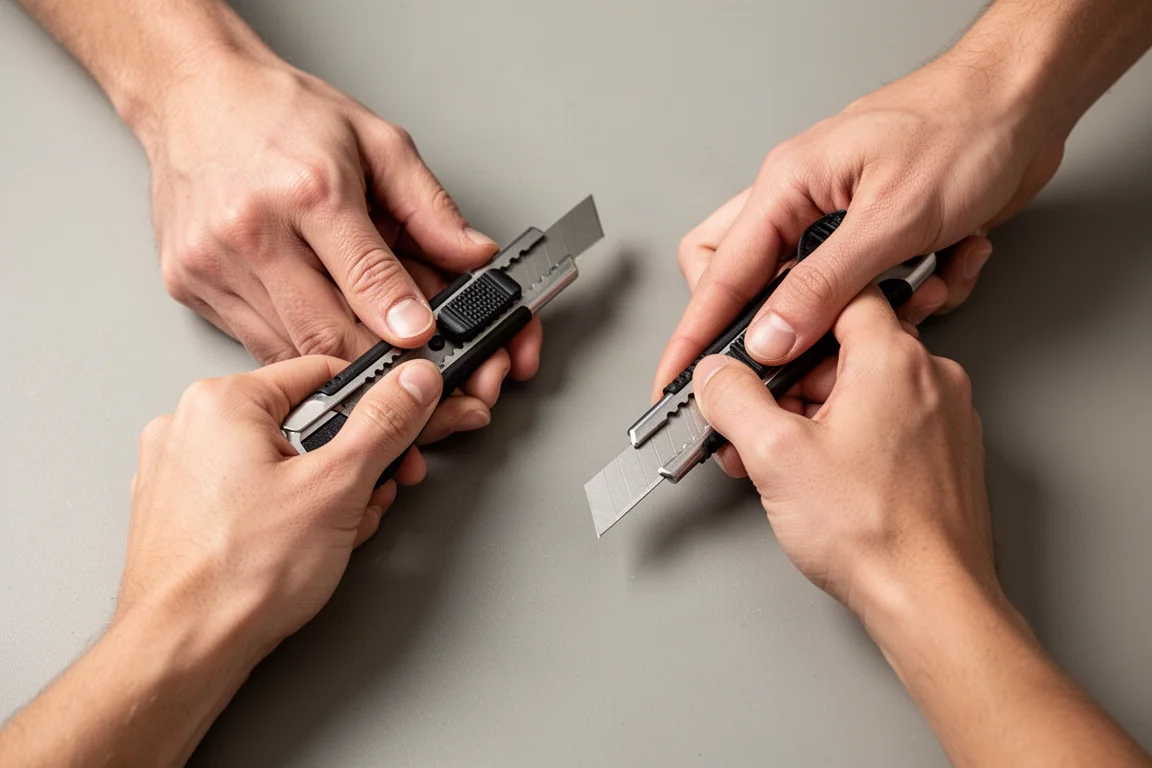
One more practical note: check the blade type before buying a self-retracting model. Packaging imagery does not always match the blade included in the box, and rounded-corner blades behave differently in the housing.
Conclusion
Every knife here has qualities and flaws. The Milwaukee 48-22-1512 is well built and has a real purpose, but only if a fully self-retracting blade is exactly what you need. The Fiskars is the standout for everyday cutting. The Stanley FatMax and 299 illustrate how bad exposed-blade design can get, and the X-Acto shows what happens when a brand rushes a plastic me-too product to market. Match the knife to how you actually cut, and you will end up with the right tool instead of the wrong one.
Further reading
Related Reviews

Tools
Best Contractor Grade Tape Measures 2026: Eight Models Tested Head to Head
We tested eight contractor grade tape measures from Milwaukee, DeWalt, Crescent Lufkin, Tajima, Stanley, Irwin, Gelan, and Craftsman to find the best value and performance.

Tools
Best Precision Screwdriver Sets 2026: Manual and Electric Options Compared
We compare 19 precision screwdriver sets, from budget manual kits to electric drivers, to find the strongest bits and best value.

Tools
Best Stud Finders 2026: Five Popular Models Put to the Test
We tested five popular stud finders on drywall, firewall, and lath and plaster surfaces to see which ones really find studs and avoid false readings.