Backpacking Tents
Best Ultralight Solo Trekking Pole Tents: Six Shelters Compared
Six single-person trekking pole tents compared on weight, interior space, fabric, and price, so you can pick the shelter that fits your trips.
Introduction
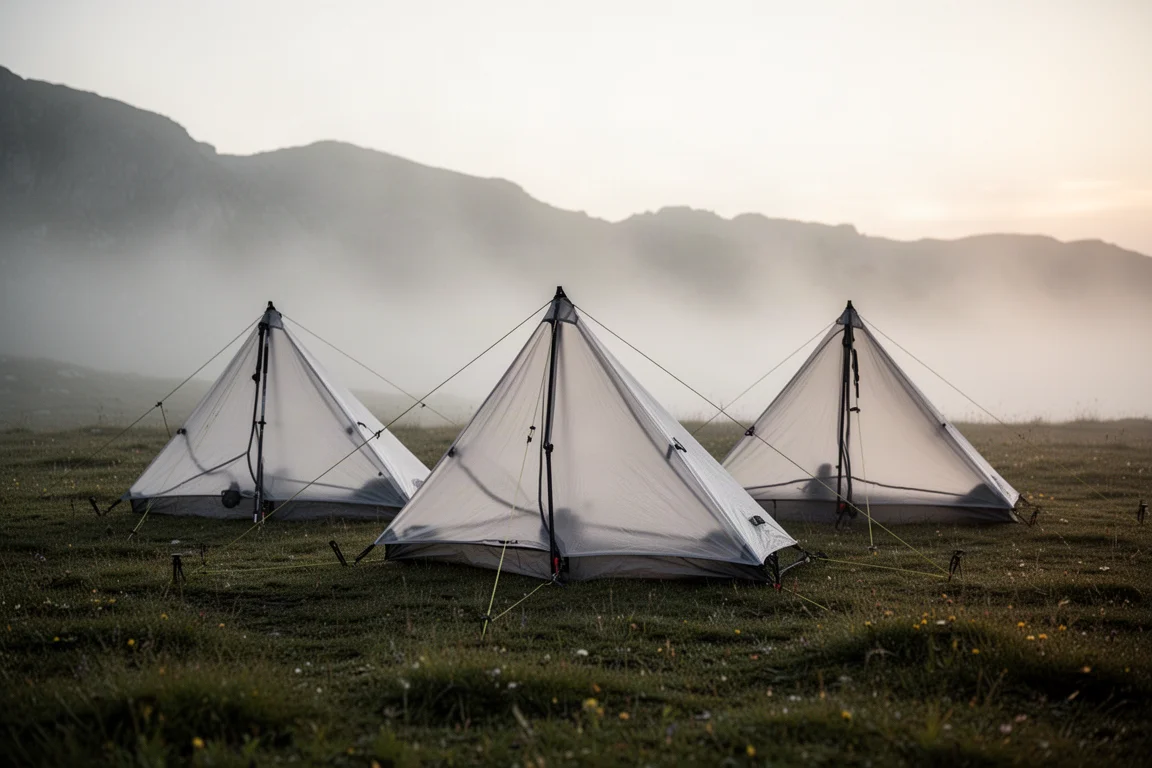
Ultralight solo shelters have converged on a similar idea: one trekking pole, one sheet of technical fabric, and a shape that sheds wind and rain. The result is a category where many tents look nearly identical on paper and only a handful stand out in practice.
That similarity is actually useful for buyers. It means the differences between these tents come down to a short list of decisions: how much you are willing to carry, how much interior space you need, and how much you are willing to spend.
This roundup covers six single-person trekking pole tents that sit at the light end of the market. Each one has a clear reason to exist, and each one asks you to give something up in return.
What Defines an Ultralight Solo Trekking Pole Tent
Every shelter here is designed for one person and pitched with trekking poles rather than a dedicated frame. That single design choice removes the weight of poles and inner structure, and it is the main reason these tents can come in under two pounds.
Weight figures in this category are usually quoted without trekking poles or stakes, so compare like with like before deciding. Fabric choice drives most of the rest. Dyneema is the lightest option, polyester resists water absorption and sagging better than nylon, and nylon ripstop keeps costs down at the expense of some stretch when wet.
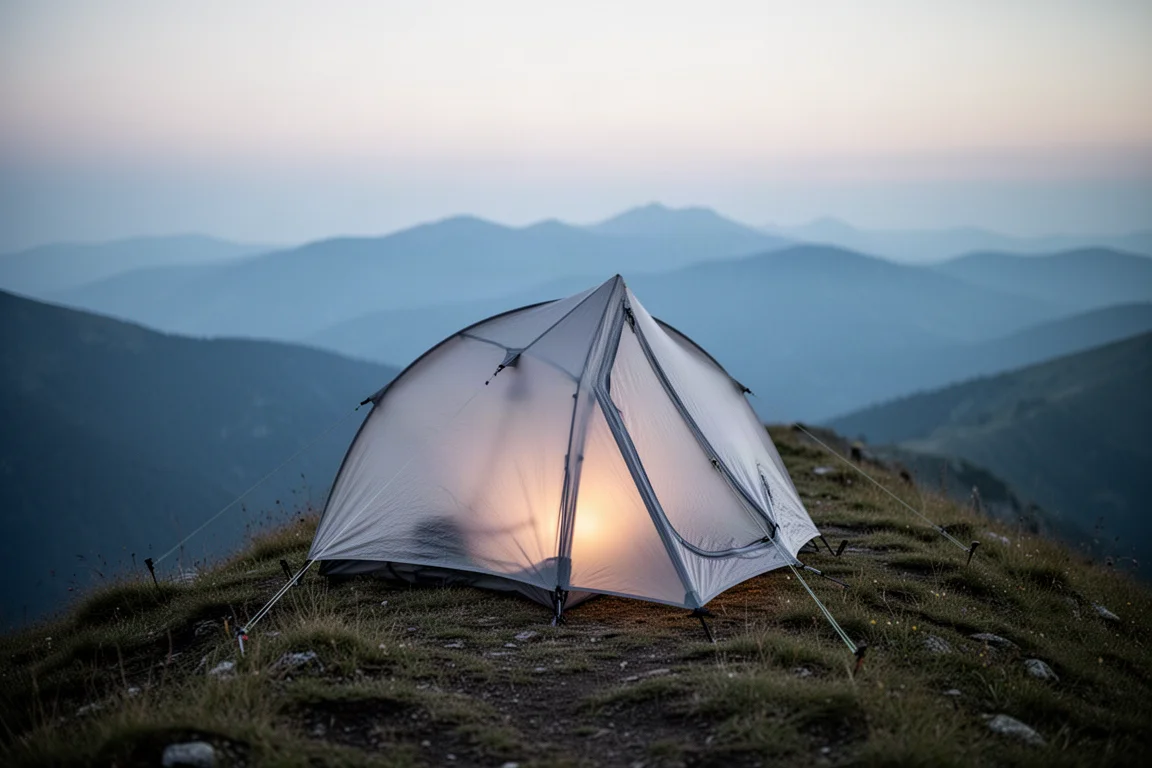
Another factor that separates these tents is seam sealing. Some manufacturers seal seams before shipping, while others leave the job to the buyer or offer it as a paid service. It is a small detail that changes both the real cost and the amount of work required before your first trip.
Setup complexity matters too. A shelter that pitches taut and weather resistant with only four stakes is worth more on an exposed ridge than one that needs constant adjustment through the night.
Zpacks Plex Solo: The Lightest Tent in This Roundup
The Plex Solo is the lightest shelter here at under 14 oz, again excluding trekking poles and stakes. It is built from Dyneema, which accounts for much of that figure, and for anyone whose first priority is pack weight, there is nothing lighter in this group.
That weight comes with compromises. The door falls to the ground in a rainbow shape, the pole sits in the path of the doorway, and the price is $600 without poles or stakes. For a shelter this minimal, those trade-offs are part of the design rather than faults.
It suits backpackers chasing the lowest possible base weight. If you want easier entry, more interior volume, or a friendlier price, the other tents below make more sense.
Six Moon Designs Lunar Solo: The Roomiest Single-Pole Option
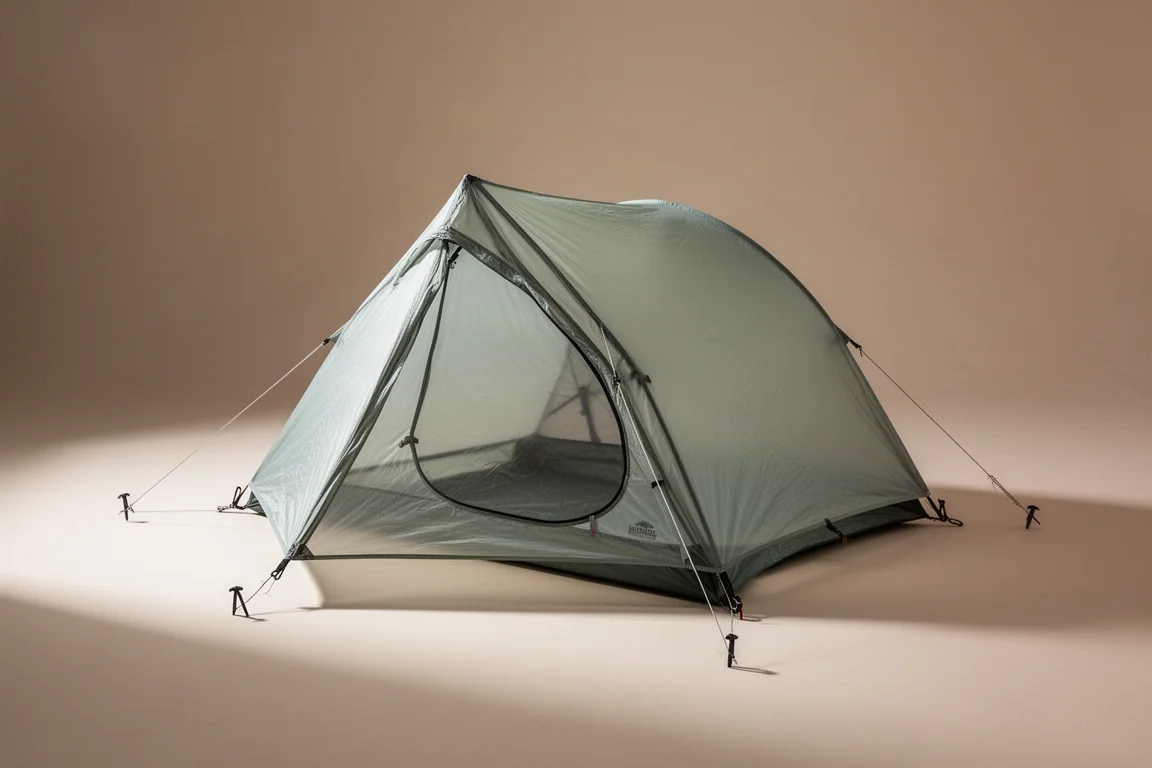
The Lunar Solo is one of the original hexagon-style single-pole tents, and much of the current market follows the shape it helped establish. It uses polyester, which does not absorb water or sag the way nylon can, though it is heavier than Dyneema.
At 28 oz it is the heaviest tent in this roundup, still comfortably under two pounds before poles and stakes. What that weight buys is space. It is the roomiest one-person tent here, with enough interior volume that it comes close to two-person territory.
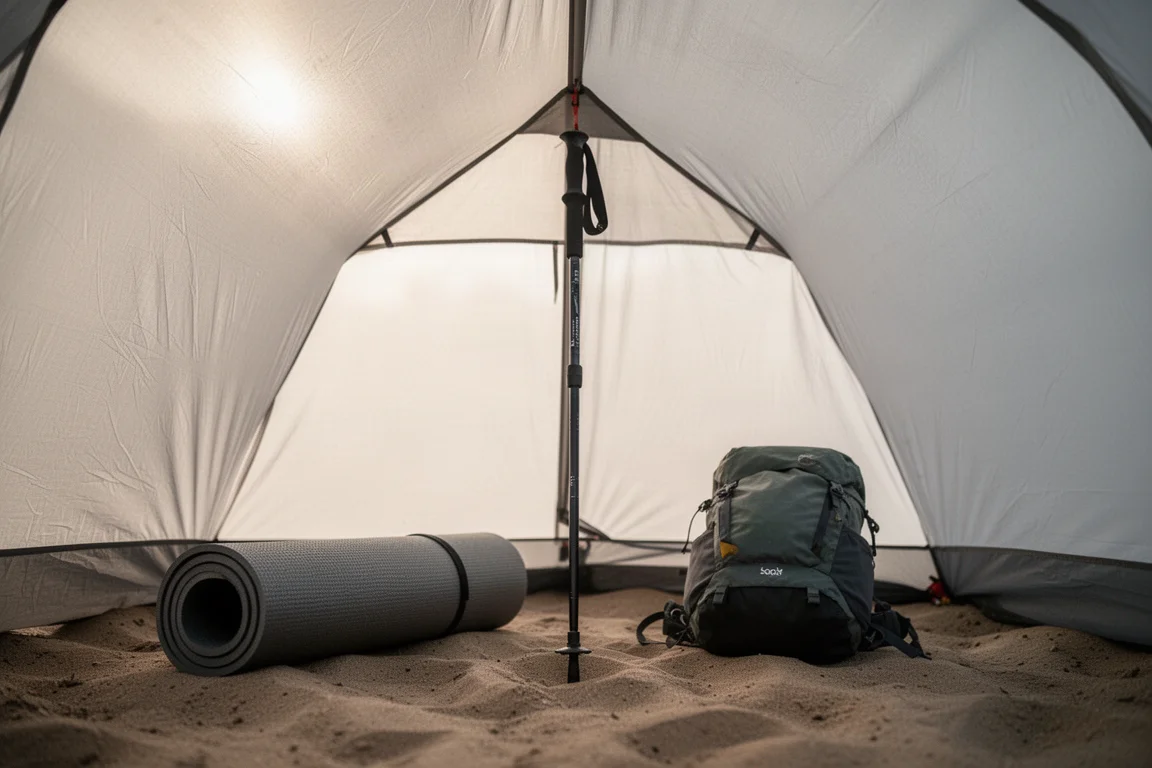
That makes it a strong choice if you keep your pack and gear inside the shelter, or if you hike with a dog. It is also one of the more affordable options at $260.
One thing to plan for is seam sealing. The Lunar Solo does not ship seam sealed, so you either treat the seams yourself or pay Six Moon Designs to do it for you.
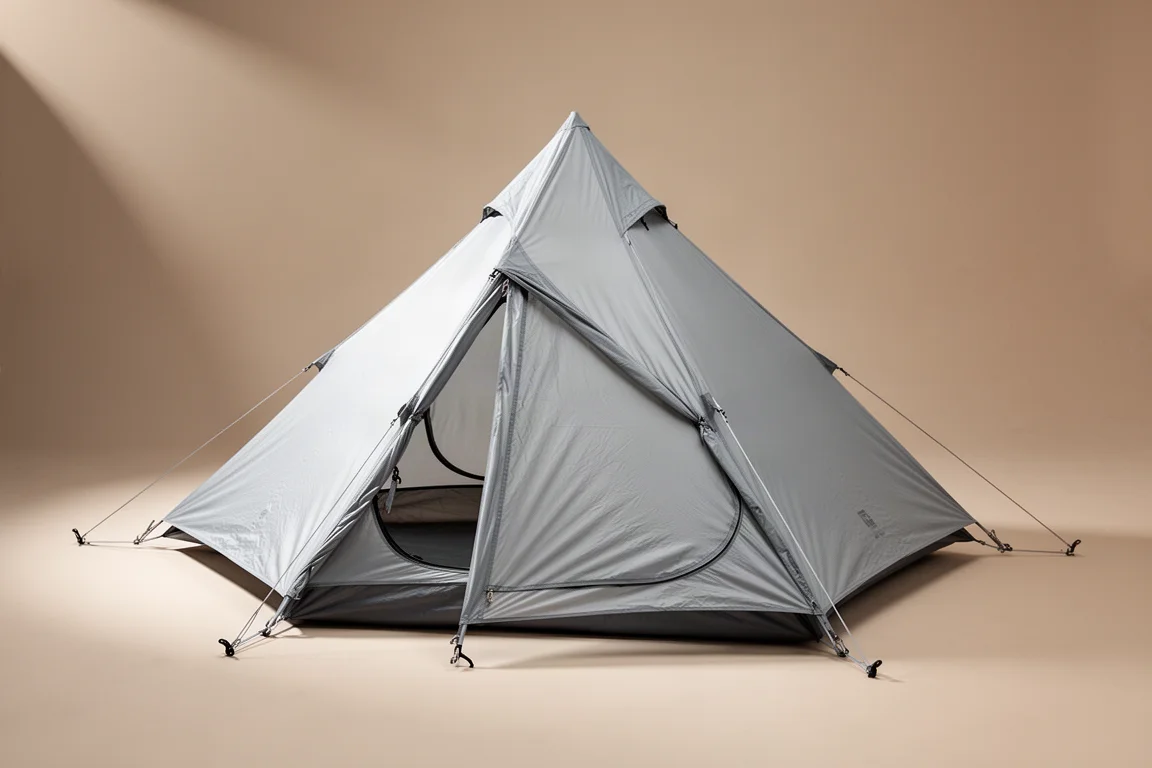
LanShan 1 Pro: The Budget Route Into Ultralight Shelters
The LanShan 1 Pro is the cheapest way into this design family at $180, and it is still light at 25.6 oz. The shape will look familiar to anyone who has compared single-pole shelters, and the weight is competitive with tents that cost considerably more.
The savings show up in the details. Like the Lunar Solo, it is not seam sealed at the factory, so that job is yours. It also uses nylon, which can sag and stretch when wet, and that matters when the fabric is part of what holds the pole upright. Plenty of tents in this category use nylon, so it is a common trade-off rather than an unusual one.
There is also the wider question of what a lower price excludes. Smaller manufacturers typically put more of the price into quality control, workmanship, customer service, and the design work behind each revision. Buyers who value those things often accept paying more for them.
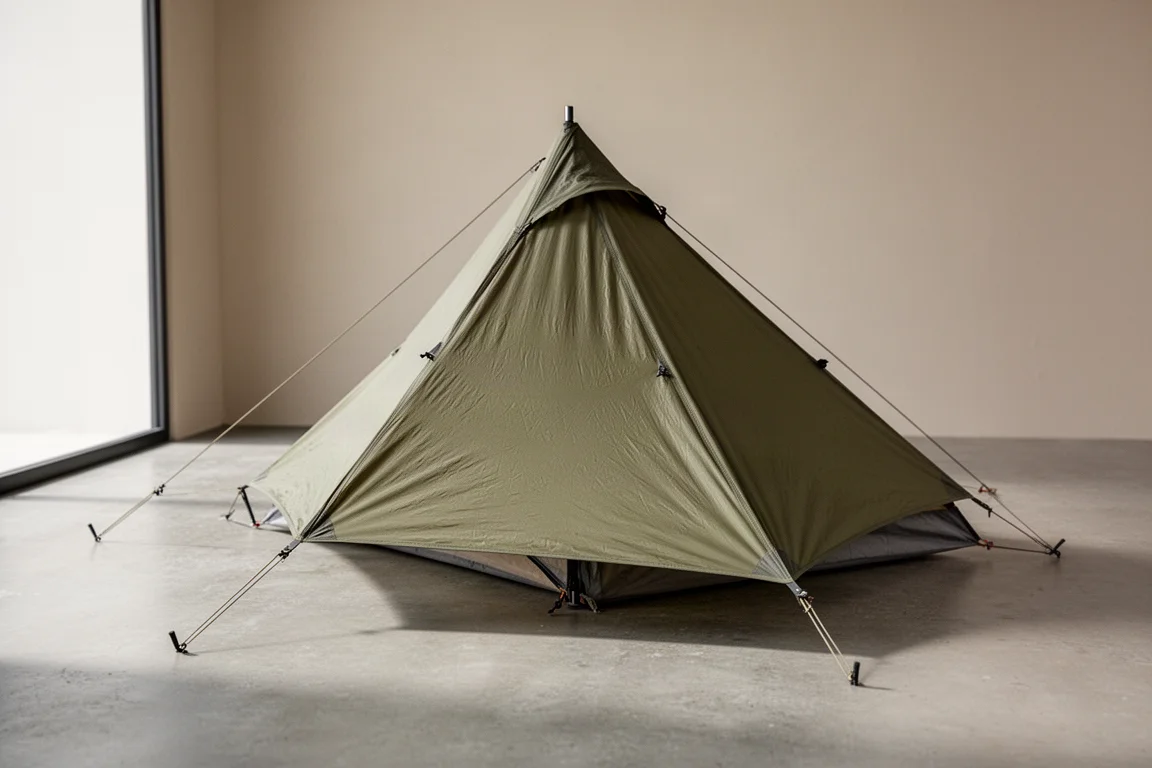
Durston X-Mid Pro 1: The Most Innovative Design Here
The X-Mid Pro 1 is the second lightest shelter in this roundup at 17.6 oz, roughly 3 oz more than the Plex Solo. In exchange, you get substantially more headroom, doors that hang properly instead of being blocked by the pole, and a geometry that pitches fully with only four stakes.
That last point matters more than it sounds. Fewer required stakes means less weight carried overall, and the design holds up well in wind and weather. It is made from Dyneema with heat-bonded seams rather than sewn seams, which is a more advanced construction method.
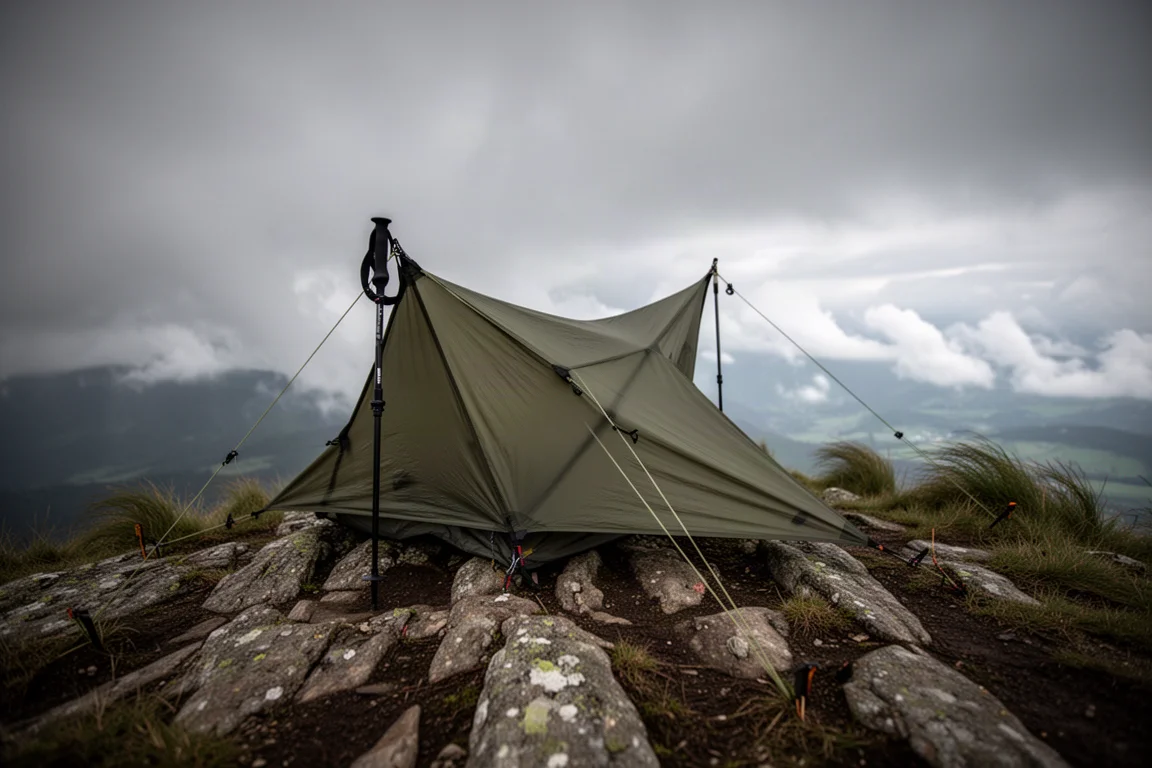
The catch is price. At $600 it matches the Plex Solo as one of the two most expensive tents here. Innovative, very light shelters cost money, and this one is no exception.
For backpackers who want the lightest possible setup without giving up headroom or a sensible door layout, this is the most compelling compromise in the group.
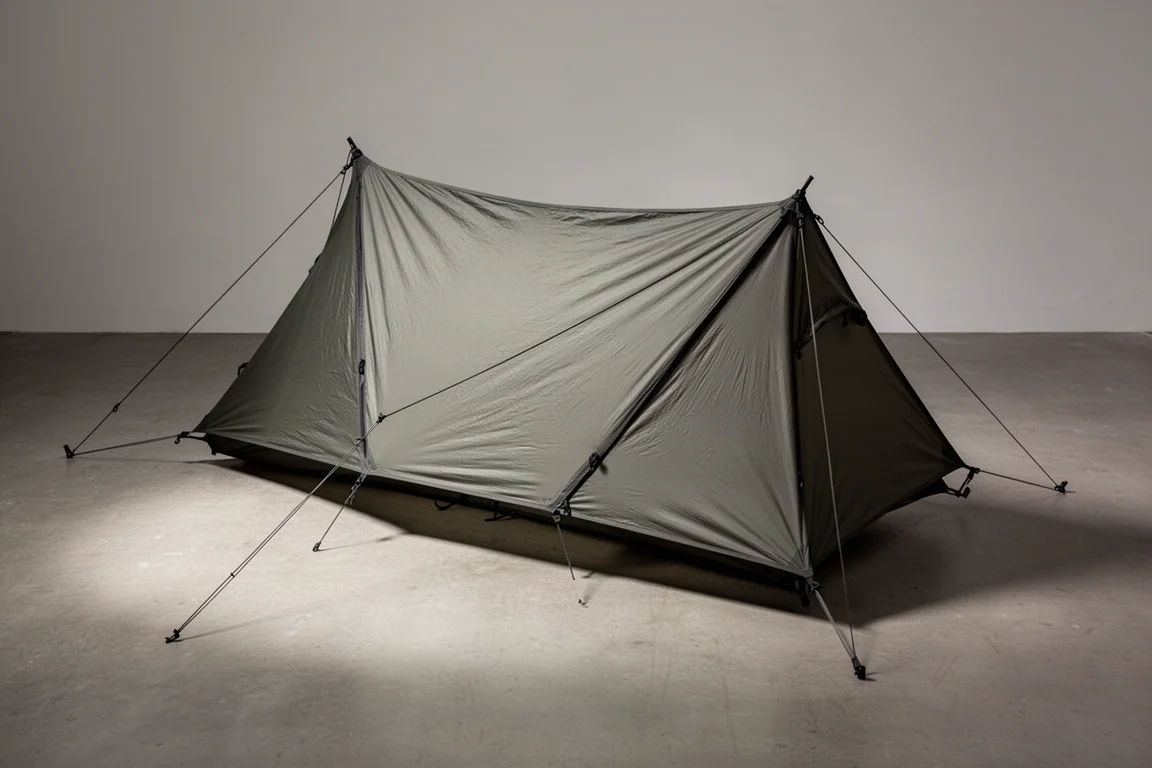
Gossamer Gear The One: The Best All-Around Balance
The One weighs 18.1 oz, just 1 oz more than the X-Mid Pro 1, but it uses ripstop nylon instead of Dyneema and costs $300. Compared with other tents at this weight, that price gap is significant.
Headroom is generous, with 43 in between the poles at the ridgeline, so the interior does not feel cramped. The main compromise is the floor, which tapers to 21 in at the foot. A 25 in wide pad will need to be tapered or mummy shaped to fit properly, which is a real limitation for anyone who prefers a rectangular pad.
If you can work with a tapered pad, this is a well-rounded tent: light, reasonably priced, and comfortable for one person.
Outdoor Vitals 40s Tent: An Honorable Mention
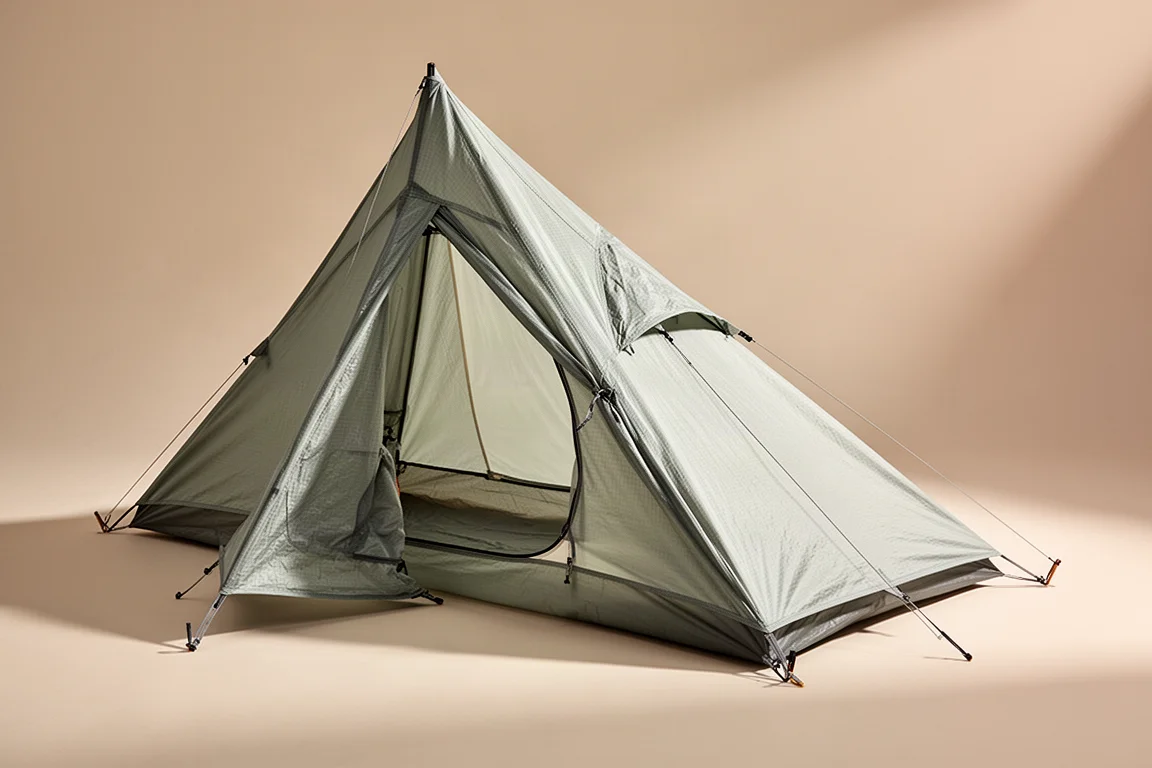
The 40s Tent is harder to place. It is not the lightest, not the roomiest, not the cheapest, and not the most innovative shelter in this roundup, which is why it sits as an honorable mention rather than a headline pick.
Its design is close to Gossamer Gear The One, and it costs $10 less, but it is 4 oz heavier. At this end of the weight scale, 4 oz is a meaningful difference, and $10 is a small amount to pay to shed it.
There are still reasons to consider it. The open mesh at the back makes the interior feel more open, though it also means the vestibule is effectively unusable because you cannot reach it. The 28 in width accepts a full rectangular wide pad, which is a genuine advantage if that is your priority.
Buying Advice: Matching a Shelter to Your Trip
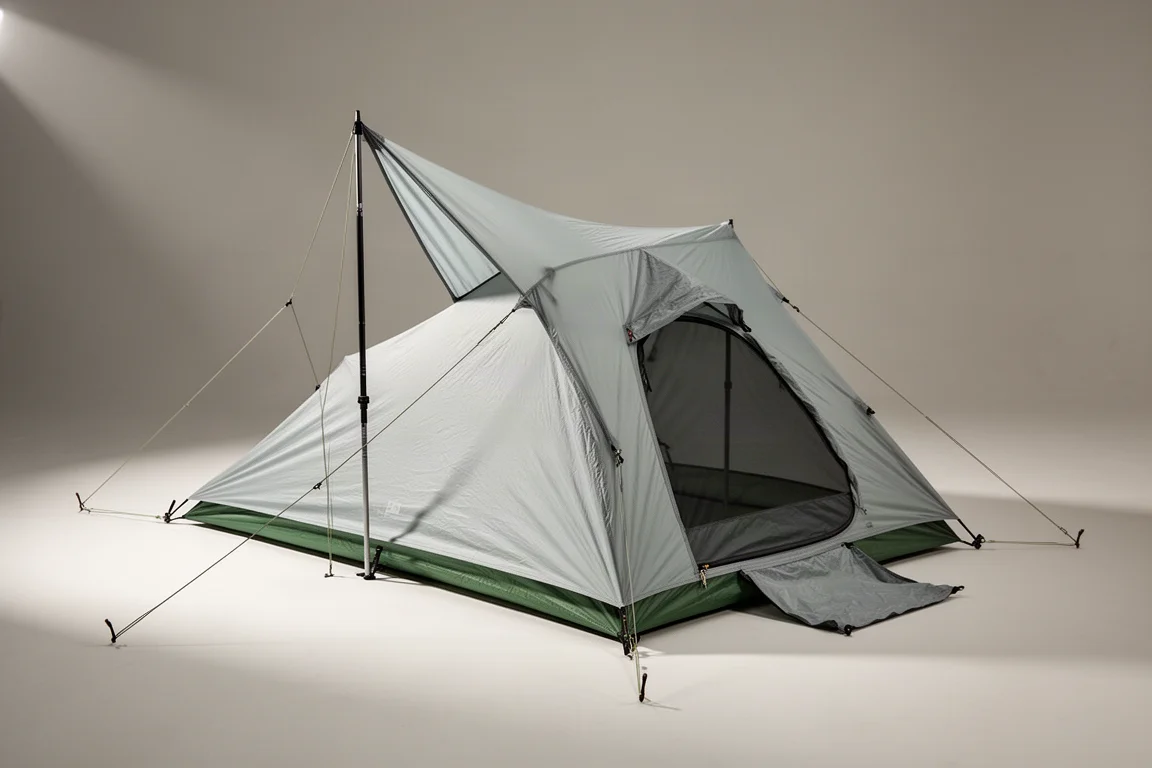
Start with weight, because it is the one number that affects every step of a trip. Under 14 oz puts you at the absolute limit of what is available, and the Plex Solo is the only tent here in that territory. Between 17 and 19 oz, the X-Mid Pro 1 and The One offer a better balance of space, design, and price.
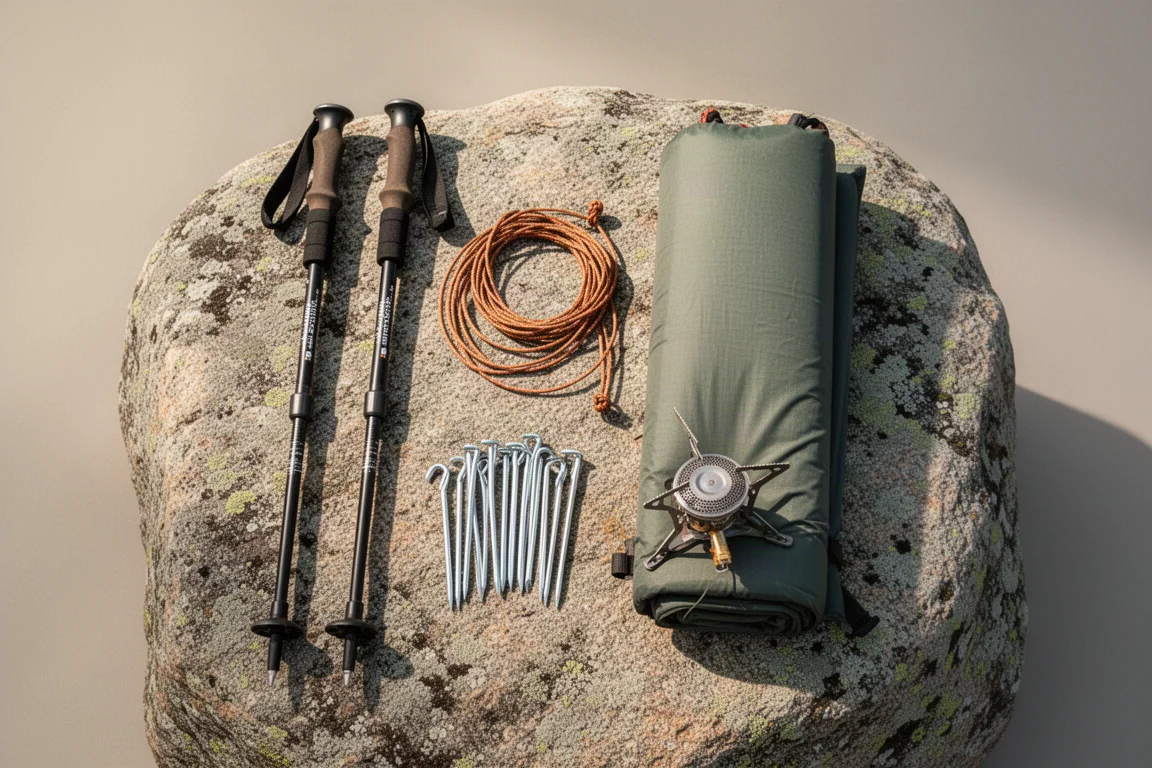
Then decide how much interior room you actually need. The Lunar Solo is the clear answer for anyone who stores gear inside the tent or brings a dog, while the 40s Tent is the one to look at if you insist on a full rectangular wide pad.
Finally, factor in the extras that never appear on a spec sheet. Seam sealing is a task or an added cost on the Lunar Solo and the LanShan 1 Pro, and fabric choice affects how a shelter behaves in sustained rain. Tents built from Dyneema cost more, while polyester and ripstop nylon bring the price down at a modest weight penalty.
Conclusion
All six of these tents solve the same problem, and they solve it differently enough that the right answer depends on your priorities rather than on which one is objectively best. The Plex Solo wins on weight, the X-Mid Pro 1 wins on design and headroom, The One wins on overall balance, and the Lunar Solo wins on interior space.
If budget is the deciding factor, the LanShan 1 Pro gets you into this category for the least money, provided you are willing to seal the seams and accept nylon fabric. If you want a wide rectangular pad and an open feel, the 40s Tent deserves a look despite the extra ounces.
Whichever you choose, buy for the trips you actually take. A shelter that matches your terrain, your gear, and your tolerance for setup will serve you better than one that simply has the lowest number on the scale.
Further reading
Related Reviews
Backpacking Tents
3F UL Lanchan Pro 1 Review: A 1 lb 8 oz Single-Wall Trekking Pole Tent
A practical look at the 3F UL Lanchan Pro 1, a single-wall trekking pole shelter with a 1 lb 8 oz weight, 20D silnylon fabrics, and a roomy 90 x 31 x 49 inch interior.
Backpacking Tents
3F UL Taiji 2-Person Tent: A Convertible Backpacking Shelter Worth a Closer Look
A practical look at the 3F UL Taiji two-person tent, covering its materials, true two-person interior, fly-first pitching, and the seasonal inner swap that lets one shelter cover more of the year.
Backpacking Tents
3FUL Lanshan Twoerson Pro Review: A Light Trekking Pole Shelter That Struggled in Rain
A two-person trekking pole shelter with a 2026 redesign, pitched with sticks and put through a night of steady rain. Here is what worked, what did not, and what to check before buying.