Kitchen Appliances
Best Toasters Tested: 15 Models From $23 to $330 Compared
We compared 15 toasters on bread toasting, defrost mode, small-item lift, bagel performance, and crumb collection to find which models are actually worth the money.
Introduction
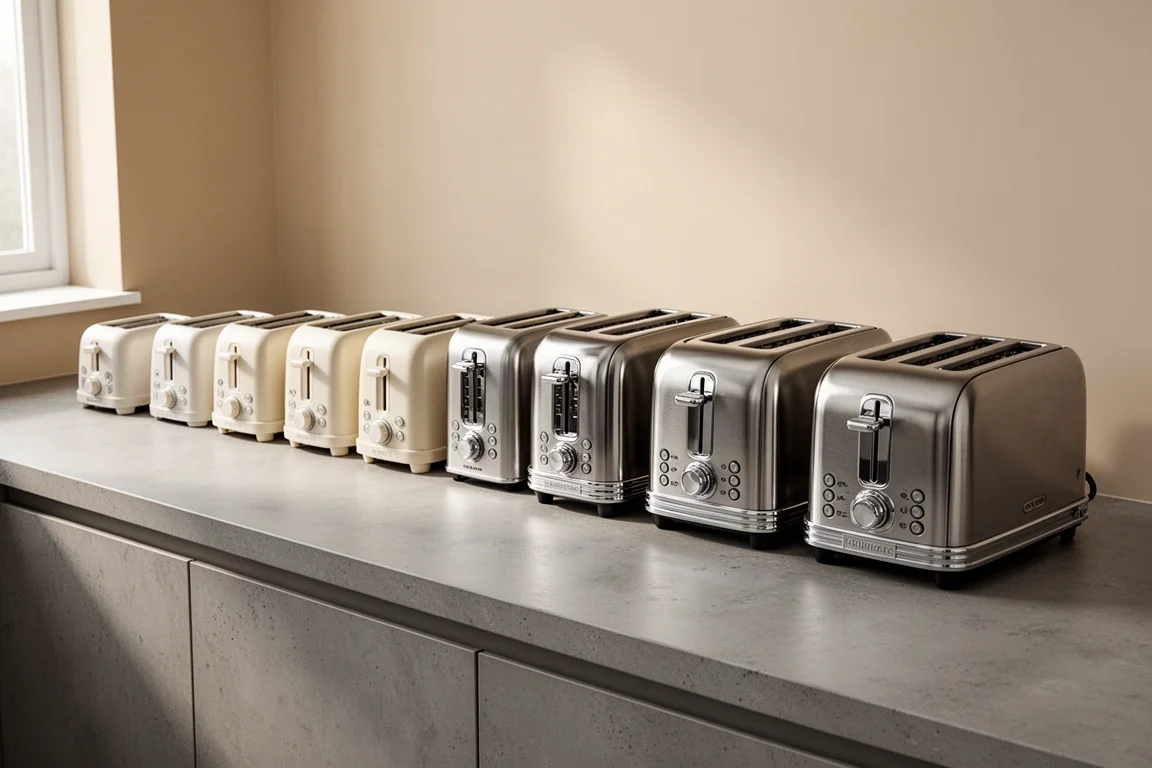
Is a $23 toaster just as good as one that costs $330? To find out, we put fifteen toasters through the same battery of tests: toasting white bread evenly, thawing frozen bread, lifting small items like Pop-Tarts clear of the hot slots, toasting bagels, and keeping breadcrumbs off the counter. The results span everything from surprisingly capable budget boxes to premium models that earn their price tags, plus a few that do not.
How We Tested
Each toaster was run through the same routine. For the bread test, we weighed two slices before and after toasting to measure moisture loss, since a golden crust with a moist center is the mark of a well-made slice. We also compared how evenly both sides darkened and how consistent the shade was from top to bottom.
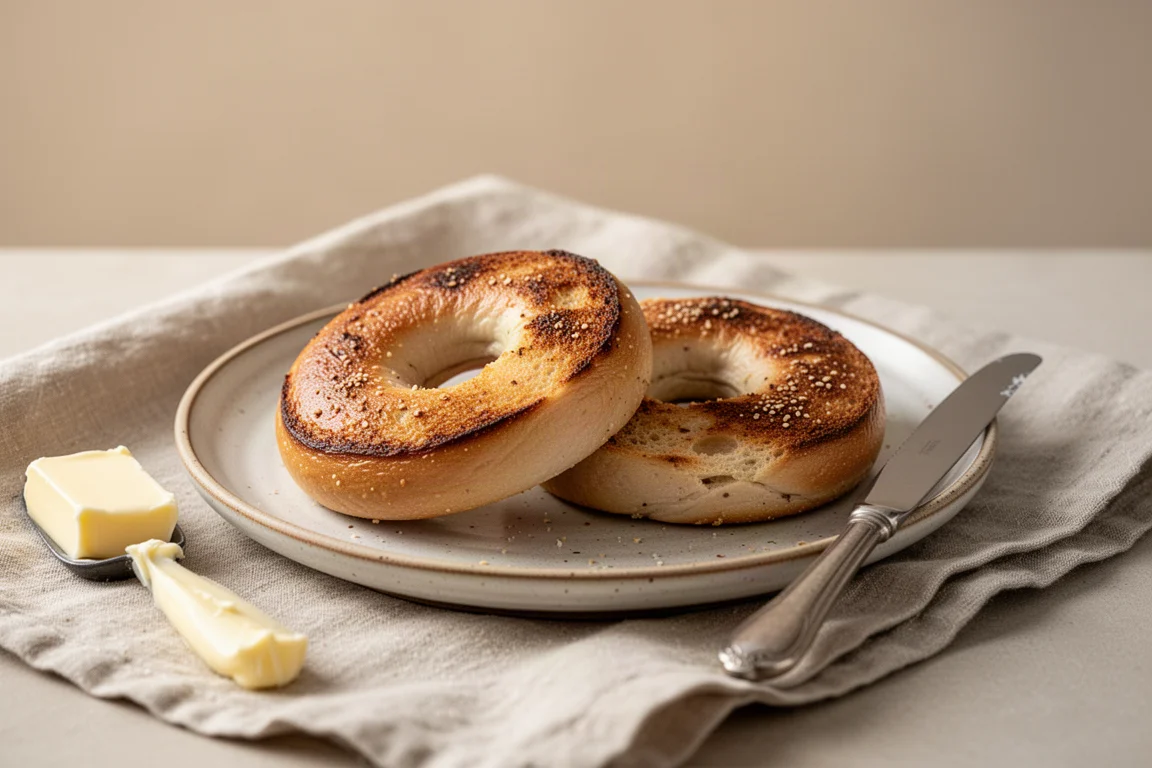
Frozen bread testing focused on the defrost function: how much extra time each mode adds and whether the result comes out golden or scorched. For small items, we used a Pop-Tart to see which spring mechanisms lift short bread above the slot without assistance. Bagels tested how each model handles thicker items, and a five-gram crumb spill test revealed which designs actually catch what falls.
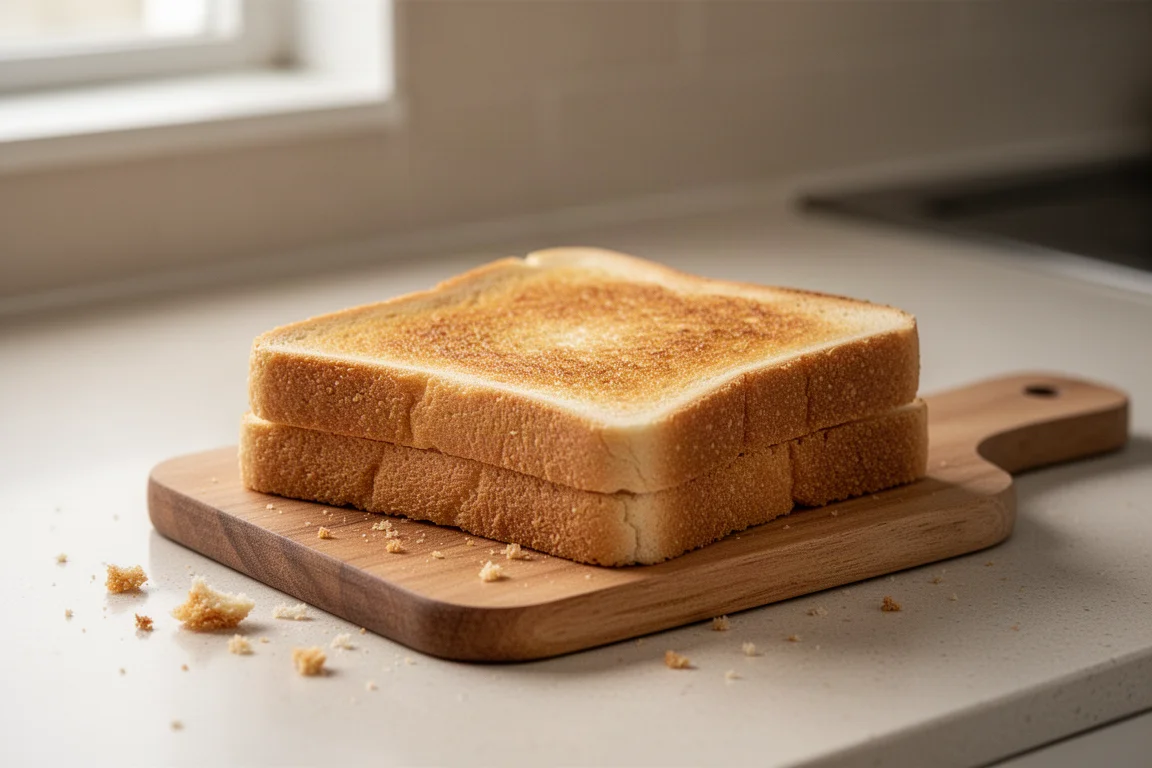
Moisture-loss results are sensitive to setup, so we treated them as supporting data rather than the final word. Evenness of toasting was the headline metric, assessed on a simple rating scale.
Budget Toasters: $23 to $30
The cheapest tier turned out to be the hardest to recommend, but a few models still have redeeming qualities.
Bella Toaster ($23)
The least expensive model tested is also one of the best sellers, moving 10,000 units in 30 days. It offers extra-wide slots, a removable crumb tray, six browning options, auto shut off, and a reheat function. It weighs 922g and drew 766W against a 750W rating. Toasting finished in 2 minutes 10 seconds, but one side came out darker than the other, and the top darkened more than the bottom. Moisture loss was 17.4%. It has no defrost function, so frozen bread requires manual timing, and the weak spring left a Pop-Tart buried below the slot.
Proctor Silex Toaster ($24)
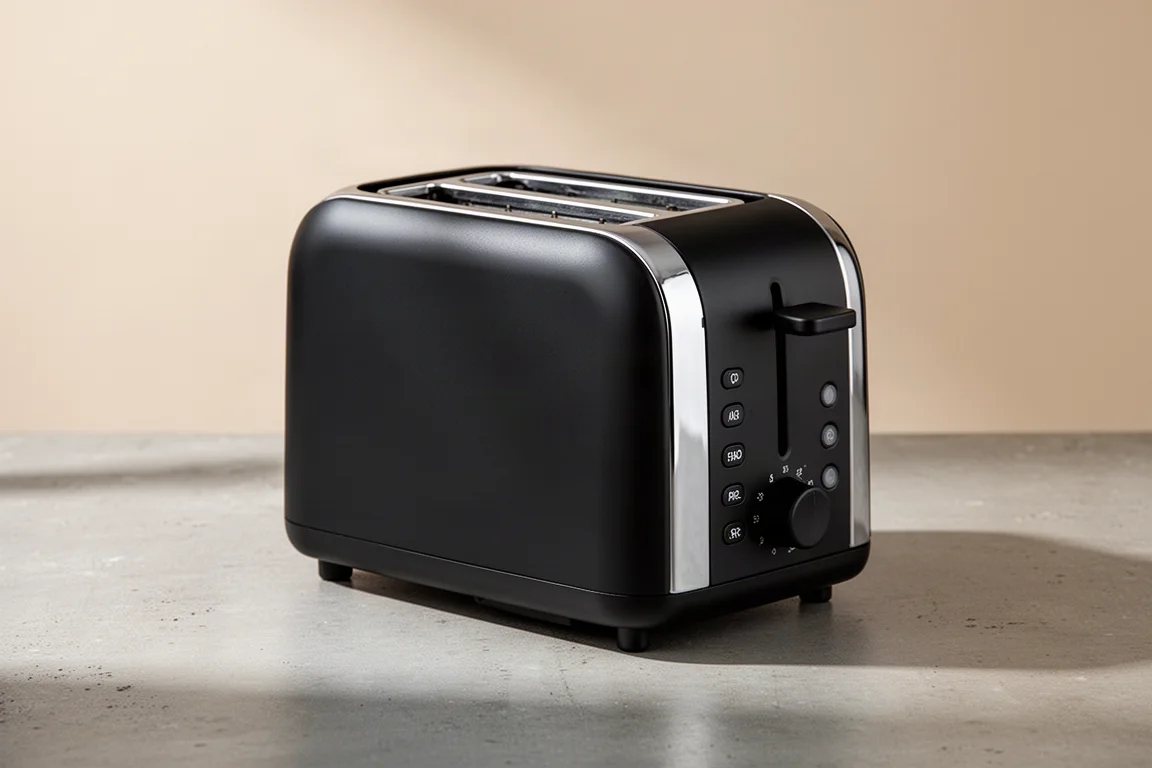
This popular model, with roughly 5,000 sales every 30 days, features cool-touch walls and a shade selector. It weighs 1,040g and delivered 732W against a 700W rating. Toast took 2 minutes 16 seconds, with a light middle band and noticeably darker toasting on one side. Moisture loss was 17.8%. Frozen bread came out a little inconsistent, but the lift was better than the Bella, and crumb retention was among the best of all fifteen models.
Black & Decker Toaster ($25)
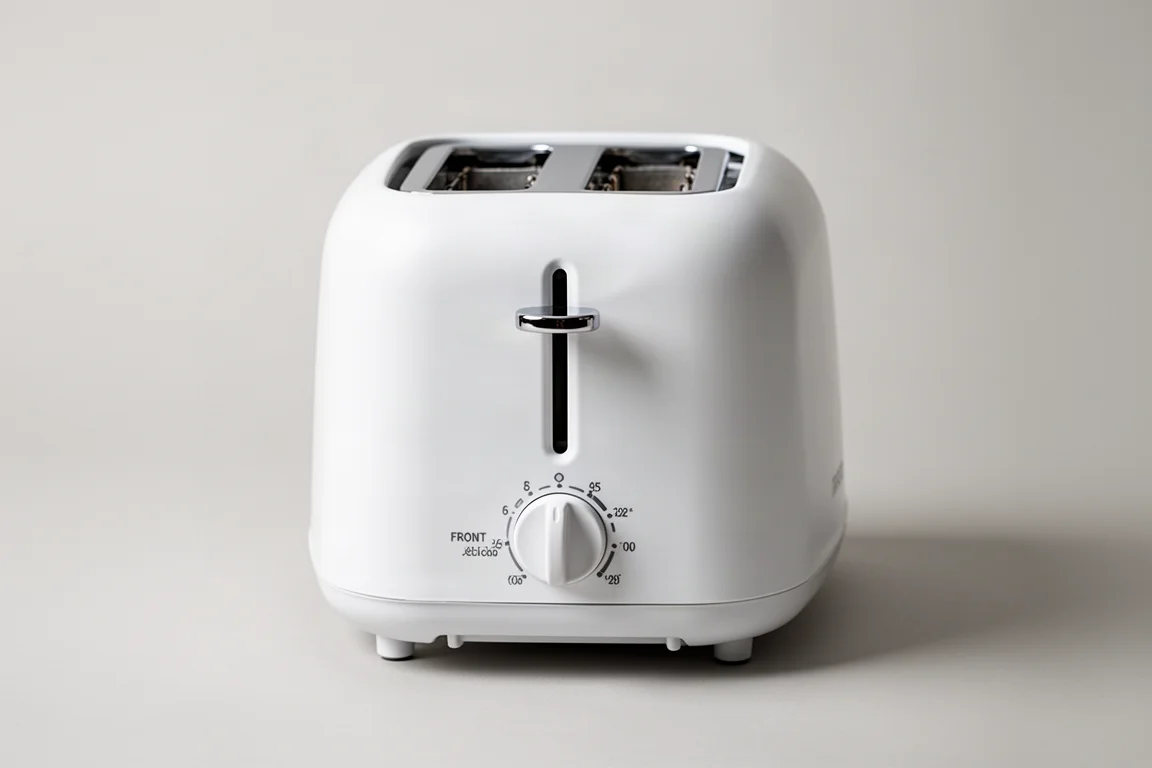
Claiming 850W for fast, precise toasting, with Frozen and Bagel buttons that adjust automatically. It weighs 1,240g and was the most powerful model yet at this point, drawing 890W. Toast finished in 2 minutes 14 seconds, but one side was darker and parts of the bread looked under-toasted on the sides and bottom. Moisture loss was 18.4%, the highest so far. Defrost mode added a sensible 16 seconds, and it lifted a Pop-Tart higher than anything before it, but crumb retention was the worst in the entire test.
Amazon Basics Toaster ($29)
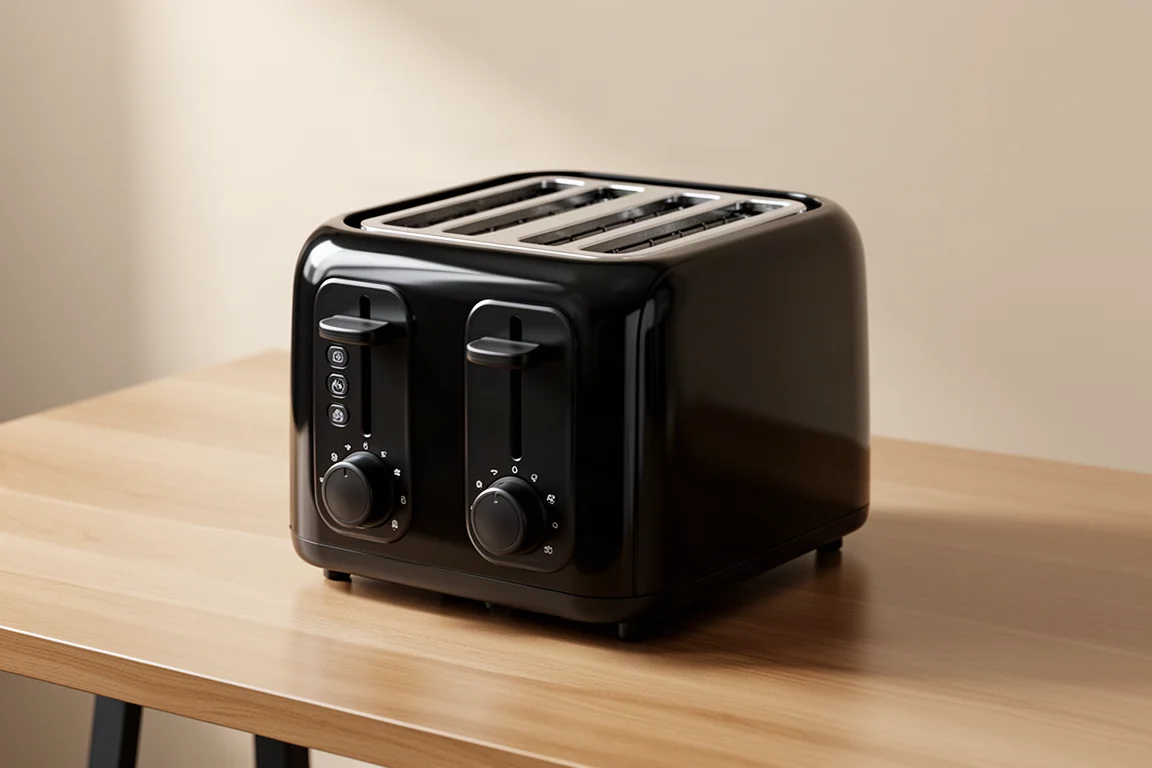
This model has an extra-lift lever for safely removing smaller pieces and six shade settings. It weighs about 1,000g and drew the most power yet at 950W against a 900W rating. Toasting took 2 minutes 27 seconds; one side was nearly perfect while the other was over-toasted in places. Moisture loss was 21.5%, the highest yet. Defrost mode added 30 seconds, which was simply too long, and crumb retention was poor despite many openings for access.
Quinart Toaster ($30)
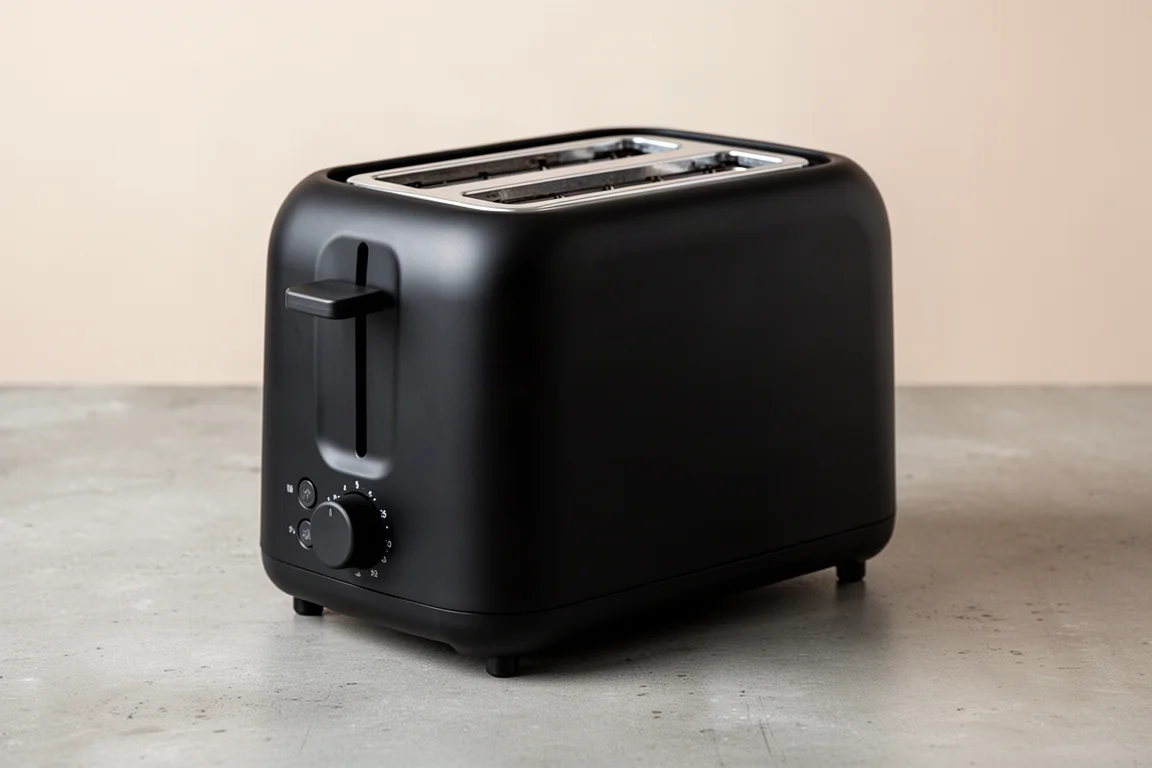
Designed for bagels and toast with preheat, defrost, and cancel options, 1.5-inch slots, and a seven-setting shade dial. It weighs 1,146g and drew around 940W, the most powerful toaster at this stage, finishing in just over 2 minutes. The trouble was consistency: one side was over-toasted well beyond the other. Moisture loss was 19.1%. Defrost mode added only 8 seconds, performing very well, and the lever broke even with the top of the slot. Crumb collection was among the best in the test.
Homer Toaster ($30)
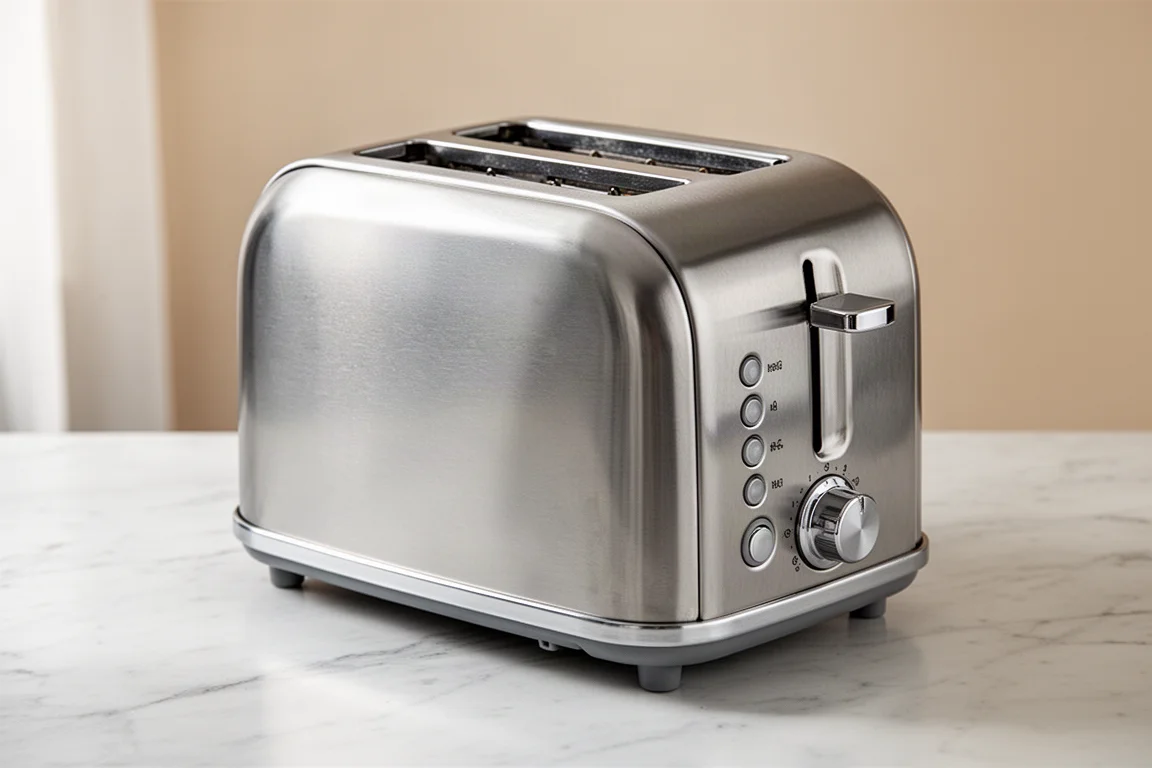
This self-described smart toaster has an LCD digital countdown timer with reheat, cancel, defrost, and bagel functions. It weighed in at 1,381g and drew about 960W against a 900W rating, finishing in 2 minutes 6 seconds. It did the best job yet at toasting both sides evenly. Moisture loss was 19.7%. Defrost mode was a disappointment at 29 extra seconds, producing quite a dark result, and the spring struggled badly with a Pop-Tart.
Mueller Toaster ($30)
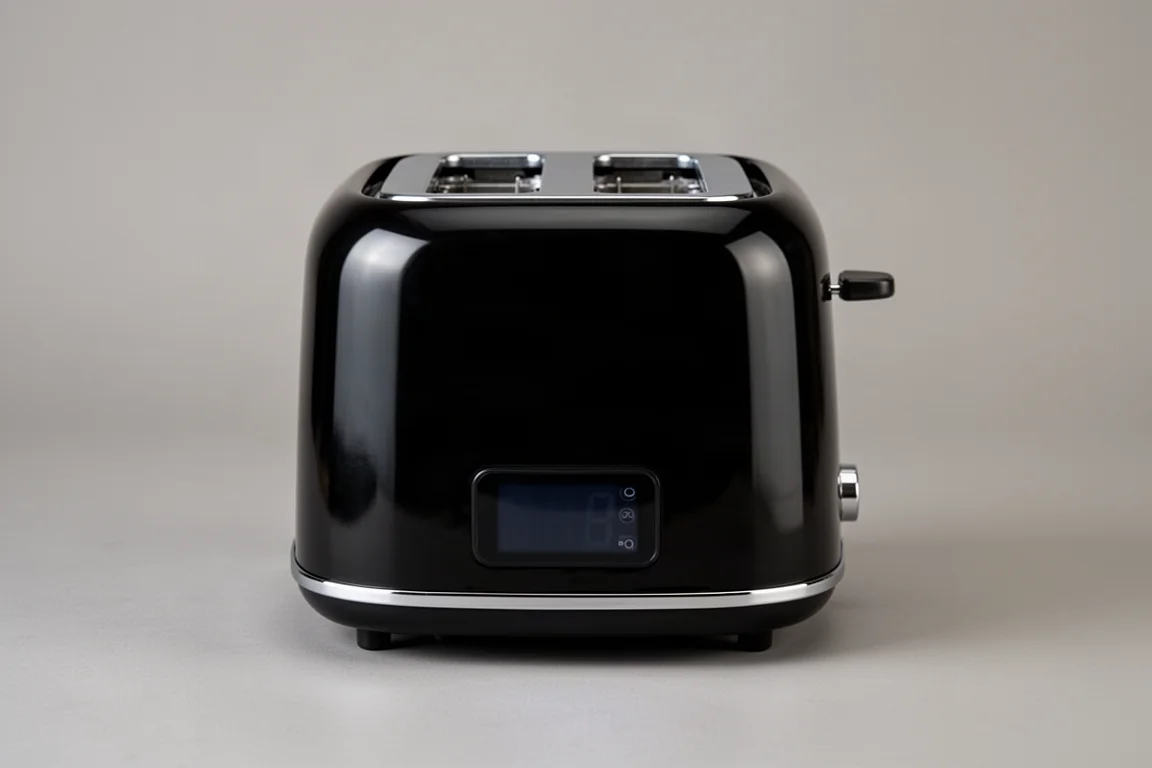
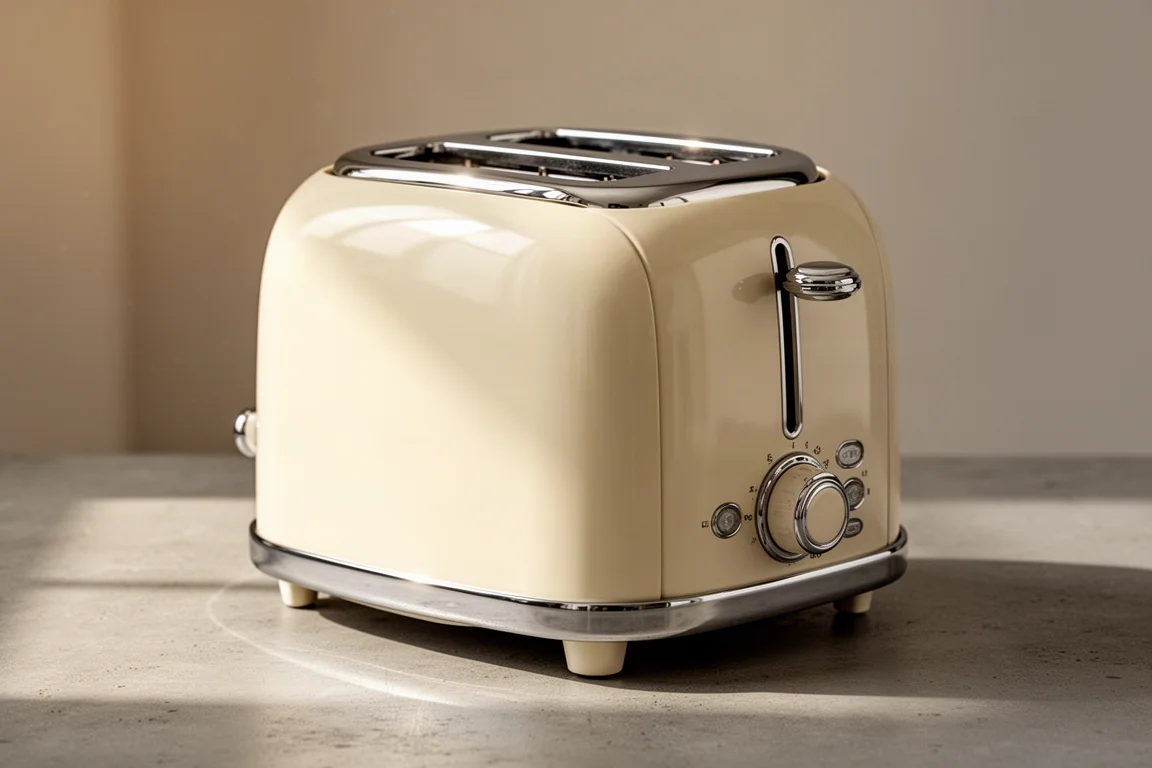
A retro-style unit that handles one or two slices with cancel, defrost, and reheat functions. At 982g it is very light, and at 720W it was the least powerful toaster yet. Toast took 2 minutes 19 seconds and it struggled badly: one side very dark, the other not dark enough, with uneven darkening top to bottom. Moisture loss was 18.3%. Its spring was the strongest yet, lifting a Pop-Tart above the slot unassisted, but it lost roughly half the test crumbs.
Mid-Range Contenders
The middle of the price range brings more power and, in some cases, more even results, but also a few new compromises.
Elite Gourmet Toaster ($33)
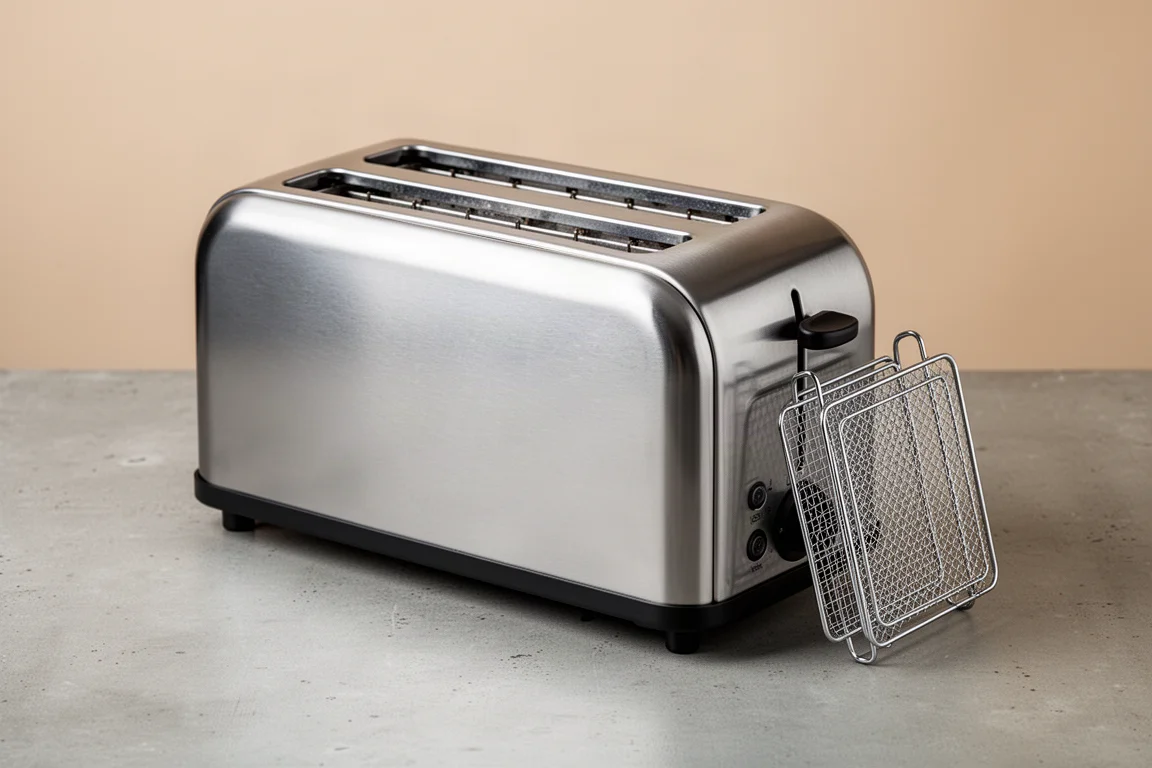
An extremely popular model, with about 20,000 sales a month, built for four slices with a retractable warming rack and extra-wide slots. It weighed 1,922g and drew 1,335W against a claimed 1,300W. Its very long slots made positioning tricky; both sides toasted the same, but the left and right edges over-toasted while the center stayed pale. Moisture loss was 21.7%. Defrost added a sensible 16 seconds, the spring lifted a Pop-Tart about an inch unassisted, and crumb retention was middling despite the size advantage.
Hamilton Beach Toaster ($36)
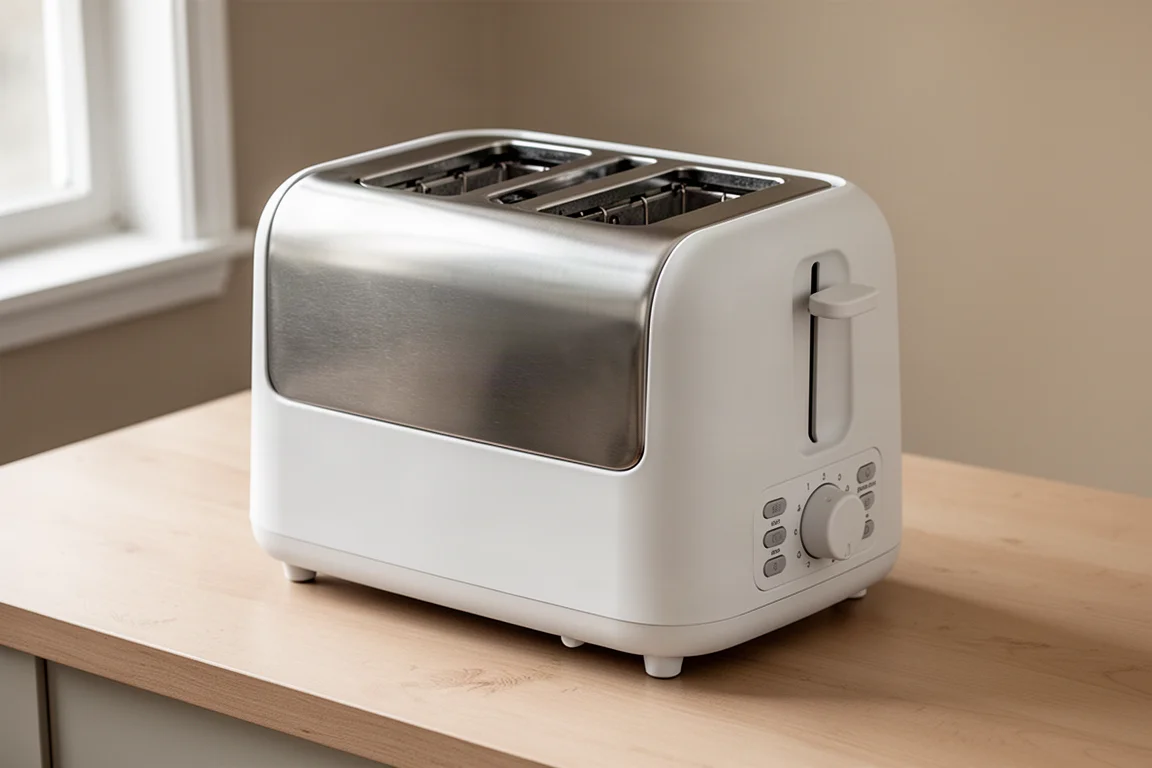
Designed to toast the cut side of a bagel while warming the outside, with extra-wide slots for easy retrieval. It weighed 1,122g and delivered 770W against a 750W rating. It took the longest yet at 2 minutes 41 seconds because it delivers less heat than most rivals. Both sides matched, but the top was over-toasted and the bottom under. Moisture loss was 20.2%. Defrost mode added 30 seconds, an overkill amount, and it continued to struggle with consistent finishes.
General Electric Toaster ($39)
Rated for 850W with 1.5-inch extra-wide slots and seven shade settings. It weighed 1,334g and delivered around 880W. Toast finished in 2 minutes 3 seconds, and it produced the best result so far: both sides evenly toasted at a consistent shade. Moisture loss was 18.1%. Its defrost setting added a wildly ambitious 65 seconds and burned the bread badly, and its spring is too weak to lift bagels or Pop-Tarts. Crumb retention was also weak.
Keenstone Toaster ($40)
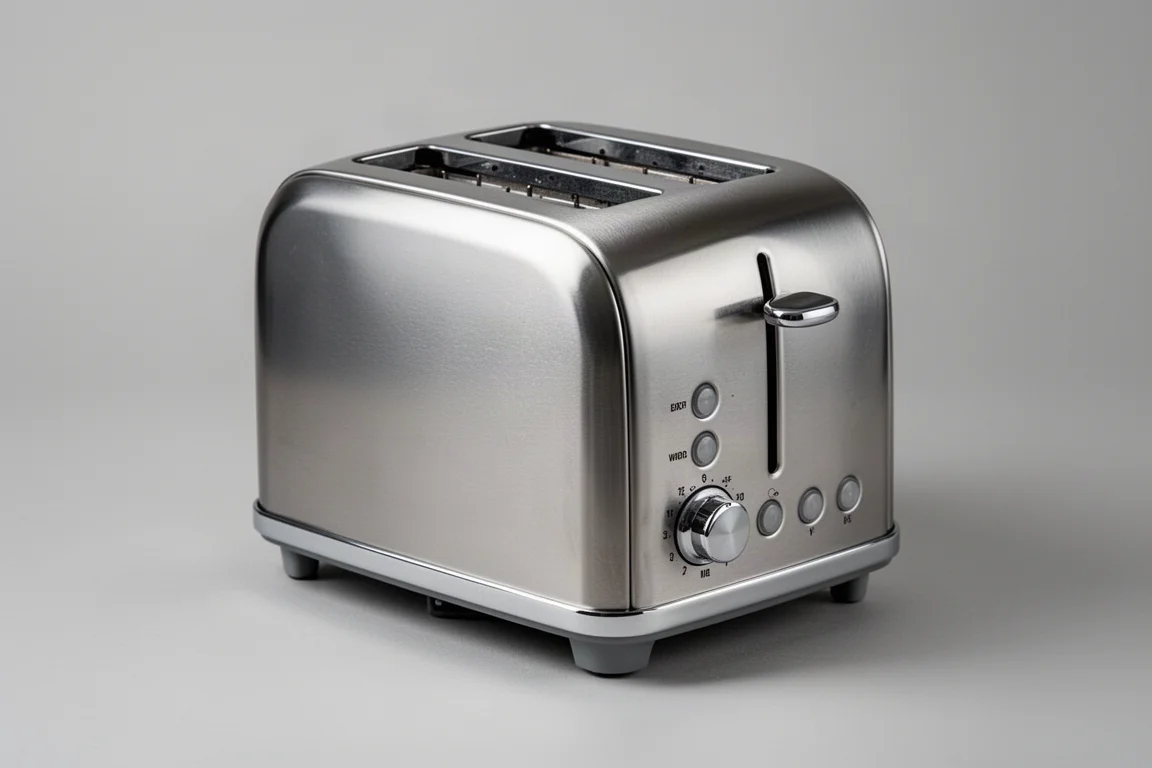
Claiming 188 stainless steel construction with a cool-touch metal housing, six shade settings, 1.5-inch slots, and bagel, defrost, and cancel functions. It weighed 1,276g and drew 845W against an 800W rating. Following the included golden-toast setup chart, it took just over 3 minutes, the longest cycle of the test, with some areas over-toasted and others under on each side. Moisture loss was 21%. Defrost added 23 seconds, too long but better than most, and bagel results were more consistent than most rivals.
Sadem Toaster ($50)
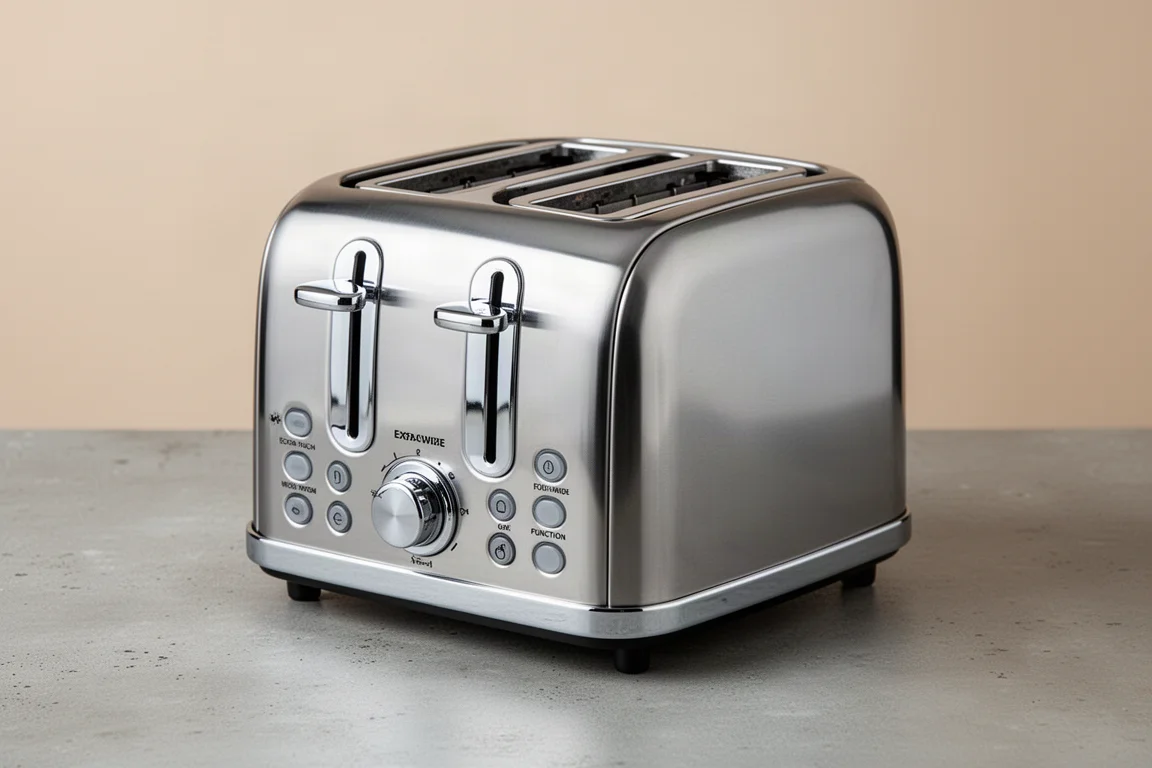
A stainless steel toaster with an LCD display and touch buttons, claiming 50% faster heating, six bread selections, and seven shade settings. Rated at 1,350W, it drew around 1,315W and weighed 1,461g. It is by far the fastest, finishing in just 1 minute 15 seconds, but the results were inconsistent: badly over-toasted in places, under in others. Moisture loss was only 10.6%, the lowest of the test, and there is no way to fine-tune the shade between steps. Defrost mode added 30 seconds and essentially torched the bread. It is also poorly suited to small items.
Premium Performers
At three and four times the price of the budget tier, expectations rise accordingly.
KitchenAid Toaster ($100)
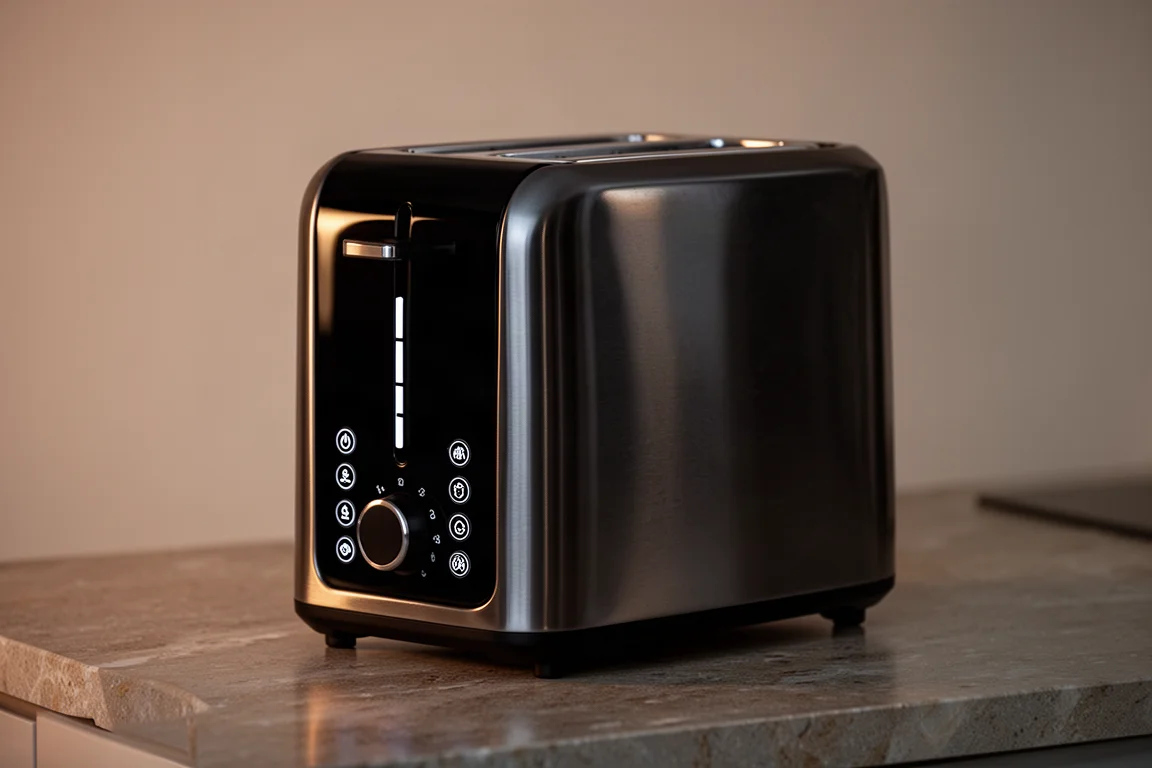
A two-slot toaster with a high-lift lever, seven shade settings, extra-wide 1.5-inch slots, and bagel, defrost, reheat, and keep-warm modes. It was the heaviest tested at 2,441g and drew 1,225W against a 1,200W rating. Toast finished in 88 seconds with both sides darkened evenly, though the bottom area was a little underdone. Moisture loss was just 12.8%. Its defrost cycle added a near-perfect 10 seconds and was the best frozen-bread result in the test, though the spring needed a little help with Pop-Tarts and bagels.
Smeg Toaster ($220)
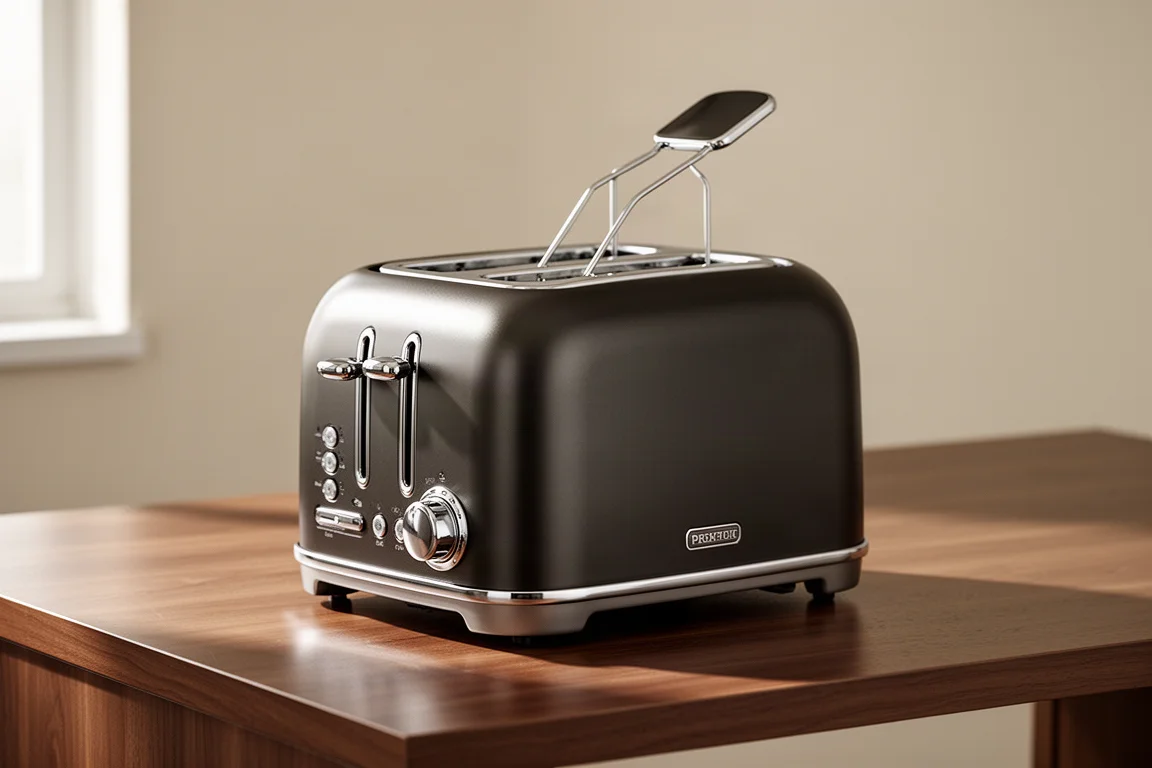
Designed in Italy with two generously sized slots, six browning levels, self-centering racks for uniform browning, and a removable stainless crumb tray. It weighed 2,390g and delivered 990W against a 980W rating, finishing in under 2 minutes. It did by far the best job of toasting both sides evenly of any model, and it also led the frozen-bread test with a well-judged 14-second defrost addition. It had more than enough spring for bagels and performed better than most on them.
Revolution Toaster ($330)
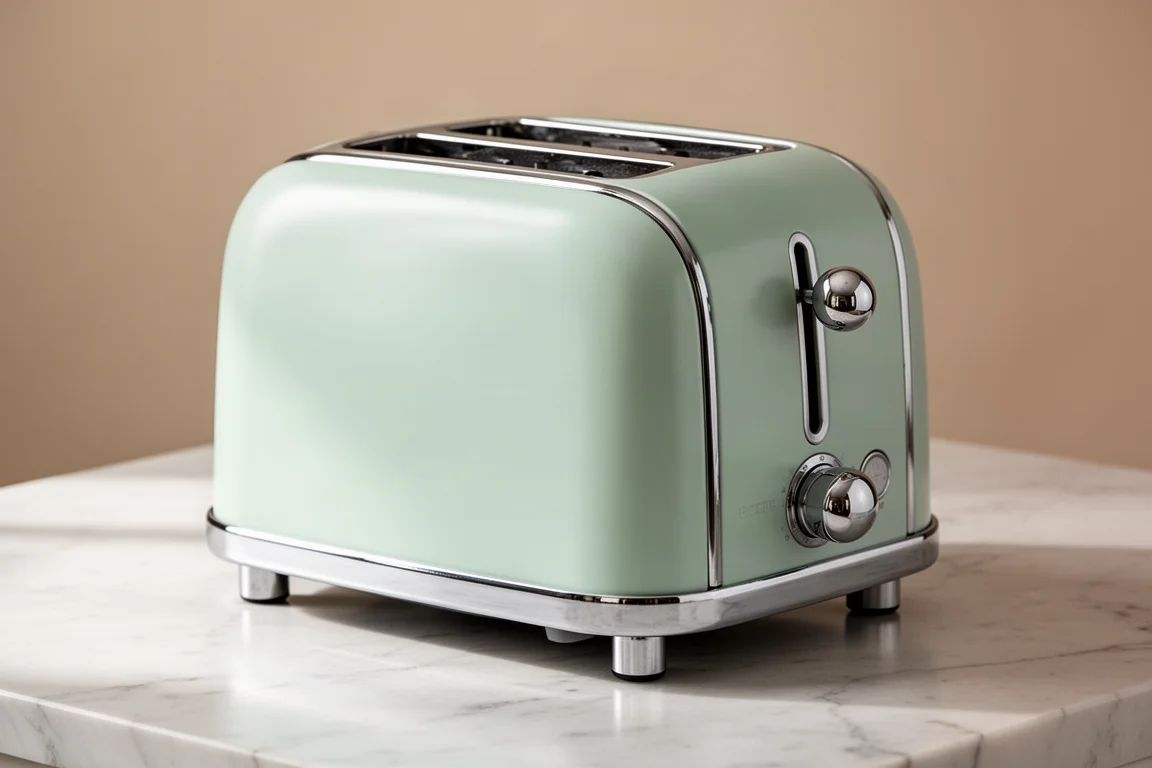
The most expensive model tested, with three toasting modes, seven shade levels, fresh and frozen options, preset bread-type algorithms, patented instant-glow heating, and a included panini press. It was the heaviest at 2,572g and the most powerful at 1,380W, finishing in about 90 seconds. Both sides toasted about the same, though not quite as evenly as the Smeg, and moisture loss was a low 13.8%. Defrost mode left the bread slightly under-finished even at a higher setting, but it was the best single-slice performer and lifted a Pop-Tart 7/8 of an inch unassisted.
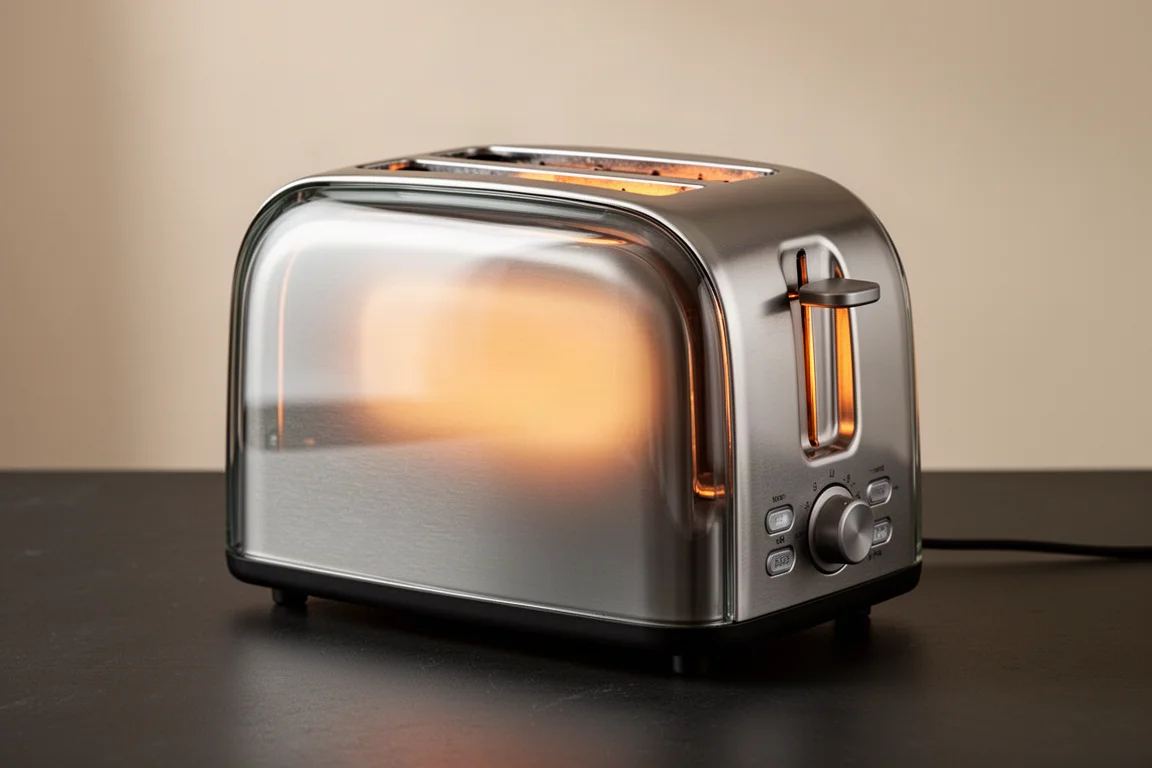
Our Verdict
After converting raw results into letter grades, one thing became clear: we cannot recommend any toaster in the $20 to $30 range this time around. Inconsistent side-to-side toasting, weak springs, and poor crumb retention were common at that price.
The best value is the General Electric toaster at around $39. It toasts unfrozen white bread efficiently without drying out the center, and it matched the more expensive premium models on evenness. Its weaknesses are a weak carriage spring for heavier items and mediocre crumb retention.
The KitchenAid, at around $100, performs significantly better than the cheaper models in most categories. Its extra power means shorter cycles and less moisture loss, and it won the frozen-bread test outright. Like the GE, it needs a hand lifting heavier items.
If it is all about performance, the Smeg is expensive but delivered exceptional results in most categories, topping the evenness and bagel tests. The Revolution also performed very well, but $330 feels like a lot to pay for a toaster, even one with a panini press.
A final note on slot dimensions: many brands advertise 1.5-inch-wide slots, but measured carriage widths showed only a few brands can actually handle an item that wide. Slot length matters too, from the Elite Gourmet’s nearly 10-inch slots to the Smeg’s 5.8 inches, and the KitchenAid offers a slot depth of nearly 6 inches for larger-diameter items.
Conclusion
Power was the clearest predictor of quality: the more powerful toasters produced a golden texture while keeping the center moist. The Smeg takes the overall performance crown, the KitchenAid is the strongest mid-priced pick, and the GE toaster is the smart value choice. Below about $35, the consistency simply is not there yet, and saving up a little is worth it.
Further reading
Related Reviews
Kitchen Appliances
Arboleaf Smart Kitchen Scale Review: Connected Cooking Made Simple
A Bluetooth-enabled kitchen scale that syncs with a nutrition-tracking app, offering real-time weight monitoring and recipe guidance for home cooks.
Kitchen Appliances
Best Air Fryer Toaster Ovens Under 100: Five Practical Options for Budget-Conscious Kitchens
Five air fryer and toaster oven combinations that deliver real cooking performance without breaking the bank, each with distinct strengths for different kitchen needs.
Kitchen Appliances
Best Air Fryer Toaster Ovens: Three Top Picks for Multi-Function Cooking
Three high-performing air fryer toaster ovens tested for versatility, ease of use, and real-world cooking results. Find the right fit for your kitchen.