Automotive Tools
13 Tire Inflators Tested: From a $28 Budget Pump to the Fastest 18V Machines
A hands-on comparison of 13 tire inflators, from compact battery-powered pumps to heavy-duty 18V tools, tested for speed, heat, noise, and high-pressure performance.
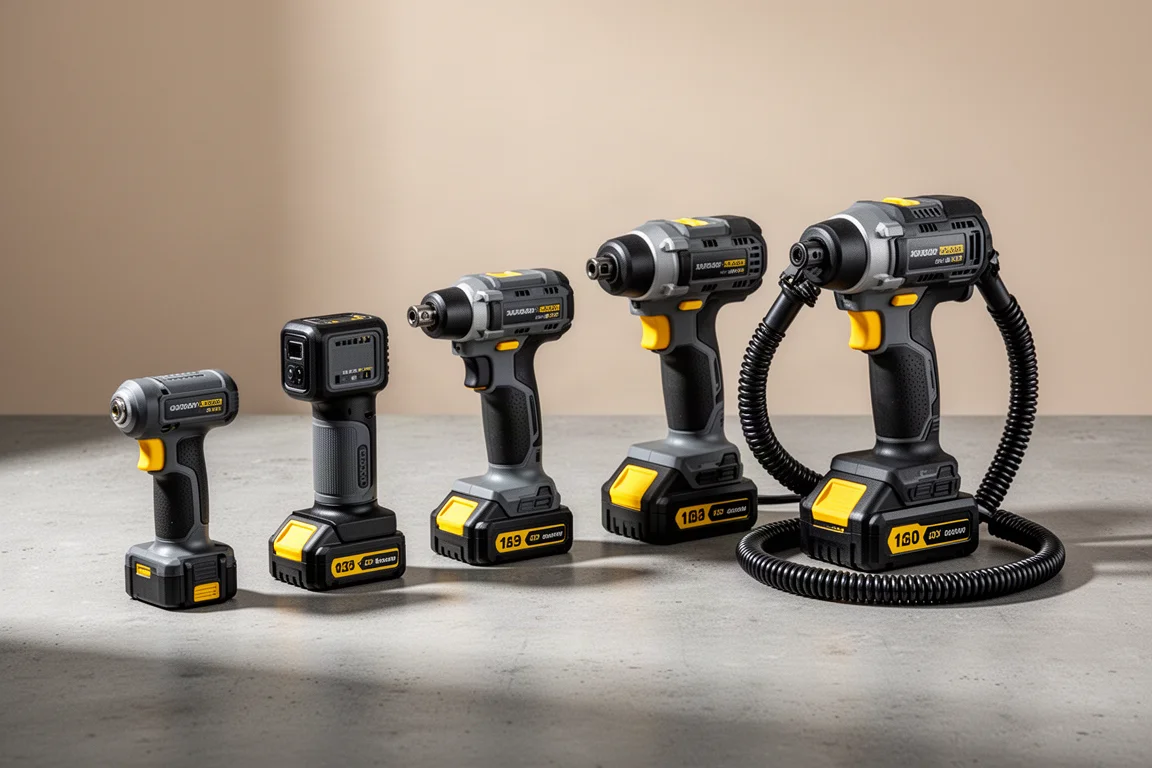
Introduction
We tested 13 tire inflators across four challenges: topping off a 15-inch car tire from 30 to 36 PSI, inflating a completely flat tire to 36 PSI, filling an air mattress, and pushing a load range E tire from 70 to 80 PSI. Prices ranged from $28 to $152, and the results made it clear that speed usually costs money, but not always.
NOVSIGHT Tire Inflator
At $28, the NOVSIGHT is the cheapest inflator in the lineup. It has an auto-stop design, a built-in 6,000 mAh battery that doubles as a power bank, a 150 PSI maximum, and weighs just 1.18 lb. On paper it looks like a bargain, but it struggled badly in testing. It made no progress topping off a tire, began squeaking, and the air hose climbed over 200 degrees Fahrenheit. It powered itself down after roughly 10 minutes with the tire still only at 15 PSI.
Deneker Tire Inflator
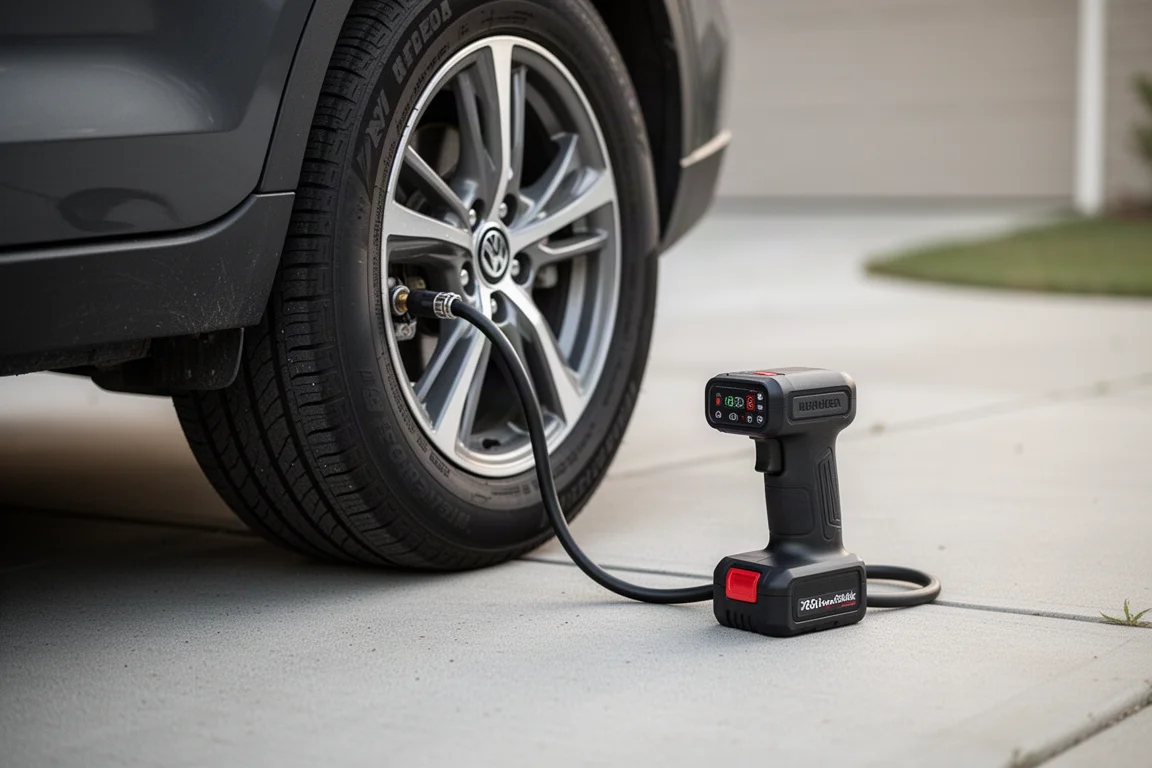
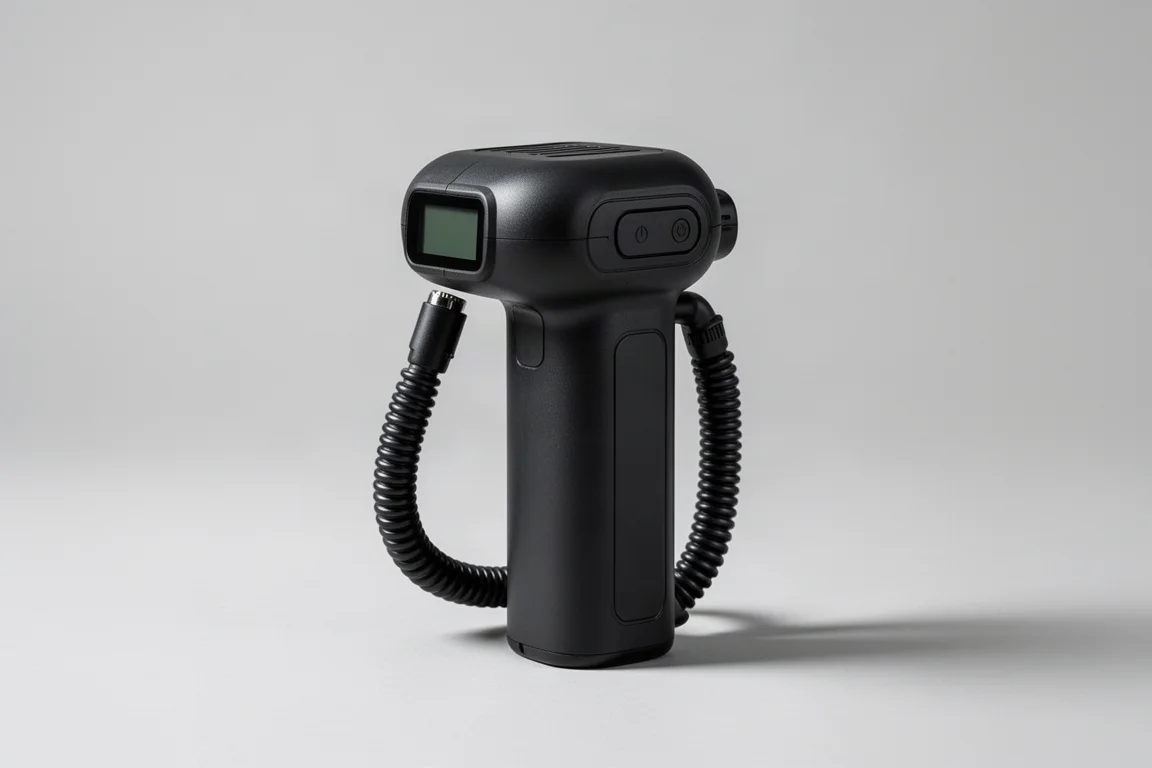
The $40 Deneker includes a 2 Ah 20V battery and charger, claims up to four tires per charge and 160 PSI max, and adds a flashlight plus an air mattress attachment. It weighs 4.25 lb and runs at 92.2 decibels. It added 6 PSI in 93 seconds, filled a flat tire to 36 PSI reliably, and handled the 70 to 80 PSI test in 6 minutes 13 seconds with the battery still showing three bars. It runs warm, around 175 degrees on the hose, but it finished every job.
How the Testing Worked
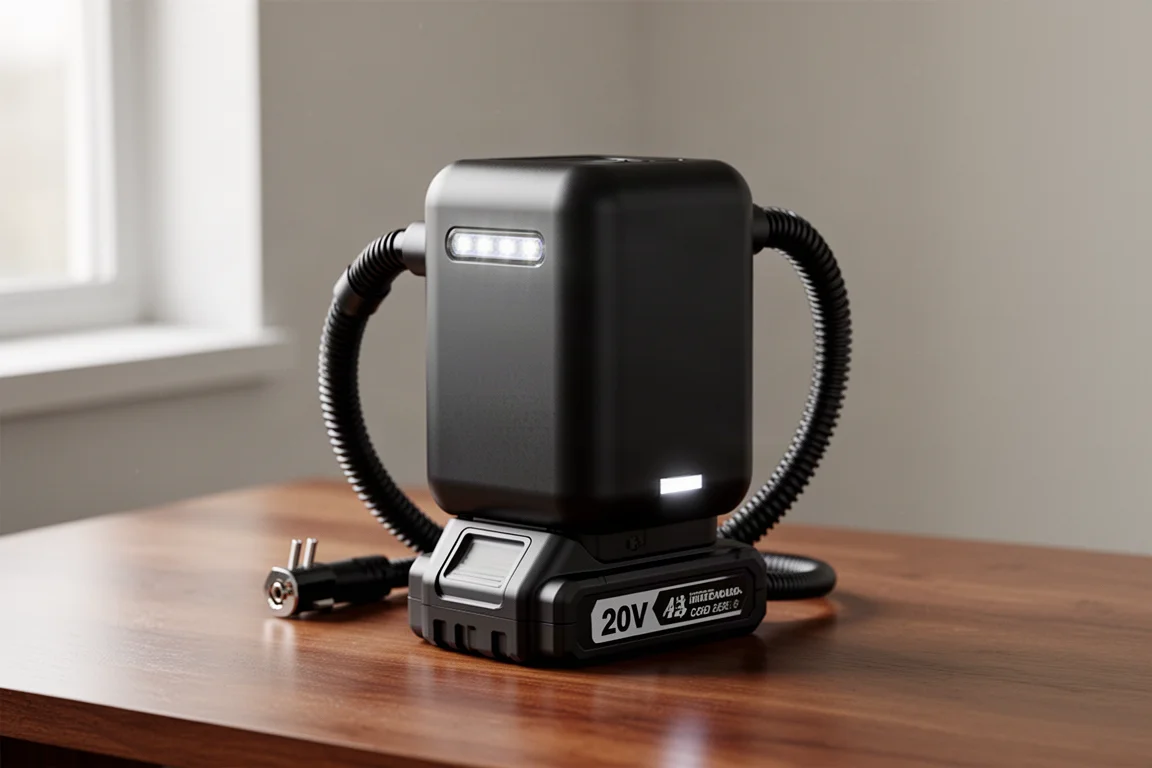
Every inflator faced the same tests with fully charged batteries, using a pass-through inline gauge so air flow stayed unobstructed. For tools sold without a battery, a 4 Ah battery powered the pump and a 5 Ah pack ran the test unit. Noise was measured at 24 inches, and hose temperature served as a rough indicator of how hard each compressor was working.
Kobalt 24V Tire Inflator
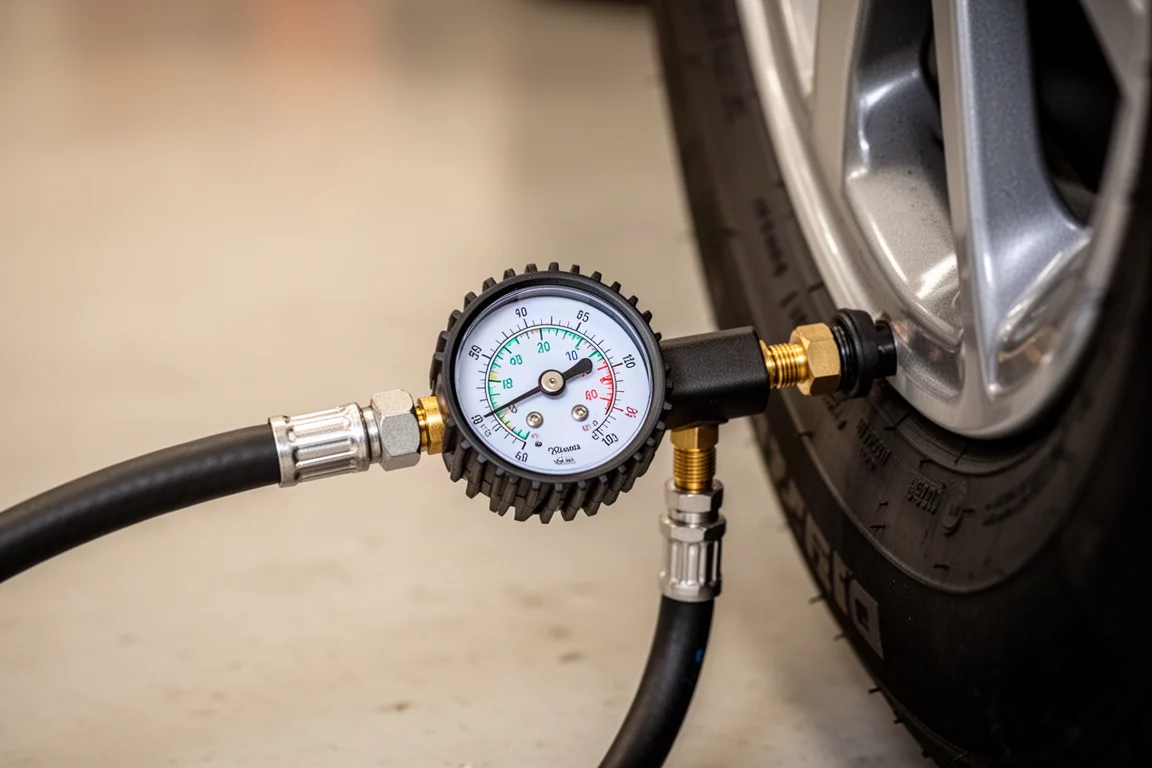
At $48 for the tool only, the Kobalt runs on a 24V battery, sets target pressure up to 120 PSI, includes a 20-inch hose with quick-connect adapter, and auto-shuts off after three minutes. It weighs 3.99 lb and measured 90.9 decibels. It beat the Deneker by 39 percent at 57 seconds in the top-off test and again in the flat-tire test at 7 minutes 10 seconds while running about 15 degrees cooler. On the high-pressure test it managed 70 to 80 PSI in 4 minutes 47 seconds.
TC15 Tire Inflator
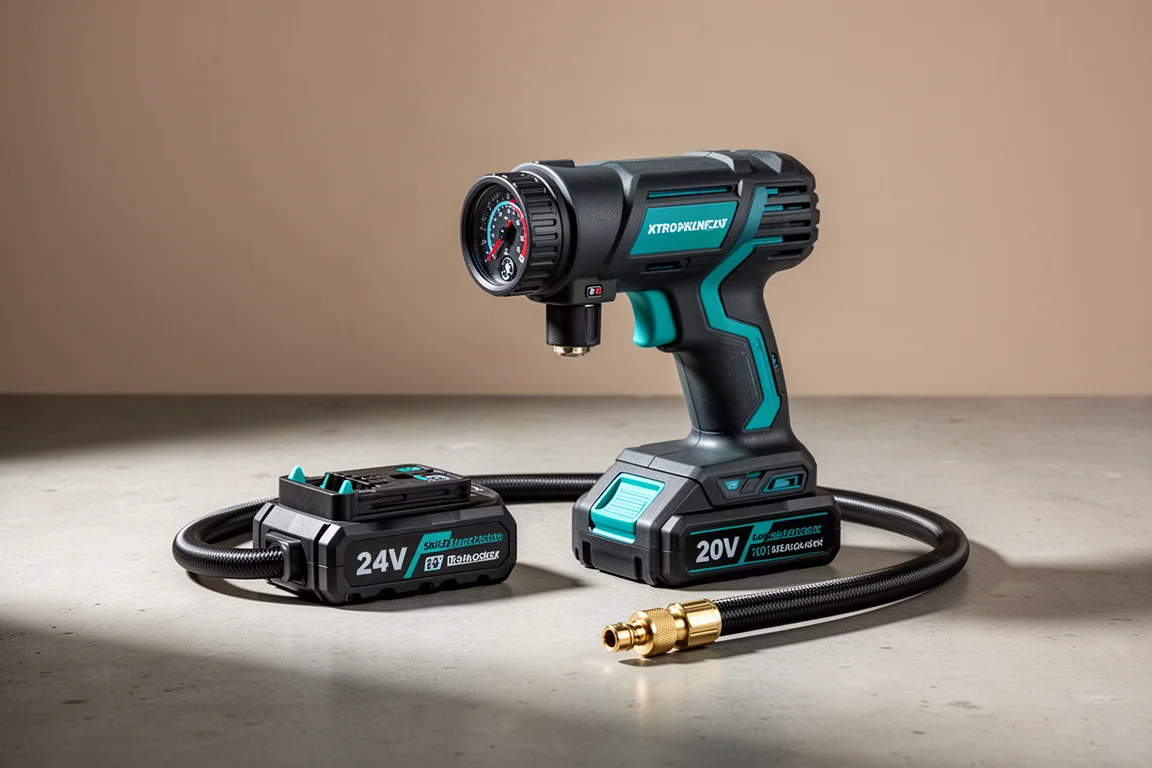
The $50 TC15 packs a 7,800 mAh built-in battery, a claimed five-minute full tire inflation from 0 to 36 PSI, power bank capability, auto shutoff, and a flashlight, all in a 1.55 lb body. It is quiet at 85.6 decibels but slow: nearly 3 minutes to add 6 PSI and just over 13 minutes on the 70 to 80 PSI test, which it barely survived. It did finish the flat tire test, refusing to quit, but this is a pump for convenience, not speed.
Bauer 20V Tire Inflator
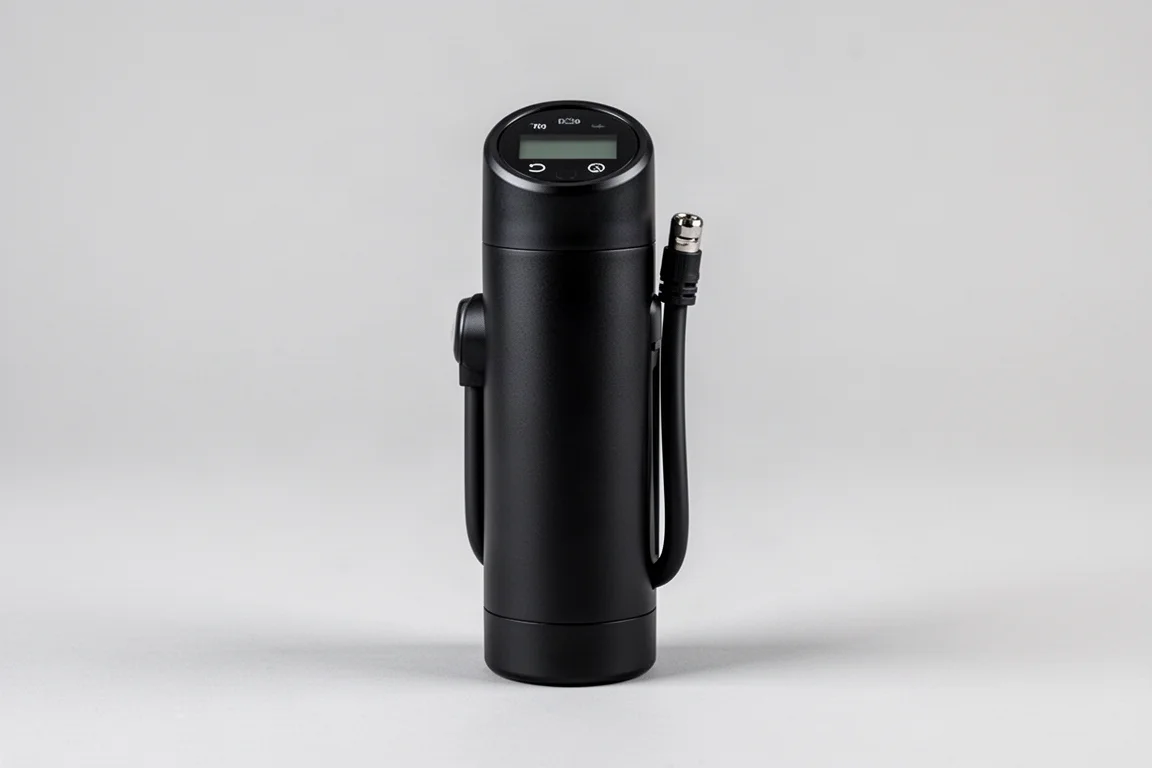
Sold at Harbor Freight for $50 without a battery, the Bauer includes a high-volume inflator and deflator for large inflatables, works with a 20V battery or a 12V car outlet, and reaches 160 PSI. With a 5 Ah battery it weighs 5.14 lb and measured 88.1 decibels. It finished the top-off test in 63 seconds, was the fastest at inflating the air mattress at 59 seconds, and matched the Kobalt closely on flat-tire work at a hose temperature of about 158 degrees. High pressure took 4 minutes 55 seconds.
Gooloo GT160 Tire Inflator
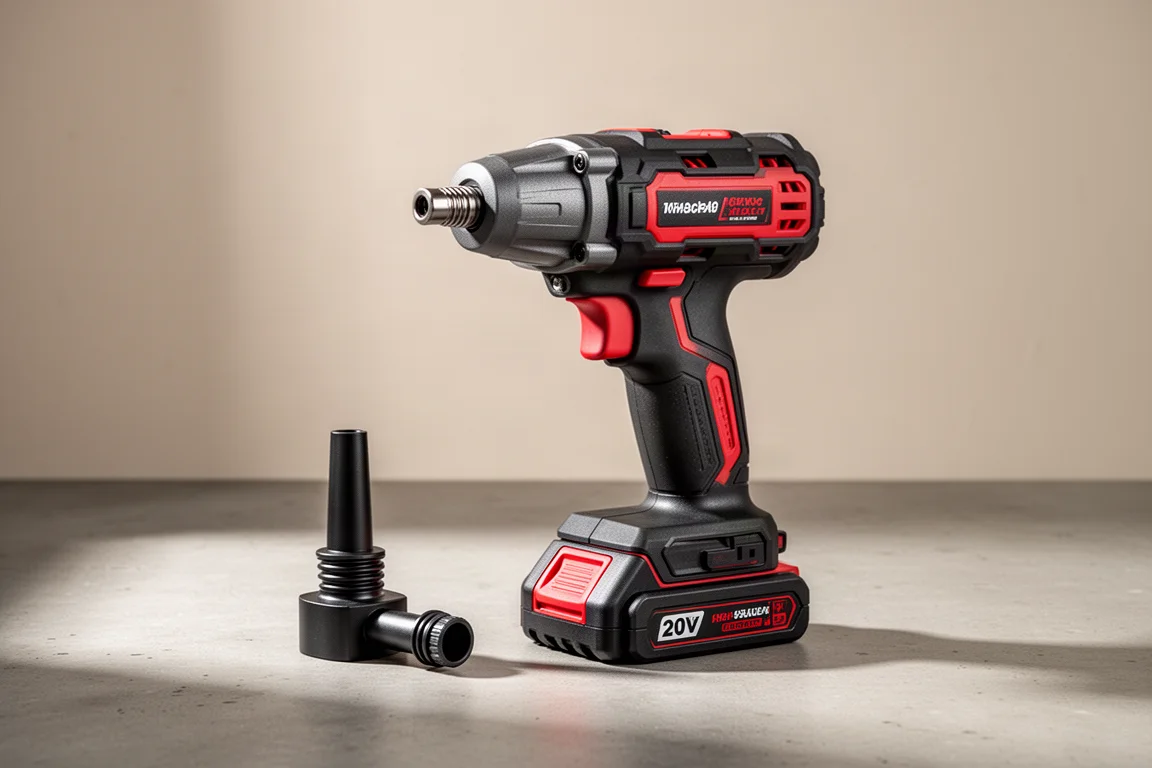
The $62 Gooloo GT160 has a built-in 7,500 mAh battery, a 160 PSI maximum, a claimed 45 minutes of continuous inflation, and power bank functionality in a 1.82 lb body. It ran at 90.8 decibels and added 6 PSI in 75 seconds, more than twice as fast as the TC15. Inflating a full-size flat tire is a big ask for such a compact pump, yet it finished in 8 minutes 50 seconds and reached 80 PSI in 7 minutes. It runs warm, around 195 degrees, but performed remarkably well for its size.
Ryobi 18V One Plus Tire Inflator
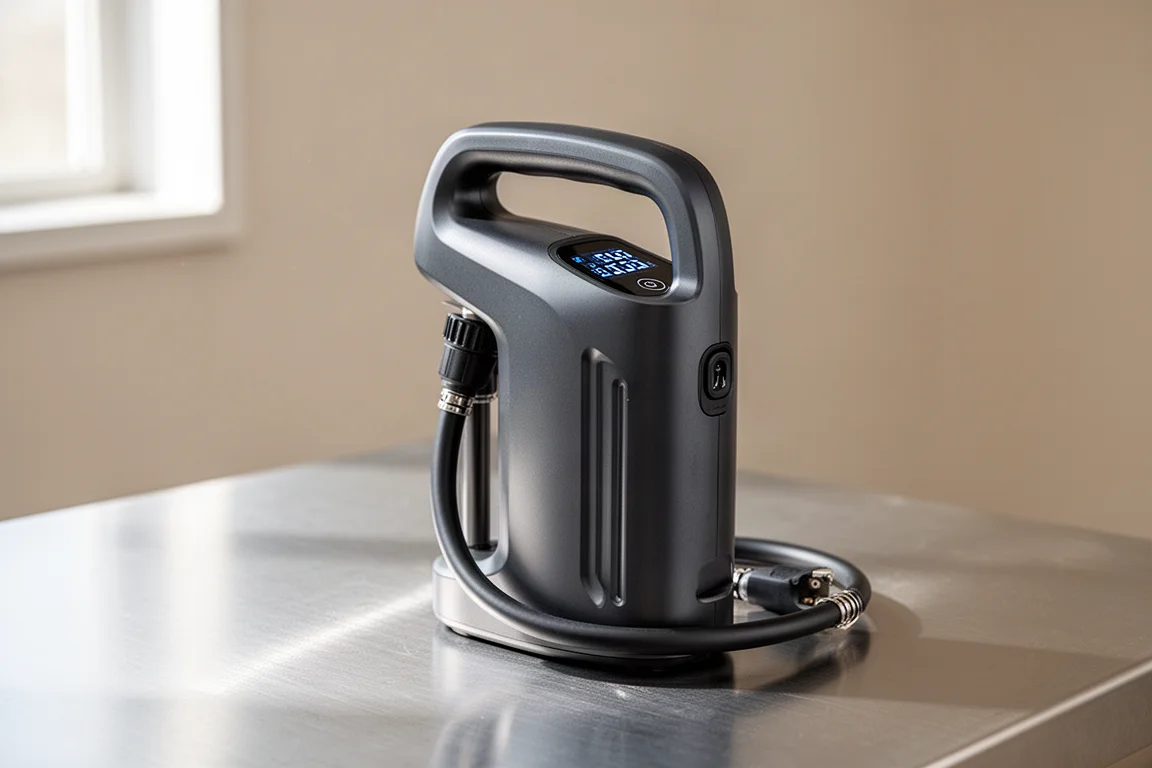
At $62 tool-only, the Ryobi uses an 18V battery, claims up to 10 car tires per charge, inflates twin air mattresses in 30 seconds, and has auto-fill shutoff. It weighs 4.57 lb with a 4 Ah battery and was the loudest of the mid-pack at 93.4 decibels. It topped off in 67 seconds, filled a flat in 7 minutes 21 seconds (overshooting to 37 PSI), and took 5 minutes 21 seconds for the 70 to 80 PSI run while running about 20 degrees hotter than the Kobalt and Bauer.
Works Tire Inflator
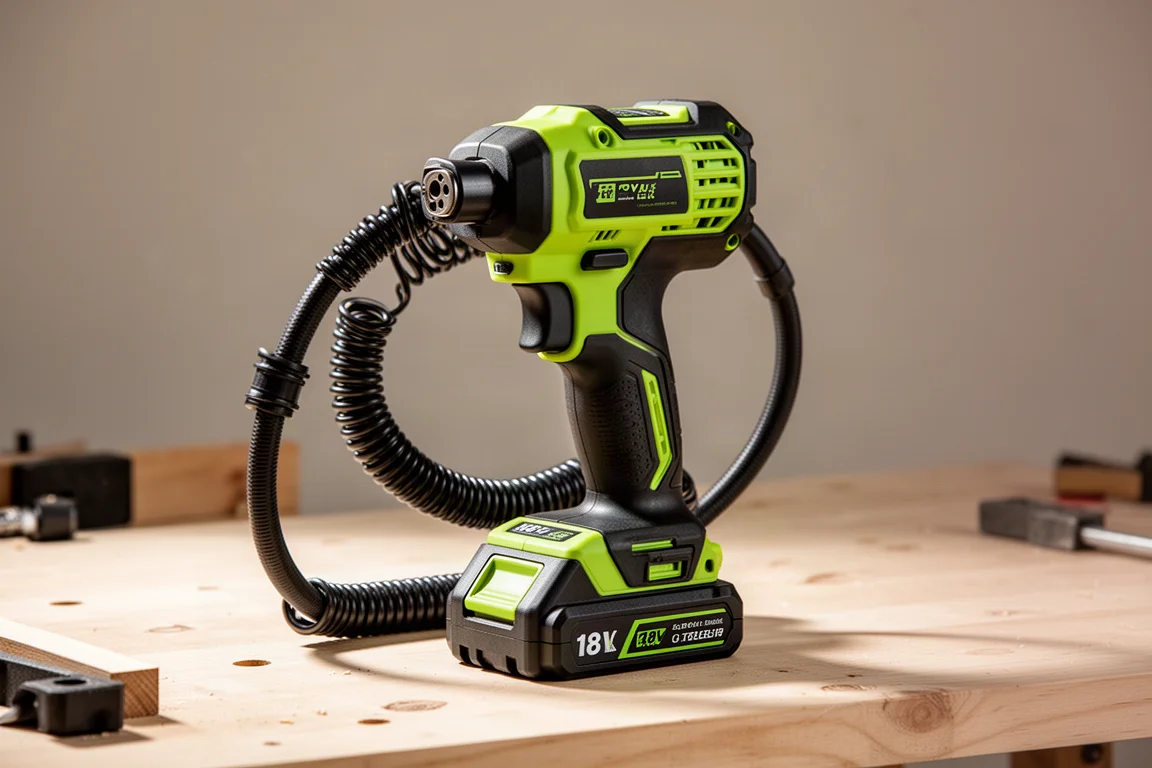
The $70 Works inflator claims a 0 to 36 PSI tire fill in 4 minutes, auto-shutoff, and an LED light delivering 150 to 200 lumens. It weighs 3.51 lb with a battery and measured 89.2 decibels. It quietly won the top-off test at 52 seconds, then dominated the flat-tire test at 5 minutes 52 seconds, a minute and a half faster than the Kobalt. It repeated that form at high pressure with 3 minutes 30 seconds, though it ran warm at about 185 degrees.
Drive Mode Tire Inflator
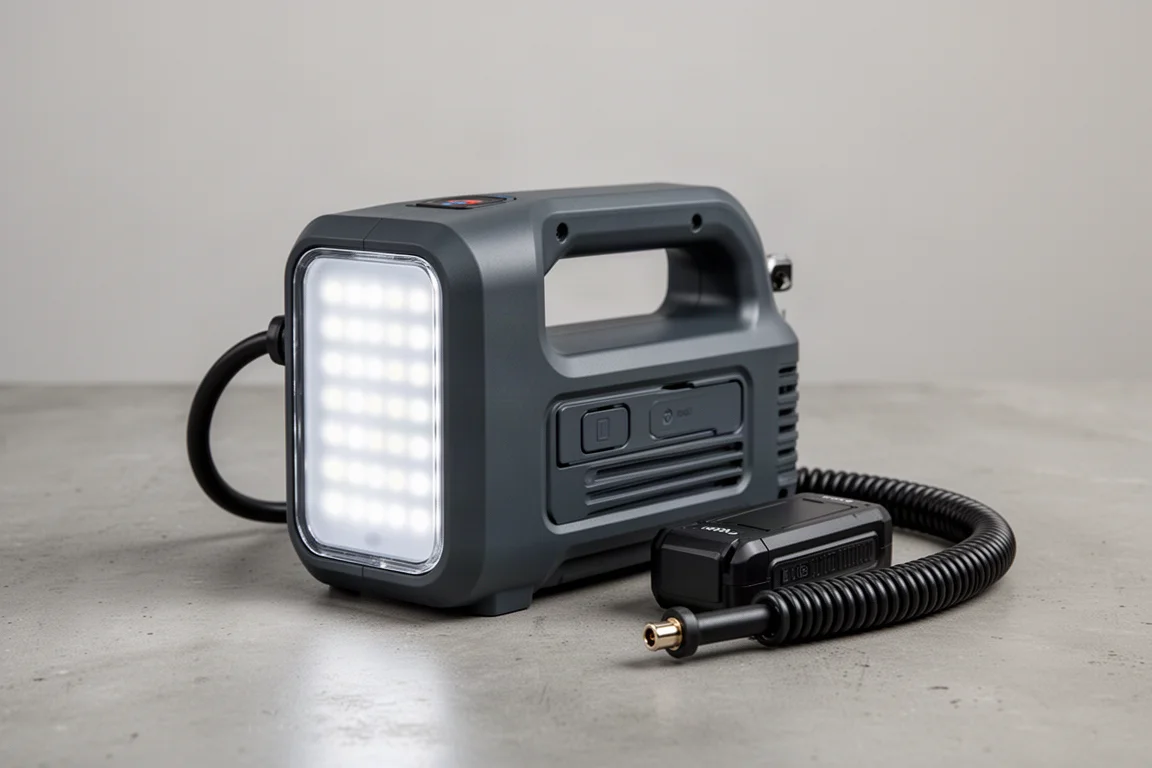
For $80, the Drive Mode includes a carrying case, a 12,000 mAh built-in battery, two-way 12V DC power, a 7.4-inch touchscreen, and a 150 PSI maximum in a 2.3 lb body. It is the quietest unit tested at 82.4 decibels, but it was slow at 1 minute 56 seconds on the top-off test, ran very hot at around 215 degrees, needed just over 10 minutes on a flat tire, and its gauge read about 2 PSI off.
RIDGID 18V Tire Inflator
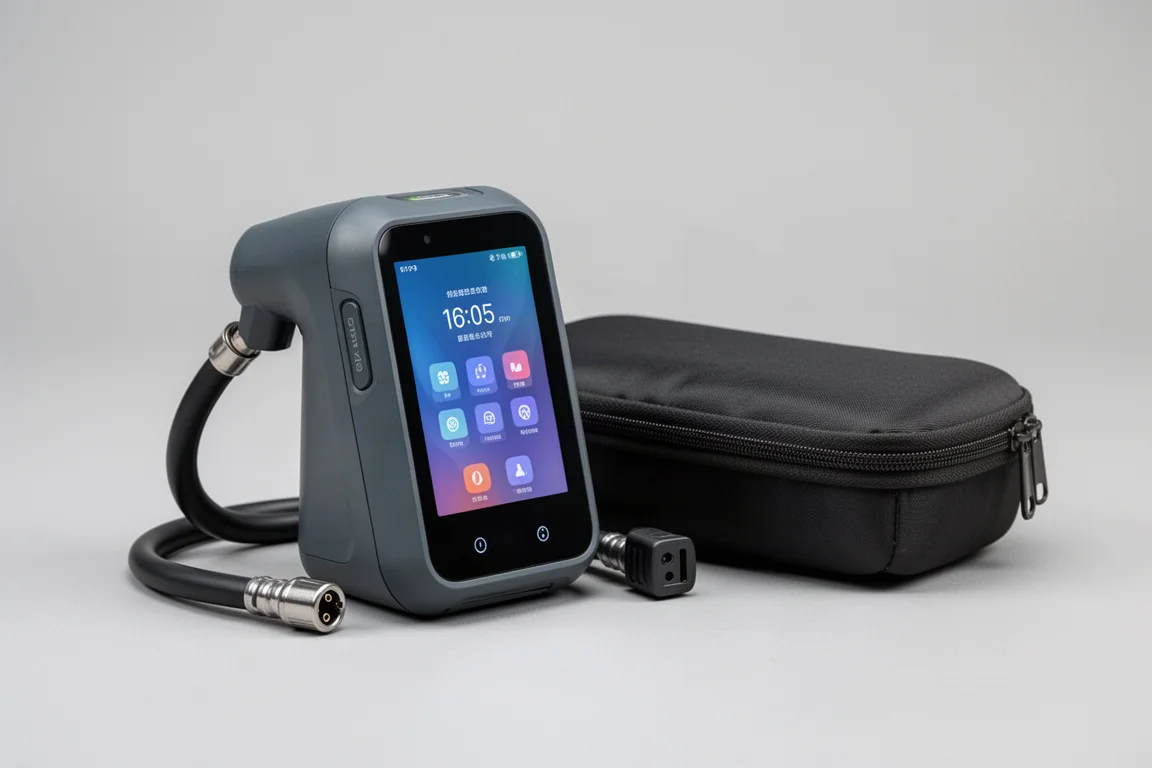
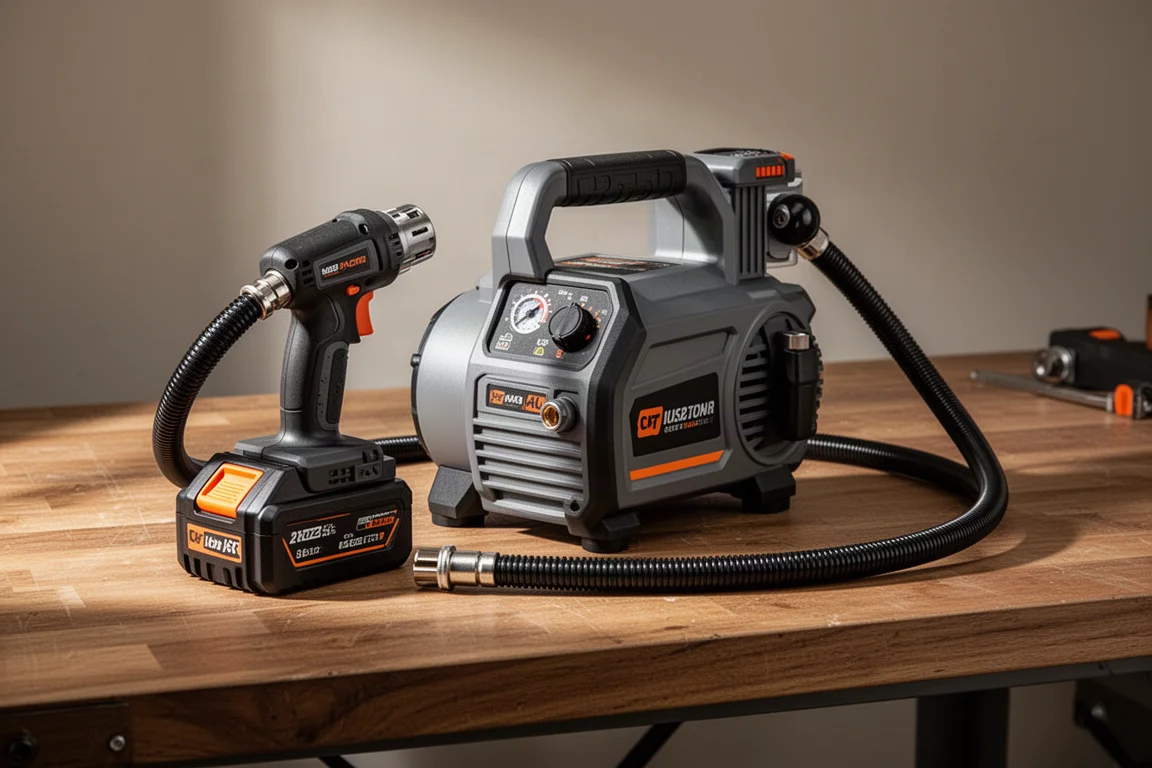
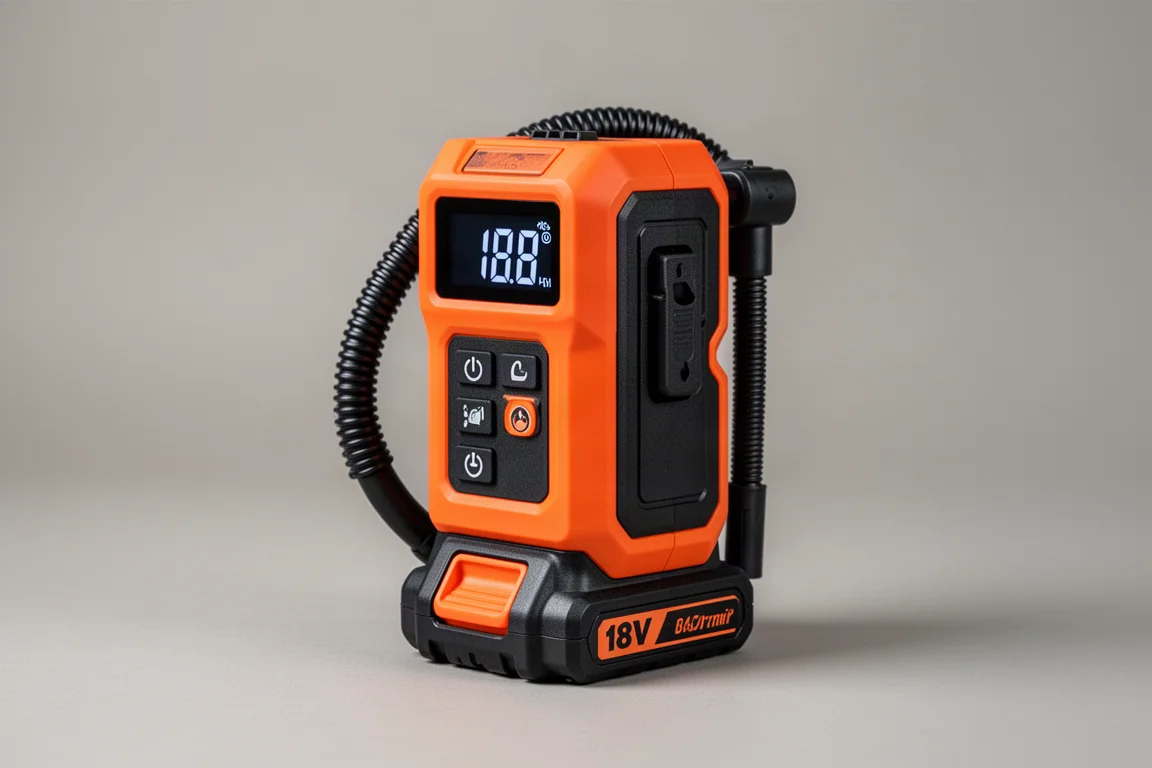
The $118 RIDGID claims to be the fastest inflator on the market and backs it with a lifetime warranty. It has a 20-inch hose, a 12V vehicle power cord, dial-based pressure programming up to 150 PSI, and weighs 3.84 lb. It is extremely loud at 96.7 decibels, but the noise paid off: 36 seconds on the top-off test, a flat tire in just under 4 minutes, and 70 to 80 PSI in 2 minutes 12 seconds. It runs hot under sustained load, around 190 to 210 degrees, which is the main trade-off.
DeWalt 20V Tire Inflator
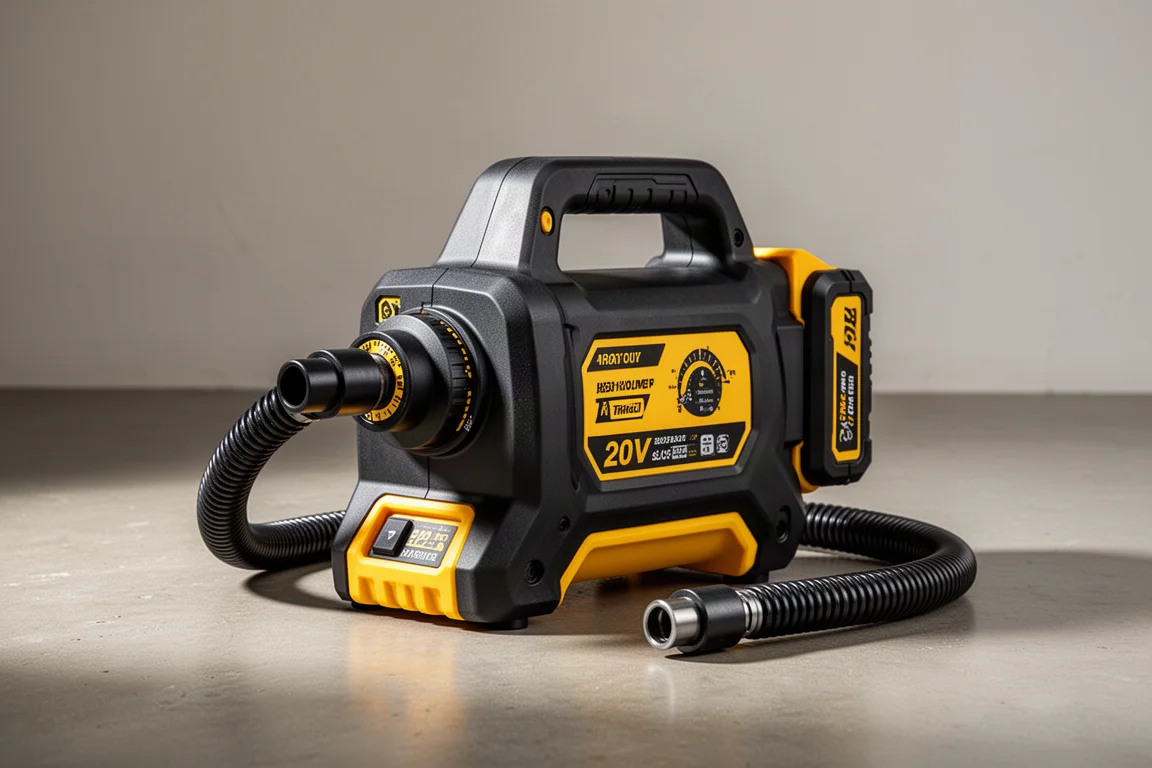
At $129 tool-only, the DeWalt offers three power methods: 20V battery, 12V DC, or 110V AC (the AC cord sold separately). It adds high-volume inflation and deflation, automatic shutoff, and dial programming, and weighs 6.91 lb. It is quieter than average at 86.2 decibels and ran one of the coolest compressors, around 180 degrees. It topped off in 64 seconds, filled a flat in just over 6.5 minutes, and stepped up at high pressure with 3 minutes 45 seconds.
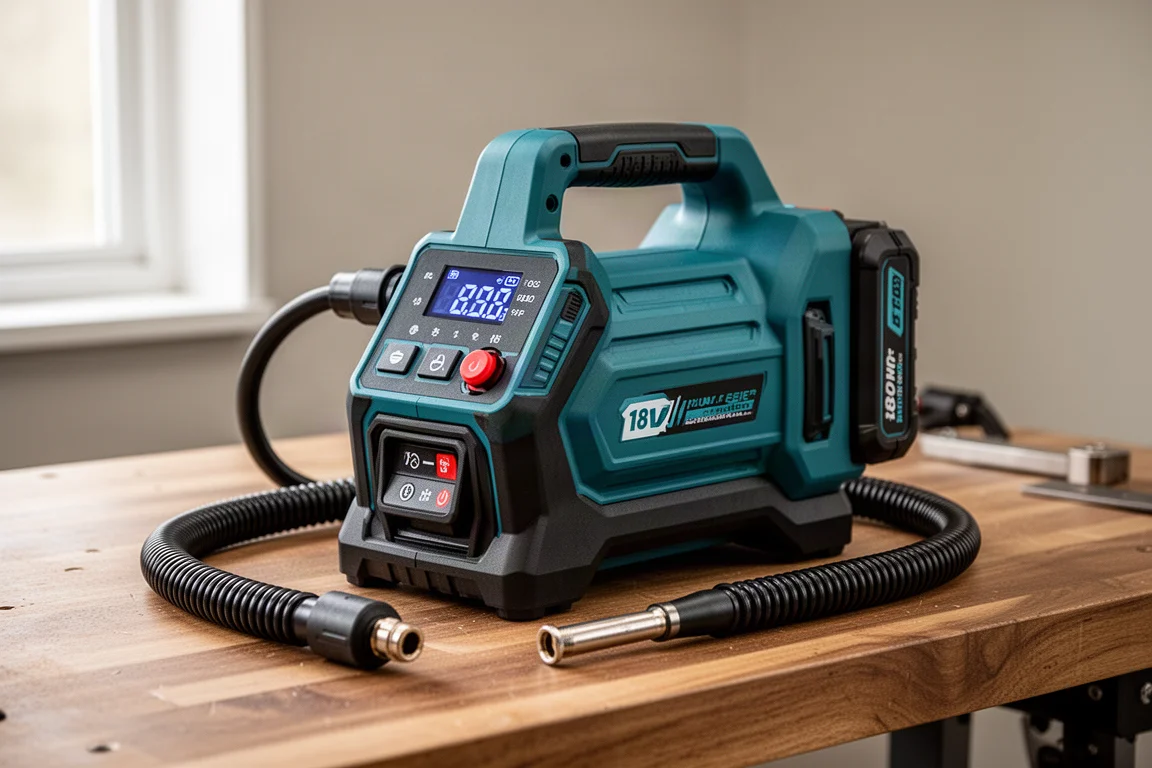
Milwaukee M18 Tire Inflator
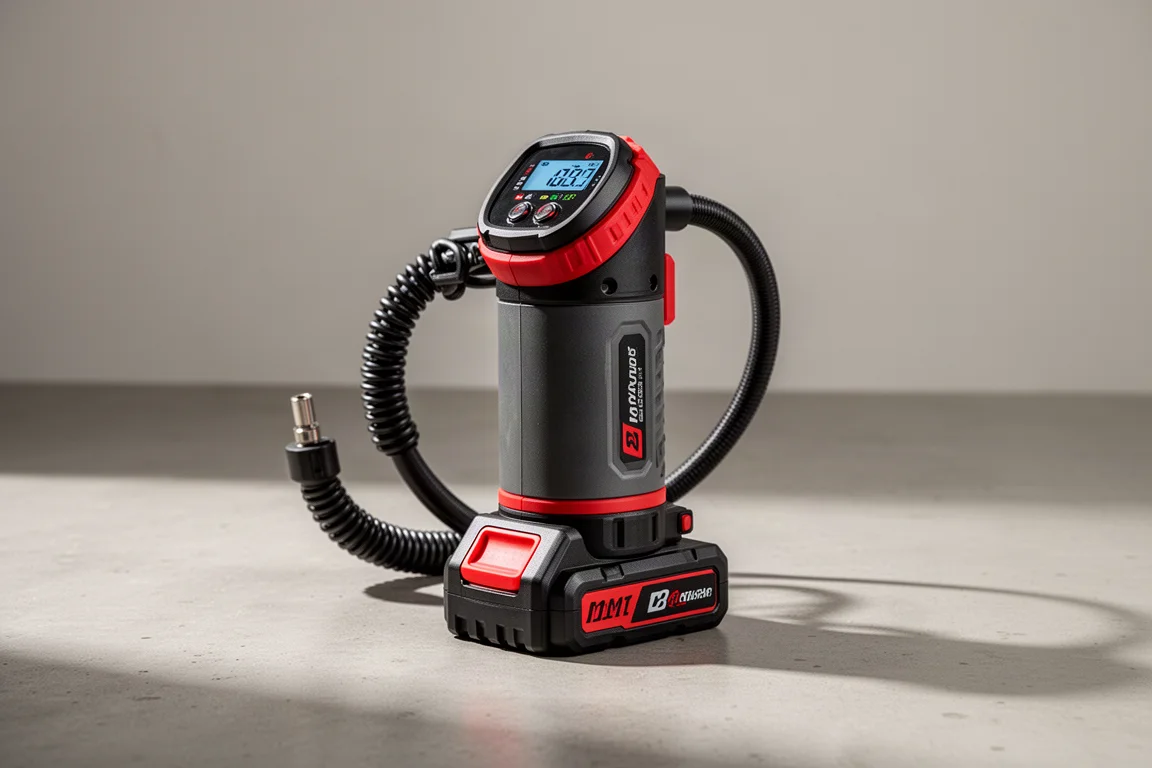
The $139 Milwaukee claims to be the fastest 18V cordless tire inflator, rated to 150 PSI, and it delivered. It is the heaviest unit at 8.68 lb and measured 89.4 decibels, but it topped off a tire in 18 seconds, roughly twice as fast as the RIDGID, filled a completely flat 15-inch tire to 36 PSI in 2 minutes 31 seconds, and went from 70 to 80 PSI in 1 minute 40 seconds, all while running a remarkably cool 117 to 150 degrees. It even survived the brutal flat-to-80 PSI test in just over 12 minutes.
Makita 18V LXT Tire Inflator
The priciest unit at $152 tool-only, the Makita runs on an 18V LXT battery, delivers up to 160 PSI, has an auto-stop function, and three speed settings. It weighs 6.02 lb and measured 90.4 decibels. It was second fastest on the top-off test at 29 seconds, filled a flat in 4 minutes 4 seconds, and managed 70 to 80 PSI in 2 minutes 15 seconds. It runs cool at around 121 to 160 degrees, but it overshot the target pressure by about 4 PSI in the flat-tire test and was slow to shut off.
Buying Advice: Which One Should You Pick
If raw speed matters most, the Milwaukee M18 is the clear winner across nearly every test, and it does so while running cooler than almost everything else. The RIDGID and Makita are the closest challengers, both finishing the flat-tire fill in around 3.5 minutes.
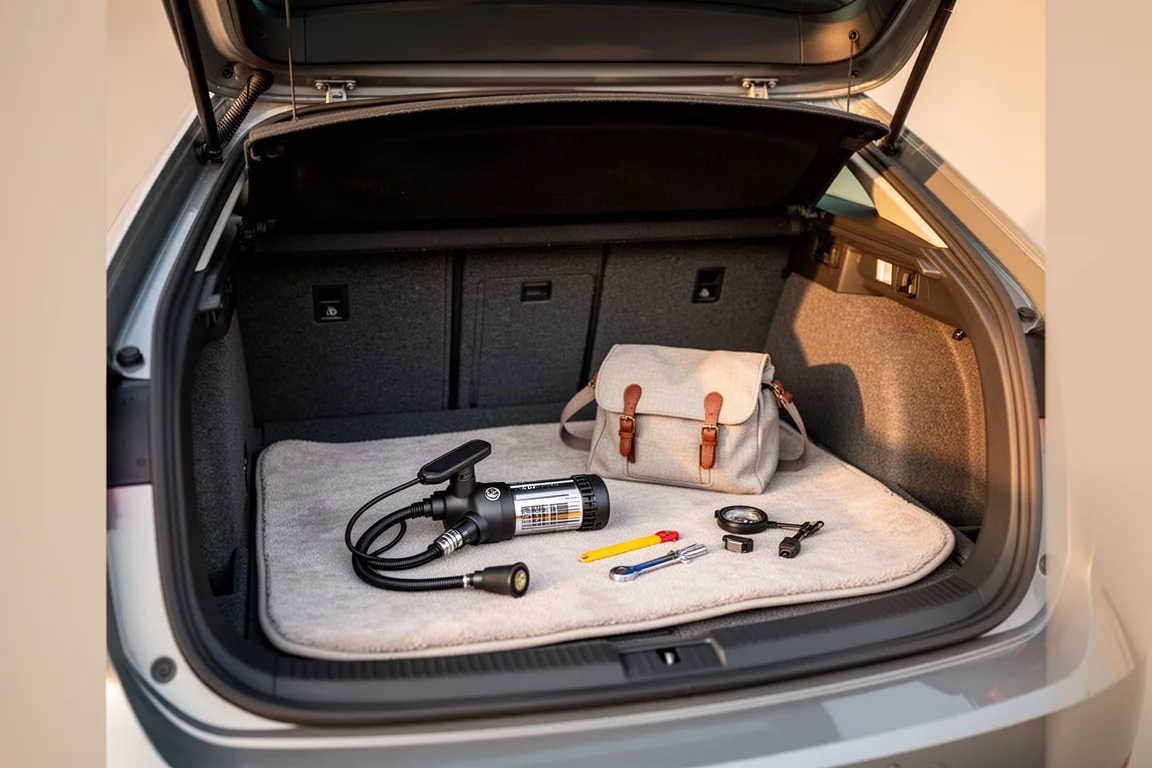
For a compact pump that lives in the car, the built-in-battery units like the Gooloo GT160, TC15, and Drive Mode are the lightest and easiest to store, with the Gooloo offering the best balance of speed and size. Noise-conscious buyers should also note that the compact pumps are the quietest. If you want serious performance without paying over $100, the Kobalt and Bauer remain the strongest value picks at around $50.
Conclusion
Across four demanding tests, the pattern held: premium 18V tools buy real speed and cooler operation, mid-priced tool-only pumps deliver excellent value if you already own the battery platform, and compact built-in-battery units trade speed for portability and quiet. The NOVSIGHT was the only pump that failed outright, proving that the cheapest option is rarely the bargain it appears to be.
Further reading
Related Reviews
Automotive Tools
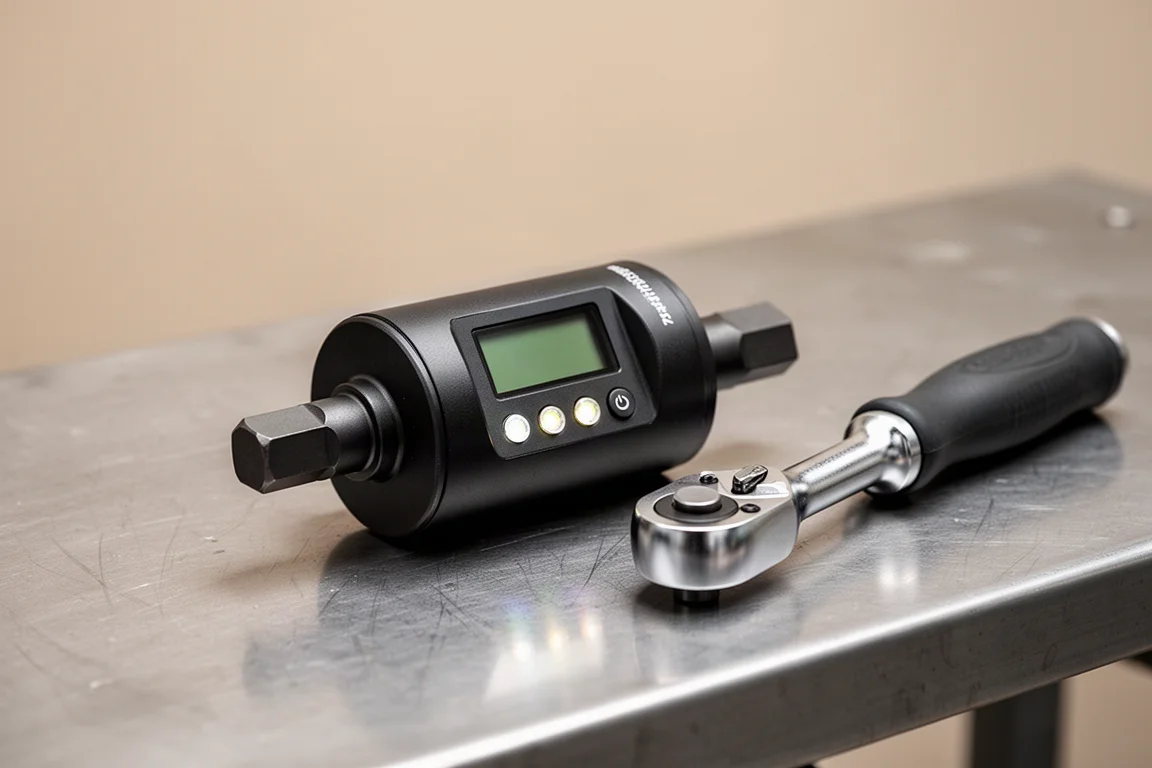
ALAIAL 1/2" Digital Torque Adapter Review: Turn Any Ratchet Into a Precision Tool
A practical look at the ALAIAL 1/2" digital torque adapter, an affordable way to add torque measurement to your existing ratchet.
Automotive Tools
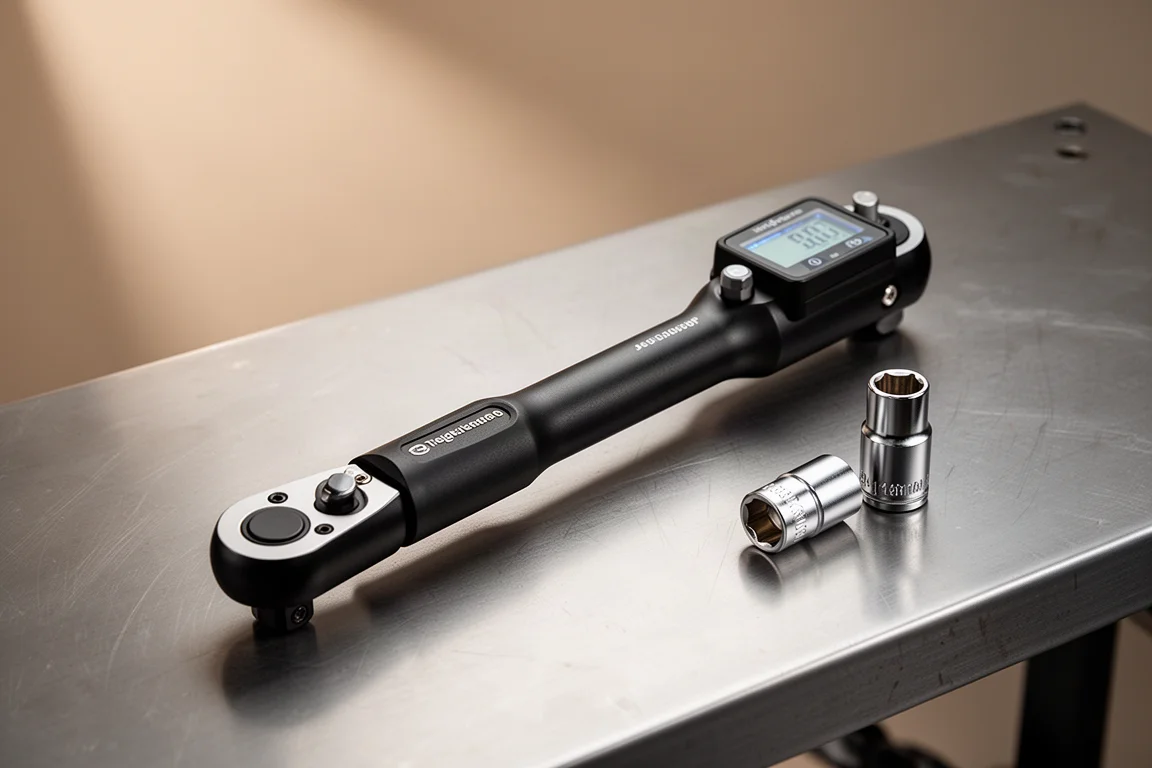
ALAIAL 3/8" Digital Torque Wrench Review: Accurate Fastening Made Simple
A practical look at the ALAIAL 3/8" digital torque wrench, covering its features, ease of use, and real-world performance for vehicle maintenance.
Automotive Tools
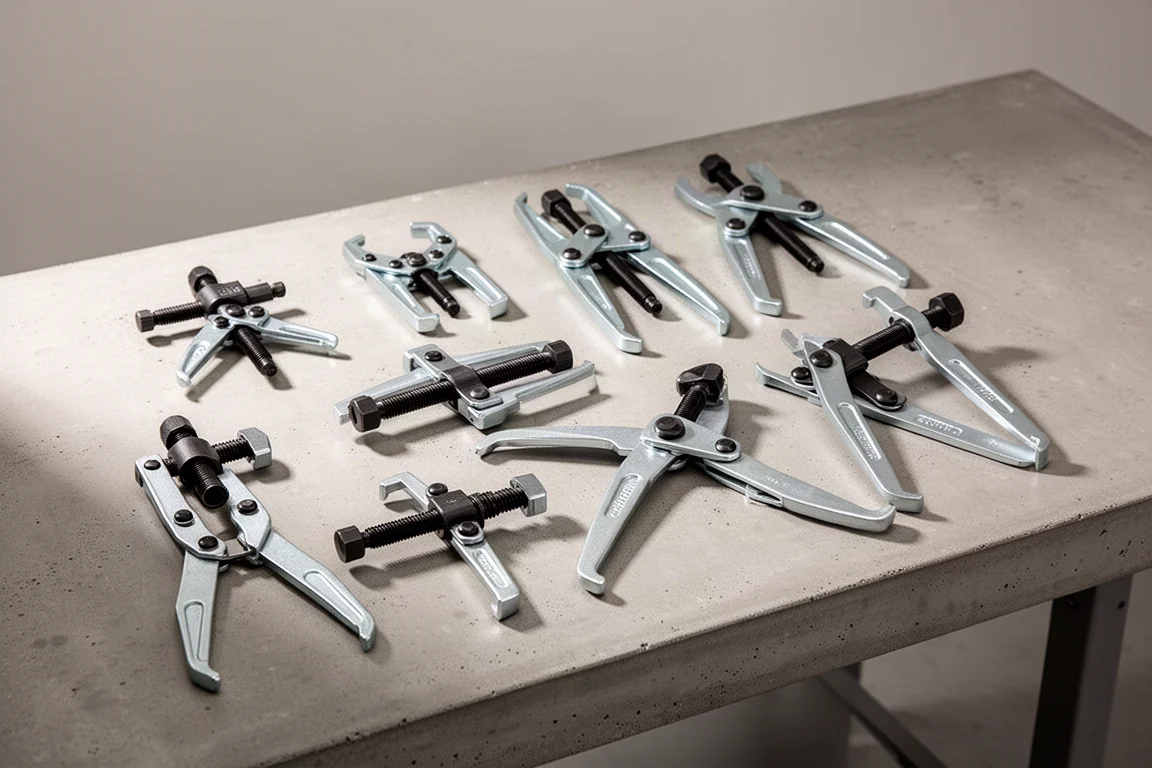
Best Gear Pullers 2026: 2-Ton and 5-Ton Options Compared
We compared nine gear pullers across 2-ton and 5-ton classes to see how design, build quality, and price affect real-world pulling performance.