Camping Tents
Best Tents for Extreme Wind: Six Ultralight Shelters Compared
Six backpacking tents compared in gusts that peaked at 73 km/h, with notes on pitching difficulty, pole behavior, guy-out options and which shelter suits exposed ground.
Introduction
Wind is the variable that decides whether a night outside is merely uncomfortable or genuinely risky. A shelter that shrugs off a breeze can fold, flap or snap when gusts climb, and the difference usually comes down to pole strength, panel size and how many guylines you can actually anchor.
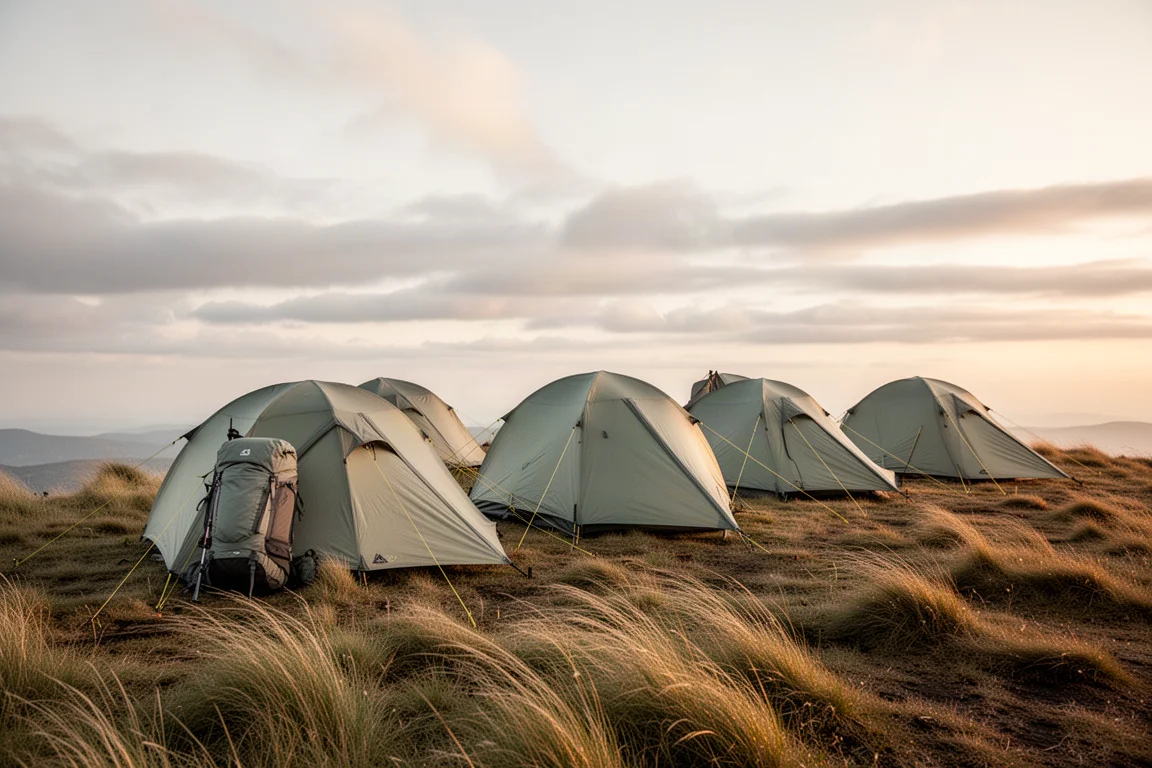
Six lightweight tents were pitched on exposed ground in conditions that were forecast to reach 70 to 80 km/h, with gusts peaking at 73 km/h. Two stayed standing for the entire session without a single issue. One lost a pole while it was still being pitched. The rest landed somewhere in between, and the reasons are useful for anyone choosing a shelter for open, windy terrain.
How These Tents Were Evaluated
Every tent was set up on firm, compact soil using high-holding-power stakes. All attached guy points were used, plus optional guy points wherever they added meaningful support, and each shelter was oriented in the way that gave it the best chance in the wind. The two questions that mattered were simple: how easy was the tent to pitch while the wind was blowing, and how did the structure hold up once it was standing.
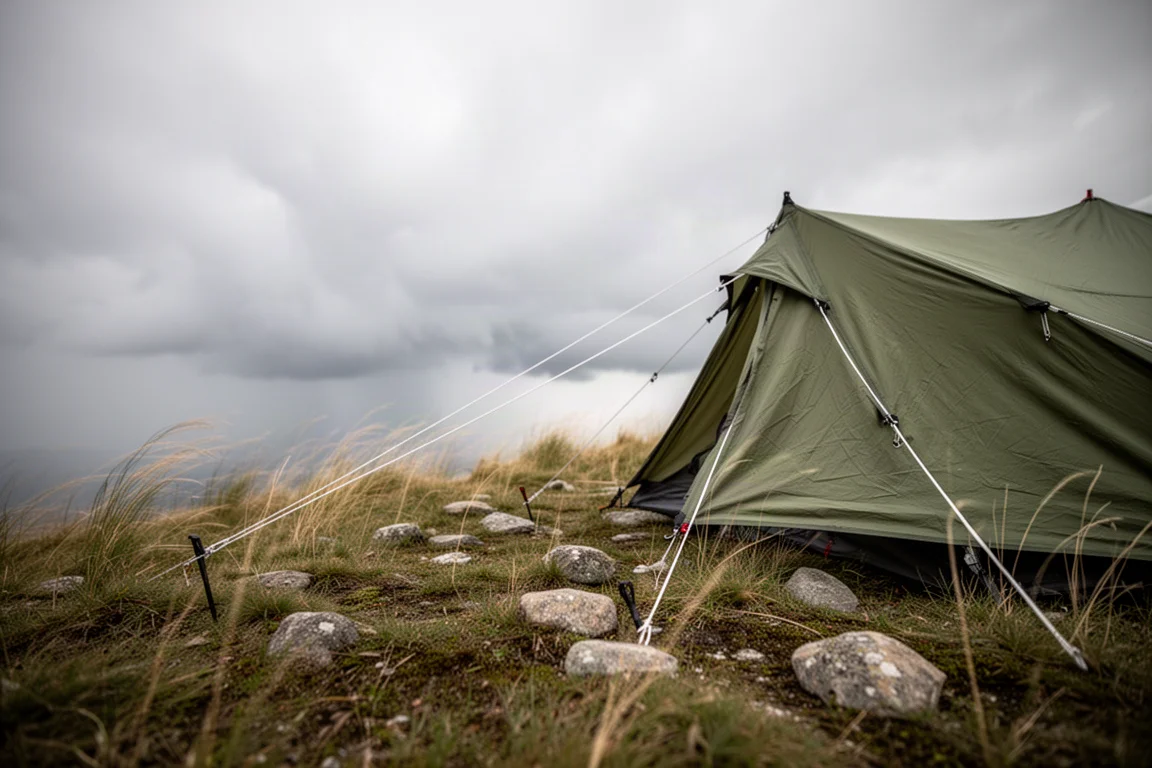
The group mixed freestanding domes with trekking-pole shelters, which is useful because the two designs put stress on different parts of the tent. Freestanding domes lean on their pole frames, while trekking-pole shelters transfer load into the fabric, the guy attachment points and the stakes. That distinction turned out to matter as much as raw pole thickness.
Tarptent ArcDome: The Most Stable Shelter Here
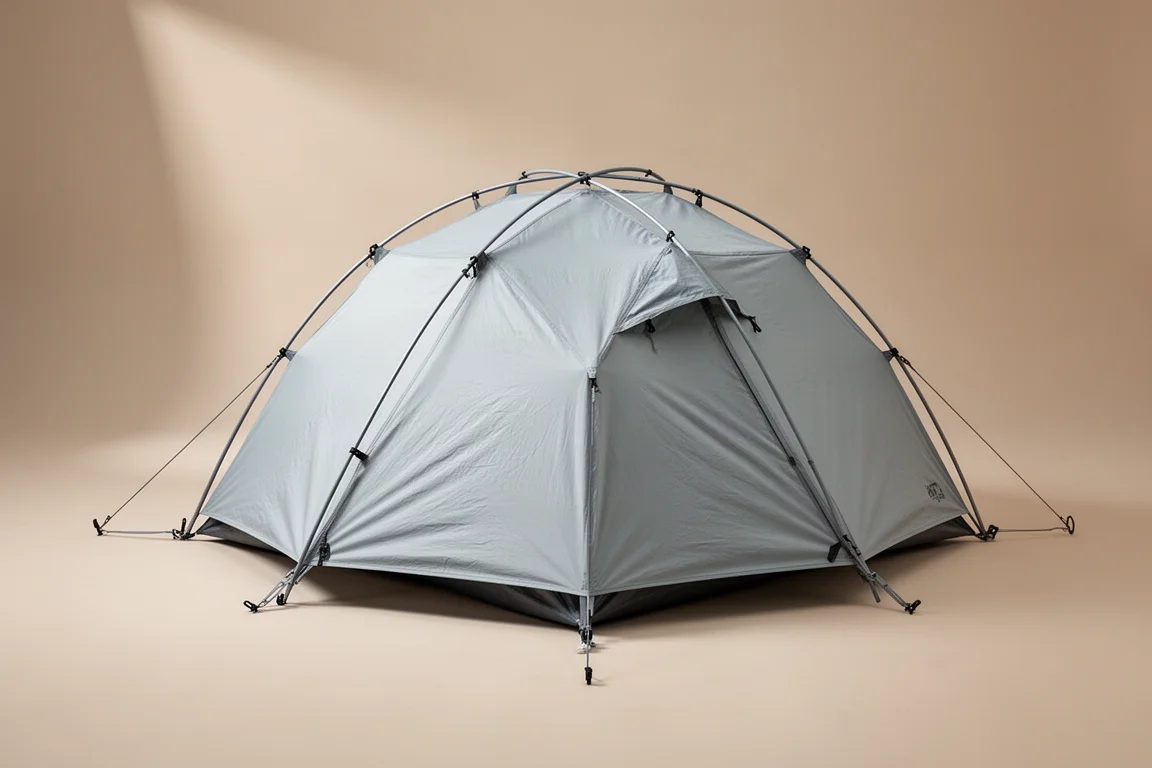
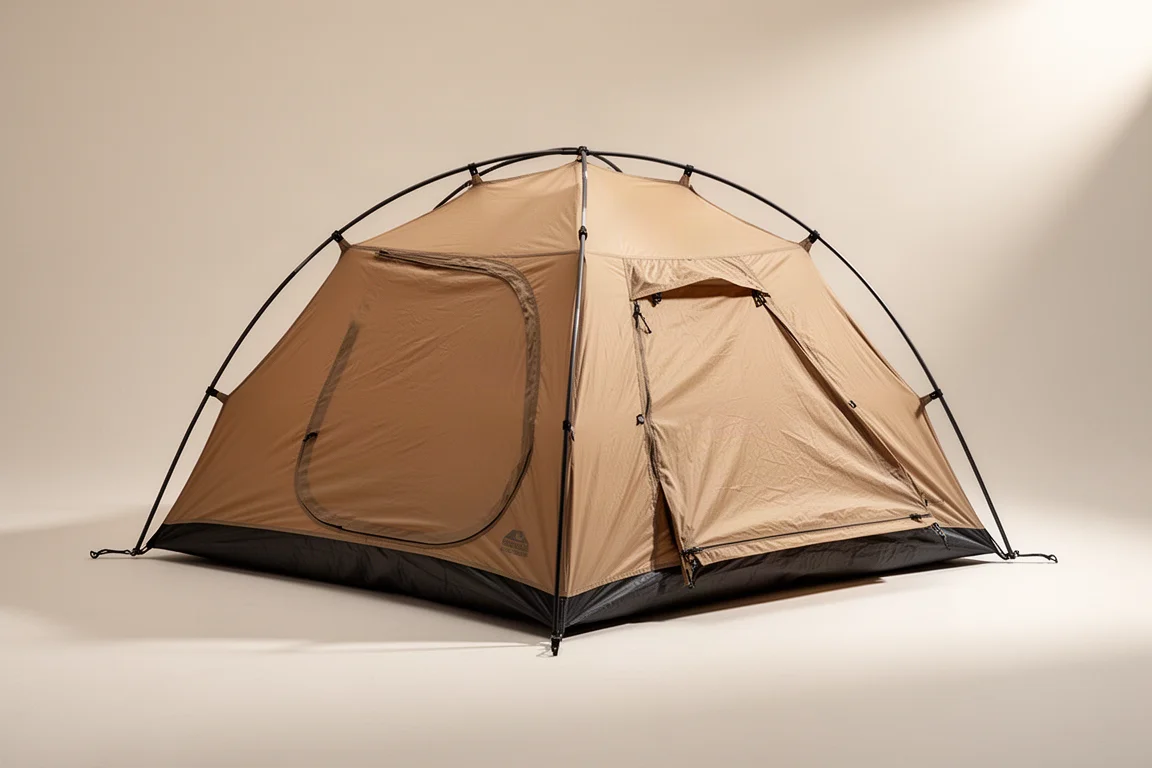
The ArcDome is the heaviest tent in this group and costs around $570. It uses Ultra TNT fabric with two 9.3 mm Easton Cyclone aluminum poles arranged in a cross-dome pattern, and it carries eight attached guy points plus twelve optional ones, the most generous anchoring setup in the comparison. It is a two-person freestanding tent with a footprint of 1.9 m by 2.57 m, the largest here.
Pitching it in gusts up to 60 km/h was manageable by pre-attaching guylines to the upwind corners and tightening them as the poles were raised into place. It then stayed standing for the full session with no issues at all. Given how much wall area the ArcDome presents, that stability was genuinely surprising, and the credit goes to the Ultra TNT material and the thick aluminum poles. The pole sleeves are more fiddly to thread than clips, but they do support the poles well. The same tent has also held up on a trip where winds were estimated at 100 km/h.
Samaya 2.0: Small Profile, Best for Poor Soil and Snow
The Samaya 2.0 is one of the most expensive tents here at roughly $1,100 and weighs 1.34 kg. It has five attached guy points and eight optional ones, and the optional points come pre-attached with cartridge systems that merge into a ring before extending from the tent. The build combines three-layer nylon and DCF with 8.7 mm DAC aluminum poles in a cross-dome layout. It is a two-person freestanding tent with a footprint of 2.2 m by 1.1 m, the smallest here and a little cramped for two people.
Because the structure is similar to the ArcDome but noticeably smaller, it was easier to set up in the wind. It survived the entire session including the 73 km/h gusts. Afterward, one upwind pole showed a slight bend, most likely from the strongest gust, but the tent was not deformed and performance was not compromised. The bend can be straightened by hand, which is one of the practical advantages of aluminum poles. A few more guy points along the base and off the peaks would make it stronger still. On poor ground or snow, this is the shelter to reach for: it is freestanding, and its small profile catches less wind, which puts less stress on every anchor point.
NEMO Dragonfly OSMO 2P: Excellent Once Standing, Difficult to Pitch in Wind
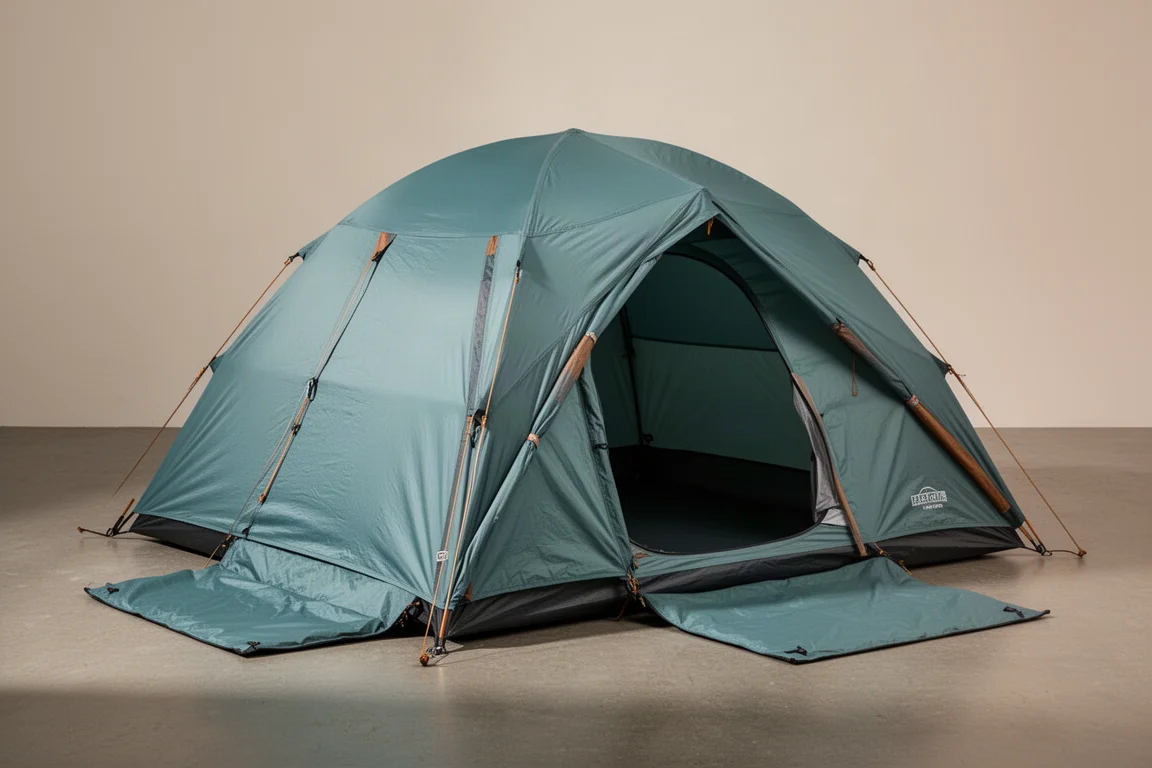
The Dragonfly OSMO 2P costs around $500 and weighs 1.2 kg. It has eight attached guy points and six optional ones, uses a polyester and nylon hybrid fabric called OSMO, and relies on 8.7 mm DAC aluminum poles. It is a two-person freestanding tent with a footprint of 2.54 m by 2.8 m.
The inner goes up first and the fly goes over the top. While the fly was being fitted, wind pressure on the tent was too much and one of the windward poles snapped in half before the shelter could be fully staked out. The breakage may have been partly caused by over-tightening one of the vestibules, and it is hard to be certain either way. The wider lesson is that inner-first pitches are genuinely difficult in strong wind. Most of the guy points sit on the fly, so guylines cannot easily be pre-attached while the tent is being built.
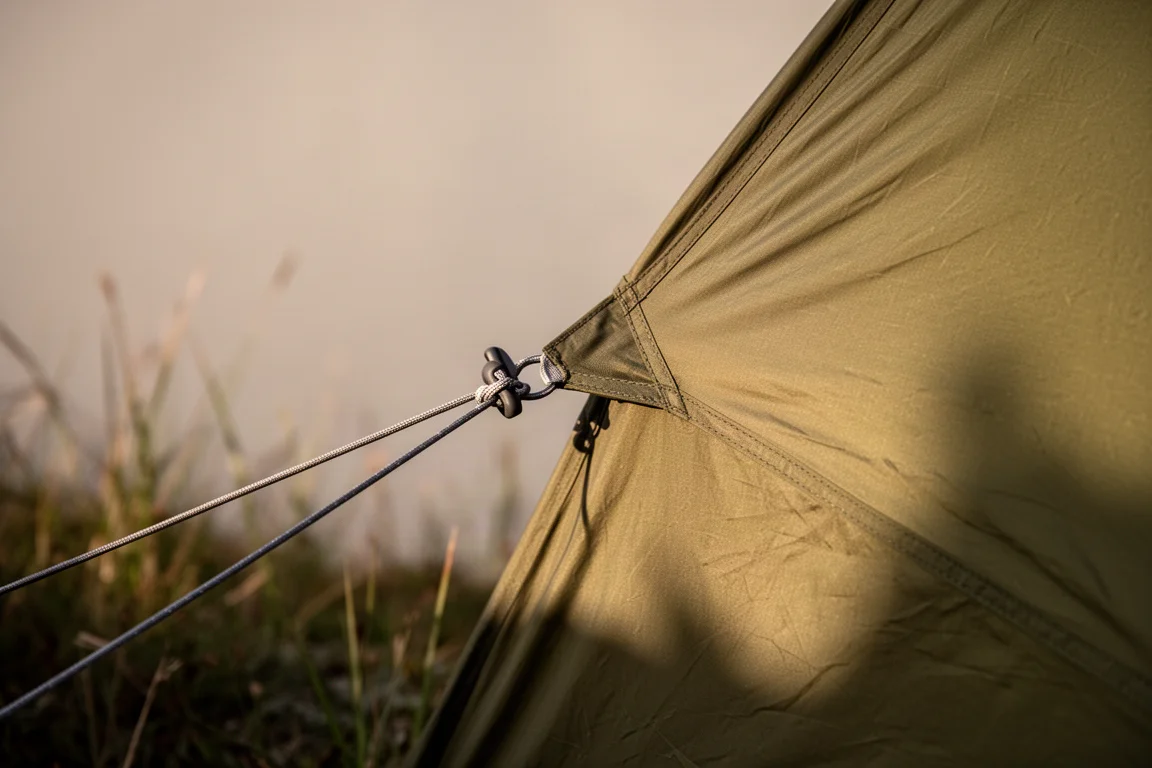
Once it is fully set up with all of its guylines, this is a very capable tent in the wind, and it has held up well in strong winds on an exposed ocean shoreline. The structure is not the weak point. The pitch sequence is.
Durston X-Mid Pro 2+: Light and Fast, With Panels That Catch Wind
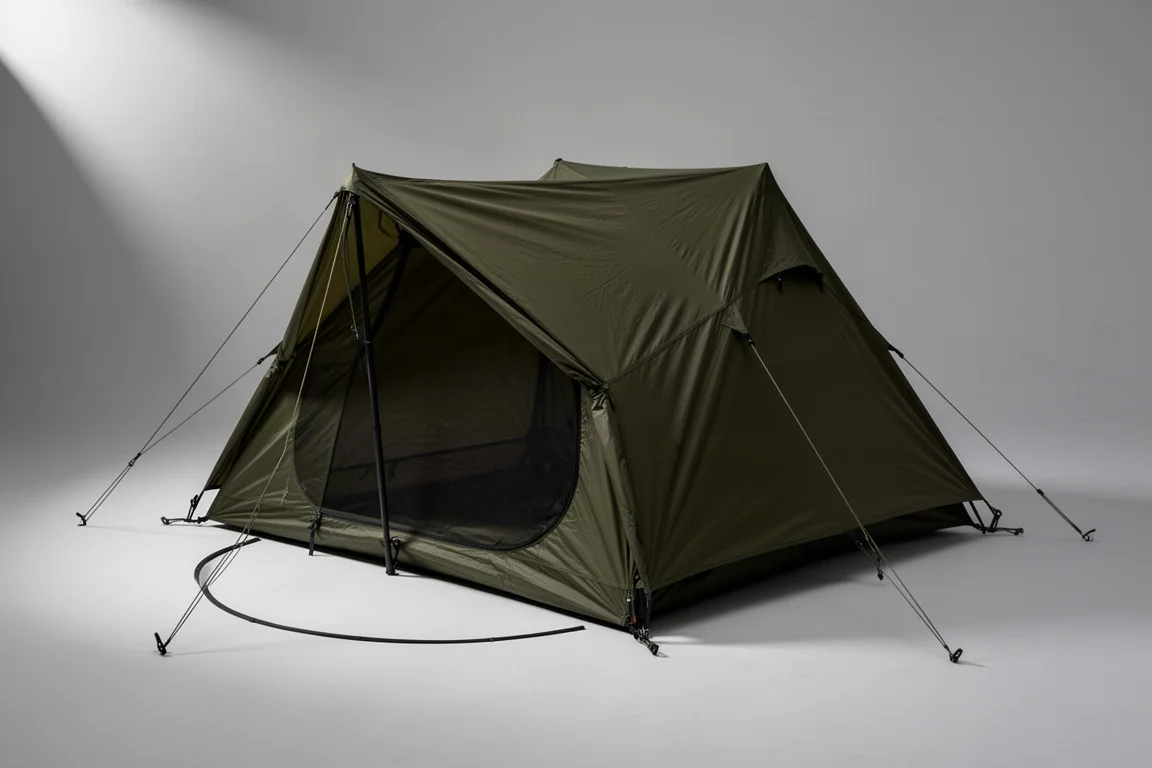
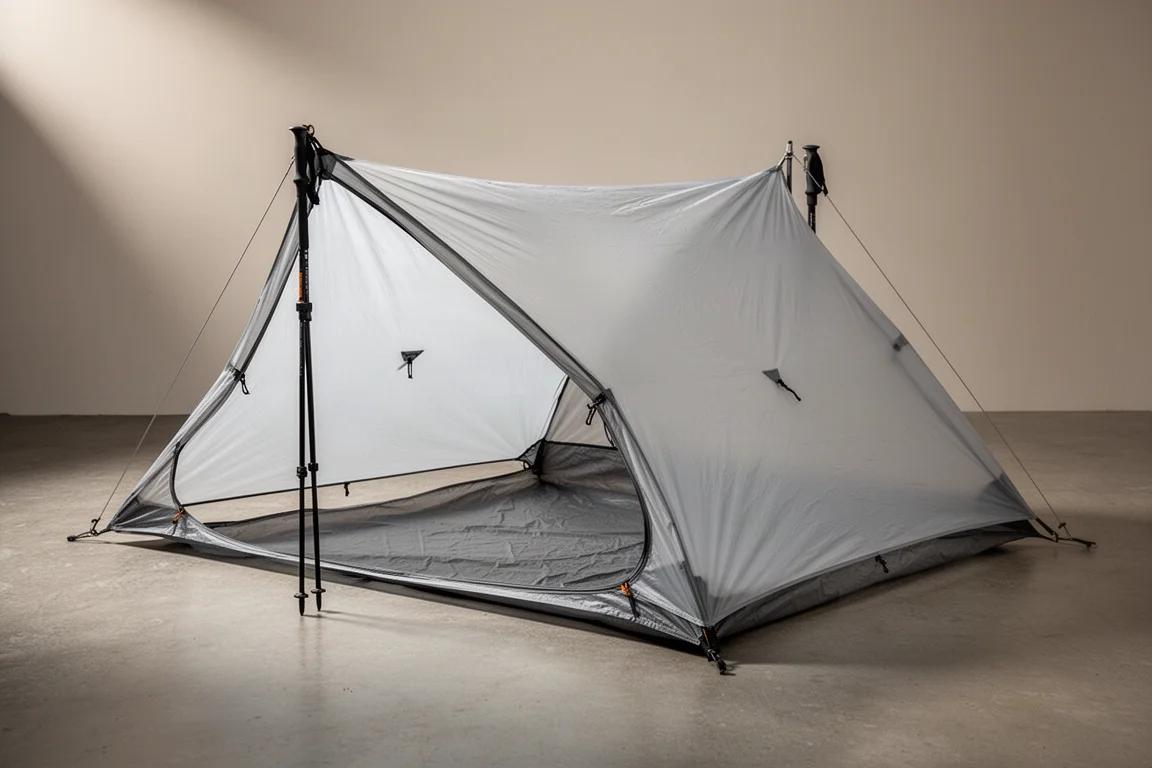
The X-Mid Pro 2+ costs around $780 and weighs just 545 g. It is made with DCF and is a non-freestanding shelter that uses trekking poles for structure. It is a two-person tent with a footprint of 2.54 m by 2.15 m, uses an all-in-one pitch, and carries eight attached guy points plus six optional ones.
Pitching was very quick and easy. The problem was size: the large panels caught a lot of wind, and it was taken down before it could be damaged. It likely would have handled the conditions if it had been fully staked out and the panel guyline angled away from the wind rather than into it. Expect it to be loud and flappy in strong wind simply because of how much fabric it presents. The smaller versions of this design, the 1P and 2P, perform better in wind because their panels are smaller and catch less of it.
Durston X-Dome 1P: The Least Expensive Tent Here
The X-Dome 1P is the least expensive tent in this comparison at around $370 and weighs 985 g. It has seven attached guy points and eight optional ones, uses a polyester fly, and is built with 3.9 mm and 6.3 mm Easton carbon fiber poles. It is a one-person freestanding tent with a footprint of 2.25 m by 1.45 m and an all-in-one pitch.
Clips are used instead of pole sleeves, which is faster to handle, though sleeves offer a little more pole support. The tent also accepts trekking poles to add vertical support at the top and panel support along the broad sides. Installing one on the windward broad side opposite the door and locking it in as the tent was clipped together made setup straightforward, and the shelter did well until a 73 km/h gust bent and warped one pole enough to bend a pole insert. The pole lengths are carbon fiber while the inserts are aluminum, and that worked in the tent’s favor: the aluminum bent instead of the carbon snapping, and the insert could be bent back into position. Individual pole segments are easy to replace, though that does not help much if a pole fails mid-trip.
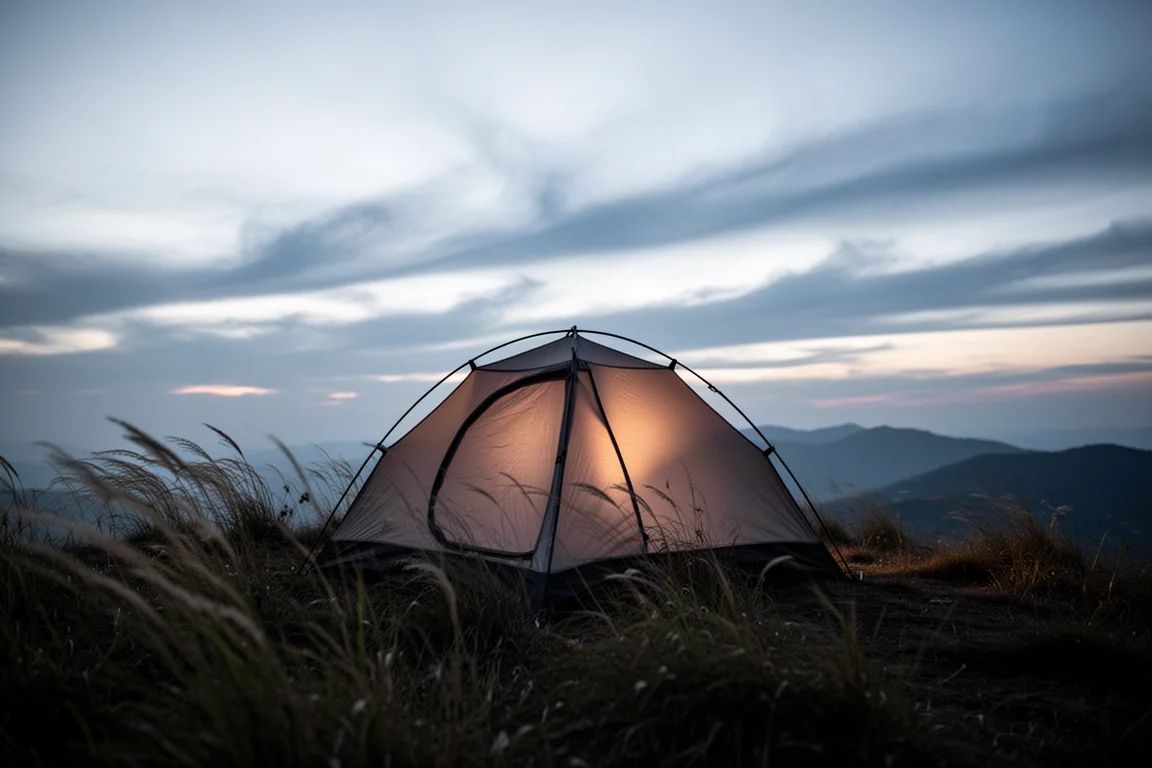
Two design changes would help this tent in wind: a second guy point lower down the body, and cordage loops pre-attached to the two end guy points. On the setup side, adding cordage to one of those end points and staking it out would have added support and may have reduced the bend. With those adjustments, this tent could plausibly handle winds around 100 km/h.
Zpacks Plex Solo: The Lightest Tent, and the Best in Wind
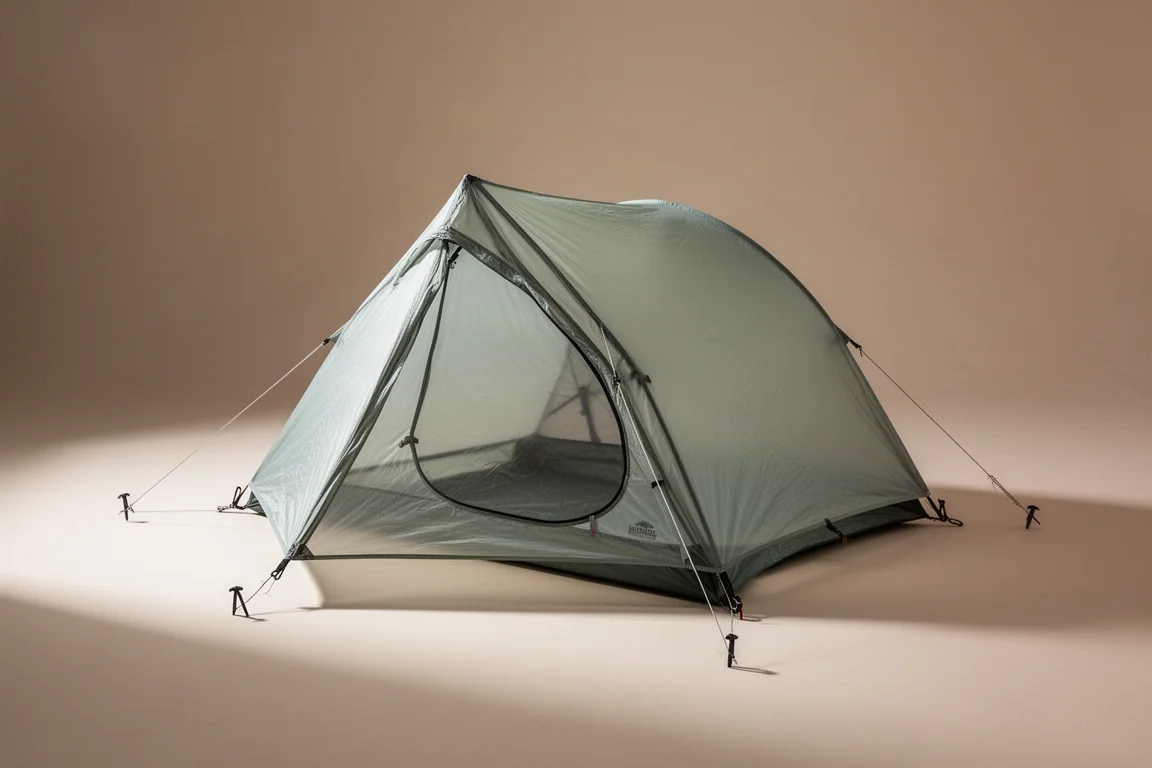
The Plex Solo costs around $600 and weighs 390 g, the lightest shelter here. It uses DCF and, like the X-Mid, is non-freestanding. It is a one-person tent with a footprint of 2.5 m by 1.57 m and needs only a single trekking pole. There are ten attached guy points and no optional ones, so the attached set effectively has to be used in full.
It pitches easily, and with all the guylines deployed and the pyramid shape working in its favor, it handled the wind very well, finishing at the top of the ranking. Trekking-pole shelters are interesting in this context because trekking poles are far sturdier than almost any dedicated tent pole. That shifts the weak points to the tent material, the guy attachment points and the stakes, which is exactly why ground quality matters so much for this design.
Wind Performance Ranked
Ranked from best to worst in these conditions, the order was the Plex Solo, then the ArcDome, then the Samaya 2.0, then the X-Dome 1P, then the X-Mid Pro 2+, and finally the Dragonfly OSMO 2P. The important caveat is that this ranking reflects setup on good soil, not poor soil or snow. On loose or snowy ground, a stake pulling free is a bigger factor than the tent structure, and that reshuffles the list. It is exactly why the freestanding Samaya 2.0 with its small profile becomes the most appealing option there.
Two broader observations stand out. Trekking-pole tents are not necessarily as weak in wind as they are often assumed to be, and on good soil one can be among the best choices for windy conditions. Inner-first pitches, by contrast, struggle mainly because of how difficult they are to erect, not because the design is inherently unstable.
Field Tips for Pitching in Strong Wind
A few habits make a real difference when the wind is already blowing:
- Pre-attach guylines and tighten them from the bottom up as the tent goes up.
- Set the doors on the leeward side, opposite the wind, so the tent does not catch air through the opening when you climb in and out.
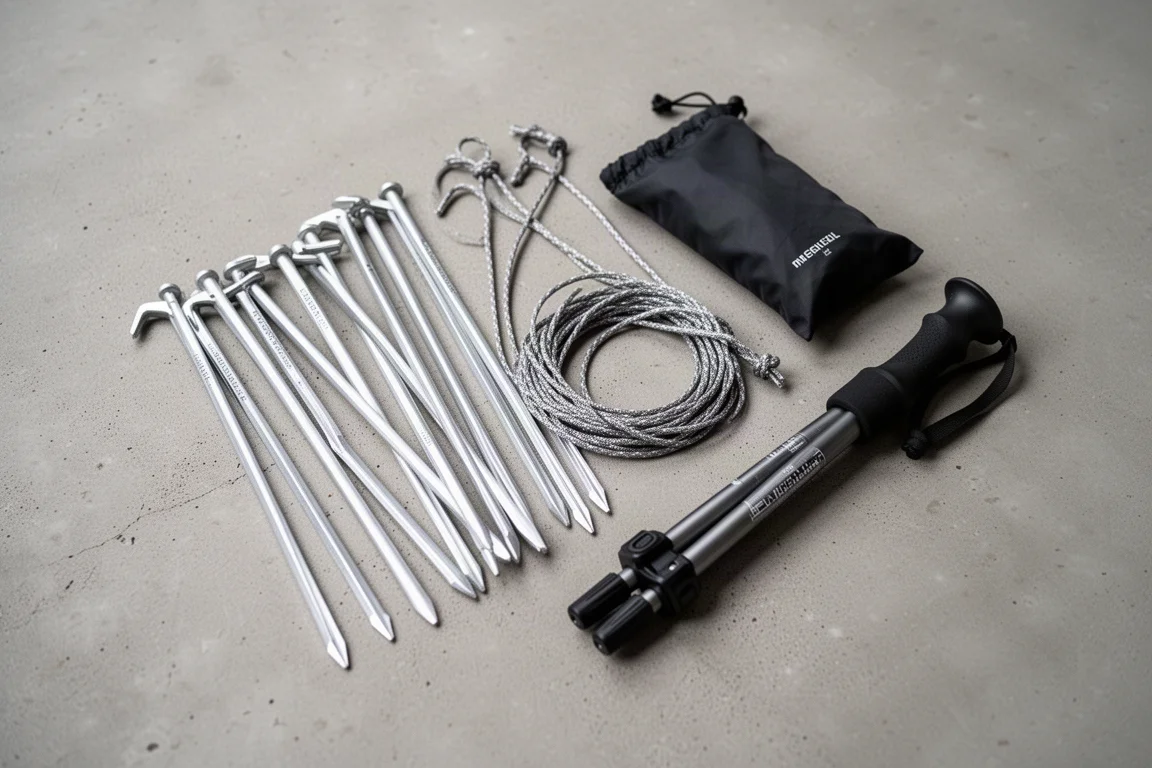
- In poor soil, strong snow stakes such as the MSR Blizzard work well, and longer stakes hold better than short ones.
- Wait for a lull if you can. The most precarious moment for any tent is while it is being pitched.
It is also worth saying plainly that camping in extreme wind is a rough experience no matter how good the tent is. It will be noisy and uncomfortable, and seeking terrain that offers some shelter is usually the better decision.
Buying Advice: Which Tent Fits Which Conditions
The right choice depends far less on brand loyalty than on the ground you expect to sleep on and how much weight you are willing to carry.
On firm soil with plenty of staking options, the Plex Solo and the ArcDome are the most confidence-inspiring of the group. The ArcDome suits anyone who wants freestanding convenience and a large two-person interior, while the Plex Solo is the pick when weight is the priority and carrying one trekking pole is already part of the plan.
On poor or snowy ground, the Samaya 2.0 makes the most sense. Its freestanding structure and small profile reduce stress on every anchor point, which is the failure mode that matters most when stakes cannot bite.
If budget is the deciding factor, the X-Dome 1P is the least expensive tent here and performed well until the strongest gust of the session. With a bit more guying at the low points, it is a strong value for one person. The Dragonfly OSMO 2P and the X-Mid Pro 2+ are both capable shelters whose difficulty lies in the pitch: the Dragonfly because of its inner-first sequence, and the X-Mid because of its large panels. Finally, count the guy points. More is better, and a tent with fewer attached points, like the Plex Solo, depends on using every one of them properly.
Conclusion
Wind performance comes down to a short list of practical factors: pole strength and diameter, panel size, the number of usable guy points, and how quickly the shelter can be raised while the wind is pushing against it. The Plex Solo and the ArcDome handled the strongest gusts here without drama, the Samaya 2.0 pairs a small profile with freestanding convenience for difficult ground, and the X-Dome 1P delivers much of that stability at the lowest price in the group. The Dragonfly OSMO 2P and the X-Mid Pro 2+ are not poor tents in wind, but both ask for a calm moment that exposed campsites rarely provide.
Further reading
Related Reviews
Camping Tents
3F UL Gear Taiji Two-Person Tent Review: Field Waterproofing Results and Buying Advice
The Taiji pairs an attached fly with a removable inner, but sustained rain exposed untaped vent seams that need sealing before this shelter can be trusted.
Camping Tents
3FUL Gear Lanshan 2 Pro 4-Season Review: A Sub-$200 Single-Wall Trekking Pole Tent
An early look at the 3FUL Gear Lanshan 2 Pro 4-Season, covering its straightforward pitch, generous interior space, and the condensation and seam-sealing questions that come with any single-wall shelter.
Camping Tents
Alps Mountaineering Lynx 1-Person Tent Review: Big Value in a Small Budget Tent
A close look at the Alps Mountaineering Lynx 1-Person Tent, covering real interior dimensions, materials, setup time, ventilation limits, and who should buy it.