Tools & Workshop
Best Stripped Thread Repair Kits: 7 Fixes Tested for Strength and Durability
We put thread lockers, epoxies, and four metal thread insert kits through torque, load, and corrosion testing to find which stripped thread repair actually holds.
Introduction
Few workshop problems derail a project faster than a stripped out thread. A bolt that spins without ever getting tight can turn a ten-minute job into a stalled repair, especially when the stripped hole lives in soft aluminum. The real question is which repair method actually restores enough strength to trust, and which ones just buy you a little time.
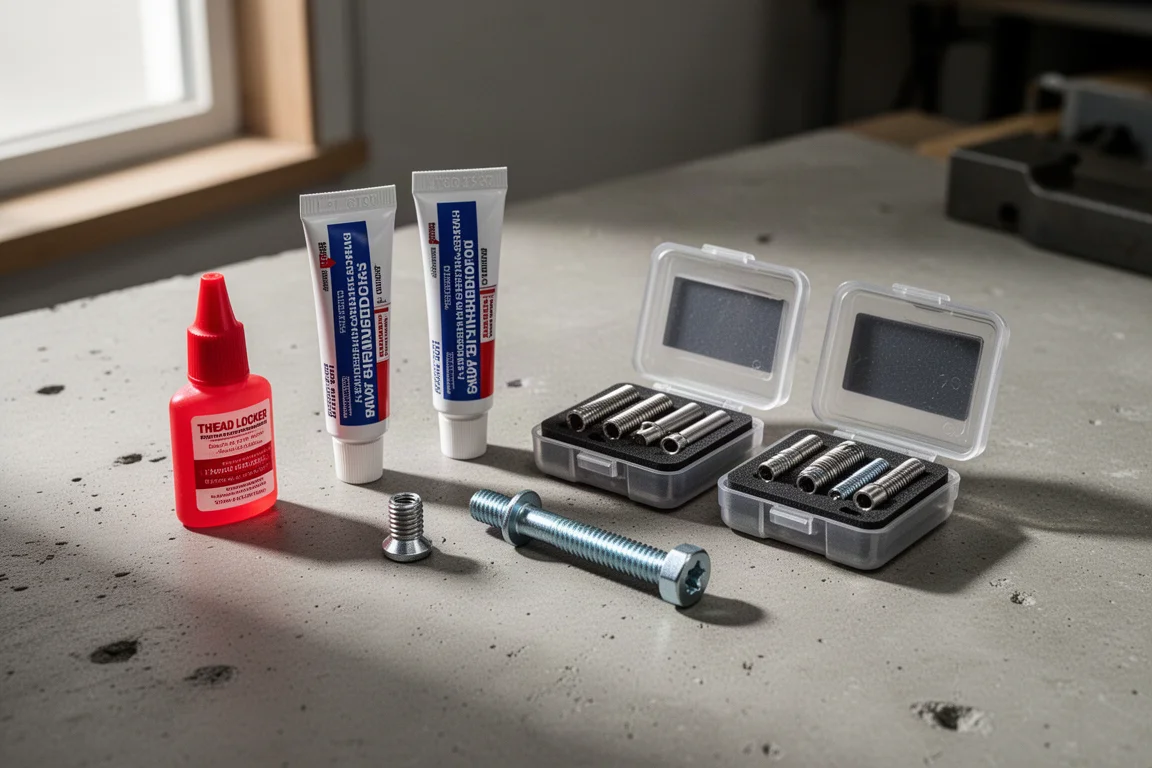
To find out, we ran a full comparison across seven repair options: copper wire as a field fix, Loctite Red 271 thread locker, JB Weld epoxy, and four dedicated thread insert kits from HHIP, Helicoil, EasyLock, and Timesert. Each one was tested for torque strength, load capacity, and corrosion resistance under identical conditions.
How the Testing Was Set Up
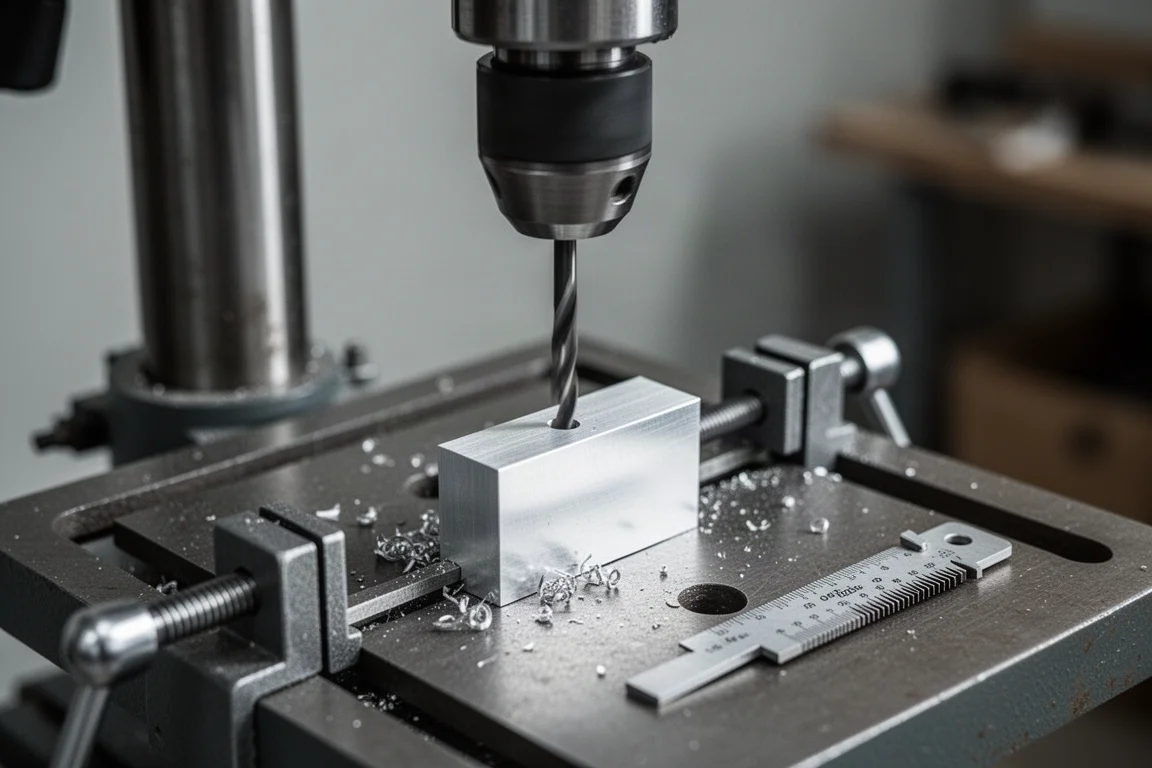
Every test started the same way: 1/2-inch aluminum flat stock was drilled with a 17/64 twist drill and tapped for 8 mm threads with a 1.25 thread pitch. Cutting oil was used to keep the tapping consistent across all 48 test pieces.
Stripping the fresh threads took between 300 and 350 inch-pounds of torque, which became the control baseline. Each test piece was then deliberately stripped out, cleaned with brake parts cleaner, and repaired using one of the seven methods before testing resumed.
Why Threads Strip in the First Place
There are three very common ways threads get damaged. Overtightening a bolt is the most obvious, and it destroys aluminum threads quickly. Corrosion is the second culprit; when rust forms, simply removing the bolt can tear the threads apart. Finally, crossthreading, where the bolt is not properly aligned with the hole, gouges the threads and ruins the fit.
Knowing which failure mode you are dealing with matters, because the cheapest fix and the strongest fix are not always the same product.
Copper Wire: The Temporary Field Fix
The least expensive repair around is a length of stripped copper wire. Remove the insulation, cut about an inch of bare wire, place it into the damaged threads, and tighten the bolt down. Copper is softer than aluminum and steel, so it fills the void left by the damaged threads.
It is not a proper repair, but as a temporary fix it can hold things together until you have the right tools.
Loctite Red 271 Thread Locker
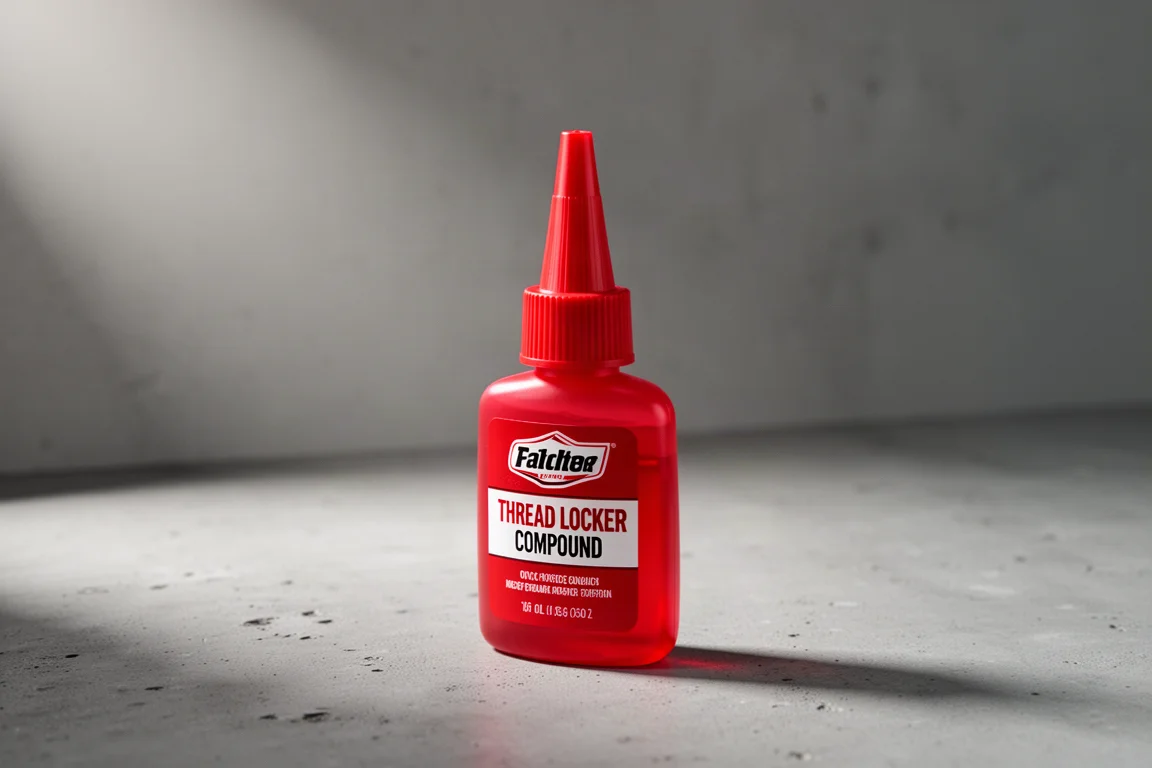
Loctite Red 271 is billed as a permanent, heavy-duty thread locker, and it sets in about 10 minutes. Made in the USA, it costs roughly $6.48. It is worth understanding what this product actually is: a thread locker, not a thread repair product. If the bolt is going into a bracket or fixture that does not need much clamp load, holding the fastener in position with red thread locker can be a reasonable shortcut. It just is not rebuilding any threads.
JB Weld Epoxy
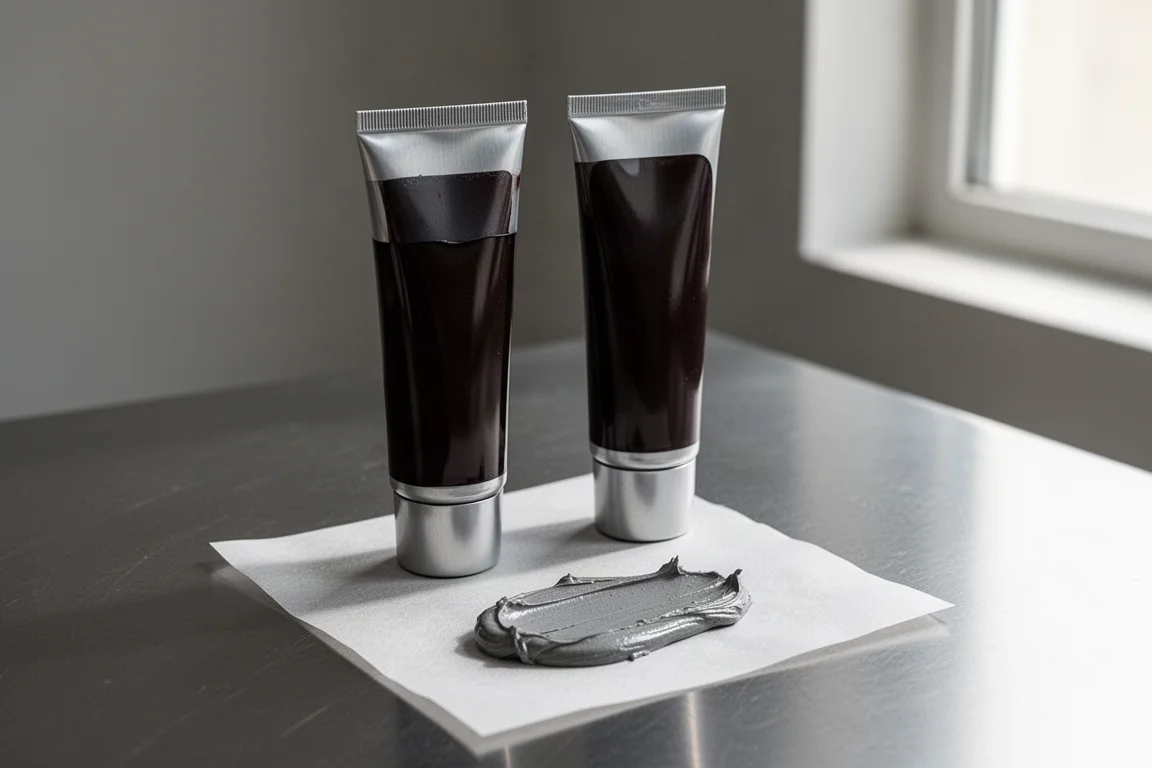
JB Weld is a steel-reinforced epoxy that claims the world’s strongest bond at 5,020 PSI, with a full cure in 15 to 24 hours. A standard tube runs about $5 to $6, while the larger ProSize container costs around $14. It is made in the USA.
The repair process means squeezing equal parts from both tubes, mixing thoroughly, coating the bolt, threading it into the filled hole, and waiting. It sets in 4 to 6 hours and should not be put back into service for at least 15 hours. For a full rebuild, you then drill and tap the cured epoxy as if it were new material.
HHIP Thread Repair Kit
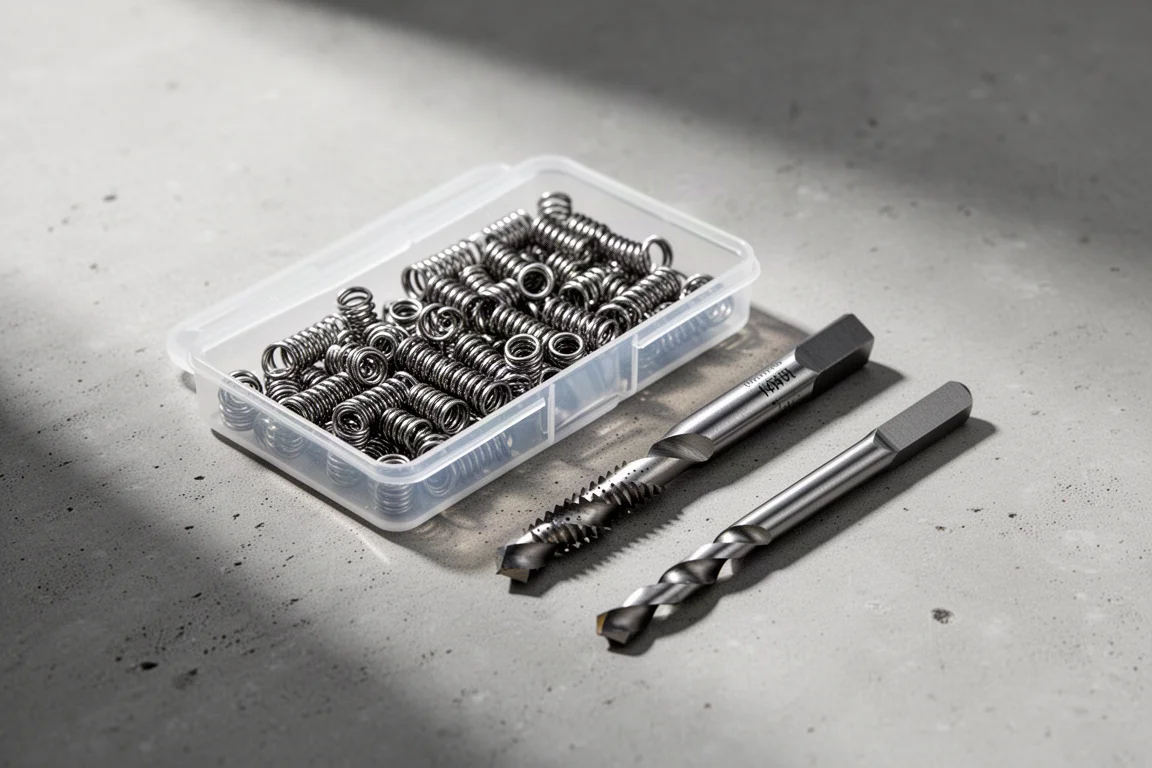
The HHIP kit costs about $20 and is designed specifically for 8 mm fasteners with a 1.25 thread pitch. It includes 25 repair inserts, a twist drill, an 8 mm tap, an insert installation tool, and a punch for breaking off the insert’s metal tab. The only things missing are instructions and a drill. HHIP products are made in China.
The process is straightforward: drill out the damaged threads, tap new ones, drive the insert in, then use the punch to break off the tab. The bolt fit nicely once the repair was complete.
Helicoil Thread Repair Kit
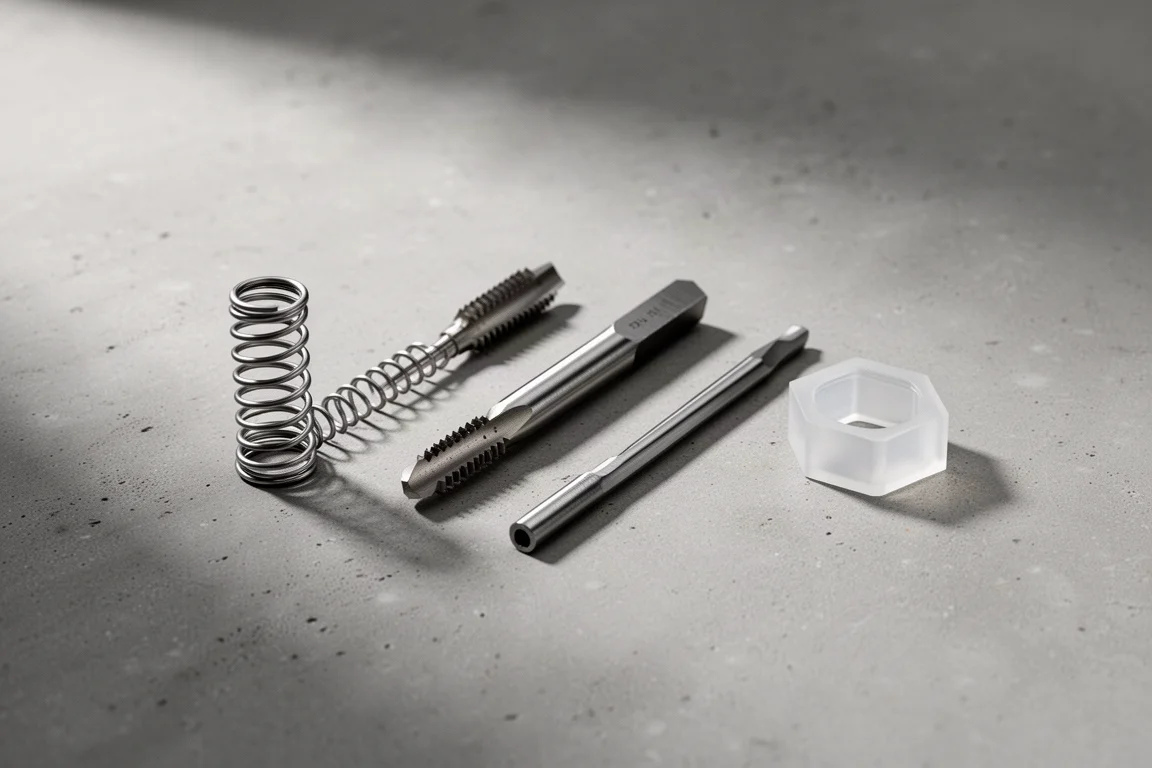
At about $25, the Helicoil brand kit is the name-brand option, made by Stanley Engineered Fastening in the USA and China. It includes a tap, an insert installation tool, and 10 repair inserts, with a genuinely well-written instruction sheet. You will need to supply your own twist drill and a square-ended punch. The tap is stamped with the required drill size.
The insert must sit a quarter to half a turn below the top surface, then the tang gets broken off at the notch. The finished repair accepted the bolt cleanly.
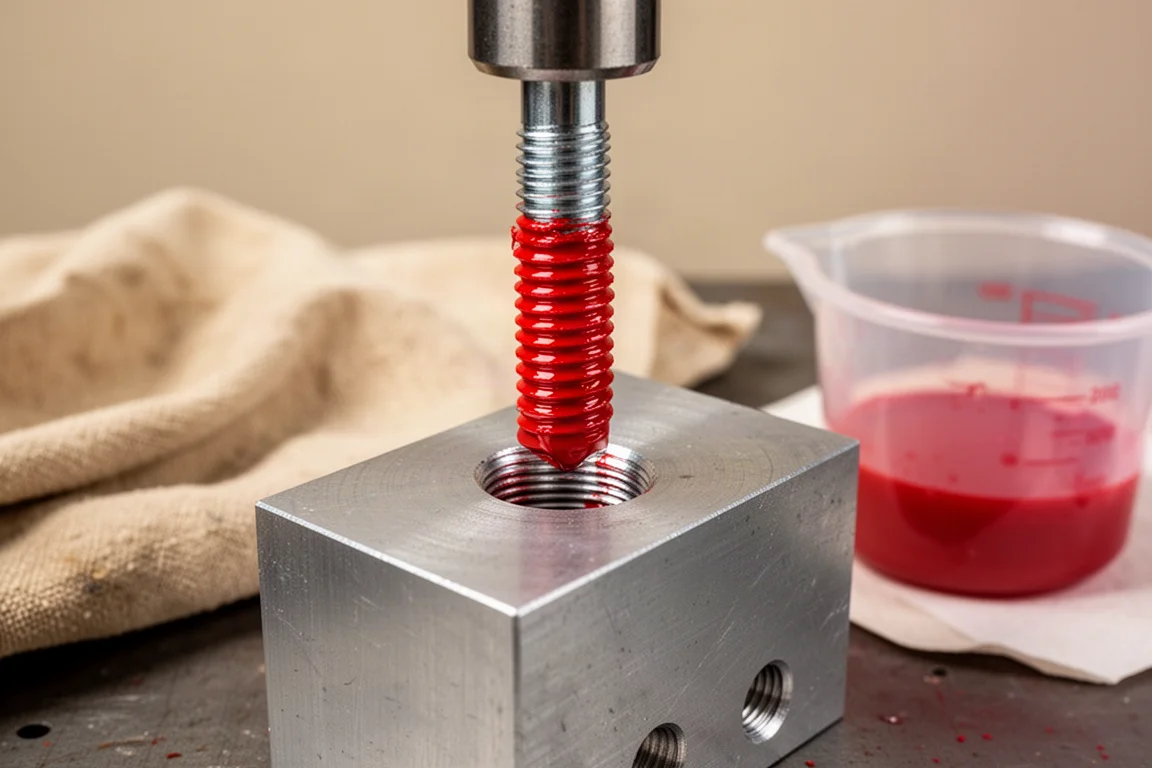
Loctite PC 3967 Strip Thread Repair Kit
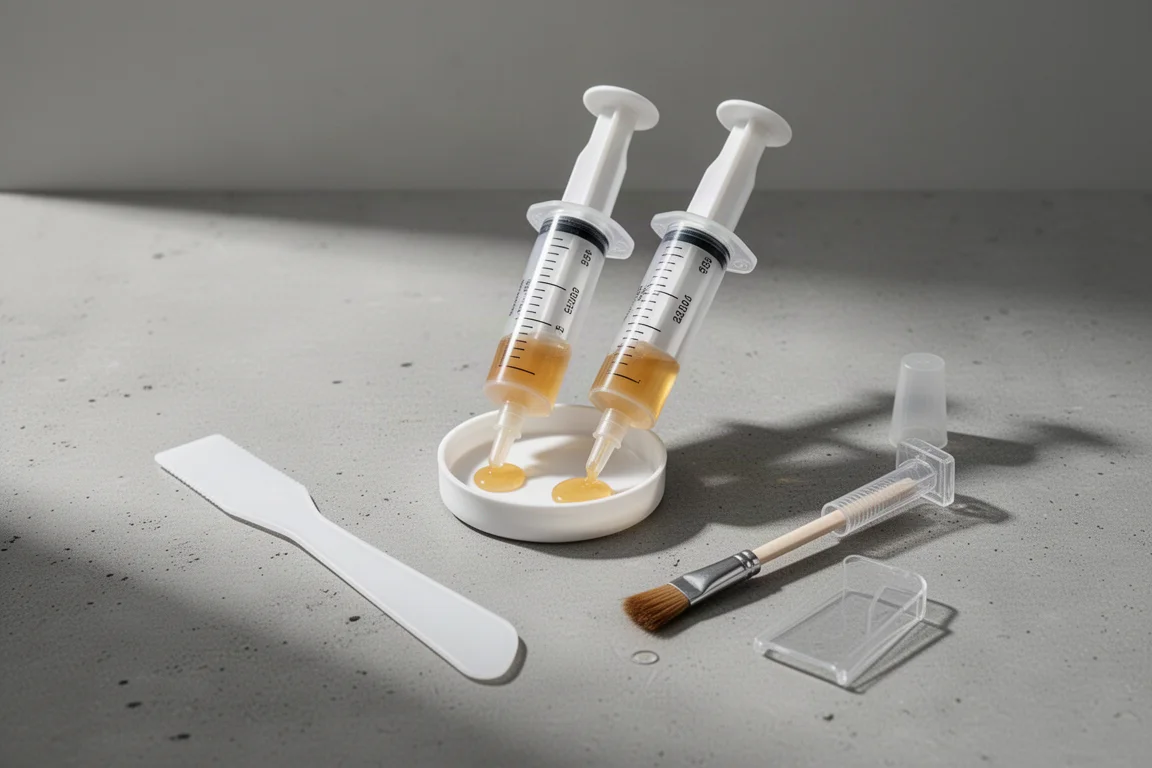
If you do not have access to many tools, the Loctite PC 3967 kit is the most flexible option because it works with just about any fastener size, not just one specific thread. It handles most metals including aluminum, iron, steel, brass, magnesium, and copper, though it has temperature limits of -65 to 300 degrees F, or 350 degrees intermittently. It is made in the USA.
The kit contains a release agent, a two-part epoxy system, and a spatula. You coat the bolt with release agent, mix the two epoxy parts, fill the female component, thread the coated bolt in, remove it after 5 to 10 minutes, and let the compound cure for 30 minutes. The formed threads looked good on inspection, though the temperature ceiling is worth respecting.
EasyLock Thread Repair Kit
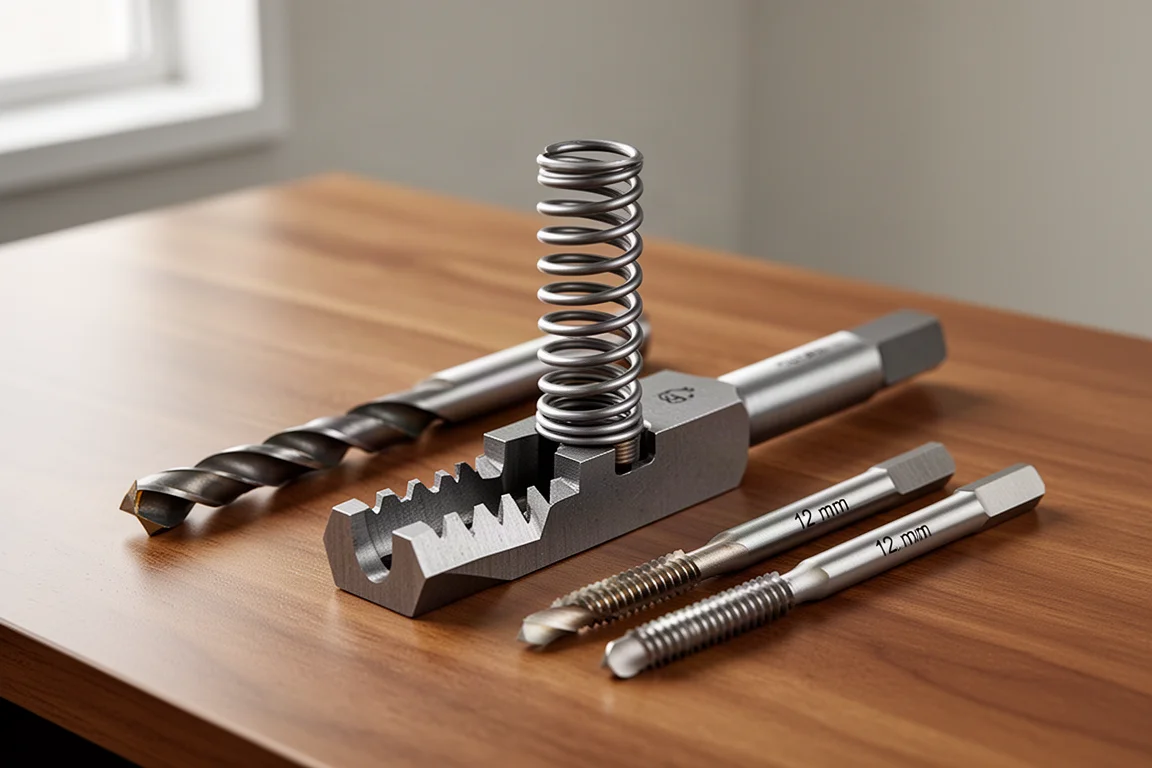
Some users suggest the EasyLock system is actually better than the Helicoil approach, and the installation quality backs that up. At $60, it is one of the pricier kits, with inserts made in the USA and tools made in China. It includes 10 inserts, a 33/32 twist drill, a 12 mm tap, and a driver with notches that secure the insert.
The installation is genuinely a simple drill, tap, and thread sequence. The insert seated into the test piece with the nicest fit of any kit tested.
Timesert Thread Repair Kit
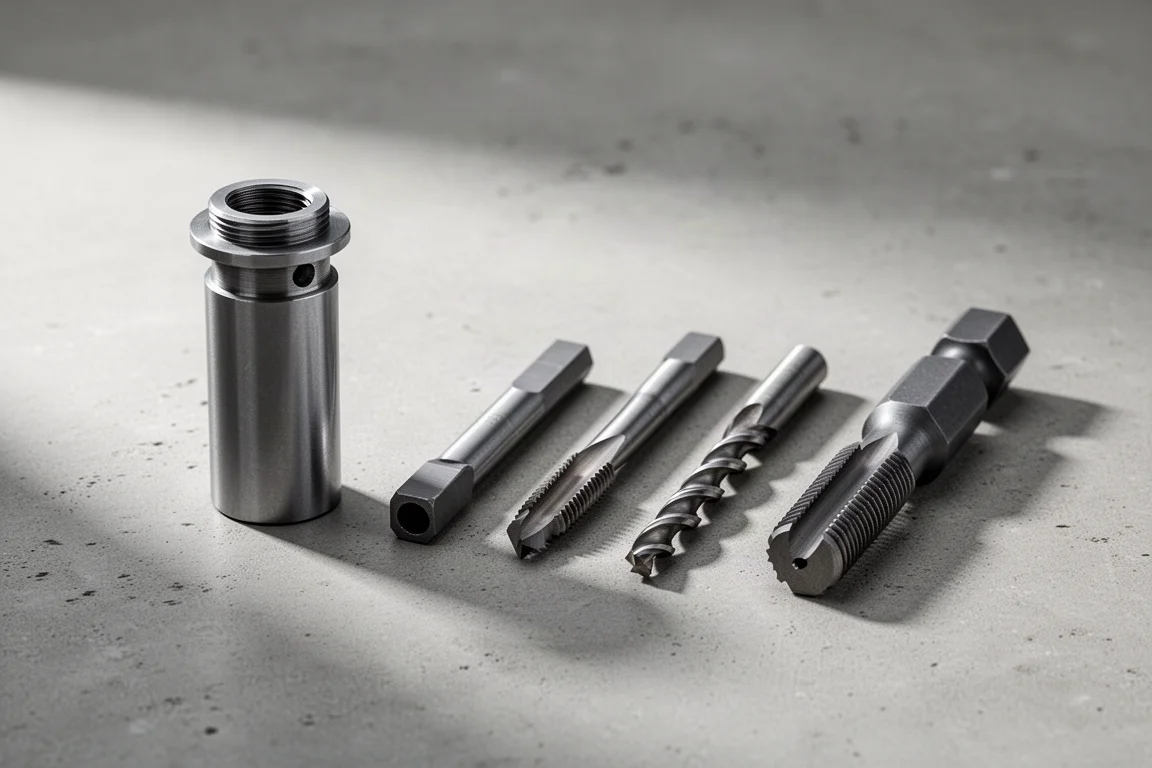
The most expensive kit tested is the $100 Timesert, made in the USA with five inserts. It comes with the drill, a counterbore tool, a tap, and an insert driver. The sequence is drill, tap to full depth, counterbore with light down pressure at slow to medium speed, then drive the insert while oiling the driver threads.
Two design details stand out. The insert has a flange on top that locks it in place and keeps it from moving down into the hole, and the insert is self-locking. The driver tightens as it expands the bottom few threads of the insert, then loosens once the expansion is complete. That self-locking design makes it a strong candidate for parts that see frequent use, such as an oil drain plug.
Torque Test Results
With all repairs fully cured after 36 hours, each one was torqued to failure. The results separated cleanly into two groups.
The four metal insert kits all outperformed the original aluminum threads. EasyLock was the standout with remarkably consistent results, breaking the bolt at roughly 706 to 717 inch-pounds across all three samples. HHIP followed at 500 to 576 inch-pounds, Timesert held at 461 to 571, and Helicoil broke bolts at 442 to 493 inch-pounds. In every insert repair, the repaired threads outlasted the bolt.
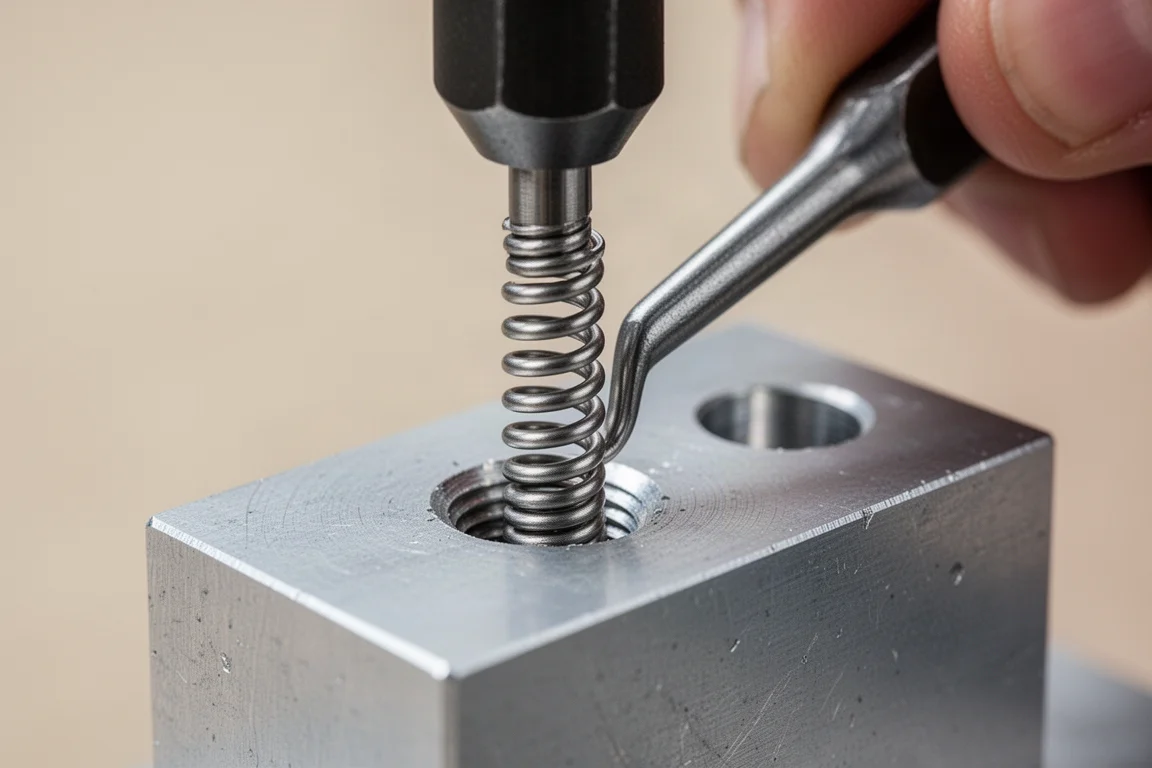
The non-insert fixes told a different story. Copper wire essentially failed, holding zero to 72 inch-pounds. Loctite Red 271 averaged around 140 inch-pounds with high variance between samples. JB Weld averaged about 206 inch-pounds but swung wildly from 98 to 372. The Loctite PC 3967 epoxy repair stripped out at 75 to 177 inch-pounds.
Heavy Load Test Results
For repairs headed into a cylinder head or any part that sees heavy loads, a second test pushed each repair with hydraulic rams until failure. The control bolt survived to about 1,000 PSI before breaking.
Again, all four metal insert kits outlasted the bolt in three out of three tests. EasyLock reached 1,000 to 1,150 PSI, Timesert 1,025 to 1,100 PSI, Helicoil 1,000 to 1,175 PSI, and HHIP 950 to 1,150 PSI, with the repaired threads still in great shape afterward. Among the non-insert options, JB Weld did best at roughly 248 PSI on average, followed by Loctite Red 271 at about 140 PSI, the PC 3967 epoxy at about 115 PSI, and copper at effectively zero.
Corrosion Test Results
A highly corrosive hydrogen peroxide, vinegar, and salt soak ran for 24 hours to test corrosion resistance. Helicoil held up best with no visible signs of corrosion, HHIP came in second with only a small amount, and EasyLock and Timesert showed slightly more corrosion, roughly equal to each other.
Which Thread Repair Kit Should You Choose?
Insert size is another factor worth weighing. The Helicoil insert measures around 10 mm, the Timesert is slightly smaller at 9.47 mm, and the EasyLock is by far the largest at almost 12 mm, which matters when there is limited material around the hole.
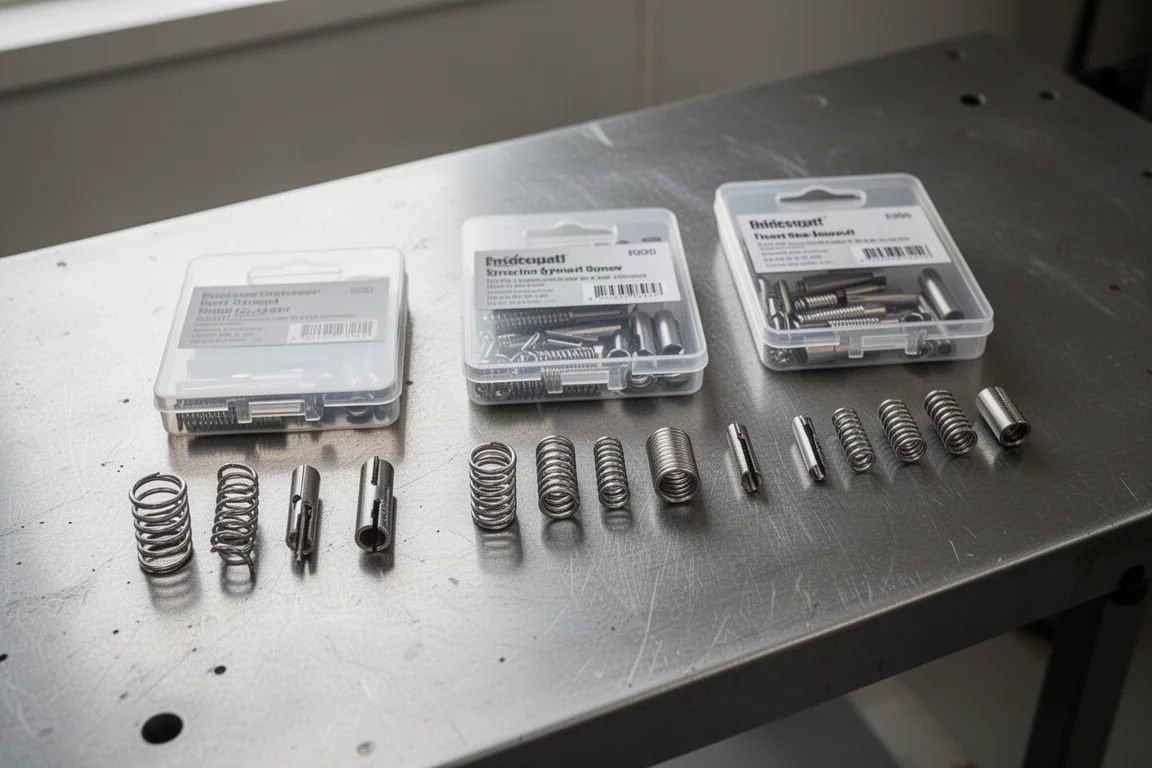
All of the metal thread insert kits impressed, because every one of them outperformed the original aluminum threads. Your choice comes down to three practical factors: corrosion resistance, the insert size your application can accept, and how much you are willing to spend on the repair.
For a budget repair, the HHIP kit delivers outstanding strength for $20, and the Helicoil kit adds better corrosion resistance and clearer instructions for $5 more. If you want the strongest, most consistent holding power, EasyLock justifies its $60 price. For frequently serviced parts like oil drain plugs, the self-locking Timesert design is worth the $100. For tool-light repairs or odd thread sizes, the Loctite PC 3967 epoxy kit is the flexible fallback, and JB Weld remains a cheap stopgap.
Conclusion
The testing produced a clear divide. Epoxy and thread locker approaches, including copper wire, never matched the strength of healthy original threads, and their results varied widely. Every metal thread insert kit, by contrast, beat the factory threads on strength and held the bolt until the fastener itself failed. If the repaired joint matters at all, an insert kit is the repair to make, with the best pick depending on your budget, the corrosion environment, and how much material surrounds the hole.
Further reading
Related Reviews
Tools & Workshop
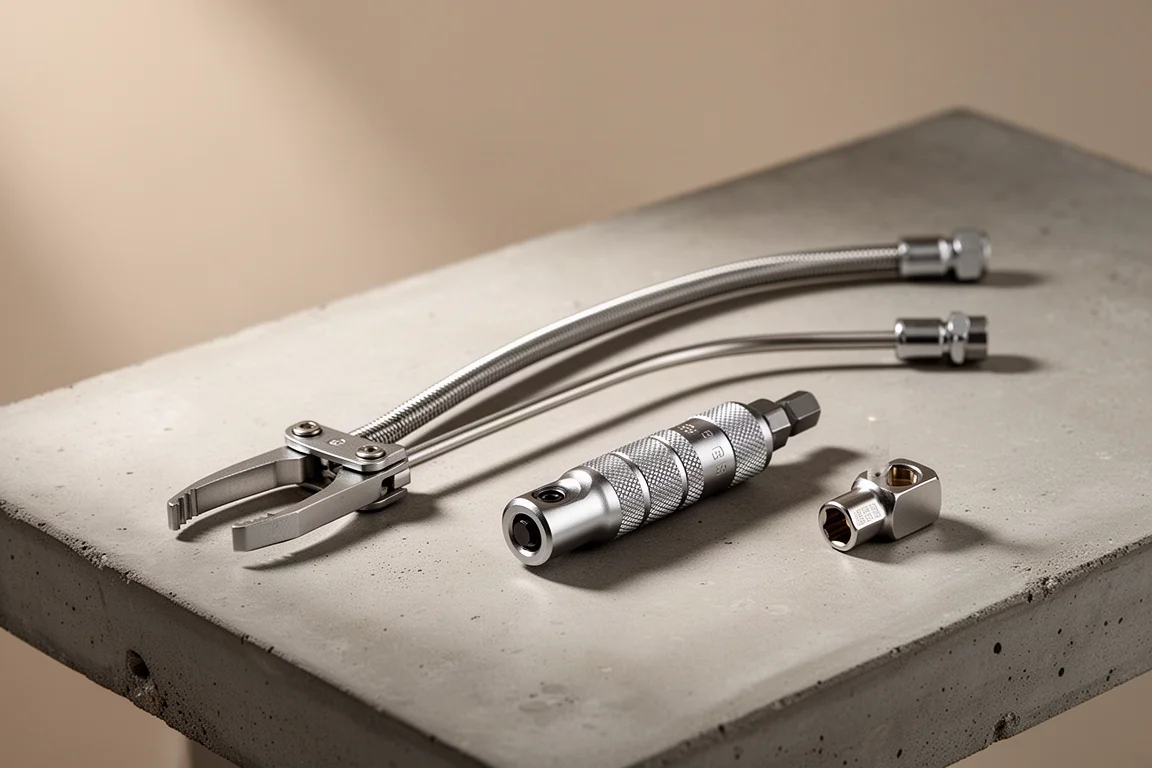
Three Tools That Saved a Tight Dishwasher Installation
A long-reach hose clamp tool, a locking ratcheting bit driver, and a flip socket that earned their spot during a cramped appliance install.
Tools & Workshop
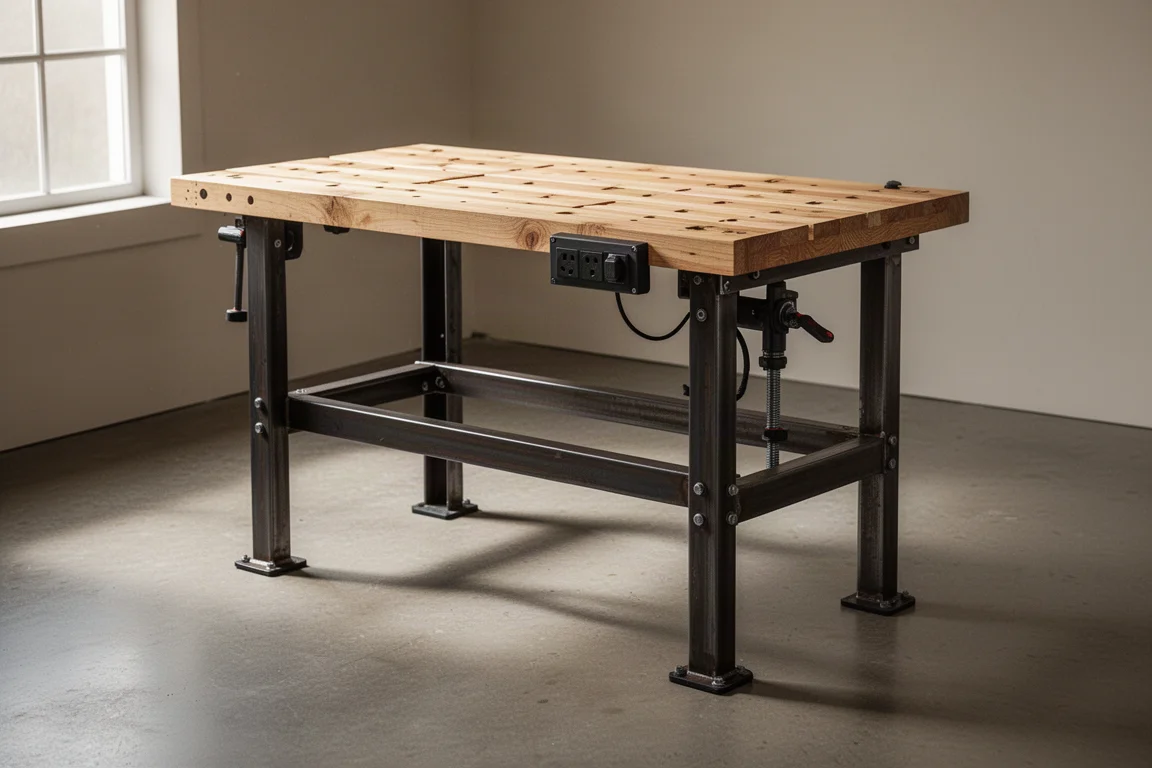
Banggood WB0102 Pro Workbench Review: A Stable, Height-Adjustable Bench for Small Workshops
A heavy, well-priced workbench with a pine top, built-in power strip, height adjustment, and a straightforward assembly that takes under 30 minutes.
Tools & Workshop
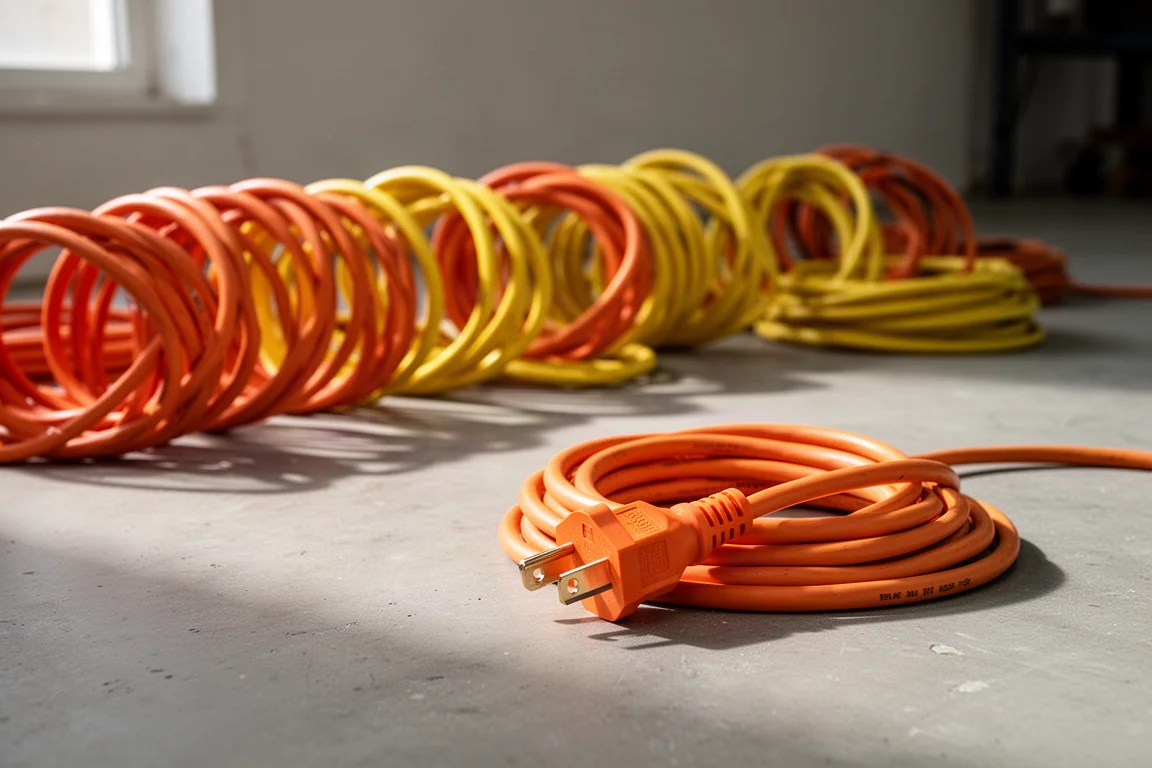
Best 50 ft Extension Cords: 15 Cords Put Through Real-World Testing
Fifteen 50 ft extension cords compared on blade strength, abrasion resistance, voltage drop, plug retention, and cold weather flexibility.