Home Appliances
Best Stick Vacuum Showdown: Ryobi ONE+ HP Whisper vs Dyson V8 vs Tineco Pure One S11
Three of the most popular stick vacuums go head to head in a hands-on comparison covering charging, suction, carpet performance, and everyday usability.
Introduction
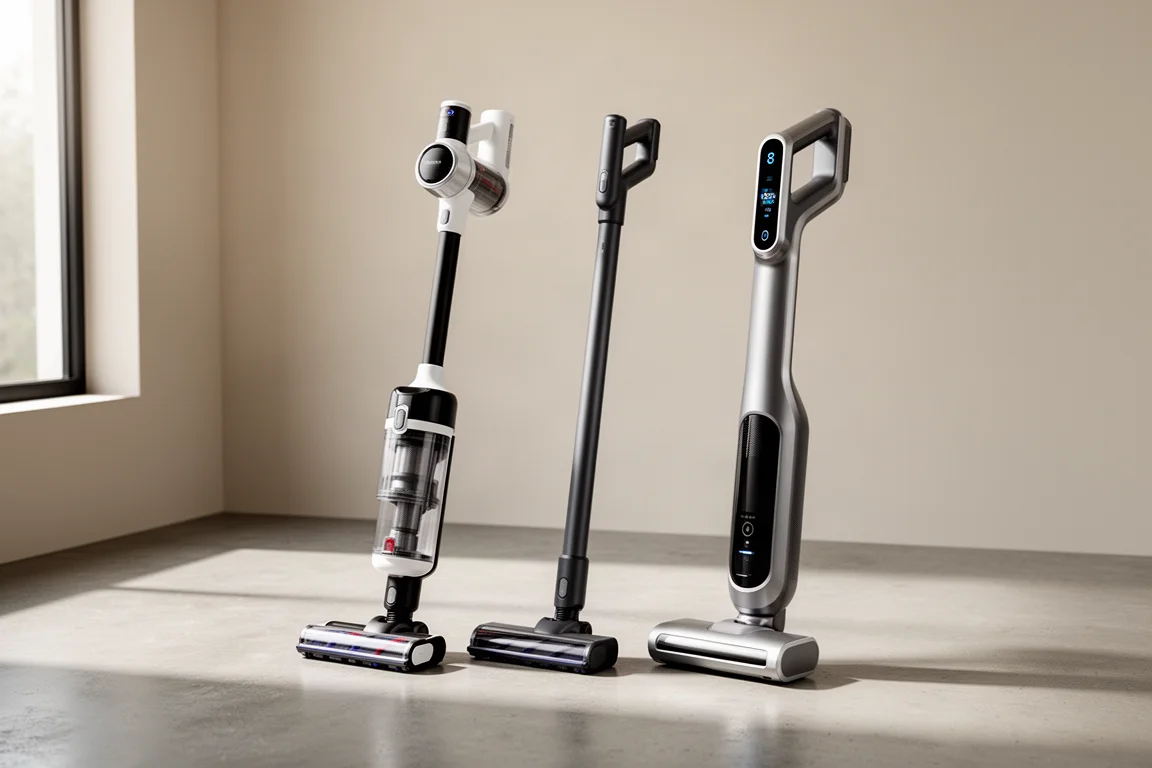
Stick vacuums promise quick, cord-free cleaning, but they vary wildly in power, battery behavior, and everyday practicality. Three of the most popular models on the market went through a full hands-on comparison: the Ryobi ONE+ HP Whisper stick vacuum, the Dyson V8, and the Tineco Pure One S11. Each was unboxed, charged, and tested on the same messes, from spilled sugar to cereal and ground coffee, to see which one actually earns a place in your home.
Evaluation Criteria
The comparison focused on the things that matter most in daily use: what comes in the box, charging speed, ease of use, suction performance across different debris types, carpet behavior, and how easy each canister is to empty and maintain. Warranty length also played a role: two years on both the Dyson and the Tineco, and three years on the Ryobi.
The Three Contenders
All three arrived with a reasonable set of accessories and all felt light and comfortable in the hand. The Tineco stands out with a small digital display and a futuristic look, plus a generous in-box accessory bundle including a wall hanger. The Dyson has a built-in battery, so there is no pack to swap or lose. The Ryobi is a bit bigger and heavier than the other two, so if you want the smallest, most nimble option, it is not the top pick, but its base feels far more solidly built than the thinner plastic stands of its rivals.
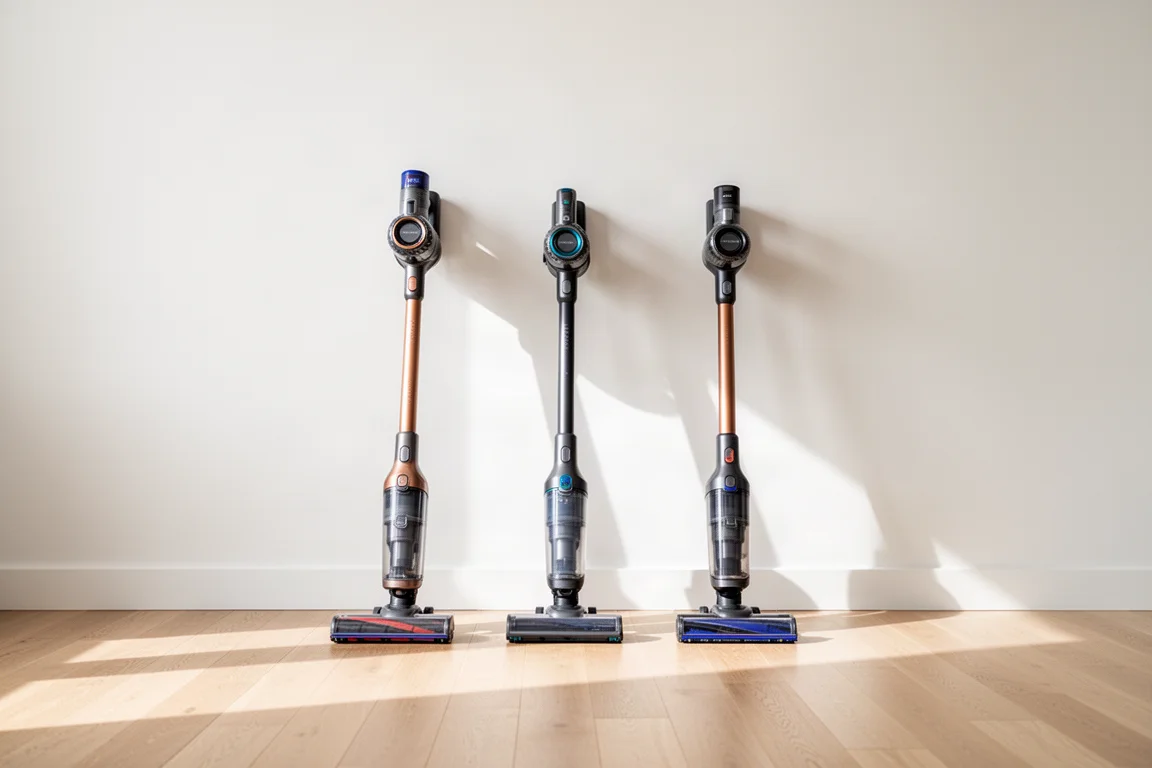
One design detail worth highlighting early: the Ryobi stands up on its own. Stick vacuums are notoriously frustrating to park, since most have to be leaned against something and slide away. The Dyson and Tineco both cannot stand up straight, while the Ryobi stays upright even when nudged around, an improvement its previous model lacked.
Ryobi ONE+ HP Whisper Stick Vacuum
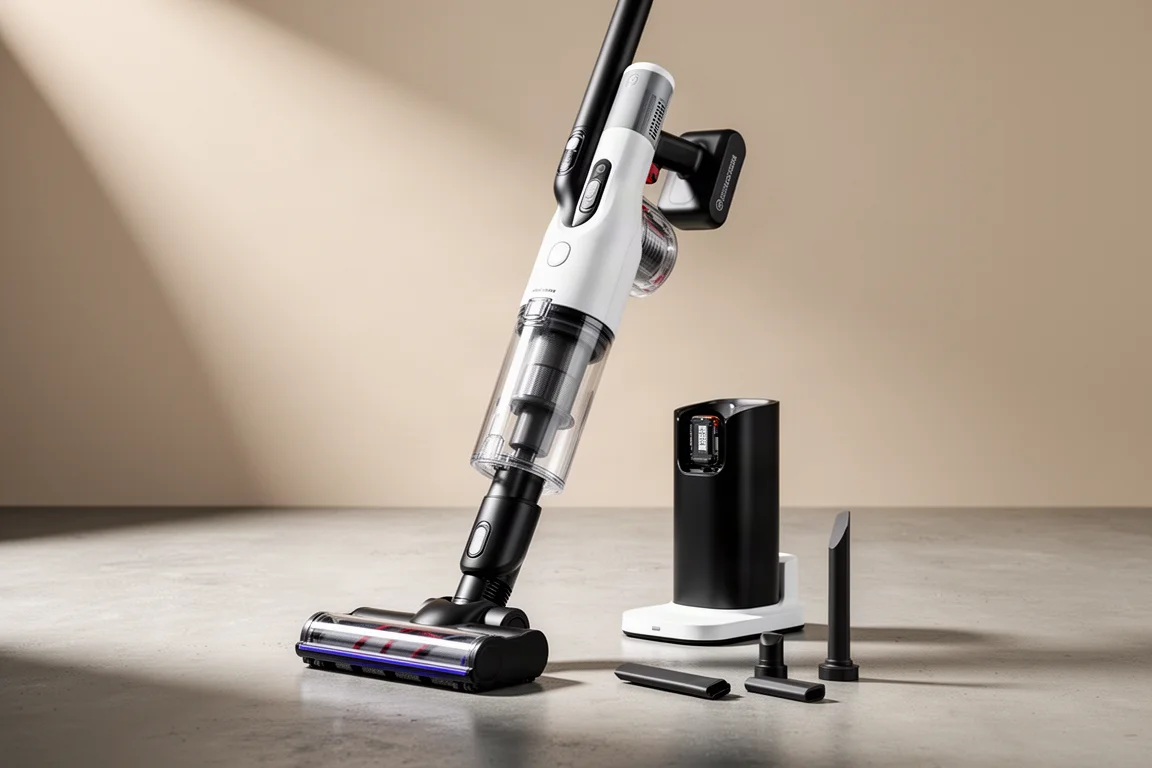
The Ryobi’s biggest advantage is battery flexibility. It ships with a high-performance 4Ah battery, not a lower-tier pack, delivering around 35 minutes on low, and any 8Ah pack from the Ryobi ONE+ family stretches that to roughly 70 minutes. Because the batteries are interchangeable with Ryobi drills, saws, and other tools, you are never stuck with a pack that only works on a vacuum.
Charging is where it pulls further ahead. On the rapid charger it took roughly 30 to 35 minutes, dramatically faster than both competitors, though the standard hanging dock takes a bit longer. It also charges at far higher wattage than the other two when plugged in alongside them.
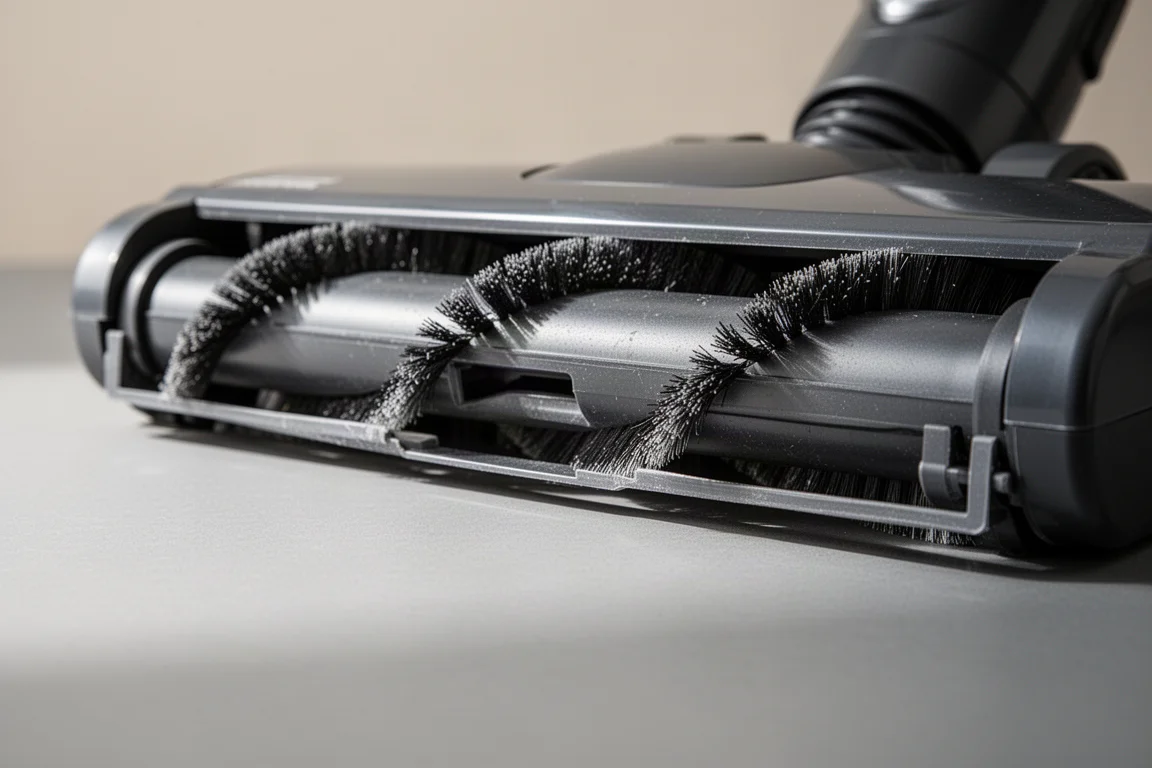
The cleaning head uses two rollers instead of the single roller on the Dyson and Tineco, with an open gap at the front that lets larger debris get swept inside. That translated directly into the strongest suction and carpet performance of the group, plus easier tangle management with simple-to-remove rollers and a small cleaning tool included. The canister is also the largest of the three and very easy to empty.
Dyson V8
The Dyson V8 carries the strongest name recognition, and it does a good job on fine debris like sugar and ground coffee with no issue. But it was a distant third overall, and the frustrations start with charging. It took hours to fill up, blinking endlessly with no clear sense of progress, which was genuinely painful to wait through.
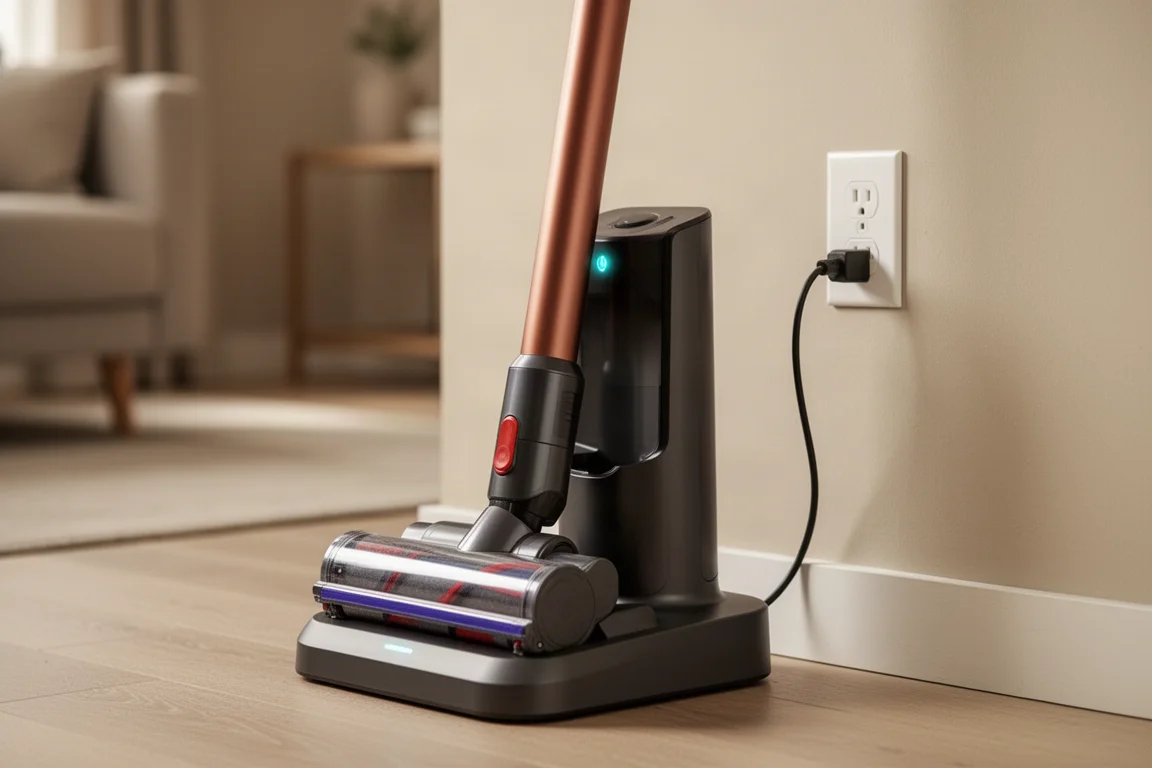
The floor head also struggles with larger debris. Rather than sucking up sprinkles and cereal, it tended to push or even blow them across the floor into corners, and on carpet it bunched up and stalled, apparently lacking the power to keep going. The built-in battery means no swaps, and the pull-up bin mechanism feels flimsy and easy to break. For a vacuum in this price range, the cleaning results do not justify the cost, and it is the most expensive of the three by a wide margin.
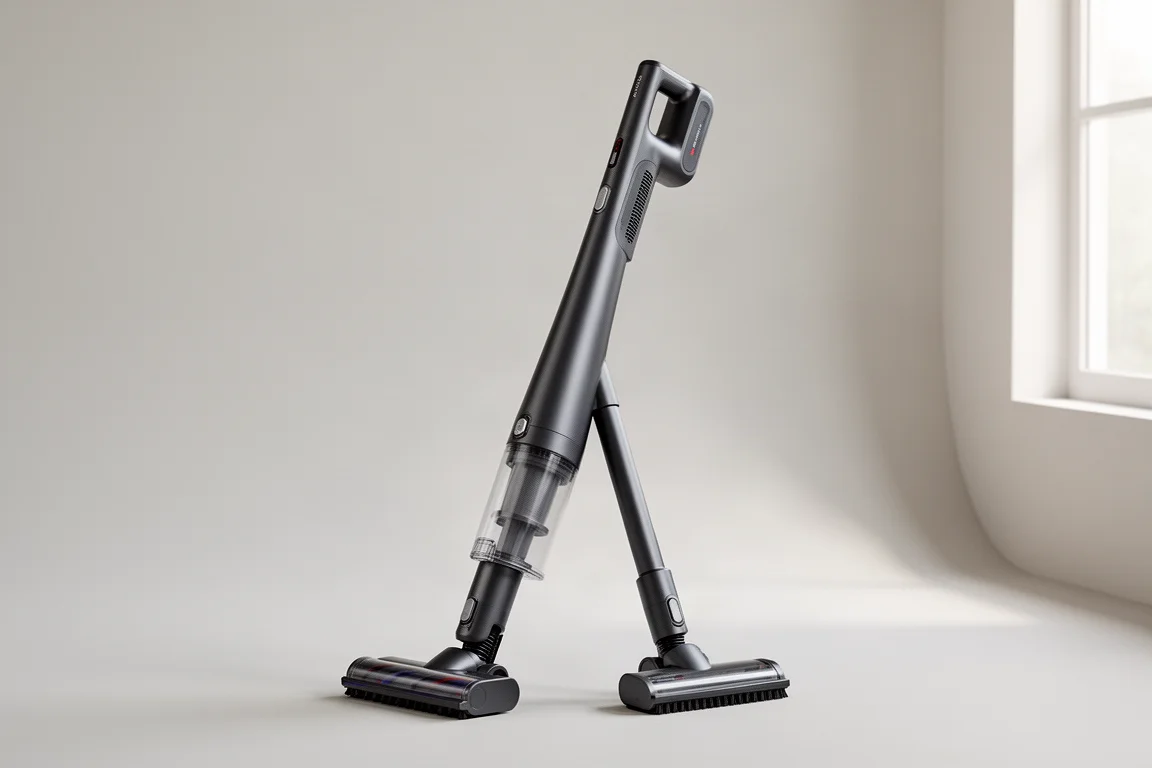
Tineco Pure One S11
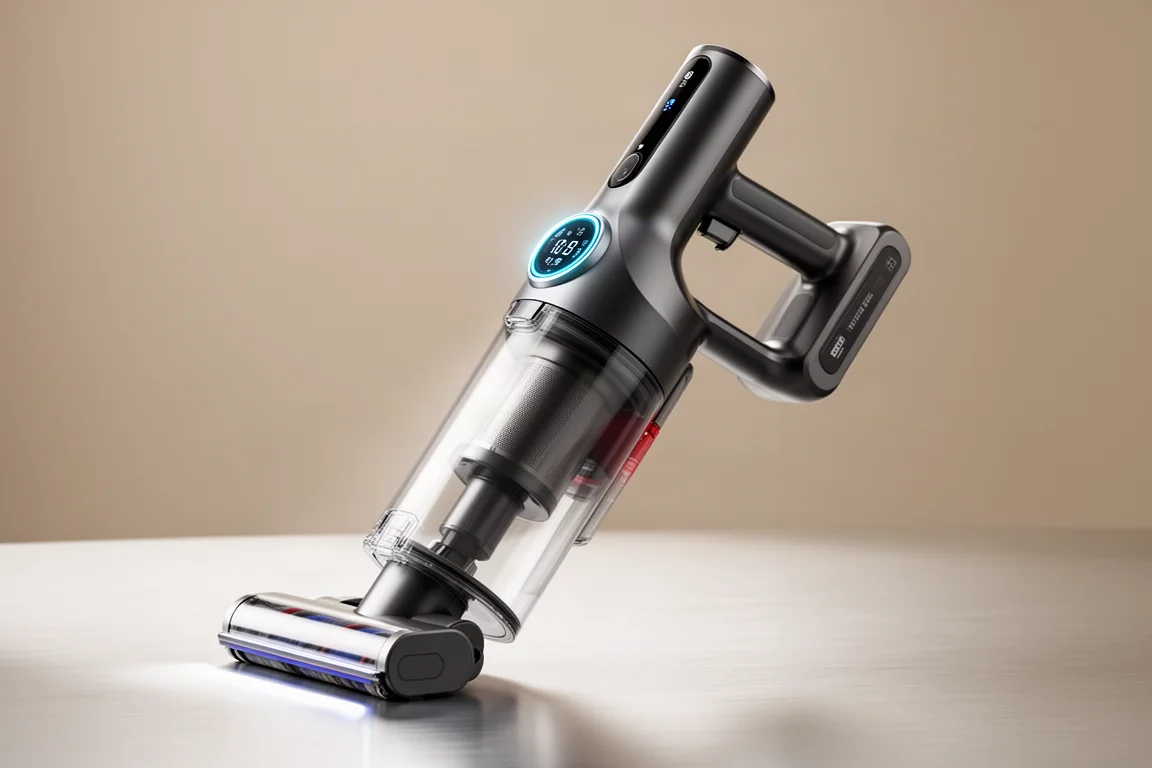
The Tineco Pure One S11 lands in a solid second place. It ships with a 21.6V battery rated for about 40 minutes on low, matches the Dyson’s runtime, and charges in roughly an hour and a half. The digital display and Auto mode, which automatically adjusts suction, give it a smarter feel, and indicator lights flag problems if anything goes wrong.
Cleaning performance was strong on sugar and excellent on ground coffee, and it handled sprinkles dramatically better than the Dyson. It faltered with large items, though, pushing cereal and almonds around much like the Dyson, and carpet performance was only slightly better than the Dyson’s. Two caveats to know before buying: the replaceable battery is vacuum-specific, and a replacement pack costs about $59. The charging indicator is also very dim and gives no sense of remaining charge time.
Suction Tests: Which One Actually Cleans
The head-to-head mess tests made the differences obvious. On sugar, the Dyson did a very good job, the Tineco performed well except for stubbornly missing small stray pieces, and the Ryobi needed a forward-then-pull-back motion rather than grabbing everything at once, but cleaned up thoroughly.
Sprinkles exposed a real weakness. The Dyson threw most of them across the floor instead of sucking them in, while both the Tineco and the Ryobi handled them far better. Ground coffee went well for all three, each picking it up cleanly.
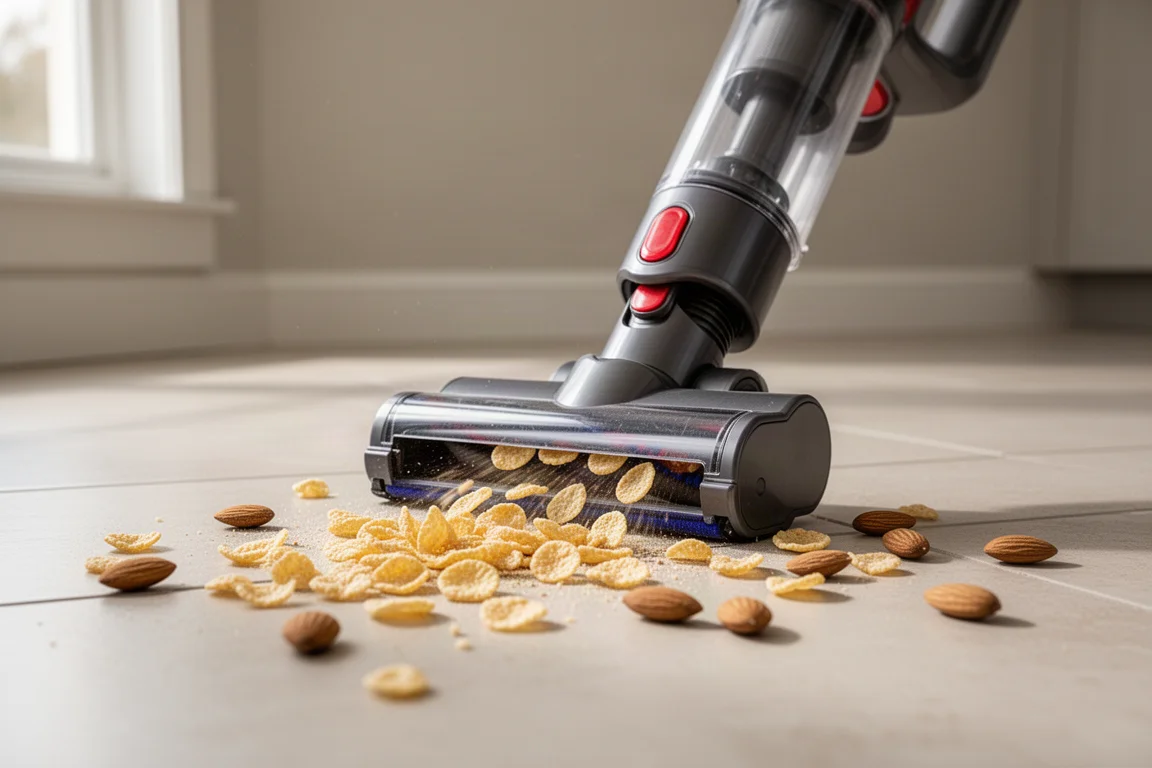
Cereal and almonds were the decisive test. The Dyson and Tineco both simply pushed the pile around, while the Ryobi, tested with an even larger spread of Cheerios and almonds, picked up everything, small pieces included, leaving the bin holding the entire mess. The open front gap and dual brushes explain the difference: on the Dyson and Tineco, large debris has no clear path into the intake.
Carpet confirmed the pattern. The Dyson repeatedly stalled and bunched up, the Tineco did a little better but had similar trouble, and the Ryobi cleaned thoroughly without stopping, aided by tangle-resistant dual rollers that are easy to pull out and clean.
Filtration and Maintenance
All three use HEPA-style filters, with the Dyson including three and the Tineco a couple, which adds ongoing filter costs over time. The Ryobi includes a rear filter as well. Extra filtration can reduce dust escaping, but none of the three showed noticeable dust escape issues in use. The Ryobi and Tineco canisters both empty out easily, while the Dyson’s bin mechanism again felt cheap and fragile by comparison.
Overall Buying Advice
If cleaning performance is the deciding factor, the Ryobi ONE+ HP Whisper is the clear winner: more power, better carpet results, faster charging, the largest canister, a three-year warranty, and a battery that works across an entire tool ecosystem. It is bigger and bulkier, and if you need the smallest, most nimble stick vacuum, look elsewhere. It is also considerably cheaper than the Dyson, which makes its dominance harder to argue with.
Choose the Tineco Pure One S11 if you want a smarter, lighter option with Auto mode, a digital display, and respectable everyday performance, accepting that large debris and carpet are not its strengths and that spare batteries are expensive and vacuum-only. The Dyson V8 is easy to use and fine on fine debris, but slow charging, weak large-debris pickup, carpet stalling, and a premium price make it hard to recommend over the other two at this money.
Conclusion
The Ryobi ONE+ HP Whisper takes the top spot hands down thanks to its swappable batteries, raw power, self-standing design, and superior carpet and large-debris cleaning. The Tineco Pure One S11 is a capable second with smarter features but no standout strength, and the Dyson V8 finishes a distant third despite its name recognition. Match the vacuum to your real messes, and the right choice becomes fairly obvious.
Further reading
Related Reviews

Home Appliances
Best Upright Vacuums 2026: Top Picks for Every Budget
We tested 23 plus upright vacuums to find the best performers across cleaning, sealing, usability, and value. These are the models worth considering.

Home Appliances
Best Vacuums 2024: Top Picks for Every Floor Type and Budget
A data-driven roundup of the best upright, cordless, and robot vacuums of 2024, with performance scores and buying advice for every budget.

Home Appliances
Best Vacuums 2026: Budget to Premium Roundup
Eight vacuums tested across carpet, hard floors, hair wrap, crevice cleaning, and air filtration. Find out which budget model beats the premium flagships.