Cookware
Best Starter Cookware: Three Budget Levels from $150 to $500
Building a cookware collection from scratch? Here are the pans worth buying at three different budget levels, with trade-offs explained.
Introduction
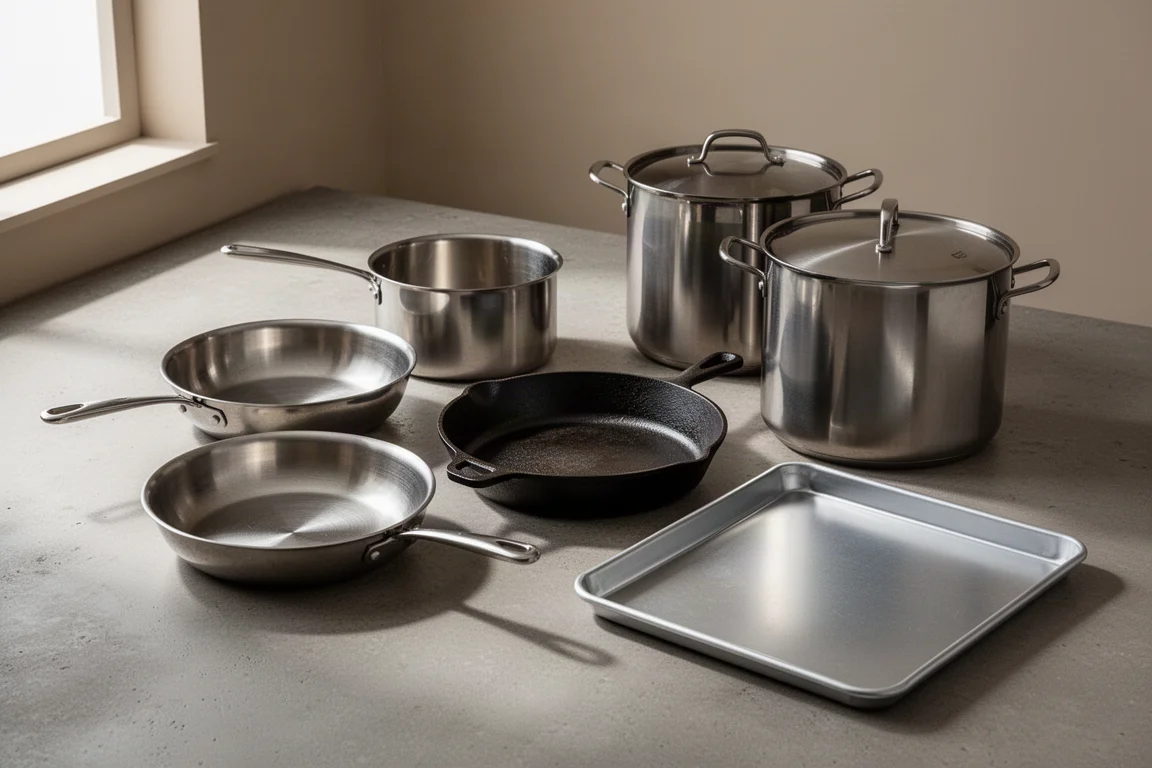
Starting a kitchen from zero is easier than it looks. You do not need a wall of pots and pans, just a small set of versatile pieces chosen in the right shapes, sizes, and materials. This guide breaks down three sensible starting points at three budget levels: roughly $150, $250, and $500. Even if your budget lands elsewhere, the logic behind each pick carries over.
Every brand mentioned here performs well in long-term use, holds up against far more expensive options, and stays affordable without cutting corners on quality.
The Three Essentials at $150
If you only had $150 and an empty kitchen, three pieces cover almost everything you cook. First, a shallow pan, either a fry pan or a sauté pan, ideally around 12 inches in total diameter with a flat cooking surface near 10 inches. This becomes your workhorse for searing meat, sautéing vegetables, frying eggs, and much more. Lodge, Goldilocks, Tramontina, and Cuisinart are all excellent affordable brands here.
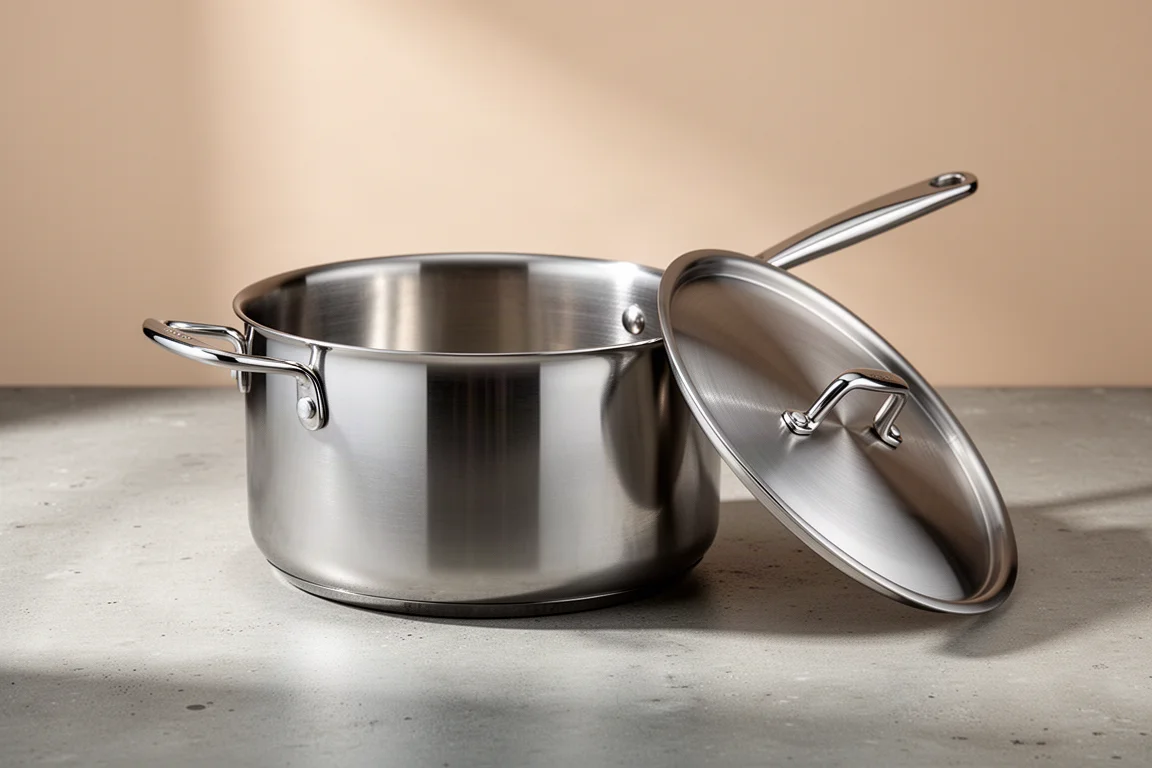
Second, a 3 to 4-quart saucepan for liquid-based foods like pasta, grains, and sauces. Many sets include smaller 1.5 or 2-quart saucepans, which are fine for hard-boiled eggs or a quick sauce, but when you are starting out, a bigger size is far more versatile.
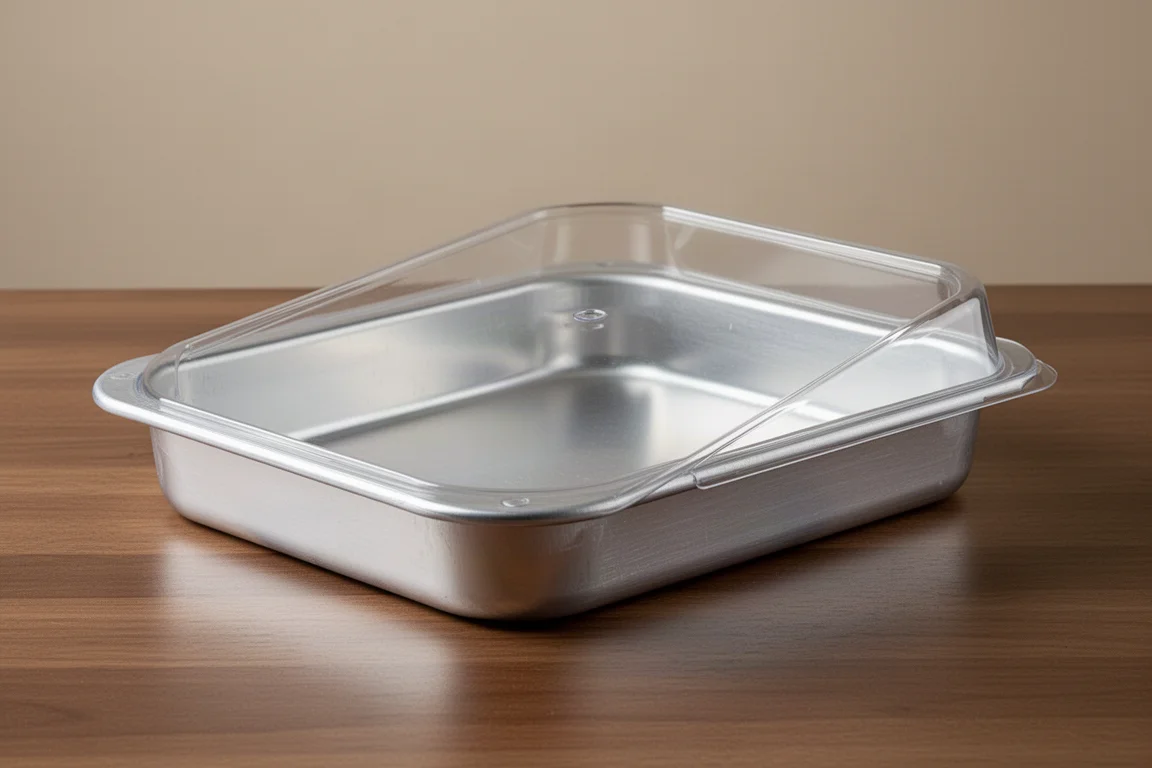
Third, a half sheet pan for anything that needs to spread out flat and bake or roast in the oven. Nordic Ware is the standout here: affordable, made in the USA, and thick enough that it is less likely to warp.
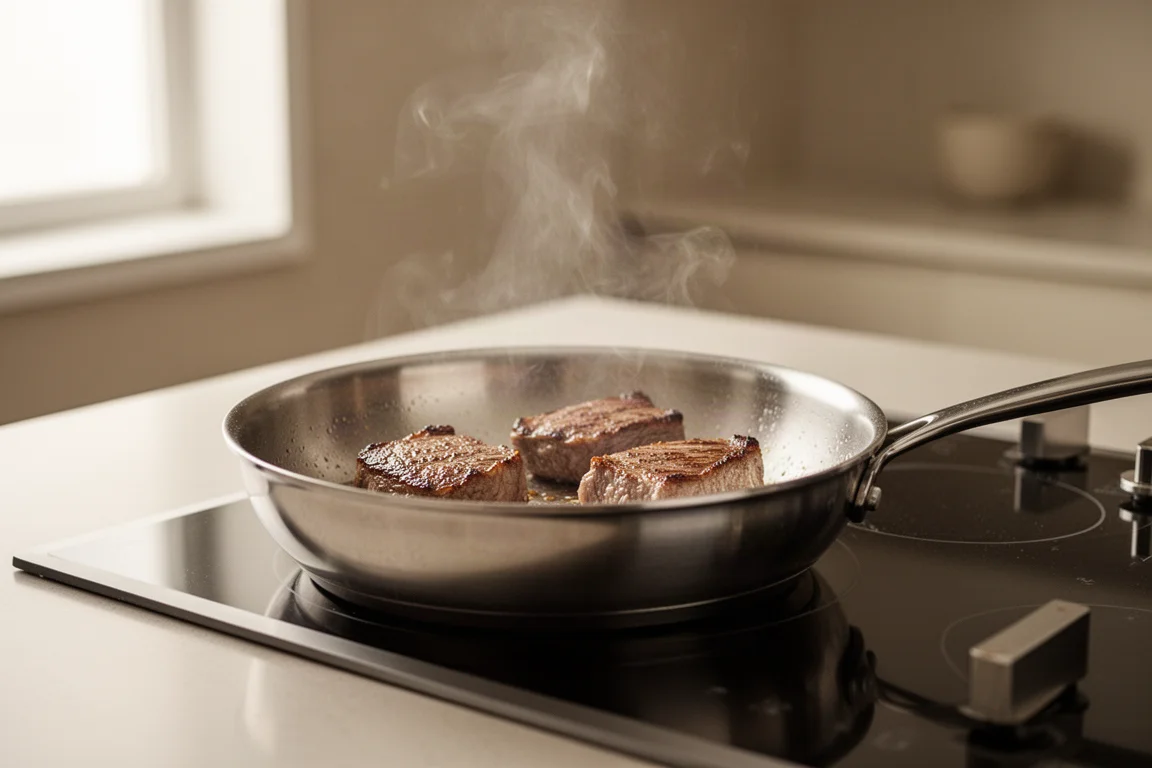
From there, the main decision is which shallow pan approach fits your cooking style. There are three practical routes.
Option One: The Sauté Pan Route
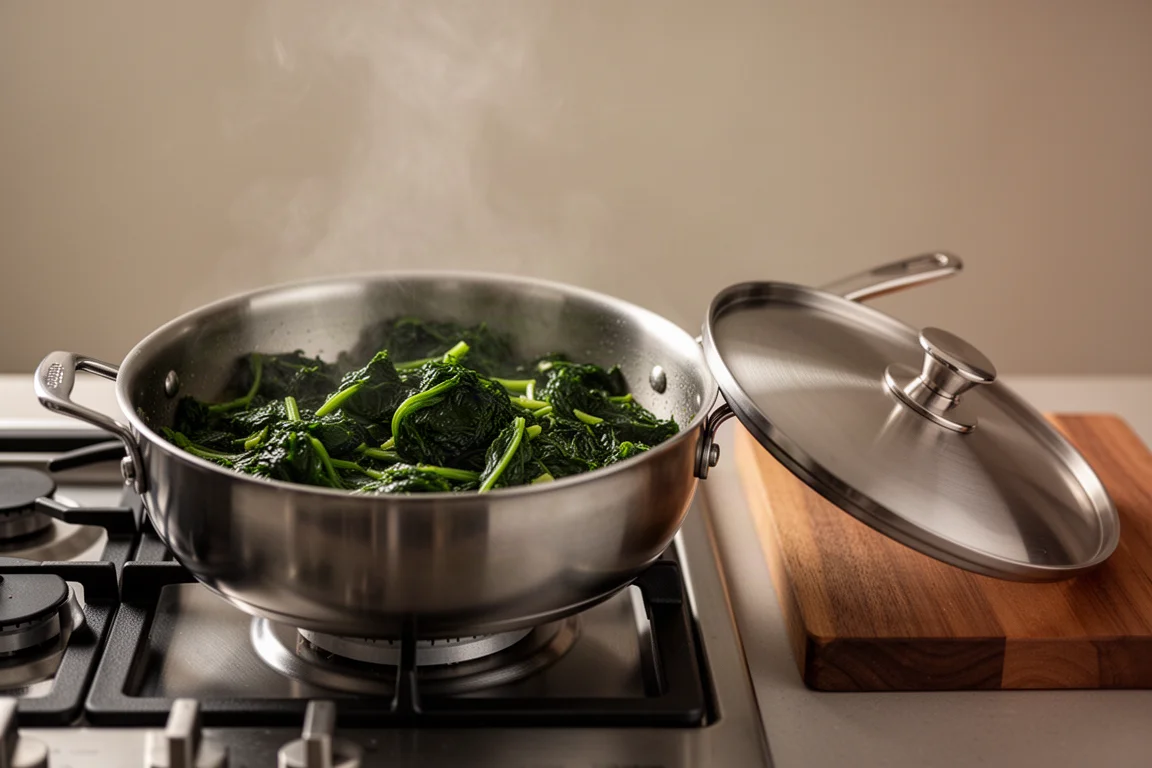
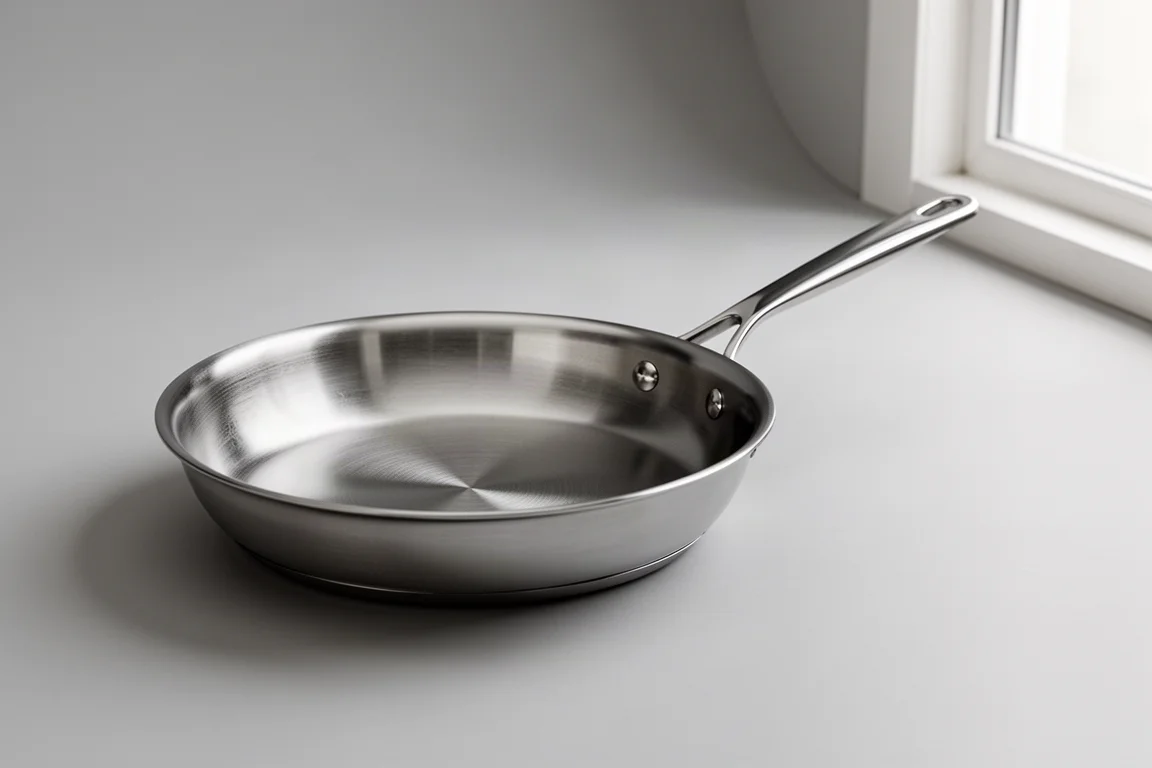
The Goldilocks 3.5-quart stainless steel sauté pan is compatible with all cooktops including induction, oven-safe up to 550°F, and comes with a large helper handle. The wide cooking surface leaves plenty of room for searing and sautéing, while the tall straight sides let you cook liquids without spilling onto the cooktop. Most sauté pans also include a lid, perfect for wilting down large quantities of leafy greens.
The trade-off: straight sides make it harder to toss food or slide a spatula underneath, and moisture evaporates more slowly than in a sloped-sided fry pan, so searing is slightly less effective, though the difference is minor.
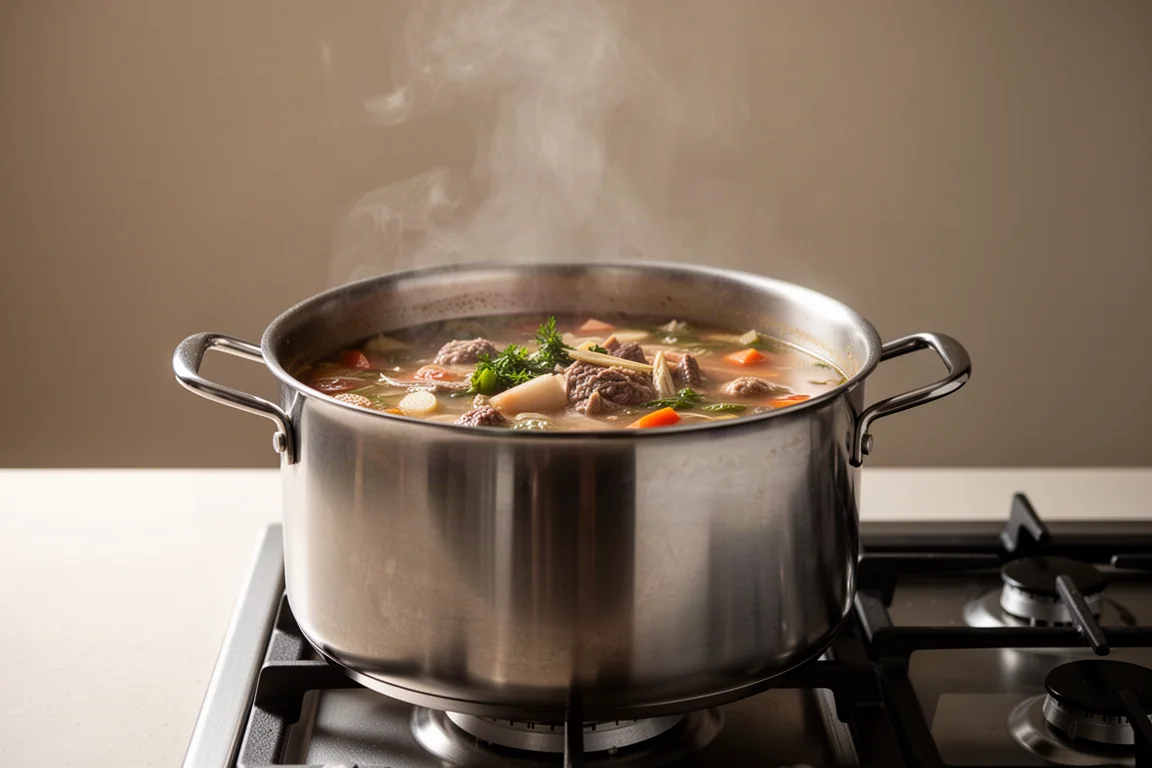
This route is excellent if you do a lot of braising or one-pan meals with acidic sauces. It is a poor fit if eggs are your daily breakfast or you like flipping food without a spatula.
Option Two: Two Fry Pans Instead
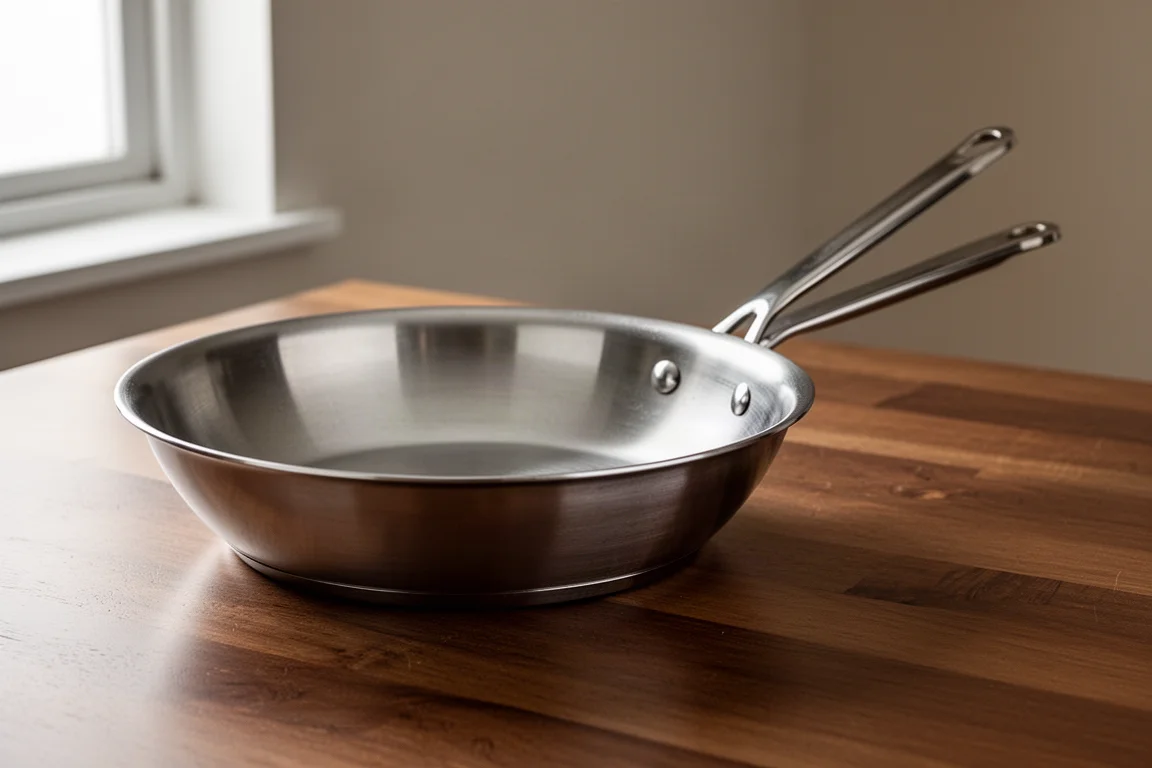
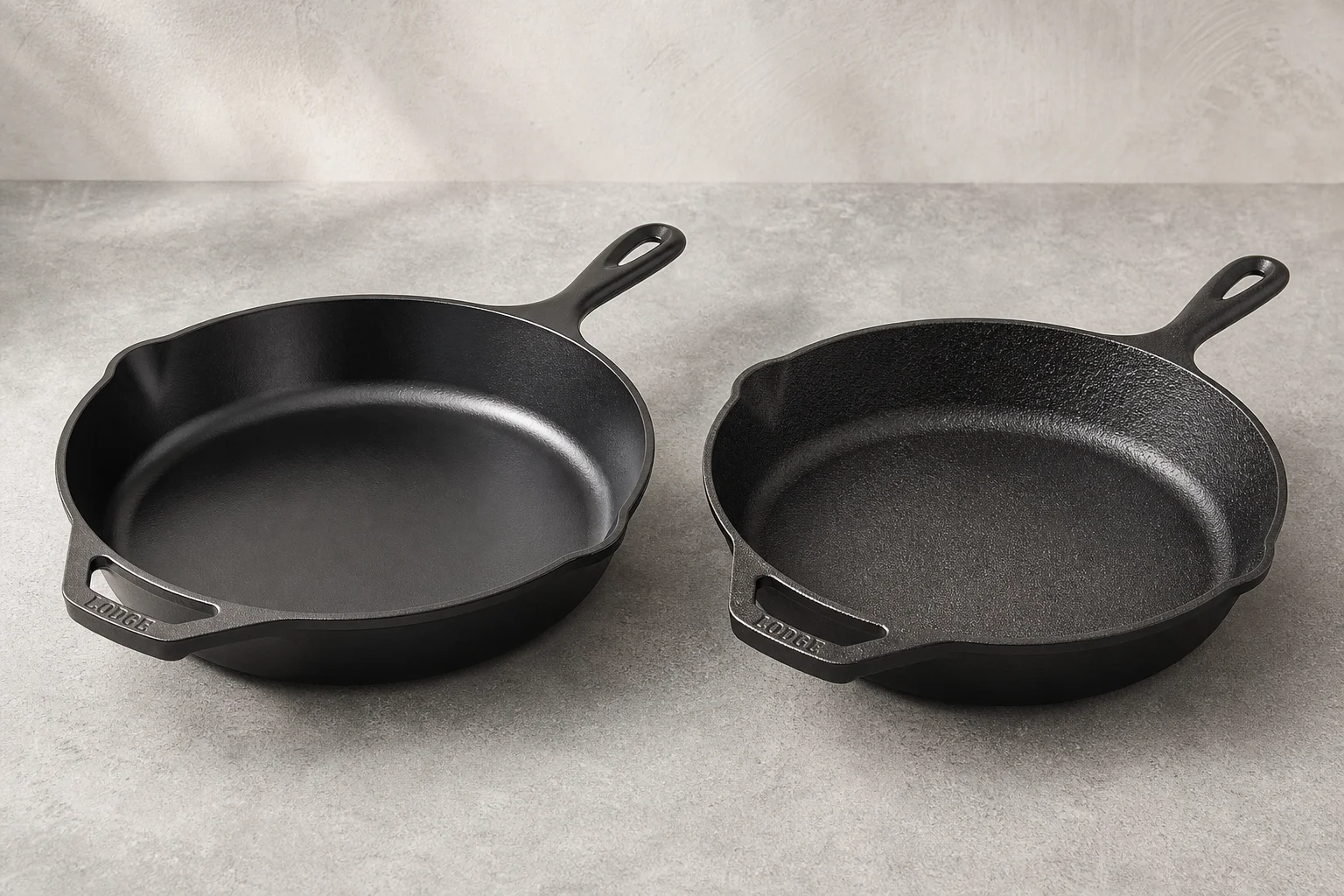
This route swaps the sauté pan for two fry pans: one stainless steel, which handles any ingredient, and one cast iron, which is thicker and heavier and, once seasoned, releases food much like a non-stick pan.
Cast iron has one clear limitation: acidic foods. To prevent rust, cast iron needs to be seasoned by coating it with oil and baking it in the oven, and simmering acidic foods for long stretches can ruin that seasoning. That is exactly why the stainless steel fry pan sits alongside it.
Compared to a sauté pan, fry pans make cooking eggs and searing meat easier, but the shallow, angled sides demand care with sauces, shallow frying, and other liquids, and neither pan comes with a lid.
Lodge 12-Inch Cast Iron Skillet
The Lodge 12-inch cast iron skillet is the classic pick for this role. It is inexpensive, built to last for decades, and once properly seasoned it behaves almost like a non-stick surface for eggs and seared meats. Just keep long-simmered acidic dishes in your stainless steel pan instead.

Tramontina 12-Inch Stainless Steel Fry Pan
The Tramontina 12-inch stainless steel fry pan rounds out the pair. It performs on par with pricier brands, and the main difference between Tramontina and Goldilocks at this size comes down to handle design rather than cooking performance.
Option Three: Cast Iron and Non-Stick
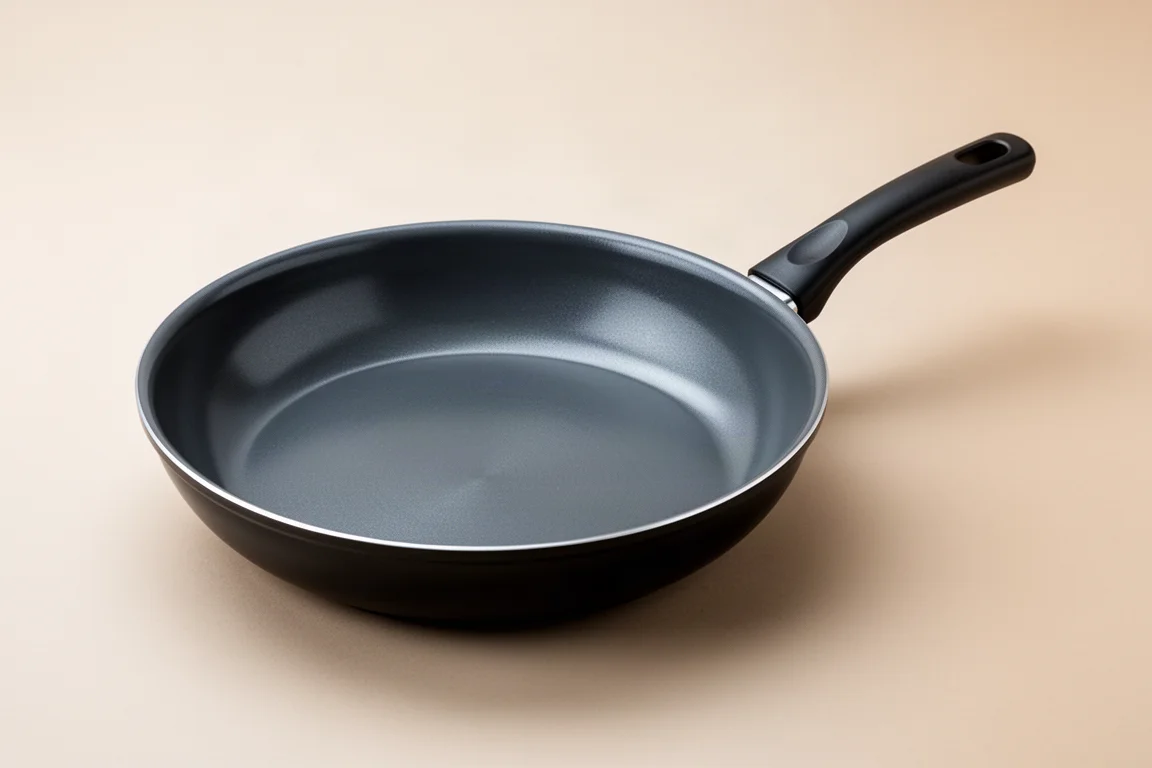
The third route keeps a larger saucepan but replaces the stainless steel shallow pan with cast iron and non-stick. You can cook eggs in stainless steel and cast iron, but it is easiest in a non-stick pan.
The Tramontina 10-inch non-stick fry pan is relatively cheap and performs well, but the coating will eventually fail and the pan will need replacing. Everything else in this guide can genuinely last a lifetime, so treat non-stick as a consumable.
The $250 Budget: Room for a Stock Pot
At $250 you keep the three essentials: a stainless steel 12-inch fry pan, a 3 to 4-quart saucepan, and at least one half sheet pan. You should also consider a 6 to 8-quart stainless steel stock pot for soups, stocks, sauces, and big batches of rice and pasta. You may not use it daily, but it earns its place when hosting or prepping food for the week.
There is also room for extra pans like cast iron and non-stick. One useful construction note: buying fully clad stainless steel is usually the advice, but a disc-bottom stock pot is a smart place to save. Fully clad means a conductive aluminum or copper core runs through the whole pan including the sides; disc bottom means the conductive layer sits only at the base. For fry pans and sauté pans, fully clad matters more because solid food contacts the bottom and sides. In a large stock pot, liquid distributes heat evenly on its own, so fully clad is not always worth the extra cost.
Nordic Ware Half Sheet Pan
The Nordic Ware half sheet pan is the quiet hero of any starter kit. It is affordable, made in the USA, and its thick construction resists warping at high oven temperatures. At $150 it is essential; at $250 you can afford a second one.
A Note on Cookware Sets
At this budget, stainless steel sets start to look tempting, and good deals exist. The problem is that most sets lack the exact sizes you actually need, and they often pad themselves with unnecessary pieces, like an 8-inch fry pan that is simply too small to be useful. Buying pieces individually usually serves you better.
The $500 Budget: Full Flexibility
At $500 you do not need to sacrifice anything. Beyond the three essentials and a large stock pot, consider adding a 3 to 4-quart stainless steel sauté pan, a 12-inch cast iron fry pan, a 10 to 12-inch non-stick fry pan, and a 5 to 6-quart enameled cast iron Dutch oven.
You could argue a Dutch oven is redundant next to a stock pot, since both are large pots with tall walls, wide openings, and lids. But the logic is the same as owning both stainless steel and cast iron skillets: Dutch ovens are heavier and retain heat better, which makes them superior for browning, braising, slow cooking, and any dish that needs a steady temperature over a long period.
Cuisinart Multiclad Pro Collection
The first $500 approach leans on the Cuisinart Multiclad Pro collection. It is fully clad throughout, including the stock pot, and it represents a step up from Goldilocks and Tramontina mainly because of the handles: they are longer, more comfortable, and the groove on top gives excellent control when tilting and pouring. When people ask for affordable alternatives to All-Clad, this collection sits at the top of the list.
Lodge Essential Enamel Dutch Oven
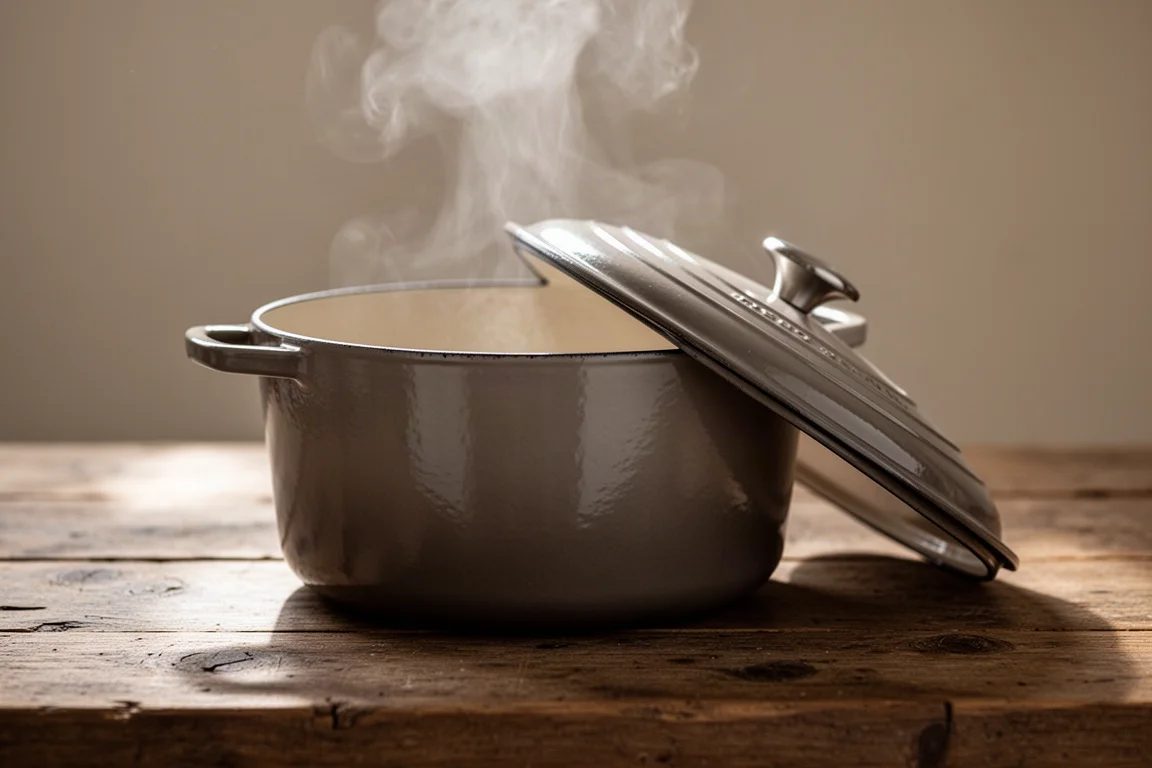
The Lodge Essential Enamel Dutch oven completes this setup. It costs much less than premium French brands like Staub and Le Creuset, but in head-to-head testing the performance is similar. The main reason for the lower price is manufacturing location: it is made in China rather than France.
The Alternative $500 Build
The second approach swaps the Cuisinart Multiclad Pro pieces for less expensive Goldilocks stainless steel pans and drops from a 4-quart to a 3-quart saucepan. The money saved goes toward a 12-inch non-stick pan instead of a 10-inch, plus an extra fry pan or small saucepan. With $500 you can freely swap brands, sizes, and shapes to match how you actually cook.

Overall Buying Advice
The right starting collection depends less on brand loyalty and more on cooking style. Frequent braisers and one-pan cooks should lean toward the sauté pan route. Egg lovers and frequent searers benefit from the two-fry-pan setup. If effortless eggs matter most and you accept replacing a coating eventually, non-stick earns a slot. Wherever you start, the stainless steel, cast iron, and sheet pan pieces you buy first are the ones most likely to still be in your kitchen decades from now.
Conclusion
A thoughtful starter kitchen needs surprisingly few pieces: one versatile shallow pan, one properly sized saucepan, and a sturdy sheet pan cover the vast majority of everyday cooking. Budgets above that simply add depth, a stock pot at $250, and a sauté pan, Dutch oven, and specialty pans at $500. Choose the shallow pan shape that matches your habits, favor brands that punch above their price, and build from there.
Further reading
Related Reviews
Cookware
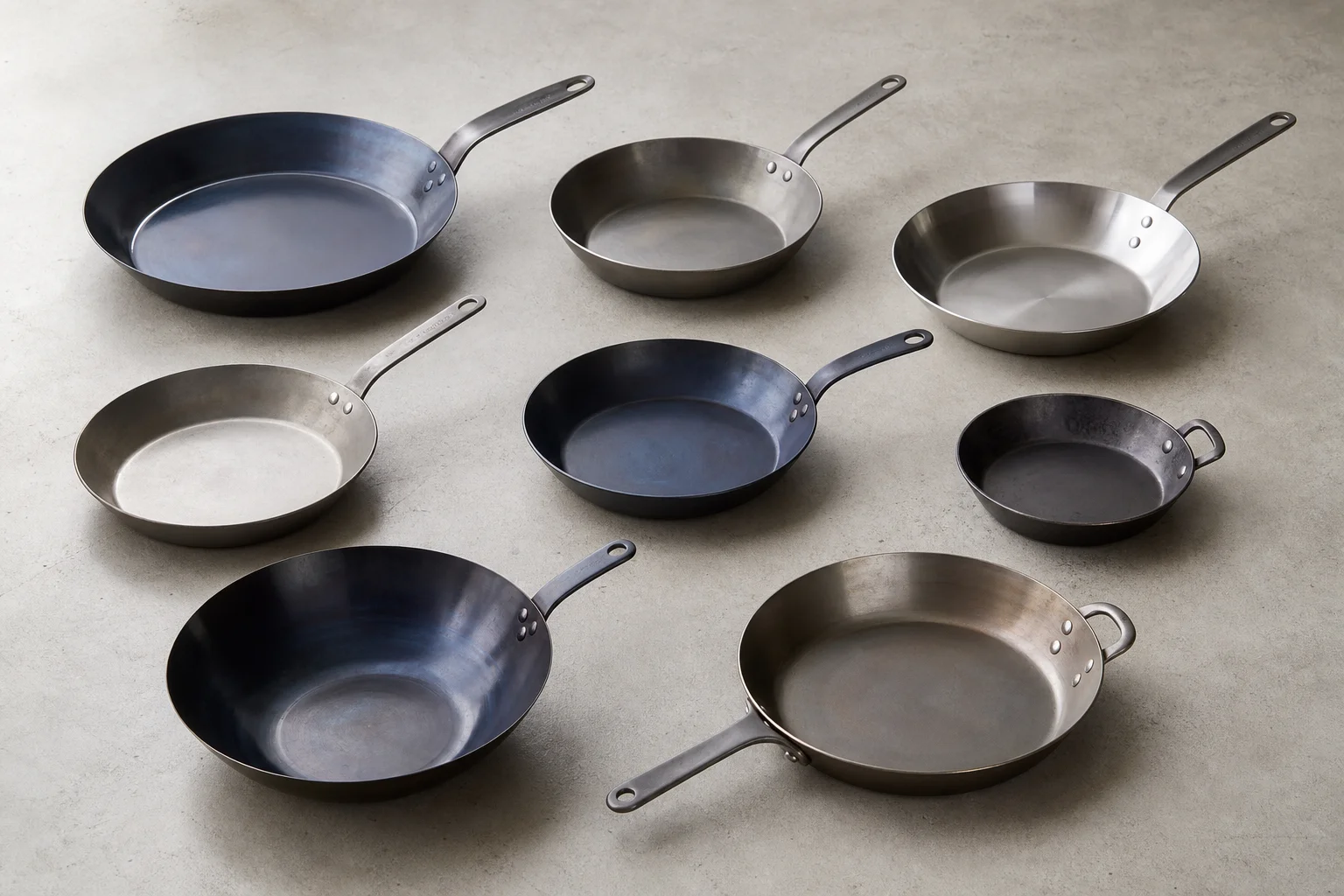
Best Carbon Steel Pans Tested: Which Brands Deliver Real Value
We tested eight popular carbon steel pans with controlled durability, heat, and cooking tests. Here's which ones perform best and which to avoid.
Cookware
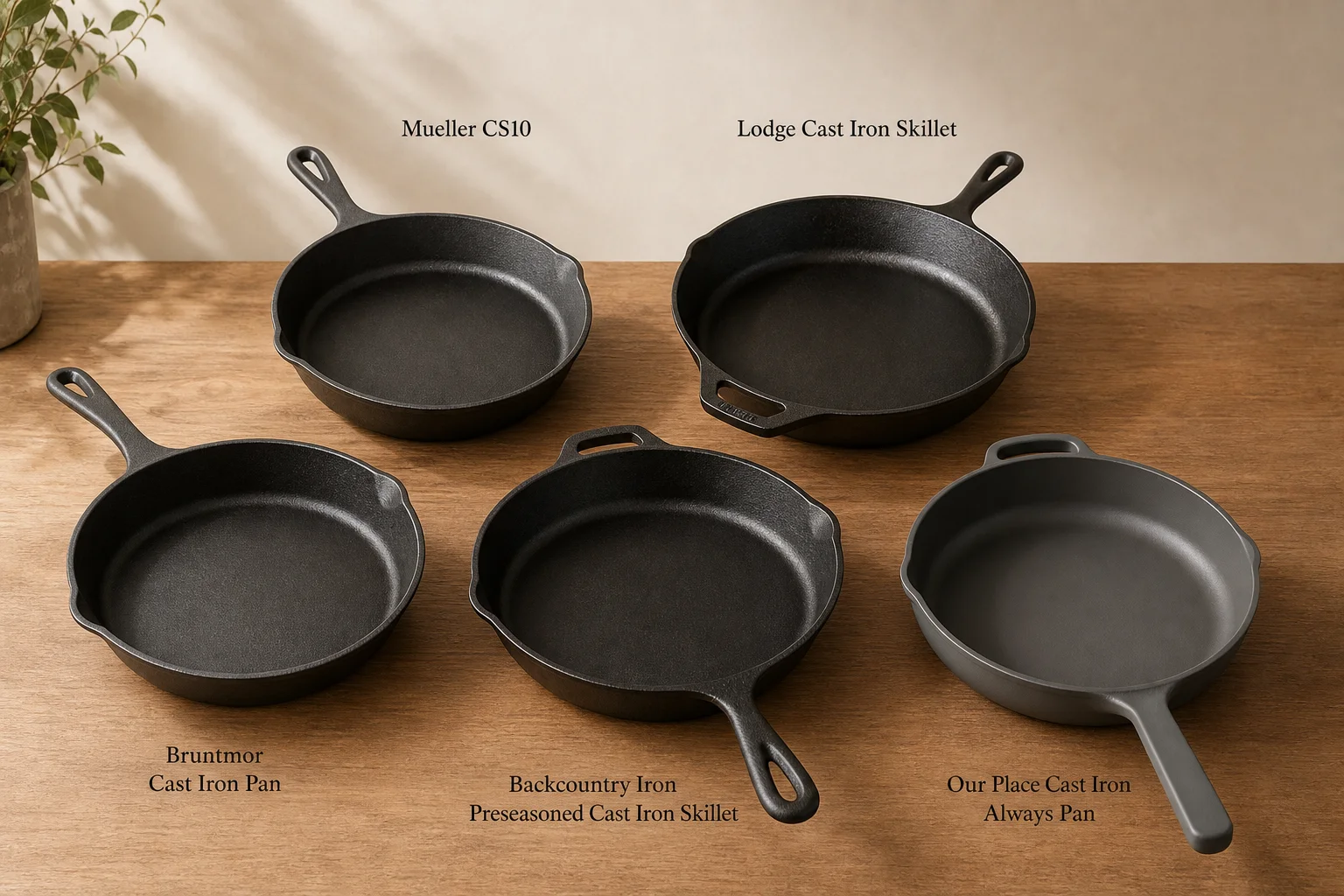
Best Cast Iron Pans 2026: Five Options from Budget to Premium
A practical breakdown of five cast iron skillets, from affordable Mueller to premium Our Place, with clear strengths and trade-offs for different cooking needs.
Cookware
Best 12-Inch Cast Iron Skillets: Premium Craftsmanship vs. Reliable Budget Option
Two standout 12-inch cast iron skillets tested for heat retention, surface finish, and durability. One premium choice and one budget-friendly alternative that both deliver.