Cookware
Best Stainless Steel Frying Pans: 31 Tested, Ranked by Real Performance
We tested 31 stainless steel frying pans across heat distribution, retention, warping, and real-world cooking. Here are the ones worth buying and the ones to avoid.
Introduction
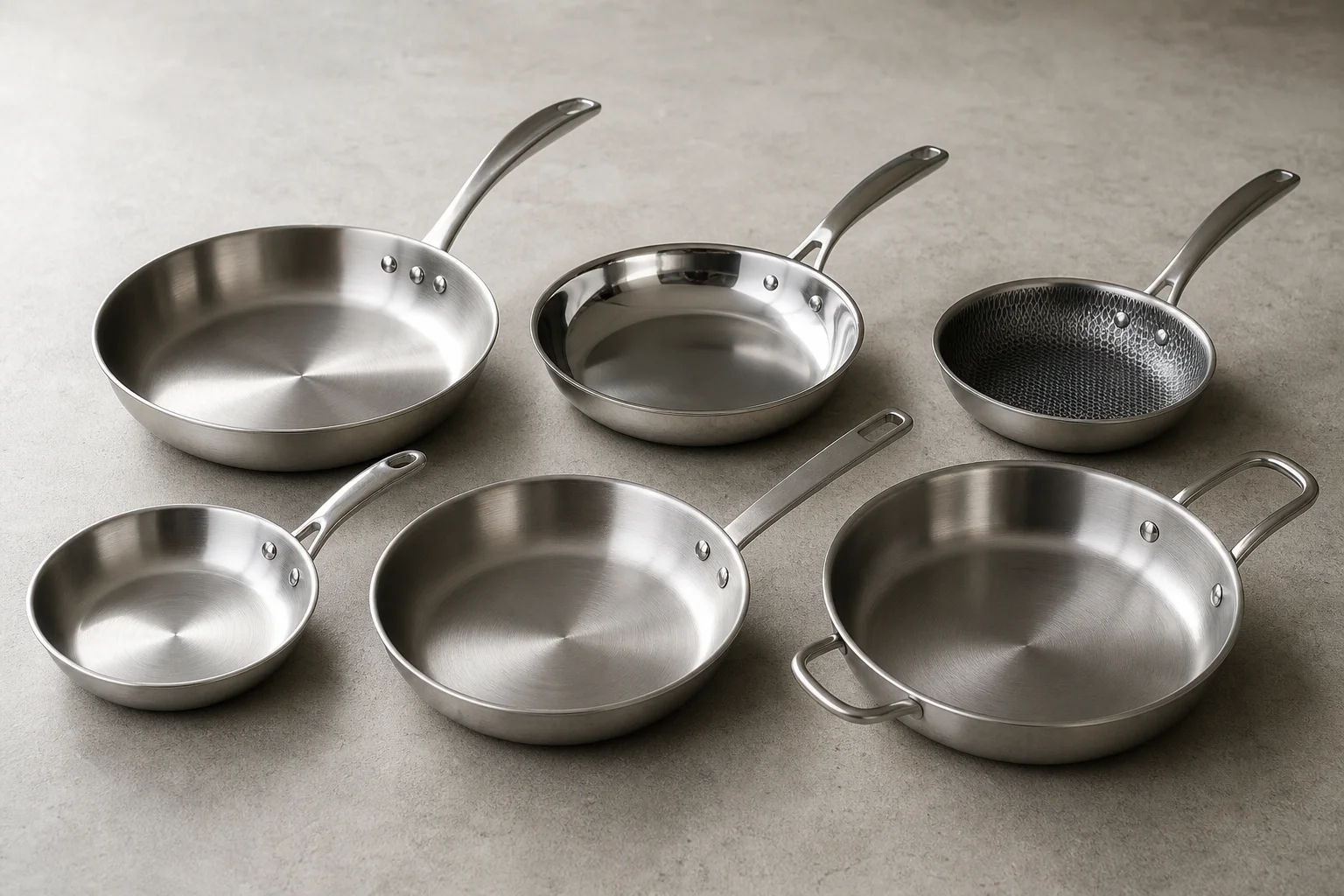
A $450 stainless steel frying pan sounds excessive until you wonder whether a $30 alternative might actually be just as good. To answer that question, we tested 31 of the highest-rated stainless steel frying pans on the market, measuring heat distribution, retention, warping resistance, thickness, and real-world cooking performance over several months.
The results reveal clear patterns: some budget pans surprise with solid performance, while others disappoint despite premium pricing. A few stand out as genuinely worth the investment. Here’s what we found.
Testing Methodology
We applied the same rigorous testing to every pan. Heat-up speed was measured by placing each pan on the same burner at the same heat setting and recording surface temperature at the center and outer edge after 1 and 2 minutes. Heat retention was tested by heating each pan to exactly 400 degrees Fahrenheit, removing it from heat, and measuring surface temperature after five minutes.
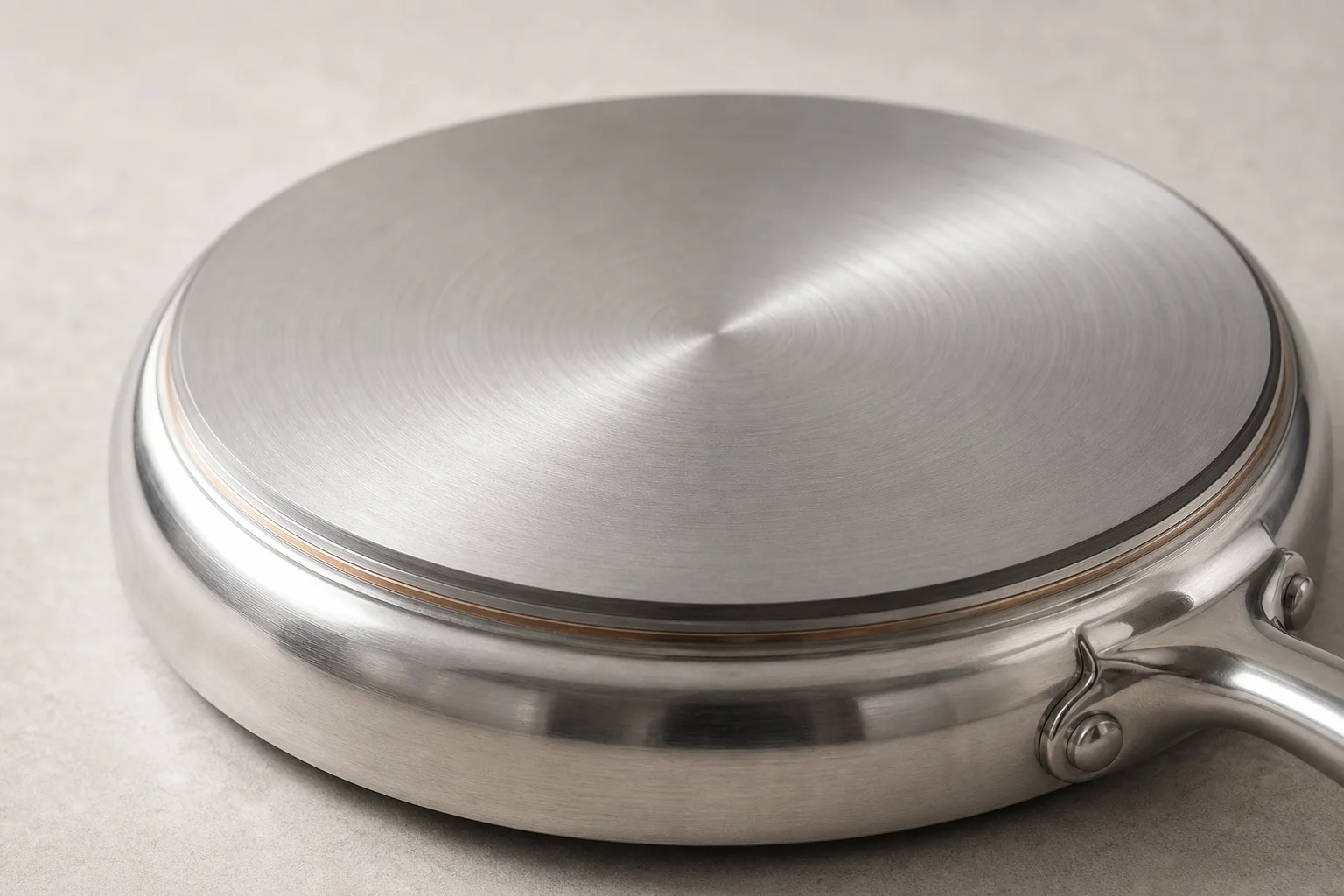
Warp resistance was evaluated by measuring the flatness of each pan’s bottom before and after heating it to 475 degrees Fahrenheit on a high-powered induction cooktop for 2 minutes. We also measured the thickness of every pan—a specification most brands don’t disclose but which impacts performance and durability. Beyond controlled tests, we cooked extensively in each pan over several months, including eggs, chicken, fish, vegetables, and more.
Budget-Friendly Options Under 100 Dollars
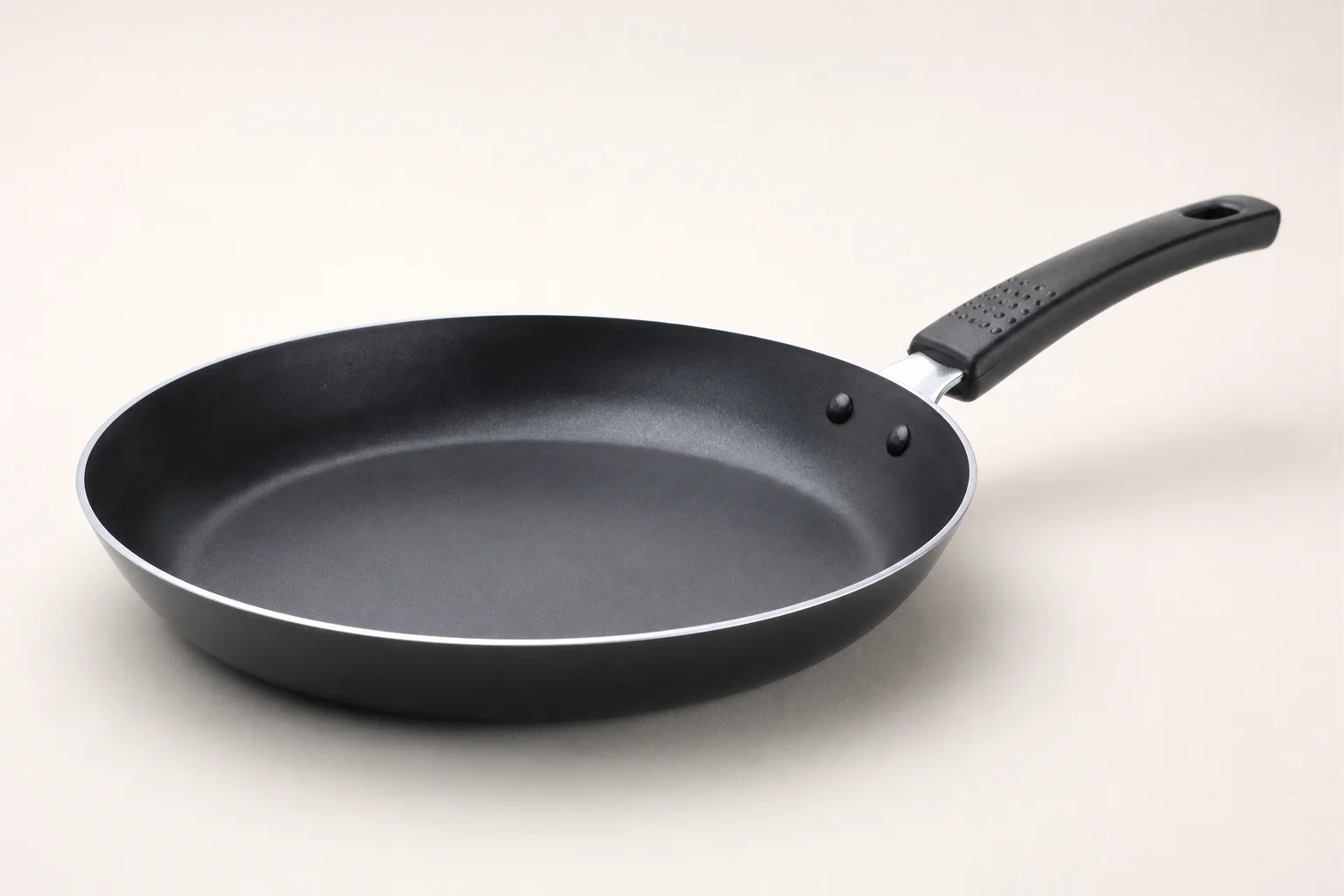
Farberware Classic is the cheapest pan tested. It’s ultra-light with thin walls that dent easily, and the short plastic handle cannot exceed 350 degrees Fahrenheit in the oven. It shows why price alone doesn’t guarantee value.
IKEA 365 is a disc-bottom pan with thin steel sides and an extremely shiny mirror-like cooking surface. Despite being the second-lightest pan tested, it performed surprisingly well, likely due to the thick disc bottom. The main complaint is the handle: a hollow, bent piece of metal with an exposed open end and visible seam that allows water to enter during washing.
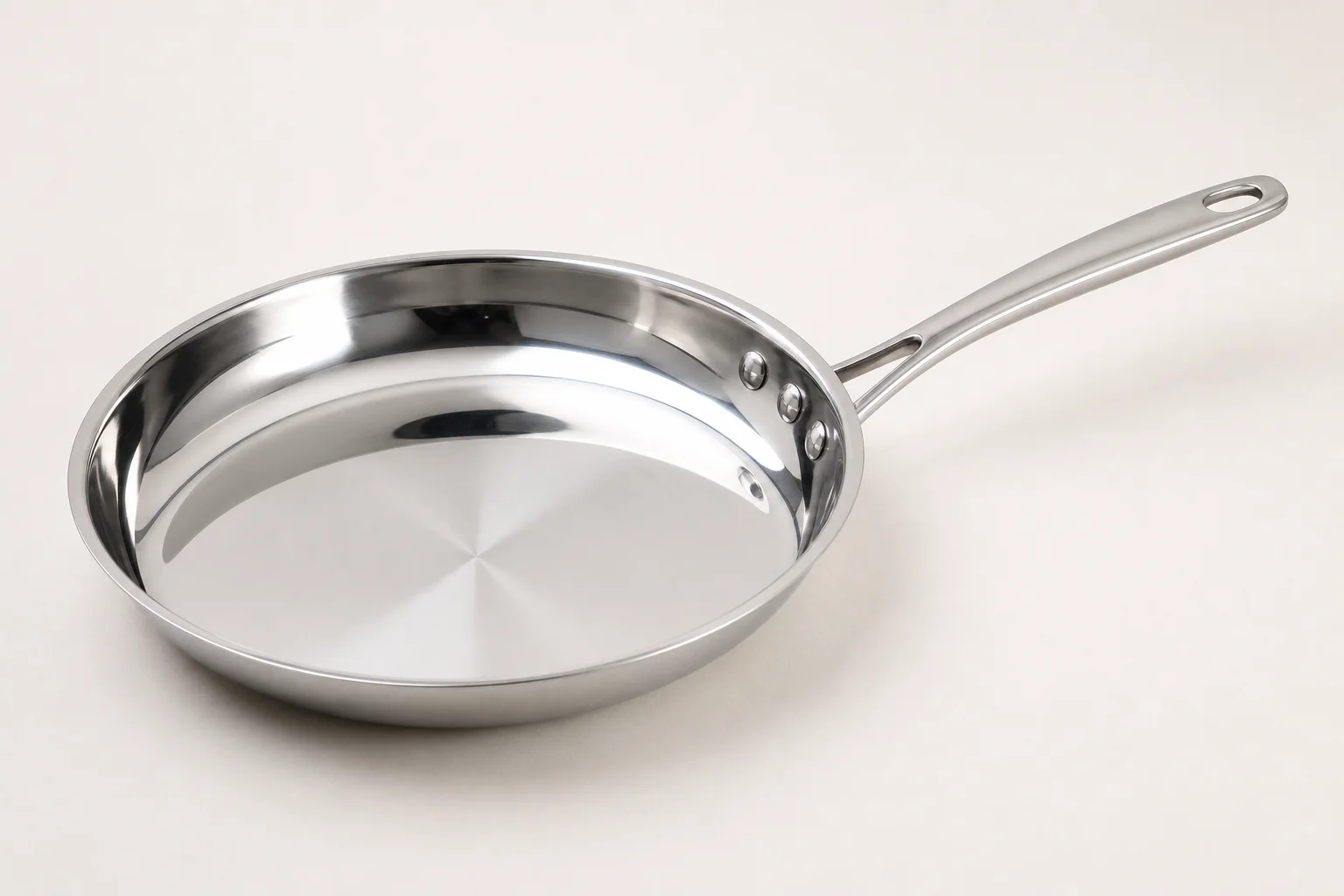
IKEA Hemkomst has a highly polished interior that helps food release slightly easier. The flat handle won’t twist in your hand but digs into your palm and isn’t very comfortable. The pan also lacks flared rims, making pouring and plating less smooth.
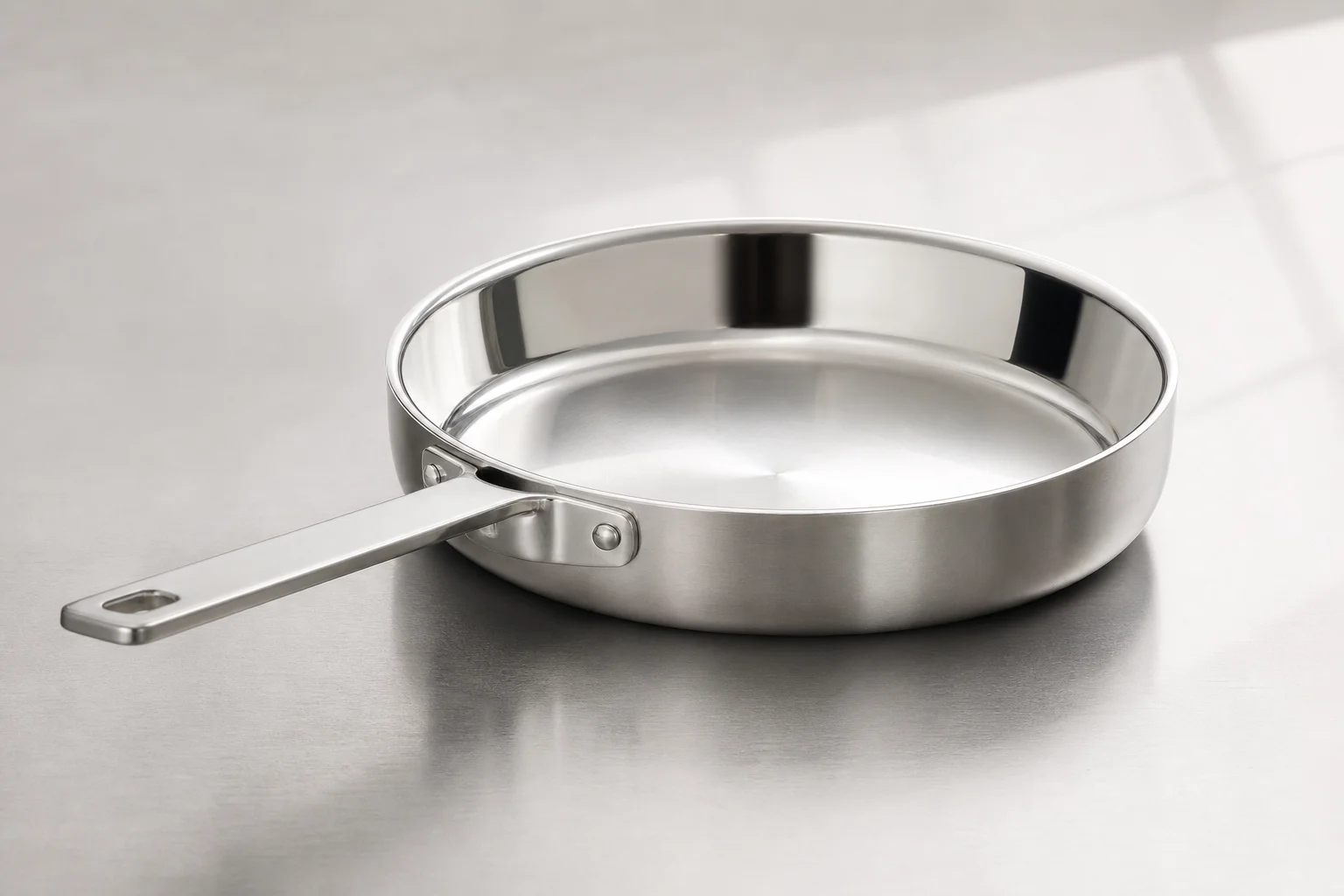
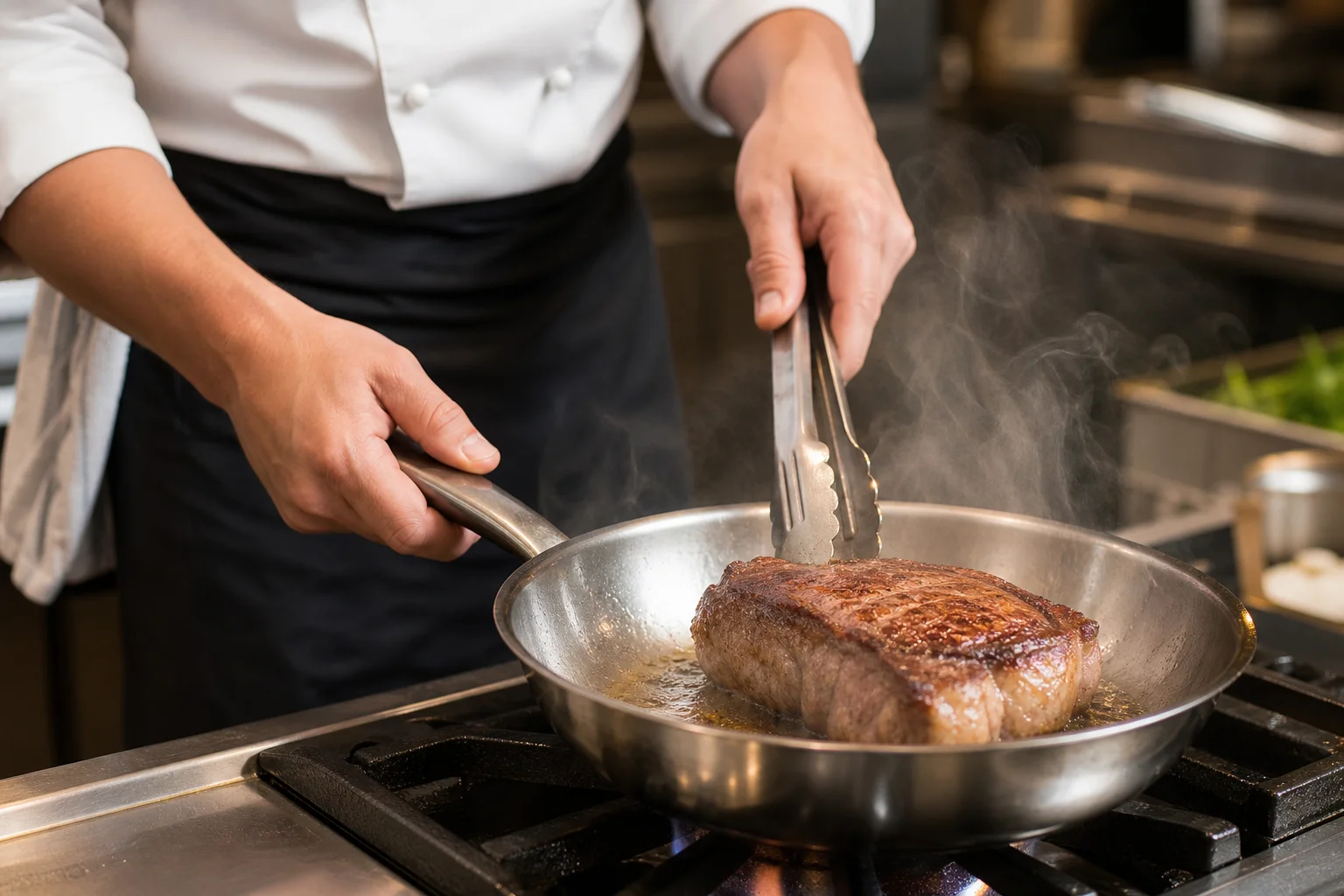
Henckels Clad H3 features a comfortable handle that’s flat on top and rounded on the bottom, flared rims, and a nice wide cooking surface. It sears really well but is one of the thinnest pans tested, with one of the largest temperature differences between center and outer edge. Note that the 12-inch fry pan only comes in a set with a 10-inch pan.
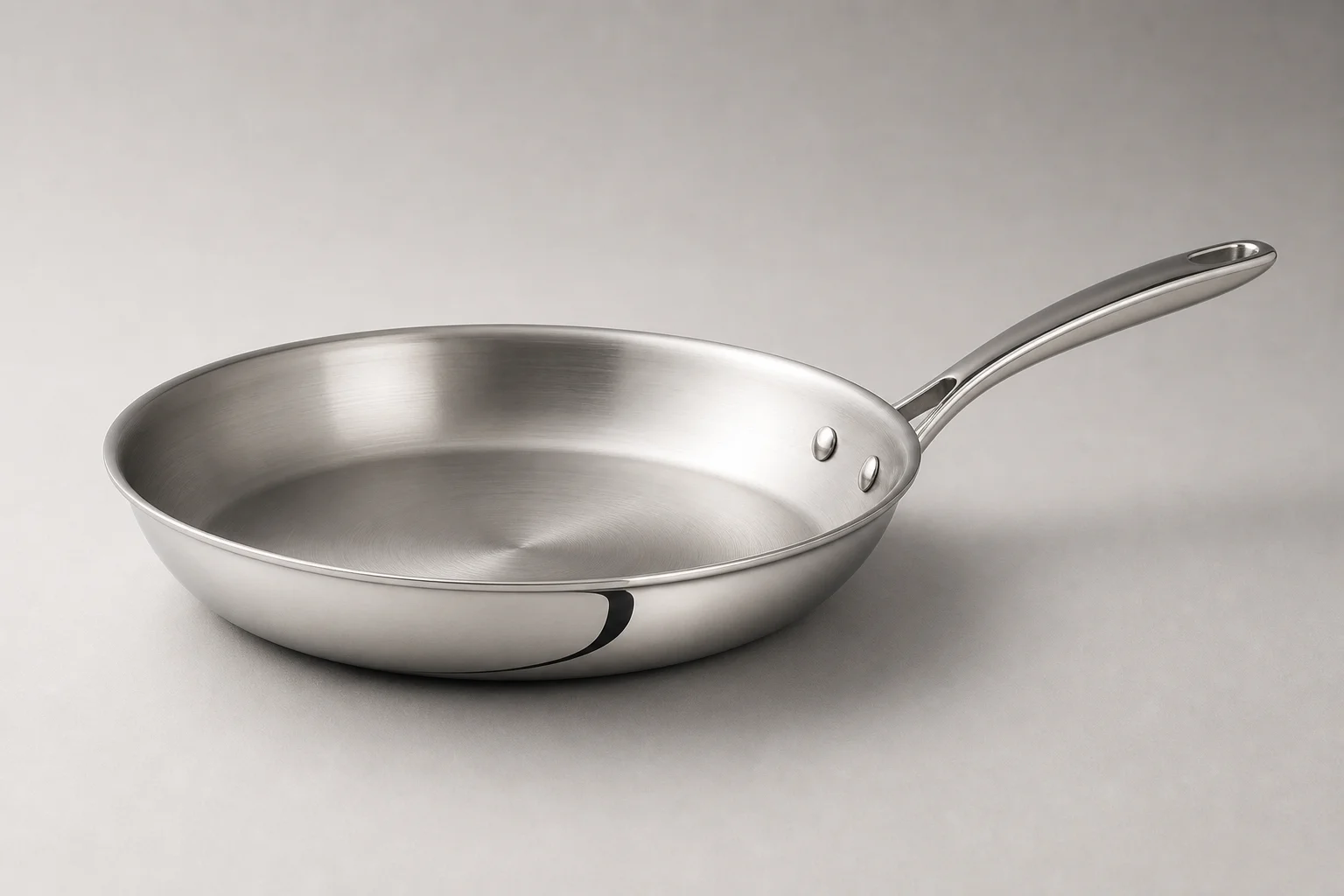
Tramontina Tri-Ply Clad has a polished exterior, smooth edges, and walls with a nice gradual slope. It performs solidly in real-world cooking but showed slight upward warping after several months of use. The bottom dips near the edges, though this hasn’t impacted cooking in practice.
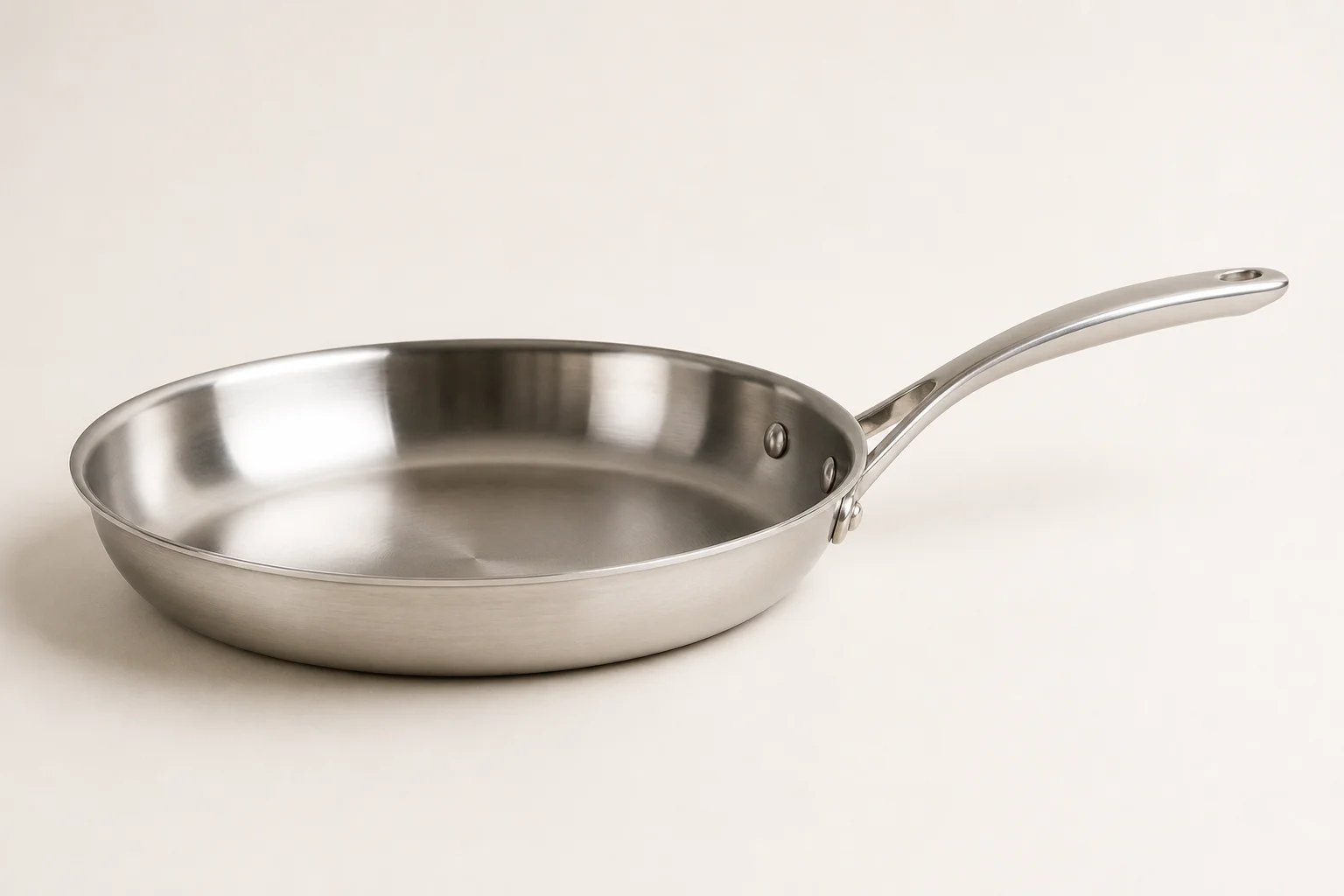
Goldilocks feels solid and sturdy when picked up. At 3 mm, it’s noticeably thicker than the Henckels and Tramontina, making it excellent for searing thick cuts of meat. The groove on the handle prevents rotation, but it’s thinner than ideal for larger hands or when wearing oven mitts.
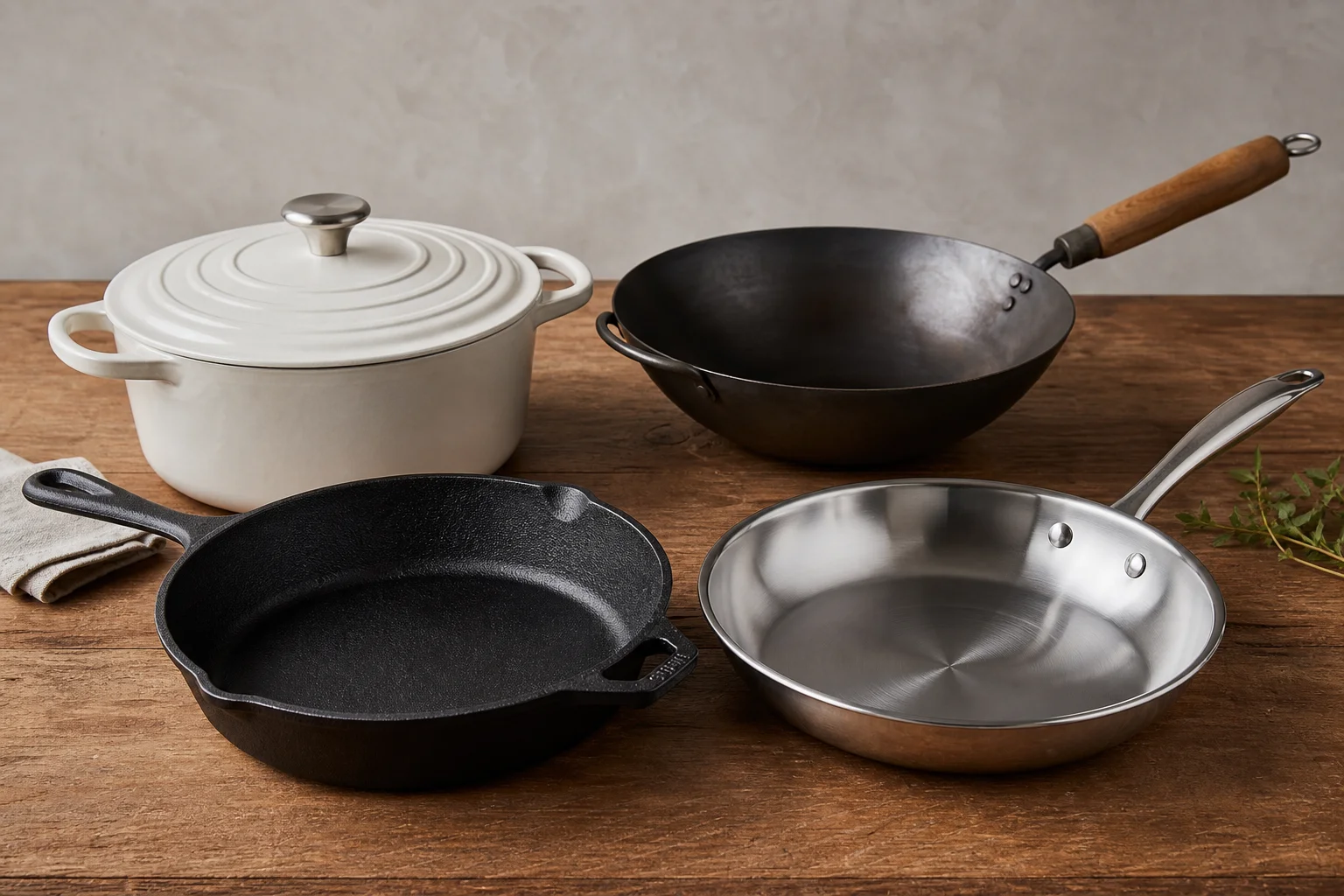
Cuisinart MultiClad Pro is the clear winner under 100 dollars. It has a super-smooth polished interior with a brushed exterior and subtle polished ring around the top. It features one of the widest flat cooking surfaces tested, sealed rims, and a helper handle. The main handle has a groove on top for your thumb that locks the pan in place so it doesn’t rotate when tilted. It’s one of the most comfortable and secure handles tested, and performance is solid.
Mid-Range Performers: 100 to 200 Dollars
Legend is a solid all-around pan with a polished exterior, slightly taller walls than most (giving more capacity), and even heating with excellent heat retention. It is on the heavier side, and the thick, round handle can get slippery when pouring liquids, sliding food onto a plate, or handwashing.
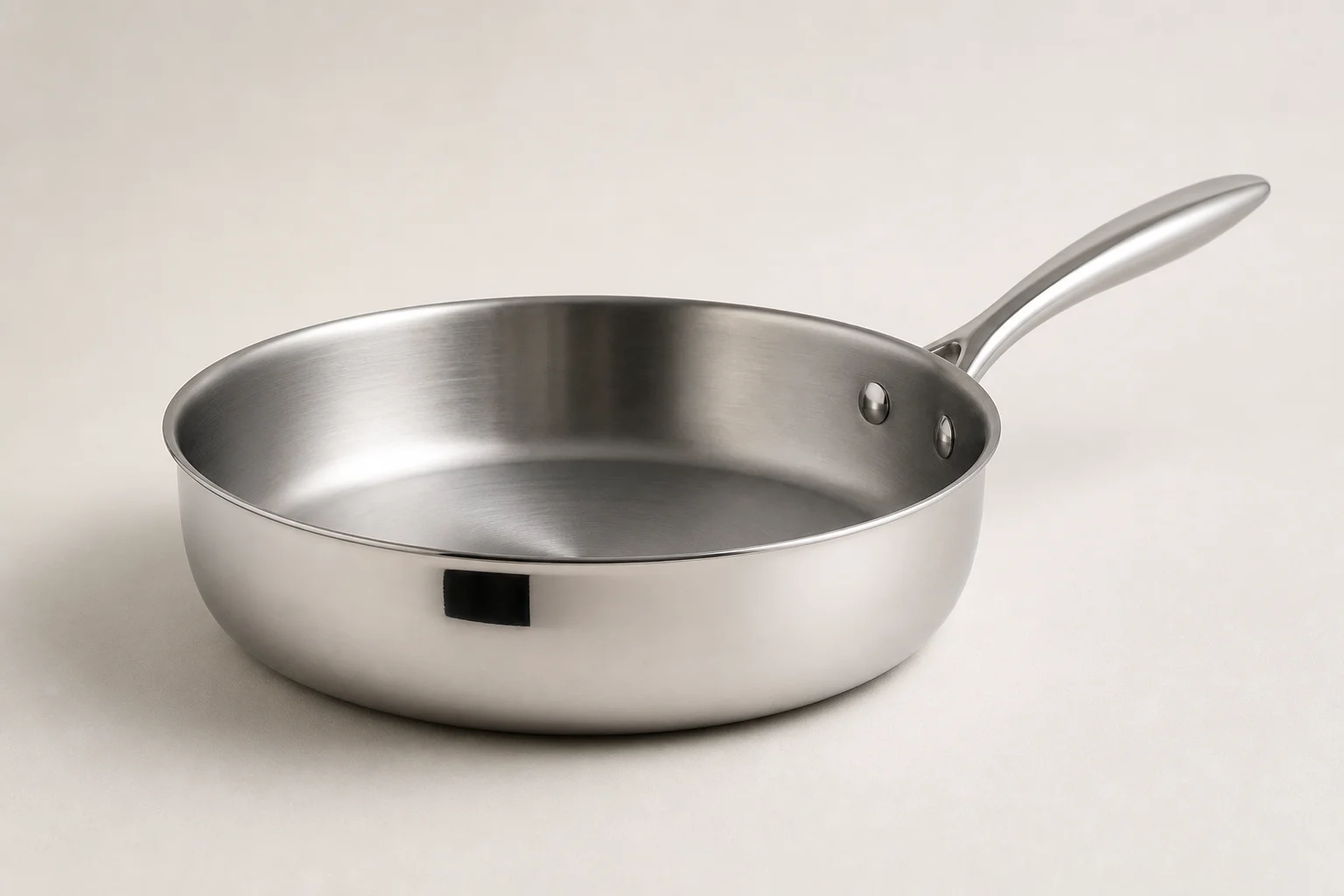
Misen is one of the heavier pans tested and one of the fastest to heat up. It has sealed rims, which is rare at this price point. The long handle is very rounded and can get slippery when tilting the pan or washing it with soapy hands.
Heritage Steel Eater Series is made by a family-owned company in Clarksville, Tennessee, and is the least expensive American-made pan tested. It has a brushed exterior that hides fingerprints, flared rims for easy pouring, and a handle that’s flat on top (so it won’t rotate) but rounded on the sides (so it’s still comfortable). It’s not too heavy, not too light—a solid all-around pan.
Caraway Stainless Steel Fry Pan has a brushed finish and modern design, but it’s expensive for a 10.5-inch pan, and they don’t make a bigger version. The pan lacks flared rims, and the rounded handle is comfortable but more prone to rotating when tilting. One sample arrived dented out of the box.
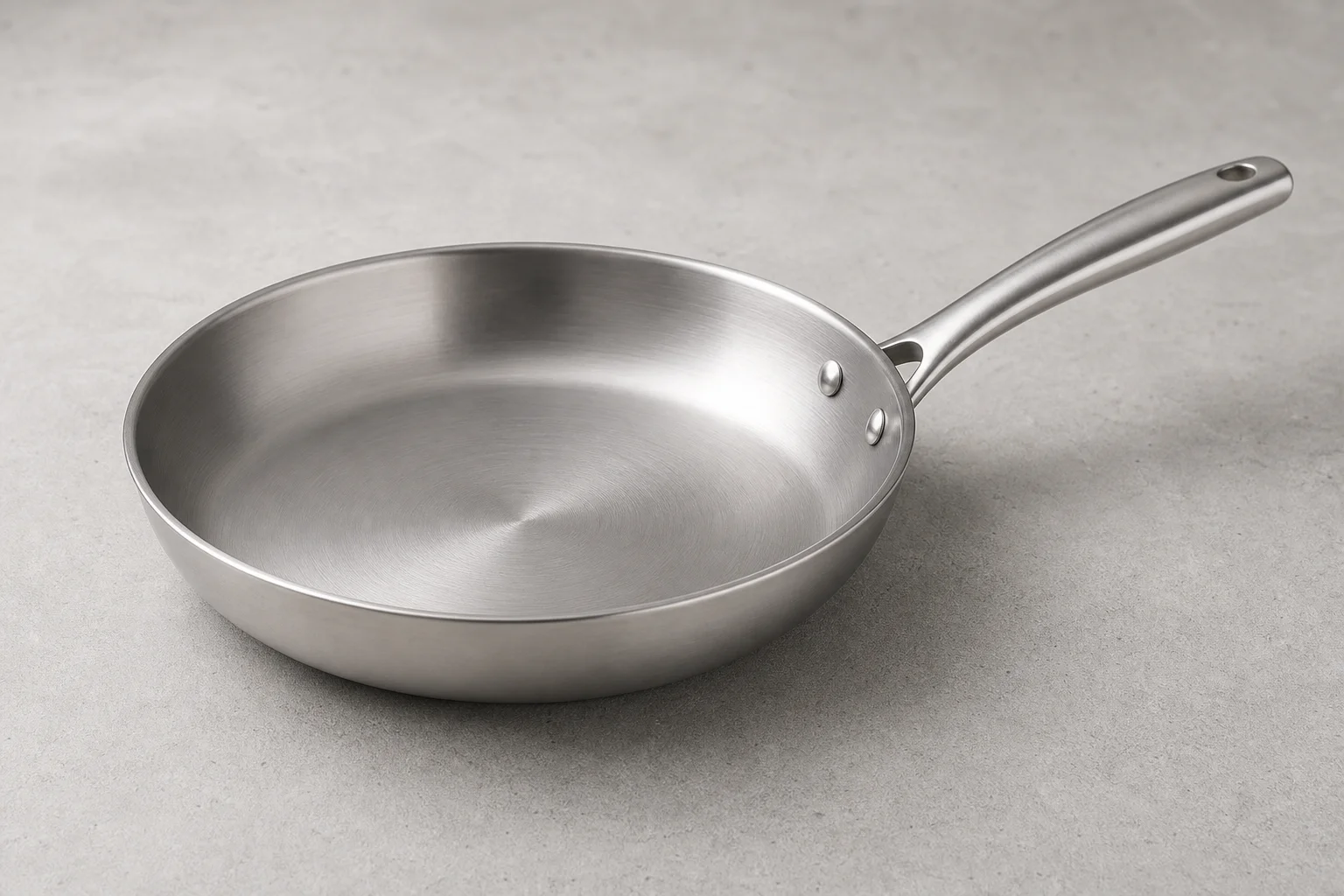
Made In is listed as 12 inches but measures 13 inches from rim to rim due to wide flared rims. It has the widest flat cooking surface of any pan tested at 10 inches. The handle widens toward the end, which is preferable to constant width. It was one of the fastest pans to heat up and has performed consistently well over several years of use.
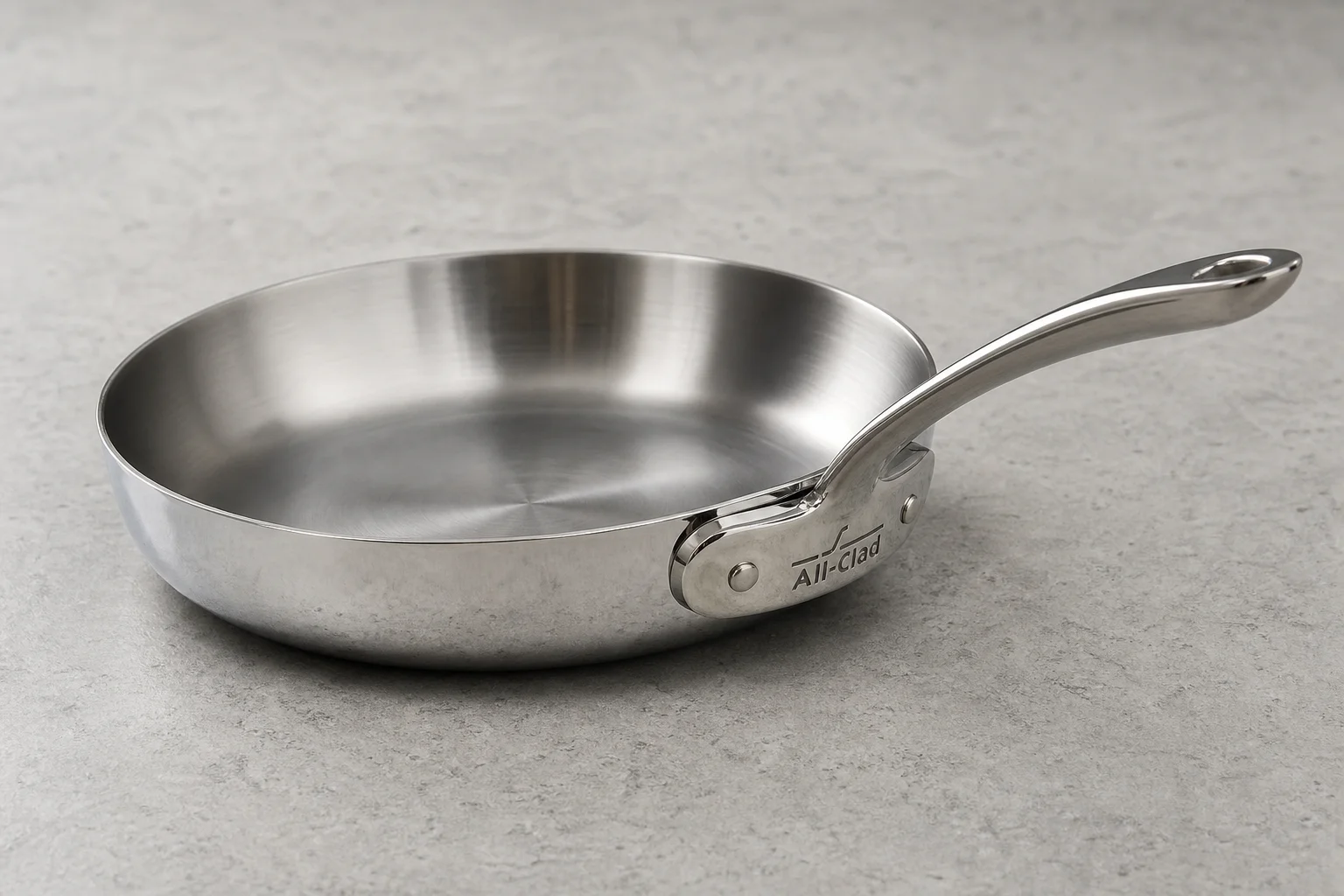
All-Clad D3 is All-Clad’s original and bestselling collection, made at their Pennsylvania factory. It has a polished exterior, flared rims, even heating, and great performance. The handle is the most polarizing tested: a concave groove on top locks the pan in place so it won’t rotate, working well with a towel or oven mitt but digging into bare hands uncomfortably.
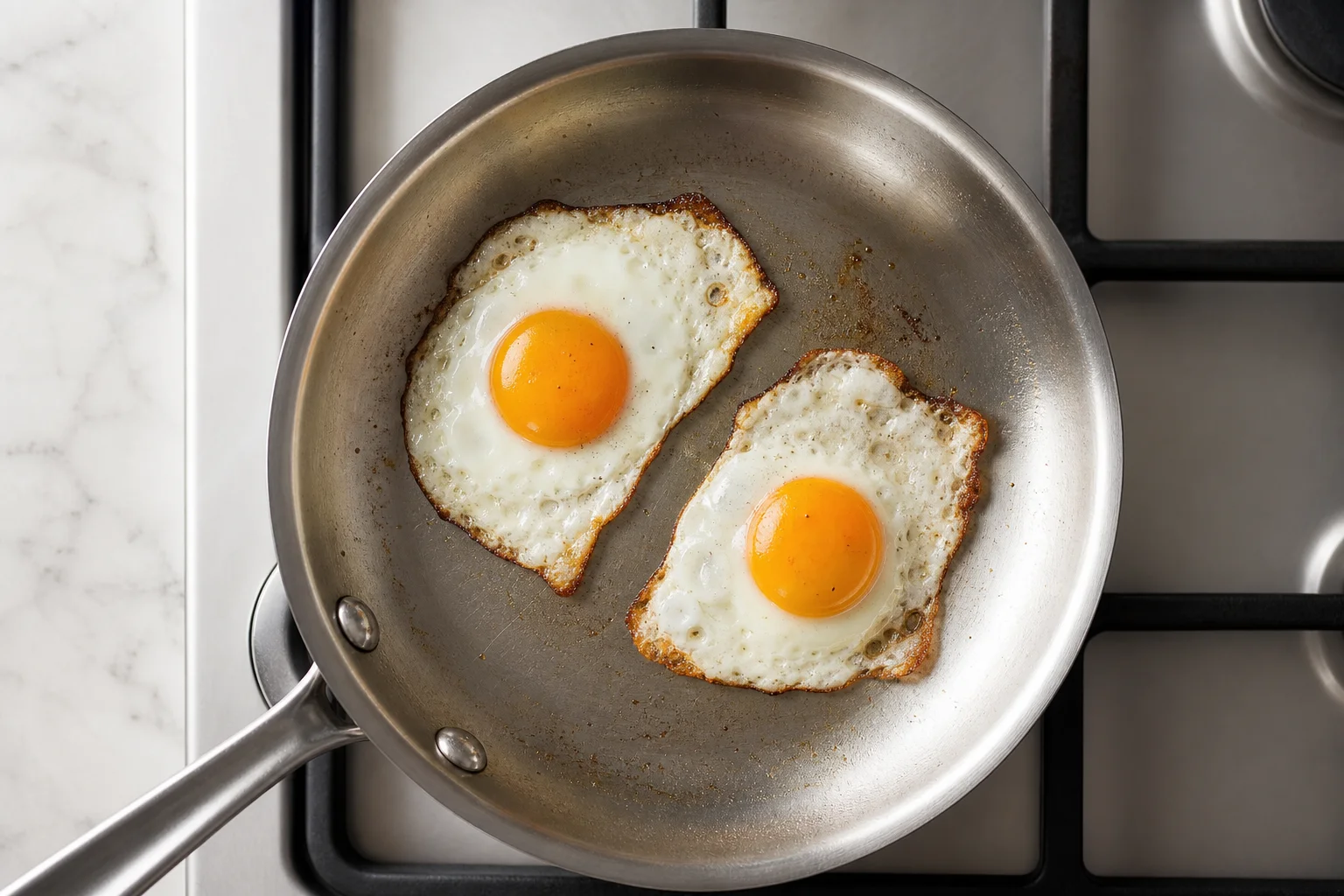
All-Clad D3 Everyday is the newer version of D3 with key upgrades. The handle has a more subtle groove that’s much more comfortable and is almost an inch longer—possibly the best handle design tested. It’s safe, functional, comfortable, and looks good. The flat cooking surface is also wider. This pan heats incredibly evenly with excellent heat retention. However, the bottom warped noticeably on a high-powered induction cooktop, so gradual preheating is necessary if you cook on induction.
Heritage Steel Titanium Series costs 30 dollars more than the Eater Series, mainly because the cooking surface is steel reinforced with titanium for better pitting and corrosion resistance. The rounded, slippery handle is less comfortable, and it’s wide in the middle but tapers thin at the end, leaving little to grab unless you hold it right in the center.
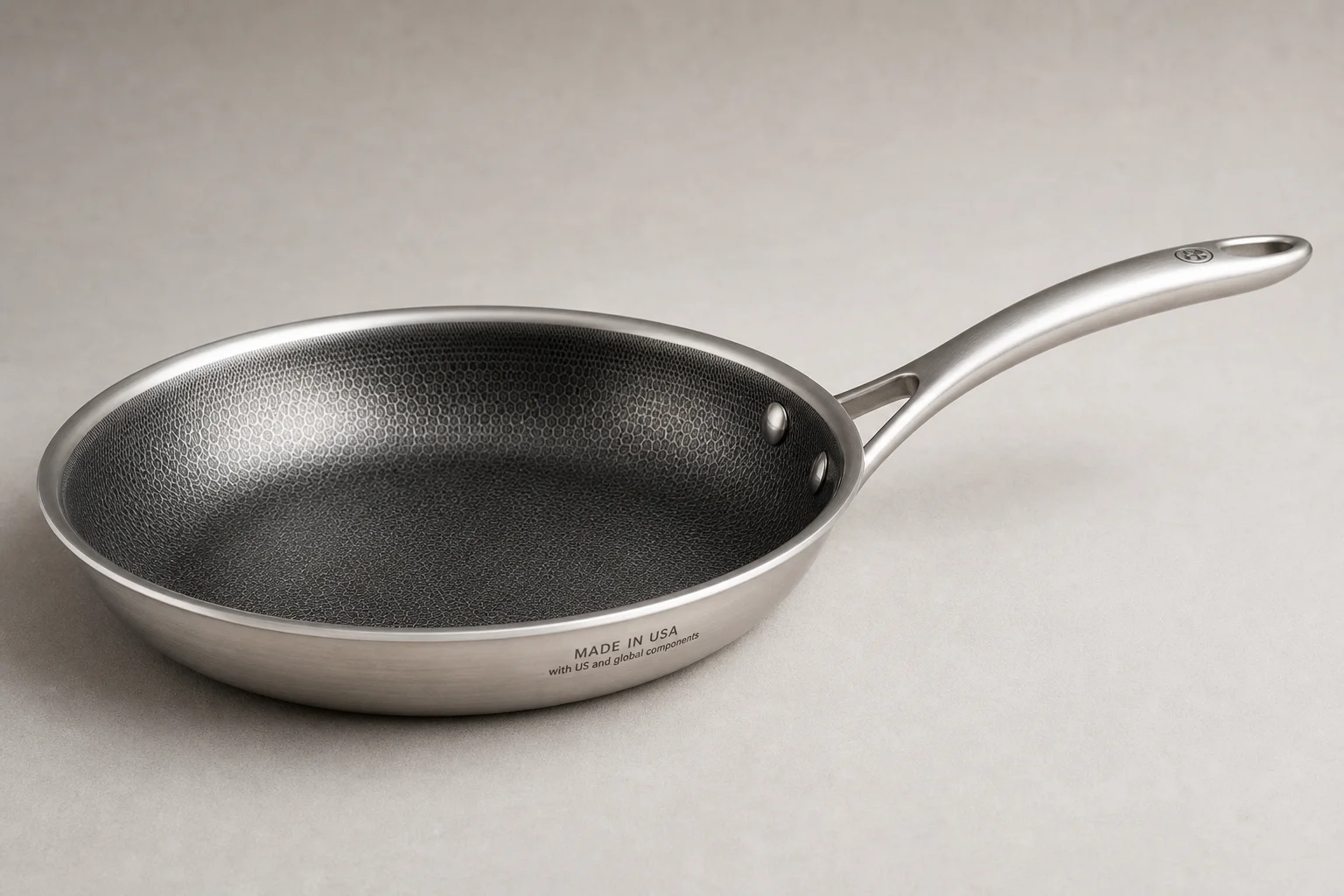
de Buyer Alchimy heated up faster than any other pan tested. After 1 minute, the center was already at 563 degrees, and after 2 minutes, it was so hot that the surface thermometer couldn’t read it. The straight (not flared) rims and flat handle end with a sharp edge that digs into your hand are drawbacks.
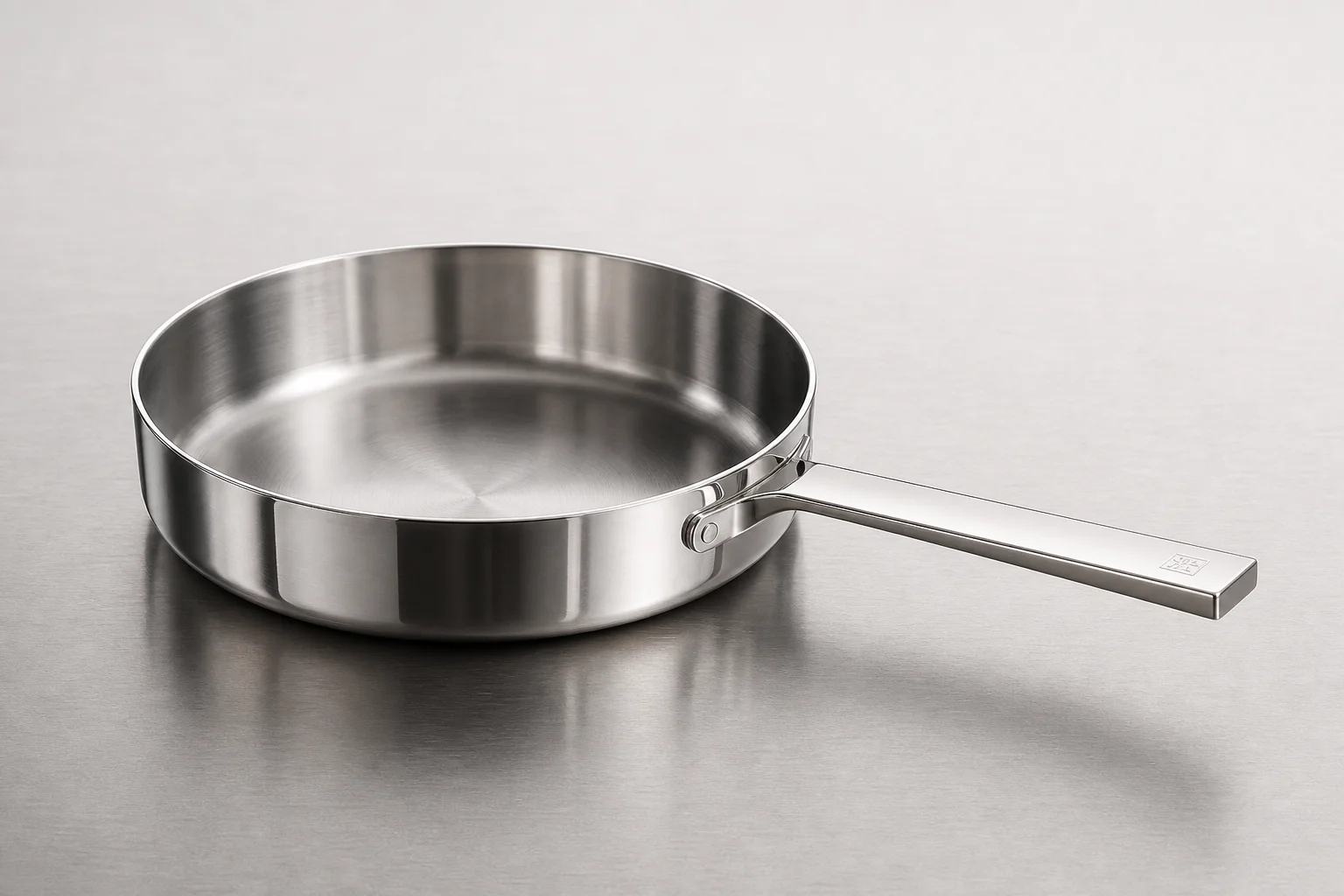
Our Place Titanium Always Pan Pro isn’t a traditional stainless steel pan but has a steel exterior and aluminum core like most fully clad pans. The cooking surface is titanium with a raised pattern designed to reduce sticking without non-stick coating. In egg tests, it works pretty well. The original version had design flaws with the handle and lid, but Our Place listened to criticism and fixed them.
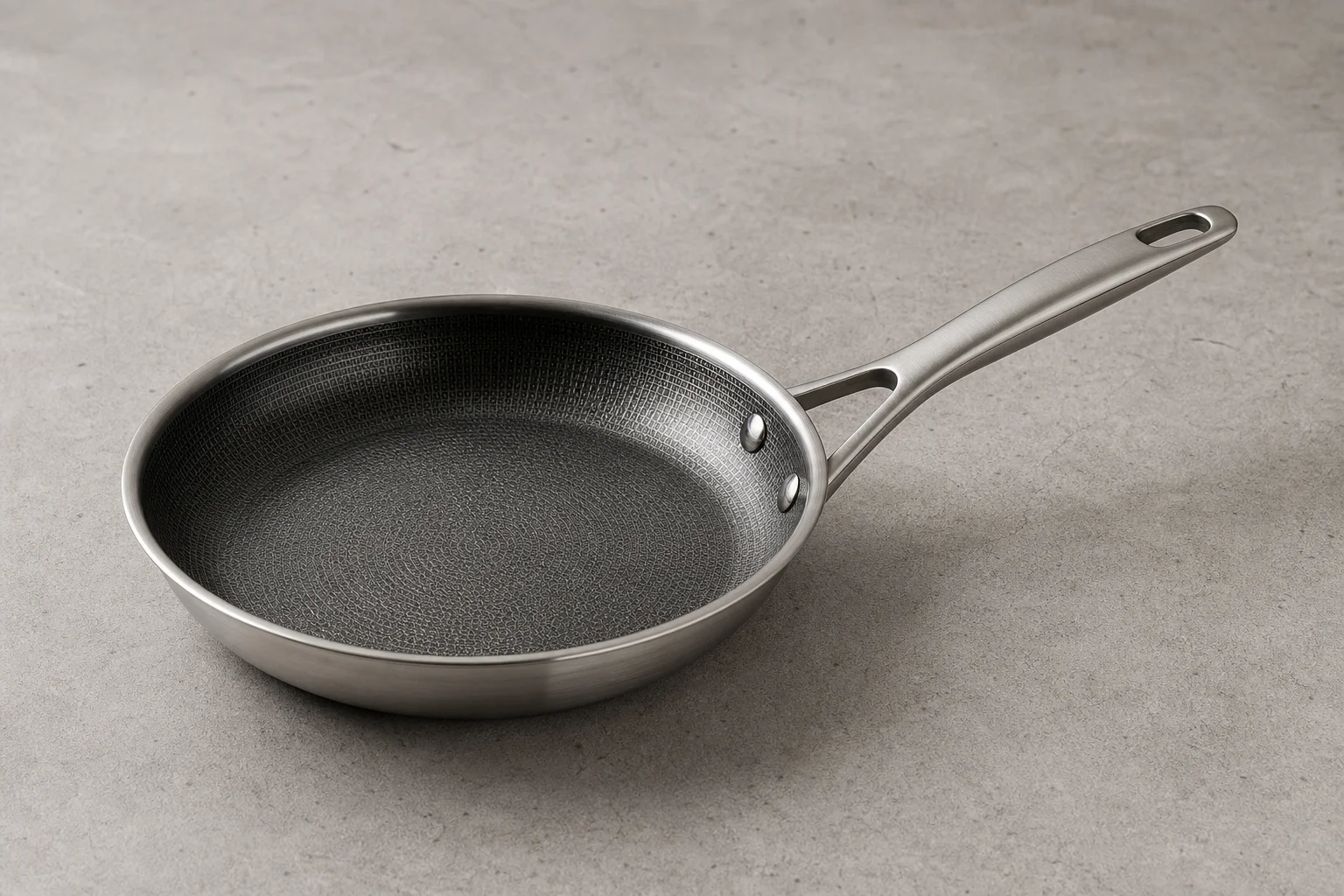
Fissler M5-Pro Ply is a solid five-ply pan made in Germany with a brushed exterior, sealed rims, and no rivets. It had one of the smallest temperature differences between center and outer edge of any pan tested, so it heats really evenly. The handle is comfortable but very round, requiring careful grip.
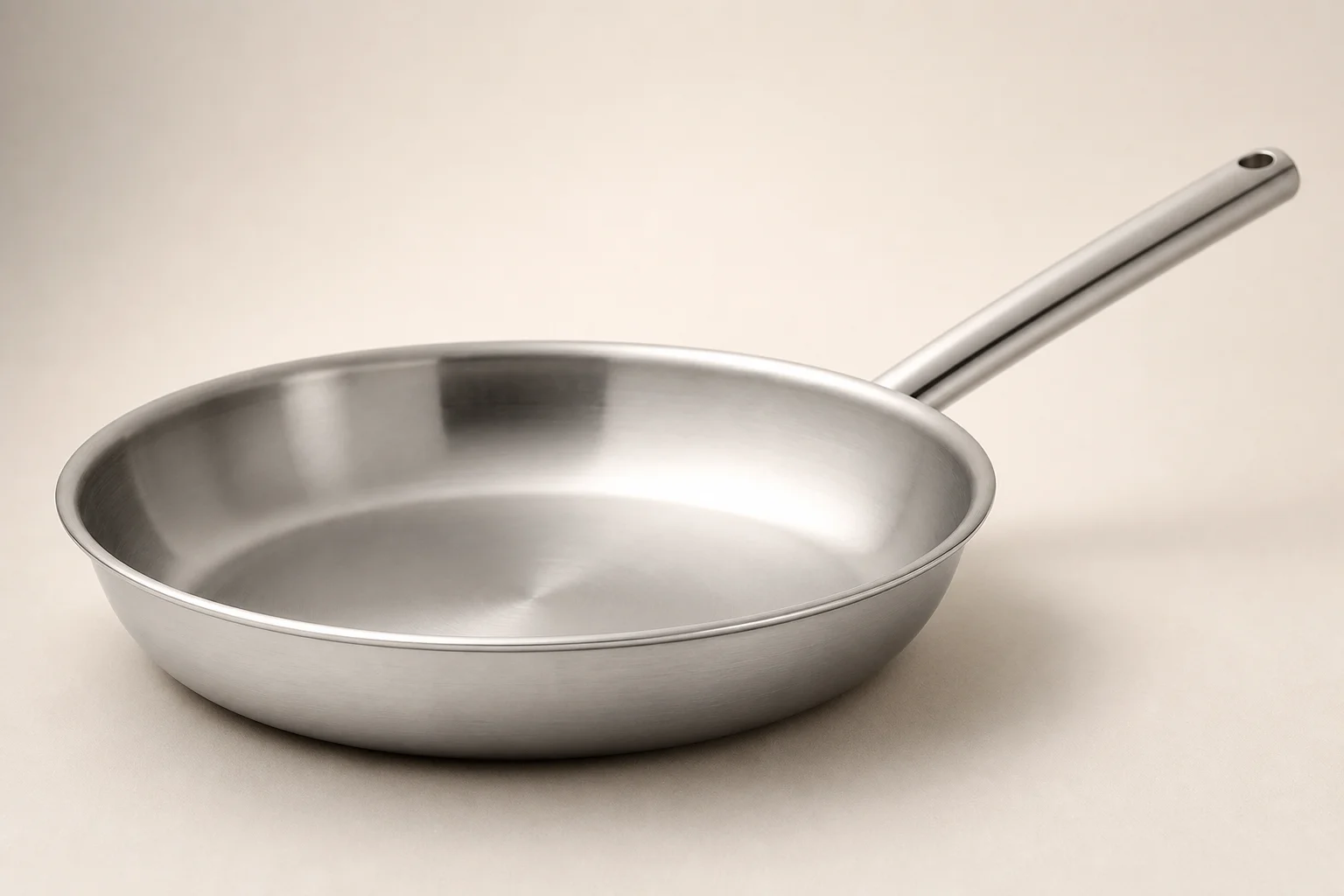
Premium Choices: When Performance Justifies the Price
All-Clad D5 has the same cup-shaped handle as D3 but an inch longer. Instead of a polished exterior, D5 is brushed and slightly heavier. The big difference is construction: five bonded layers instead of three, with a thin steel core. All-Clad claims the steel core makes it heat more evenly, and testing showed it distributes heat about 15 degrees more evenly than D3—a difference most home cooks won’t notice. You’re paying significantly more for subtle improvements.
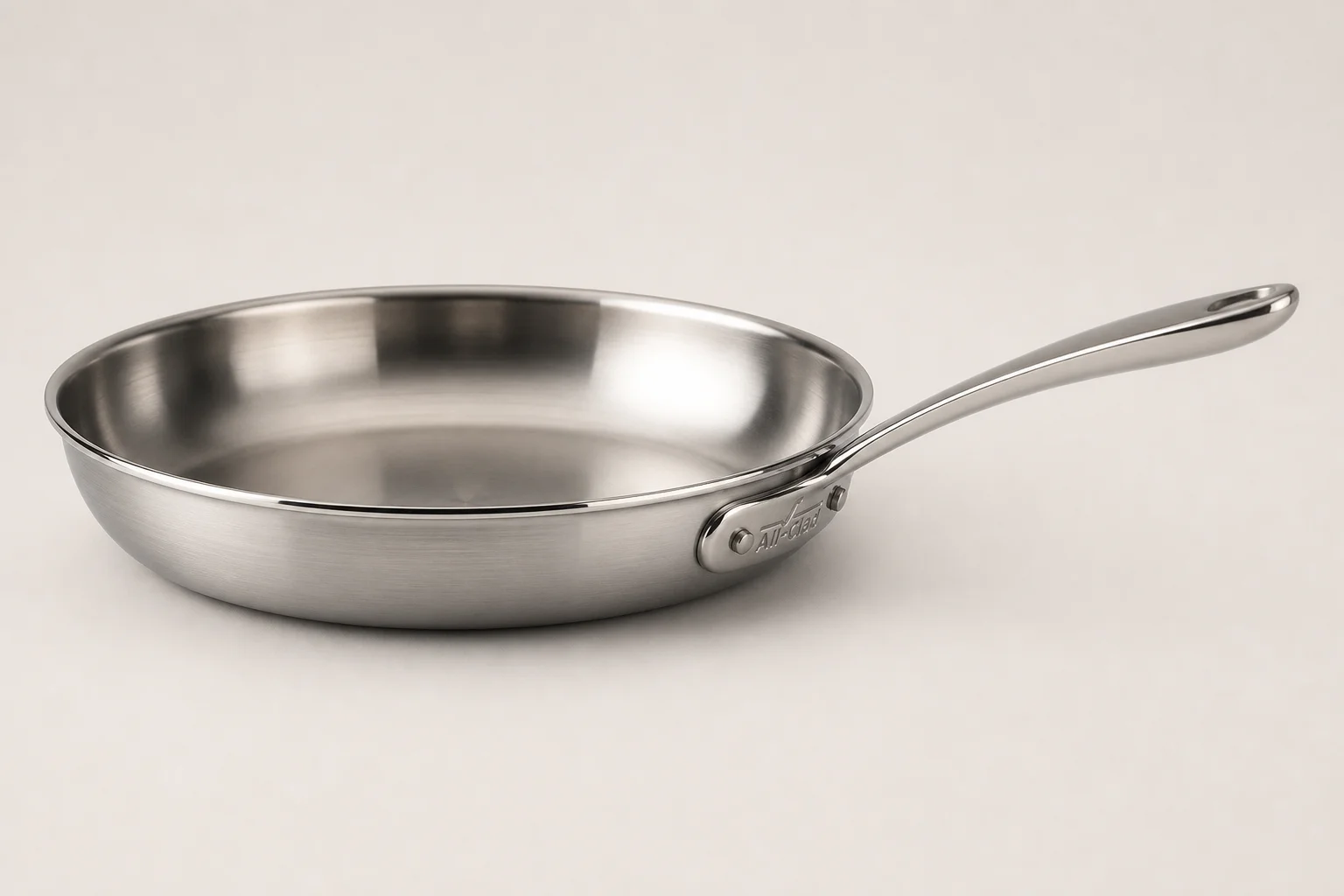
Demeyere Industry has a brushed exterior, gently sloped walls, and flared rims. The rivetless handle keeps the cooking surface completely smooth with nothing for food or grease to get stuck on. The wide fork at the end disperses heat and gives a unique look. It’s one of the most well-designed pans, with weight, thickness, and handle all feeling right. The main complaint is the premium price for performance similar to much cheaper options.
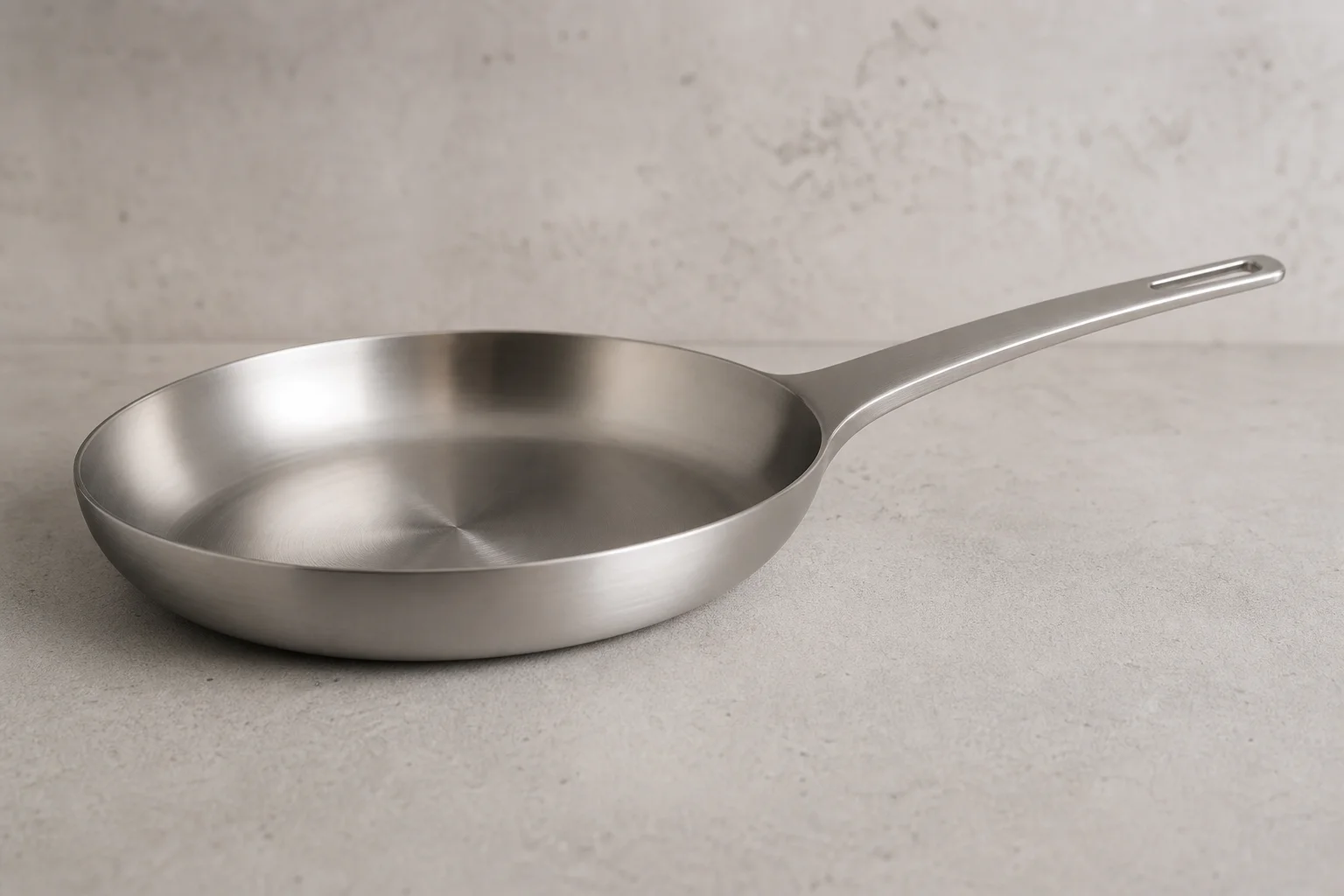
360 Cookware is made in West Bend, Wisconsin, with a main selling point of vapor cooking: spinning the lid to create a tight seal that locks in moisture so you can cook with less oil. In practice, it just burns the pan. The helper handle is long but not wide enough to actually fit your hand.
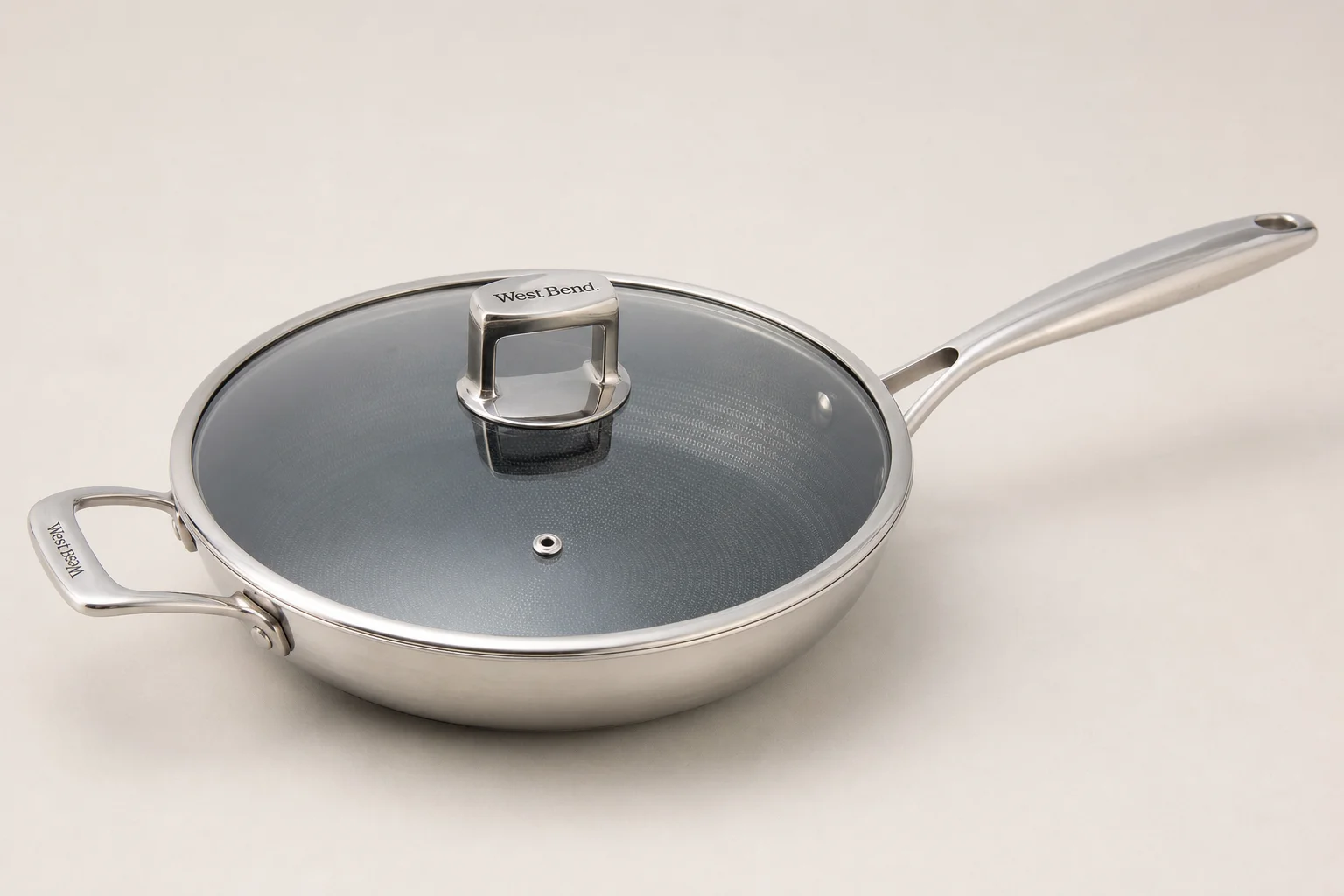
Fissler Original-Profi is a disc-bottom pan with a nearly 7 mm thick disc—the thickest pan tested. Because of its thickness, it has the best heat retention of any pan in the group, and the temperature difference between center and outer edge was essentially zero. The trade-off is speed: it was the slowest pan to heat up. The textured cooking surface keeps oil directly under food, helping browning but making eggs harder to slide and cleaning slightly more difficult.
Hestan ProBond Forged is one of the most elegant-looking brands tested. It has a brushed exterior with a polished ring around the top, sealed rims, flush rivets, and a handle with smooth rounded edges and a subtle groove that keeps the pan from rotating. Everything feels intentional and well-crafted. Made in Italy with excellent performance. The end of the handle could be thicker, and the hanging loop is larger than necessary.
Hestan ProBond Luxe is similar to ProBond Forged but with design tweaks. The exterior is fully polished instead of brushed, and the handle is lower and more parallel to the cooking surface, requiring less clearance between oven racks. A small cutout in the handle disperses heat, though it’s mostly cosmetic. The connection between handle and rim is tighter than Forged, leaving less of a gap to clean.
de Buyer Affinity is made in France with a polished exterior and excellent heat retention. At 10 inches, it has the longest handle of any pan tested. It has a groove to prevent slipping and is thick with rounded edges, making it nice and comfortable. Although the temperature difference between center and outer edge after 2 minutes was one of the largest measured, with enough preheating time it cooks evenly and is excellent for searing.
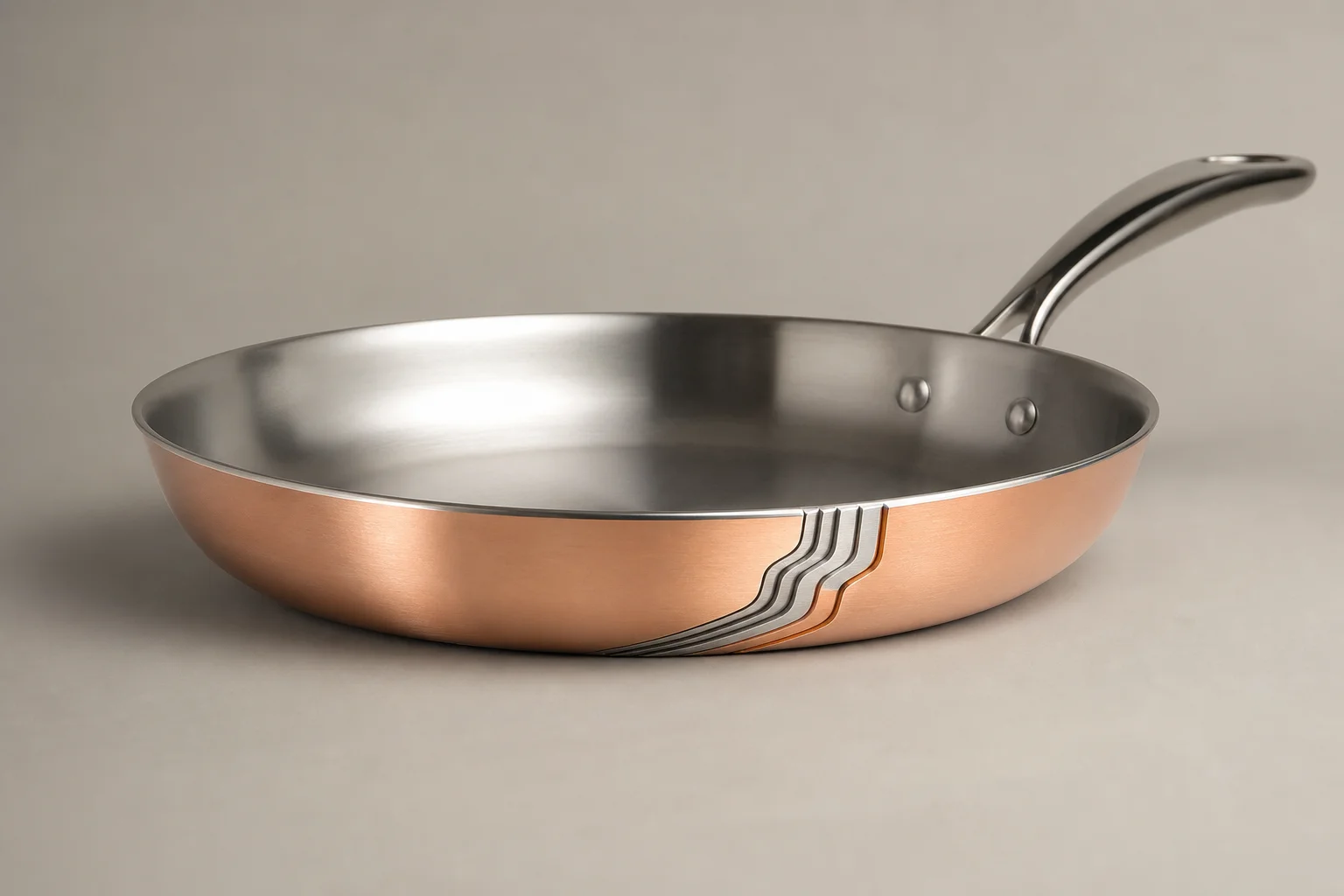
All-Clad Copper Core has the same cup-shaped handle and polished exterior as D3 but with a copper core instead of aluminum. Copper conducts heat better than aluminum, but testing showed several aluminum-core pans heated just as fast or faster. The performance advantage isn’t as big as expected. Where this pan stands out is design: a beautiful copper ring exposed around the exterior and a handle nearly two inches longer than D3.
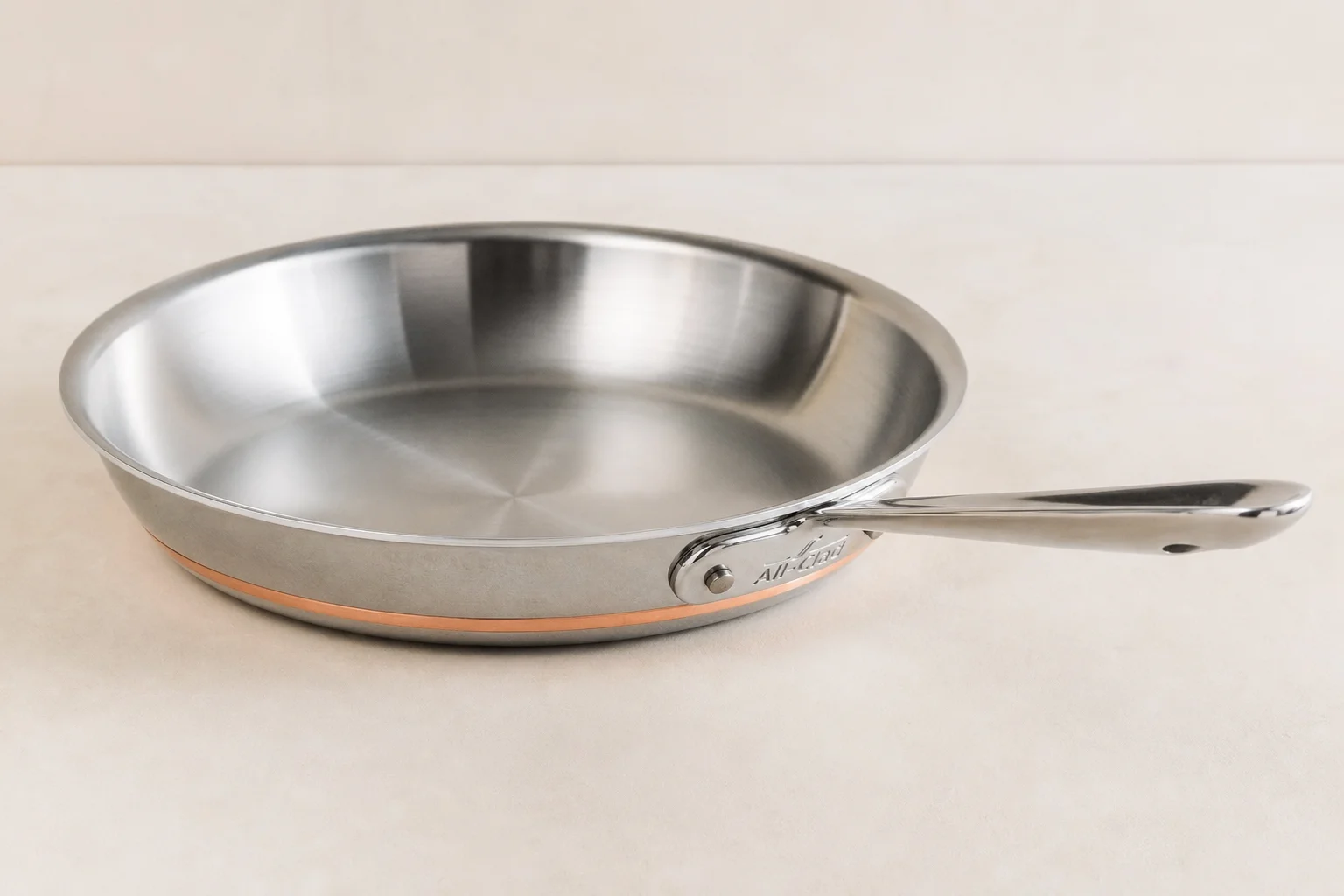
All-Clad G5 is one of the most unique pans tested. Instead of a standard aluminum or copper core, it has a perforated graphite disc as the core layer. Graphite conducts heat extremely well but weighs much less than copper. You get a pan that heats fast without the weight and cools down as fast as it heats up. If you want a pan that responds quickly when you turn the dial up or down, this one is great. If you want a pan that holds its temperature steady so you can step away from the stove without worrying about burning food, this isn’t the one.
Hestan CopperBond is five-ply with a copper core. Because copper is dense, it’s one of the heaviest pans tested. The copper is exposed on the sides, which looks great but tarnishes quickly and needs regular polishing. Most copper cookware won’t work on induction because copper isn’t ferromagnetic, but this pan has a steel base, so it does. If you love the look of copper and cook on induction, that’s the real selling point.
Demeyere Atlantis Proline is the heaviest pan tested and the second slowest to heat up. But once hot, it holds its temperature better than almost every other pan. Made up of seven bonded layers and 5 mm thick, it heats like cast iron but with the convenience and versatility of stainless steel. The bottom three layers are steel, making it efficient on induction and virtually warp-proof. It was the only stainless steel pan that didn’t buzz or click on the induction cooktop. Handles are welded instead of riveted, keeping the cooking surface completely smooth. Welded handles are not as secure as riveted ones and can break off, though this is rare.
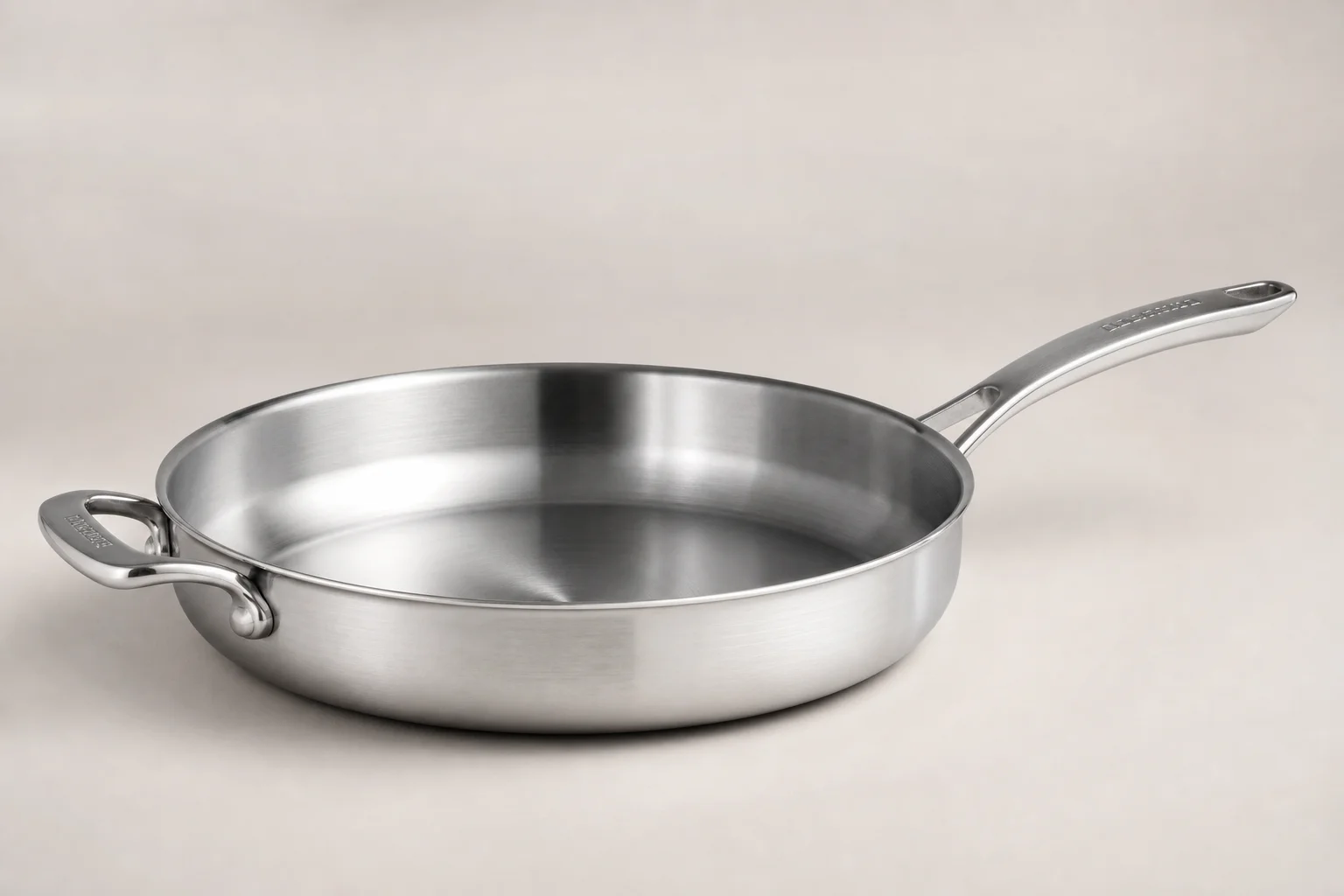
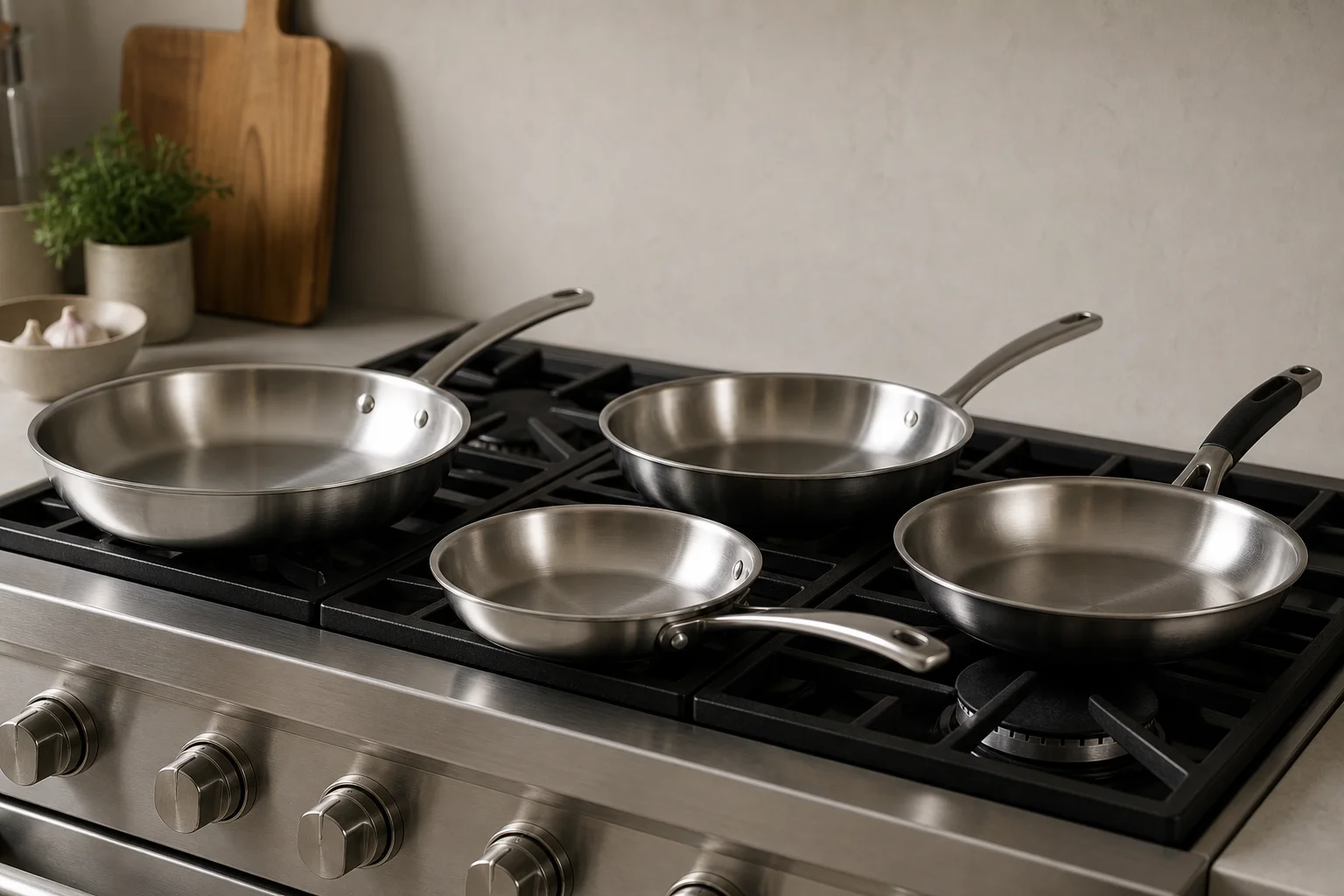
Hestan NanoBond is unique because of its surface. Titanium ions are vaporized in a vacuum chamber and bonded to the steel surface, creating a layer four times harder than typical stainless steel. You can see and feel the difference immediately: the surface has a distinct gray-blue color and an almost silky feel. That smoothness makes it slightly less sticky with eggs and more resistant to scratches than standard stainless steel. This pan sears beautifully, has a wide cooking surface, flush rivets, and sealed rims.
Key Findings from the Data
A few patterns emerge when looking at all the pans side by side. The two thickest pans retained heat far better than the rest but were also slow to heat up. Most pans are around 3 mm thick, and in that range, heat retention and conduction is much less predictable. The disc-bottom pans tested heated more evenly across the cooking surface than fully clad pans, likely due to thicker, flatter bottoms. Interestingly, five-ply pans were not thicker than three-ply pans, and the number of plys advertised didn’t correlate with better performance.
Conclusion
If money is not a factor, Demeyere Atlantis Proline and Hestan NanoBond are the best overall. Choose Demeyere for heat retention and excellent induction performance; choose Hestan NanoBond for a lighter, more responsive pan with high-end features.
In the 100 to 200 dollar range, Made In, All-Clad D3 Everyday, and Heritage Steel Eater Series are the safest long-term buys. All three have been used for years and consistently perform great.
Under 100 dollars, Cuisinart MultiClad Pro is the clear winner. It has one of the best handles, a wide cooking surface, sealed rims, and solid performance.
Avoid pans with design flaws, performance issues, or pricing that doesn’t match their capabilities. The best pan for you depends on your cooking style, stovetop type, and how much you’re willing to spend—but the data shows that the most expensive option isn’t always the best choice.
Further reading
Related Reviews
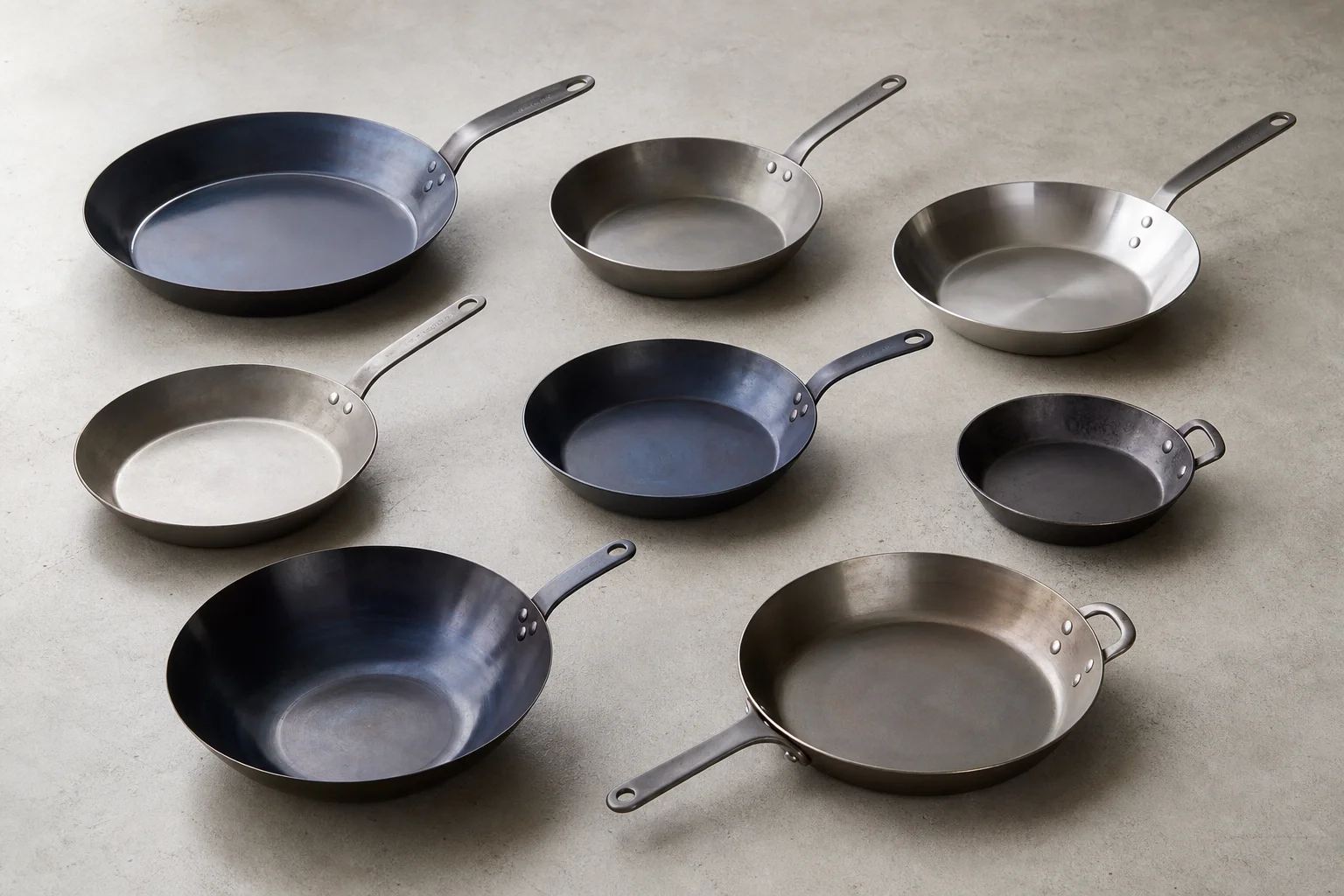
Cookware
Best Carbon Steel Pans Tested: Which Brands Deliver Real Value
We tested eight popular carbon steel pans with controlled durability, heat, and cooking tests. Here's which ones perform best and which to avoid.
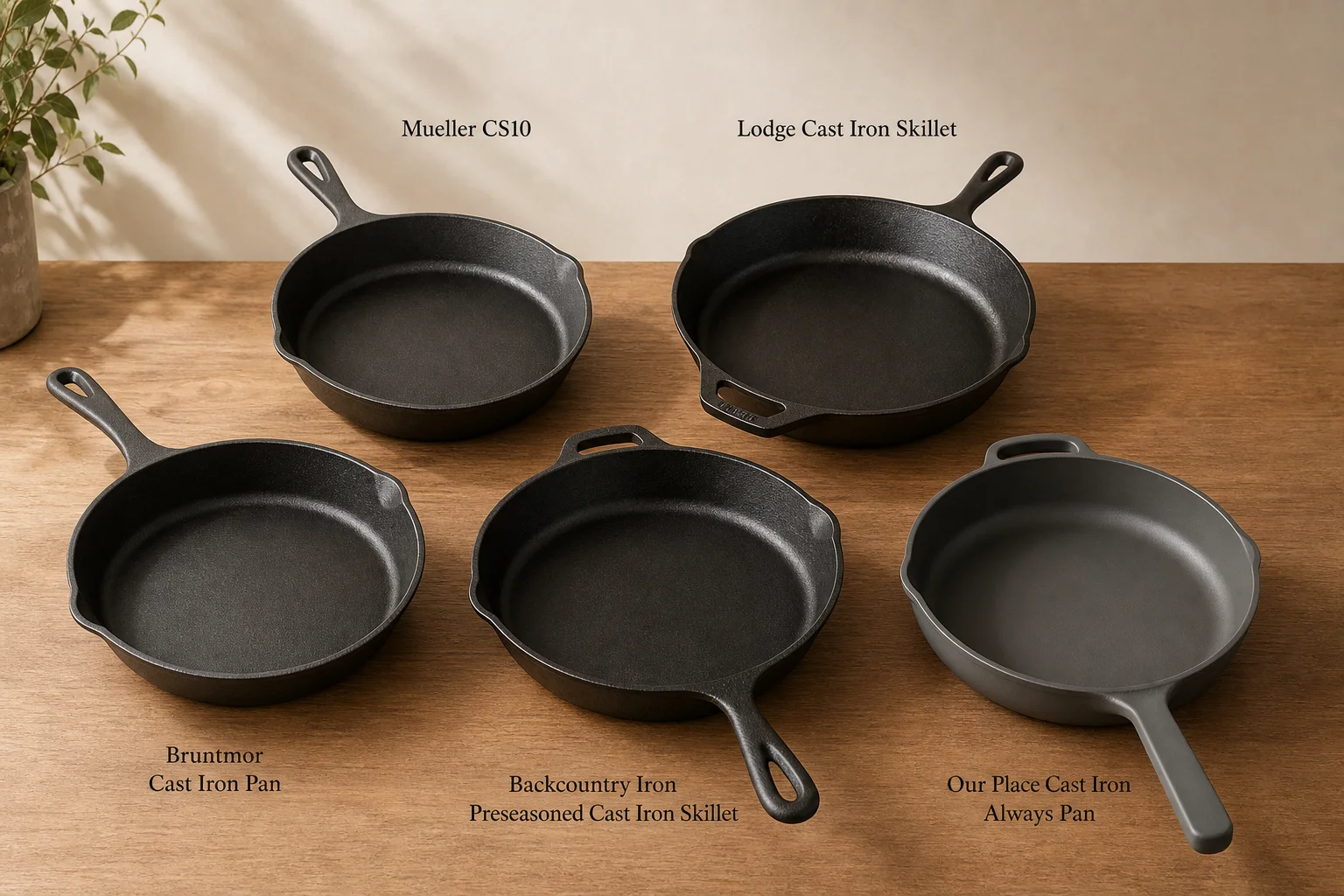
Cookware
Best Cast Iron Pans 2026: Five Options from Budget to Premium
A practical breakdown of five cast iron skillets, from affordable Mueller to premium Our Place, with clear strengths and trade-offs for different cooking needs.
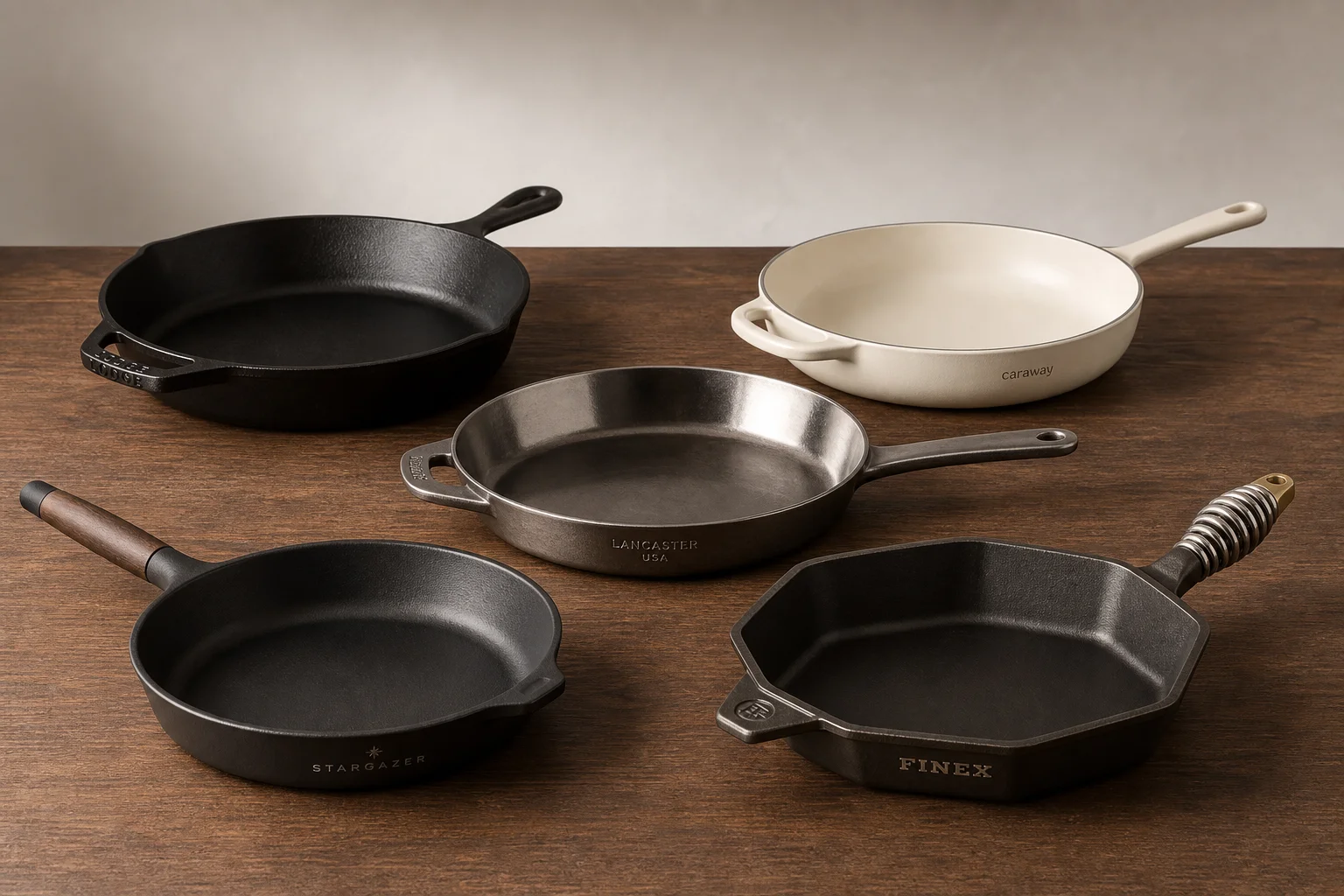
Cookware
Best Cast Iron Skillets: Five Options for Every Kitchen
A comprehensive guide to five cast iron skillets, from budget-friendly classics to premium handcrafted options, each with distinct strengths and use cases.